
Texas
Texas Knife Laws (2026): Carry, Location-Restricted Knives
Independently fact-checked against primary sources (last audited September 18, 2026). · 11 primary sources cited on this page. How we verify our legal content
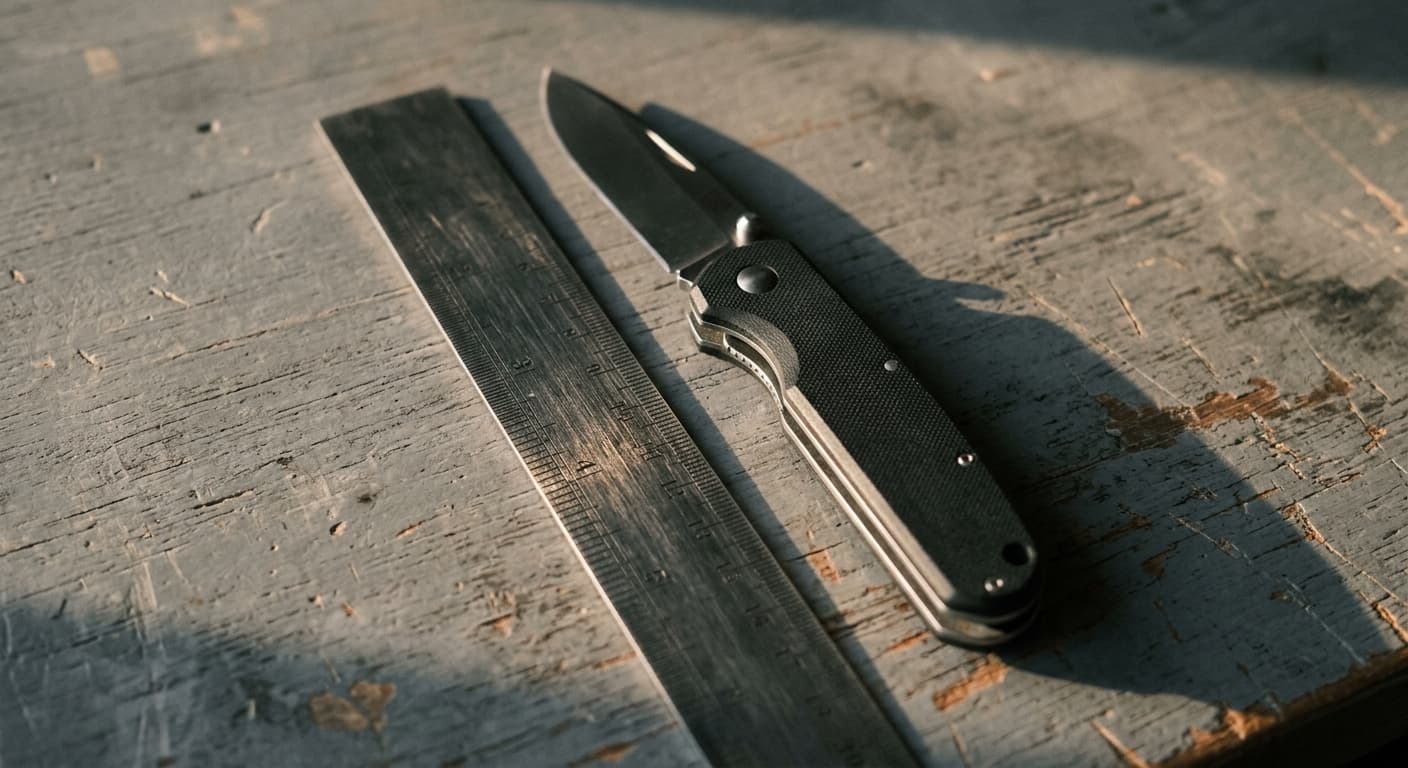
Texas has no statewide blade-length limit and no general restriction on carrying an ordinary knife, open or concealed, for an adult. A 2017 law replaced the state's old named "illegal knives" list with a single blade-length threshold that applies only to specific restricted places and to carry by a minor, not to general adult carry.
Jurisdiction scope: This page covers Texas state law only, principally Tex. Penal Code §§ 46.01, 46.02, 46.03, 46.05, 46.06, 46.11, and 46.15, and Tex. Loc. Gov't Code §§ 229.001 and 236.001-.002. It does not cover the handgun-license statutes in Government Code Chapter 411 in detail, since those govern firearms rather than knives.
Is it legal to carry a knife in Texas?
Yes, for an adult. Texas Penal Code Chapter 46 has no general statute restricting the open or concealed carry of a knife of any length or type. The chapter's carry offense for weapons, § 46.02(a), reaches only "a handgun," and while § 46.02 was expanded by a separate subsection to reach location-restricted knives, that expansion is scoped narrowly to minors, described below. An adult 18 or older may carry an ordinary knife, or a knife with a blade over 5.5 inches, openly or concealed, anywhere in Texas outside the specific restricted places listed in § 46.03.
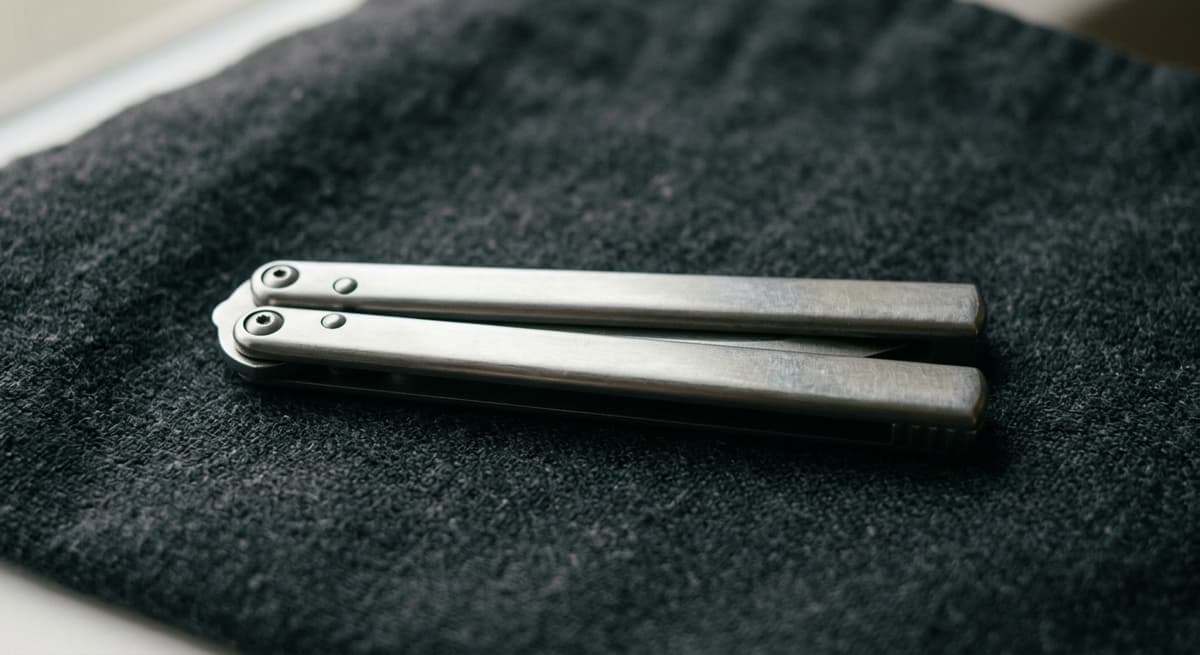
Texas Penal Code § 46.01(7) defines "knife" as "any bladed hand instrument that is capable of inflicting serious bodily injury or death by cutting or stabbing a person with the instrument," a definition with no blade-length qualifier. A second, narrower definition matters for the carry rules that do exist: § 46.01(6) defines "location-restricted knife" as "a knife with a blade over five and one-half inches." This threshold does not create a general carry limit; it only determines which knives are swept into the specific restricted-place and minors' rules described below.
The only age-based knife-carry offense, and a separate rule on selling to a minor
Section 46.02(a-4) makes it an offense for a person to carry a location-restricted knife if the person is younger than 18 years of age, unless the person is on their own premises or premises under their control, is inside of or directly en route to a motor vehicle or watercraft that the person owns or controls, or is under the direct supervision of a parent or legal guardian. An ordinary knife with a blade of 5.5 inches or less falls outside this subsection entirely regardless of the carrier's age, since it is not a "location-restricted knife" by definition.
A second, separate statute reaches the other side of that transaction. Section 46.06(a)(2) makes it an offense to "intentionally or knowingly sell, rent, lease, or give or offer to sell, rent, lease, or give to any child younger than 18 years of age any firearm, club, or location-restricted knife." Unlike § 46.02(a-4)'s Class C carry offense, a violation of § 46.06(a)(2) is a Class A misdemeanor under § 46.06(d), a higher grade than the carry offense itself (the state-jail-felony bump in § 46.06(d)(1) applies only if the weapon transferred is a handgun, not a knife). Section 46.06(c) supplies an affirmative defense if the transfer was to a minor whose parent or legal custodian gave written permission for the sale, or effective consent for a non-sale transfer.
Where a location-restricted knife can't go
Section 46.03(a) prohibits possessing or going with a firearm, a location-restricted knife, a club, or a § 46.05 prohibited weapon in 14 specific places: the premises of a school or postsecondary educational institution, on any grounds or building owned by and under the control of the school or institution and on which a school- or institution-sponsored activity is being conducted, or in the school's or institution's passenger transportation vehicle (unless carried pursuant to written regulations or written authorization of the school or institution, or, for a postsecondary institution only, by a licensed concealed handgun holder carrying no other listed weapon); a polling place on election day or during early voting; the premises of a court or court offices, unless pursuant to written regulations or written authorization of the court; a racetrack; a secured area of an airport; within 1,000 feet of a place the Texas Department of Criminal Justice has designated for an execution, on a day a death sentence is set to be carried out there, after the person has received notice of the restriction; the premises of a business that derives 51% or more of its income from on-premises alcoholic beverage sales; the premises of a high school, collegiate, or professional sporting or interscholastic event, unless the person is a participant and a firearm, location-restricted knife, club, or § 46.05 prohibited weapon is used in the event; a correctional facility; a civil commitment facility; a licensed hospital or nursing facility, unless the person has written authorization of the hospital or nursing facility administration; a mental hospital, unless the person has written authorization of the mental hospital administration; an amusement park as statutorily defined; and the room where an open meeting of a governmental entity subject to the Texas Open Meetings Act is held, with notice. "Premises" for this section is narrowed by subsection (c)(4) to a building or a portion of a building, excluding a driveway, sidewalk, or parking area. Written school or institution authorization is not the only exception that can apply to a location-restricted knife: the court exception, the sporting-event participant exception, and the hospital/nursing-facility and mental-hospital written-authorization exceptions are all weapon-neutral and can excuse carrying a knife the same as any other listed item. Only the postsecondary concealed-handgun exception is handgun-specific; it excludes anyone also carrying a knife or other listed weapon. A separate, narrower carve-out outside § 46.03 itself, § 46.15(e), provides that the minors' offense in § 46.02(a-4) (not § 46.03) does not apply to an individual carrying a location-restricted knife used in a historical demonstration or in a ceremony in which the knife is significant to the performance of the ceremony.

The penalty for a location-restricted-knife violation is notably lighter than for a firearm violation of the same section, but it is not a clean two-tier rule. Section 46.03(g) makes an offense under the section generally a felony of the third degree "except as provided by Subsections (g-1) and (g-2)." Subsection (g-1) provides that if the weapon is a location-restricted knife, the offense is a Class C misdemeanor, "except that the offense is a felony of the third degree if the offense is committed under Subsection (a)(1)," the school and postsecondary-institution provision. Subsection (g-2) separately makes an offense committed under subsection (a)(8), (a)(10), (a)(11), or (a)(13), the sporting-event, civil-commitment-facility, hospital-or-nursing-facility, and amusement-park places, a Class A misdemeanor, with no weapon-type qualifier. Neither subsection states which one controls when a location-restricted knife is the weapon at one of those four places, so the statute leaves that overlap unresolved on its face. A location-restricted knife carried into a courthouse or polling place, where only (g-1) applies, is ordinarily a Class C misdemeanor; the same knife carried onto school grounds is a felony of the third degree. Section 46.11 raises that penalty by one category, for this and every other Chapter 46 offense except § 46.03(a)(1) itself, if the offense is committed within 300 feet of a school or on premises where an official school function or a University Interscholastic League event is taking place and the actor knew it. So a Class C knife offense under (g-1), and the minors' Class C offense under § 46.02(a-4), can both become Class B misdemeanors inside a weapon-free school zone.
How Texas knife law changed in 2017 (and why older answers are wrong)
Before September 1, 2017, Texas Penal Code § 46.01(6) defined "illegal knife" to include not only a knife with a blade over five and one-half inches, but also a hand instrument designed to cut or stab by being thrown, a dagger (including a dirk, stiletto, or poniard), a bowie knife, a sword, or a spear. That definition fed directly into the general carrying-weapons offense at the old § 46.02(a), which named "a handgun, illegal knife, or club," so an adult carrying one of those named knife types committed an offense regardless of where it was carried, subject to the section's own premises and vehicle exceptions.
House Bill 1935 (2017), effective September 1, 2017, did not repeal a possession ban in § 46.05. It amended the § 46.01(6) definition itself: deleting the thrown-instrument, dagger, bowie-knife, sword, and spear items, renaming the term from "illegal knife" to "location-restricted knife," and leaving only the blade-length threshold, "a knife with a blade over five and one-half inches." The same act amended § 46.02(a) to strike "illegal knife" from the general carry offense entirely and added the current § 46.02(a-4), confining the location-restricted-knife carry offense to a person younger than 18. The practical result: a knife type that had triggered an offense under the old law is legal for an adult to carry today unless it also has a blade over 5.5 inches and is carried into one of the specific places listed in § 46.03.
The switchblade followed a different, earlier path with a different mechanism. Texas Penal Code § 46.05(a) listed a switchblade knife among the state's "prohibited weapons," alongside items such as explosive weapons and armor-piercing ammunition, until House Bill 1862 (2013), effective September 1, 2013, removed it from that list, four years before HB 1935 and unrelated to the § 46.01(6)/§ 46.02 history above. The current text of § 46.05(a) covers only an explosive weapon or machine gun (unless properly registered), armor-piercing ammunition, a chemical dispensing device, a zip gun, a tire deflation device, and an improvised explosive device; no knife type has appeared in it since 2013, and none of the pre-2017 named knife-type list survives anywhere in Chapter 46. Many search results and older articles describing Texas knife law still repeat the pre-2017 named list, misattribute the switchblade repeal to 2017, or describe an inch-based general carry limit that does not exist in the current code; none of that reflects current law.
Local ordinances: Texas preempts the field for both cities and counties
Texas Local Government Code § 229.001, part of a subchapter titled "Regulation of Firearms, Knives, and Explosives" within the chapter governing municipal regulatory authority, bars a municipality from adopting or enforcing a regulation that relates to "the transfer, possession, wearing, carrying, ownership, storage, transportation, licensing, or registration of firearms, air guns, archery equipment, knives, ammunition, or firearm or air gun supplies or accessories," or to commerce in those items; § 229.001(e)(4) defines "knife" for this section by cross-reference to Penal Code § 46.01. Subsection (a-1) makes any municipal ordinance, resolution, rule, or policy that violates the section void, and subsection (f) lets the attorney general sue to enjoin a violating municipality. The statute's carve-outs for what a municipality may still regulate, such as an air gun, archery equipment, or firearm at a public park or public meeting under subsection (b)(5), do not include knives.

A parallel chapter, Tex. Loc. Gov't Code ch. 236 ("County Regulation of Firearms, Archery Equipment, Knives, Ammunition, Firearm Supplies, and Sport Shooting Ranges"), extends the same preemption to counties. Section 236.001(1-a) defines "knife" by the same cross-reference to Penal Code § 46.01, and § 236.002(a) bars a county from adopting or enforcing a regulation that relates to "the transfer, possession, wearing, carrying, ownership, storage, transportation, licensing, or registration of firearms, air guns, archery equipment, knives, ammunition, or firearm or air gun supplies or accessories," or to commerce in those items, language that tracks § 229.001 almost word for word. A violating county order is void under § 236.002(b), and the attorney general may sue to enjoin it under § 236.002(f). Section 236.002(c) lists five things this preemption does not affect a county's authority to do: requiring a resident or public employee to be armed, regulating firearm or air gun discharge, regulating handgun-license carry, regulating a county employee's carrying in the course of duty, and (c)(4) adopting or enforcing "a generally applicable land use regulation, fire code, or business regulation," subject to subsection (d), which claws that fifth carve-out back only for a regulation that effectively restricts the manufacture, sale, purchase, transfer, or display of firearms, firearm accessories, or ammunition. The first four carve-outs are firearm- or air-gun-specific and reach no knife; the fifth, (c)(4), is weapon-neutral, so nothing in chapter 236 stops a county from applying an ordinary land-use, fire-code, or business regulation to a knife retailer the same as any other business. Between the two chapters, neither a Texas municipality nor a Texas county has authority to impose its own knife-specific carry, possession, or sale restriction.
Federal law: what it does and does not reach
Federal law does not ban an individual from owning or carrying a switchblade. The Federal Switchblade Act, 15 U.S.C. §§ 1241 to 1245, restricts interstate commerce in switchblade knives and, in 15 U.S.C. § 1245, makes it a federal offense to knowingly possess, manufacture, sell, or import a ballistic knife in or affecting interstate commerce or within federal territorial jurisdiction; the operative offense sections, §§ 1242 and 1243, do not apply to certain knives and people, listed as exemptions in 15 U.S.C. § 1244. A 2009 amendment, § 1244(5), exempts a knife with a spring, detent, or other closure-bias mechanism that requires hand, wrist, or arm exertion on the blade itself to overcome the bias and assist opening, the carve-out that keeps modern assisted-opening folding knives legal in interstate commerce. A separate exemption, § 1244(4), covers a person with only one arm possessing or carrying a switchblade with a blade three inches or less.
Disclaimer: This article provides general legal information about Texas knife law as of September 2026. It is not legal advice. Consult a lawyer licensed in Texas for advice about a specific situation.
For a state-by-state comparison, see knife laws by state. Texas's self-defense statutes are covered separately on the Texas self-defense laws page.
Statutes cited reflect their in-force version as of 2026-09-18. Last updated: 2026-09-18.
Frequently Asked Questions
Is a switchblade legal in Texas?
Yes. Tex. Penal Code § 46.05(a) listed a switchblade knife as a 'prohibited weapon' until House Bill 1862 (2013) removed it from that list, effective September 1, 2013. Current law has no blade-opening-mechanism restriction; a switchblade is treated the same as any other knife, subject only to the blade-length rules for minors and restricted places described above.
What is the longest knife you can legally carry in Texas?
There is no statewide length limit on general adult carry. The 5.5-inch 'location-restricted knife' threshold in § 46.01(6) matters only inside the specific places listed in § 46.03 (schools, courts, airports, and similar) and for carry by a person under 18 under § 46.02(a-4).
Can a minor carry a pocketknife in Texas?
Yes, if the blade is 5.5 inches or less, since § 46.02(a-4) applies only to a 'location-restricted knife' with a blade over that length; a violation of (a-4) is a Class C misdemeanor under § 46.02(d). A minor may also carry a location-restricted knife on their own premises, inside or en route to their own vehicle or watercraft, or under a parent's or legal guardian's direct supervision, or if the knife is used in a historical demonstration or a ceremony where it is significant to the ceremony under § 46.15(e).
Is it illegal to sell or give a knife to a minor in Texas?
Yes, if the knife is a location-restricted knife (blade over 5.5 inches). Tex. Penal Code § 46.06(a)(2) makes it an offense to sell, rent, lease, or give, or offer to sell, rent, lease, or give, a location-restricted knife to a child younger than 18. This is a Class A misdemeanor under § 46.06(d), higher than the Class C carry offense in § 46.02(a-4), unless the transfer falls under § 46.06(c)'s affirmative defense for a parent's or legal custodian's written permission or effective consent.
Does a Texas city or county have its own knife ordinance?
No. Neither a municipality nor a county can lawfully adopt one. Tex. Loc. Gov't Code § 229.001 voids a municipal ordinance that regulates the possession, carrying, ownership, or transfer of knives, and the parallel Tex. Loc. Gov't Code § 236.002 voids a county order that does the same. Most of each statute's carve-outs, for parks, meetings, discharge, and similar settings, apply to firearms and air guns rather than knives; the one exception is each statute's carve-out for a generally applicable land-use, fire-code, or business regulation, which is weapon-neutral and can still reach a knife retailer like any other business.
Updates
Independently fact-checked against the cited primary sources
Sources and References
- Tex. Penal Code § 46.01 - Definitions(tcss.legis.texas.gov).gov
- Tex. Penal Code § 46.02 - Unlawful Carrying Weapons(tcss.legis.texas.gov).gov
- Tex. Penal Code § 46.03 - Places Weapons Prohibited(tcss.legis.texas.gov).gov
- Tex. Penal Code § 46.05 - Prohibited Weapons(tcss.legis.texas.gov).gov
- Tex. Penal Code § 46.06 - Unlawful Transfer of Certain Weapons(tcss.legis.texas.gov).gov
- Tex. Penal Code § 46.11 - Penalty If Offense Committed Within Weapon-Free School Zone(tcss.legis.texas.gov).gov
- Tex. Penal Code § 46.15 - Nonapplicability(tcss.legis.texas.gov).gov
- Tex. Loc. Gov't Code § 229.001 - Firearms; Air Guns; Archery Equipment; Knives; Explosives (municipal preemption)(tcss.legis.texas.gov).gov
- Tex. Loc. Gov't Code ch. 236 (§§ 236.001-.002) - County Regulation of Firearms, Archery Equipment, Knives, Ammunition, Firearm Supplies, and Sport Shooting Ranges (county preemption)(tcss.legis.texas.gov).gov
- Texas House Bill 1935 (2017), Acts 2017, 85th Leg., R.S., ch. 1049 - amended §§ 46.01(6) and 46.02(a) to create the current location-restricted-knife scheme(capitol.texas.gov).gov
- Texas House Bill 1862 (2013), Acts 2013, 83rd Leg., R.S., ch. 960 - removed the switchblade from the § 46.05(a) prohibited-weapons list(capitol.texas.gov).gov
- 15 U.S.C. §§ 1241-1245 - Federal Switchblade Act, interstate commerce and ballistic-knife scope(law.cornell.edu)
- 15 U.S.C. § 1244 - exceptions, including the 2009 assisted-opening carve-out and the one-arm exception(law.cornell.edu)