
Oregon
Oregon Knife Laws (2026): Concealed Carry, Intent Felony, Delgado
Independently fact-checked against primary sources (last audited September 18, 2026). · 5 primary sources cited on this page. How we verify our legal content
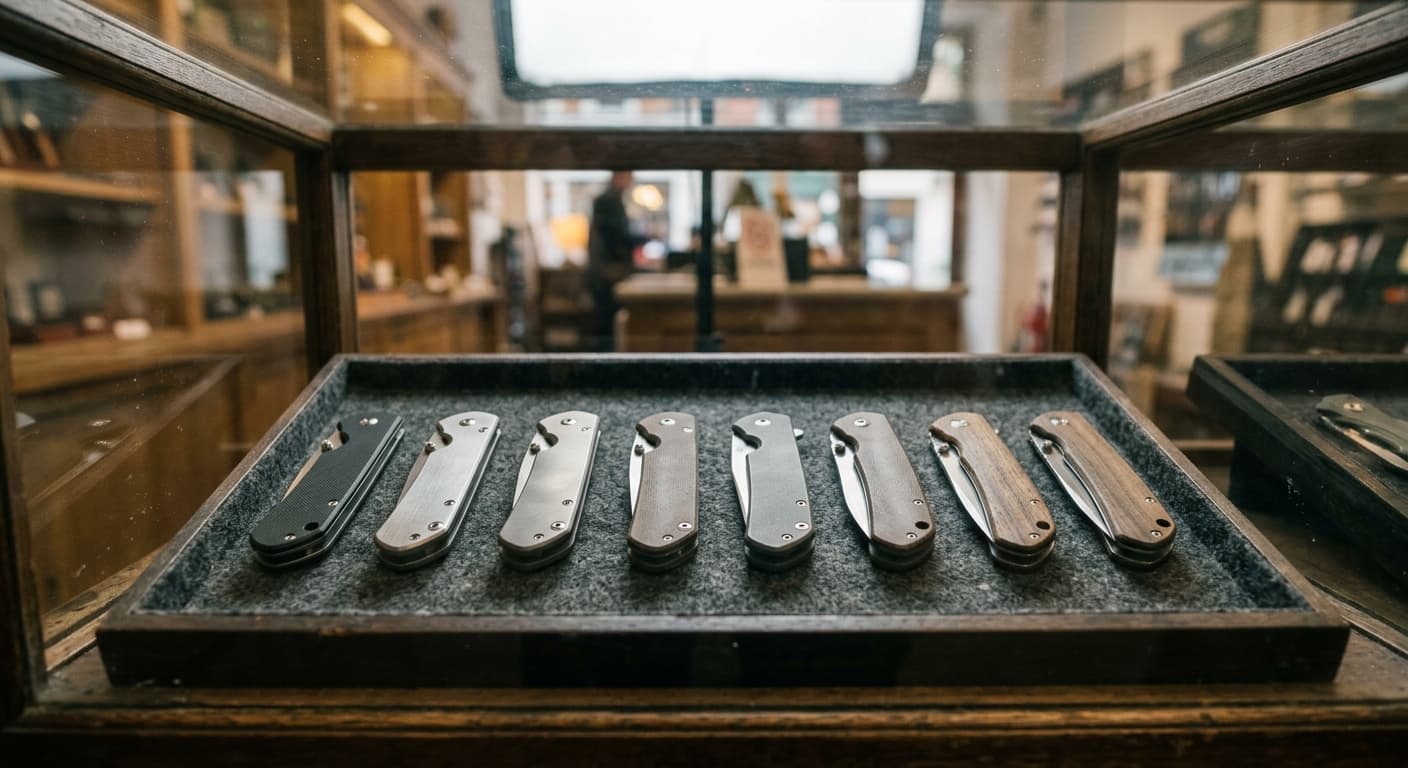
Oregon bans carrying a switchblade or gravity knife, dirk, dagger, or ice pick concealed, but does not restrict open carry of those same items, and sets no blade-length limit for general public carry. A separate statute makes it a felony to carry any knife with intent to use it unlawfully against another person, and a four-inch pocketknife exclusion governs the court-facility surrender rule specifically, though it is only one route out of that rule's "weapon" definition, not a clearance, since a knife can still qualify as a dangerous or deadly weapon under a separate paragraph of the same definition. A 1984 Oregon Supreme Court decision struck down a broader, since-repealed statute that had banned mere possession and carrying of a switchblade outright, a history worth knowing because it explains why today's law reaches only concealed carry.
Jurisdiction scope: This page covers Oregon state law only, principally ORS §§ 166.220, 166.240, 166.360, 166.370, and 166.170. It does not cover Oregon's concealed handgun license statutes in detail, since those govern handguns rather than knives.
Can you carry a knife openly or concealed in Oregon?
Open carry of an ordinary knife, and even of a switchblade or dirk carried openly, is not restricted by ORS 166.240, the state's core knife-carry statute, because that statute reaches only concealed carry. ORS 166.240(1) provides: "Except as provided in subsection (2) of this section, any person who carries concealed upon the person any knife having a blade that projects or swings into position by force of a spring or by centrifugal force, any dirk, dagger, ice pick, slungshot, metal knuckles, or any similar instrument by the use of which injury could be inflicted upon the person or property of any other person, commits a Class B misdemeanor." The statute's only exemption, at subsection (2), is for a peace officer, as defined in ORS 133.005, whose duty is to serve process or make arrests.
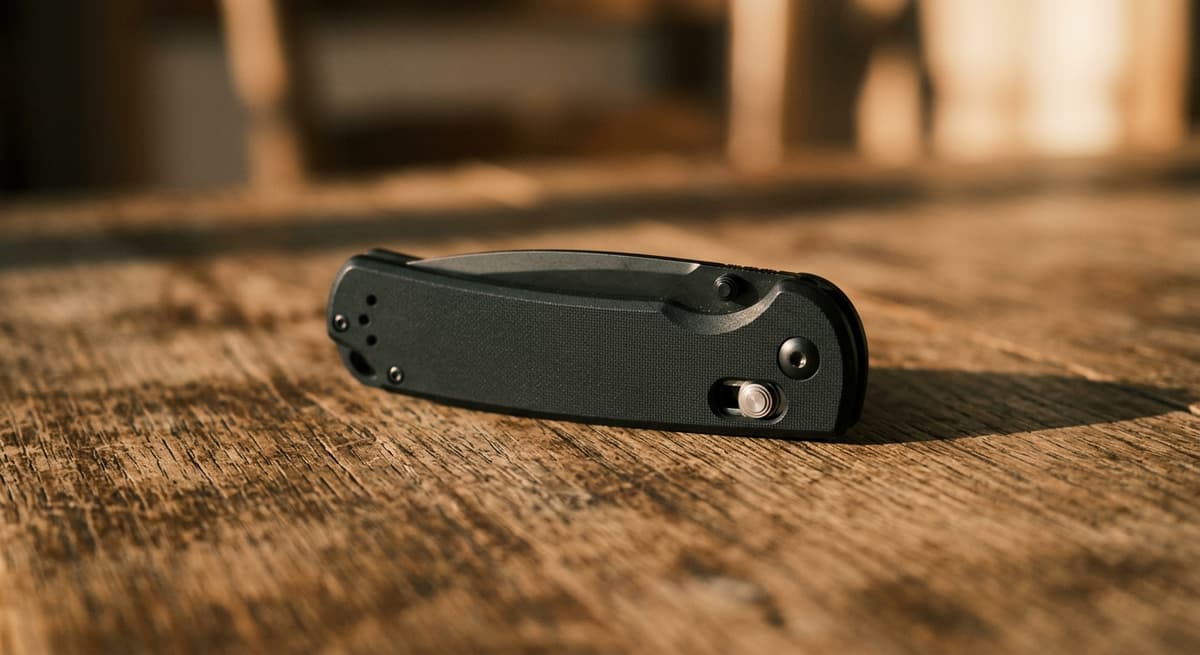
The statute reaches a functional definition, "any knife having a blade that projects or swings into position by force of a spring or by centrifugal force," which covers a switchblade and a gravity knife, plus the named items dirk, dagger, ice pick, slungshot, and metal knuckles, plus a catch-all for "any similar instrument by the use of which injury could be inflicted." An ordinary fixed-blade knife or a manually opened folding knife that does not open by spring or centrifugal force is not named by this statute and is not restricted by it regardless of blade length, whether carried openly or concealed.
Carrying a knife with intent to use it unlawfully
ORS 166.220 reaches beyond ORS 166.240's list of named items. It provides: "A person commits the crime of unlawful use of a weapon if the person: (a) Attempts to use unlawfully against another, or carries or possesses with intent to use unlawfully against another, any dangerous or deadly weapon as defined in ORS 161.015." ORS 161.015 supplies two definitions: a "dangerous weapon" is "any weapon, device, instrument, material or substance which under the circumstances in which it is used, attempted to be used or threatened to be used, is readily capable of causing death or serious physical injury," while a "deadly weapon" is "any instrument, article or substance specifically designed for and presently capable of causing death or serious physical injury." An ordinary knife is not a deadly weapon under the second, design-based definition, but it can be a dangerous weapon under the first, circumstance-dependent one, so a person who carries any knife, of any type or blade length, with intent to use it unlawfully against someone commits unlawful use of a weapon, a Class C felony under ORS 166.220(3). Subsection (2) lists exceptions, including police officers and military personnel in the lawful performance of official duties, a person lawfully defending life or property under ORS 161.219, lawful target shooting and hunting, and a USDA employee lawfully taking wildlife. This statute is the reason Oregon's lack of a blade-length limit on ordinary carry is not the whole answer to whether carrying a particular knife is lawful.
The 1984 Delgado decision and the statute it struck down
Oregon's current concealed-only rule has a specific history. Before 1985, a separate statute, ORS 166.510(1), went further: it provided that "any person who manufactures, causes to be manufactured, sells, keeps for sale, offers, gives, loans, carries or possesses an instrument or weapon having a blade which projects or swings into position by force of a spring or other device and commonly known as a switch-blade knife or an instrument or weapon commonly known as a blackjack, slung shot, sandclub, sandbag, sap glove or metal knuckles, or who carries a dirk, dagger or stiletto commits a Class A misdemeanor." Unlike ORS 166.240, this statute was not limited to concealed carry; it reached mere possession and carrying, openly or otherwise.
In State v. Delgado, 298 Or 396 (1984), the defendant was stopped by an officer while walking on a public street and was found carrying a switchblade knife in his back pocket, which he said he carried "for protection." He was convicted under ORS 166.510 despite no evidence that he had used or intended to use the knife unlawfully. The Oregon Supreme Court held that "the issue is whether ORS 166.510(1), insofar as it prohibits the mere possession and mere carrying of a switchblade knife, violates defendant's right to bear arms under Article I, section 27, of the Oregon Constitution," and concluded: "The problem here is that ORS 166.510(1) absolutely proscribes the mere possession or carrying of such arms. This the constitution does not permit." The court affirmed the Court of Appeals' reversal of the defendant's conviction, relying on its own earlier decisions in State v. Kessler, 289 Or 359 (1980), and State v. Blocker, 291 Or 255 (1981), which had extended the same state constitutional protection to other weapons. The court was careful to note that its holding did not give individuals "an unfettered right to possess or use constitutionally protected arms in any way they please," and that the legislature remained free to regulate possession and use short of an absolute ban.
ORS 166.510 was repealed the year after Delgado by 1985 Or. Laws ch. 709, § 4, and no longer appears in the current criminal code. Today's operative concealed-carry statute, ORS 166.240, was not the statute at issue in Delgado and has not been invalidated; it restricts concealed carry only, consistent with the narrower scope Delgado left open to the legislature.
Public buildings, schools, and court facilities
ORS 166.360 to 166.380 impose a separate restriction inside specific categories of buildings, but the four-inch pocketknife threshold that people associate with this restriction does not govern every provision in it. ORS 166.360(10)(b) defines "weapon," for purposes of these sections, to include "any dirk, dagger, ice pick, slingshot, metal knuckles or any similar instrument or a knife, other than an ordinary pocketknife with a blade less than four inches in length, the use of which could inflict injury upon a person or property." ORS 166.360(9) defines "public building": "A hospital, a capitol building, a public or private school, as defined in ORS 339.315, a college or university, a city hall or the residence of any state official elected by the state at large, and the grounds adjacent to each such building," plus "that portion of any other building occupied by an agency of the state or by a city, a county, a district as defined in ORS 198.010 or any other entity that falls within the definition of 'municipal corporation' in ORS 297.405, other than a court facility," and the passenger terminal of a commercial-service airport with more than one million passenger boardings a year. The "other than a court facility" clause keeps the public-building felony and the court-facility rule discussed below from overlapping: a courthouse is governed by the court-facility provisions, not this one. The "grounds adjacent" clause reaches a school parking lot or campus lawn, not only the building itself, and "capitol building" is its own defined term at ORS 166.360(1), covering seven named state buildings (the Capitol, the State Office Building, the State Library Building, the Labor and Industries Building, the State Transportation Building, the Agriculture Building, and the Public Service Building), not the Capitol alone.
ORS 166.370(1)(a) makes it a Class C felony to intentionally possess "a loaded or unloaded firearm or any other instrument used as a dangerous weapon" while in or on a public building, which includes a public or private school under the ORS 166.360(9) definition above. That phrase does not use the defined term "weapon" from ORS 166.360(10); ORS 166.370(8) instead provides that "as used in this section, 'dangerous weapon' means a dangerous weapon as that term is defined in ORS 161.015": "any weapon, device, instrument, material or substance which under the circumstances in which it is used, attempted to be used or threatened to be used, is readily capable of causing death or serious physical injury." Because the public-building offense does not route through the ORS 166.360(10)(b) definition, the four-inch pocketknife exclusion does not by itself exempt a knife from ORS 166.370(1)(a) in a public building or school; and because the ORS 161.015 definition is tied to the circumstances of use, attempted use, or threatened use rather than the object itself, an ordinary pocketknife carried without being used, attempted to be used, or threatened to be used as a weapon is not, on that definition's own terms, a dangerous weapon under this section. Subsection (3) lists categories the public-building felony does not apply to, including a person authorized by the officer or agency that controls the building to possess a firearm or dangerous weapon there, and subsection (4)(a) makes most of those listed categories affirmative defenses rather than elements the state must disprove. Any weapon carried in violation of this section is subject to forfeiture under ORS 166.279.
For court facilities specifically, ORS 166.370(2)(a)(B) uses the defined term directly: a person possessing "a weapon, other than a firearm," in a court facility "may be required to surrender the weapon to a law enforcement officer or to immediately remove it from the court facility," and failing to comply is a Class C felony. ORS 166.360(10) defines "weapon" in seven paragraphs; paragraph (b) is the one carrying the four-inch pocketknife exclusion, "any dirk, dagger, ice pick, slingshot, metal knuckles or any similar instrument or a knife, other than an ordinary pocketknife with a blade less than four inches in length, the use of which could inflict injury upon a person or property," but paragraph (g) is an independent route into the same defined term: "a dangerous or deadly weapon as those terms are defined in ORS 161.015." A pocketknife under four inches clears paragraph (b); it is not automatically outside the court-facility rule, because it can still qualify under paragraph (g) depending on how it is used, attempted to be used, or threatened to be used. The presiding judge of a judicial district or municipal court may enter an order permitting possession of specified weapons in a court facility under ORS 166.370(2)(b).
No statewide knife preemption
ORS 166.170, Oregon's state-preemption statute, is limited by its own terms to firearms. Subsection (1) provides that, except as expressly authorized by state statute, "the authority to regulate in any matter whatsoever the sale, acquisition, transfer, ownership, possession, storage, transportation or use of firearms or any element relating to firearms and components thereof, including ammunition, is vested solely in the Legislative Assembly." Subsection (2) bars a county, city, or other municipal corporation or district from enacting an ordinance that regulates the same list of firearm-related conduct. Neither subsection mentions a knife, so this statute does not preempt a local ordinance that separately regulates knives.
Federal law: what it does and does not reach
Federal law does not ban an individual from owning or carrying a switchblade. The Federal Switchblade Act, 15 U.S.C. §§ 1241 to 1245, restricts interstate commerce in switchblade knives, barring their manufacture for, or introduction, transport, and sale in, interstate commerce, and, in 15 U.S.C. § 1245, makes it a federal offense to knowingly possess, manufacture, sell, or import a ballistic knife in or affecting interstate commerce or within federal territorial jurisdiction. The two switchblade offense sections, §§ 1242 and 1243, do not apply to certain knives and people, listed as exemptions in 15 U.S.C. § 1244. A 2009 amendment, § 1244(5), exempts any knife with a spring, detent, or other closure-bias mechanism that requires hand, wrist, or arm exertion on the blade itself to overcome the bias and assist opening, the carve-out that keeps modern assisted-opening folding knives legal in interstate commerce. A separate exemption, § 1244(4), covers a person with only one arm possessing or carrying a switchblade with a blade three inches or less.
Disclaimer: This article provides general legal information about Oregon's knife laws as of September 2026. It is not legal advice. Consult a lawyer licensed in Oregon for advice about a specific situation.
For a state-by-state comparison, see knife laws by state. Oregon's self-defense statutes are covered separately on the Oregon self-defense laws page.
Statutes cited reflect their in-force version as of 2026-09-18. Last updated: 2026-09-18.
Frequently Asked Questions
Is it legal to carry a switchblade in Oregon?
Open carry, yes. ORS 166.240 bans only concealed carry of a knife that opens by spring or centrifugal force, a dirk, a dagger, an ice pick, a slungshot, or metal knuckles, a Class B misdemeanor. A prior statute that had banned mere possession or carrying of a switchblade outright, ORS 166.510, was struck down in part by the Oregon Supreme Court in State v. Delgado (1984) and repealed in 1985.
Does Oregon have a blade-length limit for knives?
Not for general public carry under ORS 166.240, and not inside a public building or school under ORS 166.370(1)(a), which turns on ORS 161.015's definition of a dangerous weapon (any instrument that, under the circumstances of its use, attempted use, or threatened use, is readily capable of causing death or serious physical injury) rather than a blade-length line. The four-inch threshold in ORS 166.360(10)(b), which excludes 'an ordinary pocketknife with a blade less than four inches in length' from one paragraph of the 'weapon' definition used in the court-facility rule, ORS 166.370(2)(a)(B), is not a full clearance there either: a separate paragraph of that same definition, (10)(g), independently reaches a dangerous or deadly weapon under ORS 161.015.
Can you carry a knife openly in Oregon?
For a switchblade, gravity knife, dirk, dagger, or ice pick, yes; ORS 166.240 restricts concealed carry only. A separate statute, ORS 166.220, makes it a felony to carry any knife with intent to use it unlawfully against someone, regardless of how it is carried. Inside a court facility, ORS 166.370(2)(a)(B) applies a surrender rule to a 'weapon,' a term with a four-inch pocketknife exclusion in one paragraph but a separate dangerous-or-deadly-weapon route in another; inside a public building or school more broadly, ORS 166.370(1)(a) applies the ORS 161.015 dangerous-weapon standard, which depends on the circumstances of use rather than blade length.
Does Oregon preempt local knife ordinances?
No. Oregon's statewide preemption statute, ORS 166.170, is expressly limited to firearms and does not mention knives, so a city or county ordinance regulating knives is not displaced by this statute.
Can carrying a knife be a felony in Oregon?
Yes. ORS 166.220 makes it a Class C felony to attempt to use a dangerous or deadly weapon, including a knife, unlawfully against another person, or to carry or possess one with intent to use it unlawfully against another. The statute exempts, among others, a person lawfully defending life or property under ORS 161.219.
Updates
Independently fact-checked against the cited primary sources
Sources and References
- ORS 166.220 - Unlawful Use of a Weapon (ORS chapter 166 text)(oregonlegislature.gov).gov
- ORS 166.240 - Carrying of Concealed Weapons (ORS chapter 166 text)(oregonlegislature.gov).gov
- ORS 166.360 - Definitions for ORS 166.360 to 166.380 (ORS chapter 166 text)(oregonlegislature.gov).gov
- ORS 166.370 - Possession of Firearm or Dangerous Weapon in Public Building or Court Facility (ORS chapter 166 text)(oregonlegislature.gov).gov
- ORS 166.170 - State Preemption (ORS chapter 166 text)(oregonlegislature.gov).gov
- State v. Delgado, 298 Or 396 (1984)(courtlistener.com)
- 15 U.S.C. 1241-1245 - Federal Switchblade Act, interstate commerce and ballistic-knife scope(law.cornell.edu)
- 15 U.S.C. 1244 - exceptions, including the 2009 assisted-opening carve-out and the one-arm exception(law.cornell.edu)