
North Carolina
North Carolina Knife Laws (2026): Pocket Knife Rule and Schools
Independently fact-checked against primary sources (last audited September 18, 2026). · 7 primary sources cited on this page. How we verify our legal content
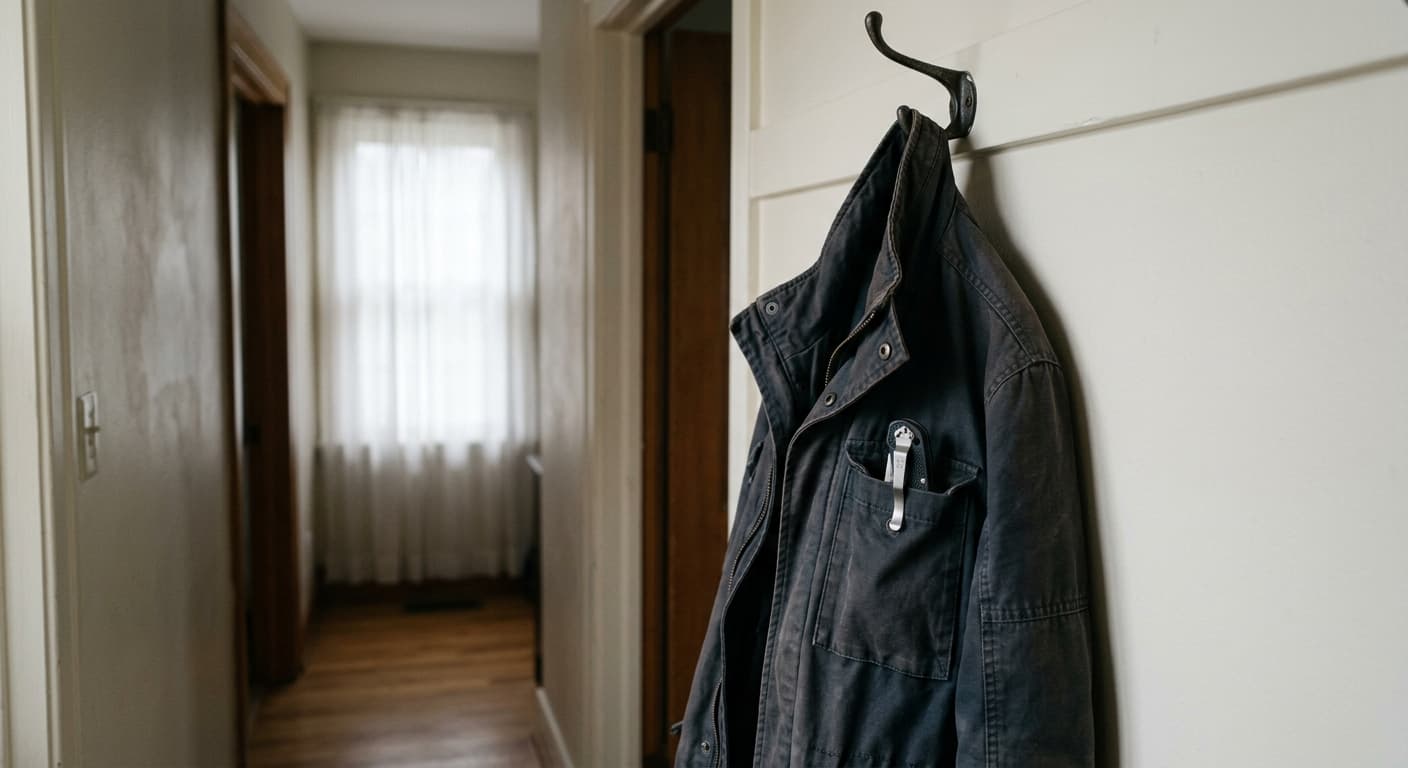
North Carolina bans carrying a bowie knife, dirk, or dagger concealed, but exempts an ordinary pocket knife defined by both size and a manual-opening requirement. That exemption does not travel everywhere: courthouses and the State Capitol complex ban any deadly weapon under a separate, stricter statute, and its own pocket-knife carve-out reaches only the Capitol. A separate statute bans spring-loaded projectile and ballistic knives outright, and schools apply a broader rule that reaches open carry too.
Jurisdiction scope: This page covers North Carolina state law only, principally N.C. Gen. Stat. §§ 14-269, 14-269.2, 14-269.4, 14-269.6, 14-277.2, 14-315, and 14-409.40. It does not cover North Carolina's concealed handgun permit statutes (Article 54B) in detail, since they govern firearms rather than knives.
Can you carry a knife openly or concealed in North Carolina?
For an ordinary pocket knife carried closed, generally yes, both openly and concealed, outside a courthouse, the State Capitol complex, and educational property. North Carolina's general concealed-weapons statute, § 14-269(a), applies only to concealed carry; open carry of a knife is not itself addressed by this statute. For concealed carry specifically, § 14-269(a) provides: "It shall be unlawful for any person willfully and intentionally to carry concealed about his or her person any bowie knife, dirk, dagger, slung shot, loaded cane, metallic knuckles, razor, shuriken, stun gun, or other deadly weapon of like kind, except when the person is on the person's own premises." Violation is a Class 2 misdemeanor under subsection (c).
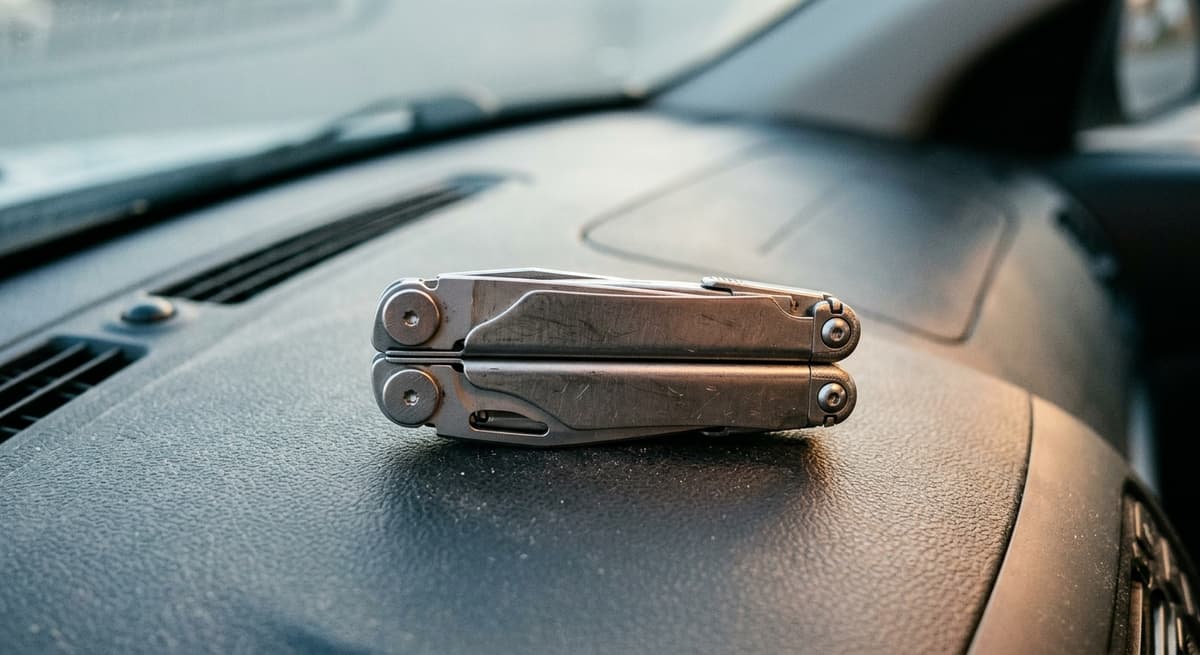
But a knife that is exempt from § 14-269 is not automatically exempt everywhere. A separate, stricter statute bans any deadly weapon, open or concealed, in a courthouse and the State Capitol complex, described next, and its pocket-knife exception does not cover a courthouse. Educational property carries its own broader rule too, described further below.
Courthouses and the State Capitol: a stricter rule with a narrower exemption
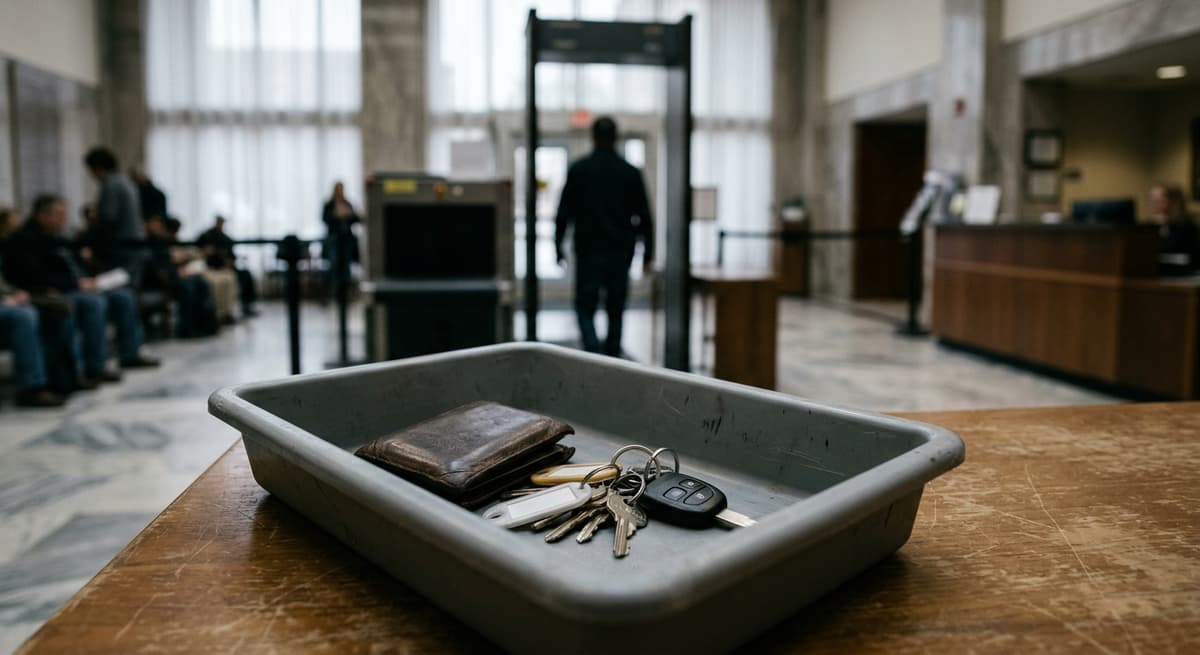
§ 14-269.4 provides: "It shall be unlawful for any person to possess, or carry, whether openly or concealed, any deadly weapon, not used solely for instructional or officially sanctioned ceremonial purposes in the State Capitol Building, the Executive Mansion, the Western Residence of the Governor, or on the grounds of any of these buildings, and in any building housing any court of the General Court of Justice. If a court is housed in a building containing nonpublic uses in addition to the court, then this prohibition shall apply only to that portion of the building used for court purposes while the building is being used for court purposes." Violation is a Class 1 misdemeanor, one grade higher than § 14-269's general concealed-carry offense. For a courthouse that shares a building with other, nonpublic uses, common among smaller North Carolina county facilities, the ban reaches only the court portion of the building, and only while that portion is being used for court purposes. The statute lists several exceptions, including a person exempted under § 14-269(b), a person possessing a weapon in a courthouse for evidentiary purposes or to deliver it to a law enforcement agency, and judges, magistrates, and certain detention officers under specified permit and duty conditions. Two further exceptions are separate and not tied together: exception (5) exempts "State-owned rest areas, rest stops along the highways, and State-owned hunting and fishing reservations" outright, with no vehicle or firearm condition, while exception (6) separately exempts a person holding an Article 54B permit who has a firearm in a closed compartment or container within the person's locked vehicle, or in a locked container securely affixed to the vehicle, a rule tied to the vehicle rather than to those particular places.
Exception (7) is the only pocket-knife carve-out this statute has, and it is narrow: "Any person who carries or possesses an ordinary pocket knife, as defined in G.S. 14-269(d), carried in a closed position into the State Capitol Building or on the grounds of the State Capitol Building." By its own text, this exception covers only the State Capitol Building and its grounds. It does not extend to the Executive Mansion, the Western Residence of the Governor, or, most importantly for most readers, a building housing a court of the General Court of Justice. Carrying a closed ordinary pocket knife into a North Carolina courthouse is not covered by any exception in this statute.
The ordinary pocket knife exemption to § 14-269 has four elements
§ 14-269(d) provides: "This section does not apply to an ordinary pocket knife carried in a closed position. As used in this section, 'ordinary pocket knife' means a small knife, designed for carrying in a pocket or purse, that has its cutting edge and point entirely enclosed by its handle, and that may not be opened by a throwing, explosive, or spring action." This definition has four elements, not just the enclosure and opening-method requirements: the knife must be small, it must be designed for carrying in a pocket or purse, its cutting edge and point must be entirely enclosed by its handle when closed, and it must not be capable of opening by a throwing, explosive, or spring action. Size is part of the definition even though the statute does not set a numeric blade-length threshold; a knife that satisfies the enclosure and opening-method requirements but is not a small pocket or purse knife does not automatically qualify. A knife that opens by spring action, such as many assisted-opening designs, fails the fourth element regardless of size, and is not exempt from § 14-269's concealed-carry ban. This exemption applies only to § 14-269; it does not apply to § 14-269.2 (educational property, below) and, as described above, applies to only one location under § 14-269.4 (the State Capitol, not a courthouse).
A legitimate-use affirmative defense
§ 14-269(b1) provides a defense to prosecution under the section: "(1) The weapon was not a firearm; (2) The defendant was engaged in, or on the way to or from, an activity in which the defendant legitimately used the weapon; (3) The defendant possessed the weapon for that legitimate use; and (4) The defendant did not use or attempt to use the weapon for an illegal purpose." The statute states plainly that "the burden of proving this defense is on the defendant." This defense is available for a knife (since it requires the weapon not be a firearm) but requires the defendant to affirmatively establish all four elements.
Exceptions for the military, law enforcement, and specific officials
§ 14-269(b) exempts a lengthy list of people from the concealed-weapons prohibition, including armed forces personnel discharging official duties under orders to carry arms, federal civil and law enforcement officers, militia and National Guard members called into service, on-duty state and local law enforcement officers, district attorneys and their investigators with a concealed handgun permit (subject to courtroom and substance restrictions), qualified retired law enforcement officers, certain detention and correctional personnel, judges and magistrates with a concealed handgun permit, and clerks of court or registers of deeds with a concealed handgun permit. Several of these exceptions are handgun-specific by their own terms (requiring a concealed handgun permit), but the base exemption in paragraphs (1) through (4) for military and law enforcement personnel discharging official duties applies to the full list of items banned by subsection (a), including the named knife types. This same exemption is separately cross-referenced as exception (1a) to § 14-269.4's courthouse and Capitol ban above.
Educational property: a broader rule, openly or concealed
§ 14-269.2(d) provides: "It shall be a Class 1 misdemeanor for any person to possess or carry, whether openly or concealed, any BB gun, stun gun, air rifle, air pistol, bowie knife, dirk, dagger, slungshot, leaded cane, switchblade knife, blackjack, metallic knuckles, razors and razor blades (except solely for personal shaving), firework, or any sharp-pointed or edged instrument except instructional supplies, unaltered nail files and clips and tools used solely for preparation of food, instruction, and maintenance, on educational property." "Switchblade knife," for this section, is defined at § 14-269.2(a)(3) as "a knife containing a blade that opens automatically by the release of a spring or a similar contrivance." "Educational property" is defined broadly to include a school building or bus, campus, grounds, recreational area, athletic field, or other property owned, used, or operated by a board of education or school board of trustees, and reaches public and private schools, community colleges, colleges, and universities under the section's definitions.
This provision reaches open carry as well as concealed carry, unlike § 14-269's general concealed-only rule, and it does not carry § 14-269's ordinary-pocket-knife exemption; its own exceptions are narrower, covering only instructional supplies, unaltered nail files and clips, and tools used solely for food preparation, instruction, and maintenance. A broader set of exceptions in § 14-269.2(g) covers weapons used for educational or ceremonial purposes under adult supervision approved by the school, people exempted under § 14-269(b), firefighters and emergency and forest-service personnel, detention officers and school-employed private police, home schools, hunting on specific properties with written permission, registered armed guards under specified conditions, volunteer school safety resource officers, and a nonpublic school employee or volunteer meeting a set of conditions, though that last exception applies only to a firearm or stun gun, not a knife.
Parades, funeral processions, and demonstrations
§ 14-277.2(a) provides: "It shall be unlawful for any person participating in, affiliated with, or present as a spectator at any parade, funeral procession, picket line, or demonstration upon any private health care facility or upon any public place owned or under the control of the State or any of its political subdivisions to willfully or intentionally possess or have immediate access to any dangerous weapon." Violation is a Class 1 misdemeanor. "Dangerous weapon," for this section, is defined at § 14-277.2(b) to include "those weapons specified in G.S. 14-269, 14-269.2, 14-284.1, or 14-288.8 or any other object capable of inflicting serious bodily injury or death when used as a weapon," a broader sweep than either the general concealed-carry statute or the educational-property statute standing alone. Under § 14-277.2(c), this section does not apply to a person exempted under § 14-269(b), a person otherwise authorized by state or federal law to carry weapons in the performance of official duties, or a person who has obtained a permit from the appropriate sheriff or police chief. There is no ordinary-pocket-knife exception written into this statute.
Selling a knife to a minor
§ 14-315(a) provides: "If a person sells, offers for sale, gives, or in any way transfers to a minor any pistol cartridge, brass knucks, bowie knife, dirk, shurikin, leaded cane, or slungshot, the person is guilty of a Class 1 misdemeanor and, in addition, shall forfeit the proceeds of any sale made in violation of this section." This is a separate offense from the possession and carry rules described above; it applies to the seller or person transferring the knife, not the minor receiving it. The statute provides its own defense at § 14-315(b1): it is a defense if the seller reasonably believed the minor was not a minor, and either the minor produced a driver's license, special identification card, military identification card, or passport showing an age at least the required age and bearing a physical description reasonably matching the minor, or the seller can otherwise show facts that reasonably indicated at the time of sale that the minor was at least the required age.
Spring-loaded projectile and ballistic knives: an outright ban
§ 14-269.6(a) provides: "On and after October 1, 1986, it shall be unlawful for any person including law-enforcement officers of the State, or of any county, city, or town to possess, offer for sale, hold for sale, sell, give, loan, deliver, transport, manufacture or go armed with any spring-loaded projectile knife, a ballistic knife, or any weapon of similar character. Except that it shall be lawful for a law-enforcement agency to possess such weapons solely for evidentiary, education or training purposes." Violation is a Class 1 misdemeanor under subsection (b). This ban is unusual for naming law enforcement officers specifically as subject to it, with the narrow carve-out limited to agency-level evidentiary, education, or training possession, not individual officer carry.
No statewide knife preemption
North Carolina's statewide local-regulation-uniformity statute, § 14-409.40, addresses firearms only. Subsection (a) declares that "the entire field of regulation of firearms is preempted from regulation by local governments except as provided by this section." Subsection (b) lists what a county or municipality may not regulate: "the possession, ownership, storage, transfer, sale, purchase, licensing, taxation, manufacture, transportation, or registration of firearms, firearms ammunition, components of firearms, dealers in firearms, or dealers in handgun components or parts." No provision in this statute's text mentions a knife. A North Carolina county or municipality's own ordinance concerning knives is not addressed by this statute.
Federal law: what it does and does not reach
Federal law does not ban an individual from owning or carrying a switchblade. The Federal Switchblade Act, 15 U.S.C. §§ 1241 to 1245, instead restricts interstate commerce in switchblade knives, barring their manufacture for, or introduction, transport, and sale in, interstate commerce, and, in 15 U.S.C. § 1245, makes it a federal offense to knowingly possess, manufacture, sell, or import a ballistic knife in or affecting interstate commerce or within federal territorial jurisdiction. The two switchblade offense sections, §§ 1242 and 1243, do not apply to certain knives and people; § 1244, captioned "Exceptions," lists them. A 2009 amendment, § 1244(5), exempts any knife with a spring, detent, or other closure-bias mechanism that requires hand, wrist, or arm exertion on the blade itself to overcome the bias and assist opening, the carve-out that keeps modern assisted-opening folding knives legal in interstate commerce. A separate exemption, § 1244(4), covers a person with only one arm possessing or carrying a switchblade with a blade three inches or less. North Carolina's own spring-loaded-projectile and ballistic knife ban, § 14-269.6, is a state offense independent of these federal interstate-commerce exemptions.
Disclaimer: This article provides general legal information about North Carolina's knife laws as of September 2026. It is not legal advice. Consult a lawyer licensed in North Carolina for advice about a specific situation.
For a state-by-state comparison, see knife laws by state. North Carolina's self-defense statutes are covered separately on the North Carolina self-defense laws page.
Statutes cited reflect their in-force version as of 2026-09-18. Last updated: 2026-09-18.
Frequently Asked Questions
Is it legal to carry a pocket knife concealed in North Carolina?
Generally yes, under N.C. Gen. Stat. 14-269, if it meets the statutory definition of an 'ordinary pocket knife' under 14-269(d): small, designed for carrying in a pocket or purse, with its cutting edge and point entirely enclosed by its handle when closed, that cannot be opened by a throwing, explosive, or spring action. A fully-enclosed folder that opens by spring action does not qualify. This exemption does not extend to a courthouse or the State Capitol complex, covered separately below.
Can you take a pocket knife into a North Carolina courthouse?
No. N.C. Gen. Stat. 14-269.4 bans possessing or carrying any deadly weapon, openly or concealed, in a building housing a court of the General Court of Justice, a Class 1 misdemeanor. If the court shares a building with other, nonpublic uses, the ban applies only to the court portion of the building while it is being used for court purposes. Its only ordinary-pocket-knife exception, exception (7), applies solely to the State Capitol Building and its grounds, not to a courthouse.
Are switchblades illegal in North Carolina?
Not under the general concealed-weapons statute, N.C. Gen. Stat. 14-269, which does not name a switchblade. A switchblade knife is specifically banned on educational property under 14-269.2(d), a Class 1 misdemeanor, and a spring-loaded projectile or ballistic knife is banned outright statewide under 14-269.6.
Can you carry a knife openly in North Carolina?
Generally yes, for an ordinary pocket knife outside a courthouse, the State Capitol complex, and educational property. N.C. Gen. Stat. 14-269 restricts only concealed carry. On educational property, 14-269.2(d) restricts a named list of items and other sharp-pointed or edged instruments whether carried openly or concealed, and 14-269.4 bans any deadly weapon, open or concealed, in a courthouse or the State Capitol complex.
Can you carry a knife to a protest or parade in North Carolina?
Possessing or having immediate access to a dangerous weapon, a term defined broadly to include everything covered by the general concealed-carry, educational-property, and several other weapons statutes, while participating in or present at a parade, funeral procession, picket line, or demonstration on state-controlled property, is a Class 1 misdemeanor under N.C. Gen. Stat. 14-277.2(a). There is no ordinary-pocket-knife exception; the statute's general escape is a permit from the appropriate sheriff or police chief.
Does North Carolina preempt local knife ordinances?
No. North Carolina's statewide preemption statute, N.C. Gen. Stat. 14-409.40, addresses only firearms. Its text does not mention knives, so a local ordinance regulating knives is not displaced by this statute.
What knives are banned in North Carolina schools?
N.C. Gen. Stat. 14-269.2(d) bans possessing or carrying, openly or concealed, a bowie knife, dirk, dagger, switchblade knife, or any sharp-pointed or edged instrument on educational property, a Class 1 misdemeanor, with narrow exceptions for instructional supplies, unaltered nail files and clips, and tools used solely for food preparation, instruction, and maintenance.
Updates
Independently fact-checked against the cited primary sources
Sources and References
- N.C. Gen. Stat. 14-269 - Carrying concealed weapons(ncleg.gov).gov
- N.C. Gen. Stat. 14-269.2 - Weapons on campus or other educational property(ncleg.gov).gov
- N.C. Gen. Stat. 14-269.4 - Weapons on certain State property and in courthouses(ncleg.gov).gov
- N.C. Gen. Stat. 14-269.6 - Possession and sale of spring-loaded projectile knives prohibited(ncleg.gov).gov
- N.C. Gen. Stat. 14-277.2 - Weapons at parades, etc., prohibited(ncleg.gov).gov
- N.C. Gen. Stat. 14-315 - Selling or giving weapons to minors(ncleg.gov).gov
- N.C. Gen. Stat. 14-409.40 - Statewide uniformity of local regulation(ncleg.gov).gov
- 15 U.S.C. 1241-1245 - Federal Switchblade Act, interstate commerce and ballistic-knife scope(law.cornell.edu)
- 15 U.S.C. 1244 - exceptions, including the 2009 assisted-opening carve-out and the one-arm exception(law.cornell.edu)