
Michigan
Michigan Knife Laws (2026): Concealed and Vehicle Carry Rules
Independently fact-checked against primary sources (last audited September 18, 2026). · 8 primary sources cited on this page. How we verify our legal content

Michigan splits its knife law across two different offenses that share overlapping terms but different triggers. MCL 750.227 bans carrying a dagger, dirk, stiletto, or double-edged nonfolding stabbing instrument, at any length, concealed on or about the person, and separately bans carrying the same items in a vehicle whether concealed or openly, subject to a hunting-knife exception and an exception for the person's own dwelling, business, or land. MCL 750.226 separately bans going armed, openly or concealed, with a knife over 3 inches or several other named weapons, but only when carried with intent to use it unlawfully against another person. A 2017 repeal removed a standalone ban on pocket knives that open by a mechanical device.
Jurisdiction scope: This page covers Michigan state law only, principally MCL 750.226, 750.227, 750.222a, 750.237a, 380.1313, 123.1102, and 259.80f. It does not cover Michigan's concealed pistol licensing statutes in detail or local municipal ordinances outside the firearms-only preemption discussed below.
Can you carry a knife openly in Michigan?
It depends on where the knife is carried. On the person, outside a vehicle, MCL 750.227 bans only concealed carry of a dagger, dirk, stiletto, or double-edged nonfolding stabbing instrument, so openly carrying one of those types on foot is not restricted by that statute. In a vehicle, the statute drops the concealment element entirely: it bans carrying the same items "concealed on or about his or her person, or whether concealed or otherwise in any vehicle operated or occupied by the person," so carrying a dagger, dirk, stiletto, or double-edged nonfolding stabbing instrument openly on a car seat, console, or dashboard is just as much a felony as hiding it, unless the vehicle is on the carrier's own dwelling, place of business, or other land. Open carry of a knife over 3 inches anywhere, including on foot, can also be a separate felony under MCL 750.226 if the person carries it with intent to use it unlawfully against another person, since that statute bans going armed "with a pistol or other firearm, or a pneumatic gun, dagger, dirk, razor, stiletto, or knife having a blade over 3 inches in length, or any other dangerous or deadly weapon or instrument," regardless of concealment, once that intent element is present.
MCL 750.227: an outright ban on named types, no intent required, broader in a vehicle
MCL 750.227(1) provides:
"A person shall not carry a dagger, dirk, stiletto, a double-edged nonfolding stabbing instrument of any length, or any other dangerous weapon, except a hunting knife adapted and carried as such, concealed on or about his or her person, or whether concealed or otherwise in any vehicle operated or occupied by the person, except in his or her dwelling house, place of business or on other land possessed by the person."
Unlike MCL 750.226, this statute has no unlawful-intent requirement. It creates two separate bans in one sentence. On the person, off a vehicle, only concealed carry of a dagger, dirk, stiletto, or double-edged nonfolding stabbing instrument is banned; open carry on foot is not reached by this statute. In a vehicle, the statute drops the concealment requirement, banning the same items "whether concealed or otherwise," so carrying one of those items openly in a car is equally an offense. Both branches share the same exceptions: "a hunting knife adapted and carried as such," a functional test about how the knife is equipped and used for hunting rather than a defined blade-length threshold, and carrying the item in the person's own dwelling house, place of business, or other land the person possesses.
MCL 750.222a defines "doubled-edged, nonfolding stabbing instrument" for the whole chapter (the compiled statute prints "doubled-edged," not "double-edged"), and its definition includes a carve-out: the term "does not include a knife, tool, implement, arrowhead, or artifact manufactured from stone by means of conchoidal fracturing." MCL 750.222a(2) then states that "subsection (1) does not apply to an item being transported in a vehicle, unless the item is in a container and inaccessible to the driver," withdrawing that carve-out for an item accessible to the driver in a vehicle. An ordinary single-edge folding pocketknife is not a dagger, dirk, or stiletto and is not a double-edged nonfolding stabbing instrument in the first place, in or out of a vehicle; subsection (2) matters only for an item that otherwise answers the definition's own terms, and it cannot turn a single-edge folding knife into a double-edged nonfolding one. The residual risk for an ordinary pocketknife carried in a vehicle is MCL 750.227's separate catchall, "any other dangerous weapon," a category the named-type list and its carve-out do not address, so an unusually large or modified folding knife could still be argued to fall within that catchall depending on the facts. A conviction under MCL 750.227 is a felony, punishable by up to 5 years' imprisonment, a fine of up to $2,500, or both.
Going armed with unlawful intent: the 3-inch threshold, open or concealed
MCL 750.226 provides: "A person shall not, with intent to use the same unlawfully against the person of another, go armed with a pistol or other firearm, or a pneumatic gun, dagger, dirk, razor, stiletto, or knife having a blade over 3 inches in length, or any other dangerous or deadly weapon or instrument." This offense applies whether the weapon is carried openly or concealed, but it requires the state to prove the person intended to use it unlawfully against another person, an element MCL 750.227 does not require. A knife with a blade of 3 inches or less falls outside this specific "knife" clause, though it could still be reached by the statute's residual "any other dangerous or deadly weapon or instrument" language depending on the facts. Violating MCL 750.226 is a felony, punishable by up to 5 years' imprisonment, a fine of up to $2,500, or both, the same penalty range as MCL 750.227.

The repealed switchblade-style ban
MCL 750.226a formerly banned unlawful possession of a pocket knife opened by a mechanical device, Michigan's functional equivalent of a switchblade ban. That section was repealed by 2017 PA 96, effective October 11, 2017, and its text no longer appears in the Michigan Compiled Laws. Simply possessing or carrying a pocket knife that opens by a mechanical device is not, on its own, a crime under this repealed section. The concept has not disappeared from Michigan law entirely, though: the K-12 school-weapon statute discussed below still lists "pocket knife opened by a mechanical device" in its own, separate definition.
Schools: a confiscation statute and a sentencing enhancement, not a single simple offense
Michigan reaches knives on school property through two different statutes that serve different purposes. MCL 380.1313, part of the Revised School Code, requires a school official to report and may confiscate a "dangerous weapon" found in a pupil's possession while the pupil is at school, at a school activity, or on a school bus. That section defines "dangerous weapon," for its own purposes only, as "a firearm, dagger, dirk, stiletto, knife with a blade over 3 inches in length, pocket knife opened by a mechanical device, iron bar, or brass knuckles." A law enforcement agency that takes custody of a confiscated weapon must attempt to identify and notify the legal owner. This is a reporting and confiscation mechanism, not itself a criminal penalty provision.

Separately, MCL 750.237a(1) enhances the punishment for committing certain already-listed offenses, including the MCL 750.226 and 750.227 knife offenses discussed above, within a "weapon free school zone." The prison ceiling itself does not rise above what the underlying section already authorizes, so for 750.226 or 750.227, both already 5-year felonies, the maximum imprisonment stays at 5 years. What increases is the fine, up to 3 times the maximum otherwise authorized (up to $7,500 for a 750.226 or 750.227 violation), plus up to 150 hours of community service. A separate subsection, MCL 750.237a(4), makes it a misdemeanor, punishable by up to 93 days, up to 100 hours of community service, and a fine of up to $2,000, for an individual to simply "possess a weapon in a weapon free school zone," but the statute's own definitions section states only that "weapon" for this subsection "includes, but is not limited to, a pneumatic gun," without further defining the term or cross-referencing a knife-specific definition, so whether an ordinary knife that does not independently violate MCL 750.226 or 750.227 falls within that undefined "weapon" language is not resolved by the text itself. MCL 750.237a(5) exempts several categories of people from that subsection (4) misdemeanor: school security personnel, peace officers, a person possessing a weapon provided by the school for instructional use, and "an individual licensed by this state or another state to carry a concealed weapon."
Airports: a flat ban on any knife in the sterile area
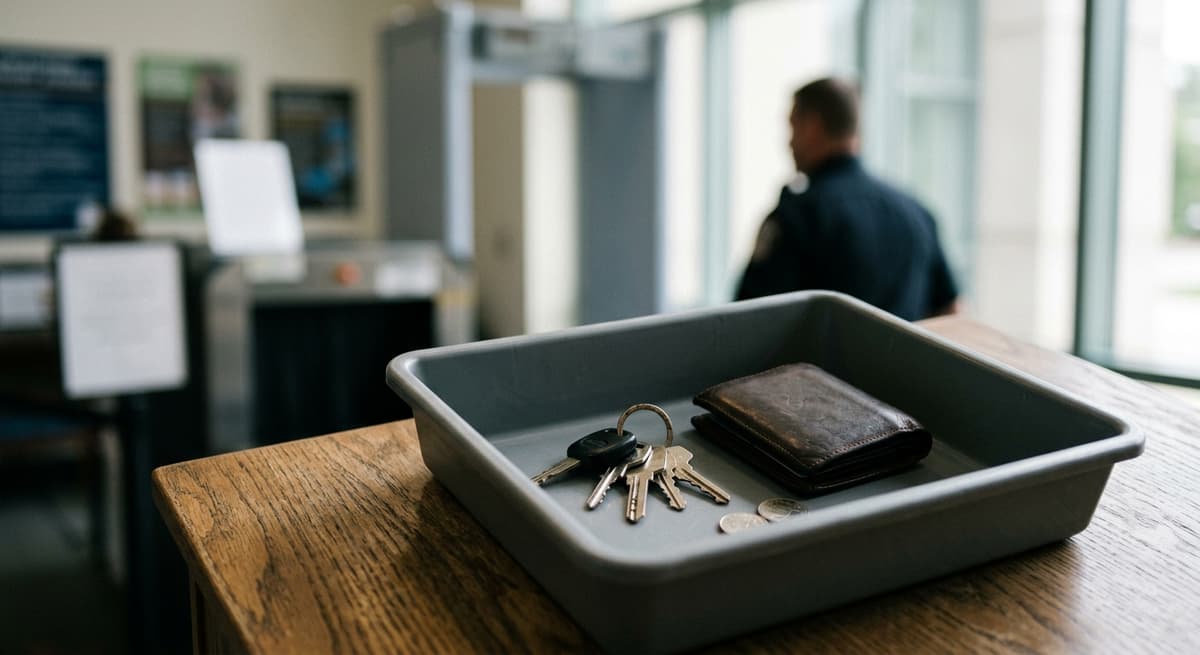
MCL 259.80f bans possessing, carrying, or attempting to possess or carry a "knife with a blade of any length," along with a firearm, explosive, razor, box cutter, or other dangerous weapon, in the sterile area of a commercial airport. A basic violation is a misdemeanor punishable by up to 1 year imprisonment, a fine of up to $1,000, or both. The offense becomes a felony, punishable by up to 10 years and a fine of up to $10,000, if committed while boarding or attempting to board an aircraft, while placing or attempting to place a listed item on an aircraft, or while committing or attempting to commit another felony. The statute exempts on-duty peace officers, certain corrections employees, active military and national guard members on duty, sterile-area security personnel, court officers on duty, and airline or airport employees authorized by their employer.
Does Michigan preempt local knife ordinances?
Only for firearms, not knives. MCL 123.1102 provides that "a local unit of government shall not impose special taxation on, enact or enforce any ordinance or regulation pertaining to, or regulate in any other manner the ownership, registration, purchase, sale, transfer, transportation, or possession of pistols, other firearms, or pneumatic guns, ammunition for pistols or other firearms, or components of pistols or other firearms, except as otherwise provided by federal law or a law of this state." Its text names pistols, other firearms, pneumatic guns, and related ammunition and components only; it does not mention knives, and the penal code's weapons sections, MCL 750.220 through 750.229, contain no preemption provision of any kind. Michigan preempts local regulation of firearms and pneumatic guns but not knives, so a city or county may adopt its own, additional knife ordinance.
Federal law: what it does and does not reach
Federal law does not ban an individual from owning or carrying a switchblade. The Federal Switchblade Act, 15 U.S.C. §§ 1241 to 1245, instead restricts interstate commerce in switchblade knives, barring their manufacture for, or introduction, transport, and sale in, interstate commerce, and, in 15 U.S.C. § 1245, makes it a federal offense to knowingly possess, manufacture, sell, or import a ballistic knife in or affecting interstate commerce or within federal territorial jurisdiction. Sections 1242 and 1243 do not apply to certain knives and people, listed as exemptions in 15 U.S.C. § 1244. A 2009 amendment, § 1244(5), exempts any knife with a spring, detent, or other closure-bias mechanism that requires hand, wrist, or arm exertion on the blade itself to overcome the bias and assist opening, the carve-out that keeps modern assisted-opening folding knives legal in interstate commerce. A separate exemption, § 1244(4), covers a person with only one arm possessing or carrying a switchblade with a blade three inches or less. Neither exemption changes what Michigan's own MCL 750.226 and 750.227 independently ban; state law governs carry within Michigan on its own terms.
Disclaimer: This article provides general legal information about Michigan's knife laws as of September 2026. It is not legal advice. Consult a lawyer licensed in Michigan for advice about a specific situation. Because Michigan's firearms preemption statute does not reach knives, local ordinances can add restrictions beyond the statewide rules described here.
For a state-by-state comparison, see knife laws by state. Michigan's self-defense statutes are covered separately on the Michigan self-defense laws page.
Statutes cited reflect their in-force version as of 2026-09-18. Last updated: 2026-09-18.
Frequently Asked Questions
Is it legal to carry a knife concealed in Michigan?
Not for the specific types listed in MCL 750.227: a dagger, dirk, stiletto, or double-edged nonfolding stabbing instrument of any length concealed on or about the person is banned outright, no unlawful intent required, with only a hunting-knife exception and an exception for the person's own dwelling, business, or land. An ordinary single-edge folding pocketknife is not one of those named types under MCL 750.222a's definition, in or out of a vehicle, so concealing one on the person is not restricted by this particular statute.
Can you carry a knife openly in Michigan?
On the person, off a vehicle, yes for most knives: MCL 750.227 bans only concealed carry of a dagger, dirk, stiletto, or double-edged nonfolding stabbing instrument, so carrying one openly on foot is not restricted by that statute, and open carry of a knife is not otherwise restricted by size alone. In a vehicle, that changes: MCL 750.227 bans the same named types 'whether concealed or otherwise,' so carrying a dagger, dirk, stiletto, or double-edged nonfolding stabbing instrument openly in a car is equally a felony, unless the vehicle is on the person's own dwelling, business, or land. Separately, MCL 750.226 makes carrying a knife over 3 inches, open or concealed, a felony when the person carries it with intent to use it unlawfully against another person; without that unlawful intent, that size-based offense does not apply.
Are switchblades legal in Michigan?
The specific ban on possessing a pocket knife that opens by a mechanical device, MCL 750.226a, was repealed by 2017 PA 96, effective October 11, 2017. Simply possessing such a knife is not a crime under that repealed section, though a mechanically-opened pocket knife could still fall within the general concealed-carry ban (MCL 750.227) or the intent-based going-armed offense (MCL 750.226) depending on its features and how it is carried.
Can you carry a knife on Michigan school property?
A pupil's possession of a 'dangerous weapon,' defined under MCL 380.1313 to include a dagger, dirk, stiletto, knife with a blade over 3 inches, or pocket knife opened by a mechanical device, triggers mandatory reporting and confiscation. Separately, committing an MCL 750.226 or 750.227 knife offense within a 'weapon free school zone' triggers MCL 750.237a, which does not raise the prison ceiling above what 750.226 or 750.227 already authorizes but does allow a fine up to 3 times the normal maximum and up to 150 hours of community service. That same statute separately makes bare possession of a 'weapon' in a weapon free school zone a misdemeanor, though the statute does not define 'weapon' beyond stating it includes a pneumatic gun, and that misdemeanor does not apply to school security staff, peace officers, instructional-use possessors, or a person licensed to carry a concealed weapon.
Does Michigan preempt local knife ordinances?
No. MCL 123.1102 preempts local regulation of pistols, other firearms, and pneumatic guns by name; the penal code's weapons sections, MCL 750.220 through 750.229, contain no preemption provision of any kind. A city or county may adopt its own knife ordinance.
Can you bring a knife through a Michigan airport?
Not into the sterile area of a commercial airport. MCL 259.80f bans a knife of any length, along with firearms, explosives, and similar items, in that area, as a misdemeanor that becomes a felony if committed while boarding an aircraft, attempting to place an item on one, or committing another felony, subject to exceptions for on-duty law enforcement and certain other authorized personnel.
Updates
Independently fact-checked against the cited primary sources
Sources and References
- MCL 750.227 - Concealed weapons, carrying, penalty (dagger, dirk, stiletto, double-edged nonfolding stabbing instrument of any length; concealed on the person, or concealed or open in a vehicle; hunting-knife and own-property exceptions)(legislature.mi.gov).gov
- MCL 750.226 - Firearm or dangerous or deadly weapon or instrument, carrying with unlawful intent (knife over 3 inches, open or concealed)(legislature.mi.gov).gov
- MCL 750.222a - 'Doubled-edged, nonfolding stabbing instrument' defined (excludes a knife, tool, implement, arrowhead, or stone artifact; exclusion switches off for an item in a vehicle unless boxed and inaccessible to the driver)(legislature.mi.gov).gov
- MCL 750.226a - Repealed, 2017 PA 96, eff. Oct. 11, 2017 (formerly pocket knife opened by mechanical device)(legislature.mi.gov).gov
- MCL 750.237a - Weapon free school zone, penalty enhancement and standalone weapon-possession misdemeanor(legislature.mi.gov).gov
- MCL 380.1313 - Dangerous weapon found in possession of pupil, report and confiscation, definition(legislature.mi.gov).gov
- MCL 123.1102 - Regulation of pistols, other firearms, pneumatic guns, or ammunition (firearms-only local preemption)(legislature.mi.gov).gov
- MCL 259.80f - Possessing or carrying certain items in sterile area of a commercial airport (knife of any length)(legislature.mi.gov).gov
- 15 U.S.C. 1241-1245 - Federal Switchblade Act, interstate commerce and ballistic-knife scope(law.cornell.edu)
- 15 U.S.C. 1244 - exceptions, including the 2009 assisted-opening carve-out and the one-arm exception(law.cornell.edu)