
Michigan
Is Jaywalking Illegal in Michigan? Rules and Fines (2026)
Independently fact-checked against primary sources (last audited October 10, 2026). · 10 primary sources cited on this page. How we verify our legal content
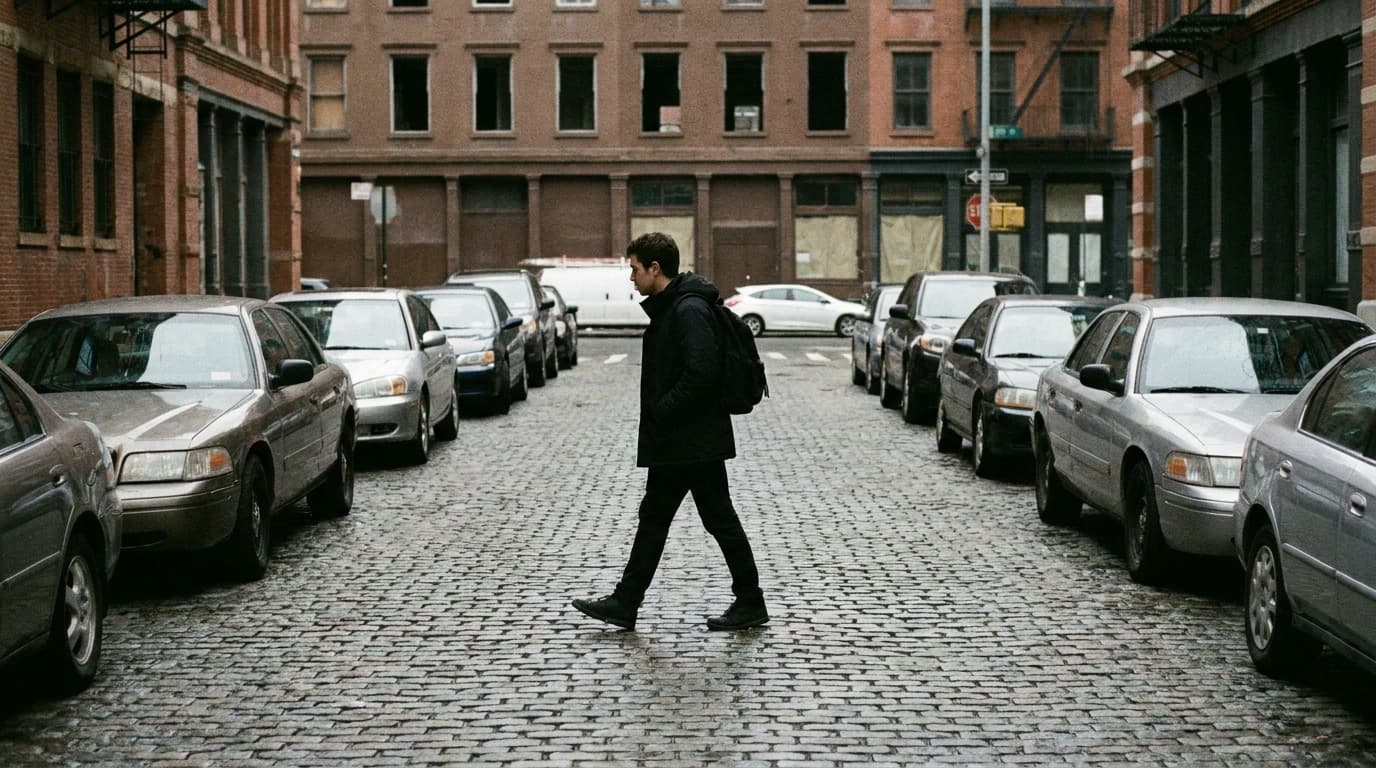
Michigan's Vehicle Code regulates pedestrians at traffic signals (MCL 257.613), on roads that have sidewalks (MCL 257.655) and on limited access highways (MCL 257.679a), and a violation of any of those sections is a civil infraction. The civil fine for a Vehicle Code civil infraction is capped at $100, with costs of no more than $100 (MCL 257.907). Those state sections contain no rule on crossing between intersections; rules on where pedestrians may cross can come from local traffic ordinances, including the State Police Uniform Traffic Code that a city, township or village may adopt by reference (MCL 257.951). Where a community has adopted that code, crossing other than in a marked crosswalk where traffic-control signals are in operation, and crossing other than in a crosswalk in a business district, are civil infractions (Mich. Admin. Code R 28.1709, R 28.1710). For how other states handle the same question, see our guide to jaywalking laws by state.
Information last verified on 2026-10-10. This article has not been reviewed by a licensed lawyer.
Jurisdiction scope: This article covers Michigan state statutes on pedestrians in the Michigan Vehicle Code: MCL 257.10 (crosswalk definition), 257.612 and 257.613 (traffic signals), 257.614 (flashing signals), 257.655 (walking along highways), 257.679a (limited access highways), 257.907 (civil fines) and 257.951 (local adoption of the Uniform Traffic Code). It also covers the pedestrian rules in Part 7 of the Uniform Traffic Code (Mich. Admin. Code R 28.1701 to R 28.1716), which apply only where a community has adopted that code, and MCL 257.742 (stops for civil infractions). It does not set out any city, township or village ordinance, and it does not cover injury claims after a crash or the law of other states.
Is jaywalking illegal in Michigan?
The answer depends on which law governs where you are. At the state level, Michigan's Vehicle Code speaks to pedestrians in three main places, and none of them is a rule against crossing mid-block:
- Traffic signals. MCL 257.613 tells pedestrians what to do at a regular traffic light and at a WALK or DON'T WALK signal.
- Walking along the road. MCL 257.655 keeps pedestrians off the main traveled portion of a highway where sidewalks exist.
- Freeways. MCL 257.679a bars pedestrians from limited access highways.
Rules on where a pedestrian may cross a street, such as a requirement to use a crosswalk, are a matter of local traffic law. Under MCL 257.951(1), "A city, township, or village may adopt by reference a code or ordinance for the regulation of traffic within cities, townships, and villages that has been promulgated by the director of the department of state police." That code is the Uniform Traffic Code, and its pedestrian rules are summarized below. Check the traffic ordinance of the city, township or village where you are crossing, because a local rule may restrict a crossing these state sections do not address.
| Situation | Michigan statute | Classification |
|---|---|---|
| Starting to cross on a steady or flashing DON'T WALK | Barred where special pedestrian signals are installed (MCL 257.613(2)(b)) | Civil infraction (257.613(3)) |
| Facing a steady red light with no pedestrian signal | Do not enter the highway unless you can do so safely and without interfering with vehicular traffic (257.613(1)(c)) | Civil infraction |
| Facing a steady yellow light with no pedestrian signal | Insufficient time to cross; a pedestrian then starting to cross must yield to all vehicles (257.613(1)(b)) | Civil infraction |
| Walking on the main traveled portion of a highway where sidewalks are provided | Barred (257.655(1)) | Civil infraction (257.655(2)) |
| Walking where no sidewalks are provided | Walk on the left side facing traffic, when practicable (257.655(1)) | Civil infraction |
| Being on a limited access highway as a pedestrian | Not permitted (257.679a(1)) | Civil infraction (257.679a(2)) |
| Crossing at any point other than within a marked crosswalk at an intersection | No rule in these state sections; under the Uniform Traffic Code, yield the right-of-way to all vehicles (R 28.1706) | Civil infraction where the community has adopted the code |
| Crossing outside a marked crosswalk where traffic-control signals are in operation | No rule in these state sections; barred under the Uniform Traffic Code (R 28.1709) | Civil infraction where the community has adopted the code |
| Crossing other than in a crosswalk in a business district | No rule in these state sections; barred under the Uniform Traffic Code (R 28.1710) | Civil infraction where the community has adopted the code |
Uniform Traffic Code pedestrian rules (where your community has adopted it)
Part 7 of the Uniform Traffic Code for Cities, Townships, and Villages (Mich. Admin. Code R 28.1701 to R 28.1716) sets the crossing rules that apply in a city, township or village that has adopted the code by reference under MCL 257.951. A local ordinance can differ, so these rules bind only where the code has been adopted. Each rule below ends: "A person who violates this rule is responsible for a civil infraction."

- Yield outside a marked crosswalk at an intersection (R 28.1706): "Every pedestrian who crosses a roadway at any point other than within a marked crosswalk at an intersection shall yield the right-of-way to all vehicles on the roadway."
- Signalized stretches (R 28.1709): "Where traffic-control signals are in operation, pedestrians shall not cross the roadway except in a marked crosswalk."
- Business districts (R 28.1710): "In any business district, a pedestrian shall not cross a roadway other than in a crosswalk."
- Route of crossing (R 28.1705): "A pedestrian shall not, except in a marked crosswalk, cross a roadway at any other place than by a route at right angles to the curb or by the shortest route to the opposite curb."
- Tunnels and overhead crossings (R 28.1707): a pedestrian who crosses where a pedestrian tunnel or overhead pedestrian crossing has been provided "shall yield the right-of-way to all vehicles on the roadway, if signs prohibiting the crossing of the roadway by pedestrians at that point are in place."
- Gates and barriers (R 28.1711): "A pedestrian shall not pass through, around, over, or under any crossing gate or barrier at a railroad grade crossing or bridge while the gate or barrier is closed or is being opened or closed."
- Soliciting from the roadway (R 28.1713): "A person shall not stand in a roadway for the purpose of soliciting a ride, employment, or business from the occupant of any vehicle."
Rule 702 also bars a pedestrian from suddenly leaving "a curb or other place of safety" and walking or running into the path of a vehicle "that is so close that it is impossible for the driver to yield" (R 28.1702).
Crossing at traffic lights in Michigan
MCL 257.613 sets two regimes, depending on whether the intersection has special pedestrian signals.
Where there is no pedestrian signal, the regular traffic light governs pedestrians. Section 257.613(1) provides:
"(a) Green indication. Pedestrians facing the signal may proceed across the roadway within a marked or unmarked crosswalk. (b) Steady yellow indication. Pedestrians facing the signal are advised that there is insufficient time to cross the roadway and a pedestrian then starting to cross shall yield the right of way to all vehicles. (c) Steady red indication. Pedestrians facing the signal shall not enter the highway unless they can do so safely and without interfering with vehicular traffic. (d) Red with arrow. Pedestrians facing the signal shall not enter the highway unless they can do so safely without interfering with vehicular traffic."
The red-light rule is written as a condition rather than a flat ban. A pedestrian who enters against a steady red without being able to do so safely, or who interferes with vehicular traffic, violates the section.
Where special pedestrian signals are installed, they control pedestrians "to the exclusion of a regular traffic control signal or signals which may be present at the same location" (257.613(2)). They must be placed at the far end of each crosswalk and show a walk or don't walk interval:
"(a) Walk interval--Pedestrians facing the signal may proceed across the highway in the direction of the signal and shall be given the right of way by the drivers of all vehicles. (b) Don't walk (steady burning or flashing) interval--A pedestrian shall not start to cross the highway in the direction of the signals, but a pedestrian who has partially completed crossing on the walk interval of the signal shall proceed to a sidewalk or safety island while the don't walk interval of the signal is showing."
Under 257.613(3), "A person who violates this section is responsible for a civil infraction."
What counts as a crosswalk in Michigan
MCL 257.10 defines a crosswalk in two parts:
"(a) That part of a roadway at an intersection included within the connections of the lateral lines of the sidewalks on opposite sides of the highway measured from the curbs, or in the absence of curbs from the edges of the traversable highway. (b) Any portion of a highway at an intersection or elsewhere distinctly indicated for pedestrian crossing by lines or other markings on the surface."
Part (a) creates an unmarked crosswalk at an intersection where sidewalks on opposite sides of the highway connect. Part (b) covers painted crossings, at intersections or mid-block. The green-light rule in 257.613(1)(a) lets a pedestrian proceed "within a marked or unmarked crosswalk," so both kinds count there.
Walking along the road and on freeways in Michigan
MCL 257.655 provides:
"(1) Where sidewalks are provided, a pedestrian shall not walk upon the main traveled portion of the highway. Where sidewalks are not provided, pedestrians shall, when practicable, walk on the left side of the highway facing traffic which passes nearest. (2) A person who violates this section is responsible for a civil infraction."
Limited access highways are closed to people on foot. MCL 257.679a(1) provides that a person shall not operate certain small motorcycles, mopeds or farm equipment on one, "nor shall a pedestrian, bicycle, except as provided in this section, or other nonmotorized traffic be permitted on a limited access highway in this state." A violation is a civil infraction (257.679a(2)).
Jaywalking ticket fine in Michigan
The state pedestrian sections make each violation a civil infraction. MCL 257.907(2)(a) sets the ceiling on the fine:
"Except as otherwise provided, for a civil infraction under this act or a local ordinance that substantially corresponds to a provision of this act, the person must be ordered to pay a civil fine of not more than $100.00."
Costs are separate, and under 257.907(4) "Costs must not be ordered in excess of $100.00." The statute sets a maximum, not a fixed amount, so the fine on a given ticket is set within that cap. On top of fines and costs, under 257.907(12) the court "shall order the defendant to pay a justice system assessment of $40.00 for each civil infraction determination, except for a parking violation or a violation for which the total fine and costs imposed are $10.00 or less." Each district court district and each municipal court "may establish a schedule of civil fines, costs, and assessments" for civil infractions within it (257.907(7)), so the amount on a ticket varies by court.
An officer who sees a civil infraction under the Vehicle Code or a substantially corresponding local ordinance "may stop the individual, detain the individual temporarily" and write a citation, which "must be a notice to appear in court for 1 or more civil infractions" (MCL 257.742(1)).
The same limit reaches local codes. MCL 257.951(3) lets the director of the state police establish civil sanctions for civil infractions in the Uniform Traffic Code, "except that a civil sanction in excess of that prescribed in the vehicle code is in conflict with that act and is void to the extent of the conflict." It adds: "The uniform traffic code must not impose a criminal penalty for an act or omission that is a civil infraction under the vehicle code."
What drivers owe pedestrians in Michigan
The Vehicle Code's driver duties toward pedestrians are tied to traffic signals. Under MCL 257.612(1)(a), when a signal shows green, vehicles may go straight or turn, but "Vehicular traffic, including vehicles turning right or left, shall yield the right-of-way to other vehicles and to pedestrians and bicyclists lawfully within the intersection or an adjacent crosswalk at the time the signal is exhibited." Drivers proceeding on a green arrow must likewise "yield the right-of-way to pedestrians and bicyclists lawfully within an adjacent crosswalk and to other traffic lawfully using the intersection" (257.612(1)(d)), and drivers turning on red after stopping must yield to the same pedestrians and bicyclists (257.612(1)(c)(ii)). A violation of 257.612(1) or (2) is a civil infraction (257.612(3)).

On a WALK signal, pedestrians "shall be given the right of way by the drivers of all vehicles" (257.613(2)(a)). At a flashing red light, drivers "shall stop before entering the nearest crosswalk at an intersection or at a limit line when marked" (MCL 257.614(1)(a)).
Wheelchair and walking-aid users. One driver duty is a crime rather than a civil infraction. MCL 257.612(4) provides: "A vehicle operator who approaches a person using a wheelchair or a device to aid the person to walk at a crosswalk or any other pedestrian crossing shall take necessary precautions to avoid accident or injury to the person using the wheelchair or device. A person who violates this subsection is guilty of a misdemeanor."
In communities that have adopted the Uniform Traffic Code, Rule 702 provides that "When traffic-control signals are not in place or are not in operation, the driver of a vehicle shall yield the right-of-way, slowing down or stopping if need be to so yield, to a pedestrian crossing the roadway within a crosswalk" on the driver's half of the roadway or approaching so closely from the opposite half as to be in danger (R 28.1702). Rule 703 bars a driver approaching from the rear from overtaking and passing a vehicle stopped at a crosswalk to let a pedestrian cross (R 28.1703), and Rule 716 requires every driver to "exercise due care to avoid colliding with any pedestrian on any roadway" and to take proper precaution on observing a child or a confused or incapacitated person (R 28.1716). Each is a civil infraction. Under Rule 715, a driver who approaches within 10 feet of a wholly or partially blind person carrying a white or red-tipped white cane, or led by a guide dog, must come to a full stop, and a violation is a misdemeanor (R 28.1715).
Local jaywalking rules in Michigan
Local law fills in what the state sections leave open. Under MCL 257.951(1), a city, township or village may adopt the Uniform Traffic Code by reference, and under 257.951(3) any civil sanction it sets above the Vehicle Code's is void to the extent of the conflict. A local ordinance that "substantially corresponds to a provision of this act" falls under the same $100 civil fine cap in 257.907(2)(a).
Whether your community has adopted the Uniform Traffic Code, or has its own ordinance instead, is a local question. The city, township or village clerk, or the published local code, is the place to check the rule on a particular street.
If a pedestrian is hit by a car in Michigan
Whether a pedestrian entered against a red light safely, or yielded on a yellow as 257.613 requires, can come up after a collision, alongside the driver's duties in 257.612. For how no-fault benefits and claims work after a crash, see Michigan car accident laws. Scooter riders follow their own rules, covered in Michigan e-scooter laws.
Related pages
This article provides general legal information about Michigan law, not legal advice. For advice about a specific situation, contact a lawyer licensed in Michigan or your city, township or village.
Last updated: 2026-10-10.
Frequently Asked Questions
Is jaywalking illegal in Michigan?
The Vehicle Code's pedestrian sections, MCL 257.613, 257.655 and 257.679a, contain no rule on crossing between intersections, but each makes its own violations civil infractions. Local traffic ordinances, including the Uniform Traffic Code a city, township or village may adopt by reference under MCL 257.951, may restrict where pedestrians cross. Where the Uniform Traffic Code has been adopted, crossing other than in a marked crosswalk where traffic-control signals are in operation, or other than in a crosswalk in a business district, is a civil infraction (Mich. Admin. Code R 28.1709, R 28.1710).
What is the fine for jaywalking in Michigan?
For a civil infraction under the Vehicle Code or a substantially corresponding local ordinance, the civil fine is not more than $100, and costs may not exceed $100, except as otherwise provided (MCL 257.907). The statute sets a ceiling rather than a fixed amount. The court must also order a $40 justice system assessment for each civil infraction determination unless the total fine and costs are $10 or less (257.907(12)), and each court may post its own schedule (257.907(7)).
Can you cross on a red light as a pedestrian in Michigan?
Where there is no pedestrian signal, a pedestrian facing a steady red shall not enter the highway unless they can do so safely and without interfering with vehicular traffic (MCL 257.613(1)(c)). Where a DON'T WALK signal is installed, a pedestrian may not start to cross on it, steady or flashing (257.613(2)(b)).
Can you walk on the freeway in Michigan?
No. MCL 257.679a(1) provides that a pedestrian shall not be permitted on a limited access highway, and a violation is a civil infraction (257.679a(2)).
Which side of the road should you walk on in Michigan?
Where sidewalks are provided, a pedestrian shall not walk on the main traveled portion of the highway. Where they are not, walk on the left side of the highway facing traffic when practicable (MCL 257.655(1)).
Do drivers have to yield to pedestrians in Michigan?
On a green light, drivers, including turning drivers, must yield to pedestrians lawfully within the intersection or an adjacent crosswalk (MCL 257.612(1)(a)), and on a WALK signal pedestrians shall be given the right of way by all drivers (257.613(2)(a)). Failing to take necessary precautions near a person using a wheelchair or walking aid at a crosswalk is a misdemeanor (257.612(4)). Where the Uniform Traffic Code has been adopted, drivers must also yield to a pedestrian in a crosswalk where signals are not in place or not operating (R 28.1702).
Updates
Independently fact-checked against the cited primary sources
The Law Behind This Article
This article rests on the statutory provisions below, held in our own legal record and retrieved from the official source. Tap a section to read the operative text.
Michigan Compiled Laws
§ 257.613Applicability of regular traffic control signals to pedestrians; special pedestrian control signals; violation as civil infractionIn force
(1) If special pedestrian control signals are not utilized, the regular traffic control signals as indicated in section 612 shall apply to pedestrians as follows: (a) Green indication. Pedestrians facing the signal may proceed across the roadway within a marked or unmarked crosswalk. (b) Steady yellow indication. Pedestrians facing the signal are advised that there is insufficient time to cross the roadway and a pedestrian then starting to cross shall yield the right of way to all vehicles. (c) Steady red indication. Pedestrians facing the signal shall not enter the highway unless they can do so safely and without interfering with vehicular traffic. (d) Red with arrow. Pedestrians facing the signal shall not enter the highway unless they can do so safely without interfering with vehicular traffic. (2) If special pedestrian control signals are installed, they shall be placed at the far end of each crosswalk and shall indicate a "walk" or "don't walk" interval.
Official text (excerpt) · last checked 2026-07-30 · Read the full text in our law library · Verify at legislature.mi.gov
§ 257.655Pedestrians on highways; violation as civil infractionIn force
(1) Where sidewalks are provided, a pedestrian shall not walk upon the main traveled portion of the highway. Where sidewalks are not provided, pedestrians shall, when practicable, walk on the left side of the highway facing traffic which passes nearest. (2) A person who violates this section is responsible for a civil infraction.
Official text (excerpt) · last checked 2026-07-30 · Read the full text in our law library · Verify at legislature.mi.gov
§ 257.612Traffic control signals; location; red arrow and yellow arrow indications; colors; traffic control signal at place other than intersection; stopping at sign, marking, or signal; violation of subsection (1) or (2) as civil infraction; approaching person using wheelchair or device to aid walking; violation of subsection (4) as misdemeanor; location of sign prohibiting turn on red signal; additional sign; location of temporary traffic control signalIn force
(1) When traffic is controlled by traffic control signals, not fewer than 1 signal shall be located over the traveled portion of the roadway so as to give vehicle operators a clear indication of the right-of-way assignment from their normal positions approaching the intersection. The vehicle signals shall exhibit different colored lights successively, 1 at a time, or with arrows. Red arrow and yellow arrow indications have the same meaning as the corresponding circular indications, except that they apply only to vehicle operators intending to make the movement indicated by the arrow. The following colors shall be used, and the terms and lights shall indicate and apply to vehicle operators as follows: (a) If the signal exhibits a green indication, vehicular traffic facing the signal may proceed straight through or turn right or left unless a sign at that place prohibits either turn. Vehicular traffic, including vehicles turning right or left, shall yield the right-of-way to other vehicles and to pedestrians and bicyclists lawfully within the intersection or an adjacent crosswalk at the time the signal is exhibited.
Official text (excerpt) · last checked 2026-07-30 · Read the full text in our law library · Verify at legislature.mi.gov
Search our full record of US law — 2.1 million sections, every state + federal →
Sources and References
- MCL 257.613 (traffic control signals; pedestrians)(legislature.mi.gov).gov
- MCL 257.655 (pedestrians on highways)(legislature.mi.gov).gov
- MCL 257.679a (limited access highways)(legislature.mi.gov).gov
- MCL 257.907 (civil infractions; civil fines and costs)(legislature.mi.gov).gov
- MCL 257.951 (adoption of uniform traffic code by reference)(legislature.mi.gov).gov
- MCL 257.612 (traffic control signals; driver duties)(legislature.mi.gov).gov
- MCL 257.10 (cross-walk defined)(legislature.mi.gov).gov
- MCL 257.614 (flashing signals)(legislature.mi.gov).gov
- Mich. Admin. Code R 28.1001 et seq., Uniform Traffic Code for Cities, Townships, and Villages (Part 7, pedestrians, R 28.1701 to R 28.1716)(ars.apps.lara.state.mi.us).gov
- MCL 257.742 (stop and citation for civil infractions)(legislature.mi.gov).gov