
Arizona
Is Jaywalking Illegal in Arizona? Crossing Rules and Fines (2026)
Independently fact-checked against primary sources (last audited October 10, 2026). · 21 primary sources cited on this page. How we verify our legal content
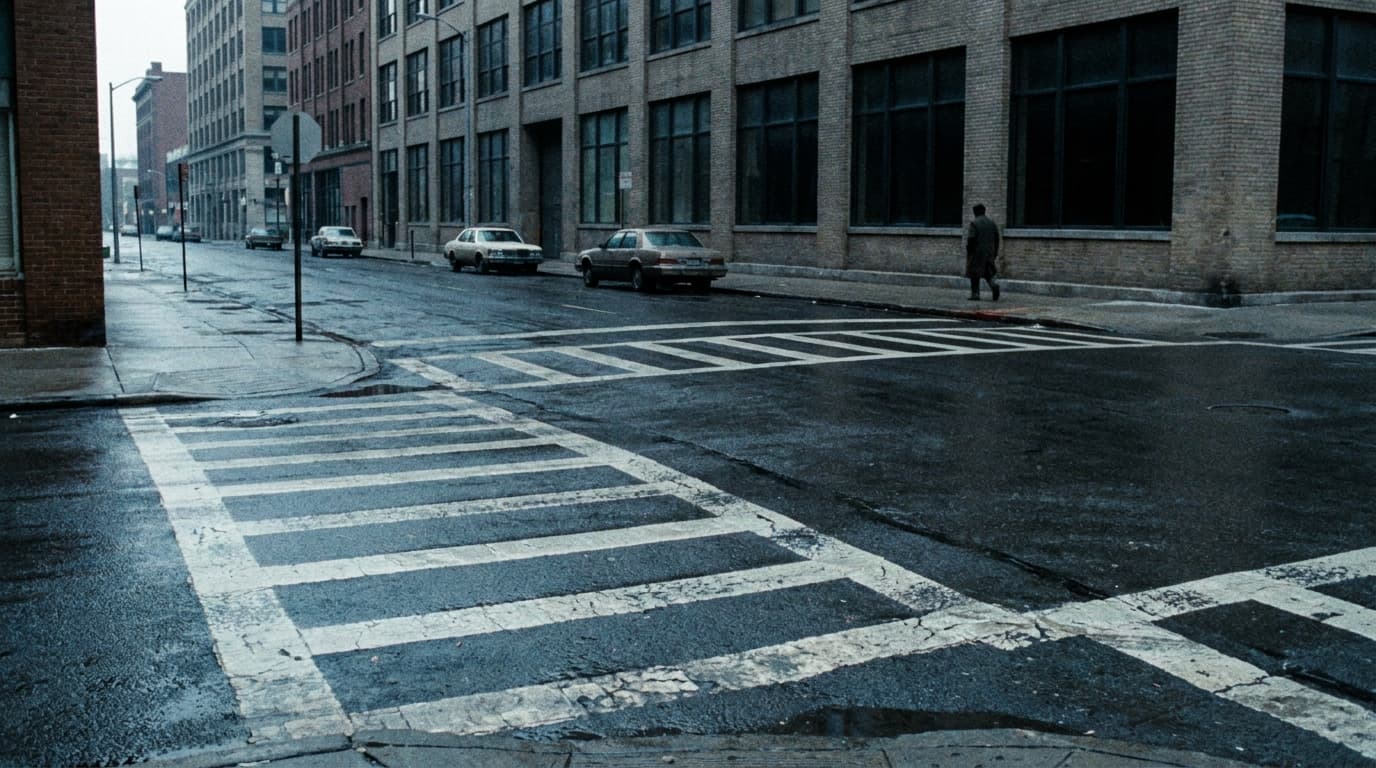
What most people call jaywalking is governed in Arizona by A.R.S. 28-793. A pedestrian crossing outside a crosswalk must yield the right-of-way to all vehicles, and between two adjacent intersections with operating traffic signals may cross only in a marked crosswalk. A violation of the pedestrian rules is a civil traffic violation under A.R.S. 28-121(B), not a crime, and cities may add their own crossing restrictions under A.R.S. 28-791(B). For how other states handle the same question, see our guide to jaywalking laws by state.
Information last verified on 2026-10-10. This article has not been reviewed by a licensed lawyer.
Jurisdiction scope: This article covers Arizona state law: the pedestrian article of Title 28 (A.R.S. 28-791 to 28-797), the signal rules in A.R.S. 28-645 and 28-646, the crosswalk definition in A.R.S. 28-601, the violation classification in A.R.S. 28-121, the civil penalty cap in A.R.S. 28-1598, the surcharges and assessments in A.R.S. 12-116.01, 12-116.02, 12-116.04, 12-116.08, 12-116.09 and 12-116.10, and the stop and identification rules in A.R.S. 28-1594 and 28-1595. Statute text reflects the Arizona Revised Statutes as published by the Arizona Legislature on 2026-10-10. Apart from one Phoenix example, it does not cover city or town ordinances, injury claims after a crash, or the law of other states.
Is jaywalking illegal in Arizona?
Arizona's statutes set several distinct pedestrian rules, and they work differently. Crossing outside a crosswalk is allowed if you yield to traffic. Crossing mid-block between signalized intersections outside a marked crosswalk is a flat prohibition. And because A.R.S. 28-791(B) lets local authorities go further, the rule on a particular street can be stricter than state law.
| Situation | Arizona rule |
|---|---|
| Crossing outside a marked or unmarked crosswalk | Allowed, but the pedestrian must yield to all vehicles (28-793(A)) |
| Crossing where a pedestrian tunnel or overhead crossing is provided | Pedestrian must yield to all vehicles (28-793(B)) |
| Crossing between adjacent intersections with traffic control signals in operation | Only in a marked crosswalk (28-793(C)) |
| Starting to cross on don't walk or an upraised hand | Barred (28-646) |
| Entering the roadway facing a steady red signal alone | Barred unless a pedestrian signal directs otherwise (28-645) |
| Starting to cross on a steady yellow (no pedestrian signal) | Barred (28-645(A)(2)(b)) |
| Loitering or unduly delaying a crossing after traffic has stopped | Barred (28-646(B)) |
| Stepping suddenly into the path of a vehicle too close to yield | Barred (28-792(A)) |
| Walking on the roadway where sidewalks are provided | Barred (28-796(A)) |
| Standing in the roadway to solicit a ride | Barred (28-796(C)) |
| Crossing outside a crosswalk in a business district or on a designated highway | May be barred by local ordinance (28-791(B)) |
Crossing outside a crosswalk
A.R.S. 28-793 contains both the yield rule and the mid-block ban:
"A. A pedestrian crossing a roadway at any point other than within a marked crosswalk or within an unmarked crosswalk at an intersection shall yield the right-of-way to all vehicles on the roadway. B. A pedestrian crossing a roadway at a point where a pedestrian tunnel or overhead pedestrian crossing has been provided shall yield the right-of-way to all vehicles on the roadway. C. Between adjacent intersections at which traffic control signals are in operation, pedestrians shall not cross at any place except in a marked crosswalk."
Subsections A and B are duties to yield. Subsection C is a prohibition: on a block with working signals at both adjacent intersections, a mid-block crossing is not allowed unless a marked crosswalk is there.
Arizona's definition of a crosswalk in A.R.S. 28-601(3) includes "(b) Any portion of a roadway at an intersection or elsewhere that is distinctly indicated for pedestrian crossing by lines or other markings on the surface." Section 28-793(A) also recognizes an "unmarked crosswalk at an intersection," so a crosswalk does not need paint.
Local jaywalking ordinances in Arizona
State law sets a floor, and cities and towns may build on it. Under A.R.S. 28-791(B):
"B. A local authority may require by ordinance that pedestrians strictly comply with the directions of an official traffic control signal and may prohibit by ordinance pedestrians from crossing a roadway in a business district or crossing a designated highway except in a crosswalk."
Local rule, Phoenix. Phoenix City Code 36-128 covers crossing or stopping in a roadway. According to the Phoenix Police Department, an update effective January 16, 2026 allows officers to issue a civil citation on first contact when violations are observed, and officers may still give warnings instead. The department says raised and painted medians are not designed for pedestrian use.
Other cities and towns have their own codes. If you cross often in a downtown business district, the local code is worth checking.
Walk signals and red lights
Under A.R.S. 28-646, on "Don't walk or a symbol of an upraised hand," a "pedestrian shall not start to cross the roadway in the direction of the signal, but a pedestrian who has partially completed crossing on the walk signal shall proceed to a sidewalk or safety island while the don't walk signal is showing." Subsection B adds: "A pedestrian shall not loiter or unduly delay crossing the roadway after traffic has stopped to give the right-of-way."
Where there is no pedestrian signal, A.R.S. 28-645 provides: "Unless otherwise directed by a pedestrian control signal as provided in section 28-646, a pedestrian facing a steady red signal alone shall not enter the roadway." On a steady yellow, a pedestrian "shall not then start to cross the roadway" (28-645(A)(2)(b)), and on a green signal other than a lone turn arrow, pedestrians may cross within a marked or unmarked crosswalk (28-645(A)(1)(c)).
Walking along the road
A.R.S. 28-796 provides: "A. If sidewalks are provided, a pedestrian shall not walk along and on an adjacent roadway. B. If sidewalks are not provided, a pedestrian walking along and on a highway shall walk when practicable only on the left side of the roadway or its shoulder facing traffic that may approach from the opposite direction. C. A person shall not stand in a roadway for the purpose of soliciting a ride from the driver of a vehicle."
In a crosswalk, A.R.S. 28-795 provides: "Pedestrians shall move expeditiously, when practicable, on the right half of crosswalks."
What drivers owe pedestrians
The pedestrian's duty to yield outside a crosswalk does not erase the driver's duties, which Arizona sets in separate sections:
- Crosswalks without working signals. Under A.R.S. 28-792(A), "Except as provided in section 28-793, subsection B, if traffic control signals are not in place or are not in operation, the driver of a vehicle shall yield the right-of-way, slowing down or stopping if need be in order to yield, to a pedestrian crossing the roadway within a crosswalk when the pedestrian is on the half of the roadway on which the vehicle is traveling or when the pedestrian is approaching so closely from the opposite half of the roadway as to be in danger." The same subsection bars a pedestrian from suddenly leaving "any curb or other place of safety" into the path of a vehicle "that is so close that it is impossible for the driver to yield."
- Due care everywhere. A.R.S. 28-794 begins "Notwithstanding the provisions of this chapter every driver of a vehicle shall:" and its first duty is to "Exercise due care to avoid colliding with any pedestrian on any roadway."
- Walk signals and turns. Pedestrians facing a walk signal "shall be given the right-of-way by the drivers of vehicles" (A.R.S. 28-646(A)(1)). Drivers turning on a green signal must yield to pedestrians lawfully within the intersection or an adjacent crosswalk (28-645(A)(1)(a), (b)), and a driver turning right on red must yield to pedestrians proceeding as directed by the signal (28-645(A)(3)(b)).
- Vehicles stopped at crosswalks. When a vehicle is stopped at a marked crosswalk or an unmarked crosswalk at an intersection to let a pedestrian cross, the driver of another vehicle approaching from the rear "shall not overtake and pass the stopped vehicle" (A.R.S. 28-792(B)).
Jaywalking fine and penalty in Arizona
Arizona does not treat pedestrian violations as crimes. A.R.S. 28-121(A) makes a violation of Title 28 a class 2 misdemeanor unless the statute defining the offense provides otherwise, but adds that "This subsection does not apply to any provision or requirement of chapter 3, 5, 7 or 8 or chapter 9, article 4 of this title." The pedestrian article sits in chapter 3, and subsection B governs it:

"B. A violation of or failure or refusal to do or perform an act or thing required by chapter 3, 5, 7 or 8 or chapter 9, article 4 of this title is a civil traffic violation unless the statute defining the violation provides for a different classification."
The pedestrian sections quoted here do not provide a different classification. For the amount, A.R.S. 28-1598 provides: "Except as otherwise provided, a civil penalty imposed pursuant to this article shall not exceed two hundred fifty dollars. In addition, the court shall levy surcharges pursuant to sections 12-116.01 and 12-116.02."
Those surcharges are percentages of the base penalty: 42%, 7% and 6% under A.R.S. 12-116.01 and 13% under A.R.S. 12-116.02, applied to the base penalty and not to another surcharge. Fixed penalty assessments are added on top: $13 (A.R.S. 12-116.04), $9 (12-116.08), $4 (12-116.09) and $4 (12-116.10).
That $250 figure is a ceiling, not a set price. The statutes covered here do not fix the amount for a pedestrian citation, so the citation or the court handling it is the place to learn what is owed.
Can police stop you for jaywalking in Arizona?
Yes. A.R.S. 28-1594 allows a peace officer to "stop and detain a person as is reasonably necessary to investigate an actual or suspected violation of this title," and the same section covers serving a complaint for a civil or criminal violation. A person other than a driver who refuses to give evidence of identity on request, when the officer has reasonable cause to believe the person committed a Title 28 violation, is guilty of a class 2 misdemeanor under A.R.S. 28-1595(C), even though the crossing violation itself is civil. For how other states treat pedestrian stops, see our jaywalking laws by state guide.
As introduced, House Bill 2684 (2025) proposed adding a new section, A.R.S. 28-798, making congregating or soliciting on a traffic island or median a civil traffic violation. The Arizona Revised Statutes as published through the 2026 regular session contain no section 28-798.
If a pedestrian is hit by a car
Whether a pedestrian was crossing legally can come up after a collision, alongside the driver's duties under A.R.S. 28-792 and 28-794. For how fault, insurance and filing deadlines work in a crash claim, see Arizona car accident laws. Electric scooter riders follow a different set of rules, covered in Arizona e-scooter laws.
Related pages
This article provides general legal information about Arizona law, not legal advice. For advice about a specific situation, contact a lawyer licensed in Arizona.
Last updated: 2026-10-10.
Frequently Asked Questions
Is jaywalking illegal in Arizona?
Crossing outside a crosswalk is allowed only if you yield to all vehicles (A.R.S. 28-793(A)). Between adjacent intersections with operating traffic signals, you may cross only in a marked crosswalk (A.R.S. 28-793(C)), and a city may prohibit crossing outside a crosswalk in a business district or on a designated highway (A.R.S. 28-791(B)).
What is the fine for jaywalking in Arizona?
A pedestrian violation is a civil traffic violation under A.R.S. 28-121(B). A.R.S. 28-1598 provides that, except as otherwise provided, a civil penalty under its article may not exceed $250, and the court adds percentage surcharges (A.R.S. 12-116.01, 12-116.02) and fixed penalty assessments. The statutes do not set a fixed amount for a pedestrian ticket.
Is jaywalking a crime in Arizona?
No. A.R.S. 28-121(A) makes most Title 28 violations class 2 misdemeanors but excludes chapter 3, which contains the pedestrian article, and 28-121(B) makes a chapter 3 violation a civil traffic violation unless the statute defining it provides otherwise.
Can I cross in the middle of the block in Arizona?
Only if you yield the right-of-way to all vehicles (A.R.S. 28-793(A)), and not between two adjacent intersections where traffic signals are operating unless you use a marked crosswalk (A.R.S. 28-793(C)). A local ordinance may add restrictions under A.R.S. 28-791(B).
Can I start crossing on a don't walk signal in Arizona?
No. Under A.R.S. 28-646, on a don't walk or upraised-hand signal a pedestrian shall not start to cross, but a pedestrian who has partially completed crossing on the walk signal shall proceed to a sidewalk or safety island.
Which side of the road should I walk on in Arizona?
If sidewalks are provided, do not walk on the adjacent roadway. If not, A.R.S. 28-796(B) says to walk when practicable only on the left side of the roadway or its shoulder, facing traffic.
Do I have to give my name to police for jaywalking in Arizona?
A.R.S. 28-1594 lets an officer stop and detain a person to investigate a suspected Title 28 violation, including a civil one. Under A.R.S. 28-1595(C), a person other than a driver who refuses to provide evidence of identity on request, when the officer has reasonable cause to believe the person committed a Title 28 violation, is guilty of a class 2 misdemeanor.
Do drivers have to stop for pedestrians in Arizona?
When traffic control signals are not in place or not in operation, a driver must yield to a pedestrian crossing within a crosswalk on the driver's half of the roadway or approaching closely from the other half (A.R.S. 28-792(A)). At a walk signal, pedestrians must be given the right-of-way by drivers (A.R.S. 28-646(A)(1)), and turning drivers must yield to pedestrians lawfully in the crosswalk (A.R.S. 28-645). Every driver must also exercise due care to avoid colliding with any pedestrian on any roadway (A.R.S. 28-794).
Updates
Independently fact-checked against the cited primary sources
The Law Behind This Article
This article rests on the statutory provisions below, held in our own legal record and retrieved from the official source. Tap a section to read the operative text.
Arizona Revised Statutes, Title 28 (Transportation), Chapter 3 (TRAFFIC AND VEHICLE REGULATION), Article 10 (Pedestrian Rights and Duties)
§ 28-793Crossing at other than crosswalkIn force
A. A pedestrian crossing a roadway at any point other than within a marked crosswalk or within an unmarked crosswalk at an intersection shall yield the right-of-way to all vehicles on the roadway. B. A pedestrian crossing a roadway at a point where a pedestrian tunnel or overhead pedestrian crossing has been provided shall yield the right-of-way to all vehicles on the roadway. C. Between adjacent intersections at which traffic control signals are in operation, pedestrians shall not cross at any place except in a marked crosswalk.
Official text (excerpt) · last checked 2026-08-04 · Read the full text in our law library · Verify at azleg.gov
§ 28-792Right-of-way at crosswalkIn force
A. Except as provided in section 28-793, subsection B, if traffic control signals are not in place or are not in operation, the driver of a vehicle shall yield the right-of-way, slowing down or stopping if need be in order to yield, to a pedestrian crossing the roadway within a crosswalk when the pedestrian is on the half of the roadway on which the vehicle is traveling or when the pedestrian is approaching so closely from the opposite half of the roadway as to be in danger. A pedestrian shall not suddenly leave any curb or other place of safety and walk or run into the path of a vehicle that is so close that it is impossible for the driver to yield. B. If a vehicle is stopped at a marked crosswalk or at an unmarked crosswalk at an intersection to permit a pedestrian to cross the roadway, the driver of another vehicle approaching from the rear shall not overtake and pass the stopped vehicle.
Official text (excerpt) · last checked 2026-08-04 · Read the full text in our law library · Verify at azleg.gov
Arizona Revised Statutes, Title 28 (Transportation), Chapter 3 (TRAFFIC AND VEHICLE REGULATION), Article 3 (Traffic Signs, Signals and Markings)
§ 28-645Traffic control signal legendIn force
A. If traffic is controlled by traffic control signals exhibiting different colored lights or colored lighted arrows successively one at a time or in combination, only the colors green, red and yellow shall be used, except for special pedestrian signals carrying a word legend. The lights shall indicate and apply to drivers of vehicles and pedestrians as follows: 1. Green indication: (a) Vehicular traffic facing a green signal may proceed straight through or turn right or left unless a sign at that place prohibits either turn. Vehicular traffic, including vehicles turning right or left, shall yield the right-of-way to other vehicles and to pedestrians lawfully within the intersection or an adjacent crosswalk at the time the signal is exhibited. (b) Vehicular traffic facing a green arrow signal, shown alone or in combination with another indication, may cautiously enter the intersection only to make the movement indicated by such arrow or such other movement as is permitted by other indications shown at the same time. Vehicular traffic shall yield the right-of-way to pedestrians lawfully within an adjacent crosswalk and to other traffic lawfully using the intersection.
Official text (excerpt) · last checked 2026-08-04 · Read the full text in our law library · Verify at azleg.gov
Search our full record of US law — 2.1 million sections, every state + federal →
Sources and References
- A.R.S. 28-793, Crossing at other than crosswalk(azleg.gov).gov
- A.R.S. 28-121 (classification of Title 28 violations)(azleg.gov).gov
- A.R.S. 28-791 (pedestrians and traffic control signals; local authority)(azleg.gov).gov
- A.R.S. 28-601 (definitions; crosswalk)(azleg.gov).gov
- A.R.S. 28-646 (pedestrian control signals)(azleg.gov).gov
- A.R.S. 28-645, Traffic control signal legend(azleg.gov).gov
- A.R.S. 28-792, Right-of-way at crosswalk(azleg.gov).gov
- A.R.S. 28-796 (pedestrians walking along roadways)(azleg.gov).gov
- A.R.S. 28-794 (drivers to exercise due care)(azleg.gov).gov
- A.R.S. 28-1598 (maximum civil penalty)(azleg.gov).gov
- Arizona Revised Statutes, Title 28(azleg.gov).gov
- A.R.S. 28-1594 (authority to detain persons)(www.azleg.gov).gov
- A.R.S. 28-1595 (failure to provide evidence of identity)(www.azleg.gov).gov
- A.R.S. 12-116.01 (surcharges)(www.azleg.gov).gov
- A.R.S. 12-116.02 (additional surcharges)(www.azleg.gov).gov
- A.R.S. 12-116.04 (penalty assessment)(www.azleg.gov).gov
- A.R.S. 12-116.08 (penalty assessment; victims’ rights)(www.azleg.gov).gov
- A.R.S. 12-116.09 (assessment; victims’ rights enforcement)(www.azleg.gov).gov
- A.R.S. 12-116.10 (assessment; law enforcement equipment fund)(www.azleg.gov).gov
- A.R.S. 28-795 (pedestrians to use right half of crosswalk)(www.azleg.gov).gov
- Phoenix Police Department, Update to City Ordinance 36-128 Crossing or Stopping in a Roadway (January 15, 2026)(www.phoenix.gov).gov