
Texas
Texas Identity Theft Laws: Penalties and Victim Rights
Independently fact-checked against primary sources (last audited August 14, 2026). · 1 primary source cited on this page. How we verify our legal content
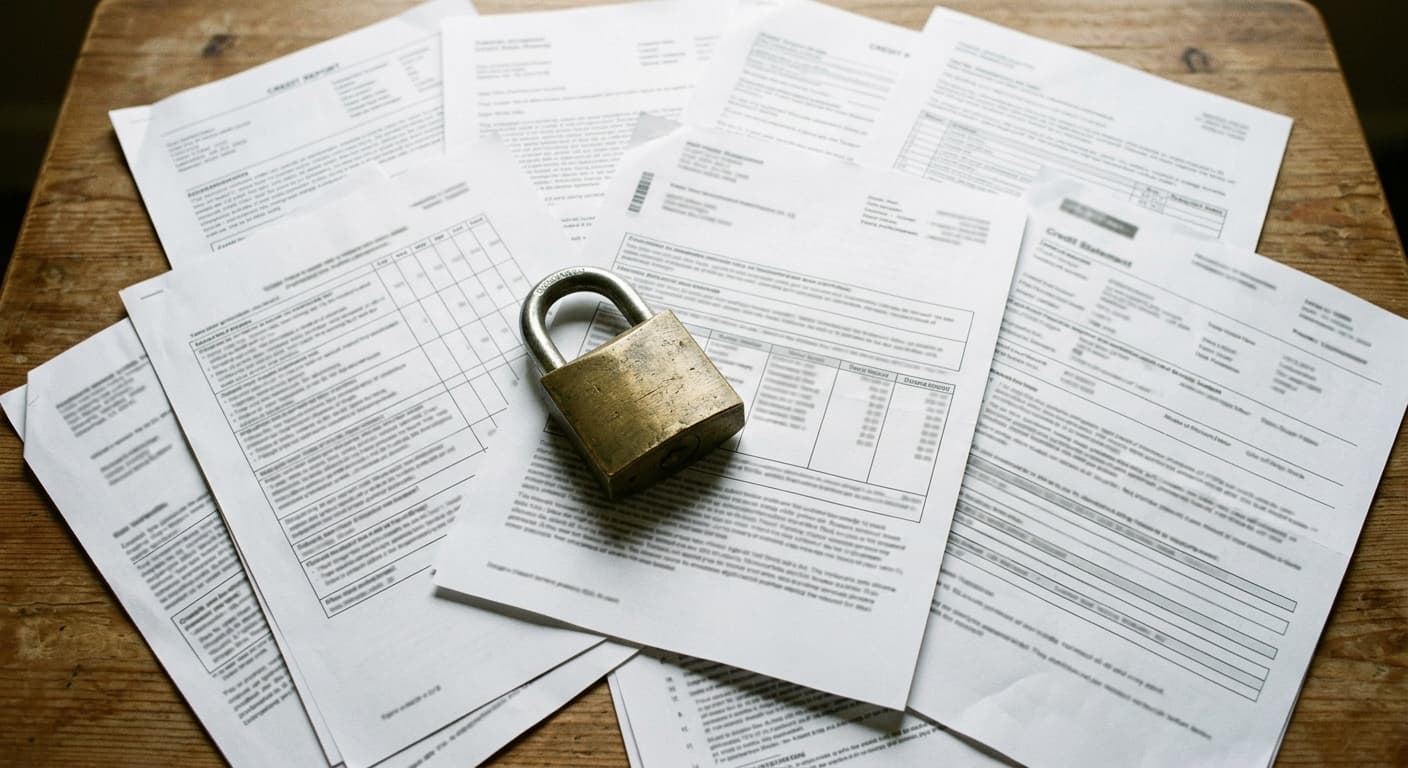
Texas prosecutes identity theft as a felony under Penal Code section 32.51, with the severity tied directly to how many people's identifying information the offender obtained, possessed, transferred, or used. A single stolen identity can already mean prison time; possessing the identifying information of dozens of people pushes the charge to a first-degree felony. This page covers the statute's penalty structure, the court-order remedy Texas gives victims to formally establish their status, the state's own minor and protected consumer freeze law, and where the federal recovery process picks up.
This article addresses Texas state law, primarily Penal Code section 32.51 and related provisions of the Business and Commerce Code, plus the federal layer that applies in every state. It does not cover every Texas county's local reporting procedures; contact your local police department or sheriff's office for jurisdiction-specific filing steps.
Texas Penal Code 32.51: The Core Offense
Under Penal Code section 32.51, a person commits an offense by obtaining, possessing, transferring, or using another person's identifying information with the intent to harm or defraud, without that person's consent. The statute specifically extends to the identifying information of a deceased person and of a child under 18, closing off two categories of theft that are easy for an offender to assume carry no real victim. "Identifying information" is defined broadly: name and date of birth, biometric data, electronic identification numbers, financial account information, telecommunication access devices, and government-issued identification numbers all count.
The statute also builds in a presumption: possessing the identifying information of three or more people creates a presumption that the person intended to defraud, unless the person is a legitimate business or government entity handling the information in that capacity. That presumption matters practically, since it shifts the burden onto someone caught holding multiple people's identifying information to explain a lawful reason for having it.
How Penalties Scale With the Number of Records
Texas ties the severity of the charge to a numeric threshold rather than a dollar amount, which is a different approach from many states. The tiers are: fewer than 5 items of identifying information is a state jail felony; 5 to 9 items is a third-degree felony; 10 to 49 items is a second-degree felony; and 50 or more items is a first-degree felony, the state's most serious felony category short of capital offenses.

Two enhancements push the charge up one full category regardless of the item count. If the offense was committed against an elderly individual, or if it was committed to help the offender evade sex-offender registration requirements, the degree of the offense increases by one level. A prosecutor building a case around a handful of records against an elderly victim, for example, can reach a higher felony tier than the raw item count alone would suggest.
Restitution and the Attorney General's Civil Penalty
Section 32.51 authorizes a sentencing court to order the defendant to reimburse the victim for lost income and expenses resulting directly from the offense, though this does not extend to covering the victim's attorney's fees. Separately, Business and Commerce Code section 521.151 gives the Texas Attorney General authority to pursue a civil penalty of $2,000 to $50,000 per violation, with an additional penalty of up to $100 per individual per day for certain breach-notification failures, capped at $250,000 per breach. That civil penalty is enforceable only by the Attorney General's office, not through a private lawsuit under that specific section, and the proceeds are earmarked for further identity-theft enforcement rather than paid to the individual victim.
A related, narrower state-law consumer protection avenue may also apply to conduct that violates the state's unauthorized-use provisions, since Texas's Deceptive Trade Practices Act allows private lawsuits for certain deceptive practices. Whether that Act independently reaches an identity-theft offender was not independently confirmed against the Act's own text for this article, so treat it as a possibility worth raising with an attorney rather than a guaranteed remedy.
The Court-Order Remedy: Clearing Your Name
One of the most practically useful rights Texas gives identity theft victims sits in Business and Commerce Code section 521.101: the right to file an application in district court for a formal order declaring the applicant a victim of identity theft. This remedy does not require the victim to identify every person responsible for the theft. A court order of this kind is designed to help a victim correct fraudulent entries on a credit report or a criminal record that resulted from someone else using their identity, giving them a concrete document to present to creditors, credit bureaus, or law enforcement rather than relying on their word alone.
Texas's Minor and Protected Consumer Freeze Law
Texas maintains its own protected consumer security freeze statute, found in Business and Commerce Code Chapter 20, Subchapter E. Under section 20.21's definitions, a "protected consumer" is a Texas resident younger than 16 at the time a freeze is requested, and a "representative" is someone who can show proof of authority to act on that minor's behalf, such as a parent or legal guardian. Sections 20.25, 20.27, and 20.28 govern how a freeze is requested, how long it stays in place, and how it is removed. This state-law right exists independently of the federal free-freeze rule described below, giving Texas families a state-specific process to point to.

Reporting Identity Theft in Texas
The Texas Attorney General's office maintains a consumer protection function, but its identity-theft resource page could not be reached during the research for this article, so this page does not describe its specific content, hotline, or complaint process. Until that can be verified directly, the most reliable starting point for any Texas resident is the federal process: file a report at IdentityTheft.gov, which generates a personal recovery plan and pre-filled letters for disputing fraudulent accounts, and file a police report with your local Texas law enforcement agency to support the credit bureau and creditor disputes that typically follow.
The Federal Layer
Every Texas identity theft victim can also draw on federal protections that apply regardless of state. The Fair Credit Reporting Act's section 605b lets a victim submit a police report or FTC Identity Theft Report to block fraudulent information from appearing on their credit file. Since 2018, federal law has also required all three nationwide credit bureaus to offer security freezes and fraud alerts to any consumer, free of charge. IdentityTheft.gov, run by the Federal Trade Commission, is the fastest way to generate the initial recovery plan most other steps build on.
Watching for New Activity on Your Own Credit
Federal law has made security freezes at Equifax, Experian, and TransUnion free since 2018, and a freeze is the place to start. The Texas court-order remedy under section 521.101 helps correct fraudulent entries once they are on your record, but it does not tell you when something new appears. If you want alerts about your own identity, Aura offers three-bureau credit monitoring and alerts if your Social Security number is found on the dark web.
See What Aura MonitorsAffiliate disclosure: if you sign up through this link we may earn a commission, at no extra cost to you. Learn more
Staying Current
A review of the 89th Texas Legislature's 2025 session found no amendment to Penal Code section 32.51 in either the list of new criminal offenses or the list of amendments to existing offenses. The penalty structure described above reflects the statute as currently in force.

Information last verified on 2026-08-13. This article has not yet been reviewed by a licensed lawyer.
Related Resources
- Identity Theft Laws: Federal Rules and State Penalties
- How to Report Identity Theft
- Credit Freeze vs. Fraud Alert
Last updated: 2026-08-13.
Frequently Asked Questions
What is the penalty for identity theft in Texas?
It depends on how many people's identifying information is involved in the offense. Fewer than 5 items is a state jail felony, 5 to 9 items is a third-degree felony, 10 to 49 items is a second-degree felony, and 50 or more items is a first-degree felony. The charge escalates one category higher for offenses against an elderly victim or committed to evade sex-offender registration.
Can Texas identity theft charges apply if the victim is deceased or a child?
Yes. Penal Code 32.51 explicitly extends to the identifying information of a deceased person and of a child under 18, not just living adults.
How can a Texas identity theft victim clear fraudulent entries from their record?
Business and Commerce Code 521.101 lets a victim apply to a district court for a formal order declaring them a victim of identity theft, which can help correct fraudulent credit or criminal record entries even if every perpetrator has not been identified.
Does a Texas identity theft conviction require the defendant to pay the victim back?
Courts may order restitution for the victim's lost income and expenses connected to the offense, though this does not cover attorney's fees. Separately, the Texas Attorney General can pursue a civil penalty of $2,000 to $50,000 per violation, but that penalty goes to the state, not directly to the victim.
Does Texas have its own credit freeze law for minors?
Yes. Business and Commerce Code Chapter 20, Subchapter E lets a parent or guardian freeze credit for a Texas resident under 16, separate from the federal minor-freeze right that also applies nationwide.
Where should a Texas resident report identity theft?
Start at IdentityTheft.gov, the federal reporting site, to generate a personal recovery plan and dispute letters, and file a police report with your local Texas law enforcement agency to support disputes with creditors and credit bureaus.
Updates
Independently fact-checked against the cited primary sources
The Law Behind This Article
This article rests on the statutory provisions below, held in our own legal record and retrieved from the official source. Tap a section to read the operative text.
Texas Penal Code
§ 32.51FRAUDULENT USE OR POSSESSION OF IDENTIFYING INFORMATIONIn force
(a) In this section: (1) "Identifying information" means information that alone or in conjunction with other information identifies a person, including a person's: (A) name and date of birth; (B) unique biometric data, including the person's fingerprint, voice print, or retina or iris image; (C) unique electronic identification number, address, routing code, or financial institution account number; (D) telecommunication identifying information or access device; and (E) social security number or other government-issued identification number. (2) "Telecommunication access device" means a card, plate, code, account number, personal identification number, electronic serial number, mobile identification number, or other telecommunications service, equipment, or instrument identifier or means of account access that alone or in conjunction with another telecommunication access device may be used to: (A) obtain money, goods, services, or other thing of value; or (B) initiate a transfer of funds other than a transfer originated solely by paper instrument.
Official text (excerpt) · last checked 2026-09-02 · Read the full text in our law library · Verify at statutes.capitol.texas.gov
Cited in 75 court opinions in our collectionLatest citing opinion in our collection: 2026
In the courts (editorial summary, independently checked):Cortez v. State (2015) held that an item of identifying information under Penal Code 32.51 is each piece of information identifying a person, not each document holding a group of them, which sets the offense level. Jones v. State (2013) held that 32.51 and the failure-to-identify statute are not in pari materia.
Opinions citing this section in our collection:
- Cortez, Damien Hernandez (Court of Criminal Appeals of Texas 2015, 469 S.W.3d 593)✓Cortez's fingerprints were on a check, a card statement and a Medicaid form bearing others' data; the court held an item of identifying information under section 32.51 is each piece or combination of data identifying a person, not each document, and upheld the jury charge.
- Jones, Christina Carletta (Court of Criminal Appeals of Texas 2013)✓Jones gave police a former schoolmate's real name at two traffic stops and was charged under section 32.51; the court held that statute and the failure-to-identify statute are not in pari materia, so the State could prosecute her under the felony provision.
- State v. Donaldson (Court of Appeals of Texas 2017, 557 S.W.3d 33)✓Donaldson was prosecuted in a second county over identifying information of the same victim; the court held the unit of prosecution under section 32.51 is each separate item of identifying information, not each act of identity theft, and reinstated the quashed count.
Identified automatically from the court opinions citing this section — not a ranking of which case controls.
Texas Business & Commerce Code
§ 521.101APPLICATION FOR COURT ORDER TO DECLARE INDIVIDUAL A VICTIM OF IDENTITY THEFTIn force
(a) A person who is injured by a violation of Section 521.051 or who has filed a criminal complaint alleging commission of an offense under Section 32.51, Penal Code, may file an application with a district court for the issuance of an order declaring that the person is a victim of identity theft. (b) A person may file an application under this section regardless of whether the person is able to identify each person who allegedly transferred or used the person's identifying information in an unlawful manner.
Official text (excerpt) · last checked 2026-07-28 · Read the full text in our law library · Verify at statutes.capitol.texas.gov
Cited in 1 court opinions in our collectionLatest citing opinion in our collection: 2025
Opinions citing this section in our collection:
- William Rainey v. Brandon Sanders (Texas Court of Appeals, 2nd District (Fort Worth) 2025)“…r Section 521.101 of the Texas Business and Commerce Code. Tex. Bus. & Com. Code Ann. § 521.101 (allowing a person whose personal iden…”
Identified automatically from the court opinions citing this section — not a ranking of which case controls.
§ 521.151CIVIL PENALTY; INJUNCTIONIn forcecited in 2 of our articles
(a) A person who violates this chapter is liable to this state for a civil penalty of at least $2,000 but not more than $50,000 for each violation. The attorney general may bring an action to recover the civil penalty imposed under this subsection. (a-1) In addition to penalties assessed under Subsection (a), a person who fails to take reasonable action to comply with Section 521.053(b) is liable to this state for a civil penalty of not more than $100 for each individual to whom notification is due under that subsection for each consecutive day that the person fails to take reasonable action to comply with that subsection. Civil penalties under this section may not exceed $250,000 for all individuals to whom notification is due after a single breach. The attorney general may bring an action to recover the civil penalties imposed under this subsection.
Official text (excerpt) · last checked 2026-07-28 · Read the full text in our law library · Verify at statutes.capitol.texas.gov
Cited in 1 court opinions in our collectionLatest citing opinion in our collection: 2014
Opinions citing this section in our collection:
- In re Target Corp. Customer Data Security Breach Litigation (District Court, D. Minnesota 2014, 66 F. Supp. 3d 1154)“…ivil penalt[-y,-ies] imposed under this *1169 subsection,” Tex. Bus. & Com.Code Ann. § 521.151(a), (a-1), and that “the attorney gener…”
Identified automatically from the court opinions citing this section — not a ranking of which case controls.
Also relied on in: Texas Data Breach Notification Laws: Reporting Rules & Timelines (2026)
§ 20.21DEFINITIONSIn force
In this subchapter: (1) "Protected consumer" means an individual who resides in this state and is younger than 16 years of age at the time a request for the placement of a security freeze is made. (2) "Record," with respect to a protected consumer, means a compilation of information identifying a protected consumer created by a consumer reporting agency solely to comply with this subchapter. (3) "Representative" means a person who provides to a consumer reporting agency sufficient proof of authority to act on behalf of a protected consumer.
Official text (excerpt) · last checked 2026-07-28 · Read the full text in our law library · Verify at statutes.capitol.texas.gov
Search our full record of US law — 2.1 million sections, every state + federal →
Sources and References
- Tex. Penal Code 32.51, Fraudulent Use or Possession of Identifying Information(texas.public.law)
- Tex. Bus. and Com. Code 20.21, Security Freeze Definitions(texas.public.law)
- Tex. Bus. and Com. Code 521.101, Right to Bring Action to Determine Victim Status(texas.public.law)
- Tex. Bus. and Com. Code 521.151, Civil Penalty(texas.public.law)
- New Texas Criminal Laws 2025 (89th Legislature roundup)(saputo.law)
- IdentityTheft.gov (Federal Trade Commission)(identitytheft.gov).gov
- 15 U.S.C. 1681c-2, Block of Information Resulting From Identity Theft (Cornell LII)(law.cornell.edu)