
West Virginia
West Virginia E-Scooter Laws: Sidewalk, Helmet & Age Rules (2026)
Independently fact-checked against primary sources (last audited July 23, 2026). · Law checked current as of August 8, 2026. · 3 primary sources cited on this page. How we verify our legal content
This article is general information about West Virginia e-scooter law and is not legal advice. If you were cited or injured, a West Virginia-licensed attorney or the state code text at code.wvlegislature.gov can give you a current, situation-specific answer. Information last verified on 23 July 2026.
Are e-scooters legal in West Virginia?
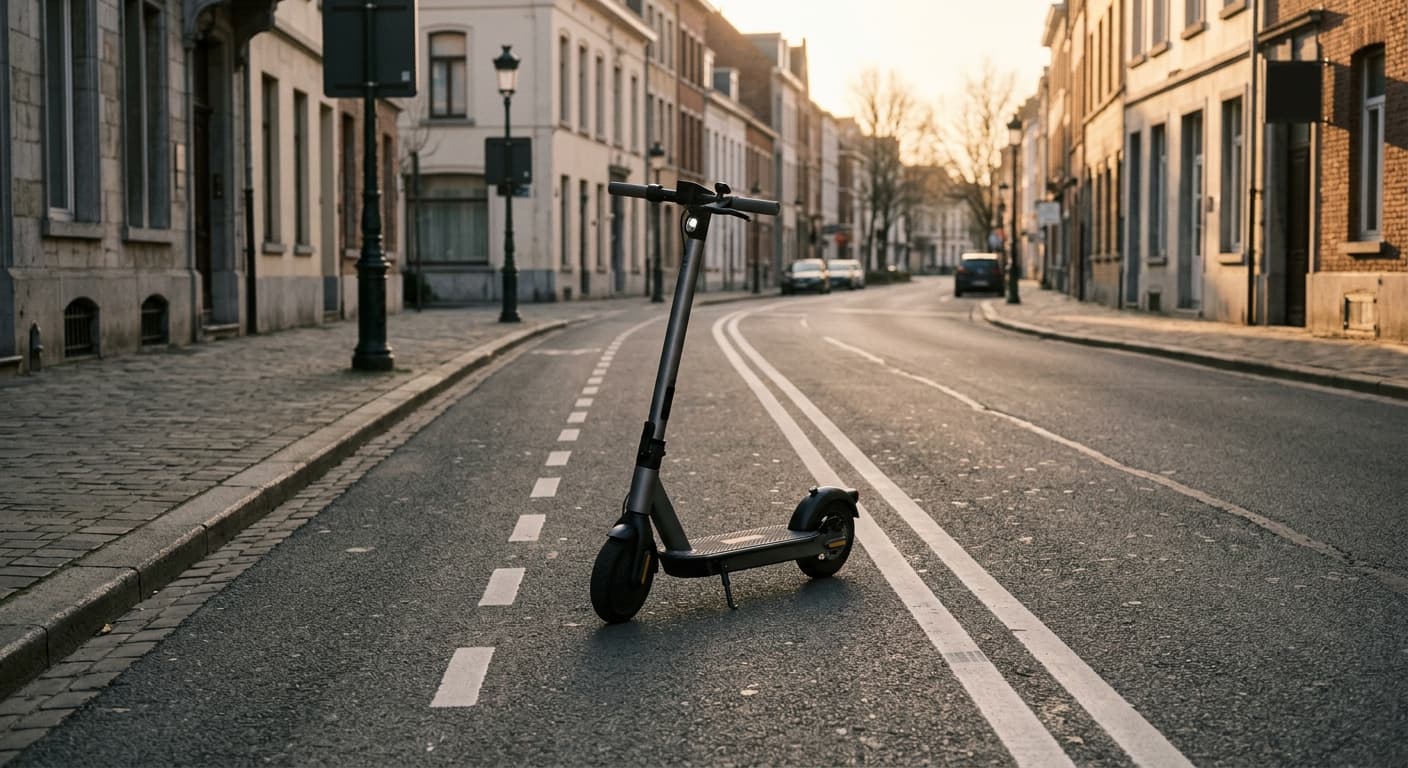
There's no clean yes or no answer, because West Virginia has no e-scooter statute at all. No provision of the West Virginia Code uses the word "scooter" to mean a stand-up electric scooter. The word does appear twice in the code, but neither use is about micromobility: section 61-7-14 lists a "motor scooter" among the private vehicles covered by a firearm-storage rule, and section 46A-6E-1 lists "motorized scooters" among the assistive devices covered by a consumer-protection warranty law. Outside those two off-topic mentions, the code simply doesn't define, permit, or prohibit an electric stand-up scooter as its own category. For how neighboring states in the region handle e-scooters directly, see the e-scooter laws hub.
What counts as an e-scooter in West Virginia
Because no statute defines "electric scooter" or "motorized scooter," a stand-up e-scooter doesn't automatically get treated as any specific vehicle type under West Virginia law. It doesn't fit the state's "moped" definition: West Virginia Code section 17C-1-5a defines a moped as a motorcycle or motor-driven cycle with foot pedals to permit muscular propulsion, and most stand-up kick scooters have no pedals at all. It also doesn't meet the definition of an "electric bicycle" under section 17C-1-70, which requires fully operable pedals along with an electric motor under 750 watts, confirmed directly against the state code. It falls outside the motorcycle definition too: section 17C-1-4 requires "a seat or saddle for the use of the rider," which is what keeps a stand-up scooter out of the motorcycle, motor-driven-cycle and moped chain in the first place.
West Virginia does have one micromobility article, and it is worth reading before assuming it covers a stand-up scooter. Section 17C-1-66 defines an "electric personal assistive mobility device" as a "self-balancing, two nontandem-wheeled device, designed to transport only one person," with an electric propulsion system averaging 750 watts and a top speed under 20 miles per hour. Article 17C-10A then sets the rules for that device: front, rear and side reflectors, a braking system that brings it to a controlled stop, a white lamp between sunset and sunrise, and, on "a sidewalk, roadway or bicycle path," the "rights and duties of a pedestrian" (section 17C-10A-2). A conventional stand-up e-scooter has two wheels one behind the other, in tandem, and does not self-balance, so it sits outside that definition and outside those rules. With no statutory category that fits, a stand-up e-scooter sits in a genuine gray area at the state level, neither clearly authorized nor clearly banned.
Where you can ride
State law does not set a roadway, bike-lane, or sidewalk rule specific to e-scooters, because no statute addresses them at all. The one place the code does set a sidewalk rule for a small electric device is Article 17C-10A, and by its own definition that article reaches only self-balancing, two nontandem-wheeled devices, not a tandem-wheeled stand-up kick scooter. Whatever rule applies in practice comes from the city or county where you're riding rather than from the West Virginia Code.
Rider rules
Age: no state minimum age exists for operating an e-scooter, because no state statute addresses e-scooters.
Helmet: no statewide helmet mandate exists for e-scooter riders.
License/registration: no rule requires a license or registration specifically for an e-scooter, but that is not the same as an exemption. West Virginia's definitions are residual rather than a closed list. Section 17C-1-2 defines a "vehicle" as every device by which a person or property may be transported upon a highway, "except devices moved by human power or used exclusively upon stationary rails or tracks or wheelchairs," and section 17C-1-3 defines a "motor vehicle" as "every vehicle which is self-propelled," with motorized wheelchairs the only exception. Section 17A-1-1, the registration chapter's definitions, uses nearly identical wording without the wheelchair carve-out. A self-propelled stand-up e-scooter is neither human-powered nor a wheelchair, so going unnamed does not lift it out of those definitions, it sweeps it in. Road use therefore sits in a gray area with real Chapter 17A registration and Chapter 17B licensing exposure, not in a confirmed exemption.
None of this should be read as an affirmative statewide permission slip. It reflects an absence of state regulation, not a state law that says e-scooters are allowed everywhere under any conditions, and a municipality remains free to regulate, or even restrict, e-scooter use within its own borders.
Penalties
Because West Virginia has no e-scooter statute, there is no statewide penalty schedule specific to e-scooters. Any penalty a rider faces would come from a local ordinance, such as Charleston's, or from general traffic or public-safety laws that might apply to how the device was operated in a specific incident.

Enforcement in practice
No statewide West Virginia enforcement data on e-scooters was documented in the research behind this article, which isn't surprising given that no state statute exists to enforce. Enforcement, where it happens at all, is a local matter tied to whatever ordinance a specific city or county has adopted, not a function of state law.
Charleston e-scooter rules
Charleston, the state capital and West Virginia's largest city, has adopted its own dedicated "Motorized Scooter" ordinance within Chapter 114, Article XIV of the Charleston City Code, confirmed to exist through the city's own Municode index. The full text of that ordinance could not be independently verified for this article, so specific figures reported secondhand, such as an age limit or speed cap, should not be relied on as confirmed. If you plan to ride an e-scooter in Charleston, check the current ordinance text directly, or with the city, rather than assuming either a state rule that doesn't exist or an unconfirmed local figure.
Some reporting has referenced a possible statewide e-scooter proposal in the West Virginia Legislature, but no bill number, sponsor, or session could be confirmed in the research behind this article, so nothing about a pending statewide law should be treated as settled. Riding on any public road still involves general traffic and impaired-driving law even without an e-scooter-specific statute; see West Virginia DUI laws for how the state's broader impaired-operation framework works, and West Virginia car accident laws for how fault and insurance questions are generally handled.
Frequently Asked Questions
Are e-scooters legal in West Virginia?
There's no state statute that either permits or bans them, so West Virginia doesn't clearly say yes or no. No provision of the state code uses "scooter" to mean a stand-up electric scooter, the only two appearances of the word are in an unrelated firearm-storage definition and in the consumer assistive-device law, and regulation is left mostly to individual cities and counties.
Is there a minimum age to ride an e-scooter in West Virginia?
No minimum age exists at the state level, because no statute addresses e-scooters. A local ordinance, such as Charleston's, may set its own age rule.
Do I need a helmet to ride an e-scooter in West Virginia?
No statewide helmet mandate exists. Check whether the city where you're riding has adopted its own rule.
Can I ride an e-scooter on the sidewalk in West Virginia?
State law doesn't address it either way. The sidewalk rule in Article 17C-10A applies only to self-balancing, two nontandem-wheeled electric personal assistive mobility devices, not to a tandem-wheeled stand-up scooter, so whether sidewalk riding is allowed depends on the city or county.
Does West Virginia treat an e-scooter as a moped?
No. The state's moped definition requires foot pedals for muscular propulsion, which most stand-up e-scooters lack, so they don't fit that category either.
Do I need a license or registration for an e-scooter in West Virginia?
No rule names e-scooters, but that is not a confirmed exemption. Section 17C-1-3 defines a motor vehicle as every self-propelled vehicle except motorized wheelchairs, and a stand-up e-scooter is neither human-powered nor a wheelchair, so road use sits in a gray area with real registration and licensing exposure.
Does Charleston have its own e-scooter rules?
Yes. Charleston's municipal code contains a dedicated Motorized Scooter ordinance, though its full text wasn't independently verified for this article. Check the current ordinance directly before relying on a specific age or speed figure.
Is a statewide e-scooter law coming to West Virginia?
Some reporting has referenced a possible proposal, but no bill number, sponsor, or confirmed status was found in the research behind this article, so nothing about a pending law is settled.
What happens if I'm cited for an e-scooter issue in West Virginia?
Since no state statute governs e-scooters, any citation would most likely come from a local ordinance or a general traffic law, not from an e-scooter-specific state penalty.
Updates
Corrected the claim that a West Virginia Code search for "scooter" returns zero results, added the state's electric personal assistive mobility device rules (sections 17C-1-66 and 17C-10A-2) and the motorcycle seat-or-saddle exclusion, and replaced the statement that no license or registration is required with the accurate position that a self-propelled e-scooter falls inside West Virginia's residual motor-vehicle definition, leaving road use a gray area rather than a confirmed exemption.
Governing law re-checked for recent changes
Independently fact-checked against the cited primary sources
The Law Behind This Article
This article rests on the statutory provisions below, held in our own legal record and retrieved from the official source. Tap a section to read the operative text.
West Virginia Code
§ 17C-1-5AMoped.In forcecited in 2 of our articles
“Moped” means every motorcycle or motor-driven cycle unless otherwise specified in this chapter, which is equipped with two or three wheels, foot pedals to permit muscular propulsion, and an independent power source providing a maximum of two-brake horsepower, but excludes electric bicycles as defined in §17C-1-70 of this code. If a combustion engine is used, the maximum piston or rotor displacement shall be 50 cubic centimeters regardless of the number of chambers in the power source. The power source shall be capable of propelling the vehicle, unassisted, at a speed not to exceed 30 miles per hour on a level road surface and shall be equipped with a power drive system that functions directly or automatically only, not requiring clutching or shifting by the operator after the drive system is engaged.
Official text (excerpt) · last checked 2026-07-30 · Read the full text in our law library · Verify at code.wvlegislature.gov
§ 17C-1-70Electric bicycles; definitions.In forcecited in 2 of our articles
For the purpose of this section, the term "electric bicycle" means a two or three wheeled vehicle with fully operable pedals and an electric motor of fewer than 750 watts. There is a "three-class system" to differentiate between the models and top-assisted speeds of electric bicycles. "Class 1" electric bicycles have a motor that provides assistance only when the rider is pedaling, and that ceases to provide assistance when the e-bike reaches 20 mph. "Class 2" electric bicycles have a motor that may be used exclusively to propel the bicycle, and that is not capable of providing assistance when the e-bike reaches 20 mph. "Class 3" electric bicycles have a motor that provides assistance only when the rider is pedaling, and that ceases to provide assistance when the e-bike reaches 28 mph. "Throttle" refers to a device that controls the flow of power to the electric motor on an electric bicycle for the purpose of propelling the electric bicycle.
Official text (excerpt) · last checked 2026-07-30 · Read the full text in our law library · Verify at code.wvlegislature.gov
§ 17A-1-1Definitions.In forcecited in 2 of our articles
Except as otherwise provided in this chapter, the following words and phrases, when used in this chapter, have the meanings respectively ascribed to them in this article: (a) “Vehicle” means every device in, upon, or by which any person or property is or may be transported or drawn upon a highway, excepting devices moved by human power or used exclusively upon stationary rails or tracks. (b) “Motor vehicle” means every vehicle which is self-propelled and every vehicle which is propelled by electric power obtained from overhead trolley wires, but not operated upon rails. (c) “Motorcycle” means every motor vehicle, including motor-driven cycles and mopeds as defined in §17C-1-5 and §17C-1-5a of this code, having a saddle for the use of the rider and designed to travel on not more than three wheels in contact with the ground, but excluding a tractor, and an electric bicycle as defined in §17C-1-70 of this code. (d) “School bus” means every motor vehicle owned by a public governmental agency and operated for the transportation of children to or from school or privately owned and operated for compensation for the transportation of children to or from school.
Official text (excerpt) · last checked 2026-07-30 · Read the full text in our law library · Verify at code.wvlegislature.gov
§ 17C-1-2Vehicle.In forcecited in 2 of our articles
"Vehicle" means every device in, upon or by which any person or property is or may be transported or drawn upon a highway, except devices moved by human power or used exclusively upon stationary rails or tracks or wheelchairs.
Official text (excerpt) · last checked 2026-07-30 · Read the full text in our law library · Verify at code.wvlegislature.gov
§ 17C-1-3Motor vehicle.In forcecited in 2 of our articles
"Motor vehicle" means every vehicle which is self-propelled and every vehicle which is propelled by electric power obtained from overhead trolley wires, but not operated upon rails, except motorized wheelchairs.
Official text (excerpt) · last checked 2026-07-30 · Read the full text in our law library · Verify at code.wvlegislature.gov
§ 17C-1-4Motorcycle.In forcecited in 2 of our articles
"Motorcycle" means every motor vehicle having a seat or saddle for the use of the rider and designed to travel on not more than three wheels in contact with the ground, but excluding a tractor.
Official text (excerpt) · last checked 2026-07-30 · Read the full text in our law library · Verify at code.wvlegislature.gov
§ 17C-1-66Electric personal assistive mobility device.In forcecited in 2 of our articles
"Electric personal assistive mobility device" or "EPAMD" means a self-balancing, two nontandem-wheeled device, designed to transport only one person, with an electric propulsion system with average power of seven hundred fifty watts (one horse power), whose maximum speed on a paved level surface, when powered solely by such a propulsion system while ridden by an operator who weighs one hundred seventy pounds, is less than twenty miles per hour.
Official text (excerpt) · last checked 2026-07-30 · Read the full text in our law library · Verify at code.wvlegislature.gov
§ 17C-10A-2Equipment requirements and operating standards for electric personal assistive mobility devices; applicability of motor vehicle code; penalties.In forcecited in 2 of our articles
(a) An electric personal assistive mobility device shall be equipped with: (1) Front, rear and side reflectors; (2) A braking system that enables the operator to bring the device to a controlled stop; and (3) If operated at any time from one-half hour after sunset to one-half hour before sunrise, a lamp that emits a white light that sufficiently illuminates the area in front of the device. (b) An operator of an electric personal assistive mobility device traveling on a sidewalk, roadway or bicycle path shall have the rights and duties of a pedestrian and shall exercise due care to avoid colliding with pedestrians. An operator shall yield the right of way to pedestrians. (c) Except as provided in this section, no other provisions of the motor vehicle code shall apply to electric personal assistive mobility devices. (d) An operator who violates a provision of subsection (a) or (b) of this section shall receive a warning for the first offense. For a second or subsequent offense, the operator shall be punished by a fine of no less than $10 and no greater than $100.
Official text (excerpt) · last checked 2026-07-30 · Read the full text in our law library · Verify at code.wvlegislature.gov
§ 46A-6E-1Definitions.In forcecited in 2 of our articles
(a) "Assistive device" means any device enabling a person with a disability to communicate, see, hear or maneuver, which a consumer purchases or accepts transfer of in this state. This definition includes a demonstrator. Examples of assistive devices include, but are not limited to, manual and motorized wheelchairs, motorized scooters, hearing aids, telephone communication devices for the deaf (TTY), assistive listening devices, voice synthesized computer modules, optical scanners, talking software and braille printers. (b) "Assistive device dealer" means a person who is in the business of selling assistive devices. (c) "Assistive device lessor" means a person who leases an assistive device to a consumer, or who holds the lessor's rights, under a written lease. (d) "Collateral costs" means expenses incurred by a consumer in connection with the repair of a nonconformity, including the costs of obtaining an alternative assistive device.
Official text (excerpt) · last checked 2026-07-30 · Read the full text in our law library · Verify at code.wvlegislature.gov
Cited in 1 court opinions in our collectionLatest citing opinion in our collection: 2024
Opinions citing this section in our collection:
- McDerment v. Sychrony Bank (District Court, S.D. West Virginia 2024)“…the following causes of action: Count One – Violations of W. Va. Code § 46A-6E-1 et seq.; Count Two – Improper Threats o…”
Identified automatically from the court opinions citing this section — not a ranking of which case controls.
§ 61-7-14Right of certain persons to limit possession of firearms on premises.In forcecited in 4 of our articles
This section may be referred to as "The Business Liability Protection Act". (a) As used in this section: (1) "Parking lot" means any property that is used for parking motor vehicles and is available to customers, employees, or invitees for temporary or long‐term parking or storage of motor vehicles: Provided, That for purposes of this section, parking lot does not include the private parking area at a business located at the primary residence of the property owner. (2) "Motor vehicle" means any privately-owned automobile, truck, minivan, sports utility vehicle, motor home, recreational vehicle, motorcycle, motor scooter, or any other vehicle operated on the roads of this state and, which is required to be registered under state law: Provided, That for purposes of this section, motor vehicle does not mean vehicles owned, rented, or leased by an employer and used by the employee in the course of employment.
Official text (excerpt) · last checked 2026-07-30 · Read the full text in our law library · Verify at code.wvlegislature.gov
Cited in 1 court opinions in our collectionLatest citing opinion in our collection: 2020
Opinions citing this section in our collection:
- The West Virginia Coalition Against Domestic Violence, Inc. v. Morrisey (District Court, S.D. West Virginia 2020)“…ception for domestic violence shelters. See W. Va. Code § 61-7-14(d); Pl.’s Opp’n Mot.…”
Identified automatically from the court opinions citing this section — not a ranking of which case controls.
Also relied on in: West Virginia Knife Laws (2026): Pocketknife Rule, Carry, West Virginia Pepper Spray and Stun Gun Laws (2026)
Search our full record of US law — 2.1 million sections, every state + federal →
Sources and References
- West Virginia Legislature, official code search results for "scooter" (zero results)(wvlegislature.gov).gov
- West Virginia Code section 17C-1-70, electric bicycle definition(wvlegislature.gov).gov
- West Virginia Code section 17C-1-5a, moped definition(wvlegislature.gov).gov
- Charleston, WV City Code, Chapter 114, Article XIV (Motorized Scooters) index(library.municode.com)
- West Virginia Code section 61-7-14, firearm-storage definition of "motor vehicle" (the statute's only use of "motor scooter")(wvlegislature.gov)
- West Virginia Code section 46A-6E-1, assistive-device definitions listing "motorized scooters"(wvlegislature.gov)
- West Virginia Code section 17C-1-66, electric personal assistive mobility device definition(wvlegislature.gov)
- West Virginia Code section 17C-10A-2, equipment rules and pedestrian rights and duties for electric personal assistive mobility devices(wvlegislature.gov)
- West Virginia Code section 17C-1-4, motorcycle definition ("seat or saddle for the use of the rider")(wvlegislature.gov)
- West Virginia Code section 17C-1-2, definition of "vehicle"(wvlegislature.gov)
- West Virginia Code section 17C-1-3, definition of "motor vehicle"(wvlegislature.gov)
- West Virginia Code section 17A-1-1, vehicle and motor vehicle definitions for the registration chapter(wvlegislature.gov)
Paid attorney referral. RecordingLaw may receive compensation when you use an attorney-help link. RecordingLaw is not a law firm. Submitting a request does not guarantee that an attorney will accept your case and does not create an attorney-client relationship.