Justice Kagan Denies Surrogate's Emergency Stay in Parentage Case
Independently fact-checked against primary sources (last audited September 24, 2026). · 7 primary sources cited on this page. How we verify our legal content
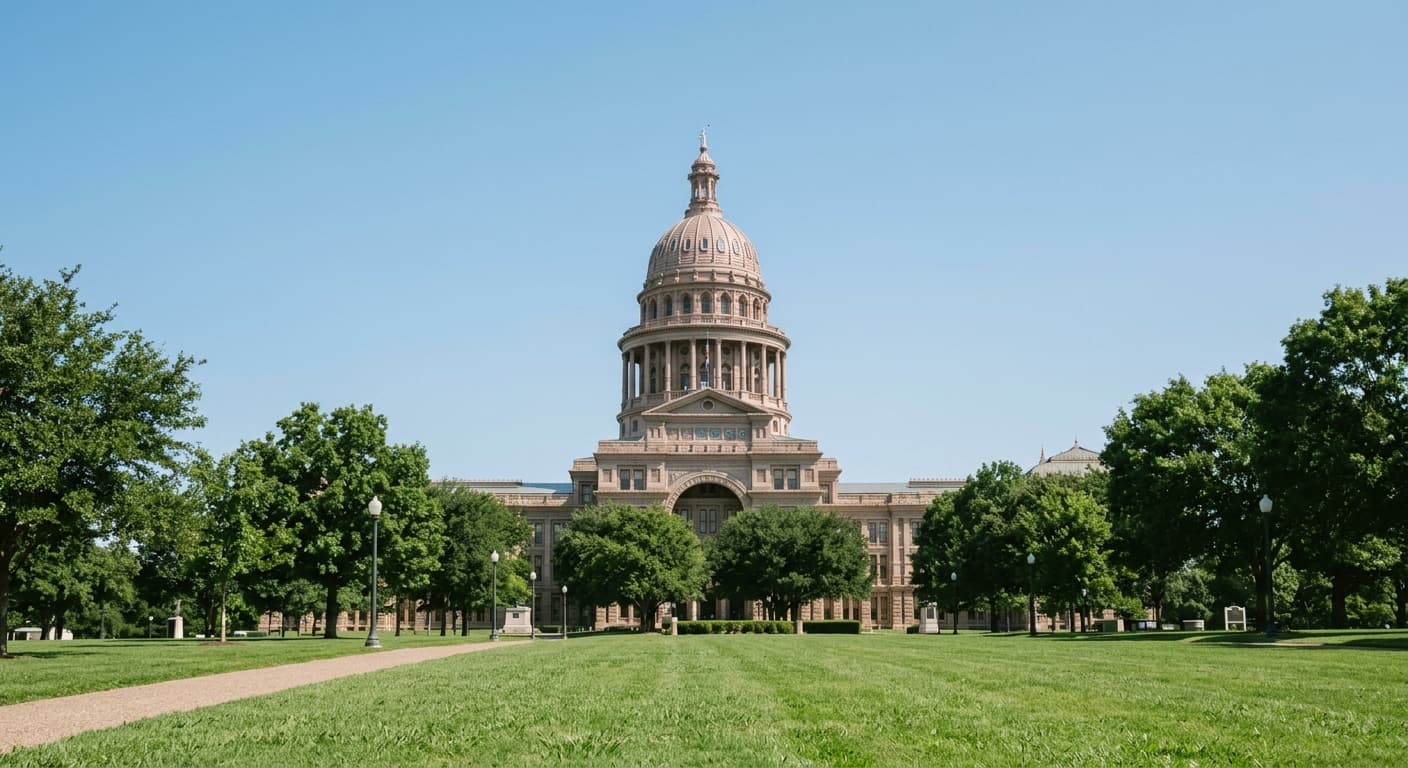
Justice Elena Kagan denied an emergency stay application on September 22, 2026, in a California surrogacy parentage dispute docketed as No. 26A325. The order decided nothing about surrogacy law. It left a California parentage judgment undisturbed after every state court below had already declined to pause it.
Information last verified on September 24, 2026. This is a developing story; we update it as the record changes.
Status: Justice Kagan denied the emergency stay application on September 22, 2026. A stay denial is not a ruling on the merits and sets no precedent. The California Supreme Court had already denied review and a stay in No. S297974 on August 26, 2026, and an appeal from the underlying parentage judgment was pending in the California Court of Appeal when the application was filed.
Jurisdiction scope: This article covers a federal emergency application arising from a California parentage proceeding. The statutes discussed are California's gestational surrogacy provisions in Part 7 of Division 12 of the Family Code, its UCCJEA jurisdiction provision, and the federal stay statute. Surrogacy parentage law varies sharply between states, and nothing here describes the law of Texas, Alaska, or any other state.
What Happened
The public docket in M. W., Applicant v. Superior Court of California, Los Angeles County, et al., No. 26A325, shows a compressed thirteen day sequence. The case was docketed on September 9, 2026, on application from the Supreme Court of California, No. S297974.
The key docket entries read, in order (the full docket of fourteen entries also carries four amicus briefs, a supplemental brief from the applicant, and the respondents' sealing motion):
- September 9, 2026: "Application (26A325) for a stay and motion for leave to file supplemental appendix under seal, submitted to Justice Kagan."
- September 11, 2026: "Response to application (26A325) requested by Justice Kagan, due by 4 p.m. (EDT) on September 18, 2026."
- September 18, 2026: "Response to application from respondent N.G. and O.A. filed."
- September 21, 2026: "Reply of applicant M. W. filed."
- September 22, 2026: "Applicant's motion for leave to file supplemental appendix under seal GRANTED."
- September 22, 2026: "Application (26A325) denied by Justice Kagan."
Two procedural details are worth flagging because readers often misread them.
First, Justice Kagan called for a response on September 11. A Justice is not required to do that before denying an application, and a request for a response is sometimes read as a signal of interest. It is not a ruling of any kind, and the same docket shows the application denied eleven days later.
Second, the docket also records amicus curiae filings between September 10 and September 15 from the American Association of Pro-Life Obstetricians and Gynecologists and the American College of Pediatricians, from the State of Florida and other states, from Americans United for Life, and from the American Center for Law and Justice. Amicus participation signals outside interest in a dispute. It does not change what a stay denial decides, which is nothing on the merits.
The September 22 entry carries no linked order or opinion. There is no published reasoning to parse, and the docket notes no dissent.
National outlets including CBS News, NBC News, CNN, and The Hill have reported on the underlying dispute. According to that reporting, a gestational surrogate sought to block a California parentage judgment naming the intended parents as the newborn's legal parents; the child was diagnosed prenatally with hypoplastic left heart syndrome, a serious congenital heart defect; the surrogate declined the intended parents' request to terminate the pregnancy, travelled to Texas, and gave birth there. That is press reporting about the background, not a legal holding, and none of it appears as a finding in the Supreme Court docket entries above.
We did not independently open the California Supreme Court docket in No. S297974, which is behind a bot challenge on the California appellate courts case information system. What that court did is nonetheless recorded in the papers filed with the U.S. Supreme Court: the applicant's own emergency application lists "California Supreme Court, M.W. v. Superior Court, S297974 (Aug. 26, 2026)" among the proceedings below, and states that the order "denying M.W.'s petition for review and stay is unreported." That is the applicant's account of the record. This article does not describe the reasoning of the California courts, and what the record before the U.S. Supreme Court shows is the sequence set out above and nothing more.
What an Emergency Stay Application Actually Is
An emergency application to a Justice is not an appeal. It is a request to freeze the effect of a lower court judgment for a limited time while the applicant tries to get the full Court to take the case.
The statutory hook is 28 U.S.C. 2101(f), which provides that where a final judgment is subject to review by the Supreme Court on writ of certiorari, "the execution and enforcement of such judgment or decree may be stayed for a reasonable time to enable the party aggrieved to obtain a writ of certiorari from the Supreme Court," and that "the stay may be granted by a judge of the court rendering the judgment or decree or by a justice of the Supreme Court."
Three features of that mechanism explain why the September 22 order decides so little.
It is temporary relief about timing, not a decision about who is right. The statute describes a stay "for a reasonable time to enable the party aggrieved to obtain a writ of certiorari." The question is whether the judgment should be paused while review is sought, not whether the judgment was correct.
The burden is deliberately steep. Supreme Court Rule 23.3 requires an application to "set out with particularity why the relief sought is not available from any other court or judge," states that except "in the most extraordinary circumstances" an application will not be entertained unless the relief was first sought below, and requires the applicant to "set out specific reasons why a stay is justified." Rule 23.1 says only that "a stay may be granted by a Justice as permitted by law." An applicant who fails that demanding showing loses the application. That failure is not a holding that the applicant's legal position is wrong.
It is one Justice, acting alone, usually without explanation. Under Rule 22.3 an application "shall be addressed to the Justice allotted to the Circuit from which the case arises." The Supreme Court's published circuit assignments list Justice Kagan as the Circuit Justice for the Ninth Circuit, which includes California. That is why this application went to her. Rule 22.5 allows a Justice to refer a stay application to the full Court, and Rule 22.4 allows a denied application to be renewed to another Justice, though it adds that "except when the denial is without prejudice, a renewed application is not favored." The docket here shows neither a referral nor, so far, a renewal.
Put plainly: a stay denial is a decision not to interrupt the normal course of litigation. It sets no precedent, binds no other court, and answers no question about the legality of surrogacy agreements in California or anywhere else.
What the Law Actually Says
California addresses gestational surrogacy in Part 7 of Division 12 of the Family Code. Two sections matter for understanding why a parentage judgment can exist before a child is born.
Family Code section 7960 supplies the definitions. It defines an "intended parent" as "an individual, married or unmarried, who manifests the intent to be legally bound as the parent of a child resulting from assisted reproduction," and it separates two kinds of surrogate. A "traditional surrogate" is a woman who agrees to gestate an embryo where she is the gamete donor. A "gestational carrier" is "a woman who is not an intended parent and who agrees to gestate a genetically unrelated embryo pursuant to an assisted reproduction agreement." The distinction is genetic, and it drives everything downstream.
Family Code section 7962 sets the formalities and the judgment mechanism. Under subdivision (b), before signing, "a surrogate and the intended parent or intended parents shall be represented by separate independent licensed attorneys of their choosing." Under subdivision (c) the agreement must be notarized or witnessed by an equivalent method. Under subdivision (d), the parties may not begin an embryo transfer or the injectable medication preparing for one until the agreement has been fully executed as required by subdivisions (b) and (c).
Subdivision (e) is the answer to why parentage is settled early: an action to establish the parent and child relationship "may be filed before the child's birth," in any of several listed counties, with a copy of the agreement lodged with the court.
Subdivision (f) supplies the effect. A properly notarized agreement with attached attorney declarations, lodged with the superior court, "shall rebut any presumptions" that the gestational carrier or her spouse or partner is a parent. On petition of a party, "the court shall issue a judgment or order establishing a parent and child relationship," which "may be issued before or after the child's or children's birth subject to the limitations of Section 7633," and which "shall establish that the surrogate, and the surrogate's spouse or partner, is not a parent of, and has no parental rights or duties with respect to, the child or children." The statute directs that the judgment "shall be issued forthwith and without further hearing or evidence, unless the court or a party ... has a good faith, reasonable belief" that the agreement or the attorney declarations were not executed in compliance with the section, and it provides that on a party's motion the matter shall be set for hearing before a judgment issues.
That structure is why a pre-birth parentage judgment is an ordinary output of California surrogacy practice rather than an unusual intervention. It is also why disputes in this area tend to arrive as challenges to an existing judgment rather than as open questions.
A separate statute governs which state may make a custody determination. Family Code section 3421, California's enactment of the Uniform Child Custody Jurisdiction and Enforcement Act, makes home state jurisdiction the primary basis for an initial child custody determination and states in subdivision (b) that "subdivision (a) is the exclusive jurisdictional basis for making a child custody determination by a court of this state." Subdivision (c) adds that "physical presence of, or personal jurisdiction over, a party or a child is not necessary or sufficient to make a child custody determination." That last sentence is the one most often misunderstood when a birth occurs in a different state from the one where the case was filed. Whether and how the UCCJEA figures in this particular matter is not something the Supreme Court docket resolves.
Analysis: Why This Matters
The following is analysis from the Recording Law Editorial Team.
The largest risk with an order like this is the headline. A one line docket entry is structurally easy to report as the Supreme Court taking a side, and structurally hard to report accurately, because there is no reasoning to quote and the only available facts come from the parties' filings and from press accounts.
What happened is narrow: one Justice, sitting as Circuit Justice, declined to freeze a state court judgment pending a certiorari petition. The denial tells us the applicant did not carry the Rule 23.3 burden in that posture. It does not tell us the Court thinks California's surrogacy statute is sound, or unsound, or that any constitutional claim raised in the application is weak.
There is a further point worth naming. The legal question people think this case presents may not be a question the Court would ever reach. Emergency applications rise and fall on the stay standard, timing, and the state of the record below. A merits question about a surrogacy agreement, if one is ever presented, would arrive through a certiorari petition with full briefing, and the Court grants a small fraction of those.
The privacy posture in the docket is also a deliberate signal. The caption uses initials. Both sides were granted leave to file materials under seal on September 22, on motions filed September 9 and September 18. Courts handle newborn and family matters this way because the person with the most at stake cannot consent to publicity. Publishing names in that setting is a choice the court record itself declines to make, which is why this article uses the initials the Court uses.
For readers who came here because of the surrogacy angle, the practical takeaway is not about this order at all. It is that the enforceability of a surrogacy arrangement in California is largely determined long before a dispute, by whether the section 7962 formalities were satisfied: separate independent counsel, notarization, execution before any embryo transfer, and the agreement lodged with the court. Those are the facts a court looks at first.
What Happens Next
Only the procedural posture is knowable from the record.
The denial of application No. 26A325 ends that application. It does not end the case, and it does not revive the California Supreme Court proceeding. According to the applicant's own filing in this Court, that court denied her petition for review and request for a stay in No. S297974 on August 26, 2026. The same filing lists an appeal from the June 22, 2026 parentage judgment as pending in the California Court of Appeal, Second Appellate District. We could not independently confirm the current status of that appeal, because the California appellate courts' case information system is behind a bot challenge.
Rule 22.4 permits renewal of a denied application to another Justice, though the Rules add that except when a denial is without prejudice, a renewed application is "not favored." Nothing on the No. 26A325 docket as of September 24, 2026 shows a renewal. A stay denial also does not preclude a later petition for a writ of certiorari, which is the ordinary route to merits review and would be docketed as its own case number.
We are not predicting that either step will be taken. We are stating what the Rules permit and what the docket currently shows, and we will update this page if the record changes.
This article is general legal information, not legal advice. It describes a public court docket and the text of published statutes as of September 24, 2026. It does not create an attorney client relationship and it is not a prediction of how any court will rule. Parentage, custody, and surrogacy law vary by state and turn on specific facts. Consult a licensed family law attorney in your state about your situation.
Related articles
- Child custody laws in all 50 states, including how courts apply the best interests standard
- How California handles custody and parenting time
- California divorce rules: grounds, residency, and process
- Divorce laws by state, the hub for filing rules across the country
Last updated: 2026-09-24. This is a developing story; details verified as of 2026-09-24.
Frequently Asked Questions
Did the Supreme Court rule on surrogacy?
No. The Court issued no decision on surrogacy, on the surrogacy agreement, or on California's surrogacy statute. A single Justice denied an emergency stay application, which is a decision not to pause a lower court judgment while review is sought. It creates no precedent and resolves no legal question.
What is the difference between a stay denial and a ruling on the merits?
A stay is temporary relief about timing. Under 28 U.S.C. 2101(f) it pauses enforcement of a judgment for a reasonable time so the losing party can seek certiorari. A merits ruling decides who is legally right, comes after full briefing and usually argument, and is issued by the full Court in a written opinion. Only the second kind binds other courts.
Why did Justice Kagan decide this alone instead of the full Court?
Supreme Court Rule 22.3 directs that an application be addressed to the Justice allotted to the circuit the case comes from. The Court's published circuit assignments list Justice Kagan as Circuit Justice for the Ninth Circuit, which includes California. Rule 22.5 lets a Justice refer a stay application to the full Court, and the docket does not show a referral here.
Does the denial mean the surrogate's legal arguments were rejected?
No. Rule 23.3 requires an applicant to show with particularity that relief is unavailable from any other court and to give specific reasons why a stay is justified. Failing that showing in an emergency posture is not a determination that the underlying arguments lack merit. The docket entry gives no reasoning at all.
Can the application be filed again?
Rule 22.4 provides that a party whose application a Justice has denied may generally renew it to any other Justice, but the same rule states that except when a denial is without prejudice, a renewed application is not favored. Separately, a petition for a writ of certiorari is the normal path to merits review. Nothing on the No. 26A325 docket as of September 24, 2026 shows a renewal, and a certiorari petition would be docketed separately under its own number.
Why does California let intended parents get a parentage judgment before the baby is born?
Family Code section 7962(e) expressly allows a parentage action for a child conceived under a gestational carrier agreement to be filed before the child's birth. Subdivision (f) directs the court to issue the judgment forthwith, without further hearing, when the statute's requirements are met, unless the court or a party has a good faith, reasonable belief that the agreement or attorney declarations were not properly executed.
What makes a California gestational surrogacy agreement valid?
Family Code section 7962 requires that the surrogate and the intended parents each be represented by separate independent licensed attorneys of their own choosing before signing, that the signatures be notarized or equivalently witnessed, and that no embryo transfer or injectable preparation for one begin until the agreement is fully executed. A copy of the agreement must be lodged with the court in the parentage action.
Why does this article use initials instead of names?
The Supreme Court's own caption identifies the parties only as M. W., N.G., and O.A., and both sides obtained leave on September 22, 2026 to file materials under seal. This is a family law matter involving a newborn. We follow the court record rather than press accounts that publish names.
Updates
Independently fact-checked against the cited primary sources
Sources and References
- Supreme Court of the United States, Docket for No. 26A325, M. W., Applicant v. Superior Court of California, Los Angeles County, et al. (docketed Sept. 9, 2026; application denied by Justice Kagan Sept. 22, 2026)(supremecourt.gov).gov
- Rules of the Supreme Court of the United States, Rule 22 (Applications to Individual Justices) and Rule 23 (Stays)(supremecourt.gov).gov
- 28 U.S.C. 2101(f), stay of a judgment pending application for a writ of certiorari (Office of the Law Revision Counsel)(uscode.house.gov).gov
- Supreme Court of the United States, Circuit Assignments (Justice Kagan allotted to the Ninth Circuit, which includes California)(supremecourt.gov).gov
- California Family Code section 7960, definitions for surrogacy and assisted reproduction agreements(leginfo.legislature.ca.gov).gov
- California Family Code section 7962, requirements for assisted reproduction agreements for gestational carriers and issuance of a parentage judgment(leginfo.legislature.ca.gov).gov
- California Family Code section 3421, initial child custody jurisdiction under the Uniform Child Custody Jurisdiction and Enforcement Act(leginfo.legislature.ca.gov).gov
- CBS News, Supreme Court stays out of custody dispute between California couple and surrogate (background reporting only)(cbsnews.com)
- NBC News, Supreme Court declines to intervene in custody case involving newborn with heart condition (background reporting only)(nbcnews.com)
- CNN, Supreme Court rejects surrogate's request to have a say in sick baby's care (background reporting only)(cnn.com)