Judge Grants Final Approval to $68M Google Assistant Settlement
Independently fact-checked against primary sources (last audited October 18, 2026). · 2 primary sources cited on this page. How we verify our legal content
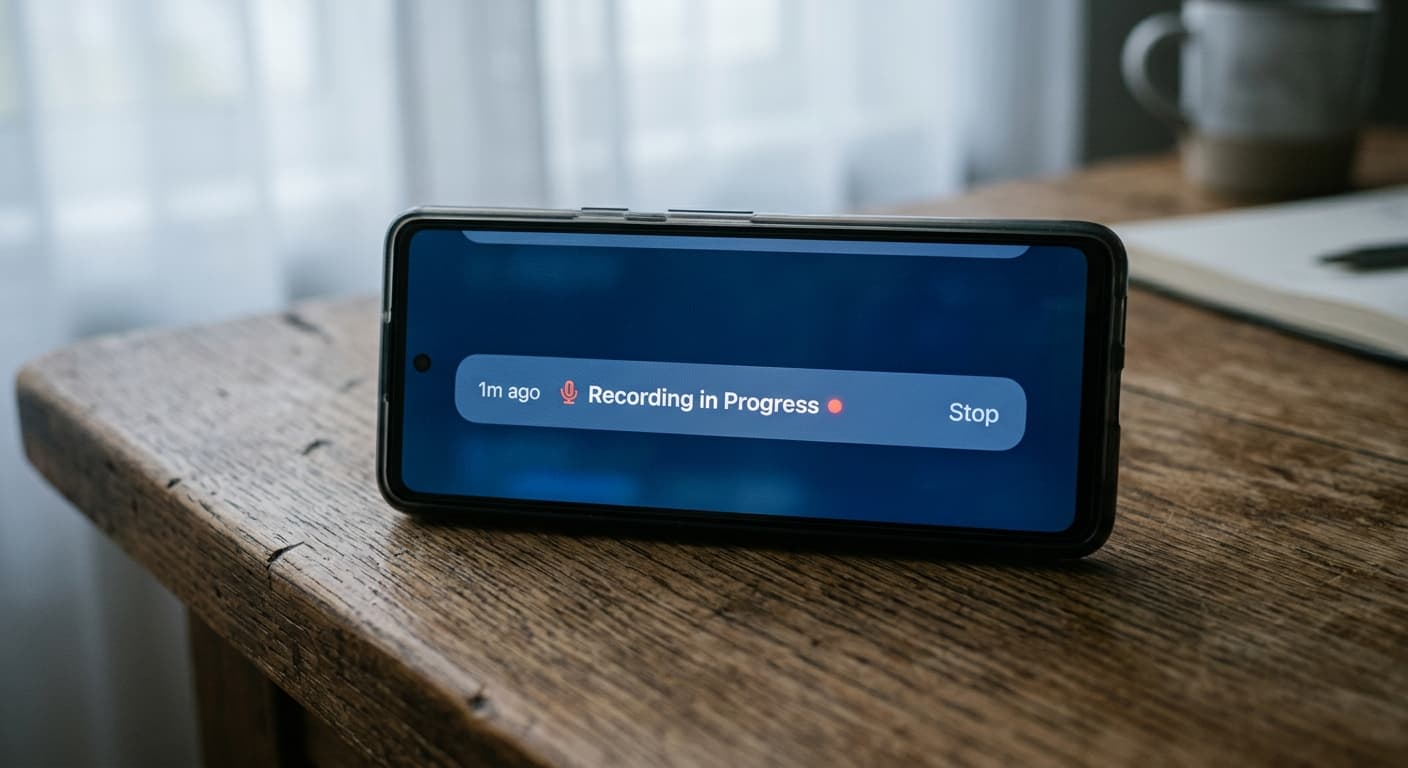
A federal judge in San Jose granted final approval on October 13, 2026 to Google's $68 million Google Assistant privacy settlement, overruling all seven class-member objections, awarding class counsel $22.67 million, and cutting each of the four class representatives' service awards from $10,000 to $5,000.
Information last verified on October 18, 2026. Final approval is not the end of the case. No judgment appeared on the publicly readable docket as of this date, and under the settlement agreement no money moves until the judgment becomes final.
Jurisdiction scope: This article covers a single federal case in the Northern District of California and the federal and California claims it resolved. It does not cover state wiretap claims outside California, criminal enforcement, or any other Google privacy matter. For the consent rules that sit behind the California claim, see California's all-party consent rules.
What Happened
On October 13, 2026, Judge Beth Labson Freeman of the United States District Court for the Northern District of California granted final approval to a $68,000,000 class action settlement with Google over audio that Google Assistant devices recorded without an intentional activation. The 31-page order appears at ECF No. 584 in Kumandan v. Google LLC, No. 5:19-cv-04286-BLF, consolidated as In re Google Assistant Privacy Litigation. It also granted class counsel's fee motion in part and denied it in part, and overruled all seven objections filed by class members.
The court had held a fairness hearing on October 1, 2026, which appears in the record as the transcript at ECF No. 579. The order terminates the two pending motions, the final approval motion at ECF No. 567 and the fee motion at ECF No. 566.
The case is seven years old. It began in July 2019 when Asif Kumandan, Melissa Spurr, and Melissa Spurr as guardian of a minor, B.S., sued over what the order describes as "Google's alleged nonconsensual recording of individuals." Two more complaints followed, from Lourdes Galvan and Eleeanna Galvan and from Edward Brekhus and Jon Hernandez, and all three were consolidated. The complaint was amended four times and survived three rounds of motions to dismiss.
The core factual theory is the "false accept." The settlement agreement defines one at paragraph 1.20 as "an instance where a Google Assistant Enabled Device records and transmits audio data to Google's servers because a Hot Word was detected although a Hot Word was not spoken." A Hot Word is a phrase such as "OK Google" or "Hey Google." The class certification order at ECF No. 414 records the plaintiffs' allegation that Google did not destroy those recordings but kept using them to improve Assistant and to target advertising, and that some were routed to human reviewers.
The money
The $68,000,000 fund is non-reversionary, which the order explains plainly: "none of the funds revert to Google." Any balance left after the first distribution is redistributed, and only when further distribution becomes economically irrational would a remainder go to a court-approved cy pres recipient. Google's counsel in the case is Perkins Coie LLP; the negotiations ran through several mediators, most recently Magistrate Judge Westmore.
Measured against the plaintiffs' own damages model, the order puts the fund at "approximately 15.15% to 56.67% of the maximum recoverable damages," using a classwide range of about $120,000,000 on nominal damages of $1.00 per device up to $448,800,000 on a $3.74 price premium per device. The court called the result "an excellent result" and an "exceptional outcome given the risks."
Translated to individuals, the order repeats the plaintiffs' estimate of "approximately $18 to $56 to each Purchaser Settlement Class Member and approximately $2 to $10 to each Privacy Settlement Class Member." Those figures come from a declaration in the record at ECF No. 549-8, and the court treats them throughout as plaintiffs' estimates rather than as fixed entitlements. Actual amounts depend on how many valid claims are paid out of the net fund.
Allocation runs on points. A Purchaser Settlement Class claim earns four points per eligible Google-made device, capped at three devices for a maximum of 12 points. A Privacy Settlement Class claim earns one point. A claimant in both classes can hold at most 13 points.
Fees, expenses and the service award cut
Class counsel asked for one third of the fund, a figure the order writes as $22,666,666.7 and also states as 33.33% of the fund, an upward departure from the Ninth Circuit's 25% benchmark. The court granted it after walking the Vizcaino factors and running a lodestar cross-check, but it did not take the billing records at face value.
Reviewing the fee chart at ECF No. 583-1, the court found one requested rate of $3,000 an hour "patently unreasonable" and reduced it to $1,600 for cross-check purposes, noting that the highest rate in any case the declarant cited was $1,975 and the highest in-district figure was $1,545. It reduced a second $1,960 rate and two $1,795 rates to $1,600 as well. Those cuts took $217,800 off the $22,477,337.50 lodestar that class counsel had calculated from 20,371.6 hours. The order puts the cross-check ratio at 1.01 before the reductions and 1.009 after, and treats the difference as immaterial. Four firms billed the time: Lowey Dannenberg, Scott+Scott, the Lexington Law Group, and the Wood Law Firm.
Expenses were approved as requested, at $1,021,738.40.
The service awards were not. Each of the four class representatives had asked for $10,000. The court rejected the argument that the awards were defensible because they amounted to less than 0.06% of the fund, and reframed the question as a comparison with what ordinary class members get. On plaintiffs' own high-end figure, it wrote, "a Class Representative would receive more than 178 times that of a Purchaser Class member." It granted $5,000 each instead.
The objections
Seven class members objected, at ECF Nos. 561, 562-1, 563, 569, 570, 571 and 572-1. Every objection was overruled, though two of them moved the court.
The most developed objection argued that class counsel undervalued the claims by using a willingness-to-pay metric, that the three-device cap unfairly cut claim value, that the serial-number requirement on the claim form shut out owners who cannot find their serial numbers, and that the fee was inflated. The court agreed that the lodestar cross-check "must be calibrated before its 1.01 multiplier is credited," and that is what produced the rate reductions. It rejected the rest. On the device cap it held that an allocation formula "need only have a reasonable, rational basis," credited class counsel's explanation that the cap was based on the expected lifetime of Google devices, and held that a class member with more than three devices had an adequate alternative remedy: opt out. On serial numbers it credited class counsel's point that "the modern claims process is fraught with automated 'bot' operations" and treated the requirement as a fraud-prevention measure rather than an undue burden.
A separate objection complained that the cy pres provision did not name a recipient. The court read the provision differently than the objector did: leftover funds get redistributed until redistribution costs more than the remainder, and only then does a cy pres recipient come into play, subject to a further motion and court approval.
Another objection appeared to be aimed at a different Google case entirely, Rodriguez v. Google LLC, No. 3:20-cv-04688 (N.D. Cal.).
Notice, claims and opt-outs
A.B. Data, Ltd. is the court-appointed claims administrator. The order records that it emailed notice to 173,814,291 valid addresses with a 98.76% delivery rate, sent a reminder two months later to every address that had neither claimed nor opted out, ran a digital and social campaign, and staffed a settlement website, an email inbox and a toll-free line. The notice plan reached a reported 75.2% of the target audience, which the court compared favorably with the 70% to 95% range in the Federal Judicial Center's class action notice checklist.
As of September 17, 2026, A.B. Data had received more than 1.49 million timely claims and more than 40,000 late claims, which the order notes it "has discretion to accept under the Settlement Agreement." As of September 30, 2026, per the administrator declaration at ECF No. 575, it had received 217 valid and timely exclusion requests. The court put that opt-out rate at less than 0.015% and treated it as evidence of a positive class reaction.
What the Law Actually Says
The claims that survived to settlement
After three rounds of motions to dismiss, eight claims remained in the Fourth Amended Complaint, and the final approval order lists them: violation of the federal Wiretap Act, 18 U.S.C. sections 2510 and following; violation of the Stored Communications Act, 18 U.S.C. sections 2701 and following; violation of California Penal Code section 632; intrusion upon seclusion; invasion of privacy under Article I, Section 1 of the California Constitution; breach of contract; violation of the California Unfair Competition Law, California Business and Professions Code sections 17200 and following; and a request for declaratory judgment under 28 U.S.C. sections 2201 and following. Two other claims, under California's Consumer Legal Remedies Act and for common law fraud, were dismissed at ECF No. 152.
The class certification order identifies Penal Code section 632 as the California Invasion of Privacy Act claim. The California Supreme Court quoted that section in Smith v. LoanMe, Inc. (2021), a case that decided a different question under section 632.7: section 632 imposes liability on a person who "intentionally and without the consent of all parties to a confidential communication . . . uses an electronic amplifying or recording device to eavesdrop upon or record the confidential communication, whether the communication is carried on among the parties in the presence of one another or by means of a telegraph, telephone, or other device, except a radio." That all-party consent requirement is the California rule a device that records a room runs into, and it is why section 632 was among the eight claims pleaded here.
Why only one class was certified for litigation
This distinction drives the entire payout structure, so it is worth being precise about it. In the class certification order at ECF No. 414, the court certified only the Purchaser Class, and only on the breach of contract and UCL claims. It declined to certify the proposed Privacy Class and the proposed SCA Class, writing that the plaintiffs "failed to put forth a qualifying class representative for the Privacy Classes."
The common questions the court accepted as satisfying Rule 23's commonality requirement were contractual, not statutory: whether Google made uniform representations that Assistant would record only on intentional activation, whether it breached those promises by recording and sharing audio, and whether that left class members who overpaid for devices that did not possess the promised attributes.
That history is why the two settlement classes recover different amounts. As the final approval order puts it, "relief for the Privacy Class was further conditioned on a successful appeal of the denial of class certification." The court held that the differential was therefore equitable, citing the ordinary difficulty of winning class certification and the greater difficulty of reversing a denial of it. For settlement purposes it certified both classes, noting that "the criteria for class certification are applied differently in litigation classes and settlement classes."
Who the two settlement classes are
The preliminary approval order conditionally defined them, and the final approval order quotes the definitions. The Purchaser Settlement Class is "All Users who purchased a Google-Made Device during the period between May 18, 2016 through the date the Court grants preliminary approval of the Settlement (both days inclusive)." The Privacy Settlement Class is "All Users of Google Assistant and members of their Households during the Settlement Class Period whose communications were recorded or otherwise obtained by Google Assistant as a result of a False Accept or whose communications were recorded or otherwise obtained by Google Assistant and disclosed to any third-party review vendor."
Two defined terms do the heavy lifting. "Users," at paragraph 1.53 of the agreement, are "individuals who reside in the United States or its territories whose Google accounts were associated with at least one Google Assistant Enabled Device during the Settlement Class Period." "Google-Made Devices," at paragraph 1.23, are the devices Google manufactured and sold, including Google Home, Home Mini and Home Max speakers, the Nest Hub and Nest Hub Max displays, and Pixel smartphones.
The class period ends on the date of preliminary approval. The court signed its preliminary approval order on March 19, 2026 at ECF No. 553, and an amended version on April 16, 2026 at ECF No. 560. The administrator's official website describes the window as May 18, 2016 to March 19, 2026.
There is no injunctive relief
Coverage of privacy settlements often assumes the cash comes bundled with promises about future conduct. Here it does not, and the agreement says so in terms. Paragraph 3.2 reads: "Defendants' sole obligation under this Settlement is payment of the Settlement Amount as discussed in Section 2. Upon full payment of the Settlement Amount, Defendants shall have no further financial obligation under this Settlement." The same paragraph ends: "Defendants do not agree to provide any injunctive or prospective relief."
A search of the executed agreement turns up no retention limit, no deletion commitment, and no disclosure change. One objector argued that the settlement reflected "a recurring pattern of disclosure-heavy" and "devalued" settlements; the court disagreed that any such provision deflated the monetary recovery and said the $68,000,000 was an excellent outcome "even independent of any injunctive relief the settlement agreement endows upon the classes." Read against paragraph 3.2, that phrase is hedged rather than a finding that such relief exists. The operative document controls, and it disclaims prospective relief.
Analysis: Why This Matters
The following is analysis from the Recording Law Editorial Team.
The mechanism at the center of this case is the one that makes voice assistants legally awkward. A device that must listen for a wake word is always listening for something, and the false accept is the gap between what the product promises and what the hardware does. The plaintiffs did not have to prove Google deliberately eavesdropped. They alleged that the device recorded when it was not supposed to, that Google kept and used what it captured, and that the privacy promises in the contract were part of what buyers paid for.
What actually got certified for litigation is the most instructive part of the record. The wiretap and CIPA theories, the claims most people would describe as the privacy claims, did not clear class certification. Breach of contract and the UCL did. The court's certified common questions are about uniform contractual promises and a price premium, which is a consumer-protection frame rather than a surveillance frame. The $18 to $56 versus $2 to $10 split in the settlement is the direct financial consequence of that difference.
The service award ruling is worth watching for its reasoning rather than its dollar amount. The order acknowledges that other courts in this district have granted similar service awards. Judge Freeman declined to measure the award against the size of the fund and measured it against what a class member receives instead, producing the 178-to-1 ratio. That comparison is portable to any megaclass settlement where per-person recovery is small, and it points the same direction as the rate reductions in the fee analysis: the court scrutinized the pieces of the deal that are easy to wave through.
The absence of injunctive relief is the part a reader should not gloss over. A cash-only settlement resolves the claims of people who already had audio captured. It does not, by its own terms, change how any device behaves going forward. Whatever Google has changed about Assistant recording, retention or human review, it did not agree to do it here, and nothing in this settlement makes those practices enforceable by this court.
How This Affects You
If you submitted a claim before the August 27, 2026 deadline, it is with the administrator, which reviews each claim for validity under the settlement agreement. Final approval is a necessary step toward payment but it is not payment, and the amount is not fixed by the order.
If you did not submit a claim, the window described in the court-approved schedule has closed. The administrator reported more than 40,000 late claims, and the order notes it has discretion under the settlement agreement to accept late claims, but whether any particular late claim is accepted is the administrator's decision, not something the order resolves and not something anyone else can promise. The official administrator site is the only place to confirm the current status of a submitted claim.
If you validly and timely opted out, you are one of the 217 exclusions the administrator reported. Paragraph 27 of the preliminary approval order says such a person is not a settlement class member, is not bound by the settlement agreement, and is not eligible for any benefit under it. Paragraph 28 says any settlement class member who did not submit a valid and timely request for exclusion is bound by the final judgment dismissing the action on the merits with prejudice. The agreement's release reaches those members whether or not they filed a claim form. The release is defined in the agreement, not in press coverage, and it is the document to read before assuming a separate individual claim survives.
Nothing about this case changes what the law allows your own devices to do. A recording that would violate California Penal Code section 632 does not become lawful because a class action settled. The order describes its own task under Rule 23(e) as ensuring that the settlement "taken as a whole is fair, reasonable, and adequate," which is a judgment about a compromise rather than about liability. This case settled with a summary judgment motion pending and trial set for September 2025, so no merits judgment was ever entered.
We are not the claims administrator, the court, or a filing venue, and nothing can be filed with us.
What Happens Next
Three things have to happen before any money moves, and the October 13 order starts that sequence rather than finishing any part of it.
A judgment has to be entered. The order directs class counsel to "submit a proposed judgment consistent with this Order and attach to it the list of class members who opted out of this settlement." Until the court enters that judgment, the step the agreement conditions everything else on has not occurred.
The judgment has to become final. Paragraph 1.21 of the agreement says the final judgment becomes "Final" one business day after the latest of three events: the date the time to file or notice an appeal expires; if there is an appeal other than one solely about attorneys' fees, the completion of all proceedings arising out of it in a way that "finally affirms and leaves in place the Final Judgment without any modification"; or the date of final dismissal of any appeal. Under Federal Rule of Appellate Procedure 4(a)(1)(A), a civil notice of appeal is generally due "within 30 days after entry of the judgment or order appealed from," subject to the exceptions that rule lists. The effective date, at paragraph 1.14, is the first business day after every condition in paragraph 11.1 is met or waived in writing, and one of those conditions is a final judgment that has become final.
Then the money is deposited and distributed. Paragraph 2.4 gives Google 15 calendar days after the effective date to deposit the remainder of the settlement amount. Paragraph 4.19 says payments go to class members who submitted a valid claim "within 60 calendar days after the Effective Date, or as soon as practicable thereafter." Claimants chose among direct electronic transfer, ACH, Zelle, Venmo, PayPal or check. Paragraph 4.20 handles what is left six months after the initial distribution.
The administrator's own site says the same thing in plainer words: "Relief from the Settlement will be made only if the Court approves the Settlement and only after any appeals are resolved. Please be patient."
On appeals, here is exactly what we can and cannot tell you. On October 18, 2026 the public docket report for this case showed no entry above ECF No. 584, the October 13 order: no judgment entry and no notice of appeal. Every document we probed from ECF No. 585 upward was also absent from the RECAP archive. Public docket mirrors can lag the court's own record, so this is what the readable docket showed on that date rather than proof that nothing has been filed. The docket was readable to us only through ECF No. 584 as of October 18, 2026. We will update this page when a later entry becomes readable. You can also see where this settlement sits in our tracker, which carries the phase and verification date we last confirmed.
This is general legal information, not legal advice. This article covers one federal case in the Northern District of California and the federal and California claims it resolved. Sources were verified on October 18, 2026. Laws change; consult a lawyer licensed in your jurisdiction about your specific situation.
Related articles
- Our tracker entry for this settlement
- The Apple Siri settlement, the closest comparison
- What the Verizon settlement actually paid out, against its estimates
- Are class action settlements taxable?
- California recording laws and all-party consent
Last updated: 2026-10-18. Developing: judgment entry and the appeal window are still open questions on the publicly readable docket.
Frequently Asked Questions
Who is eligible under the Google Assistant privacy settlement?
The court certified two settlement classes. The Purchaser Settlement Class covers Users who purchased a Google-made device between May 18, 2016 and the date of preliminary approval, which the administrator describes as March 19, 2026. The Privacy Settlement Class covers Users of Google Assistant and members of their households during that same period whose communications were recorded or otherwise obtained as a result of a False Accept, or were recorded and disclosed to a third-party review vendor. The agreement defines Users as individuals who reside in the United States or its territories whose Google accounts were associated with at least one Google Assistant Enabled Device during the class period. Eligibility is determined by the administrator under the settlement agreement, not by us.
What was the claim deadline for the Google Assistant settlement?
August 27, 2026. That date appears in the settlement schedule in the court's preliminary approval order at ECF No. 553 and in the amended order at ECF No. 560, calculated as 112 days after the May 7, 2026 notice date. The same August 27, 2026 date was the objection and exclusion deadline. The final approval order of October 13, 2026 does not itself state a claim deadline.
Can I still file a claim?
The claim window set by the court closed on August 27, 2026, and the official administrator's website states that the deadline has passed. The final approval order records that the administrator had received more than 40,000 late claims as of September 17, 2026 and notes that it has discretion under the settlement agreement to accept late claims. Whether a late claim is accepted is the administrator's decision under that agreement. The official settlement website operated by A.B. Data is the place to confirm status.
How much money will class members actually receive?
The order quotes plaintiffs' estimates of approximately $18 to $56 for each Purchaser Settlement Class member and approximately $2 to $10 for each Privacy Settlement Class member. Those are estimates in the record, not guaranteed amounts. Payment is pro rata from the net fund after fees, expenses, service awards, taxes and administration costs, using a points formula of four points per eligible Google-made device capped at three devices, plus one point for a Privacy Class claim.
When will Google Assistant settlement payments be sent?
No date is set. Under the settlement agreement, Google deposits the remainder of the fund within 15 calendar days after the effective date, and payments go out to valid claimants within 60 calendar days after the effective date or as soon as practicable afterward. The effective date arrives only after the court enters judgment and that judgment becomes final, which requires the appeal period to expire with no appeal or any appeal to be fully resolved.
Has anyone appealed the final approval order?
No appeal appeared on the readable docket as of October 18, 2026. The public docket report showed no entry above ECF No. 584, the October 13, 2026 final approval order, meaning no judgment entry and no notice of appeal. Public docket mirrors can lag the court's own record, so that reflects what was readable on that date rather than proof that nothing has been filed.
What is a False Accept?
The settlement agreement defines it at paragraph 1.20 as an instance where a Google Assistant Enabled Device records and transmits audio data to Google's servers because a Hot Word was detected although a Hot Word was not spoken. A Hot Word is a phrase such as 'OK Google' or 'Hey Google'. In plain terms, the device started recording when nobody meant to trigger it.
What legal claims did this settlement resolve?
Eight claims remained when the case settled: the federal Wiretap Act, the Stored Communications Act, California Penal Code section 632 under the California Invasion of Privacy Act, intrusion upon seclusion, invasion of privacy under Article I Section 1 of the California Constitution, breach of contract, the California Unfair Competition Law, and a request for declaratory judgment. Earlier claims under California's Consumer Legal Remedies Act and for common law fraud were dismissed. In the litigation class certification ruling, only a purchaser class on the contract and unfair competition claims was certified.
Does the settlement require Google to change how Assistant records audio?
No. Paragraph 3.2 of the settlement agreement states that Google's sole obligation under the settlement is payment of the settlement amount and that Google does not agree to provide any injunctive or prospective relief. The agreement contains no retention limit, deletion commitment or disclosure change. It is a cash settlement.
Is a class action settlement payment taxable?
It depends on what the payment compensates for, and the settlement documents in this case do not decide that question. Our separate explainer on how class action settlement money is treated at tax time covers the general framework. Consult a tax professional about your own return.
Updates
Independently fact-checked against the cited primary sources
Sources and References
- Order Granting Plaintiffs' Motion for Final Approval of Class Action Settlement; Granting in Part and Denying in Part Class Counsel's Motion for Attorneys' Fees and Expenses; and Overruling Objections, Kumandan v. Google LLC, No. 5:19-cv-04286-BLF (N.D. Cal. Oct. 13, 2026), ECF No. 584(storage.courtlistener.com)
- Stipulation and Agreement of Settlement (Execution Version), In re Google Assistant Privacy Litigation, No. 5:19-cv-04286-BLF (N.D. Cal. filed Jan. 23, 2026), ECF No. 549-2(storage.courtlistener.com)
- Order Granting Plaintiffs' Motion for Preliminary Approval of Class Action Settlement (settlement schedule, incl. Aug. 27, 2026 claims filing deadline), No. 5:19-cv-04286-BLF (N.D. Cal. Mar. 19, 2026), ECF No. 553(storage.courtlistener.com)
- Amended Order Granting Plaintiffs' Motion for Preliminary Approval of Class Action Settlement, No. 5:19-cv-04286-BLF (N.D. Cal. Apr. 16, 2026), ECF No. 560(storage.courtlistener.com)
- Order Granting in Part and Denying in Part Plaintiffs' Motion for Class Certification, Kumandan v. Google LLC, No. 5:19-cv-04286-BLF (N.D. Cal.), ECF No. 414(storage.courtlistener.com)
- Official settlement website of the court-appointed claims administrator A.B. Data, Ltd., Google Assistant Privacy Litigation (claim deadline and class period)(googleassistantprivacylitigation.com)
- Federal Rules of Appellate Procedure, Rule 4(a)(1)(A) (time for filing a notice of appeal in a civil case), U.S. Courts(uscourts.gov).gov
- Smith v. LoanMe, Inc., No. S260391 (Cal. Apr. 1, 2021) (quoting Cal. Penal Code section 632(a): liability for recording a confidential communication without the consent of all parties)(courts.ca.gov).gov
- Second Supplemental Declaration of Rochelle J. Teichmiller re Implementation of Notice Plan, Kumandan v. Google LLC, No. 5:19-cv-04286-BLF (N.D. Cal. Sept. 30, 2026), ECF No. 575 (exclusion requests)(storage.courtlistener.com)
- Declaration of Rochelle J. Teichmiller re Implementation of Notice Plan, Kumandan v. Google LLC, No. 5:19-cv-04286-BLF (N.D. Cal. 2026), ECF No. 567-1 (email notice volume, delivery rate and reach)(storage.courtlistener.com)
- Declaration in support of preliminary approval estimating per-member distributions, Kumandan v. Google LLC, No. 5:19-cv-04286-BLF (N.D. Cal. 2026), ECF No. 549-8(storage.courtlistener.com)
- Memorandum in support of Class Counsel’s motion for attorneys’ fees and expenses, Kumandan v. Google LLC, No. 5:19-cv-04286-BLF (N.D. Cal. 2026), ECF No. 566-1 (damages range and lodestar cross-check)(storage.courtlistener.com)
- Combined Category and Hours Chart, All Firms, Kumandan v. Google LLC, No. 5:19-cv-04286-BLF (N.D. Cal. Oct. 7, 2026), ECF No. 583-1(storage.courtlistener.com)
- Public docket report, In re Google Assistant Privacy Litigation, No. 5:19-cv-04286-BLF (N.D. Cal.), CourtListener RECAP(www.courtlistener.com)