Bundestag and Bundesrat Pass Bundespolizeigesetz Reform
Independently fact-checked against primary sources (last audited September 25, 2026). · 14 primary sources cited on this page. How we verify our legal content
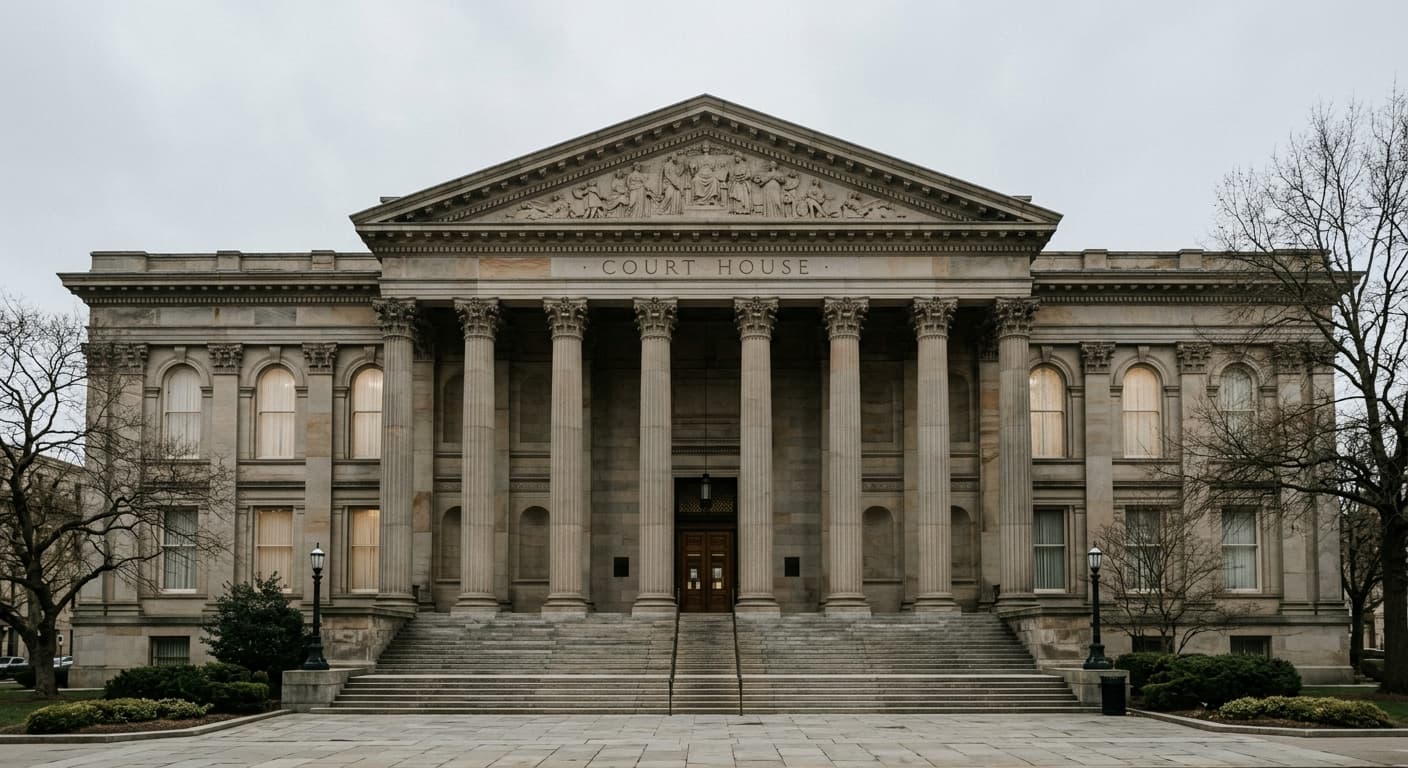
The Bundestag voted 322 to 134 with 118 abstentions on Friday, 25 September 2026, to adopt the Gesetz zur Modernisierung des Bundespolizeigesetzes, a rewrite of Germany's Federal Police Act. Hours later the Bundesrat consented, so the Act has come into being under Article 78 GG. It had not been promulgated in the Bundesgesetzblatt when this page was checked, so it is not yet in force; by its own terms it enters into force the day after promulgation.
Information last verified on September 25, 2026. This is a developing story; we update it as the record changes.
Status: Adopted by both chambers on 25 September 2026; awaiting promulgation. The Bundestag adopted the bill in third reading that morning (Drucksache 21/3051 in the version recommended by the Interior Committee, Drucksache 21/6990). The Bundesrat took it the same day as TOP 103 of its 1068th plenary sitting, under an abridged-deadline procedure (fristverkürzt), and consented: „Der Bundesrat hat der Reform des Bundespolizeigesetzes am 25. September 2026 zugestimmt.“ The Bundesrat's own note on what follows reads „Das Gesetz kann nun ausgefertigt und verkündet werden und tritt am Tag nach der Verkündung in Kraft.“ The Act had not been promulgated in the Bundesgesetzblatt when this page was checked, so it is not yet in force.
Jurisdiction scope: This article concerns German federal law and the powers of the Bundespolizei (Federal Police). It does not cover the separate police acts of the 16 Bundesländer, which govern state police forces, and it is not a general account of EU law. Where the European Union's AI Regulation is mentioned, it is described as the Bundestag's own committee document describes it, because we were not able to open an official EU source for that text in this session.
What Happened
At the start of the plenary sitting on Friday, 25 September 2026, the Bundestag adopted the federal government's bill to modernise the Bundespolizeigesetz in third reading and without debate. In the recorded vote (namentliche Abstimmung), 322 members voted for the bill, 134 voted against and 118 abstained. The bill is Drucksache 21/3051, adopted in the version amended by the Committee on Internal Affairs (Innenausschuss), whose recommendation is Drucksache 21/6990. A report from the Budget Committee under Paragraf 96 of the Bundestag's rules of procedure on the bill's financing is Drucksache 21/7001. (Deutscher Bundestag, textarchiv, 25 September 2026.)
This was the second attempt at a final vote. The Bundestag had already adopted the bill in second reading on Friday, 10 July 2026, the last sitting before the summer recess. According to the Bundestag's own record, the finding required by § 48 Abs. 3 of the Geschäftsordnung des Deutschen Bundestages was not made on that day. That provision requires the chamber to establish the consent of the prescribed majority whenever a particular majority is required for a decision. It is required here because the bill's Eingangsformel (enacting formula) reads: „Der Bundestag hat mit der Mehrheit seiner Mitglieder und mit der Zustimmung des Bundesrates das folgende Gesetz beschlossen.“ That formula demands both an absolute majority of the Bundestag's members and the consent of the Bundesrat.
The second reading and the Schlussabstimmung are separate steps, and it was the Schlussabstimmung that fell short. Because that vote was taken „nur mit einfacher Mehrheit der anwesenden Mitglieder“, the Bundestag record states that no concluding resolution on the Act had been adopted and that the Schlussabstimmung could be repeated, with at least 316 members needed for adoption. The 25 September vote was that repetition.
At that 10 July sitting the Bundestag also rejected a motion for a resolution from Bündnis 90/Die Grünen (Drucksache 21/6996) and a motion from Die Linke titled „Bundespolizei rechtsstaatlich modernisieren“ (Drucksache 21/3306). The Bundestag's report on the 25 September sitting does not record either motion being put again. The bill had its first reading on 18 December 2025 and a public expert hearing in the Innenausschuss on 26 January 2026, at which witnesses split sharply. In the Bundestag's summary of that hearing, Kai Dittmann of the Gesellschaft für Freiheitsrechte said the draft exceeded constitutional and human-rights limits and carried a high risk of misuse and discrimination, while Uli Grötsch, the Bundestag's Police Commissioner, called the new tasks sensible and necessary and stressed that citizens' fundamental rights must be comprehensively protected.
What the Law Would Authorise
The government bill is a full recast of the Bundespolizeigesetz, so it renumbers the statute. The section numbers below are those of the draft (BPolG-E) as printed in Drucksache 21/3051 and amended by Drucksache 21/6990, not the numbering of the Act currently in force.
Data and communications powers. The draft's table of contents lists Paragraf 24 Bestandsdatenauskunft (subscriber data), Paragraf 25 Erhebung von Verkehrs- und Nutzungsdaten (traffic and usage data), Paragraf 40 Ueberwachung der Telekommunikation (telecommunications interception), which the bill's explanatory part states includes Quellentelekommunikationsüberwachung or Quellen-TKÜ (interception at the device, before encryption), and Paragraf 41 Identifizierung und Lokalisierung von Mobilfunkkarten und -endgeräten (identifying and locating SIM cards and handsets).
Sensors and drones. Paragraf 38 BPolG-E covers the „Einsatz mobiler Sensorträger“ for image-capture, image-recording, sound-capture and sound-recording devices, which is the drafting hook for police drones. Paragraf 39 BPolG-E covers technical means directed against unmanned vehicle systems, that is, counter-drone measures. The government's own statement of the problem says that the use of drones as Sensorträger has become indispensable given changed technical possibilities.
Restrictions on individuals. Paragraf 29 BPolG-E creates Meldeauflagen (orders to report to the police at set times) and Paragraf 60 BPolG-E creates the Aufenthaltsverbot (a ban on being in a defined area), alongside the existing Platzverweisung at Paragraf 59 BPolG-E.
The two committee additions. The Innenausschuss amended the government draft on 8 July 2026 and inserted two sections after Paragraf 31 BPolG-E, the provision on automatic image-capture and image-recording devices.
Paragraf 31a BPolG-E, „Automatisierte Erkennung von Gefahren“, would let the Bundespolizei run automated data-processing applications on the material collected under Paragraf 31 in order to detect and evaluate movement patterns and locations suggesting that a criminal offence is being committed; patterns suggesting weapons within the meaning of Paragraf 1 Absatz 2 of the Waffengesetz, knives or other dangerous objects; and movement patterns and locations suggesting endangered or helpless persons. Where such a pattern is detected, officers must immediately check whether an actual danger exists, and if it does, the system may tag and automatically follow the relevant person in the live image feeds. The draft section itself states that processing biometric data capable of identifying particular persons is inadmissible for pattern recognition under that subsection.
Paragraf 31b BPolG-E, „Biometrische Detektion in Echtzeit“, is the real-time biometric matching power. As drafted it would let the Bundespolizei hold a file of biometric data and compare images collected under Paragraf 31 against it immediately after collection. The file may only take in the biometric data of four categories of people: persons responsible under Paragraf 18 or Paragraf 19 BPolG-E where a pressing danger to the existence or security of the Federation or a Land, or to a person's life, must be averted; persons where specific facts justify assuming they will commit an offence listed in Paragraf 129a Absatz 1 and 2 of the Strafgesetzbuch within a foreseeable period; certain victims of abduction, human trafficking or sexual exploitation; and certain missing persons facing a pressing danger to life or serious harm to health.
The drafted safeguards are unusually explicit. Only mathematical feature representations (biometric templates) and photographs may be stored. Linking the biometric record to further data and databases is inadmissible, which the committee's reasoning explains is meant to keep the reference database separate so the system can only say whether there is a hit at a given station, not whether a named person is there. The measure must be limited in time and place to what is strictly necessary. The matching system may access only images transmitted in real time, not stored recordings. Automated match proposals must be checked separately by two police officers trained in the risks of using artificial intelligence, with a single-officer exception where there is imminent danger (Gefahr im Verzug). If the check shows it is not the person sought, the data collected during the biometric comparison may not be stored. Measures need a court order from the Amtsgericht, applied for by a restricted circle of senior Bundespolizei officials.
The committee's reasoning states that Paragraf 31b is drafted to comply with Regulation (EU) 2024/1689, the EU's Artificial Intelligence Regulation, and it cites that Regulation's Article 5(1)(h), Article 5(3), Article 5(4) and Article 5(5) for, respectively, the prohibition-with-exceptions on real-time remote biometric identification in publicly accessible spaces, the 24-hour deadline for applying to a court, notification of each use to the market surveillance authority and the national data protection authority, and member-state reporting rules. We could not open an official EU source for the Regulation in this session, so those characterisations are reported as the Bundestag document states them.
The committee also extended the reporting duty in Paragraf 106 Absatz 1 BPolG-E to Paragraf 31a and Paragraf 31b, and inserted a new Paragraf 106 Absatz 3 requiring the Bundespolizei, together with a scientific institution, to evaluate both sections on a scientific basis. The evaluation period begins two years after a system under Paragraf 31a Absatz 1 or Paragraf 31b Absatz 1 is brought into service, and the Federal Ministry of the Interior must report the results to the Bundestag. What has to be evaluated is expressly not only effectiveness but also the effects on the exercise of fundamental rights and the severity of the interferences caused.
What German Law Says Today
None of the above is currently in force. The Gesetz über die Bundespolizei as published on gesetze-im-internet.de contains Paragraf 22a (Bestandsdatenauskunft), Paragraf 27 (selbsttätige Bildaufnahme- und Bildaufzeichnungsgeräte), Paragraf 27a (mobile Bild- und Tonaufzeichnungsgeräte), Paragraf 27b (anlassbezogene automatische Kennzeichenerfassung), Paragraf 28 (besondere Mittel der Datenerhebung) and Paragraf 38 (Platzverweisung). Its table of contents has no section on telecommunications interception, no section on automated danger detection, no section on real-time biometric detection, no Meldeauflage and no Aufenthaltsverbot. The government's own problem statement says the Act largely dates from 1994 and has so far been adapted only in individual provisions.
The constitutional footing for a federal police force is Article 87(1) sentence 2 of the Grundgesetz, which provides that „Bundesgrenzschutzbehörden“ and certain central police information and criminal-police bodies may be established by federal statute. Article 73(1) GG lists the matters on which the Federation has exclusive legislative power, including the unity of the customs and trading area and border protection (No. 5) and rail transport of federally owned railways (No. 6a), which is why federal police powers attach to borders, railway stations and airports rather than to general policing.
The right the new surveillance powers press against is the right to informational self-determination, derived from Article 2(1) GG („Jeder hat das Recht auf die freie Entfaltung seiner Persönlichkeit“) read together with Article 1(1) GG („Die Würde des Menschen ist unantastbar“). The Bundesverfassungsgericht set out the current test for automated analysis of police data in its judgment of 16 February 2023, 1 BvR 1547/19 and 1 BvR 2634/20, on the Hessian and Hamburg automated data analysis provisions. Its first Leitsatz states that where stored datasets are processed by an automated data analysis or evaluation application, this interferes with the informational self-determination of everyone whose data is used in a personally identifiable way in that operation. The court held that where such analysis enables a serious interference, it can be justified only under the strict conditions that apply generally to intrusive covert surveillance, that is, only to protect particularly weighty legal interests and only where there is at least a sufficiently concrete danger to them. That requirement can be dispensed with constitutionally only where the permitted analysis is limited so narrowly, and with sufficient normative clarity, that the weight of the interference is substantially reduced.
The court has also addressed automated pattern-matching against passing members of the public. In its decision of 18 December 2018, 1 BvR 142/15 (Kfz-Kennzeichenkontrollen 2), it held that an automated licence-plate check interferes with the informational self-determination of everyone whose plate is included, even where the result is a „Nichttreffer“ and the data is deleted immediately, expressly departing from its earlier position in BVerfGE 120, 378. It added that police checks aimed at the targeted search for persons or things generally require an objectively determined and limited occasion, and that the reach of the databases used for comparison must be limited by reference to that occasion.
The government draft itself is partly a compliance exercise. It states that the Bundesverfassungsgericht declared parts of the Bundeskriminalamtgesetz unconstitutional in its judgment of 20 April 2016 (1 BvR 966/09 and 1 BvR 1140/09, BVerfGE 141, 220), and that comparable provisions of the Bundespolizeigesetz therefore have to be adapted. It also names the decision of 9 December 2022 (1 BvR 1345/21) on the core area of private life when undercover officers and informants are used, and the decision of 14 November 2024 (1 BvL 3/22) on particularly intrusive measures.
On the data protection side, Directive (EU) 2016/680 on processing by law enforcement authorities is, as the draft puts it, largely implemented in the Bundesdatenschutzgesetz, with the Bundespolizeigesetz supplementing it at specific points. Readers who want the general picture of how the DSGVO and the BDSG fit together, and which body supervises whom, will find it in our explainer on Datenschutz in Germany; the question of which regulator is competent for a federal authority rather than a company is covered in our guide to Germany's data protection supervisory authorities. That matters here because the drafted Paragraf 31b requires notification to the Bundesbeauftragte für den Datenschutz.
Finally, nothing in this bill touches the rules that apply to private recording. The criminal prohibition on recording the non-public spoken word under Paragraf 201 StGB is unchanged, and so is the all-party-consent expectation we set out in Germany's recording laws. If you are asking whether you may record a conversation you are part of, the answer still turns on Paragraf 201 StGB and is discussed in detail in our piece on recording conversations in Germany.
Analysis: Why This Matters
The following is analysis from the Recording Law Editorial Team.
The most consequential thing in this bill is not the drone provision or the interception provision, both of which mirror powers the Bundeskriminalamt already has. It is Paragraf 31a BPolG-E. Paragraf 31b operates against a closed reference file of four narrowly defined categories, behind a court order. Paragraf 31a operates against everyone in front of a Bundespolizei camera, with no judicial order written into the section and no reference file at all, because it is looking for patterns rather than people.
The drafters plainly saw the constitutional exposure there, which is why the section ends with an express prohibition on processing biometric data capable of identifying particular persons for pattern recognition. Whether that line holds is a question the courts will decide, and this article does not predict the answer. But the shape of the question is already set by existing case law. The Bundesverfassungsgericht held in 2018 that an automated comparison interferes with the rights of every person swept into it, even where the system returns no hit and deletes the data at once. It held in February 2023 that the constitutional demands on automated analysis scale with the type and volume of data that can be processed and with the analysis method permitted, and that the legislature must itself lay down the essential limits on both, in a normatively clear way, rather than leaving them to administrative practice. Paragraf 31a as drafted names three pattern categories and relies on an immediate human check; it does not, in the text itself, limit the analysis method or the retention of the derived pattern data.
There is a second thing worth noticing, and it cuts the other way. The committee attached an evaluation clause to both new sections that requires assessment of the effects on the exercise of fundamental rights and the severity of the interferences caused, not merely whether the tools work, and it put both sections under the Paragraf 106 reporting duty, with the resulting report made publicly available by the Bundestag. That is a checkable lever. It is also a tacit acknowledgement that nobody yet knows how these systems perform in a German railway station, which is the honest position.
For most readers of this site the practical effect is narrow. Bundespolizei jurisdiction is borders, federally owned railways, airports and the protection of federal organs, so the places where these powers would bite are stations, airports and border crossings, not high streets or workplaces. If your question is about cameras where you work rather than where you travel, that is a different body of law entirely, built on the DSGVO, the BDSG and works council co-determination, and we cover it in workplace surveillance in Germany.
What Happens Next
The bill is a Zustimmungsgesetz by its own enacting formula, which means Bundesrat consent was a condition of its coming into existence, not merely an opportunity to object. That consent was given on 25 September 2026, so what remains is signature and promulgation.
Step one: the Bundesrat. Done. Article 78 GG provides that a law adopted by the Bundestag comes into being if the Bundesrat consents, does not make the request under Article 77(2) GG (the request to convene the Vermittlungsausschuss, the mediation committee), does not lodge an objection within the Article 77(3) period or withdraws it, or if an objection is overridden by the Bundestag. Because the enacting formula here requires consent, the consent route was the operative one. TOP 103 was taken fristverkürzt, that is, with the normal waiting period shortened, precisely because the Bundestag vote happened the same morning. The Bundesrat consented that day, under the heading „Bundesrat stimmt Reform des Bundespolizeigesetzes zu“, so the consent route in Article 78 GG was the one taken. Its own summary of what follows reads „Das Gesetz kann nun ausgefertigt und verkündet werden und tritt am Tag nach der Verkündung in Kraft.“
Step two: Ausfertigung and Verkündung. If the Act comes into being, Article 82(1) GG requires that it be signed (ausgefertigt) by the Federal President after countersignature and then promulgated (verkuendet) in the Bundesgesetzblatt, which may be kept in electronic form.
Step three: entry into force. Article 82(2) GG provides that every statute should state the day it enters into force, and that absent such a provision it enters into force on the fourteenth day after the end of the day on which the Bundesgesetzblatt was issued. This bill does state one. Artikel 12 of the government draft reads that the Act „tritt am … [einsetzen: Datum des Tages nach der Verkündung dieses Gesetzes] in Kraft“, that is, the day after promulgation. The committee's recommendation renumbers that provision, referring to Artikel 13 (Außerkrafttreten) and Artikel 14 (Inkrafttreten) after two further articles were inserted. A separate transitional rule in Paragraf 107 BPolG-E delays the reliability-check provision in Paragraf 76 BPolG-E to 1 January 2027.
What would make this settled law. Promulgation in the Bundesgesetzblatt followed by the stated entry-into-force date. Note that the Bundesgesetzblatt website returns HTTP 200 for URLs that do not exist, so a page loading there proves nothing; the citation to look for is a dated BGBl Teil I entry naming the Act. After that, the open questions move to the courts and to the Paragraf 106 reports. We will update this page when the promulgation or any constitutional challenge is on the public record.
This article is general legal information about German federal law and the Grundgesetz, and about an Act that both chambers have adopted but that had not been promulgated when this page was checked. It is not legal advice, it does not create a lawyer-client relationship, and it does not address the police acts of the German Länder or the law of any other country. Information was verified on 25 September 2026 against the cited primary sources. Legislative status can change within hours. For advice on your own situation, consult a qualified lawyer (Rechtsanwältin or Rechtsanwalt) admitted in the relevant jurisdiction.
Related articles
- Germany Recording Laws: All-Party Consent, StGB, GDPR
- Is it a crime to record a conversation in Germany (Paragraf 201 StGB)
- Workplace Surveillance in Germany
- Datenschutz in Germany: the DSGVO, the BDSG and who enforces them
- Which German data protection authority is responsible
Last updated: 2026-09-25. This is a developing story; details verified as of 2026-09-25.
Frequently Asked Questions
Is the German Federal Police Act reform now law?
Not yet in force, but it has cleared both chambers. On 25 September 2026 the Bundestag passed it in third reading by 322 to 134 with 118 abstentions, and the Bundesrat consented the same day as TOP 103 of its 1068th sitting, taken under an abridged-deadline procedure. Because the Act is a Zustimmungsgesetz, that consent means it has come into being under Article 78 GG. What is still outstanding is signature by the Federal President and promulgation in the Bundesgesetzblatt. The Act enters into force the day after promulgation, and it had not been promulgated when this page was checked.
Would this legalise live facial recognition at German railway stations?
Not today. The Act as adopted contains a new Paragraf 31b BPolG-E headed 'Biometrische Detektion in Echtzeit' which would allow real-time comparison of camera images against a separate file of biometric templates and photographs covering four defined categories of people, subject to a court order and other conditions. That provision is not yet in force, because the Act had not been promulgated when this page was checked, and the Bundespolizeigesetz currently in force contains no equivalent power.
What is the difference between Paragraf 31a and Paragraf 31b in the bill?
Paragraf 31a BPolG-E, 'Automatisierte Erkennung von Gefahren', is pattern detection: movement patterns and locations suggesting an offence, patterns suggesting weapons or knives, and patterns suggesting endangered or helpless persons. Its own text says that processing biometric data capable of identifying particular persons is inadmissible for that purpose. Paragraf 31b BPolG-E is identification: comparing images against a biometric reference file to find a specific sought person. Only Paragraf 31b carries the judicial-order requirement in the drafted text.
What is Quellen-TKÜ and is it in this bill?
Quellen-Telekommunikationsüberwachung is interception carried out at the communicating device itself, which is how authorities reach messages that are encrypted in transit. The government's statement of the problem in Drucksache 21/3051 says legal bases for this are needed because offenders communicate in encrypted form and use cloud and online services, modelled on the Bundeskriminalamtgesetz. The draft places telecommunications interception at Paragraf 40 BPolG-E, and the Bundestag record describes Quellen-TKÜ as among the new powers.
Does this change the police laws of the German Länder?
No. This is a federal statute governing the Bundespolizei, whose tasks under the Bundespolizeigesetz centre on border protection, federally owned railways, aviation security, protection of federal organs and duties at sea. The 16 Bundesländer each have their own police act governing their own police forces, and those are untouched by this bill.
Does it change what I am allowed to record in Germany?
No. The bill concerns what the Federal Police may do. The criminal prohibition on recording the non-public spoken word in Paragraf 201 StGB, and the data protection obligations that can attach to private recording under the DSGVO and the BDSG, are not amended by it.
Who would oversee the Bundespolizei's use of these systems?
Under the committee text, the Bundespolizei would have to notify the Bundesbeauftragte für den Datenschutz, and both new sections would fall under the reporting duty in Paragraf 106 Absatz 1 BPolG-E, so the Bundespolizei reports to the Federal Ministry of the Interior, which forwards the report to the federal government and the Bundestag within two months, and the Bundestag makes it publicly available. A new Paragraf 106 Absatz 3 would require a scientific evaluation of both sections beginning two years after such a system is brought into service.
Why did the Bundestag have to vote on this twice?
The Bundestag adopted the bill in second reading on 10 July 2026, but according to its own record the finding required by § 48 Abs. 3 of its Geschäftsordnung was not made, because the vote was taken only with a simple majority of the members present. That finding is required whenever a particular majority is prescribed, and it is prescribed here because the enacting formula demands the majority of the Bundestag's members. The record states that no concluding resolution had therefore been adopted, that the Schlussabstimmung could be repeated, and that at least 316 members would then be needed. The 25 September vote was that repeat.
When does the Act enter into force?
The Bundesrat's consent is in, so what remains under Article 82(1) GG is signature by the Federal President after countersignature, then promulgation in the Bundesgesetzblatt. On timing, Article 82(2) GG sets a default of the fourteenth day after the day the Bundesgesetzblatt was issued where a statute is silent, but this Act is not silent: its entry-into-force article provides that it enters into force on the day after its promulgation, which is also what the Bundesrat states. A transitional provision delays Paragraf 76 BPolG-E to 1 January 2027. No promulgation date was on the public record when this page was checked.
Updates
Independently fact-checked against the cited primary sources
Sources and References
- Deutscher Bundestag, Textarchiv, 'Modernisierung des Bundespolizeigesetzes in dritter Beratung beschlossen' (third reading of 25 September 2026: 322 Ja, 134 Nein, 118 Enthaltungen; Drucksachen 21/3051, 21/6990, 21/7001; the unmade finding under Paragraf 48 Absatz 3 GO-BT after the 10 July 2026 vote; public expert hearing of 26 January 2026), accessed 25 September 2026(bundestag.de).gov
- Deutscher Bundestag, Drucksache 21/3051, 'Gesetzentwurf der Bundesregierung: Entwurf eines Gesetzes zur Modernisierung des Bundespolizeigesetzes', 21. Wahlperiode, 3 December 2025 (A. Problem und Ziel; Inhaltsuebersicht listing Paragrafen 24, 25, 29, 38, 39, 40, 41 and 60 BPolG-E; Artikel 12 Inkrafttreten)(dserver.bundestag.de).gov
- Deutscher Bundestag, Drucksache 21/6990, 'Beschlussempfehlung und Bericht des Ausschusses fuer Inneres' on Drucksachen 21/3051 and 21/3306, 21. Wahlperiode (inserting Paragraf 31a 'Automatisierte Erkennung von Gefahren' and Paragraf 31b 'Biometrische Detektion in Echtzeit' BPolG-E, with the Richtervorbehalt, two-officer verification, false-positive deletion and database-separation rules; the Paragraf 106 Absatz 1 reporting extension and new Paragraf 106 Absatz 3 evaluation clause; the committee's references to Articles 5(1)(h), 5(3), 5(4) and 5(5) of Regulation (EU) 2024/1689)(dserver.bundestag.de).gov
- Bundesrat, 'BundesratKOMPAKT: Ausgewaehlte Tagesordnungspunkte der 1068. Sitzung am 25.09.2026', TOP 103 Bundespolizeigesetz, Beschluss 'Bundesrat stimmt Reform des Bundespolizeigesetzes zu' ('Der Bundesrat hat der Reform des Bundespolizeigesetzes am 25. September 2026 zugestimmt'; 'Das Gesetz kann nun ausgefertigt und verkuendet werden und tritt am Tag nach der Verkuendung in Kraft'; sitting reported as 'Die Sitzung ist beendet'), accessed 25 September 2026(bundesrat.de).gov
- Bundesrat, Tagesordnung der 1068. Sitzung, TOP 103 'Gesetz zur Modernisierung des Bundespolizeigesetzes' (agenda entry, taken fristverkuerzt on 25 September 2026), accessed 25 September 2026(bundesrat.de).gov
- Bundesministerium der Justiz / Bundesamt fuer Justiz, 'Gesetz ueber die Bundespolizei (Bundespolizeigesetz - BPolG)', nichtamtliches Inhaltsverzeichnis (currently in force: Paragraf 22a Bestandsdatenauskunft, Paragraf 27 selbsttaetige Bildaufnahme- und Bildaufzeichnungsgeraete, Paragraf 27a mobile Bild- und Tonaufzeichnungsgeraete, Paragraf 27b anlassbezogene automatische Kennzeichenerfassung, Paragraf 38 Platzverweisung; no telecommunications interception, biometric detection or Aufenthaltsverbot section), accessed 25 September 2026(gesetze-im-internet.de).gov
- Grundgesetz fuer die Bundesrepublik Deutschland, Artikel 87 Absatz 1 Satz 2 (federal police and central police authorities may be established by federal statute), gesetze-im-internet.de, accessed 25 September 2026(gesetze-im-internet.de).gov
- Grundgesetz fuer die Bundesrepublik Deutschland, Artikel 73 Absatz 1 (exclusive federal legislative competences, including No. 5 customs and border protection and No. 6a federally owned railways), gesetze-im-internet.de, accessed 25 September 2026(gesetze-im-internet.de).gov
- Grundgesetz fuer die Bundesrepublik Deutschland, Artikel 2 Absatz 1 (free development of personality, the basis with Artikel 1 Absatz 1 GG for the right to informational self-determination), gesetze-im-internet.de, accessed 25 September 2026(gesetze-im-internet.de).gov
- Grundgesetz fuer die Bundesrepublik Deutschland, Artikel 1 Absatz 1 (human dignity is inviolable), gesetze-im-internet.de, accessed 25 September 2026(gesetze-im-internet.de).gov
- Grundgesetz fuer die Bundesrepublik Deutschland, Artikel 78 (when a statute adopted by the Bundestag comes into being, including Bundesrat consent and the Article 77(2) mediation-committee request), gesetze-im-internet.de, accessed 25 September 2026(gesetze-im-internet.de).gov
- Grundgesetz fuer die Bundesrepublik Deutschland, Artikel 82 (Ausfertigung by the Federal President, Verkuendung in the Bundesgesetzblatt, and the fourteenth-day default entry into force), gesetze-im-internet.de, accessed 25 September 2026(gesetze-im-internet.de).gov
- Bundesverfassungsgericht, Urteil des Ersten Senats vom 16. Februar 2023, 1 BvR 1547/19 and 1 BvR 2634/20 (Automatisierte Datenanalyse), Leitsaetze(bundesverfassungsgericht.de).gov
- Bundesverfassungsgericht, Beschluss des Ersten Senats vom 18. Dezember 2018, 1 BvR 142/15 (Kfz-Kennzeichenkontrollen 2), Leitsaetze(bundesverfassungsgericht.de).gov