Acima Settlement: 43 States, $183.5M in Rent-to-Own Relief
Independently fact-checked against primary sources (last audited November 23, 2026). · 12 primary sources cited on this page. How we verify our legal content

Forty-three state attorneys general resolved a joint investigation of rent-to-own finance company Acima Digital, LLC for $183.5 million on November 12, 2026. The relief rests on state rental-purchase statutes rather than federal lending law, and the judgment requires no claim form from any consumer.
Information last verified on November 23, 2026. This is a developing story; we update it as the record changes.
Status: The final consent judgment is executed and signed, and it defines its own Effective Date as November 12, 2026, which is the date its compliance clocks and its $43 million restitution and $130 million lease-reduction deadlines run from. The $10.5 million payment to the states is the exception: Paragraph 81 runs that clock from Acima's receipt of each state's written payment instructions. Pennsylvania's stipulated motion for entry of that judgment was filed the same day in the Court of Common Pleas of Allegheny County, and the Pennsylvania Office of Attorney General described the consent petition as pending approval by the court. As of November 23, 2026 we have not verified entry of the judgment on that docket. The judgment's opening paragraph says Acima is entering into similar judgments with the attorney general offices of the other 42 states at the same time, and Maryland's office reports that its own filing went to the Circuit Court for Howard County. We have not confirmed where each of the other states filed.
Jurisdiction scope: This settlement covers residents of the 43 states named in the judgment: Alaska, Arizona, Arkansas, Colorado, Connecticut, Delaware, Florida, Georgia, Hawaii, Idaho, Illinois, Indiana, Iowa, Kansas, Kentucky, Louisiana, Maine, Maryland, Massachusetts, Michigan, Minnesota, Mississippi, Missouri, Nebraska, Nevada, New Hampshire, New Jersey, North Carolina, North Dakota, Ohio, Oklahoma, Oregon, Pennsylvania, Rhode Island, Tennessee, Texas, Utah, Vermont, Virginia, Washington, West Virginia, Wisconsin and Wyoming. Seven states are not signatories: Alabama, California, Montana, New Mexico, New York, South Carolina and South Dakota. The District of Columbia resolved its own Acima matter separately in July 2026, and New York sued Acima separately in August 2024 on a different legal theory. Nothing below is a statement about any other rent-to-own company.
What Happened
On November 12, 2026, the Pennsylvania Office of Attorney General filed a two-count complaint and a stipulated motion for entry of a final consent judgment against Acima Digital, LLC and Acima Holdings, LLC in the Court of Common Pleas of Allegheny County, Civil Division. Both defendants are Utah limited liability companies whose principal place of business is 5501 Headquarters Drive, Plano, Texas. The judgment names their corporate parents as Upbound Group, Inc. and Rent-A-Center East, Inc.
Acima is a rent-to-own financing company that partners with retailers. When a shopper takes the offer, Acima buys the merchandise from the retailer and leases it back to the shopper under a rental-purchase agreement, with Acima Digital listed as lessor.
The complaint describes three routes to ownership: pay every scheduled rental payment through the maximum term, which it says is often twelve months; exercise a 90-day purchase option; or exercise a later early purchase option priced at roughly 75 percent of the remaining payments. The Commonwealth's central allegation is that the first route was the default and the second route was the advertisement.
"The Total of Payments amounts to at least twice the Cash Price of the merchandise."
Source: Commonwealth of Pennsylvania v. Acima Digital, LLC, Complaint, Paragraph 13
Count One lists thirteen categories of alleged unfair or deceptive conduct. Among them: advertising the agreements as ninety-day "same as cash" or interest-free programs without disclosing the finance cost; failing to tell retail partners that customers were defaulted into the long term; using the words credit, financing and loan for a lease; marking up the retailer's advertised cash price by as much as roughly $100; and obstructing consumers who tried to end an agreement by returning the goods.
The electronic signing process gets its own section. According to Paragraphs 43 and 44, the summary screen until recently listed the 90-day purchase amount first and the higher twelve-month total of payments after it, without disclosing that consumers were defaulted into the twelve-month schedule. Paragraphs 45 and 46 add that from about 2017 to 2022 the signing screen showed a faded image of the agreement behind a text box, so a consumer had to click a Hide button to read the contract before typing a name into the box.
The money
Monetary relief sits in Paragraphs 80 through 84. The Total Payment is $53.5 million: $10.5 million to the states, divided at the discretion of the Multistate Executive Committee, and $43 million into a settlement administrator's trust account for consumer restitution. Paragraph 22 defines that committee as the attorney general offices of eleven states: Colorado, Connecticut, Illinois, Iowa, Maryland, Nebraska, New Hampshire, Ohio, Pennsylvania, Tennessee and Washington. The $10.5 million may be used for attorneys' fees and investigation costs or deposited in consumer protection enforcement and education funds. Acima separately funds up to $700,000 of administrator costs, with any unspent balance reverting to the company.
The $130 million is not cash. Within 30 days of the Effective Date, Acima must reduce to zero the balances on three defined categories of delinquent charged-off accounts, hand those consumers outright ownership of the merchandise on an as-is, where-is basis, treat the balances as disputed debt, and ask the consumer reporting agencies to remove the associated tradelines. The notice form attached as Exhibit A tells consumers that Acima agreed to make that credit-reporting request by January 11, 2027.
Acima also warrants in Paragraph 84 that it has not sought payment on those accounts since May 29, 2026, and must undertake reasonable efforts to refund any payment a covered consumer made after that date.
Per-state shares are published by each attorney general rather than set out in the judgment. Pennsylvania reports more than $1.6 million in restitution and more than $3.6 million in lease forgiveness, roughly $5 million in all, reaching almost 9,000 Pennsylvania consumers. Maryland reports more than $1.6 million in restitution and more than $2.84 million in lease forgiveness. Nebraska, at the other end of the scale, reports $292,608.42 in restitution and $593,465.05 in lease forgiveness.
What Acima has to change
Paragraph 44 bars Acima from advertising that consumers will only pay the cash price, and names the banned phrases: cash option, same as cash, and no additional fees required, unless the early purchase option price genuinely does not exceed the cash price. Paragraph 46 bars calling the product a loan or credit, and allows the word financing only when the same advertisement conspicuously says rental-purchase, rent-to-own, lease-purchase or lease-to-own.
Paragraph 55 caps the Acima Cash Price at the retailer's cash price, ending the markup. Paragraph 71 bars Acima from using words like repossession, legal proceedings or court action in collections messages unless seizure is lawful and the company actually intends to do it.
The windows differ by provision: 60 days to implement most injunctive terms, 90 days for most advertising terms, and 150 days to replace physical in-store marketing materials. Retailer training obligations run five years from 150 days after the Effective Date, stretching to seven if a court in any participating state finds a violation. The servicing provisions run ten years, and the first annual compliance report is due 455 days out.

What the Law Actually Says
One distinction does most of the work in this case: a rental-purchase agreement is generally not a credit transaction, so the federal disclosure regime most people think of does not apply to it.
Regulation Z, which implements the Truth in Lending Act, sweeps some leases in. Under 12 CFR 1026.2(a)(16), a credit sale includes a bailment or lease under which the consumer pays a sum substantially equivalent to or more than the value of the property and will become or may become the owner for nominal consideration, but only "unless terminable without penalty at any time by the consumer." That exception is decisive. A rent-to-own agreement the customer can return at any time without a penalty sits outside Regulation Z, which means no annual percentage rate, no federal finance-charge disclosure, and no federal disclosure claim.
What fills the gap is a state rental-purchase act. Pennsylvania's is the Rental-Purchase Agreement Act, codified at 42 Pa.C.S. 6901 et seq. Two of its provisions map directly onto the conduct alleged here. Section 6905(a) says the total amount charged for the cost of lease services "shall not exceed the cash price of the property." Section 6904(7) forbids any provision requiring the lessee to pay a fee in connection with retrieval of the property or termination or rescission of the agreement.
The complaint's Count Two alleges Acima broke both. On the cap, it alleges that Acima inflated the disclosed cash price by up to roughly $100 and then charged a cost of lease services measured against that inflated number, so the real lease cost exceeded the real cash price. On termination, it alleges Acima put onerous and costly demands on consumers who invoked a right the statute and Acima's own contracts gave them.
Those two allegations are connected. The penalty-free right to terminate is what keeps the product outside Regulation Z, so a lessor that obstructs the right in practice leaves the consumer without the benefit of the state provision and still outside the federal regime.
The counts also explain why Pennsylvania could sue at all. The Unfair Trade Practices and Consumer Protection Law, 73 P.S. 201-1 et seq., is what authorizes the attorney general to bring the action at all, and Count One rests on it directly. Section 6909(a) of the Rental-Purchase Agreement Act is the bridge for Count Two: the complaint pleads at Paragraph 78 that an RPAA violation is a per se violation of the Consumer Protection Law. Count One separately pleads 73 P.S. 201-2(4)(v) and (xxi), the misrepresentation and catch-all deception subsections. Paragraph 110 of the judgment states that it operates as an injunction under 73 P.S. 201-4.
Two other governments pursued Acima on their own, and only one of them tried the federal-credit route. The Consumer Financial Protection Bureau sued Acima Holdings, Acima Digital and founder Aaron Allred in the District of Utah in July 2024, arguing these leases were credit and pleading the Truth in Lending Act and Regulation Z among other claims; the Bureau voluntarily dismissed that case with prejudice in March 2025. The New York Attorney General sued in August 2024 under New York's own rent-to-own law, alleging that Acima leased goods it would not take back, charged more than that law allows, and misled consumers about the cost of its financing; the release describes consumers paying effective rates of 100 percent or higher. New York is not among the 43 signatories, and as of November 23, 2026 we have not verified the current posture of its case. The deception counts brought here did not require winning that reclassification argument, and the judgment reflects the narrower footing: Paragraph 79 obliges Acima to follow the Truth in Lending Act only if it later offers a non-RPA product that is actually governed by it.
If you are comparing this to how the rules work when a car lease or an installment contract goes bad, our overview of debt collection rules and consumer protections and the page on what a creditor must do before taking a vehicle cover the adjacent territory. Pennsylvania's own deception statute, the one Count One runs on, is explained in plainer terms in our guide to Pennsylvania consumer fraud law.
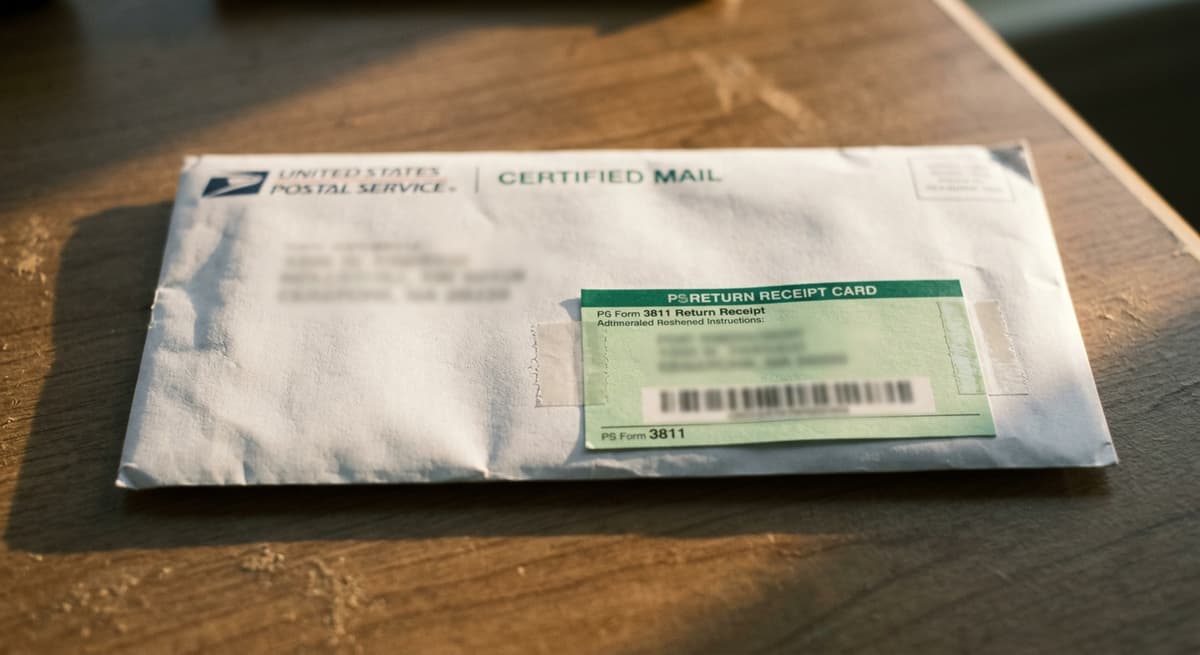
What Consumers Should Expect, and Who Will Contact Them
The judgment sets out a mechanism, not an application: no claim form, no eligibility questionnaire, no consumer deadline.
Restitution works like this. Acima pays $43 million into a trust account for a settlement administrator chosen by the Multistate Executive Committee. The committee, in its sole discretion, decides which consumers are entitled to restitution and in what amounts, and Acima must hand over the records needed to identify and locate them. The administrator named in the court-filed notice form is Rust Consulting, Inc. Once distribution is complete, funds left over from uncashed and voided checks go to the states as an additional multistate payment.
Lease forgiveness works differently. Acima, not the administrator, notifies the affected consumers, using the exact notice text attached to the judgment as Exhibit A. That notice is specific about what it means.
"This means that for the account(s) and/or lease(s) listed above, your balance has been reduced to $0 and you do not owe Acima Leasing any more money with respect to such listed account(s) and/or lease(s). You now own the leased property that is subject to the account(s) and/or lease(s) as-is, where-is and may keep it without any further obligations to Acima Leasing, and Acima Leasing does not have any further obligations to you with respect to such property."
Source: Final Consent Judgment, Exhibit A (notice of lease balance reduction)
The same notice states that payments made on a zeroed account before May 29, 2026 will not be refunded, that payments made after that date will be, and that any other Acima accounts the consumer holds are unaffected.
Because no consumer has to do anything, anyone who contacts you asking for something is worth a second look. A website or caller that asks you to submit a claim for this settlement, pay a fee or a percentage to collect, verify your Social Security number or bank details to release a payment, or "register" before a deadline is not operating any part of this settlement. The judgment contains no such step. The two legitimate contacts are a notice from Rust Consulting, Inc. about restitution and a notice from Acima about a lease balance reduction, and the subject line on the official form is a plain reference to the Acima Leasing multistate settlement.
If you want a general method for pressure-testing an unexpected message like that, our walkthrough on spotting the tells in a suspicious offer applies cleanly here.
One limit worth knowing: the release in Paragraph 85 reaches only claims the signatory attorneys general could have brought. Paragraph 86(A) expressly preserves private rights of action, individual or class, under state unfair-practices law and rental-purchase acts.
Analysis: Why This Matters
The following is analysis from the Recording Law Editorial Team.
The interesting number here is not $183.5 million. It is the $70.
Paragraph 39 of the judgment, setting out what the new retailer training has to cover, illustrates the early purchase options as they stood when the judgment was signed: under the 90-day option, the consumer pays the cash price plus a charge of $70. So the product the advertising promised was always real, and always cheap. The expensive product was the one you got by doing nothing. Everything the attorneys general alleged, from the ad slogans to the ordering of the summary screen to the automatic ACH setup at signing, operates on the gap between those two prices. The settlement is less a lending case than a defaults case.
That framing explains why the injunctive terms are mostly about sequence and salience rather than price. Paragraph 45 does not cap anything. It says that if Acima advertises a shorter path to ownership, the same advertisement has to disclose the full maximum term, a representative example of what that term costs, and the fact that the consumer must affirmatively contact Acima to get the cheaper path. That is a remedy aimed at the architecture of the transaction, and it is the right target.
The gap between the press releases and the document is also instructive, and it runs in one direction. Nearly every state release says flatly that Acima cannot report these agreements to the three major credit bureaus for five years. Paragraph 60 is narrower on all three axes: it reaches only agreements originated after the Effective Date, it covers only Equifax, Experian and TransUnion, and it expressly lets Acima keep sending transaction data to specialty consumer reporting agencies such as Clarity and DataX, which are exactly what subprime underwriters pull. A consumer reading the press release could reasonably conclude the lease has gone invisible to lenders. It has not.
The harder question the settlement does not answer is whether a rental-purchase agreement is credit. The Consumer Financial Protection Bureau said yes and dropped the case. New York stayed out of this deal and sued separately under its own rent-to-own law instead, so no government is currently pressing the credit question. Forty-three attorneys general took the narrower path and collected, which was almost certainly the correct litigation judgment in 2026. But the narrow path leaves the category where it was. Rent-to-own stays outside the Truth in Lending Act as long as the customer can hand the sofa back without a penalty, which means the single most consequential consumer protection in this entire product line is a contract right that this very complaint says Acima made hard to use. Paragraphs 56 and 72 through 76 now spell out how that return has to work. Whether a term in a consent judgment is a durable substitute for statutory coverage is the thing to watch, and the compliance reports due starting 455 days out are where the first evidence will appear.
This article is general legal information, not legal advice, and reading it does not create an attorney-client relationship. The documents described here are court filings and official releases; a filed consent judgment is not a finding of wrongdoing. If a rental-purchase agreement, a collection attempt or a credit report is affecting you personally, talk to a licensed attorney in your state or contact your state attorney general's consumer protection office.
Related articles
- Debt collection rules and what collectors may not do
- What has to happen before a lender takes your vehicle
- How Pennsylvania's consumer fraud statute works
- Spotting the tells in a suspicious offer
Last updated: 2026-11-23. This is a developing story; details verified as of 2026-11-23.
Frequently Asked Questions
What is the Acima settlement?
On November 12, 2026, 43 state attorneys general announced a $183.5 million resolution of a joint investigation into Acima Digital, LLC and Acima Holdings, LLC, a rent-to-own finance company. The states alleged Acima advertised a ninety-day payoff while defaulting customers into a term of roughly twelve months costing about twice the cash price. The total breaks down as $43 million in consumer restitution, $10.5 million to the states, and $130 million in lease balance reductions. Acima did not admit wrongdoing.
Do I need to file a claim for the Acima settlement?
No. The consent judgment creates no claim form, no application and no consumer deadline. Restitution is distributed by a settlement administrator, Rust Consulting, Inc., which contacts the consumers the Multistate Executive Committee identifies from Acima records. Lease balance reductions are announced by Acima itself using a notice form attached to the judgment. Any website or caller asking you to submit a claim, pay a fee or verify financial details to collect from this settlement is not part of it.
How is it decided who receives restitution from the Acima settlement?
Paragraph 82 of the consent judgment gives the Multistate Executive Committee, the eleven attorney general offices named in Paragraph 22, sole discretion over which consumers are entitled to restitution and in what amounts, using records Acima must hand over. Lease balance reductions are different: Paragraph 84 defines three categories of delinquent charged-off accounts by status, origination window and how much of the cash price was paid. Nobody determines their own eligibility, and nobody applies.
Which states are part of the Acima settlement?
Forty-three: Alaska, Arizona, Arkansas, Colorado, Connecticut, Delaware, Florida, Georgia, Hawaii, Idaho, Illinois, Indiana, Iowa, Kansas, Kentucky, Louisiana, Maine, Maryland, Massachusetts, Michigan, Minnesota, Mississippi, Missouri, Nebraska, Nevada, New Hampshire, New Jersey, North Carolina, North Dakota, Ohio, Oklahoma, Oregon, Pennsylvania, Rhode Island, Tennessee, Texas, Utah, Vermont, Virginia, Washington, West Virginia, Wisconsin and Wyoming. Alabama, California, Montana, New Mexico, New York, South Carolina and South Dakota are not signatories. The District of Columbia resolved its own Acima matter in July 2026 for $4 million.
When are Acima settlement payments due?
The judgment, not a published distribution calendar, sets the deadlines. Acima must pay $43 million into the administrator trust account within 30 calendar days of the November 12, 2026 Effective Date and carry out the $130 million in lease balance reductions within the same 30 days. Credit-reporting corrections on the zeroed accounts are due within 60 days, and the attached notice form references a January 11, 2027 date for that request. The judgment sets no date by which individual restitution checks must reach consumers.
Does the settlement take the Acima account off my credit report?
Only for the accounts whose balances are being zeroed out. For those, Paragraph 84 requires Acima to treat the balance as disputed debt and ask each consumer reporting agency it reported to for removal of the tradeline, within 60 days of the Effective Date. Separately, Paragraph 60 stops Acima from reporting agreements originated after the Effective Date to Equifax, Experian and TransUnion for five years, starting 60 days out. That freeze does not cover older agreements, and it expressly permits Acima to keep furnishing data to specialty consumer reporting agencies such as Clarity and DataX.
What is a rent-to-own or rental-purchase agreement?
It is a lease of personal property, often furniture, appliances or electronics, under which the customer makes renewing periodic payments and can reach ownership either by paying through the full term or by exercising an early purchase option. Because the customer can normally return the goods at any time without penalty, it is generally not treated as a credit sale under 12 CFR 1026.2(a)(16), so the Truth in Lending Act disclosures do not apply. State rental-purchase acts regulate the transaction instead, and their terms differ by state.
Is Acima legal?
Rent-to-own financing is a lawful, regulated business, and nothing in this settlement bars Acima from operating. Paragraph 99 of the consent judgment states that it is not an adjudication or finding of wrongdoing, and Acima specifically denies liability. What the judgment does, once the court enters it, is impose injunctive terms on how Acima advertises, discloses, prices, services and reports these agreements, running five to ten years depending on the provision, enforceable in the Court of Common Pleas of Allegheny County as an injunction under 73 P.S. 201-4.
Updates
Independently fact-checked against the cited primary sources
Sources and References
- Pennsylvania Office of Attorney General, "Attorney General Sunday Announces $183.5 Million Multistate Settlement with Rent-to-Own Finance Company Acima Digital" (Nov. 12, 2026). Cited for: the $183.5 million total and its three components, the 43-state coalition and the full list of joining states, the Pennsylvania shares (more than $1.6 million restitution and more than $3.6 million lease forgiveness, roughly $5 million reaching almost 9,000 Pennsylvania consumers), the statement that Pennsylvania, Colorado and Tennessee led the coalition, the no-action-required statement, and the statement that the consent petition was filed in the Allegheny County Court of Common Pleas and is pending court approval.(attorneygeneral.gov).gov
- Commonwealth of Pennsylvania, Office of Attorney General v. Acima Digital, LLC and Acima Holdings, LLC, Complaint (Ct. Com. Pl. Allegheny Cty., Civil Division, filed Nov. 12, 2026). Cited for: the two counts pleaded (Unfair Trade Practices and Consumer Protection Law, 73 P.S. 201-1 et seq., and the Rental-Purchase Agreement Act, 42 Pa.C.S. 6901 et seq.); the three routes to ownership and the 12-month default (Paragraphs 11 to 13); the quoted sentence that the Total of Payments is at least twice the Cash Price (Paragraph 13); the electronic signing and Hide-button allegations (Paragraphs 43 to 46); the up to roughly $100 cash-price markup (Paragraph 39); the cost-of-lease-exceeding-cash-price allegation (Paragraphs 52 to 54); the termination-obstruction allegations (Paragraphs 59 to 62); the thirteen categories of alleged unfair or deceptive conduct (Paragraph 75); and the RPAA sub-counts (Paragraph 80).(cdn.attorneygeneral.gov).gov
- Commonwealth of Pennsylvania v. Acima Digital, LLC and Acima Holdings, LLC, Stipulated Motion for Entry of Final Consent Judgment and executed [Proposed] Final Consent Judgment (Ct. Com. Pl. Allegheny Cty., Nov. 12, 2026). THE CONTROLLING DOCUMENT. Cited for: the list of 43 signatory states (unnumbered paragraph following the caption); defendants' Utah organization and Plano, Texas principal place of business (Paragraphs 2 to 3); the Effective Date of November 12, 2026 (Paragraph 18); the Multistate Executive Committee's eleven member states (Paragraph 22); the Parents Upbound Group, Inc. and Rent-A-Center East, Inc. (Paragraph 25); released claims and preserved private rights of action (Paragraphs 26, 85, 86(A), 106); the Rental-Purchase Agreement Act definition (Paragraph 30); the five-to-seven-year retailer training term (Paragraph 37); the $70 90-day purchase option illustration (Paragraph 39); the banned advertising phrases (Paragraph 44); the early-purchase-option disclosure requirements (Paragraph 45); the loan/credit/financing restrictions (Paragraphs 46 to 47); the cash-price markup prohibition (Paragraph 55); the right-to-terminate disclosure (Paragraph 56); the five-year Equifax/Experian/TransUnion reporting halt and the Clarity and DataX carve-out (Paragraph 60); the ten-year servicing term (Paragraph 62); the repossession-threat prohibition (Paragraph 71); the return-options provisions (Paragraphs 72 to 76); the TILA/Regulation Z obligation for non-RPA products (Paragraph 79); the $53.5 million Total Payment, $10.5 million Multistate Payment, $43 million Restitution Payment, up-to-$700,000 administrator costs and the $130 million lease balance reduction with its three account categories, 30-day and 60-day deadlines and the May 29, 2026 refund warranty (Paragraphs 80 to 84); the no-admission-of-wrongdoing provision (Paragraph 99); the injunction under 73 P.S. 201-4 (Paragraph 110); the transition and compliance-report schedule including the 455-day first report (Paragraphs 87 to 88); and the Exhibit A consumer notice naming Rust Consulting, Inc., the $0 balance language and the January 11, 2027 credit-reporting date.(cdn.attorneygeneral.gov).gov
- Nebraska Attorney General Mike Hilgers, press release, "Attorney General Mike Hilgers Announces $183.5 Million Multistate Settlement with Rent-to-Own Finance Company Acima Digital, LLC" (Nov. 13, 2026). Cited for: the independent 43-state list corroborating the consent judgment, Nebraska's $292,608.42 restitution and $593,465.05 lease forgiveness figures, and the statement that consumers need not take action because the administrator contacts restitution recipients and Acima contacts lease-forgiveness recipients.(ago.nebraska.gov).gov
- Office of the Attorney General of Maryland, "Attorney General Brown Announces $183.5 Million Multistate Settlement with Rent-to-Own Finance Company Acima Digital, LLC" (Nov. 13, 2026). Cited for: Maryland's more than $1.6 million in restitution and more than $2.84 million in lease forgiveness, the fact that Maryland filed its parallel settlement in the Circuit Court for Howard County, and the no-claim-required statement.(oag.maryland.gov).gov
- Connecticut Office of the Attorney General, "Attorney General Tong Announces Settlement With Acima Digital" (Nov. 12, 2026). Cited for: independent confirmation that Rust Consulting is the settlement administrator, the 43-state count, and the list of injunctive terms including the five-year credit-reporting provision.(portal.ct.gov).gov
- District of Columbia Office of the Attorney General, "Attorney General Schwalb Secures $4 Million from 'Rent to Own' Company Acima for Engaging in Deceptive Lease Agreements" (July 9, 2026). Cited for: the separate, earlier District of Columbia resolution of $4 million ($900,000 in refunds, $2.7 million in lease forgiveness, $100,000 in vouchers and $300,000 in civil penalties), which is why the District is not among the 43 signatory states.(oag.dc.gov).gov
- In the Matter of Acima Digital, LLC and Acima Holdings, LLC, Assurance of Voluntary Compliance, D.C. Office of the Attorney General (executed July 2026). Cited for: the District's legal basis (Consumer Protection Procedures Act, D.C. Code 28-3901 et seq., and the Lease-Purchase Agreements Act, D.C. Code 42-3671.01 et seq.) and the $4,000,000 aggregate monetary relief, confirming the DC matter is a separate and earlier resolution.(oag.dc.gov).gov
- 42 Pa.C.S. Ch. 69, Rental-Purchase Agreement Act, Pennsylvania General Assembly official consolidated statutes. Cited for: the short title at 42 Pa.C.S. 6901; the cost-of-lease-services cap at 42 Pa.C.S. 6905(a) ('shall not exceed the cash price of the property'); the termination-fee prohibition at 42 Pa.C.S. 6904(7); the purchase-option chart requirement at 42 Pa.C.S. 6905(c); and 42 Pa.C.S. 6909(a), which makes an RPAA violation a violation of the Unfair Trade Practices and Consumer Protection Law. Corrects the widely repeated miscitation of this act to Title 73.(legis.state.pa.us).gov
- 12 CFR 1026.2 (Regulation Z definitions), eCFR versioner API, title 12 as of November 19, 2026. Cited for: 12 CFR 1026.2(a)(16), under which a credit sale includes a bailment or lease only 'unless terminable without penalty at any time by the consumer' where the consumer pays substantially the value of the property and may become its owner for nominal consideration, and 12 CFR 1026.2(a)(14) defining credit. This is the provision that keeps rental-purchase agreements outside the Truth in Lending Act.(ecfr.gov).gov
- Consumer Financial Protection Bureau, enforcement action page for Acima Holdings, LLC; Acima Digital, LLC; and Aaron Allred, No. 2:24-cv-00525 (D. Utah). Cited for: the Bureau's July 26, 2024 filing and amended complaint arguing Acima's leases were credit under the CFPA, TILA/Regulation Z, FCRA/Regulation V and EFTA/Regulation E, and for the status 'Expired/Terminated/Dismissed' following the Bureau's March 6, 2025 notice of voluntary dismissal with prejudice (docketed March 7, 2025).(consumerfinance.gov).gov
- New York State Office of the Attorney General, "Attorney General James Sues Predatory Lender For Cheating Thousands of New Yorkers" (Aug. 14, 2024). Cited for: New York's separate August 2024 suit against Acima Digital, Acima Holdings and Acima Solutions on the theory that the agreements were disguised loans at effective rates of 100 percent or more, which is context for New York's absence from the 43-state coalition. The article states that the current posture of this case was not verified as of November 23, 2026.(ag.ny.gov).gov