
Hawaii
How Long Is a Life Sentence in Hawaii? (2026 Guide)
Independently fact-checked against primary sources (last audited August 20, 2026). · Reviewed by the RecordingLaw editorial team. · Law checked current as of August 20, 2026. · 5 primary sources cited on this page. How we verify our legal content
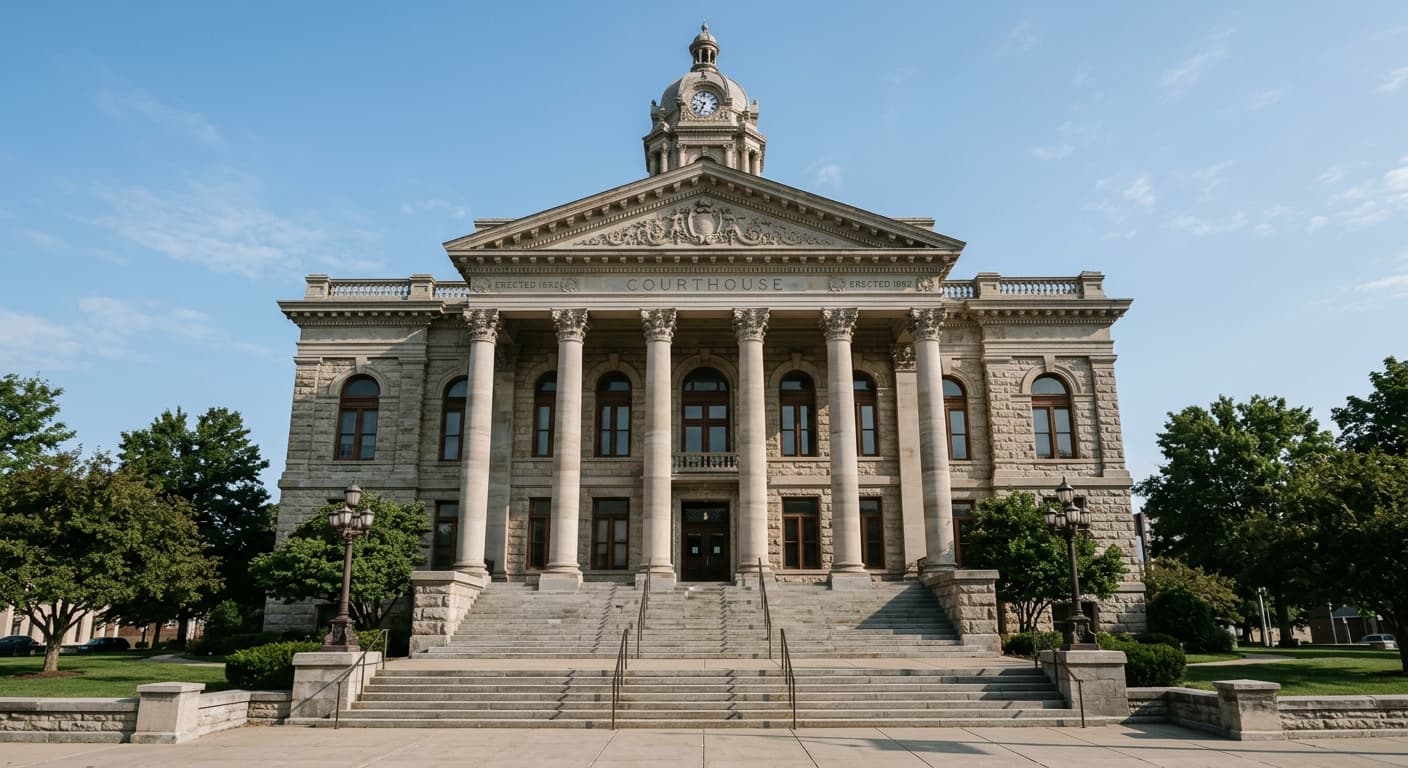
In Hawaii, first-degree murder committed by an offender who was 21 or older at the time of the offense carries mandatory life imprisonment WITHOUT the possibility of parole under HRS Section 706-656 — there is no aggravating-factor gate; LWOP is automatic. Only an offender who was under 21 at the time of a first-degree murder receives life with the possibility of parole. Second-degree murder carries life imprisonment with the possibility of parole, with the minimum term set case-by-case by the Hawaii Paroling Authority (the statute specifies no fixed range) — except that a court may enhance a second-degree murder sentence to LWOP under HRS Section 706-657 if the killing was especially heinous, atrocious, or cruel, or the defendant had a prior murder conviction.
Updated March 17, 2026
A life sentence in Hawaii carries real weight, but the specifics depend heavily on the offense, the presence of aggravating factors, and whether the court imposes the possibility of parole. Hawaii is one of a small number of states that has never had the death penalty as a state, and its approach to life imprisonment reflects a long-standing emphasis on rehabilitation over pure retribution.
Understanding how life sentences work in Hawaii requires examining the interplay between the state's murder statutes, its parole eligibility rules, and the role of aggravating factors. This guide breaks down each element and places Hawaii's sentencing framework in the context of recent case law and legislative changes.
For a broader comparison of how all 50 states handle life imprisonment, see our complete state-by-state guide to life sentences.
Hawaii Life Sentence Statutes
Hawaii defines murder and its penalties under Title 37 of the Hawaii Revised Statutes (HRS). The two primary murder statutes create a tiered structure that determines both the severity of the charge and the available sentencing range.
First-Degree Murder (HRS Section 707-701): A person commits murder in the first degree if they intentionally or knowingly cause the death of another person under specific circumstances listed in the statute, including multiple victims, killing a law enforcement officer, judge, prosecutor, or witness in the performance of duty or to prevent testimony, murder for hire, and murder committed while imprisoned.
First-degree murder is no longer classified as a Class A felony (a 1986 amendment, effective January 1, 1987, removed that classification). The sentence is governed by HRS Section 706-656: mandatory life imprisonment WITHOUT the possibility of parole for any offender 21 or older at the time of the offense, with no aggravating-factor requirement. Only an offender under 21 at the time of the offense receives life WITH the possibility of parole.
Second-Degree Murder (HRS Section 707-701.5): A person commits murder in the second degree if they intentionally or knowingly cause the death of another person without the specific aggravating circumstances required for first-degree murder. Second-degree murder is also a Class A felony.
The penalty for second-degree murder is life imprisonment with the possibility of parole. The minimum term before parole eligibility is set by the Hawaii Paroling Authority.
Attempted Murder: Attempted first-degree murder carries a sentence of life imprisonment with the possibility of parole. Attempted second-degree murder is a Class A felony with an indeterminate 20-year maximum term.
Sentencing Framework Under HRS Section 706-656
HRS Section 706-656 is the sentencing statute that governs life imprisonment terms in Hawaii. It specifies the mandatory sentences for murder and establishes the parole eligibility framework.
For first-degree murder, the statute mandates life imprisonment WITHOUT the possibility of parole for any person 21 years of age or older at the time of the offense. This is unconditional — there is no aggravating-factor requirement and no judicial discretion. The court must order preparation of a commutation application to the governor after 20 years, but that is an executive clemency mechanism, not parole. Only a person under 21 at the time of the offense receives life WITH the possibility of parole for first-degree murder.
For second-degree murder, the sentence is life with the possibility of parole — unless the court imposes an enhanced LWOP sentence under HRS Section 706-657 (heinous/atrocious/cruel killing, or a prior murder conviction). Where parole remains possible, the minimum term is set by the Hawaii Paroling Authority; the statute does not itself specify a numeric minimum.
Parole Eligibility
Parole eligibility for life-sentenced inmates in Hawaii depends on the offense. First-degree murder committed by an offender 21 or older carries no parole eligibility at all — it is mandatory LWOP. Second-degree murder (and first-degree murder committed under age 21) carries life with the possibility of parole, with the minimum term set case-by-case by the Hawaii Paroling Authority; the statute specifies no numeric minimum, so no fixed range can be stated as a matter of law.
Second-Degree Murder: HRS Section 706-656 sets no numeric minimum for second degree murder. The Hawaii Paroling Authority fixes the minimum term at a hearing held within 60 days of confinement (HRS Section 706-669), applying its own guidelines: the nature of the offense, the degree of injury or loss, and the offender's criminal history place the person in one of three levels of punishment, I through III, alongside the maximum term set by the court. The HPA publishes no fixed year range for murder and expressly retains discretion to depart from its guidelines, so any specific figure quoted elsewhere should be treated with caution.
First-Degree Murder, Under-21 Offender: The only first-degree murder category carrying parole eligibility is where the offender was under 21 at the time of the offense (HRS Section 706-656, as amended by Act 152, Session Laws 2025). The statute sets no numeric minimum term for it. There is no first-degree-murder-with-parole category for an offender who was 21 or older; that sentence is mandatory life without parole.
Multiple Convictions: When a defendant is convicted of multiple murders or multiple serious felonies, the court can impose consecutive minimum terms. This effectively extends the time before parole eligibility by stacking the minimums end to end.
The Hawaii Paroling Authority
The Hawaii Paroling Authority (HPA) is the state agency responsible for setting minimum terms and making parole decisions for all inmates serving indeterminate sentences, including life sentences.
The HPA uses a structured decision-making framework that considers the severity of the offense, the offender's criminal history, institutional behavior, participation in rehabilitative programs, and risk to public safety. Victim input is also considered through impact statements.
Parole eligibility does not guarantee release. The HPA conducts individualized hearings and may deny parole if the board determines that the inmate poses an unreasonable risk to the community. Denied inmates are typically reconsidered at regular intervals, usually every one to two years.
Hawaii's parole grant rate for life-sentenced inmates has historically been modest. Many inmates serve well beyond their minimum terms before the HPA grants release, and some are never released despite being technically eligible.
Life Without Parole in Hawaii
Life without the possibility of parole (LWOP) is Hawaii's mandatory sentence for first-degree murder where the offender was 21 or older at the time of the offense — it is not conditioned on aggravating factors. Hawaii also allows a court to enhance a SECOND-degree murder sentence to LWOP where specific factors under HRS Section 706-657 are proven (an especially heinous, atrocious, or cruel killing, or a prior murder conviction).
Enhanced LWOP for Second-Degree Murder Under HRS Section 706-657
HRS Section 706-657, titled "Enhanced sentence for second degree murder," lets a court impose life imprisonment WITHOUT the possibility of parole on a SECOND-degree murder conviction — not first-degree murder, which already carries mandatory LWOP under Section 706-656 regardless of aggravating factors. The only two grounds under Section 706-657 are:
- The murder was especially heinous, atrocious, or cruel, manifesting exceptional depravity (defined in the statute as "a conscienceless or pitiless crime that is unnecessarily torturous to a victim")
- The defendant was previously convicted of murder (in Hawaii or an equivalent offense elsewhere)
(Kidnapping/sexual-assault/robbery context, multiple victims, murder for hire, and killing a law enforcement officer/judge/prosecutor/witness are elements of the FIRST-degree murder definition under HRS Section 707-701, not aggravating factors under Section 706-657. First-degree murder does not need any aggravating-factor finding to receive LWOP — it is mandatory for any offender 21 or older.)
The prosecution must prove one of the two Section 706-657 grounds beyond a reasonable doubt for a court to enhance a second-degree murder sentence to LWOP.
LWOP in Practice
Hawaii courts apply LWOP selectively. The state's progressive sentencing philosophy means that prosecutors do not seek LWOP in every eligible case, and judges exercise significant discretion in determining whether the aggravating factors warrant permanent incapacitation.
As a practical matter, the majority of murder convictions in Hawaii result in life with the possibility of parole rather than LWOP. The state's relatively small population and low murder rate mean that LWOP sentences are uncommon compared to larger states.
Notable Cases
Several recent Hawaii cases illustrate how life sentences are applied in practice and how the courts navigate the tension between public safety and the state's rehabilitative values.
State v. Kapela Crawford (2020)
Kapela Crawford was sentenced to life without the possibility of parole for a first-degree murder conviction. The case involved aggravating factors that met the threshold under HRS Section 706-657, and the court determined that LWOP was the appropriate sentence given the severity and circumstances of the offense. The Crawford case is one of the more recent examples of Hawaii courts imposing the state's most severe penalty.
State v. Naeem Williams (2021)
The Williams case raised important questions about juvenile sentencing in Hawaii. The court examined how the state's sentencing framework applies to defendants who committed their offenses as juveniles, consistent with evolving U.S. Supreme Court precedent on the Eighth Amendment's prohibition of cruel and unusual punishment. The case reinforced Hawaii's position that juvenile offenders must be treated differently from adults in sentencing, with greater emphasis on rehabilitation and the capacity for change.
State v. Kalaola (2019)
The Kalaola case addressed felony murder in Hawaii. The defendant was charged with first-degree murder under the felony murder doctrine, which applies when a death occurs during the commission of certain dangerous felonies. The case examined the boundaries of felony murder liability and the appropriate sentence when the defendant did not directly cause the victim's death but was engaged in the underlying felony. The court's ruling clarified how Hawaii applies its life sentence framework to felony murder scenarios.
Recent Legislative Changes
Hawaii's legislature has been active in recent years on criminal justice issues, with particular attention to juvenile sentencing and the overall structure of the state's punishment framework.
Act 202, Session Laws 2014 -- Juvenile Life Sentences
Act 202, Session Laws 2014 (enacted as House Bill 2116) is the landmark legislation that addressed the sentencing of juvenile offenders in Hawaii. The act amended HRS Sections 706-656 and 706-657 to require that defendants who committed first-degree murder or first-degree attempted murder before age 18 are sentenced to life WITH the possibility of parole, not life without parole.
Act 202 brought Hawaii into compliance with the U.S. Supreme Court's decision in Miller v. Alabama (2012), which held that mandatory LWOP for juveniles violates the Eighth Amendment; Hawaii's approach also anticipated the retroactivity later confirmed in Montgomery v. Louisiana (2016). The act applies to proceedings arising on or after July 2, 2014.
Under the resulting statute, juvenile offenders convicted of murder receive life with the possibility of parole, with the minimum term set case-by-case by the Hawaii Paroling Authority.
(A separate 2020 bill, House Bill 2575, is sometimes miscited in connection with this reform. HB 2575 (2020) was in fact an elections bill relating to a county-candidate civics-test pilot program -- it was deferred by the Judiciary Committee in February 2020 and never passed, and has no connection to juvenile sentencing.)
Ongoing Reform Efforts
Hawaii's legislature has continued to examine its criminal justice framework with an eye toward reducing incarceration rates and expanding rehabilitative alternatives. Bills addressing parole reform, sentencing guidelines, and reentry support have been introduced in multiple recent sessions.
The state has also invested in restorative justice programs, which align with Native Hawaiian cultural values emphasizing community restoration and healing rather than punitive isolation. These programs complement the formal sentencing system by providing additional pathways for accountability and rehabilitation.
| Year | Change |
|---|---|
| 2014 | Act 202, Session Laws 2014 (HB 2116) banned JLWOP and codified juvenile sentencing protections |
| 2019 | State v. Kalaola clarified felony murder sentencing standards |
| 2016 | Montgomery v. Louisiana required retroactive application of Miller |
| 2012 | Miller v. Alabama banned mandatory JLWOP nationwide |
| 1957 | Death penalty abolished (pre-statehood, as a territory) |
Juvenile Sentencing
Hawaii's approach to juvenile life sentences is clear and categorical: life without parole is not available for any defendant who committed their offense before the age of 18.
This position is codified in state law following the passage of Act 202, Session Laws 2014. The act formalized what was already the practical reality in Hawaii -- the state had not imposed JLWOP in modern practice -- but provided explicit statutory protection against future attempts to sentence juveniles to die in prison.
Constitutional Framework
The U.S. Supreme Court's trilogy of juvenile sentencing cases -- Roper v. Simmons (2005, banning the juvenile death penalty), Graham v. Florida (2010, banning JLWOP for non-homicide offenses), and Miller v. Alabama (2012, banning mandatory JLWOP for homicide) -- established the constitutional floor for juvenile sentencing nationwide.
Hawaii exceeds this floor. While Miller allows discretionary JLWOP after an individualized hearing, Hawaii has chosen to ban JLWOP entirely. No juvenile offender in Hawaii can receive a sentence that eliminates all possibility of eventual release, regardless of the offense.
Practical Application
Juvenile offenders convicted of murder in Hawaii are sentenced to life with the possibility of parole. The Hawaii Paroling Authority sets their minimum terms with consideration of their youth at the time of the offense, their developmental trajectory during incarceration, and their demonstrated capacity for rehabilitation.
Hawaii's Department of Public Safety operates juvenile-specific programs designed to address the unique needs of young offenders, including education, mental health treatment, and family reunification services. These programs reflect the state's commitment to treating juvenile incarceration as a period of growth and development rather than mere punishment.
Historical Context: Hawaii's Progressive Approach
Hawaii's approach to criminal sentencing has been consistently more progressive than most mainland states. This philosophy has deep roots in the state's unique history, cultural values, and political identity.
Pre-Statehood Abolition of the Death Penalty
Hawaii abolished the death penalty in 1957, two years before it became the 50th state on August 21, 1959. The Territory of Hawaii had used capital punishment sparingly, but the territorial legislature voted to end the practice as part of a broader modernization of the criminal code.
When Hawaii drafted its state constitution and entered the union, it did so without capital punishment. Hawaii has never executed a single person as a state. This distinction places Hawaii alongside Alaska (which also abolished the death penalty in 1957, before its own statehood in 1959) as one of the earliest American jurisdictions to permanently reject execution.
Cultural Influences
Hawaii's sentencing philosophy is influenced by Native Hawaiian cultural concepts, particularly the value of ho'oponopono -- a traditional practice of reconciliation and forgiveness. While the formal legal system does not directly incorporate ho'oponopono, the underlying values of restoration, community healing, and the belief in human capacity for change permeate Hawaii's approach to criminal justice.
The state's multicultural population and its geographic isolation from the mainland have also contributed to a political culture that is more receptive to rehabilitative approaches and less driven by the "tough on crime" rhetoric that has dominated criminal justice policy in many other states.
Comparison to Other States
Hawaii occupies a distinctive middle ground in American criminal sentencing. Unlike Alaska, which prohibits LWOP entirely, Hawaii does allow LWOP for the most serious murder cases. But unlike most mainland states, Hawaii applies LWOP sparingly and maintains a strong presumption in favor of parole eligibility.
Hawaii also lacks the death penalty, placing it in a group of approximately 23 states (as of 2026) that have either abolished capital punishment or imposed formal moratoriums on executions. Combined with its selective use of LWOP and its progressive juvenile sentencing laws, Hawaii's overall sentencing framework is among the most rehabilitation-oriented in the nation.
Hawaii Life Sentence at a Glance
| Category | Details |
|---|---|
| Life sentence minimum | Life imprisonment (indeterminate) |
| Parole eligibility | None for first-degree murder (21+ at offense) — mandatory LWOP. For second-degree murder and first-degree murder under-21, minimum set case-by-case by the Hawaii Paroling Authority (no fixed statutory range) |
| LWOP available | Yes — mandatory for first-degree murder (offender 21+), no aggravating factors required (HRS Section 706-656); a court may also enhance a second-degree murder sentence to LWOP under HRS Section 706-657 if aggravating factors are proven |
| Death penalty | No (abolished 1957, pre-statehood; never had it as a state) |
| JLWOP banned | Yes (Act 202, Session Laws 2014) |
| Parole authority | Hawaii Paroling Authority (HPA) |
| Key statutes | HRS Section 707-701, Section 707-701.5, Section 706-656, Section 706-657 |
| Sentencing structure | Indeterminate life terms with minimum terms set by HPA |
| Notable recent case | State v. Kapela Crawford (2020, LWOP imposed) |
Related Pages
Frequently Asked Questions
How long is a life sentence in Hawaii?
A life sentence in Hawaii depends heavily on the offense. First-degree murder committed by an offender 21 or older carries MANDATORY life without the possibility of parole — there is no parole eligibility at all. Only an offender under 21 at the time of a first-degree murder, or someone convicted of second-degree murder (absent an enhanced LWOP sentence under HRS Section 706-657), gets life with the possibility of parole, with the minimum term set case-by-case by the Hawaii Paroling Authority rather than fixed by statute.
Does Hawaii have the death penalty?
No. Hawaii abolished the death penalty in 1957 as a territory, two years before becoming a state. Hawaii has never executed anyone as a state and has never had capital punishment in its state legal code. It is one of the earliest U.S. jurisdictions to permanently reject execution.
Can you get life without parole in Hawaii?
Yes. LWOP is the mandatory sentence for first-degree murder committed by an offender 21 or older at the time of the offense (HRS Section 706-656) — no aggravating-factor finding is required. Separately, a court may enhance a SECOND-degree murder sentence to LWOP under HRS Section 706-657 if the killing was especially heinous, atrocious, or cruel, or the defendant had a prior murder conviction.
Can a juvenile get life without parole in Hawaii?
No. Hawaii banned juvenile life without parole (JLWOP) through Act 202, Session Laws 2014. No defendant who committed their offense before age 18 can be sentenced to LWOP in Hawaii. Juvenile offenders convicted of murder receive life with the possibility of parole, with the minimum term set by the Hawaii Paroling Authority.
How does Hawaii's life sentence compare to other states?
Hawaii is more progressive than most states but not as lenient as Alaska, which prohibits LWOP entirely. Hawaii allows LWOP for aggravated first-degree murder but applies it sparingly. Combined with the absence of the death penalty and the ban on JLWOP, Hawaii's sentencing framework is among the most rehabilitation-oriented in the country.
Updates
Corrected a fabricated bill citation: Hawaii's 2020 House Bill 2575 (an unrelated elections bill that never passed) was wrongly credited throughout the article as the state's juvenile-life-without-parole ban. The real law is Act 202, Session Laws 2014.
Independently fact-checked against the cited primary sources; governing law re-checked for recent changes
Reviewed and approved by an editor
Sources and References
- HRS Section 707-701(capitol.hawaii.gov).gov
- HRS Section 707-701.5(capitol.hawaii.gov).gov
- HRS Section 706-656(capitol.hawaii.gov).gov
- Hawaii Paroling Authority(dps.hawaii.gov).gov
- HRS Section 706-657(capitol.hawaii.gov).gov