
Georgia
Georgia Dog Bite Laws: Liability and Victim Rights
Independently fact-checked against primary sources (last audited August 23, 2026). · Reviewed by the RecordingLaw editorial team. · Law checked current as of August 23, 2026. How we verify our legal content
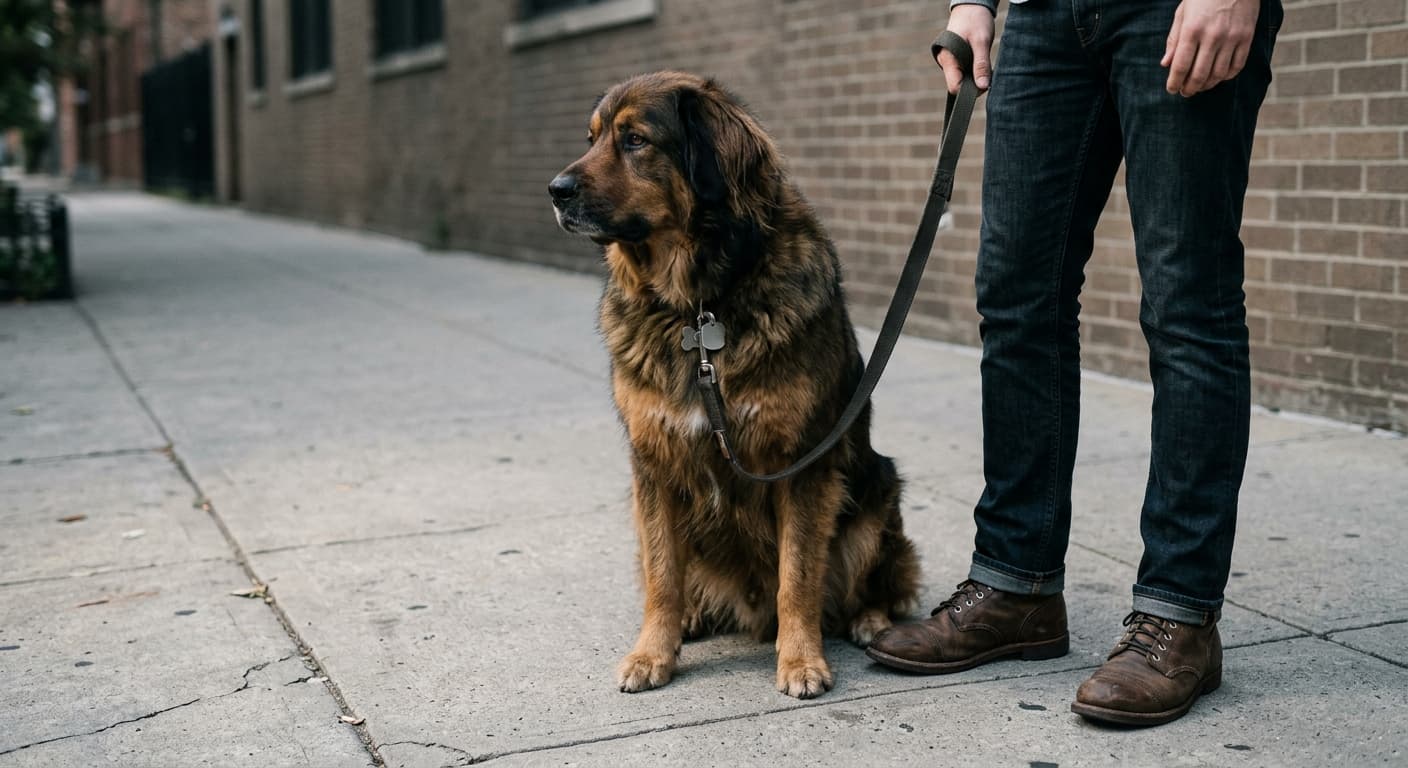
Under O.C.G.A. 51-2-7, Georgia holds dog owners liable when they knew or should have known their dog was dangerous, or when the dog was loose in violation of a local leash ordinance at the time of the attack.
Estimate your claim: Use our free Georgia Dog Bite Settlement Calculator to see a rough settlement range based on the medical bills, the bite location, the victim's age, and Georgia's liability rule.
How Georgia Dog Bite Liability Works
Georgia follows a modified version of the one-bite rule for dog bite liability. Under O.C.G.A. § 51-2-7, a person who owns or keeps a vicious or dangerous animal and who, by careless management or by allowing the animal to go at liberty, causes injury to another person who did not provoke the injury may be held liable in damages.

This statute creates two separate paths to liability for dog bite victims in Georgia.
Path 1: Knowledge of Dangerous Propensity
The first path requires showing that the dog owner knew or should have known about the dog's dangerous tendencies. Evidence of this knowledge can include:
- Prior bites or aggressive incidents
- The dog lunging, snapping, or growling at people
- The owner keeping the dog chained, muzzled, or behind warning signs
- Complaints from neighbors or animal control reports
- The dog's breed-specific training for aggression
The victim does not need to prove a prior bite occurred. Any behavior showing the owner was on notice of the dog's dangerous nature can satisfy this requirement.
Path 2: Violation of a Local Leash or Restraint Ordinance
The second path is often easier to prove. Under O.C.G.A. § 51-2-7, it is sufficient to show that a city, county, or consolidated government ordinance required the dog to be at heel or on a leash, and the dog was not restrained at the time of the attack.
Many Georgia cities and counties have leash laws requiring dogs to be leashed in public spaces. When an unleashed dog bites someone in an area covered by such an ordinance, the victim does not need to prove the owner knew the dog was dangerous.
Georgia's Responsible Dog Ownership Law
Georgia's Responsible Dog Ownership Law (O.C.G.A. § 4-8-20 through 4-8-33) establishes a statewide framework for classifying and managing dangerous dogs. Signed into law in 2012, this statute sets minimum standards that apply across the state, though counties and cities can impose stricter requirements.
Dangerous Dog vs. Vicious Dog: Key Definitions
Georgia law draws a clear distinction between two categories under O.C.G.A. § 4-8-21:
| Classification | Definition |
|---|---|
| Dangerous Dog | A dog that causes a substantial puncture of a person's skin by teeth without causing serious injury (a nip, scratch, or abrasion alone does not qualify), aggressively attacks in a way that would make a person reasonably believe the dog posed an imminent threat of serious injury even if none occurs, or, while off the owner's property, kills a pet animal |
| Vicious Dog | A dog that inflicts serious injury on a person, or causes serious injury resulting from reasonable attempts to escape the dog's attack |
| Serious Injury | Any physical injury that creates a substantial risk of death; results in death, broken or dislocated bones, lacerations requiring multiple sutures, or disfiguring avulsions; requires plastic surgery or admission to a hospital; or results in protracted impairment of health, including transmission of an infection or contagious disease, or impairment of the function of any bodily organ |
The classification process begins when a dog control officer investigates a reported incident. The owner receives notice and has the right to a hearing before any classification takes effect.
Requirements for Owners of Classified Dogs
Once a dog receives a dangerous or vicious classification, the owner must meet strict requirements under O.C.G.A. § 4-8-27:
The requirements are not the same for both classifications. These apply to dangerous and vicious dogs alike under § 4-8-27(b) and § 4-8-27(c)(1)-(2):
- Registration: Obtain a certificate of registration (the owner must be 18 or older, and no more than one certificate is issued per domicile)
- Enclosure: Maintain an enclosure designed to securely confine the dog on the owner's property, indoors, or in a securely locked and enclosed pen, fence, or structure
- Warning signs: Post clearly visible warning signs at all entrances to the premises where the dog resides
- Annual renewal: Renew the registration certificate each year
These two apply to vicious dogs only, under § 4-8-27(c)(3)-(4):
- Microchipping: Have a scannable microchip injected under the skin between the dog's shoulder blades
- Insurance: Maintain, and be able to show proof of, at least $50,000 in liability insurance covering bodily injury or property damage caused by the dog
An owner of a dog classified as dangerous is not required by state law to microchip the dog or to carry the $50,000 policy.
Penalties Under the Responsible Dog Ownership Law
Violations carry serious consequences under O.C.G.A. § 4-8-29:
- Violating the vicious-dog confinement or restraint requirements: Misdemeanor of high and aggravated nature
- Felony charges: If an owner who already has a previous conviction for violating the Responsible Dog Ownership Law has a classified dog that causes serious injury to a person under circumstances constituting another violation of the law, the owner faces imprisonment of one to ten years, a fine of $5,000 to $10,000, or both
- Dog destruction: The classified dog may be euthanized at the owner's expense
Statute of Limitations for Dog Bite Claims
Under O.C.G.A. § 9-3-33, Georgia gives dog bite victims two years from the date of the injury to file a personal injury lawsuit. This deadline applies to all personal injury claims in the state.
Important timing considerations:
- The two-year clock starts on the date of the bite
- Minors generally have until two years after turning 18 to file
- Claims against a government entity carry a separate, much shorter notice deadline. A claim against a city requires an ante-litem notice within six months of the incident under O.C.G.A. § 36-33-5(b), while a claim against a county (O.C.G.A. § 36-11-1) or against the state (O.C.G.A. § 50-21-26(a)(1)) allows 12 months. Missing the notice deadline bars the claim even though the two-year lawsuit deadline has not run
- Missing the deadline almost always bars the claim permanently
Damages Dog Bite Victims Can Recover
Dog bite victims in Georgia may pursue both economic and non-economic damages in a civil lawsuit.
Economic Damages
- Emergency room visits, surgery, and hospital stays
- Ongoing medical treatment and rehabilitation
- Prescription medications and medical devices
- Lost wages during recovery
- Reduced future earning capacity
- Property damage (torn clothing, broken items)
Non-Economic Damages
- Physical pain and suffering
- Emotional distress and psychological trauma
- Permanent scarring or disfigurement
- Loss of enjoyment of life
- Post-traumatic stress, especially in children
Defenses Available to Dog Owners
Georgia law provides several defenses that can reduce or eliminate a dog owner's liability.
Provocation
Under O.C.G.A. § 51-2-7, a person who provokes the injury by their own act cannot recover damages. Provocation includes teasing, tormenting, hitting, or otherwise agitating the dog. The provocation must be enough to cause a normally calm dog to react aggressively.
Trespassing
Dog owners generally owe reduced duties to trespassers. If the victim was on the owner's property without permission, the owner may have a strong defense. However, Georgia courts often treat child trespassers differently, recognizing that young children may not understand property boundaries.
Modified Comparative Negligence
Georgia applies a modified comparative negligence standard under O.C.G.A. § 51-12-33. This rule works as follows:
- If the victim is less than 50% at fault, their damages are reduced by their percentage of fault
- If the victim is 50% or more at fault, they are completely barred from recovering any damages
For example, if a jury finds the victim 20% responsible for approaching a chained dog despite warning signs, a $100,000 award would be reduced to $80,000.
Assumption of Risk
Professionals who work with dogs, such as veterinarians, groomers, and kennel workers, may face an assumption-of-risk defense. If the victim voluntarily accepted the known risk of working with animals, recovery may be limited or barred.
Landlord Liability for Dog Bites in Georgia
Georgia law generally shields landlords from liability for tenant dog bites. Under O.C.G.A. § 44-7-14, a landlord who has fully parted with possession of the property is not responsible to third parties for damages caused by a tenant's negligence.
However, a landlord may face liability in limited situations:
- The landlord knew the tenant's dog was dangerous and had the power to require the dog's removal
- A defective fence, gate, or enclosure that the landlord failed to repair allowed the dog to escape and the landlord knew the dog had a propensity to do harm
- The landlord retained control over common areas where the bite occurred
The broken-gate scenario is not an independent route to liability. In Tyner v. Matta-Troncoso, 305 Ga. 480 (2019), the Georgia Supreme Court considered exactly those facts, a landlord who never repaired a broken gate latch through which the tenants' dogs escaped and mauled a neighbor two blocks away. The court held that O.C.G.A. § 51-2-7 does not reach an out-of-possession landlord at all, so the leash-ordinance shortcut that works against a dog's owner is unavailable against a landlord. Under O.C.G.A. § 44-7-14, the victim still had to show the landlord knew the dogs had tendencies to do harm, because without that knowledge the attack was not a reasonably foreseeable result of the unrepaired latch. Since there was no evidence the dogs had ever shown aggression, the landlord won summary judgment.
Simply knowing that a tenant keeps a dog is not enough to establish landlord liability. The landlord must have had actual knowledge of the dog's dangerous propensities.
Dog Leash Requirements Under Georgia Law
Georgia's Responsible Dog Ownership Law addresses leash requirements for classified dogs under O.C.G.A. § 4-8-29. When off the owner's property, a classified dog must be:
- Restrained by a leash no longer than six feet and under the immediate physical control of a capable person
- Contained in a closed and locked cage or crate
- Working or training as a hunting, herding, or predator control dog
Many Georgia municipalities also have their own leash ordinances that apply to all dogs, not just classified ones. Violating a local leash law can serve as evidence of negligence in a dog bite lawsuit under O.C.G.A. § 51-2-7.
Criminal Penalties for Dog Owners in Georgia
Beyond civil liability, Georgia dog owners can face criminal charges for failing to control their animals.
Misdemeanor Charges
A dog owner may face misdemeanor charges for:
- Failing to register a classified dangerous or vicious dog
- Allowing a classified dog off the property without proper restraint
- Not maintaining the required secure enclosure
- Failing to carry the $50,000 liability insurance that state law requires for a dog classified as vicious
Felony Charges
Felony charges under O.C.G.A. § 4-8-29(d) require a prior conviction. They apply to an owner who already has a previous conviction for a violation of the Responsible Dog Ownership Law and whose classified dog then causes serious injury to a person under circumstances constituting another violation of the law. The statute contains no "knowingly and willfully" element, and "serious injury" is the defined term from O.C.G.A. § 4-8-21 set out earlier on this page. A first offense, however serious, is not charged as a felony under this subsection. Penalties include:
- A fine of $5,000 to $10,000
- Imprisonment of one to ten years
- Both a fine and imprisonment
- Mandatory euthanasia of the dog at the owner's expense
Steps to Take After a Dog Bite in Georgia
If a dog bites you or a family member in Georgia, take these steps to protect your health and legal rights:
- Get medical attention immediately. Dog bites carry risks of infection, nerve damage, and scarring. Keep all medical records and receipts.
- Report the bite. Contact your local animal control agency and file a police report. Georgia law requires animal control to investigate reported bites.
- Document the scene. Photograph your injuries, the location, the dog (if safe to do so), and any relevant conditions like broken fences or missing leash.
- Collect information. Get the dog owner's name, address, phone number, and homeowner's or renter's insurance details. Ask for proof of the dog's rabies vaccination.
- Identify witnesses. Gather names and contact information from anyone who saw the attack.
- Preserve physical evidence. Keep torn or bloodied clothing in a sealed bag.
- Track your losses. Record all medical expenses, missed work days, and other costs from the date of the bite forward.
Breed-Specific Legislation in Georgia
Some Georgia municipalities have enacted breed-specific legislation (BSL) that restricts or bans certain dog breeds, often targeting pit bulls, Rottweilers, and similar breeds. However, the statewide Responsible Dog Ownership Law focuses on individual dog behavior rather than breed.
The trend in Georgia has moved away from breed-specific bans in favor of behavior-based dangerous dog classifications. Check your local county or city ordinances for any breed-specific restrictions in your area.
More Georgia Laws
Frequently Asked Questions
Does Georgia follow a strict liability or one-bite rule for dog bites?
Georgia follows a modified one-bite rule under O.C.G.A. § 51-2-7. Dog owners are liable if they knew or should have known about their dog's dangerous propensities, or if they violated a local leash ordinance at the time of the attack. Georgia is not a strict liability state for dog bites.
How long do I have to file a dog bite lawsuit in Georgia?
You have two years from the date of the bite to file a personal injury lawsuit under O.C.G.A. § 9-3-33. Missing this deadline will almost certainly bar your claim. Minors generally have until two years after turning 18.
What is the difference between a dangerous dog and a vicious dog in Georgia?
Under O.C.G.A. § 4-8-21, a dangerous dog causes a substantial skin puncture without serious injury, or aggressively attacks in a way that would make a person reasonably believe it posed an imminent threat of serious injury even if none occurs, or kills a pet animal while off the owner's property. A vicious dog inflicts serious injury, defined as any physical injury that creates a substantial risk of death, results in death, broken or dislocated bones, lacerations requiring multiple sutures, disfiguring avulsions, injuries requiring plastic surgery or hospital admission, or protracted impairment of health.
Can I still recover damages if I was partly at fault for the dog bite?
Yes, as long as you were less than 50% at fault. Georgia's modified comparative negligence rule under O.C.G.A. § 51-12-33 reduces your damages by your percentage of fault. If you are 50% or more at fault, you cannot recover any damages.
What insurance must owners of classified dogs carry in Georgia?
The $50,000 liability insurance requirement applies only to dogs classified as vicious, not to dogs classified as dangerous. Under O.C.G.A. § 4-8-27(c), the owner of a vicious dog must maintain and show proof of at least $50,000 in liability insurance and have the dog microchipped, on top of the secure enclosure and posted warning signs that § 4-8-27(b) requires for a dangerous dog. Both classifications require annual registration renewal and restraint when the dog is off the owner's property.
Injured in Georgia? Get a free case review from a personal-injury attorney
If someone else's negligence caused your injury, you may be owed compensation for medical bills, lost wages, and pain and suffering. Get a free, no-obligation review from a Georgia personal-injury attorney. Most work on contingency, so there is no upfront cost.
Updates
Corrected the ante litem notice deadline for claims against a city to six months under O.C.G.A. § 36-33-5(b), limited the microchip and $50,000 insurance requirements to vicious dogs under O.C.G.A. § 4-8-27(c), restated the felony elements of O.C.G.A. § 4-8-29(d) to require a prior conviction, and conditioned landlord liability for a defective gate on knowledge of the dog’s propensities per Tyner v. Matta-Troncoso.
Expanded Georgia's 'serious injury' definition for vicious-dog classification to include all of the statute's qualifying triggers (substantial risk of death, dislocated bones, hospitalization, and protracted health impairment), which the page had previously stated as an incomplete list, and removed a duplicate leash-rule bullet that was attributed to the wrong statute section.
Independently fact-checked against the cited primary sources; governing law re-checked for recent changes
Corrected two O.C.G.A. citations in the Responsible Dog Ownership Law section: the registration/enclosure/leash/insurance/microchip requirements for classified dogs are set by O.C.G.A. 4-8-27 (the article cited 4-8-25, which is the court-ordered-euthanasia provision), and the misdemeanor/felony penalty schedule is set by O.C.G.A. 4-8-29 (the article cited 4-8-30, which is the confiscation provision).
Corrected the penalty description under O.C.G.A. 4-8-29: the escalating $500 (second conviction) / $750 (third-or-subsequent conviction) fine tiers do not exist in the current statute (they belonged to the pre-2012, now-repealed O.C.G.A. 4-8-28). Current 4-8-29 sets a single misdemeanor-of-high-and-aggravated-nature penalty for a bare confinement/restraint violation, plus the already-correct $5,000-$10,000 / 1-10-year felony tier for a repeat classified-dog offender whose dog causes serious injury.
Governing law re-checked for recent changes
Corrected Georgia's 'dangerous dog' definition, which the article had inverted (the statute's dangerous-dog tier is a bite or attack that does NOT cause serious injury; serious injury is what elevates a dog to the 'vicious dog' tier) and which invented a nonexistent 'previously classified as potentially dangerous' tier; Georgia's O.C.G.A. § 4-8-21 scheme has only two tiers, dangerous and vicious.
Governing law re-checked for recent changes
Reviewed and approved by an editor
The Law Behind This Article
This article rests on the statutory provisions below, held in our own legal record and retrieved from the official source. Tap a section to read the operative text.
Official Code of Georgia Annotated
§ 51-2-7Liability of owner or keeper of vicious or dangerous animal for injuries caused by animal.In forcecited in 2 of our articles
A person who owns or keeps a vicious or dangerous animal of any kind and who, by careless management or by allowing the animal to go at liberty, causes injury to another person who does not provoke the injury by his own act may be liable in damages to the person so injured.…
Official text (excerpt) · last checked 2021-08-17 · Read the full text in our law library
Cited in 77 court opinions in our collectionLatest citing opinion in our collection: 2025
In the courts (editorial summary, independently checked):Swanson v. Tackling (2016) held a dog owner entitled to summary judgment where no prior incident showed the dog's propensity to bite, and Tyner v. Matta-Troncoso (2019) held OCGA 51-2-7 applies only to a person who owns or keeps the animal, not to an out-of-possession landlord.
Opinions citing this section in our collection:
- Hamilton v. Walker (Court of Appeals of Georgia 1998, 235 Ga. App. 635)✓A four-year-old entered a fenced yard and was bitten by a dog that had growled and barked at strangers but never bitten anyone; the court affirmed summary judgment for the owners, holding menacing behavior alone does not show the propensity the statute requires.
- Supan v. Griffin (Court of Appeals of Georgia 1999, 238 Ga. App. 404)✓A nine-year-old was bitten by the owner's Rottweiler and Chow mix; the court affirmed denial of summary judgment, holding the owner's earlier remark to a neighbor to do whatever was needed to keep the dogs from attacking raised a jury question on knowledge.
- Rowlette v. Paul (Court of Appeals of Georgia 1995, 219 Ga. App. 597)✓A property appraiser in a rain hood was bitten in a backyard by a beagle whose one prior bite came a year earlier after a relative startled the sleeping dog by banging on the porch; the court affirmed summary judgment, finding no notice of a propensity to attack a stranger.
Identified automatically from the court opinions citing this section — not a ranking of which case controls.
Also relied on in: Dog Bite Laws by State: Liability and Victim Rights
§ 4-8-20Short title.In force
This article shall be known and may be cited as the "Responsible Dog Ownership Law." (Code 1981, § 4-8-20 , enacted by Ga. L. 2012, p. 1290, § 4/HB 685.)
Official text (excerpt) · last checked 2021-08-17 · Read the full text in our law library
Cited in 4 court opinions in our collectionLatest citing opinion in our collection: 2015
Opinions citing this section in our collection:
- Eshleman v. Key (Supreme Court of Georgia 2015)“…east for the purposes of the Responsible Dog Ownership Law, OCGA § 4-8-20 et seq., “[n]o dog shall be classified…”
- Jason Wyno v. Lowndes County (Court of Appeals of Georgia 2015, 331 Ga. App. 541)“…unity or, alternatively, the Responsible Dog Ownership Law, OCGA §§ 4-8-20, et seq., barred the action against th…”
- Griffiths v. Schafer (Court of Appeals of Georgia 1996, 223 Ga. App. 560)“…otentially dangerous dog” in the Dangerous Dog Control Law. OCGA § 4-8-20 et seq. See OCGA § 4-8-21 (a) (6). The…”
Identified automatically from the court opinions citing this section — not a ranking of which case controls.
§ 4-8-21Definitions.In force
(a) As used in this article, the term: (1) "Classified dog" means any dog that has been classified as either a dangerous dog or vicious dog pursuant to this article. (2) "Dangerous dog" means any dog that: (A) Causes a substantial puncture of a person's skin by teeth without causing serious…
Official text (excerpt) · last checked 2021-08-17 · Read the full text in our law library
Cited in 3 court opinions in our collectionLatest citing opinion in our collection: 2017
Opinions citing this section in our collection:
- Eshleman v. Key (Supreme Court of Georgia 2015)“…icularized and certain enough to 2 But see OCGA § 4-8-21 (b) (at least for the purposes of the R…”
- Griffiths v. Schafer (Court of Appeals of Georgia 1996, 223 Ga. App. 560)“…in the Dangerous Dog Control Law. OCGA § 4-8-20 et seq. See OCGA § 4-8-21 (a) (6). The intent of the General Asse…”
- Randall Kevin Jones v. Officer S. Fransen (Court of Appeals for the Eleventh Circuit 2017, 857 F.3d 843)“…explain the problems with that scenario. 7 O.C.G.A. § 4-8-21(b) provides that “[n]o dog shall be cla…”
Identified automatically from the court opinions citing this section — not a ranking of which case controls.
§ 4-8-27Certificates of registration; requirements for issuance of certificate; individuals excluded from receiving registration; limitation of ownership; annual renewal.In force
(a) It shall be unlawful for an owner to have or possess within this state a classified dog without a certificate of registration issued in accordance with the provisions of this Code section.…
Official text (excerpt) · last checked 2021-08-17 · Read the full text in our law library
§ 4-8-29Limitations on dog's presence off of owner's premises; penalty for violation; defense.In force
(a) It shall be unlawful for an owner of a dangerous dog to permit the dog to be off the owner's property unless: (1) The dog is restrained by a leash not to exceed six feet in length and is under the immediate physical control of a person capable of preventing the dog from engaging any other…
Official text (excerpt) · last checked 2021-08-17 · Read the full text in our law library
§ 44-7-14Tort liability of landlord.In force
Having fully parted with possession and the right of possession, the landlord is not responsible to third persons for damages resulting from the negligence or illegal use of the premises by the tenant;…
Official text (excerpt) · last checked 2021-08-17 · Read the full text in our law library
Cited in 106 court opinions in our collectionLatest citing opinion in our collection: 2026
Opinions citing this section in our collection:
- Norman v. Jones Lang LaSalle Americas, Inc. (Court of Appeals of Georgia 2006, 277 Ga. App. 621)“…however, that it was an out-of-possession landlord and that OCGA § 44-7-14 limited its liability to third parties…”
- Colquitt v. Rowland (Supreme Court of Georgia 1995, 265 Ga. 905)“…as relinquished by rental or under a lease is determined by OCGA § 44-7-14. Howell Gas of Athens v. Coile,…”
- Martin v. Johnson-Lemon (Supreme Court of Georgia 1999, 271 Ga. 120)“…to third persons is determined under the bases set forth in OCGA § 44-7-14, the Court of Appeals erred by assessin…”
Identified automatically from the court opinions citing this section — not a ranking of which case controls.
§ 51-12-33Reduction and apportionment of award or bar of recovery according to percentage of fault of parties and nonparties.In forcecited in 8 of our articles
(a) Where an action is brought against one or more persons for injury to person or property and the plaintiff is to some degree responsible for the injury or damages claimed, the trier of fact, in its determination of the total amount of damages to be awarded, if any, shall determine the percentage
Official text (excerpt) · last checked 2026-09-08 · Read the full text in our law library · Verify at legis.ga.gov
Cited in 187 court opinions in our collectionLatest citing opinion in our collection: 2026
Opinions citing this section in our collection:
- Zaldivar v. Prickett (Supreme Court of Georgia 2015)“…path. Commonly known as the “apportionment statute,” OCGA § 51-12-33 requires the trier of fact in some cas…”
- Couch v. Red Roof Inns, Inc. (Supreme Court of Georgia 2012, 291 Ga. 359)“…century of Georgia’s common law simply by using “fault” in OCGA § 51-12-33. Because I believe our case law prevent…”
- Martin v. Six Flags Over Georgia II, L.P. (Supreme Court of Georgia 2017, 301 Ga. 323)“…liability, we now address the apportionment of damages. See OCGA § 51-12-33 (prescribing method of apportioning dam…”
Identified automatically from the court opinions citing this section — not a ranking of which case controls.
Also relied on in: Georgia Car Accident Laws: Fault, Insurance, and Your Claim, Georgia Dashcam Laws: Windshield Mounting and Recording Rules (2026), Medical Malpractice Laws in Georgia (2026): Deadlines & Caps
§ 9-3-33Injuries to the person; injuries to reputation; loss of consortium; exception.In forcecited in 9 of our articles
Except as otherwise provided in this article, actions for injuries to the person shall be brought within two years after the right of action accrues, except for injuries to the reputation, which shall be brought within one year after the right of action accrues, and except for actions for injuries…
Official text (excerpt) · last checked 2021-08-17 · Read the full text in our law library
Cited in 729 court opinions in our collectionLatest citing opinion in our collection: 2026
In the courts (editorial summary, independently checked):Georgia courts apply section 9-3-33 by the nature of the injury, not the legal theory: Daniel v. American Optical Corp. (1983) held its two-year personal injury period covers strict liability claims, and Miles v. Ashland Chemical Co. (1991) declined to extend the discovery rule to wrongful death, which accrues at death.
Opinions citing this section in our collection:
- Shessel v. Stroup (Supreme Court of Georgia 1984, 253 Ga. 56)✓A failed sterilization caused no injury until the patient became pregnant over two years later. Reading OCGA 9-3-33 to run only from when injury accrues, the court used that contrast to hold the separate medical malpractice limit unconstitutional as applied.
- Daniel v. American Optical Corp. (Supreme Court of Georgia 1983, 251 Ga. 166)✓Hot metal flew over a worker's safety glasses into his eye and he sued the manufacturer in strict liability three years later. The court held OCGA 9-3-33's two-year personal injury period turns on the nature of the injury, not the legal theory, so the claim was untimely.
- Miles v. Ashland Chemical Co. (Supreme Court of Georgia 1991, 261 Ga. 726)✓Relatives of three workers who died of cancer sued over methylene chloride warnings more than two years after the deaths, saying they learned of the link later. The court refused to extend the discovery rule to wrongful death; OCGA 9-3-33's two years runs from the date of death.
Identified automatically from the court opinions citing this section — not a ranking of which case controls.
Also relied on in: Defamation Laws by State: Libel and Slander (2026), Georgia Defamation Laws: Libel, Slander & Suing (2026), Motorcycle Accident Laws in Georgia (2026): Deadlines & Helmets
Search our full record of US law — 2.1 million sections, every state + federal →
Sources and References
- O.C.G.A. Section 51-2-7 - Liability of Owner or Keeper of Vicious or Dangerous Animal(law.justia.com)
- Georgia Responsible Dog Ownership Law (O.C.G.A. Sections 4-8-20 through 4-8-33)(law.justia.com)
- O.C.G.A. Section 4-8-21 - Definitions (Dangerous Dog, Vicious Dog, Serious Injury)(law.justia.com)
- O.C.G.A. Section 9-3-33 - Statute of Limitations for Personal Injury (Two Years)(law.justia.com)
- O.C.G.A. Section 51-12-33 - Modified Comparative Negligence (50% Bar Rule)(law.justia.com)
- O.C.G.A. Section 4-8-29 - Dog Leash Requirements and Penalties(law.justia.com)
- O.C.G.A. Section 44-7-14 - Landlord Liability Limitations(law.justia.com)
- O.C.G.A. Section 4-8-27 - Certificates of Registration; Requirements for Classified Dogs(law.justia.com)
- Tyner v. Matta-Troncoso, 305 Ga. 480, 826 S.E.2d 100 (2019) (landlord liability for a tenant’s dog requires knowledge of the dog’s propensities; O.C.G.A. § 51-2-7 does not apply to an out-of-possession landlord)(courtlistener.com)