
Canada
Prohibited Weapons in Canada: Brass Knuckles, Tasers, Batons, Crossbows, and Airsoft Guns
Independently fact-checked against primary sources (last audited September 24, 2026). · 12 primary sources cited on this page. How we verify our legal content
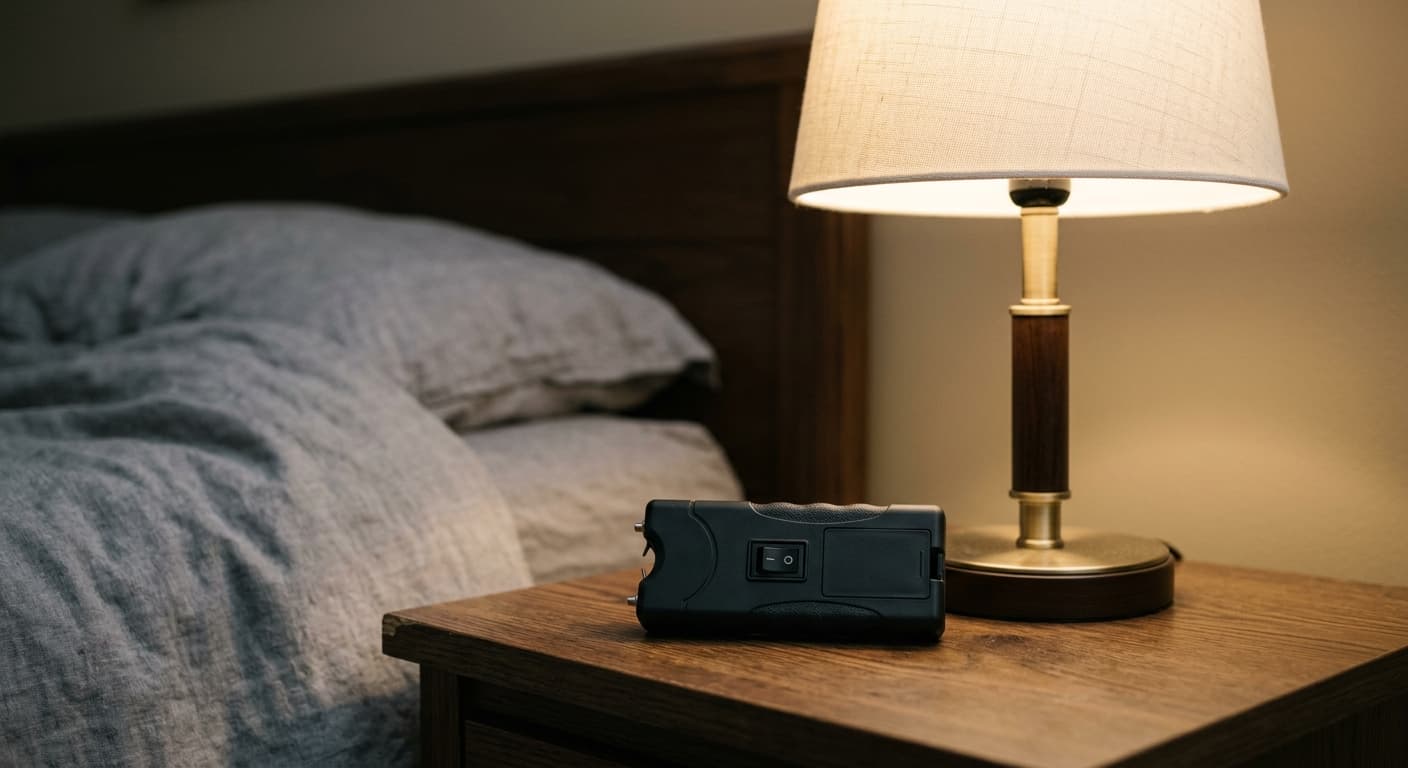
Canada's Criminal Code and its regulations name a specific list of prohibited weapons, including brass knuckles, nunchaku, spring-loaded batons, handheld stun guns under 480 millimetres, dart-firing tasers, and pistol or short crossbows, and possessing most of them is a criminal offence on its own, regardless of what the owner intends to do with it.
Information last verified on 2026-09-24. This article has not yet been reviewed by a licensed lawyer.
This article covers federal prohibited-weapons law under the Criminal Code, RSC 1985, c C-46, and its regulations, which apply the same way in every province and territory. It covers brass knuckles, tasers and stun guns, batons, nunchaku, kubotans, crossbows, and airsoft or replica firearms. It does not cover knives, which have their own detailed rules at Knife and Weapons Laws in Canada, or pepper spray and bear spray, covered separately at Is Pepper Spray Legal in Canada?. It does not cover the law of self-defence itself; for when force against another person is legally justified, see Self-Defence Laws in Canada.
What Makes Something a Prohibited Weapon Under Canadian Law
Section 2 of the Criminal Code defines weapon broadly enough to cover almost anything:
"weapon means any thing used, designed to be used or intended for use (a) in causing death or injury to any person, or (b) for the purpose of threatening or intimidating any person and, without restricting the generality of the foregoing, includes a firearm..." (Criminal Code, RSC 1985, c C-46, s 2)
Under that definition, a stick, a kitchen knife, or a can of bear spray can all become a weapon the moment someone carries or uses it to hurt or threaten a person. That is a separate question from whether an object is also a prohibited weapon by name.
Section 84(1) defines prohibited weapon in two parts. Paragraph (a) covers knives with a blade that opens automatically by gravity or centrifugal force or by hand pressure applied to a button, spring or other device in or attached to the handle, already addressed on the site's knife page. Paragraph (b) is a blank check to regulation:
"prohibited weapon means ... (b) any weapon, other than a firearm, that is prescribed to be a prohibited weapon" (Criminal Code, RSC 1985, c C-46, s 84(1))
The actual list lives in Part 3 of the Regulations Prescribing Certain Firearms and Other Weapons, Components and Parts of Weapons, Accessories, Cartridge Magazines, Ammunition and Projectiles as Prohibited or Restricted, SOR/98-462, current to September 3, 2026 and last amended March 7, 2025. That list is what this article walks through item by item. The Criminal Code also allows regulations to prescribe restricted weapons, but CBSA's memorandum states: "Currently, there are no devices that are prescribed in regulations to be restricted weapons."
Brass Knuckles
Brass knuckles are named directly in SOR/98-462, Part 3, item 15:
"a band of metal with one or more finger holes designed to fit over the fingers of the hand" (SOR/98-462, Part 3, item 15)
The Canada Border Services Agency's classification memorandum, D19-13-2, explains two details the bare regulation text does not spell out. First, the material matters: brass knuckles can be made of any metal, and CBSA's own guidance states that plastic knuckles do not fall within the definition. Second, a knife with a knuckle-style handle, sometimes called a brass knuckles knife, is only prohibited on this basis if the handle is itself effective as a weapon and meets the brass-knuckles definition; a decorative or non-functional knuckle-shaped grip does not automatically make an otherwise ordinary knife prohibited.
Tasers and Stun Guns: Two Different Categories
Conducted-energy weapons split across two different parts of the federal scheme, and most consumer-facing pages blur the two together.
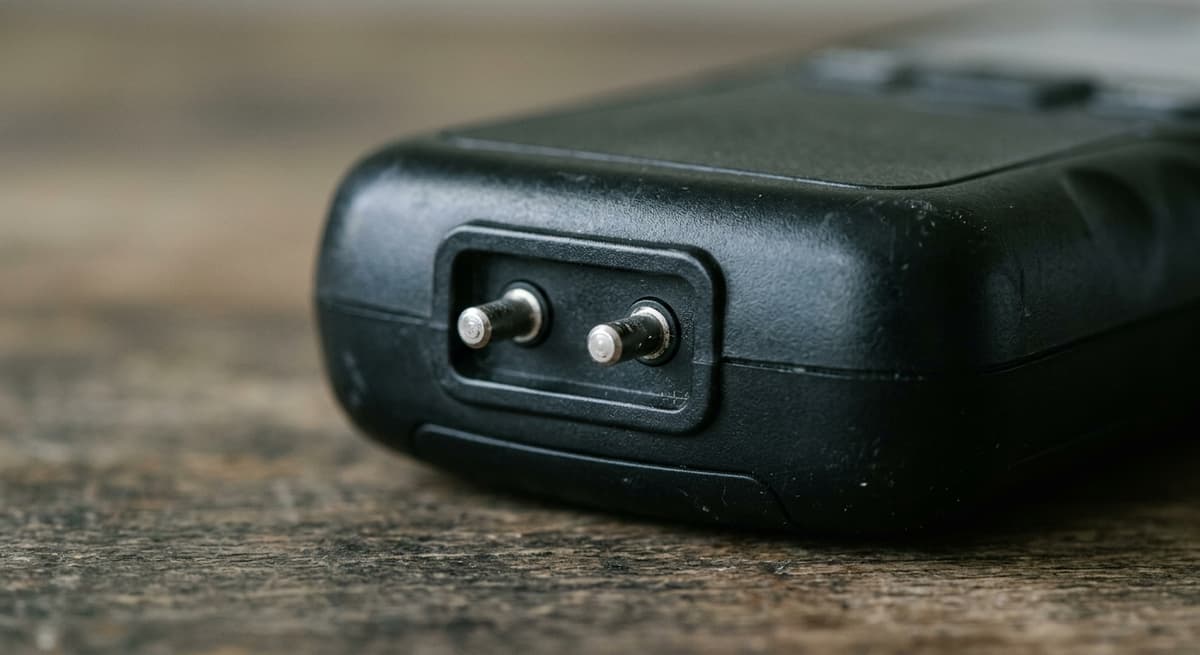
A dart-firing device, the law-enforcement-style Taser, is a prohibited firearm, not a prohibited weapon:
"Any firearm capable of discharging a dart or other object carrying an electrical current or substance, including the firearm of the design commonly known as the Taser Public Defender and any variant or modified version of it." (SOR/98-462, Part 1, item 1)
A handheld contact stun gun or stun baton, the kind sold as a personal self-defence device, is instead a prohibited weapon under Part 3, item 6, when it is designed to discharge its electrical charge at a length of less than 480 millimetres. Item 6 also covers "any similar device," and CBSA notes that "some devices greater than 480mm in length may be considered prohibited as 'similar devices'." In practice, both categories are unobtainable for ordinary civilian self-defence use in Canada, but they sit on different statutory hooks, which matters if the question is whether a specific charge would be a firearms offence or a weapons offence.
Batons: Which Types Are Prohibited
This is the point where a lot of consumer content misstates the law in one direction or the other. SOR/98-462, Part 3, item 13 names the device commonly called the Kiyoga Baton or Steel Cobra "and any similar device consisting of a manually triggered telescoping spring-loaded steel whip terminated in a heavy calibre striking tip."
CBSA's memorandum D19-13-2 states that "there are two main types of prohibited telescoping/ expandable batons: spring batons and spring-loaded rigid batons." A spring baton has one or more coiled spring body sections, is flexible and is extended by centrifugal force; a spring-loaded rigid baton has a button or other trigger that releases a spring to extend it. CBSA then lists three related products that generally do not meet the definition of a prohibited weapon: centrifugal rigid batons, deployed by swinging force with no spring; standard collapsible or telescopic police-style batons with no spring mechanism; and slapjacks or blackjacks. CBSA's own guidance adds that misusing any of these items can still be punishable under other laws.
That carve-out does not make carrying one of these batons safe. Because the Criminal Code's general weapon definition turns on intent and use rather than on what is printed in a regulation, carrying a centrifugal or collapsible baton, or a slapjack, with intent to use it against a person still risks a possession-for-a-dangerous-purpose charge under section 88, or a concealed-carry charge under section 90, both discussed below. A page or seller that says either all batons are illegal or batons are legal to carry is wrong; the object class is not banned by name, but carrying almost any of them for personal protection carries real risk, and provincial or municipal bylaws can add further restrictions on top.
Nunchaku and the Rest of the Named List
Several other items are named outright in SOR/98-462, Part 3, and are prohibited regardless of intent:
- Nunchaku (item 2), which CBSA reads to include the sanjiegun or three-section staff; light, flexible training nunchaku covered in foam or other soft material are not considered prohibited
- Shuriken, or throwing stars (item 3)
- Manrikigusari or kusari, a weighted chain (item 4)
- A bladed finger ring (item 5)
- The Constant Companion belt buckle knife (item 8)
- A push-dagger (item 9)
- A concealed-blade device disguised as an innocuous object, such as a knife hidden in a comb, under 30 centimetres (item 10)
- A spiked wristband (item 11)
- A Yaqua Blowgun (item 12)
- A Morning Star, a spiked ball connected to a handle by a chain, rope or other flexible material (item 14)
Several of these overlap with knife law; for the full treatment of prohibited knife types, see Knife and Weapons Laws in Canada.
Kubotans and Other Everyday Self-Defence Items
A kubotan, the small keychain-style striking stick sometimes marketed as a legal self-defence tool, is not named anywhere in the Criminal Code, SOR/98-462, or CBSA's classification memorandum. That is a genuine gap in the named list, not an oversight to read around: it means a kubotan falls back to the ordinary, intent-driven weapon definition in section 2, the same as a rock, a pen, or any other everyday object carried with intent to injure or intimidate someone. Marketing a kubotan or a similar item as completely legal self-defence gear is misleading in the same way that carrying any object for self-defence is; the object itself is not banned, but the moment a court finds it was carried or used with intent to injure or threaten a person, the general weapon offences apply. For how Canadian law actually treats defending yourself with force, including why there is no stand-your-ground rule, see Self-Defence Laws in Canada.
Crossbows
CBSA's memorandum defines a crossbow as a device with a bow and bowstring mounted on a stock, designed to propel an arrow, bolt, or similar projectile on a guided trajectory, capable of causing serious bodily injury or death. Two configurations are prohibited weapons under SOR/98-462, Part 3, item 7: a crossbow designed for one-handed use, a pistol crossbow, and a crossbow of 500 millimetres or shorter, including the stirrup.
An ordinary two-handed crossbow longer than 500 millimetres is neither a prohibited weapon nor a firearm. The RCMP states: "Under the Firearms Act, you do not need a licence or registration certificate to have other types of bows. This includes crossbows that are longer than 500 mm that need two hands to use."
Some summaries cite section 8(4) of the Firearms Act as a federal minimum age of 18 to buy a crossbow. The provision is narrower than that. It governs who is eligible to hold a licence:
"An individual who is less than eighteen years old is not eligible to hold a licence authorizing the individual to possess prohibited firearms or restricted firearms or to acquire firearms or cross-bows." (Firearms Act, SC 1995, c 39, s 8(4))
The Firearms Act provides for licences to sell, barter or give crossbows only in circumstances that would otherwise be an offence under subsection 97(1) of the Criminal Code, and section 97 reads "[Repealed before coming into force, 2008, c. 20, s. 3]." Because no licence is needed to acquire an ordinary crossbow, the age bar attached to that licence does not operate as a purchase age, and no other federal minimum age for buying one was found in researching this article. Provincial rules and individual retailers may set their own limits. Provincial hunting licence and hunter-safety requirements for actually using a crossbow while hunting vary by province; check your provincial wildlife agency, for example Ontario's hunting regulations summary, rather than assuming a single national rule.
Airsoft Guns, BB Guns, and Replica Firearms
This is the most technical corner of the list. Two separate questions decide where an air gun or airsoft gun lands: how powerful it is, and how closely it resembles a real firearm.
Section 2 of the Criminal Code defines a firearm as a barrelled weapon that "is capable of causing serious bodily injury or death to a person." Section 84(3)(d) then deems a barrelled weapon not to be a firearm, but only "for the purposes of sections 91 to 95, 99 to 101, 103 to 107 and 117.03 of this Act and the provisions of the Firearms Act," where it is proved that it is not designed or adapted to discharge a projectile at a muzzle velocity exceeding 152.4 metres per second or at a muzzle energy exceeding 5.7 Joules. That deeming does not strip firearm status for every purpose. Section 84(1) separately defines a replica firearm, a prohibited device:
"replica firearm means any device that is designed or intended to exactly resemble, or to resemble with near precision, a firearm ... at a muzzle velocity exceeding 152.4 m per second and at a muzzle energy exceeding 5.7 Joules, and that itself is not a firearm..." (Criminal Code, RSC 1985, c C-46, s 84(1))
Note the words "that itself is not a firearm." A device powerful enough to be a firearm under section 2 cannot be a replica, however realistic it looks. The RCMP divides air guns, including airsoft, BB and pellet guns, into four groups:
- Firearms under both the Firearms Act and the Criminal Code. Air guns over both 152.4 metres per second and 5.7 Joules. The RCMP says these "are subject to the same licence and registration requirements as a conventional firearm."
- Unregulated firearms. Air guns at or below 152.4 metres per second or 5.7 Joules that still meet the section 2 definition. They are exempt from licensing and registration, but "they are considered to be firearms under the Criminal Code if they are used to commit a crime," and "the Criminal Code requires that you take reasonable precautions to use, carry, handle, store, transport and ship them in a safe and secure manner." CBSA adds that an air gun resembling a real make and model "may not be a replica firearm if it is an 'unregulated' firearm."
- Replica firearms. Air guns "not powerful enough to cause serious injury or death, but designed to resemble a real firearm with near precision." These are prohibited devices.
- Neither. Air guns "that are not powerful enough to be classified as firearms and that do not resemble a real firearm closely enough to be considered a replica," such as a clear plastic air gun or an obvious child's toy. The RCMP notes they may still be subject to Criminal Code penalties if used to commit a crime.
CBSA's memorandum gives the figures it uses for the serious-injury line. For an airsoft gun firing a .20 gram, 6 millimetre plastic pellet, CBSA states that to be a firearm within the meaning of section 2 it "must have a muzzle velocity in excess of 111.6 metres per second (366 feet per second)." For an air gun firing a .177 calibre metal pellet, CBSA says that under 71.43 metres per second (235.71 feet per second) "it may qualify as a replica firearm if it is designed to resemble a real firearm." Neither figure is the licensing threshold, which remains 152.4 metres per second and 5.7 Joules. CBSA also relies on manufacturer specifications for an airsoft gun's velocity and, where a range crosses two classifications, uses the highest figure quoted.
Replica status limits buying and importing more than owning. Sections 91(2) and 92(2) of the Criminal Code exclude replica firearms from the unauthorized-possession offences, and the RCMP explains that individuals "may keep those they owned on December 1, 1998. You don't need a licence to possess them, and they do not need to be registered. However, you cannot import or acquire a replica firearm."
Individuals cannot import a replica firearm at all. CBSA's guidance confirms that only a business holding the required firearms business licence can lawfully import one, for narrow approved purposes such as supplying props for film production.
Penalties for Possessing a Prohibited Weapon
Simply having a prohibited weapon without the narrow authorization the Firearms Act allows is itself an offence. Unauthorized possession under section 91 of the Criminal Code carries up to five years on indictment; possessing one while knowing it is unauthorized, under section 92, carries up to ten years. Both sections carry the same narrow exceptions for someone using the item under direct supervision, or disposing of or licensing an inherited item within a reasonable time.

Two further offences apply regardless of whether the item happens to be on the named list. Section 88 makes it an offence to possess any weapon, including an ordinary object that is not itself prohibited, for a purpose dangerous to the public peace or to commit an offence, punishable by up to ten years on indictment. Section 90 makes it an offence to carry any weapon concealed, unless the Firearms Act specifically authorizes concealed carry, punishable by up to five years on indictment. Those two sections are why carrying a legal item, a centrifugal baton or a kubotan, for self-defence still carries real risk: the concealment or the intent, not the item's name, is what turns it into a chargeable offence.
Disclaimer: This article provides general information about federal prohibited-weapons law in Canada under the Criminal Code, RSC 1985, c C-46, and the Regulations Prescribing Certain Firearms and Other Weapons, Components and Parts of Weapons, Accessories, Cartridge Magazines, Ammunition and Projectiles as Prohibited or Restricted, SOR/98-462, current as of September 2026. It is not legal advice, does not cover knives or pepper and bear spray, which have their own articles, and does not address every provincial or municipal weapons bylaw. Consult a lawyer licensed in your province for advice on your specific situation.
Frequently Asked Questions
Are brass knuckles illegal in Canada?
Yes. Brass knuckles are named directly as a prohibited weapon in Part 3, item 15 of SOR/98-462, a band of metal with finger holes designed to fit over the hand. CBSA guidance confirms plastic knuckles fall outside that definition, but any metal version is covered regardless of who made it or why.
Are tasers legal to own in Canada?
No, not for ordinary civilian self-defence use. A dart-firing Taser-style device is a prohibited firearm, and a handheld contact stun gun or stun baton under 480 millimetres is a prohibited weapon; CBSA notes some longer devices may also be treated as prohibited similar devices. Both categories are effectively off-limits to civilians, though they fall under different sections of federal law.
Is it illegal to carry a baton in Canada?
It depends on the type. Part 3, item 13 names the Kiyoga Baton or Steel Cobra and similar devices, and CBSA treats spring batons with coiled-spring sections and trigger-released spring-loaded rigid batons as prohibited. CBSA says centrifugal rigid batons, collapsible batons with no spring, and slapjacks generally are not, but carrying any of them with intent to use against a person still risks a possession-for-a-dangerous-purpose or concealed-weapon charge under the Criminal Code's general weapon provisions.
Do you need a licence to own a crossbow in Canada?
An ordinary two-handed crossbow longer than 500 millimetres does not require a firearms licence or registration certificate. No operative federal minimum purchase age was found: the under-18 rule in section 8(4) of the Firearms Act applies to holding a licence, which is not needed for these crossbows, and provincial rules or retailers may set their own limits. Pistol crossbows and any crossbow of 500 millimetres or shorter are prohibited weapons that cannot be lawfully possessed by an ordinary civilian.
Are airsoft guns legal in Canada?
It depends on power and appearance. An airsoft gun too weak to cause serious injury that does not closely resemble a real firearm is not a firearm. One equally low-powered that resembles a specific real firearm with near precision is a replica firearm, a prohibited device that cannot be imported or acquired, although replicas owned on December 1, 1998 may be kept. CBSA treats an airsoft gun firing a .20 gram 6 millimetre pellet at over 111.6 metres per second as a firearm under the Criminal Code, and one over both 152.4 metres per second and 5.7 Joules needs a firearms licence.
Is a kubotan legal to carry in Canada?
A kubotan is not named in the Criminal Code, SOR/98-462, or CBSA's classification guidance, so owning one is not banned by name. Carrying it with intent to use it against another person still exposes you to the same general weapon-possession offences that apply to any object carried for that purpose.
What happens if you are caught with a prohibited weapon in Canada?
Unauthorized possession of a prohibited weapon is an offence under section 91 of the Criminal Code, punishable by up to five years on indictment, and possessing one while knowing it is unauthorized under section 92 carries up to ten years. Carrying any weapon, prohibited or not, concealed or for a purpose dangerous to the public, adds separate offences under sections 88 and 90.
Updates
Independently fact-checked against the cited primary sources
Sources and References
- Criminal Code, RSC 1985, c C-46, s 2 (definition of weapon) (Justice Laws Website)(laws-lois.justice.gc.ca).gov
- Criminal Code, RSC 1985, c C-46, s 84 (definitions of prohibited weapon, prohibited device, and replica firearm) (Justice Laws Website)(laws-lois.justice.gc.ca).gov
- Criminal Code, RSC 1985, c C-46, s 88 (possession of a weapon for a dangerous purpose) (Justice Laws Website)(laws-lois.justice.gc.ca).gov
- Criminal Code, RSC 1985, c C-46, s 90 (carrying a weapon concealed) (Justice Laws Website)(laws-lois.justice.gc.ca).gov
- Criminal Code, RSC 1985, c C-46, s 91 (unauthorized possession of a prohibited weapon) (Justice Laws Website)(laws-lois.justice.gc.ca).gov
- Regulations Prescribing Certain Firearms and Other Weapons, Components and Parts of Weapons, Accessories, Cartridge Magazines, Ammunition and Projectiles as Prohibited or Restricted, SOR/98-462, Parts 1 and 3 (Justice Laws Website)(laws-lois.justice.gc.ca).gov
- Memorandum D19-13-2, Importing and Exporting Firearms, Weapons and Devices, Canada Border Services Agency(cbsa-asfc.gc.ca).gov
- Firearms Act, SC 1995, c 39, s 8 (licence eligibility, including the under-18 rule) (Justice Laws Website)(laws-lois.justice.gc.ca).gov
- Criminal Code, RSC 1985, c C-46, s 92 (possession of a prohibited weapon knowing possession is unauthorized) (Justice Laws Website)(laws-lois.justice.gc.ca).gov
- Criminal Code, RSC 1985, c C-46, s 97 (sale of cross-bows, repealed before coming into force) (Justice Laws Website)(laws-lois.justice.gc.ca).gov
- Specific types of firearms: air guns, crossbows and replica firearms, Royal Canadian Mounted Police, Canadian Firearms Program(rcmp.ca).gov
- Firearms Act, SC 1995, c 39, s 4 (purpose, including licences to sell, barter or give cross-bows) (Justice Laws Website)(laws-lois.justice.gc.ca).gov