What to Wear to Court: A Complete Attire Guide (2026)

Dress conservatively and business-appropriate for any court appearance, in person or by video. Choose a suit or dress pants with a collared shirt for men, or a conservative suit, pantsuit, or blouse with dress pants for women. Wear closed-toe shoes, remove hats and excess jewelry, and skip shorts, sandals, tank tops, and anything with offensive text.
The specific rules differ by courthouse, sometimes even by judge, but the underlying standard is consistent everywhere: look like you take the proceeding seriously. This guide covers what to wear by type of hearing, the jeans question directly, men's and women's specifics, colors, shoes, grooming, what gets people turned away at the door, and what to wear when appearing by Zoom or another video platform.
Why What You Wear to Court Matters
It does not matter whether the appearance is as a defendant, plaintiff, petitioner, witness, or juror. Clothing is one of the only things a judge, clerk, or opposing party can evaluate about a person before a word is spoken, and courts treat it as a signal of two things: respect for the proceeding and respect for everyone else in the room.
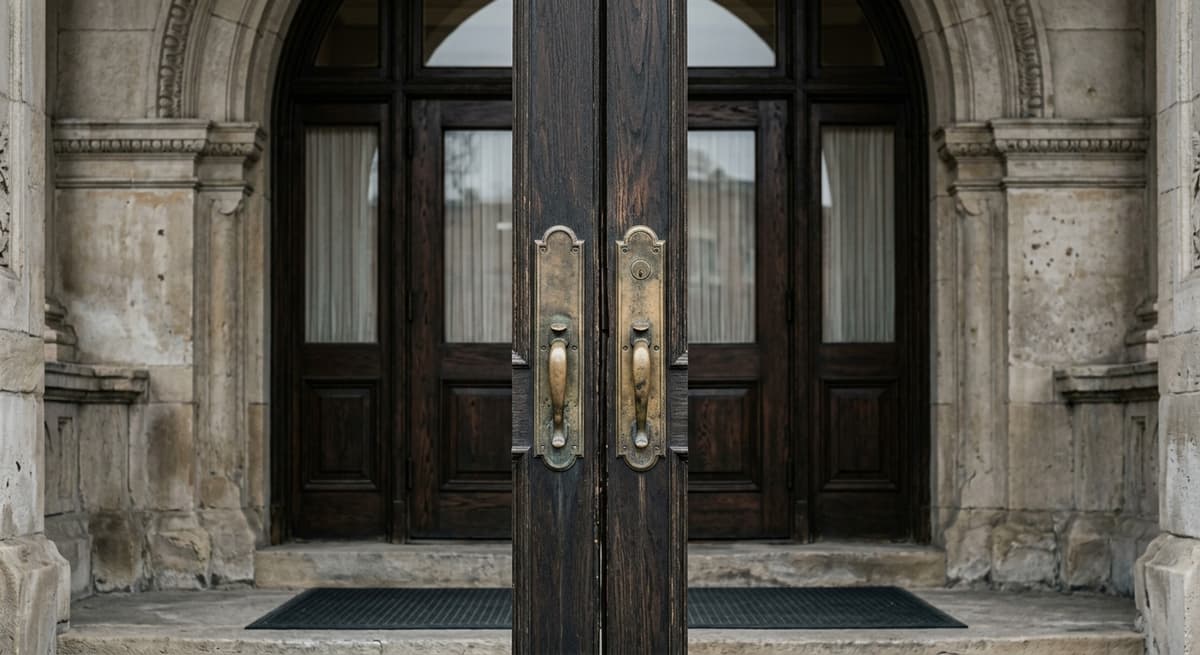
Courts do not leave this to guesswork. Individual courthouses publish and enforce their own written dress codes, and the details vary by jurisdiction. The California Courts Self-Help Center sums up the general standard simply: dress "like you're going to a job interview," and skip shorts, baseball hats, and flip-flops (California Courts Self-Help Center, Tips for Your Day in Court). Oregon's Union County Circuit Court goes further, stating that "proper attire and appropriate behavior is required by everyone entering" the courtroom and "will be strictly enforced," with improperly dressed people turned away (Union County Circuit Court, Rules, Etiquette, and Dress Code). A federal district court frames the same idea in plainer terms: business attire is suggested to show respect to the litigants, their counsel, and the court (U.S. District Court, Southern District of West Virginia, Dress Code and Courtroom Etiquette). Because the exact rules differ from one courthouse to the next, the conservative guidance below satisfies the great majority of them.
Court-Appropriate Outfits by Type of Hearing
The stakes and formality of the hearing should guide how far to dress up. A few common appearance types, from most to least formal:
- Criminal defendant (arraignment, trial, sentencing): The highest-stakes category. A suit or the closest equivalent is worth the effort, since attire can influence how seriously a judge or jury perceives the defendant.
- Family court and custody hearings: Judges in these cases are also assessing stability and judgment, so conservative, put-together clothing matters as much as in a criminal matter.
- Civil trial or hearing with an attorney: Follow the attorney's specific guidance, since they know the assigned judge's preferences, but default to business attire absent other instruction.
- Small claims or self-represented civil matters: A full suit is not required, but clean, conservative clothing is expected. South Dakota's Unified Judicial System self-help guidance tells self-represented litigants to wear "a clean, neat outfit" and "conservative clothing," and to skip shorts, t-shirts, low necklines, or torn clothing (South Dakota Unified Judicial System, Court Checklist).
- Traffic court: Business casual is generally enough. A collared shirt and slacks, or a simple blouse and dress pants, cover it; shorts, tank tops, and flip-flops still are not accepted.
- Jury duty: Formal wear is not required, but courts still set floors. New Jersey's courts note jurors should wear "clothing appropriate for an appearance in court," with shorts, t-shirts, uniforms, and clothing with offensive symbols not permitted, and hats removed inside the courtroom (New Jersey Courts, Is there a dress code for jurors reporting?). A federal court in Iowa tells jurors they "may wear comfortable but appropriate business-like clothing," while ruling out shorts, jeans, t-shirts, tank tops, and sweatshirts (U.S. District Court, Northern District of Iowa, jury duty attire guidance).
- Witness testimony: Treat it like a job interview for credibility. A witness who looks careless can unintentionally undercut how believable their testimony seems, independent of its actual content.
Can I Wear Jeans to Court?
This is one of the most common questions, and the honest answer is: it depends on the courthouse, but treat jeans as a fallback, not a first choice. Dress pants, slacks, or a conservative skirt are the safer default everywhere.
That said, not every court bans denim outright. Some courthouse guidance draws a line at condition rather than fabric, tolerating clean, dark, unripped jeans when nothing else is available, while other courts and individual judges prohibit jeans entirely regardless of condition. Because this specific rule varies more than almost any other item on a dress code, the safest approach is to check the specific courthouse's posted policy or ask the clerk's office in advance if jeans are the only option. If jeans are unavoidable, choose the darkest, cleanest, most unremarkable pair available, never a lighter wash, distressed, or logo-heavy style.
Men's Court Attire
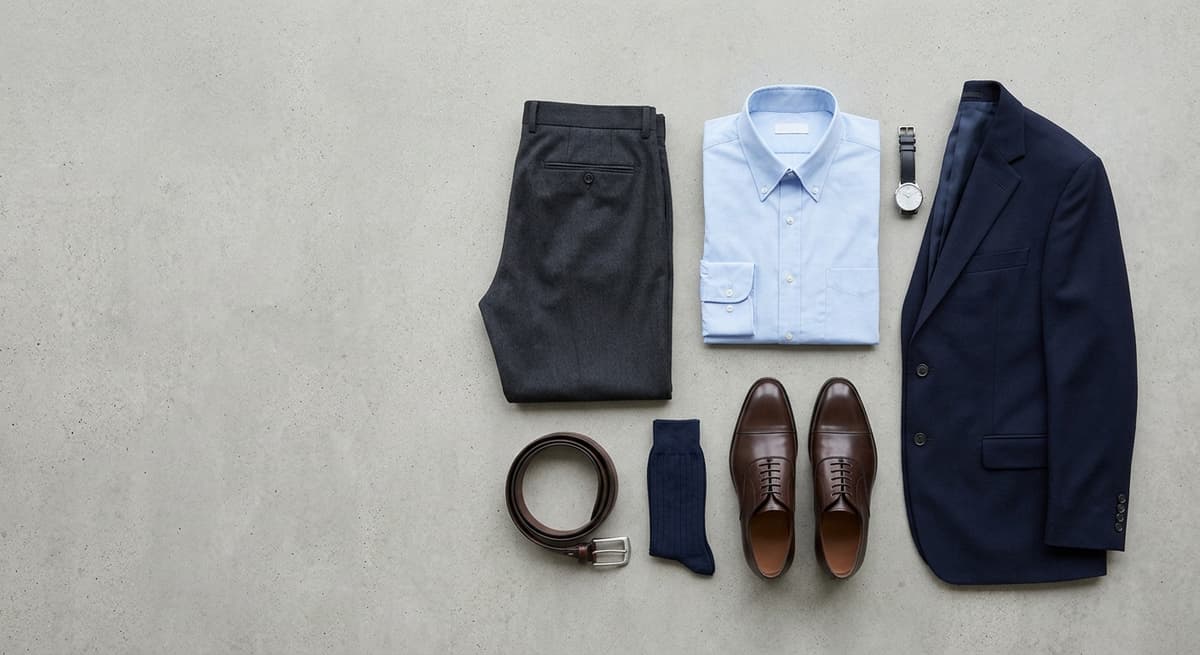
For men, the ideal outfit for court goes in this order of preference:
- A properly fitting suit with a conservative tie.
- A sport coat and long dress pants with a tie.
- A long-sleeve, collared, button-up shirt, ideally with a tie even without a jacket.
- Dress pants (matching the jacket if possible) with a collared shirt, no tie.
Whatever the level, the outfit should be clean, pressed, and well fitted rather than baggy or tight. Excess jewelry should come off before arriving.
Appropriate Pants for Men
Long pants are expected; many courtrooms will not allow entry in shorts at all. In order of preference: matching suit pants, dark dress pants, dress pants in another neutral color, and only as a last resort, dark, clean jeans with no rips or fading.
Women's Court Attire
For women, a conservative suit or pantsuit is the safest choice; a simple blouse with dress pants or a knee-length skirt is also acceptable. Fashion-forward, trendy, or revealing pieces read as too casual or too flashy for a courtroom, even when they would be perfectly normal at the office. A useful mental test many attorneys suggest: dress as if attending a fairly formal church service.
As with men's attire, the outfit should be clean and well kept, hemlines should sit at or below the knee, necklines should be modest, and excess jewelry should be minimal.
Colors to Wear (and Avoid) in Court
Neutral, muted colors are the safest choice for any court appearance: navy, charcoal, black, gray, white, and soft blues read as serious and understated. These are the same tones federal courthouse guidance points participants toward for video hearings, described below, and they translate just as well to appearing in person.
Bright, bold, or busy colors, loud patterns, and anything with graphics or slogans pull attention away from the substance of the case and can read as not taking the moment seriously. Reserve them for another day. All-black outfits are acceptable but not required. Some attorneys advise against all-white for certain proceedings depending on the courtroom's culture, so when in doubt, a neutral middle tone is the safest bet.
Shoes for Court
- A closed-toe shoe is the standard for every hearing type and every gender.
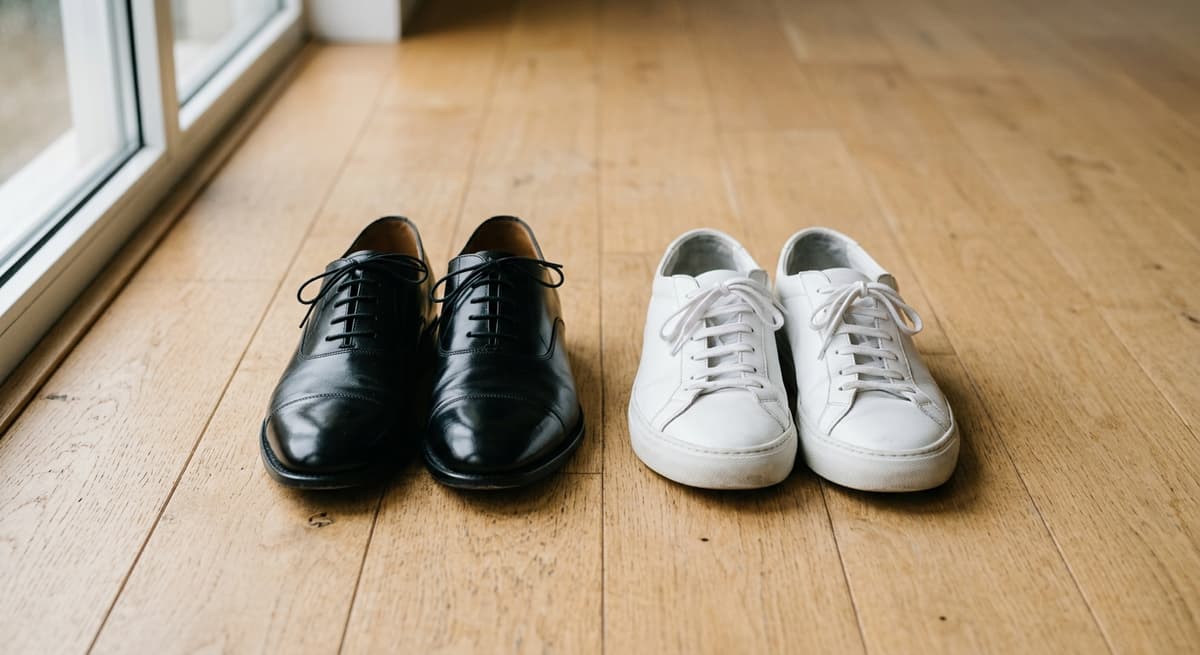
- Conservative dress shoes (oxfords, loafers, low pumps, flats) are preferred over athletic shoes.
- Shoes should be clean and in good repair; scuffed or worn-out shoes undercut an otherwise put-together outfit.
- Sandals, flip-flops, and open-toed shoes are discouraged almost everywhere and outright barred in many courthouses.
- If wearing heels, avoid an extremely high or narrow spike heel, both for practicality (courthouse floors, security lines, standing for a hearing) and for how it reads in a conservative room.
- Athletic shoes are acceptable only if they are the sole closed-toe option available, and should be as clean and plain as possible.
Grooming, Hair, Tattoos, and Piercings
Clothing is only part of the picture. Grooming choices send the same signal of preparation and respect:
- Schedule a haircut about two weeks before the court date, which leaves time to fix any mistakes.
- Hair should be clean, dry, and neatly styled; long hair is best tied back.
- Shave or trim a beard or mustache before the court date; if keeping facial hair, make sure it is combed and neat.
- Shower beforehand and wear deodorant. Nerves often mean sweat.
- Keep cologne or perfume light. A strong scent in an enclosed courtroom or waiting area can be genuinely distracting to everyone nearby.
- Keep nails a reasonable length and avoid anything visibly unkempt.
- There is no general legal requirement to cover tattoos or remove piercings, and attitudes toward both have relaxed over time. Even so, many attorneys still recommend covering visible tattoos and removing facial piercings when practical, since there is no way to know in advance how a particular judge or jury pool will react, and it costs little to reduce that variable in a serious matter.
What Not to Wear to Court
A few categories show up on nearly every courthouse's prohibited list, across jurisdictions:
- Shorts of any kind, and anything with "sweat" in the name: sweatshirts, sweatpants, sweat suits.
- Tank tops, muscle shirts, halter tops, and anything exposing the midriff or shoulders.
- Low-cut tops, short skirts, or anything otherwise revealing.
- Flip-flops, sandals, slides, and bare feet.
- Hats and non-prescription sunglasses (see the head-covering note below for exceptions).
- Clothing with offensive, vulgar, drug-related, or graphic text or images.
- Anything stained, torn, wrinkled, or visibly dirty.
- Uniforms unrelated to the proceeding.
Dress code specifics vary further from courthouse to courthouse. The Trial Courts of Metropolitan Nashville and Davidson County, for example, prohibit bandanas, scarves, do-rags, and hairnets in addition to hats, and require sunglasses to be removed, with no stated religious exception listed on the policy (Trial Courts of Metropolitan Nashville & Davidson County, Dress Code). Nashville's separate jury service guidance takes a lighter approach for jurors specifically, stating there is "not a specific dress code for jurors" and business attire "is not required," while still prohibiting hats, non-prescription sunglasses, and discouraging flip-flops, tank tops, and shorts (Metro Nashville, Dress Code for Jury Duty). That gap between two policies from the same court system is a good example of why it is worth checking the specific hearing type's rules rather than assuming one dress code covers everyone who walks in the door.
Getting Turned Away
A judge or courtroom staff can deny entry, ask a person to change or cover up, or in some cases delay a hearing until they return properly dressed. Oregon's Union County Circuit Court policy states this plainly: inappropriately dressed people can be turned away, and the requirement is "strictly enforced" (Union County Circuit Court, Rules, Etiquette, and Dress Code). For a juror specifically, being sent home over attire usually just means returning on a future date for service, but for a party or witness, it can mean losing a hearing slot or delaying a case. Dressing appropriately the first time avoids that entirely.
Security Screening: Phones, Bags, and What to Leave at Home
Courthouse entry involves passing through a security checkpoint, not just a dress inspection. Visitors should expect an x-ray screening of any bag or briefcase and a walk through metal detection equipment; prohibited items generally cannot be stored on site, so a federal court in Alabama's guidance notes visitors who arrive with a prohibited item may have to leave the building entirely to store it elsewhere before being allowed in (U.S. District Court, Northern District of Alabama, What to Expect When Visiting the Courthouse). Weapons of any kind, including pocketknives, are barred from federal court facilities.
Cell phone policies vary more than almost any other courthouse rule. Some courthouses allow phones into the building but require them off or silenced inside the courtroom itself; others restrict laptops, tablets, or any device with a camera beyond the security checkpoint. The Northern District of Georgia, for example, allows cell phones into the courthouse but does not allow laptops, tablets, or other camera-equipped devices past the security checkpoint, while non-camera devices are permitted through (U.S. District Court, Northern District of Georgia, Electronic Device Policy FAQ). Because this differs by courthouse and even by judge, it is worth checking the specific court's website or calling ahead, especially for a first-time visit. As a practical matter, excess metal jewelry can also slow down the screening line, so keeping it minimal helps on both the dress-code front and the security-line front at once.
What to Wear for a Virtual or Zoom Court Appearance
Remote hearings are now routine in many courts, and the dress expectation carries over directly from the physical courtroom rather than relaxing for the camera. A Michigan county court's guidance on video hearings is direct about this: "Attorneys and court participants should likewise appear dressed in the same professional manner they would dress and appear in-person in a courtroom," specifically ruling out t-shirts, jeans, and hats on camera (Eaton County, Michigan, Maintaining a Professional Image During Zoom Hearings).
A few things matter more on video than in person:
- Wear a full outfit, including pants, not just a camera-ready top. A judge may ask a participant to stand, move, or adjust the camera mid-hearing.
- Choose simple, solid, neutral colors. Busy patterns and stripes can flicker or distort on a webcam feed.
- Sit somewhere with a plain, uncluttered background and good, even lighting facing the camera, not behind it.
- Treat the hearing exactly like an in-person appearance for the full duration: no eating, no lying down, no wandering out of frame, and phones silenced.
- Confirm the specific court's video-hearing instructions in advance, since platform (Zoom, Microsoft Teams, a court's own portal) and camera-on requirements vary by jurisdiction.
Frequently Asked Questions
What should I wear to court if I don't own a suit?
Wear the most conservative, clean option available, such as dress pants or a knee-length skirt paired with a collared or buttoned shirt. Clean, dark jeans are an acceptable last resort if no other pants are available in some courts, but shorts, sweatpants, and athletic wear are not appropriate in most courtrooms.
Are jeans appropriate for court?
Dress pants or slacks are the safer default everywhere. Some courts will tolerate dark, clean, unripped jeans as a last resort if nothing else is available, while others do not allow them at all. Checking the specific courthouse's posted dress code, or asking the clerk's office, is the most reliable way to confirm before showing up in jeans.
What are court-appropriate outfits for men and women?
For men, a suit with a tie is the safest choice, followed by a sport coat and dress pants, then a collared button-up shirt with dress pants. For women, a conservative suit or pantsuit is the safest choice, followed by a simple blouse with dress pants or a knee-length skirt. Both should be clean, well fitted, and free of graphics, slogans, or revealing cuts.
What should I wear to jury duty specifically?
Jury duty generally does not require formal business attire, but courts still set limits. Shorts, t-shirts, tank tops, sweatshirts, hats, and non-prescription sunglasses are commonly prohibited, and some federal courts recommend business-like clothing even though a full suit is not required.
What happens if someone shows up to court dressed inappropriately?
A judge or courtroom staff can deny entry, ask the person to change or cover up, or in some cases postpone the hearing until they return in appropriate attire. Oregon's Union County Circuit Court, for instance, states that people dressed inappropriately can be turned away and that the policy is strictly enforced.
Are hats allowed in the courtroom?
Most courthouses prohibit hats and other head coverings in the courtroom itself. Policies on religious or medical exceptions vary by court: some allow them, while others, like the Nashville, Tennessee trial courts' general dress code, list no religious exception at all. Confirming the specific courthouse's policy in advance is the safest approach if a head covering is a factor.
What should I wear for a Zoom or virtual court hearing?
Dress exactly as you would for an in-person hearing, including full pants and shoes, not just a camera-ready top. Choose simple, solid, neutral colors, sit against a plain background with good lighting, and avoid t-shirts, jeans, and hats, since courts that publish video-hearing guidance apply the same standards on camera as in the courtroom.
Can I bring my phone into the courthouse?
It depends on the courthouse. Many allow cell phones into the building but require them off or silenced inside the courtroom, while some restrict laptops, tablets, or any device with a camera beyond the security checkpoint. Checking the specific court's website or calling ahead avoids being turned away or having to store a device off site.
Is there one dress code that applies to every courthouse?
No. There is no single nationwide courtroom dress code. State, county, and federal courts, and sometimes individual judges, each set and post their own rules, so the specific prohibited items and exceptions differ from one courthouse to the next. Dressing conservatively, as described in this article, satisfies the great majority of courthouse policies.
Updates
Full rewrite and expansion (2026): added attire guidance by hearing type, a dedicated jeans section, virtual/Zoom court appearances, courthouse security screening, and current sourcing to state and federal court dress codes. Refreshed with new topic-relevant images.
Sources and References
- California Courts Self-Help Center, Tips for Your Day in Court(selfhelp.courts.ca.gov).gov
- Union County Circuit Court, Rules, Etiquette, and Dress Code (Oregon Judicial Department)(courts.oregon.gov).gov
- U.S. District Court, Southern District of West Virginia, Dress Code and Courtroom Etiquette(wvsd.uscourts.gov).gov
- New Jersey Courts, Is There a Dress Code for Jurors Reporting?(njcourts.gov).gov
- U.S. District Court, Northern District of Iowa, What Should I Wear and Bring for Jury Duty(iand.uscourts.gov).gov
- South Dakota Unified Judicial System, Court Checklist (Self-Help)(ujs.sd.gov).gov
- Trial Courts of Metropolitan Nashville & Davidson County, Dress Code(trialcourts.nashville.gov).gov
- Metro Nashville, Dress Code for Jury Duty(juryduty.nashville.gov).gov
- U.S. District Court, Northern District of Alabama, What to Expect When Visiting the Courthouse(alnd.uscourts.gov).gov
- U.S. District Court, Northern District of Georgia, Electronic Device Policy FAQ(gand.uscourts.gov).gov
- Eaton County, Michigan, Maintaining a Professional Image During Zoom Hearings(eatoncounty.org).gov