Weird Christmas Laws From Around The World
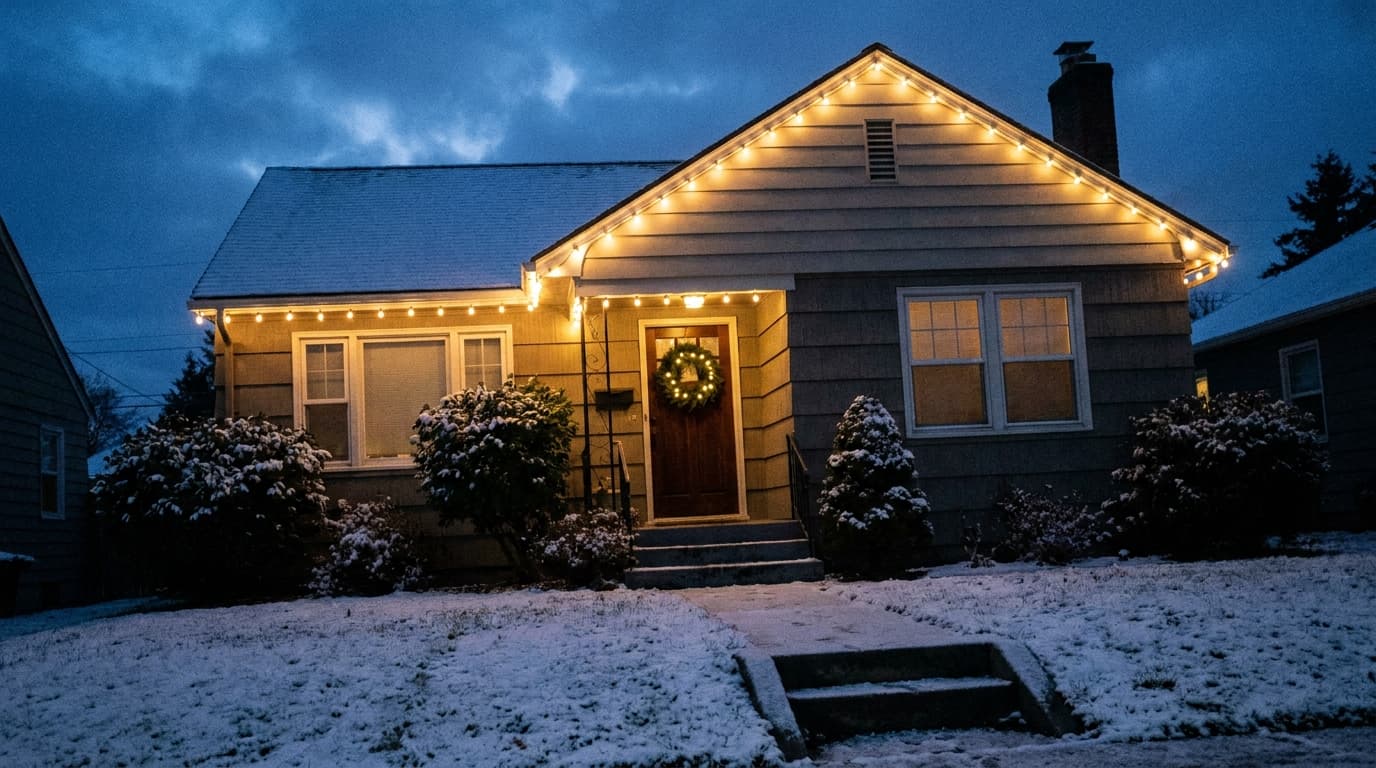
Christmas comes with a surprising number of legal quirks around the world. Boston banned the holiday outright in 1659, backed by a five-shilling fine for anyone caught celebrating. The UK can fine drivers up to 5,000 pounds if a Santa suit stops them from properly controlling their car. North Korea bans Christmas celebrations entirely, and a few of the internet's favorite "weird Christmas law" claims turn out to be myths.
Was Christmas illegal in the United States in the 17th century? Did the United Kingdom really make it so Santa couldn't drive a car (never mind his sleigh)? Here is what is true, what is exaggerated, and what is an outright myth about Christmas law around the world.
A few quick things to note before we get started:
- Stay far away from North Korea during the Christmas season if you plan on celebrating.
- Excessive holiday lighting can count as light trespass, which is grounds for a trespassing complaint in some New Jersey towns. Watch out, Santa.
- Christmas pudding and mince pie are not actually banned in the UK today, whatever Oliver Cromwell's Puritans once tried.
We like to think our lawmakers are noble, well-educated people who have our best interests at heart. These laws prove that isn't always the case, though a surprising number of "weird Christmas laws" you'll read online don't actually exist.
Christmas is observed in almost every country on the planet, so there are plenty of real laws about what you can and cannot do during the season. Here are the weirdest, verified.
A 5000-Pound Fine If You Drive While Wearing Christmas Party Outfits in the UK
Rule 97 of the Highway Code is not a new law and was not written with Santa suits in mind. It has long required drivers to make sure their clothing and footwear do not stop them from safely controlling their vehicle. Every December, though, UK outlets report on drivers risking a fine over festive outfits, because bulky boots, a fake beard, or an oversized costume can genuinely interfere with driving.
What is rule 97 of the highway code?
Rule 97 of the Highway Code requires drivers to make sure they do not wear clothing or footwear that prevents them from using the vehicle's controls correctly.
How does a Santa suit prevent you from using car controls?
The boots, the beard, and arguably the padded belly can all interfere with driving. Bulky boots make it harder to feel exactly where the pedals are, which leaves more room for error and more reason to glance down instead of at the road. A fake beard can block peripheral vision.
So are Santa suits banned in the UK? No. You only violate rule 97 if the outfit actually stops you from controlling the vehicle. If you're accused of that, the possible penalties are:
- A fine of up to 5,000 pounds.
- Discretionary disqualification from driving.
- 9 points on your license.
Boston Outlawed Christmas in 1659
After England executed King Charles I and overthrew the monarchy in 1649, Puritan leaders turned their attention to Christmas. In their view, December 25th was supposed to be a day of fasting and prayer, not feasting.
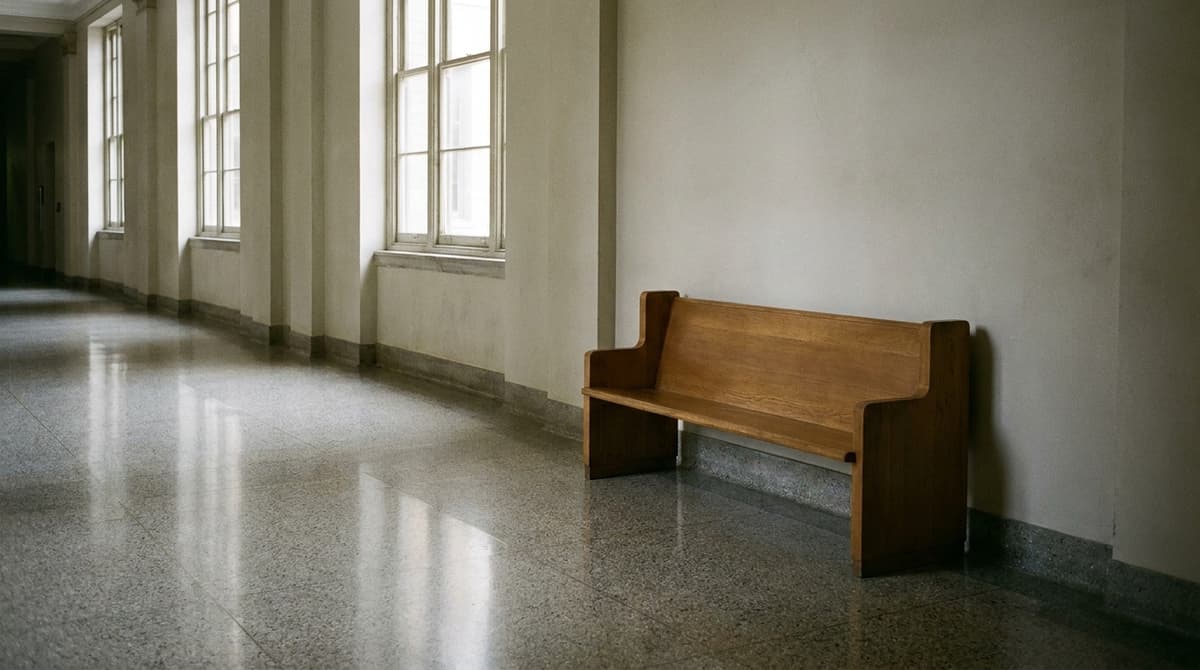
Ten years later, in 1659, Puritans who had migrated to New England, acting through the General Court of the Massachusetts Bay Colony, passed a law fining anyone caught observing Christmas:
"For preventing disorders arising in several places within this jurisdiction, by reason of some still observing such festivals as were superstitiously kept in other communities, it is ordered that whosoever shall be found observing any such day as Christmas or the like, either by forbearing labor, feasting, or in any other way, shall pay five shillings as a fine to the county."
No prosecutions under the law appear in the historical record, and it was repealed in 1681. Christmas remained culturally frowned upon in New England well into the 18th century, but by the early 1800s even Puritan-descended churches had begun holding formal Christmas services.
** Why did Puritans hate Christmas?**
They had a few reasons:
- Puritans believed there was no biblical basis for a Christmas feast, so celebrating it looked like a departure from scripture to them.
- Many Puritans had fled religious persecution by an Anglican majority and viewed the season's revelry as excessive.
- Because the holiday has pre-Christian roots, some Puritans considered celebrating it a form of idolatry.
Did the Puritans ban Christmas?
Yes. The Puritans banned Christmas by decree in 1659. Can you celebrate Christmas in Boston today? Absolutely. The ban was repealed a generation later, and Puritan-descended churches eventually embraced formal Christmas services. Christmas became a federal holiday in the United States in 1870, and it has been celebrated nationwide ever since.
In Some Parts of New Jersey "Light Trespass" Is Unlawful
If you live in Eatontown, New Jersey, violating the borough's outdoor lighting ordinance can get you an enforcement notice. If you receive one, you're entitled to a hearing in municipal court, where you can contest it.
If found guilty, Eatontown's glare-nuisance ordinance allows a civil penalty of up to $1,250 for each offense, plus up to 90 days of imprisonment or community service.
In plain terms, if glare from your holiday display is a nuisance to neighbors, or creates a hazard for cyclists and drivers through glare-related fatigue or reduced visibility, it can violate the ordinance and lead to a fine or worse.
Other New Jersey ordinances separately target excessive noise and traffic congestion from holiday visitors. It's worth checking your own town's code, many are searchable through eCode360 or your municipal clerk's office, before assuming Eatontown's specific numbers apply where you live.
To stay on the right side of your neighbors and local code:
- Avoid excessive artificial light.
- Fix misaligned fixtures that cause unnecessary glare.
- Leave enough light for Santa's reindeer to actually find your house.
Are There Laws on How Long You Can Keep Christmas Lights On?
This is one of the most repeated "weird law" claims on the internet, and it turns out to be mostly a myth. Two versions circulate constantly.
The first says Maine requires homeowners to take down Christmas lights by January 14th or face a fine. A Maine legislative law librarian confirmed no such law has ever existed, even though the rumor is popular enough to show up on national "dumbest laws" lists.
The second says San Diego fines residents $250 for leaving lights up past February 2nd. San Diego's actual municipal lighting code addresses technical fixture specifications, not seasonal decoration deadlines, and the fine people cite traces back to a private homeowners association dispute in La Jolla, not a city law.
So no, there's no nationwide or even citywide deadline for taking down your outdoor lights. Some homeowners associations set their own removal windows, typically 30 to 45 days after the holiday, but that's a private contract, not a criminal or civil law.

In Arkansas It Is Illegal to Sell Alcohol on Christmas Day
Arkansas law flatly prohibits alcohol sales on Christmas Day, no exceptions for restaurants or bars, aside from the state's three licensed casinos in Pine Bluff, Hot Springs, and West Memphis. The same body of law also restricts Sunday sales statewide by default, though roughly two dozen Arkansas cities and counties have separately opted in to allow Sunday alcohol sales.
What to remember:
- If Christmas Day falls on a Sunday in a county without Sunday sales approval, both restrictions stack.
- Public intoxication is a Class C misdemeanor in Arkansas.
- Arkansas law does not allow the driver or any passenger to have an open container of alcohol in the vehicle.
Christmas Pudding May Have Been Banned in England
To fight gluttony, one of the "deadly sins," Oliver Cromwell's Puritan-led government is often credited with banning the eating of pudding and mince pies on Christmas Day in the 1650s. How true is that?
It depends who you ask. Some historians point to genuine Puritan-era rules discouraging festive excess. Others say the specific "pudding ban" story doesn't appear in Cromwell's actual statute books and may be exaggerated folklore. Either way, Christmas pudding and mince pies are entirely legal in the UK today.
Celebrating Christmas in Public Is Banned or Restricted in Several Countries
North Korea is an officially atheist state where Christianity and other religions are effectively outlawed. U.S. State Department religious freedom reporting documents severe punishment, including forced labor camps, for North Koreans caught practicing any religion, Christmas included. The government instead promotes December 24th as the birthday of Kim Jong Suk, the current leader's grandmother, honored as "the sacred mother of the revolution."
Religious activity that can trigger punishment in North Korea includes:
- Praying.
- Singing Christmas or other religious hymns.
- Contact with religious people or organizations.
- Possessing religious items, including Bibles.
Brunei has banned public Christmas displays since 2015, after the sultanate adopted full Sharia law. Muslims and non-Muslims caught celebrating in public, including wearing Santa hats or putting up a tree, can face fines or years in prison. Christians can still worship and celebrate privately at home or in registered churches.
Tajikistan has restricted Christmas trees, fireworks, and organized gift-giving in schools since 2015, and a broader 2024 law added fines tied to celebrations for other holidays too.
Two countries often listed alongside these deserve an update. Saudi Arabia restricted public Christmas displays for decades, but lifted its ban on Christmas trees and decorations in 2022, and cities like Riyadh and Jeddah now host public Christmas markets. Christmas still isn't an official Saudi holiday, and large public religious processions remain restricted, but the country is far more open than the old "Christmas is banned" claim suggests. Albania banned all religious observance, Christmas included, from 1967 to 1990, when the communist government declared it the world's first officially atheist state and closed or destroyed every church, mosque, and religious building in the country. The ban was lifted in December 1990, in time for Albanians to attend Christmas services that same year, so the country no longer belongs on a present-day list of Christmas bans.
England has its own historical entry on this list. It wasn't technically illegal to celebrate Christmas under Oliver Cromwell's Puritan-led government between 1649 and 1660, but public celebrations were heavily suppressed. To Cromwell and his followers, Christmas had become an excuse for what they called carnal and sensual indulgence.
What Are Some Weird Christmas Facts?
- Islamic scholars are divided on whether wishing Christians a merry Christmas is permitted. It isn't prohibited outright, but some imams advise against it out of caution.
- The idea that a candy cane's J shape stands for Jesus is a popular modern legend, not history. Historians trace the earliest cane-shaped sugar sticks to a German choirmaster in 1670, decades before any of the religious origin stories claim, and no one knows who added the stripes.
- Several Australian states restrict retail trading and paid public entertainment on Christmas Day, a holdover from older trading-hours laws.
- Texas's 2013 "Merry Christmas law" (House Bill 308) protects public schools' right to say "Merry Christmas," display a nativity scene or menorah alongside secular symbols, and teach students about the holiday's history.
- Philadelphia's fire code bans natural cut Christmas trees in any residential building with three or more units, citing fire risk from dried-out trees. One and two-family homes are exempt, and violators can face a $300 fine.
Updates
Fact-checked and refreshed the whole page: removed the debunked Maine and San Diego Christmas-lights-deadline myth, corrected Saudi Arabia's outdated Christmas-ban status (eased since 2022) and Albania's listing (its ban ended in 1990), softened the unverified candy cane origin legend, fixed several broken and mismatched links, corrected the Philadelphia Christmas tree fire code details, and added primary-source citations throughout.
The Law Behind This Article
This article rests on the statutory provisions below, held in our own legal record and retrieved from the official source. Tap a section to read the operative text.
Arkansas Code of 1987 Annotated
§ 3-3-211Sales on Christmas Day.In force
(a) It shall be unlawful to sell intoxicating liquors on Christmas Day. (b) Any person who shall sell intoxicating alcoholic liquors on Christmas Day shall be guilty of a Class B misdemeanor.
Official text (excerpt) · last checked 2020-11-06 · Read the full text in our law library
Cited in 1 court opinions in our collectionLatest citing opinion in our collection: 2018
Opinions citing this section in our collection:
- Stiritz v. Martin (Supreme Court of Arkansas 2018, 556 S.W.3d 523)“…nt's § 7(b) that casino licensees shall not be subject to Ark. Code Ann. § 3-3-211 , which prohibits *534 the sale of in…”
Identified automatically from the court opinions citing this section — not a ranking of which case controls.
Search our full record of US law — 2.1 million sections, every state + federal →
Sources and References
- reporting on UK drivers risking a fine for festive outfits that impede vehicle control(thesun.co.uk)
- the official Highway Code text of rule 97, requiring clothing and footwear that do not prevent safe control of the vehicle(gov.uk).gov
- Massachusetts' own account of the 1659 General Court law fining Christmas observance and its 1681 repeal(mass.gov).gov
- New Jersey's model outdoor lighting ordinance guide(nj.gov).gov
- Eatontown, NJ's glare-nuisance ordinance (Chapter 170) and its penalty schedule(ecode360.com)
- a Maine legislative law librarian confirming no state law requires Christmas lights down by January 14(pressherald.com)
- reporting tracing the San Diego 'February 2 fine' claim to a private HOA dispute, not city law(nbcsandiego.com)
- Arkansas Code section 3-3-211, prohibiting alcohol sales on Christmas Day(law.justia.com)
- the U.S. State Department's international religious freedom report on North Korea(state.gov).gov
- coverage of Brunei's 2015 ban on public Christmas celebrations under Sharia law(asianews.it)
- the Library of Congress Global Legal Monitor on Tajikistan's restrictions on Christmas trees, gift-giving, and other celebrations(loc.gov).gov
- Arab News reporting on Saudi Arabia lifting its ban on Christmas trees and decorations in 2022(arabnews.com)
- Balkan Insight's history of Albania's 1967 to 1990 ban on all religious observance, lifted in time for Christmas 1990(balkaninsight.com)
- Smithsonian Magazine debunking the candy-cane-as-Christian-symbol legend(smithsonianmag.com)
- CBS Philadelphia on the fire code banning natural cut Christmas trees in buildings with three or more units(cbsnews.com)