PC 148 Explained: Resisting or Obstructing an Officer
Independently fact-checked against primary sources (last audited October 21, 2026). · 8 primary sources cited on this page. How we verify our legal content
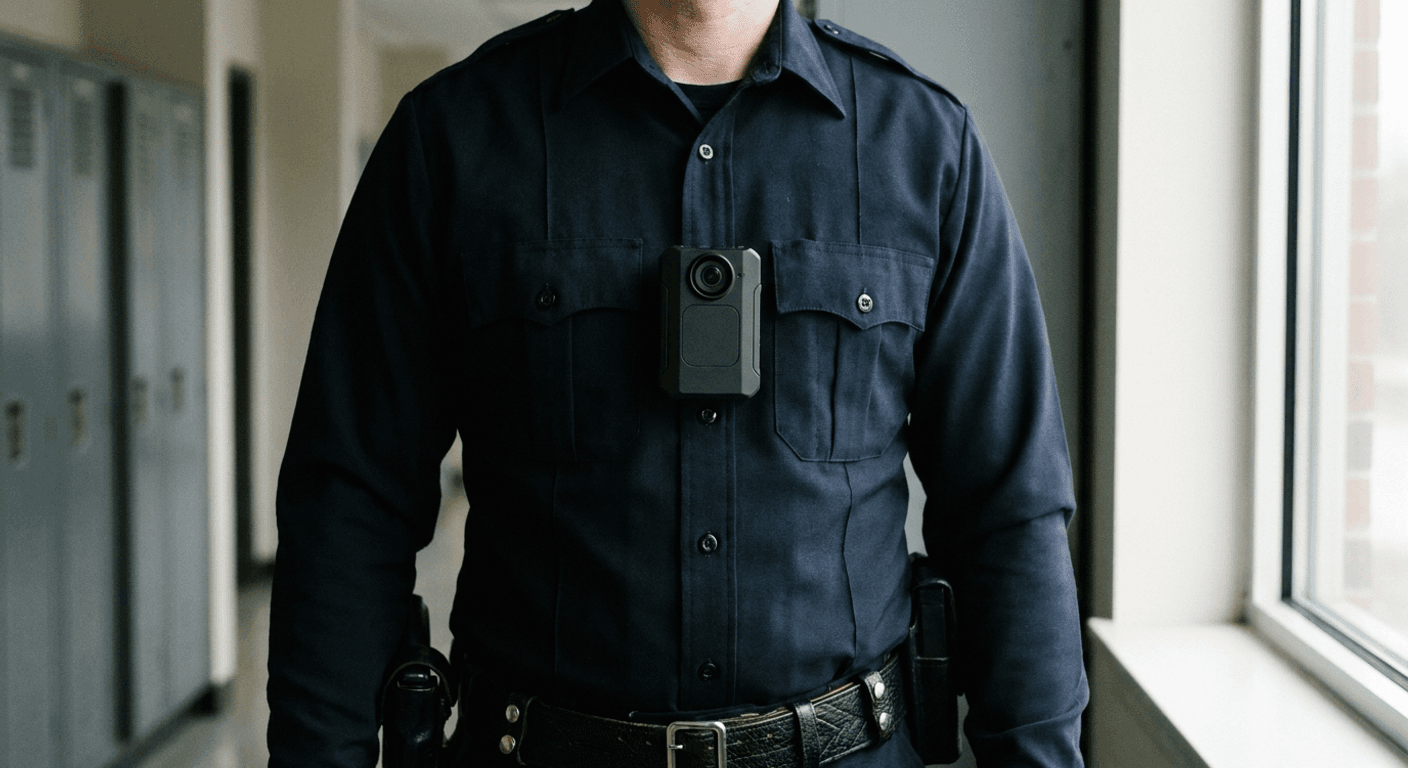
California Penal Code section 148(a)(1) makes it a crime to willfully resist, delay, or obstruct a public officer, peace officer, or emergency medical technician who is discharging, or trying to discharge, a duty of the office or employment. The official California jury instruction titles the offense "Resisting Peace Officer, Public Officer, or EMT."
This page covers what section 148 says as published on the California Legislature's official site, including the separate subdivisions on taking an officer's weapon and on recording officers, what the prosecution has to prove, and the penalties the statute sets. It covers California state law only.
Information last verified against primary sources on October 20, 2026. This article has not yet been reviewed by a licensed lawyer.
What PC 148 says
Section 148 sits in Title 7 of Part 1 of the Penal Code, "Of Crimes Against Public Justice," in the chapter titled "Other Offenses Against Public Justice." It has seven subdivisions, (a) through (g).
148(a)(1): resisting, delaying, or obstructing
The core offense reads:
"Every person who willfully resists, delays, or obstructs any public officer, peace officer, or an emergency medical technician, as defined in Division 2.5 (commencing with Section 1797) of the Health and Safety Code, in the discharge or attempt to discharge any duty of his or her office or employment, when no other punishment is prescribed, shall be punished by a fine not exceeding one thousand dollars ($1,000), or by imprisonment in a county jail not to exceed one year, or by both that fine and imprisonment."
Three things in that sentence shape every 148(a)(1) case. The act must be willful. The person resisted, delayed, or obstructed must be a public officer, a peace officer, or an emergency medical technician. And the officer must have been discharging, or attempting to discharge, a duty of the job.
The paragraph's own penalty applies, in its words, "when no other punishment is prescribed."
148(a)(2): interfering with public safety radio
Paragraph (2) covers anyone who "knowingly and maliciously interrupts, disrupts, impedes, or otherwise interferes with the transmission of a communication over a public safety radio frequency." The penalty is the same as (a)(1). The paragraph begins with an exception for subdivision (d) of section 653t, which this page does not cover.
148(b), (c), and (d): taking an officer's weapon
Three subdivisions deal with weapons taken from an officer:
- 148(b) covers a person who, during a 148(a) offense, "removes or takes any weapon, other than a firearm, from the person of, or immediate presence of, a public officer or peace officer."
- 148(c) covers a person who, during a 148(a) offense, removes or takes a firearm from the person or immediate presence of a public officer or peace officer.
- 148(d) covers a person who "removes or takes without intent to permanently deprive, or who attempts to remove or take a firearm" from an officer engaged in the performance of lawful duties.
For 148(d), the statute tells the prosecution how specific intent must be shown. It must demonstrate that at least one of eight "direct, but ineffectual, acts" occurred. They include the defendant unfastening the officer's holster strap, partially removing the firearm from the holster, or releasing the firearm safety; independent-witness corroboration of certain statements or actions; the defendant's fingerprint on the firearm or holster; scientifically authenticated physical evidence that the defendant touched the firearm; and, in a struggle, the defendant attempting to pick up the officer's fallen firearm.
148(e) and (f): multiple convictions and disarmed officers
Subdivision (e) says a person "shall not be convicted of a violation of subdivision (a) in addition to a conviction of a violation of subdivision (b), (c), or (d)" when the resistance and the weapon taking (or attempt) were committed against the same officer or EMT. It adds that a person may be convicted of multiple violations of section 148 if more than one officer or EMT is a victim.
Subdivision (f) says section 148 "shall not apply if the public officer, peace officer, or emergency medical technician is disarmed while engaged in a criminal act."
148(g): photographing or recording an officer
Subdivision (g) addresses recording directly:
"The fact that a person takes a photograph or makes an audio or video recording of a public officer or peace officer, while the officer is in a public place or the person taking the photograph or making the recording is in a place he or she has the right to be, does not constitute, in and of itself, a violation of subdivision (a), nor does it constitute reasonable suspicion to detain the person or probable cause to arrest the person."
The words "in and of itself" carry the meaning. The subdivision says the act of photographing or recording, alone, is not a 148(a) violation and is not alone a basis to detain or arrest. It does not address other conduct that might accompany a recording. CALCRIM No. 2656 includes an optional jury instruction to the same effect: recording an officer in a public place, or from a place where the person has the right to be, "is not, by itself, a crime."
California has separate rules on recording confidential conversations; see our California Invasion of Privacy Act explainer.
What the prosecution has to prove
California's official jury instruction for 148(a) is CALCRIM No. 2656, "Resisting Peace Officer, Public Officer, or EMT (Pen. Code, § 148(a))," published by the Judicial Council of California (2026 edition). It tells the jury the prosecution must prove that:

- The named person was a peace officer, public officer, or emergency medical technician lawfully performing or attempting to perform their duties.
- The defendant willfully resisted, obstructed, or delayed that person in the performance or attempted performance of those duties.
- When the defendant acted, the defendant knew, or reasonably should have known, that the person was an officer or EMT performing or attempting to perform their duties.
The instruction's bench notes say appellate courts are split on this knowledge element, and that a trial court agreeing with the line of cases that requires actual knowledge should modify the instruction to require proof that the defendant knew the person was an officer.
"Someone commits an act willfully when he or she does it willingly or on purpose." The instruction adds that it is not required that the person intend to break the law, hurt someone else, or gain any advantage.
The first element turns on lawful performance. When that is an issue in the case, the instruction includes this optional paragraph:
"A peace officer is not lawfully performing his or her duties if he or she is (unlawfully arresting or detaining someone/ [or] using unreasonable or excessive force in his or her duties)."
Two more optional paragraphs come up often. Where several acts are alleged, the jurors must all agree on at least one act the defendant committed. And "If a person intentionally goes limp, requiring an officer to drag or carry the person in order to accomplish a lawful arrest, that person may have willfully" resisted, obstructed, or delayed the officer "if all the other requirements are met."
Penalties under PC 148
The punishment depends on the subdivision.
| Subdivision | What it covers | Punishment stated in the statute |
|---|---|---|
| 148(a)(1) | Resisting, delaying, or obstructing | Fine up to $1,000, county jail up to one year, or both |
| 148(a)(2) | Interfering with public safety radio | Fine up to $1,000, county jail up to one year, or both |
| 148(b) | Taking a non-firearm weapon from an officer | County jail up to one year, or imprisonment under section 1170(h) |
| 148(c) | Taking an officer's firearm | Imprisonment under section 1170(h) |
| 148(d) | Taking without intent to permanently deprive, or attempting to take, an officer's firearm | County jail up to one year, or imprisonment under section 1170(h) |
148(a) offenses carry no state prison or section 1170(h) option. Penal Code section 17(a) defines a felony as a crime punishable by death, by imprisonment in the state prison, or by imprisonment in a county jail under section 1170(h), and says "Every other crime or public offense is a misdemeanor except those offenses that are classified as infractions."
148(b) and 148(d) allow either county jail for up to one year or imprisonment under section 1170(h), so they can be handled as a misdemeanor or a felony. Penal Code section 17(b) lists when an either-way offense becomes a misdemeanor for all purposes, such as when the court grants probation and declares it a misdemeanor, or when the prosecutor files it as a misdemeanor and the defendant does not object.
148(c) is punishable only under section 1170(h), which makes it a felony under section 17(a).
None of these subdivisions states a term for the section 1170(h) option. Section 1170(h)(1) supplies one for that situation:
"Except as provided in paragraph (3), a felony punishable pursuant to this subdivision where the term is not specified in the underlying offense shall be punishable by a term of imprisonment in a county jail for 16 months, or two or three years."
Under paragraph (3) of section 1170(h), an executed sentence under that subdivision is served in state prison instead when the defendant has a prior or current serious felony conviction (as described in section 1192.7(c)) or violent felony conviction (as described in section 667.5(c)), has a prior felony conviction in another jurisdiction for an offense with all the elements of one of those felonies, is required to register as a sex offender, or receives an enhancement under section 186.11.
Related sections
- Penal Code section 243(b). Battery against a peace officer and a list of other workers engaged in the performance of their duties, where the person knows or reasonably should know the victim's role, is punishable by a fine of up to $2,000, county jail for up to one year, or both. Official text. For battery generally, see our PC 242 explainer.
- Penal Code section 489. Section 148(d) applies "notwithstanding subdivision (a) of Section 489," the grand theft punishment for theft of a firearm. See our PC 487 explainer. Official text.
- Penal Code section 653t. Named as an exception in 148(a)(2). Official text.
- Penal Code section 17. Felony and misdemeanor definitions and the either-way rules. Official text.
- Penal Code section 1170. Subdivision (h) on county jail felony terms. Official text.
For assault and battery more broadly, see California assault and battery laws. For how California sorts crimes into felonies, misdemeanors, and infractions, see California felony and misdemeanor classes. Other statute explainers are in our statutes library.
Legislative history
The official history note for section 148 reads: "Amended by Stats. 2015, Ch. 177, Sec. 2. (SB 411) Effective January 1, 2016." The note does not describe what the amendment changed. The text quoted on this page is the version published on the Legislature's site as of October 20, 2026.
What happens after an arrest for PC 148
A "148" on a jail roster or booking sheet is the arresting agency's charge. The prosecutor reviews the case and decides whether to file a 148 charge, a different charge, or nothing. The first court appearance, the arraignment, is where the filed charges are read.

Our California charge code lookup translates other booking codes, and What Happens After You Get Arrested walks through the steps from booking to arraignment.
Disclaimer
This page explains what California Penal Code section 148 and the related sections quoted here say, as published on official state sources and checked on October 20, 2026. It is general legal information, not legal advice, and reading it does not create an attorney-client relationship. Whether an officer was lawfully performing their duties, and whether conduct amounted to resisting, delaying, or obstructing, depends on the specific facts, so anyone facing a 148 charge should speak with a criminal defense lawyer licensed in California.
Last updated: October 20, 2026.
Frequently Asked Questions
Is PC 148 a misdemeanor in California?
Section 148(a)(1) is punishable by a fine of up to $1,000, county jail for up to one year, or both, with no state prison or section 1170(h) option. Under Penal Code section 17(a), a crime that is not punishable by death, state prison, or county jail under section 1170(h) is a misdemeanor unless it is an infraction. Subdivisions (b), (c), and (d), which involve taking or trying to take an officer's weapon, carry the section 1170(h) option.
What is the punishment for 148(a)(1)?
A fine not exceeding $1,000, imprisonment in a county jail not to exceed one year, or both that fine and imprisonment, as stated in section 148(a)(1).
Is it illegal to record the police in California?
Section 148(g) says that taking a photograph or making an audio or video recording of a public officer or peace officer, while the officer is in a public place or the person recording is in a place they have the right to be, does not in and of itself violate 148(a), and is not by itself reasonable suspicion to detain or probable cause to arrest. The subdivision speaks to the act of recording alone. It does not address other conduct that may happen alongside a recording, or other laws.
What does resisting, delaying, or obstructing an officer mean under 148?
The statute uses those three words without defining them. CALCRIM No. 2656 requires proof that the officer was lawfully performing or attempting to perform their duties, that the defendant willfully resisted, obstructed, or delayed the officer in that performance, and that the defendant knew or reasonably should have known the person was an officer performing or attempting to perform their duties.
Does going limp count as resisting under PC 148?
CALCRIM No. 2656 includes an optional instruction, given when it fits the case, that a person who intentionally goes limp, requiring an officer to drag or carry the person to accomplish a lawful arrest, may have willfully resisted, obstructed, or delayed the officer if all the other requirements are met.
Is taking a police officer's gun a felony in California?
Section 148(c) makes removing or taking a firearm from an officer's person or immediate presence during a 148(a) offense punishable by imprisonment under section 1170(h), with no county jail misdemeanor alternative. Under Penal Code section 17(a), a crime punishable by county jail imprisonment under section 1170(h) is a felony. An attempt, or a taking without intent to permanently deprive, falls under 148(d), which allows county jail up to one year or section 1170(h).
Can someone be convicted of 148 more than once for one incident?
Section 148(e) says a person may be convicted of multiple violations of section 148 if more than one officer or emergency medical technician is a victim. It also bars a 148(a) conviction on top of a 148(b), (c), or (d) conviction when the resistance and the weapon taking or attempt were committed against the same officer.
Updates
Independently fact-checked against the cited primary sources
The Law Behind This Article
This article rests on the statutory provisions below, held in our own legal record and retrieved from the official source. Tap a section to read the operative text.
California Penal Code
§ 148In forcecited in 4 of our articles
(a) (1) Every person who willfully resists, delays, or obstructs any public officer, peace officer, or an emergency medical technician, as defined in Division 2.5 (commencing with Section 1797) of the Health and Safety Code, in the discharge or attempt to discharge any duty of his or her office or employment, when no other punishment is prescribed, shall be punished by a fine not exceeding one thousand dollars ($1,000), or by imprisonment in a county jail not to exceed one year, or by both that fine and imprisonment. (2) Except as provided by subdivision (d) of Section 653t, every person who knowingly and maliciously interrupts, disrupts, impedes, or otherwise interferes with the transmission of a communication over a public safety radio frequency shall be punished by a fine not exceeding one thousand dollars ($1,000), imprisonment in a county jail not exceeding one year, or by both that fine and imprisonment.
Official text (excerpt) · last checked 2026-07-28 · Read the full text in our law library · Verify at leginfo.legislature.ca.gov
Cited in 1,008 court opinions in our collectionLatest citing opinion in our collection: 2026
In the courts (editorial summary, independently checked):California courts have shaped Sec. 148(a)(1): People v. Smith (2013) held it is a necessarily included lesser offense of resisting an officer under section 69 as charged. Cornell v. City & Cnty. of S.F. (2017) held a 148(a) charge requires the officer act within lawful duty, so an unlawful detention defeats probable cause to arrest.
Opinions citing this section in our collection:
- People v. Kelly (California Supreme Court 2006, 51 Cal. Rptr. 3d 98)“…or count of resisting, delaying, or obstructing an officer (Pen.Code, § 148, subd. (a)(1)). The trial court imposed…”
- People v. Smith (California Supreme Court 2013, 57 Cal. 4th 232)✓A jail inmate struck one deputy and threw a bowl of urine and feces at another, and was convicted under section 69; the court held section 148(a)(1) was a lesser offense necessarily included in section 69 as charged, but that no instruction on it was required here.
- City of Santa Cruz v. Municipal Court (California Supreme Court 1989, 49 Cal. 3d 74)✓A man charged under section 148 after a forceful arrest sought the officers' prior excessive force complaints; in that prosecution the court held his lawyer's information-and-belief declaration showed materiality under Evidence Code section 1043, not construing section 148.
Identified automatically from the court opinions citing this section — not a ranking of which case controls.
Also relied on in: California Laws on Recording in Public: What Is Legal (2026), California Laws on Recording Police: Your Rights and Limits (2026), California Recording Laws (2026): All-Party Consent Rules
Search our full record of US law — 2.1 million sections, every state + federal →
Sources and References
- California Penal Code § 148 (resisting, delaying, or obstructing an officer)(leginfo.legislature.ca.gov).gov
- Judicial Council of California Criminal Jury Instructions (CALCRIM), 2026 edition, No. 2656, Resisting Peace Officer, Public Officer, or EMT (Pen. Code, § 148(a))(courts.ca.gov).gov
- California Penal Code § 17 (felony and misdemeanor classification)(leginfo.legislature.ca.gov).gov
- California Penal Code § 1170 (subdivision (h) county jail felony terms)(leginfo.legislature.ca.gov).gov
- California Penal Code § 1192.7 (serious felony list)(leginfo.legislature.ca.gov).gov
- California Penal Code § 667.5 (violent felony list, subdivision (c))(leginfo.legislature.ca.gov).gov
- California Penal Code § 243 (battery punishment, including battery on officers)(leginfo.legislature.ca.gov).gov
- California Penal Code § 489 (grand theft punishment)(leginfo.legislature.ca.gov).gov
Paid attorney referral. RecordingLaw may receive compensation when you use an attorney-help link. RecordingLaw is not a law firm. Submitting a request does not guarantee that an attorney will accept your case and does not create an attorney-client relationship.