Utility Scams: Shutoff Threats, Fake Workers and What to Do
Independently fact-checked against primary sources (last audited October 3, 2026). · 7 primary sources cited on this page. How we verify our legal content

If someone calls, texts, emails or knocks on your door saying your gas, electric or water will be shut off unless you pay right now, it's a scam. That is the Federal Trade Commission's own wording: "If you get an unexpected call, text, email, or in-person visit from your gas, electric, or water company and they threaten to shut off your service unless you pay them, it's a scam." Real utility companies, the FTC says, "won't demand immediate payment to avoid same-day disconnection."
What to do right now: hang up or close the door, don't click any link, and check your account by calling the number printed on your bill or going to the company's website yourself. If you already paid, call the bank, card company, payment app or gift card company you used immediately and say you paid a scammer. Then see our guide to getting money back after a scam for the rules that apply to how you paid.
Information last verified on October 3, 2026. This article has not been reviewed by a licensed lawyer.
Jurisdiction scope: This guide covers United States federal law and federal agency guidance on utility impersonation scams: the FTC's Rule on Impersonation of Government and Businesses (16 C.F.R. part 461) and FTC consumer guidance. It quotes the Minnesota Public Utilities Commission as one state example. It does not cover each state's utility disconnection rules, the rules for switching your electricity or gas supplier, or individual utilities' policies. Refund rights by payment method are on our money-back guide, not here.
How to tell a utility scam from a real utility call
The FTC describes the scam simply: scammers "might call, text, email, or visit you in person and threaten to shut off your gas, electric, or water service if you don't pay them immediately. These scammers want to scare you into paying before you have time to confirm what they're telling you. But real utility companies don't do this."
These are the tells the FTC and one state regulator have published:
- A shutoff threat with a deadline of today. The FTC says real utility companies "won't demand immediate payment to avoid same-day disconnection."
- A demand to pay a certain way. The FTC says scammers "will often say you can only pay them by wiring money through a company like Western Union or MoneyGram, using cryptocurrency, using a payment app, or putting money on a gift card and then giving them the numbers on the back of the card." Its rule of thumb: "Only scammers say you can only pay one of those ways. Your utility company won't ask you to pay any of those ways. Neither will any other legitimate business."
- Pressure to act before you can check. The FTC says the point of the threat is to scare you "into paying before you have time to confirm what they're telling you."
- Someone at the door who wants in. The FTC says that if they show up at your door, "don't let them pressure their way into your home."
- A call from the utility regulator offering discounts or threatening shutoff. Minnesota's Public Utilities Commission warns of people who "falsely claim to represent the PUC," including calls, emails or notices "offering utility bill discounts to sign up for services." It says: "The PUC will never offer bill discounts, threaten service disconnection, request payments or ask for your banking or credit card information." That statement is about Minnesota's commission; check your own state's regulator.
Scammers reach people by phone, text and email, so a message that looks official proves nothing. Our guide to phishing, smishing and vishing explains how fake texts, links and calls work, and our guide to tech support and fake invoice scams covers fake bills.
Why scammers ask for gift cards, wires, crypto or payment apps
The FTC's explanation is blunt: "Scammers tell you to pay this way because it's hard to get your money back when you use one of these methods."
A real utility bill comes with a real account and real ways to pay. A caller who will only take one of these four methods is telling you who they are. If you were pushed into one of them, our guides to gift card scams and Zelle and payment app scams explain what to do for each.
What to do if someone threatens to shut off your utilities
- Hang up, or don't reply. The FTC says: "If someone contacts you claiming to be from your utility company and threatening to shut off your service if you don't pay on the spot, hang up. Don't click any links or respond to the message."
- Find the real number yourself. The FTC says to "contact your utility company using the number on your bill or the company's website."
- Ask about your account. If the utility says your account is current, you have your answer. If you really are behind, the next section explains what the FTC suggests.
- Report the contact. See the reporting section below.

Watch out for fake payment sites in search results
Searching for your utility's name can lead you to the wrong place. The FTC warns: "Your top search results online are often paid ads, which dishonest businesses sometimes use to impersonate real utility companies." It adds that "Even if some of these businesses pay your bill, they might also charge you a bunch of fees that you wouldn't have to pay if you visited your utility company's website directly."
The FTC's advice is to "Scroll to the unpaid search results to help make sure you have the right number or website." Safer still, type the web address printed on your bill.
A utility worker at your door: how to check
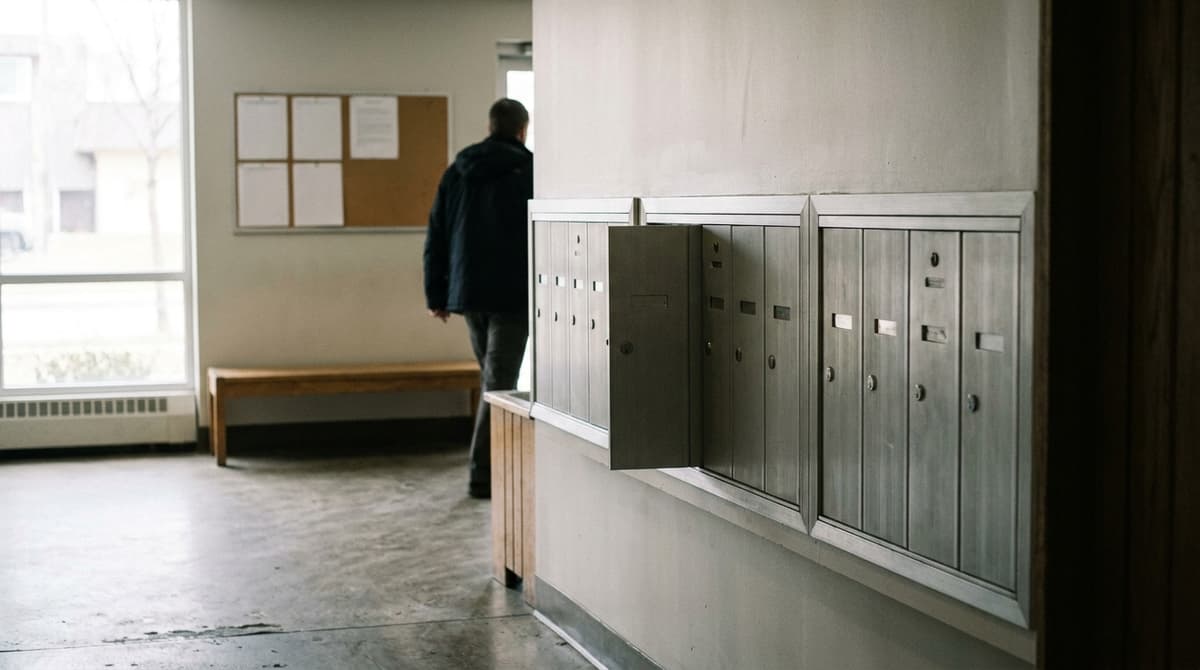
A fake worker at the door is a safety problem, not just a payment problem. The FTC's guidance is short: if they show up, "don't let them pressure their way into your home." The Minnesota Public Utilities Commission, as one state example, gives more detail:
- "Utility workers and authorized contractors who visit your home should be clearly identifiable. They typically wear a uniform and carry a company-issued photo ID badge. Their vehicles are usually marked with the utility or contractor's name and logo."
- "Utility employees and contractors will not demand immediate access to your home. In many cases, they only need access to a meter, which is often located outside or in a side or back yard."
- "You have the right to ask for identification and to verify the person's identity before allowing them access to your property."
- "Do not use a phone number provided by the person at your door."
Keep the door closed while you call the utility at the number on your bill. The Minnesota commission says: "If you believe someone is impersonating a utility worker or you feel unsafe, contact local law enforcement immediately by calling 9-1-1."
Salespeople at the door
Not everyone at the door is a fake worker. Some are selling something. The FTC's Cooling-Off Rule "gives you three days to cancel certain sales made at your home, workplace, or dormitory, or at a seller's temporary location," with exclusions that include sales "under $25 for sales made at your home" and those "needed to meet an emergency." Your "right to cancel for a full refund lasts until midnight of the third business day after the sale."
We have not confirmed whether that rule reaches a contract to switch your electricity or gas supplier signed at your door, so do not rely on it for that kind of contract. If someone at the door pressures you to sign up for anything to do with your utility service, you can say no, close the door and call your utility at the number on your bill.
If you are really behind on your utility bill
Sometimes the worry behind a scam call is real: you may owe money. If you are behind on your utility bills, or expect to be, the FTC's advice is to "contact the utility company immediately." It adds that "Often, companies won't shut off your service if you pay part of the overdue bill now and agree to a plan to catch up on your payments over time."
Disconnection rules are mostly set by state law and each utility's tariff, and they vary from state to state. The FTC says: "Some states have rules for when a utility company shuts off your service. Contact your state or local consumer protection office to find out if that's the case where you live." Your state's utility regulator is also a place to ask.
Pro tip: a real shutoff process runs through your actual account. If you call the number on your bill and the utility has no record of a past-due balance, that is a strong sign the threat did not come from them.
What to do if you already paid a utility scammer
Act fast. The FTC's utility page sends people who paid to its general advice to "read What To Do if You Were Scammed for specific steps to take depending on how you paid."
- Call the payment company first. Contact the bank, card issuer, wire company, crypto exchange, payment app or gift card company you used, tell them it was a scam, and ask them to stop or reverse the payment.
- Keep everything. Save receipts, gift cards, screenshots of texts or emails, and the caller's number.
- Check your real utility account using the number on your bill, so you know whether any real balance is due.
- Report the scam (next section).
Whether you can get money back depends almost entirely on how you paid and how fast you act. Our money-back guide walks through the rules for cards, bank transfers, payment apps, wires, crypto and gift cards. If your bank or app turned down your claim, see what to do when a bank refuses a scam refund.
If you gave the scammer personal or account information
If the caller got your bank login, card number or Social Security number, see our guide on what to do when a scammer has your information. If someone used your information to open utility service, the FTC says to "contact the utility company and tell them someone stole your identity. Ask them to close the account. Then report the utility identity theft at IdentityTheft.gov." Our guide on how to report identity theft covers the rest of that process.
Where to report a utility scam
The FTC lists three places to report: "your utility company online or by calling a number you know is real; the FTC at ReportFraud.ftc.gov; your state attorney general". The FTC also takes reports in Spanish at ReporteFraude.ftc.gov.
Reporting to your utility lets it warn other customers. If a fake worker came to your home or you felt unsafe, the Minnesota commission's advice is to call local law enforcement. Our guide on where to report a scam explains what each agency does with a report.
Is pretending to be a utility company illegal?
Yes, under federal law it is an unfair or deceptive practice. The FTC's Rule on Impersonation of Government and Businesses, at 16 C.F.R. § 461.3, says:
"It is a violation of this part, and an unfair or deceptive act or practice to: (a) materially and falsely pose as, directly or by implication, a business or officer thereof, in or affecting commerce as commerce is defined in the Federal Trade Commission Act (15 U.S.C. 44); or (b) materially misrepresent, directly or by implication, affiliation with, including endorsement or sponsorship by, a business or officer thereof, in or affecting commerce as commerce is defined in the Federal Trade Commission Act (15 U.S.C. 44)."
A scammer who claims to be your gas, electric or water company is posing as a business, or, if your utility is run by a city or other government body, as a government entity under 16 C.F.R. § 461.2. The FTC enforces the rule. In a June 15, 2026 press release, the FTC said the rule "gives the agency stronger tools," enabling it "to file federal court cases seeking to get money back to injured consumers and civil penalties."
When a scammer pretends to be a government regulator, such as a state utility commission, a companion section, 16 C.F.R. § 461.2, covers posing as a government entity. Our government impersonation scams guide explains that section. State laws also apply; every state has its own guide on our scams and fraud hub. For when a private lawyer can and cannot help, see when a lawyer helps after a scam.
How much do imposter scams cost?
The FTC does not break out utility scams in the figures it released. Its June 15, 2026 press release on 2025 reports says people reported losing $3.5 billion to imposter scams, and that "nearly one in three fraud reports were about imposter scams." Within that, people reported losing "nearly $1 billion to business impersonators with the highest reported losses to bank impersonators."
Those are FTC-wide categories. They are not a utility-scam figure, and they cover only what people reported.
Related guides
- Scams and fraud: the full guide, with every state's guide
- How to get money back after a scam
- Where to report a scam
- When a lawyer helps after a scam
- Phishing, smishing and vishing
- Tech support and fake invoice scams
- Zelle and payment app scams
- Gift card scams
- Government impersonation scams
- Home Repair and Contractor Scams
- How to Tell if Something Is a Scam
Last updated: October 3, 2026.
This article is general legal information about US federal law as verified on October 3, 2026, not legal advice. For your specific situation, contact your utility company at the number on your bill, the payment company you used, the FTC, your state attorney general, or a lawyer licensed in your state.
Frequently Asked Questions
Will the power company call and threaten to shut off my power today?
The FTC says real utility companies won't demand immediate payment to avoid same-day disconnection, and that an unexpected call, text, email or visit threatening shutoff unless you pay is a scam. Hang up and call the number on your bill.
Does the electric company take gift cards or payment apps?
The FTC says your utility company won't ask you to pay by wire transfer, cryptocurrency, payment app or gift cards, and that only scammers say you can only pay one of those ways.
How do I know if a utility worker at my door is real?
Minnesota's Public Utilities Commission says real workers typically wear a uniform and carry a company-issued photo ID, usually drive a marked vehicle, and won't demand immediate access to your home. Verify with the utility using a number you find yourself, not one the person gives you.
What should I do if I paid a utility scammer?
Contact the bank, card issuer, payment app or gift card company you used right away and report the fraud, then report the scam to your utility, the FTC at ReportFraud.ftc.gov and your state attorney general. What you can recover depends on how you paid.
Can I search online for my utility's phone number?
Carefully. The FTC warns that top search results are often paid ads, which dishonest businesses sometimes use to impersonate utility companies and charge extra fees. Use the number on your bill or scroll to the unpaid results.
Is there a federal law against pretending to be a utility company?
The FTC's Impersonation Rule, 16 C.F.R. § 461.3, makes it an unfair or deceptive practice to materially and falsely pose as a business or its officer. If your utility is run by a city or other government body, 16 C.F.R. § 461.2 covers posing as a government entity. The FTC enforces the rule.
How much notice does a utility have to give before shutting off service?
It depends on your state. The FTC says some states have rules for when a utility can shut off service and suggests contacting your state or local consumer protection office. Your bill or utility can tell you which rules apply.
Someone opened a utility account in my name. What do I do?
The FTC says to contact the utility company, tell them someone stole your identity, ask them to close the account, and then report the utility identity theft at IdentityTheft.gov.
Updates
Independently fact-checked against the cited primary sources
The Law Behind This Article
This article rests on the statutory provisions below, held in our own legal record and retrieved from the official source. Tap a section to read the operative text.
Code of Federal Regulations Title 16
§ 461.3Impersonation of businesses prohibited.In forcecited in 4 of our articles
It is a violation of this part, and an unfair or deceptive act or practice to: (a) materially and falsely pose as, directly or by implication, a business or officer thereof, in or affecting commerce as commerce is defined in the Federal Trade Commission Act (15 U.S.C. 44); or (b) materially misrepresent, directly or by implication, affiliation with, including endorsement or sponsorship by, a business or officer thereof, in or affecting commerce as commerce is defined in the Federal Trade Commission Act (15 U.S.C. 44).
Official text (excerpt) · last checked 2026-07-28 · Read the full text in our law library · Verify at ecfr.gov
Also relied on in: Phishing, Smishing and Vishing: Spot Them and What to Do If You Clicked, Tech Support Scams and Fake Invoices: Geek Squad, McAfee, PayPal, Government Impersonation Scams: IRS, Social Security, Jury Duty, Police
§ 461.2Impersonation of government prohibited.In forcecited in 7 of our articles
It is a violation of this part, and an unfair or deceptive act or practice to: (a) materially and falsely pose as, directly or by implication, a government entity or officer thereof, in or affecting commerce as commerce is defined in the Federal Trade Commission Act (15 U.S.C. 44); or (b) materially misrepresent, directly or by implication, affiliation with, including endorsement or sponsorship by, a government entity or officer thereof, in or affecting commerce as commerce is defined in the Federal Trade Commission Act (15 U.S.C. 44).
Official text (excerpt) · last checked 2026-07-28 · Read the full text in our law library · Verify at ecfr.gov
Also relied on in: Where to Report a Scam: Which Agency, and Can You Get Money Back?, Phone Scams Targeting Spanish Speakers in the U.S.: How to Spot Them, Medicare and Health Insurance Scams: Warning Signs and Reporting
§ 429.0Definitions.In forcecited in 2 of our articles
For the purposes of this part the following definitions shall apply: (a) Door-to-Door Sale —A sale, lease, or rental of consumer goods or services in which the seller or his representative personally solicits the sale, including those in response to or following an invitation by the buyer, and the buyer's agreement or offer to purchase is made at a place other than the place of business of the seller (e.g., sales at the buyer's residence or at facilities rented on a temporary or short-term basis, such as hotel or motel rooms, convention centers, fairgrounds and restaurants, or sales at the buyer's workplace or in dormitory lounges), and which has a purchase price of $25 or more if the sale is made at the buyer's residence or a purchase price of $130 or more if the sale is made at locations other than the buyer's residence, whether under single or multiple contracts.
Official text (excerpt) · last checked 2026-07-28 · Read the full text in our law library · Verify at ecfr.gov
Also relied on in: Home Repair and Contractor Scams: Signs and Your Right to Cancel
§ 429.1The Rule.In forcecited in 2 of our articles
In connection with any door-to-door sale, it constitutes an unfair and deceptive act or practice for any seller to: (a) Fail to furnish the buyer with a fully completed receipt or copy of any contract pertaining to such sale at the time of its execution, which is in the same language, e.g., Spanish, as that principally used in the oral sales presentation and which shows the date of the transaction and contains the name and address of the seller, and in immediate proximity to the space reserved in the contract for the signature of the buyer or on the front page of the receipt if a contract is not used and in bold face type of a minimum size of 10 points, a statement in substantially the following form: “You, the buyer, may cancel this transaction at any time prior to midnight of the third business day after the date of this transaction.
Official text (excerpt) · last checked 2026-07-28 · Read the full text in our law library · Verify at ecfr.gov
United States Code Title 15
§ 45Unfair methods of competition unlawful; prevention by CommissionIn forcecited in 20 of our articles
Unfair methods of competition in or affecting commerce, and unfair or deceptive acts or practices in or affecting commerce, are hereby declared unlawful. The Commission is hereby empowered and directed to prevent persons, partnerships, or corporations, except banks, savings and loan institutions described in section 57a(f)(3) of this title, Federal credit unions described in section 57a(f)(4) of this title, common carriers subject to the Acts to regulate commerce, air carriers and foreign air carriers subject to part A of subtitle VII of title 49, and persons, partnerships, or corporations insofar as they are subject to the Packers and Stockyards Act, 1921, as amended [7 U.S.C. 181 et seq.], except as provided in section 406(b) of said Act [7 U.S.C. 227(b) ], from using unfair methods of competition in or affecting commerce and unfair or deceptive acts or practices in or affecting commerce.
Official text (excerpt) · last checked 2026-07-28 · Read the full text in our law library · Verify at uscode.house.gov
Cited in 3,207 court opinions in our collectionLatest citing opinion in our collection: 2026
In the courts (editorial summary, independently checked):United States v. Philadelphia National Bank (1963) applied the bank exclusion in 15 U.S.C. 45(a)(6) when construing Clayton Act section 7, and Copperweld Corp. v. Independence Tube Corp. (1984) noted that a corporation and its wholly owned subsidiaries remain subject to section 5 of the FTC Act.
Opinions citing this section in our collection:
- Morales v. Trans World Airlines, Inc. (Supreme Court of the United States 1992, 504 U.S. 374)“…etition in commerce.” 38 Stat. 719 , codified as amended, 15 U. S. C. § 45 (a)(1). That type of prohibition is ent…”
- Copperweld Corp. v. Independence Tube Corp. (Supreme Court of the United States 1984, 467 U.S. 752)“…d § 5 of the Federal Trade Commission Act, 38 Stat. 719 , 15 U. S. C. §45 . That these statutes are adequate to c…”
- Bowen v. Massachusetts (Supreme Court of the United States 1988, 487 U.S. 879)“…n required to exhaust before coming into court. See 15 U. S. C. §45 (c) (1940 ed.); 29 U. S. C. § 160 (f)…”
Identified automatically from the court opinions citing this section — not a ranking of which case controls.
Also relied on in: I Got Scammed: What to Do, How to Get Money Back, Where to Report, FTC Fines Travel App Hopper $35 Million Over Hidden "Junk Fees", FTC Finalizes Order Against Illuminate Over Student Data Breach (2026)
§ 57bCivil actions for violations of rules and cease and desist orders respecting unfair or deceptive acts or practicesIn forcecited in 2 of our articles
If any person, partnership, or corporation violates any rule under this subchapter respecting unfair or deceptive acts or practices (other than an interpretive rule, or a rule violation of which the Commission has provided is not an unfair or deceptive act or practice in violation of section 45(a) of this title), then the Commission may commence a civil action against such person, partnership, or corporation for relief under subsection (b) in a United States district court or in any court of competent jurisdiction of a State. If any person, partnership, or corporation engages in any unfair or deceptive act or practice (within the meaning of section 45(a)(1) of this title) with respect to which the Commission has issued a final cease and desist order which is applicable to such person, partnership, or corporation, then the Commission may commence a civil action against such person, partnership, or corporation in a United States district court or in any court of competent jurisdiction of a State.
Official text (excerpt) · last checked 2026-07-28 · Read the full text in our law library · Verify at uscode.house.gov
Cited in 150 court opinions in our collectionLatest citing opinion in our collection: 2025
Opinions citing this section in our collection:
- FEDERAL TRADE COMMISSION, Plaintiff-Appellee, v. FIGGIE INTERNATIONAL, INC., Defendant-Appellant (Court of Appeals for the Ninth Circuit 1993, 994 F.2d 595)“…TC sought consumer redress under section 19 of the FTC Act, 15 U.S.C. § 57b. The district court granted FTC’s motion…”
- Federal Trade Commission v. Bronson Partners, LLC (Court of Appeals for the Second Circuit 2011, 654 F.3d 359)“…out that unlike Section 13(b), Section 19 of the FTC Act, 15 U.S.C. § 57b(b), expressly provides for monetary dam…”
- Warner-Lambert Company v. Federal Trade Commission (Court of Appeals for the D.C. Circuit 1977, 562 F.2d 749)“…emplary or punitive damages. 69 15 U.S.C. § 57b(a)(2) and 57b(b). (Emphasis supplied)…”
Identified automatically from the court opinions citing this section — not a ranking of which case controls.
Also relied on in: FTC: FleetCor (Corpay) and CEO to Pay $100 Million Over Hidden Fuel-Card Fees
Search our full record of US law — 2.1 million sections, every state + federal →
Sources and References
- FTC, Scammers Pretend To Be Your Utility Company (June 2026)(consumer.ftc.gov).gov
- Minnesota Public Utilities Commission, Spot the Signs (utility scam warnings)(mn.gov).gov
- FTC, Buyer's Remorse: The FTC's Cooling-Off Rule May Help(consumer.ftc.gov).gov
- FTC, Getting Utility Services: Why Your Credit Matters (September 2025)(consumer.ftc.gov).gov
- FTC, Protecting Older Consumers 2024-2025 report (December 1, 2025), listing ReportFraud.ftc.gov and ReporteFraude.ftc.gov(ftc.gov).gov
- 16 C.F.R. § 461.3, Impersonation of businesses prohibited (eCFR)(ecfr.gov).gov
- FTC press release, FTC Data Show People Reported Losing $3.5 Billion to Imposter Scams in 2025 (June 15, 2026)(ftc.gov).gov