
Arizona
Are Magic Mushrooms Legal in Arizona? Psilocybin Laws (2026)
Independently fact-checked against primary sources (last audited October 11, 2026). · 22 primary sources cited on this page. How we verify our legal content
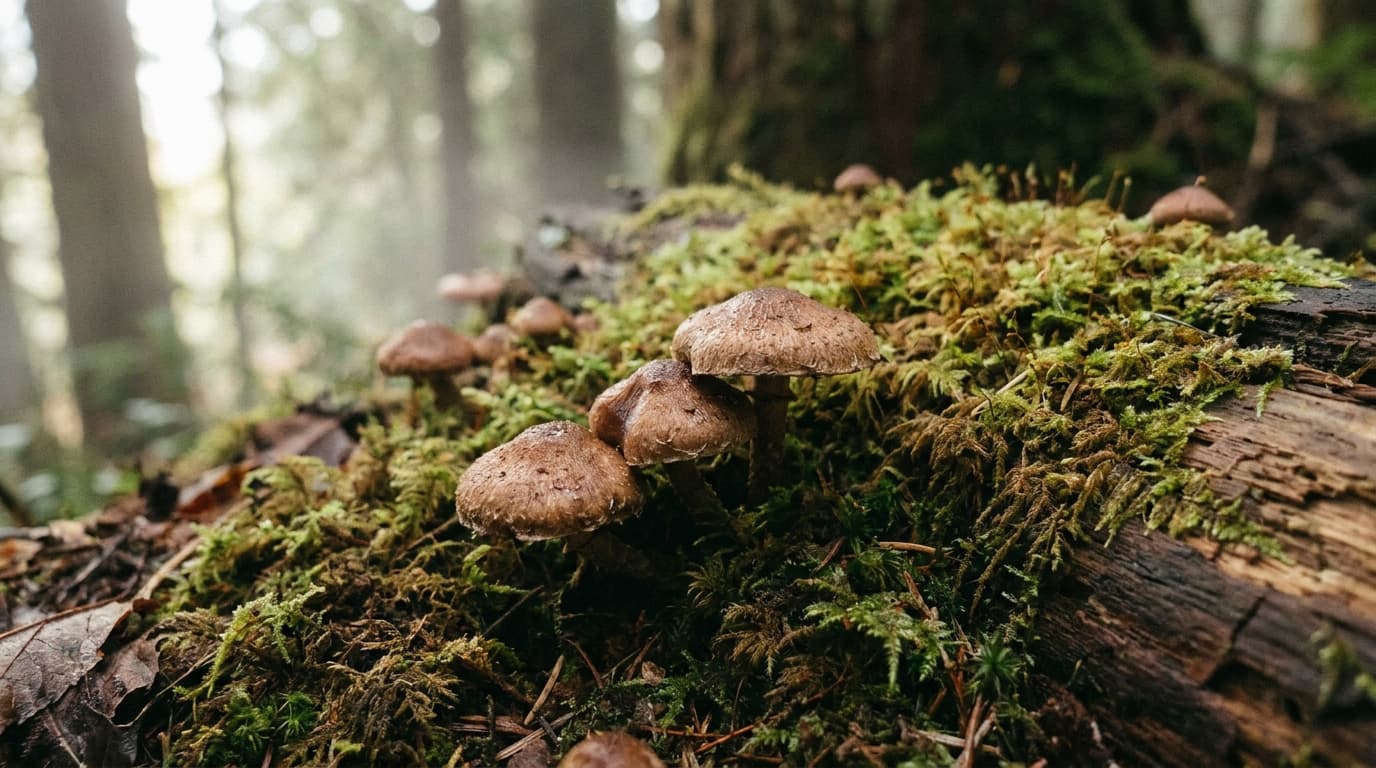
Magic mushrooms are illegal in Arizona. Psilocybin and psilocyn are "dangerous drugs" under A.R.S. 13-3401(6)(a), and knowingly possessing or using one is a class 4 felony under A.R.S. 13-3407, though a court may reduce a first offense to a misdemeanor for some people; Arizona has no psilocybin therapy or decriminalization program, and its 2025 psilocybin law applies only to a future FDA-approved medicine. For other states, see our guide to psilocybin mushroom laws by state.
Information last verified on 2026-10-11. This article has not been reviewed by a licensed lawyer.
Jurisdiction scope: This article covers Arizona state law on psilocybin and psilocyn: the dangerous-drug definition in A.R.S. 13-3401, the offenses and penalties in A.R.S. 13-3407 and related sentencing, enhancement and exemption sections of Title 13, the Title 36 scheduling provisions (A.R.S. 36-2512, 36-2517.02, 36-2517.03), the 2024 to 2026 psilocybin bills, and one line of the driving statute, with one paragraph on federal law. It does not cover Arizona State Board of Pharmacy rule text, city or county measures, tribal law, religious-use claims, employer policies, military rules or other states' laws.
Is psilocybin legal in Arizona?
No. Arizona's drug offenses use the term "dangerous drug," and A.R.S. 13-3401(6)(a) defines it to include:
"Any material, compound, mixture or preparation that contains any quantity of the following hallucinogenic substances and their salts, isomers, whether optical, positional or geometric, and salts of isomers, unless specifically excepted, whenever the existence of such salts, isomers and salts of isomers is possible within the specific chemical designation"
Psilocybin and psilocyn both appear on that list, along with psilacetin. Because the definition reaches any material containing "any quantity" of them, it covers material such as mushrooms that contain psilocybin, even though the statute names the compounds rather than the mushrooms.
Arizona's controlled substances act in Title 36 works alongside the criminal code. A.R.S. 36-2512(A) directs the Board of Pharmacy to "adopt by rule the schedule I controlled substances listed in 21 Code of Federal Regulations section 1308.11 and section 13-3401." Psilocybin is a federal Schedule I substance, and the criminal offenses below run through the dangerous-drug definition in Title 13.
What does Arizona law say about mushrooms and spores?
Arizona's drug statutes name the compounds psilocybin and psilocyn and materials containing them. Neither A.R.S. 13-3401 nor A.R.S. 13-3407 names mushrooms or spores. The statute does not say whether spores, which do not themselves contain psilocybin, fall under the dangerous-drug definition, and this page does not describe them as legal.

The drugs chapter's definition of manufacture is broad. A.R.S. 13-3401 provides:
"Manufacture" means produce, prepare, propagate, compound, mix or process, directly or indirectly, by extraction from substances of natural origin or independently by means of chemical synthesis, or by a combination of extraction and chemical synthesis.
The definition goes on to include packaging and labeling and to exclude certain activity by licensed practitioners.
The statute does not state whether growing psilocybin mushrooms is manufacture, and this page cites no court decision on the question. Manufacturing a dangerous drug is a class 2 felony.
Psilocybin offenses and penalties in Arizona
A.R.S. 13-3407(A) lists seven offenses. Each requires that the person act "knowingly," and each carries its own class under subsection B:
| Offense under A.R.S. 13-3407(A) | Class | First-felony range under A.R.S. 13-702(D) |
|---|---|---|
| (1) Possess or use a dangerous drug | Class 4 felony (misdemeanor option for some first offenders) | 1 to 3.75 years; presumptive 2.5 |
| (2) Possess a dangerous drug for sale | Class 2 felony | 3 to 12.5 years; presumptive 5 |
| (3) Possess equipment or chemicals for the purpose of manufacturing a dangerous drug | Class 3 felony | 2 to 8.75 years; presumptive 3.5 |
| (4) Manufacture a dangerous drug | Class 2 felony | 3 to 12.5 years; presumptive 5 |
| (5) Administer a dangerous drug to another person | Class 2 felony | 3 to 12.5 years; presumptive 5 |
| (6) Obtain or procure a dangerous drug by fraud, deceit, misrepresentation or subterfuge | Class 3 felony | 2 to 8.75 years; presumptive 3.5 |
| (7) Transport for sale, import into Arizona, sell or transfer, or offer to do so | Class 2 felony | 3 to 12.5 years; presumptive 5 |
The ranges run from the mitigated to the aggravated term for a first felony offense. A.R.S. 13-702(D) sets the full scale:
| Class | Mitigated | Minimum | Presumptive | Maximum | Aggravated |
|---|---|---|---|---|---|
| Class 2 felony | 3 years | 4 years | 5 years | 10 years | 12.5 years |
| Class 3 felony | 2 years | 2.5 years | 3.5 years | 7 years | 8.75 years |
| Class 4 felony | 1 year | 1.5 years | 2.5 years | 3 years | 3.75 years |
Fines apply on top of any sentence. A.R.S. 13-3407(H) requires the court to order every person convicted under the section "to pay a fine of not less than one thousand dollars or three times the value as determined by the court of the dangerous drugs involved in or giving rise to the charge, whichever is greater," and "a judge shall not suspend any part or all of the imposition of any fine required by this subsection." The felony fine ceiling is $150,000 (A.R.S. 13-801(A)). If a person convicted under the section is granted probation, A.R.S. 13-3407(J) requires at least 360 hours of community restitution as a condition.
Two rules bar probation for the more serious offenses. A person convicted of manufacturing a dangerous drug is not eligible for probation (A.R.S. 13-3407(F)). A person convicted of possession for sale, administering, or transporting for sale or selling is not eligible for probation if the drugs involved equal or exceed the threshold amount (A.R.S. 13-3407(D)), which for psilocybin is a value of at least $1,000 (A.R.S. 13-3401(36)(j)).
First-offense possession: misdemeanor option and mandatory probation
Two provisions can soften a first possession case. First, A.R.S. 13-3407(B)(1) gives the court an option. Unless the drug involved is LSD, methamphetamine, amphetamine or phencyclidine, or the person was previously convicted of a felony or a violation of 13-3407 or 13-3408, the court "on motion of the state, considering the nature and circumstances of the offense," may:
- enter judgment for a class 1 misdemeanor, which carries up to six months in jail (A.R.S. 13-707(A)(1)) and a fine of up to $2,500 (A.R.S. 13-802(A)); or
- place the defendant on probation and "refrain from designating the offense as a felony or misdemeanor until the probation is successfully terminated."
The option depends on the state's motion. The statute adds that "the offense shall be treated as a felony for all purposes until the court enters an order designating the offense a misdemeanor."
Second, A.R.S. 13-901.01(A) provides that "any person who is convicted of the personal possession or use of a controlled substance or drug paraphernalia is eligible for probation. The court shall suspend the imposition or execution of sentence and place the person on probation." Subsection B excludes a person who "has been convicted of or indicted for a violent crime," and subsection C provides that personal possession "shall not include possession for sale, production, manufacturing or transportation for sale of any controlled substance."
Subsection D makes participation in a drug treatment or education program a condition of that probation. Under subsection H, the mandatory-probation rule does not apply to a person the court finds had been convicted three times of personal possession, refused drug treatment as a term of probation or rejected probation, and under subsection G a person who refuses to take part in drug treatment can have that probation revoked. Those persons are sentenced under the drugs chapter, though subsection I leaves ordinary probation under A.R.S. 13-901 open to a person who otherwise qualifies for it.
Weight, repeat offenses and enhancements
Arizona sets no weight threshold for psilocybin. The drugs chapter's "threshold amount" for an unlisted substance such as psilocybin is "a value of at least $1,000" (A.R.S. 13-3401(36)(j)), and both A.R.S. 13-3407(D), which bars probation for sale-type offenses at or above the threshold, and A.R.S. 13-3419, the repeat-offense statute, turn partly on whether the amount involved meets that threshold.
Other sections can raise the exposure:
- Repeat drug offenses: A.R.S. 13-3419 governs sentencing for a person convicted of two or more drug-chapter offenses "that were not committed on the same occasion but that either are consolidated for trial purposes or are not historical prior felony convictions." Simple possession under 13-3407(A)(1) is expressly excepted. A person sentenced under 13-3419 is not eligible for probation, except where there are two offenses and the drugs involved are below the threshold amount.
- Minors: A.R.S. 13-3409 makes it a class 2 felony to knowingly sell, transfer or offer to sell or transfer a dangerous drug to a minor, or to hire, employ or use a minor in a dangerous-drug offense. The person "is not eligible for suspension of sentence, probation, pardon or release from confinement on any basis until the sentence imposed by the court has been served or commuted," the court must order a fine of at least $2,000 or three times the value of the substance, whichever is greater, and if the minor is under 15 the offense is punishable under A.R.S. 13-705(E).
- Drug free school zones: A.R.S. 13-3411 makes it unlawful to possess or use a dangerous drug in a drug free school zone, to be present there intending to sell or transfer one, or to manufacture one there. The offense is the same class of felony, "except that the presumptive, minimum and maximum sentence shall be increased by one year." A drug free school zone is "the area within three hundred feet of a school or its accompanying grounds, any public property within one thousand feet of a school or its accompanying grounds, a school bus stop or on any school bus or bus contracted to transport pupils to any school." A school-zone conviction also carries a mandatory fine of at least $2,000 or three times the value of the drugs, whichever is greater (A.R.S. 13-3411(C)), and the statute bars probation (A.R.S. 13-3411(B)). The Arizona Court of Appeals has held that the mandatory-probation rule in A.R.S. 13-901.01 still applies to possession of a drug for personal use in a school zone (State v. Pereyra, 199 Ariz. 352 (App. 2001)), so the no-probation rule does not override mandatory probation for a personal-possession offense that otherwise falls under 13-901.01.
Overdose Good Samaritan protection
A.R.S. 13-3423(A) provides that a person who, in good faith, seeks medical assistance for someone experiencing a drug-related overdose "may not be charged or prosecuted for the possession or use of a controlled substance or drug paraphernalia or a preparatory offense if the evidence for the violation was gained as a result of the person's seeking medical assistance." Subsection B gives the same protection for possession or use to the person experiencing the overdose. The official code page labels the section "(Rpld. 7/1/28)," meaning it is set to be repealed on July 1, 2028 unless the Legislature acts.
Research exemption
Arizona's drug offenses carve out lawful scientific use. Under A.R.S. 13-3412(A)(3), the offenses in sections 13-3405 through 13-3409, among others, do not apply to "persons who lawfully acquire and use such drugs only for scientific purposes," and the drugs chapter defines "scientific purpose" as "research, teaching or chemical analysis." Under A.R.S. 36-2522(A), anyone who "uses for scientific purposes any controlled substance" in Arizona must first hold a license or permit as a medical practitioner, pharmacy, pharmacist, manufacturer or wholesaler and be a registrant under the federal controlled substances act. In a prosecution, the burden of proving an exemption is on the defendant (A.R.S. 13-3412(C)).

A separate provision, A.R.S. 13-3412.01, allows a medical doctor licensed in Arizona to prescribe a Schedule I substance to treat a disease or to relieve the pain and suffering of a seriously ill or terminally ill patient, after documenting supporting scientific research and obtaining a second doctor's written opinion and the patient's written consent, and A.R.S. 13-3412(A)(8) exempts that patient's receipt and possession. It creates no psilocybin program and does not change federal law, under which psilocybin remains a Schedule I substance.
Psilocybin bills and laws, 2024 to 2026
Of the psilocybin and psychedelic bills below, only SB 1555 became law, and in conditional form:
| Bill | What it is | Outcome |
|---|---|---|
| SB 1570 (2024) | Psilocybin services; regulation; licensure | Vetoed June 18, 2024 |
| SB 1555 (2025) | Approved medication; rescheduling; controlled substance | Signed June 27, 2025; Laws 2025, ch. 231; conditional |
| HB 2871 (2025) | Ibogaine research appropriation | Held in Senate |
| SB 1542 (2026) | Controlled substances; approval; use; research | Held in Committees |
| SB 1752 (2026) | Mescaline | Held in House |
Laws 2025, ch. 231 added A.R.S. 36-2517.02, which the official code page labels "(Conditionally Eff.)." It provides:
"Any pharmaceutical composition of crystalline polymorph psilocybin that is approved by the United States food and drug administration and rescheduled by the United States drug enforcement administration to a schedule other than schedule I of the controlled substances act (P.L. 91-513; 84 Stat. 1242; 21 United States Code sections 801 through 904) is a controlled substance for the purposes of this chapter and may be prescribed in this state."
The section does not take effect unless, on or before January 1, 2031, crystalline polymorph psilocybin "is newly approved as a prescription medication pursuant to 21 United States Code section 355 and is controlled under a federal interim final rule issued pursuant to 21 United States Code section 811(j) and published in the Federal Register." The executive director of the Board of Pharmacy must notify the director of the Arizona Legislative Council by February 1, 2031 whether the condition was met. The law creates no state psilocybin program and does not change the dangerous-drug status of psilocybin or of psilocybin mushrooms.
A 2026 act works the same way for FDA-approved products generally. Laws 2026, ch. 216 (SB 1188, approved by the Governor June 22, 2026; effective September 12, 2026) added A.R.S. 36-2517.03, under which, "without any further action by the board," any FDA-approved compound, mixture or preparation that the DEA schedules or reschedules "is assigned the identical schedule under this chapter," and one rescheduled to a schedule other than Schedule I "may be prescribed in this state." It would reach psilocybin only if an FDA-approved psilocybin product were federally rescheduled.
Federal psilocybin law
Federal law still lists psilocybin and psilocyn in Schedule I (21 CFR 1308.11(d), eCFR version of October 6, 2026), covering any material or preparation containing any quantity of them. Simple possession of a controlled substance is a federal misdemeanor under 21 U.S.C. 844(a), punishable by up to one year and a minimum $1,000 fine for a first offense. No DEA or HHS notice or rule rescheduling psilocybin appears in the Federal Register as of October 2026, and no psilocybin drug is FDA-approved. Executive Order 14401 (April 18, 2026) directs federal agencies to build pathways and review rescheduling for psychedelic drugs, but it does not reschedule psilocybin. Our psilocybin mushroom laws by state hub covers the federal layer in more detail.
Driving and criminal records
A.R.S. 28-1381(A)(3) prohibits driving "while there is any drug defined in section 13-3401 or its metabolite in the person's body," and psilocybin and psilocyn are drugs defined there. A.R.S. 28-1381(A)(1) separately prohibits driving under the influence of any drug if the person is impaired to the slightest degree. See our guide to Arizona DUI laws for the statute's other provisions and the penalties. A psilocybin conviction is a criminal record, and our guide to Arizona expungement laws explains how Arizona treats past convictions.
Related
This article provides general legal information about Arizona state law as of October 11, 2026. It is not legal advice. Sentencing in a drug case depends on the charge, prior record and other facts. For advice about a specific situation, contact a lawyer licensed in Arizona.
Last updated: 2026-10-11.
Frequently Asked Questions
Are magic mushrooms legal in Arizona?
No. Psilocybin and psilocyn are dangerous drugs under A.R.S. 13-3401(6)(a), and knowingly possessing or using a dangerous drug is a class 4 felony under A.R.S. 13-3407(B)(1). Arizona has no psilocybin therapy or decriminalization program.
Is possession of psilocybin mushrooms a felony in Arizona?
Yes. Possession or use is a class 4 felony under A.R.S. 13-3407(B)(1), carrying 1 to 3.75 years for a first felony offense. For a person with no prior felony and no prior conviction under 13-3407 or 13-3408, the court on the state's motion may enter a class 1 misdemeanor or defer designation until probation ends.
What is the penalty for selling psilocybin in Arizona?
Possession for sale and selling or transferring a dangerous drug are class 2 felonies under A.R.S. 13-3407(B)(2) and (B)(7), with a first-offense range of 3 to 12.5 years under A.R.S. 13-702(D), plus a mandatory fine of at least $1,000 or three times the value of the drugs. If the drugs are worth at least $1,000, the person is not eligible for probation (A.R.S. 13-3407(D)), and a manufacturing conviction carries no probation regardless of amount (A.R.S. 13-3407(F)).
Will I go to jail for a first psilocybin possession charge in Arizona?
A.R.S. 13-901.01(A) provides that a person convicted of personal possession or use of a controlled substance is eligible for probation and that the court shall suspend the sentence and place the person on probation. Probation under 13-901.01 must include a drug treatment or education program (subsection D). The rule does not apply to a person convicted of or indicted for a violent crime or to possession for sale (subsections B and C), or to a person with three prior personal-possession convictions, who refused drug treatment as a probation term or who rejected probation (subsection H).
Are psilocybin mushroom spores legal in Arizona?
Arizona's dangerous-drug list names psilocybin and psilocyn, not spores or mushrooms. The statute does not address spores directly, and this page does not treat them as legal. The drugs chapter defines manufacture to include propagating, and manufacturing a dangerous drug is a class 2 felony.
Did Arizona legalize psilocybin therapy?
No. SB 1570 (2024), which would have regulated psilocybin services, was vetoed on June 18, 2024. Laws 2025, ch. 231 (SB 1555) only allows prescribing an FDA-approved, federally rescheduled crystalline polymorph psilocybin medicine, and only if its federal conditions are met by January 1, 2031.
Can you get a DUI for psilocybin in Arizona?
A.R.S. 28-1381(A)(3) prohibits driving while any drug defined in A.R.S. 13-3401, or its metabolite, is in the body, and psilocybin and psilocyn are defined there. A.R.S. 28-1381(A)(1) separately prohibits driving under the influence of any drug if the person is impaired to the slightest degree. See the Arizona DUI laws guide for the other DUI provisions and penalties.
Updates
Independently fact-checked against the cited primary sources
The Law Behind This Article
This article rests on the statutory provisions below, held in our own legal record and retrieved from the official source. Tap a section to read the operative text.
Arizona Revised Statutes, Title 13 (Criminal Code), Chapter 34 (DRUG OFFENSES)
§ 13-3407Possession, use, administration, acquisition, sale, manufacture or transportation of dangerous drugs; classificationIn force
A. A person shall not knowingly: 1. Possess or use a dangerous drug. 2. Possess a dangerous drug for sale. 3. Possess equipment or chemicals, or both, for the purpose of manufacturing a dangerous drug. 4. Manufacture a dangerous drug. 5. Administer a dangerous drug to another person. 6. Obtain or procure the administration of a dangerous drug by fraud, deceit, misrepresentation or subterfuge. 7. Transport for sale, import into this state or offer to transport for sale or import into this state, sell, transfer or offer to sell or transfer a dangerous drug. B. A person who violates: 1. Subsection A, paragraph 1 of this section is guilty of a class 4 felony.
Official text (excerpt) · last checked 2026-08-04 · Read the full text in our law library · Verify at azleg.gov
§ 13-3401DefinitionsIn force
In this chapter, unless the context otherwise requires: 1. "Administer" means to apply, inject or facilitate the inhalation or ingestion of a substance to the body of a person. 2. "Amidone" means any substance identified chemically as (4-4-diphenyl-6-dimethylamine-heptanone-3), or any salt of such substance, by whatever trade name designated. 3. "Board" means the Arizona state board of pharmacy. 4. "Cannabis" means the following substances under whatever names they may be designated: (a) The resin extracted from any part of a plant of the genus cannabis, and every compound, manufacture, salt, derivative, mixture or preparation of such plant, its seeds or its resin. Cannabis does not include oil or cake made from the seeds of such plant, any fiber, compound, manufacture, salt, derivative, mixture or preparation of the mature stalks of such plant except the resin extracted from the stalks or any fiber, oil or cake or the sterilized seed of such plant which is incapable of germination. (b) Every compound, manufacture, salt, derivative, mixture or preparation of such resin or tetrahydrocannabinol. 5.
Official text (excerpt) · last checked 2026-08-04 · Read the full text in our law library · Verify at azleg.gov
Arizona Revised Statutes, Title 36 (Public Health and Safety), Chapter 27 (CONTROLLED SUBSTANCES ACT), Article 2 (Schedules)
§ 36-2517.02United States food and drug administration; approved medication; reschedulingIn force
(Conditionally Eff.) Any pharmaceutical composition of crystalline polymorph psilocybin that is approved by the United States food and drug administration and rescheduled by the United States drug enforcement administration to a schedule other than schedule I of the controlled substances act (P.L. 91-513; 84 Stat. 1242; 21 United States Code sections 801 through 904) is a controlled substance for the purposes of this chapter and may be prescribed in this state.
Official text (excerpt) · last checked 2026-08-04 · Read the full text in our law library · Verify at azleg.gov
Search our full record of US law — 2.1 million sections, every state + federal →
Sources and References
- A.R.S. 13-3401, Drugs chapter definitions (dangerous drug, manufacture, threshold amount)(www.azleg.gov).gov
- A.R.S. 13-3407, dangerous drug offenses and classification(www.azleg.gov).gov
- A.R.S. 36-2512, Schedule I adoption by Board of Pharmacy rule(www.azleg.gov).gov
- A.R.S. 13-702, felony sentencing ranges(www.azleg.gov).gov
- A.R.S. 13-801, felony fines(www.azleg.gov).gov
- A.R.S. 13-707, misdemeanor jail terms(www.azleg.gov).gov
- A.R.S. 13-802, misdemeanor fines(www.azleg.gov).gov
- A.R.S. 13-901.01, probation for personal possession or use(www.azleg.gov).gov
- A.R.S. 13-3419, sentencing for multiple drug offenses(www.azleg.gov).gov
- A.R.S. 13-3409, drug offenses involving minors(www.azleg.gov).gov
- A.R.S. 13-3411, drug free school zones(www.azleg.gov).gov
- State v. Pereyra, 199 Ariz. 352, 18 P.3d 146 (App. 2001)(www.courtlistener.com)
- A.R.S. 13-3423, Medical assistance requests; prohibited prosecution of Good Samaritans(www.azleg.gov).gov
- A.R.S. 13-3412, exemptions from drug offenses(www.azleg.gov).gov
- A.R.S. 13-3412.01, prescribing Schedule I substances for seriously ill and terminally ill patients(www.azleg.gov).gov
- A.R.S. 36-2522, controlled substance registration(www.azleg.gov).gov
- SB 1570 (2024), psilocybin services; regulation; licensure, vetoed bill summary(www.azleg.gov).gov
- Laws 2025, ch. 231 (SB 1555), A.R.S. 36-2517.02(www.azleg.gov).gov
- Laws 2026, ch. 216 (SB 1188), A.R.S. 36-2517.03(www.azleg.gov).gov
- 21 CFR 1308.11, Schedule I (eCFR)(www.ecfr.gov).gov
- 21 U.S.C. 844, Penalties for simple possession(www.law.cornell.edu)
- Executive Order 14401, Accelerating Medical Treatments for Serious Mental Illness, 91 FR 21709(www.federalregister.gov).gov
- A.R.S. 28-1381, driving under the influence(www.azleg.gov).gov
- Arizona Legislature, general effective dates(www.azleg.gov).gov