
Michigan
Michigan Pepper Spray and Stun Gun Laws (2026)
Independently fact-checked against primary sources (last audited September 23, 2026). · 12 primary sources cited on this page. How we verify our legal content

Michigan treats pepper spray and stun guns very differently. Pepper spray is legal for an adult to buy and carry with no license, regulated instead by strict formula and capacity caps. A stun gun is far more restrictive: Michigan's current statute bans an ordinary contact stun gun outright, for everyone, even a concealed pistol license (CPL) holder. The only device a civilian may lawfully possess is a narrow, tracking-enabled category, and only with a CPL and required training. The Legislature amended the stun-gun statute through 2012 PA 122, approved and filed May 8, 2012 and effective August 6, 2012, replacing an earlier total ban with the current exception structure; the Michigan Court of Appeals separately held that earlier total ban unconstitutional in a decision issued June 26, 2012 that addressed only the ban then in effect, not the amendment already on the books.
Jurisdiction scope: This page covers Michigan state law only, principally Michigan Penal Code Sections 750.224, 750.224a, 750.224d, and 750.237a, and MCL 28.425o. It does not cover Michigan's concealed pistol licensing statute in full. Unlike pistols, Michigan's local-preemption statute, MCL 123.1102, does not reach pepper spray or stun guns (it names "pistols, other firearms, or pneumatic guns," and 1990 PA 319's own definitions section, MCL 123.1101(a), defines "firearm" as a weapon that "will, is designed to, or may readily be converted to expel a projectile by action of an explosive"), so a municipality may regulate either device beyond what state law requires; check local ordinances before relying on this page alone.
Is pepper spray legal in Michigan?
Yes, for any adult, with no license or permit required, subject to formula and capacity limits written directly into the statute. MCL 750.224d(1) defines a "self-defense spray or foam device" by what it can eject: "(i) Not more than 35 grams of any combination of orthochlorobenzalmalononitrile and inert ingredients. (ii) A solution containing not more than 18% oleoresin capsicum. (iii) A solution containing an ultraviolet dye and not more than 18% oleoresin capsicum." A qualifying device may not eject, release, or emit anything else capable of disabling, incapacitating, injuring, or harming a person. MCL 750.224(3)(a) exempts a qualifying device from Michigan's general weapons-manufacture and possession felony, which is what makes ordinary sale and possession of pepper spray lawful in the first place; a device that does not fit the formula does not get that exemption. MCL 750.224(1)(e) makes it a felony to manufacture, sell, offer for sale, or possess "a device, weapon, cartridge, container, or contrivance designed to render a person temporarily or permanently disabled by the ejection, release, or emission of a gas or other substance," and 750.224(2) sets the penalty at up to 5 years imprisonment or a $2,500 fine, or both. So a spray with more than 35 grams of CS gas, a concentration above 18% oleoresin capsicum, or a different active ingredient is not a lesser offense than the formula-capped device; it falls outside the exemption entirely and into that felony.
Using the device on another person is regulated separately from possessing it. MCL 750.224d(2) makes it a misdemeanor, punishable by up to 2 years imprisonment or a $2,000 fine, or both, to use a self-defense spray or foam device to eject, release, or emit orthochlorobenzalmalononitrile or oleoresin capsicum at another person, unless the use falls within one of two exceptions in subsection (5). The first covers reasonable use, while performing official duties, by a person employed by a county sheriff or chief of police who is authorized in writing to carry and use the device and trained in its use, effects, and risks, and only for a device containing not more than 18% oleoresin capsicum. The second, ordinary self-defense exception is reasonable use "in the protection of a person or property under circumstances that would justify the person's use of physical force," and it too is written narrowly by device type: subsection (5)(b) names only "a self-defense spray or foam device containing not more than 18% oleoresin capsicum" and the same formula with a UV dye added. It does not separately name the 35-gram CS-gas formula defined in subsection (1)(a)(i), so a reader choosing between an OC-based spray and a CS-gas device should know the self-defense-use exception's text covers the OC formulas by name.
Selling a self-defense spray or foam device to a minor is a separate misdemeanor under MCL 750.224d(4), punishable by up to 90 days imprisonment or a $500 fine, or both. If a person uses or threatens to use a self-defense spray or foam device during the commission of a crime, MCL 750.224d(3) requires the sentencing judge to consider that use as a reason to enhance the sentence for the underlying crime.
Is a stun gun legal in Michigan?
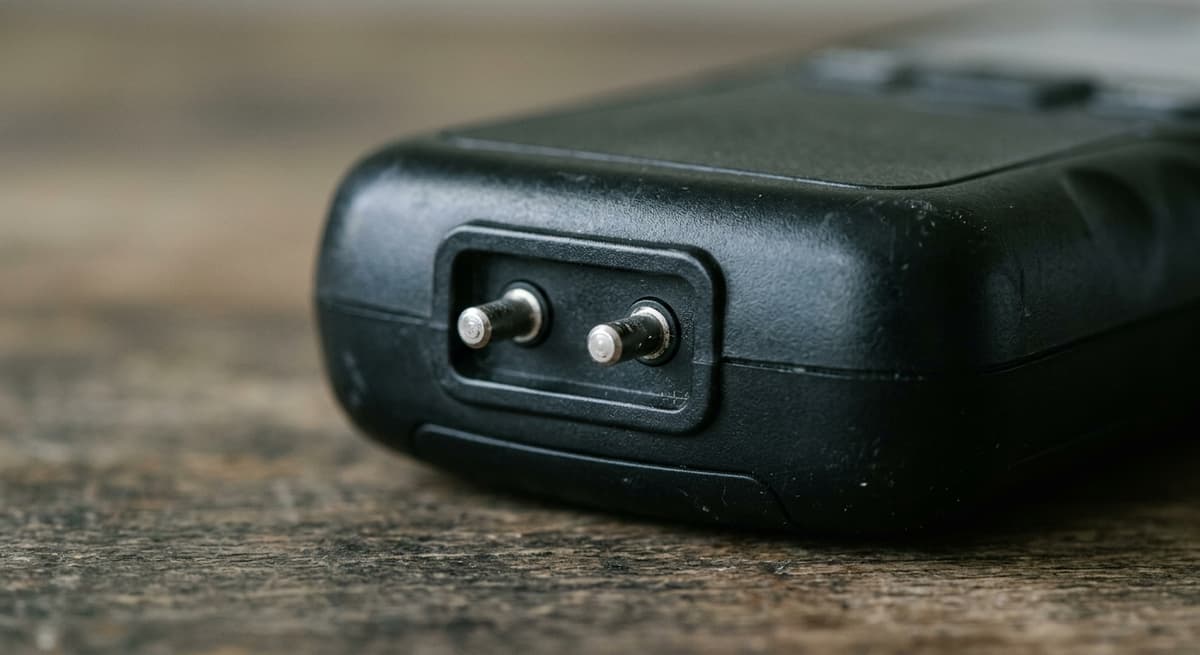
Only a narrow category of device, and only with a CPL. MCL 750.224a(1) states: "a person shall not sell, offer for sale, or possess in this state a portable device or weapon from which an electrical current, impulse, wave, or beam may be directed, which current, impulse, wave, or beam is designed to incapacitate temporarily, injure, or kill." Subsection (4) makes an unauthorized violation a felony, punishable by up to 4 years imprisonment or a $2,000 fine, or both. That ban reaches every stun gun and taser sold in Michigan unless it fits one of the exceptions in subsection (2), and the ordinary consumer contact stun gun, the kind sold without any purchaser-tracking feature, does not fit any of them.

The Legislature amended MCL 750.224a through 2012 PA 122, Enrolled Senate Bill No. 29, approved and filed May 8, 2012 and effective August 6, 2012, replacing an earlier total ban with the current structure: a felony ban that opens only to specific categories, including the CPL-and-tracking-device path described below. Seven weeks later, in People v Yanna, 297 Mich App 137 (2012), decided June 26, 2012, the Michigan Court of Appeals held that the previous MCL 750.224a, which banned possessing a stun gun or taser outright with no exceptions for private citizens, violated the Second Amendment: the court held that a complete ban on possessing these devices in the home was unconstitutional, and separately that a total prohibition on openly carrying them in public was also unconstitutional. Yanna's first footnote says the opinion "considers only the complete ban implemented by the statute under which defendant was arrested, not the partial ban of the new statute," the version already enacted by 2012 PA 122, so no published Michigan decision has ruled on whether today's narrower ban, or its tracking-device requirement, is constitutional.
Subsection (2) lists who may lawfully possess "a device that uses electro-muscular disruption technology," a defined term, not every stun gun. A peace officer, a term subsection (7)(c) defines broadly to include out-of-state and federal officers and reserve peace officers, may possess and reasonably use the device with no training or official-duty condition attached in the statute's text. Everyone else on the list, department of corrections employees authorized in writing; local corrections, jail, or lockup employees authorized by their chief of police, director of public safety, or sheriff; probation officers; court officers; bail agents; licensed private investigators; aircraft pilots and crew members; and private security police officers, must both be trained in the device's use, effects, and risks and be using the device while performing official duties. The one path open to an ordinary civilian is subsection (2)(b): "an individual who holds a valid license to carry a concealed pistol under section 5b of 1927 PA 372, MCL 28.425, and who has been trained under subsection (5) in the use, effects, and risks of the device." But holding a CPL only unlocks possession of the defined device, not any stun gun. MCL 750.224a(7)(a) defines "a device that uses electro-muscular disruption technology" as a device to which both of the following apply: it is "capable of creating an electro-muscular disruption and is used or intended to be used as a defensive device capable of temporarily incapacitating or immobilizing a person by the direction or emission of conducted energy," and it "contains an identification and tracking system that, when the device is initially used, dispenses coded material traceable to the purchaser through records kept by the manufacturer, and the manufacturer of the device has a policy of providing that identification and tracking information to a police agency upon written request by that agency. However, this subdivision does not apply to a launchable device that is used only by law enforcement agencies." An ordinary contact stun gun with no tracking system satisfies the first part of the definition but not the second, so it is not "a device that uses electro-muscular disruption technology" as the statute defines the phrase, and no exception in subsection (2) reaches it. Possessing one remains a felony under subsection (1) and (4) even for a CPL holder who has completed training; the CPL and training only matter once the device itself qualifies.
The training requirement runs through the seller. MCL 750.224a(5) requires an authorized dealer selling a qualifying device to a CPL holder to verify the buyer's identity and valid CPL and to provide training on the device's use, effects, and risks at the time of sale; a dealer who fails to do so commits a misdemeanor punishable by up to 30 days imprisonment or a $500 fine, or both. Separately, subsection (6) makes it a misdemeanor, punishable by up to 2 years imprisonment or a $2,000 fine, or both, for anyone described in subsection (2), including a CPL holder, to use the device against another person outside circumstances that would justify a lawful use of physical force.
Where you can't carry either device
MCL 28.425o(2) extends the same restricted-premises list that applies to concealed pistols to any portable device that uses electro-muscular disruption technology: a school or school property, a licensed public or private child care or day care center, a sports arena or stadium, a bar or tavern where the primary source of income is on-premises liquor-by-the-glass sales (a restriction the statute says does not apply to an owner or employee of the business), property owned or operated by a church, synagogue, mosque, temple, or other place of worship (unless the presiding official permits carrying), an entertainment facility with a seating capacity of 2,500 or more, a hospital, and a dormitory or classroom of a community college, college, or university. Subsection (4) provides that, as used in subsection (1), "premises" does not include parking areas of the places identified in subsection (1). Because subsection (2) reaches only the premises described in subsection (1), the same parking-area carve-out should follow the electro-muscular disruption device, though subsection (4) is written by its terms for subsection (1). The pistol-specific rule in subsection (1)(a) separately exempts a parent or legal guardian dropping off or picking up a student while in a vehicle on school property, but subsection (2), the provision that governs an electro-muscular disruption device, contains no matching text, so whether that parental exception extends to the device is not resolved by the statute. Subsection (5) exempts several licensed categories, including retired law-enforcement officers, licensed security contractors on duty, licensed private investigators, and sheriff's-posse or reserve/auxiliary officers, among others. The penalty ladder in subsection (6) has three rungs: a first violation is a state civil infraction with a fine up to $500 and a 6-month CPL suspension; a second violation is a misdemeanor with a fine up to $1,000 and CPL revocation; a third or subsequent violation is a felony punishable by up to 4 years imprisonment or a $5,000 fine, or both, with the CPL revoked.

MCL 750.224d, the self-defense spray statute, does not contain an equivalent restricted-premises list, but that is not the last word on where pepper spray can go. MCL 750.237a, the weapon free school zone statute, separately enhances conduct that violates Section 224d (illegal use or sale of self-defense spray) inside a weapon free school zone to a misdemeanor punishable by one or more of imprisonment for the maximum term authorized for the section violated or 93 days, whichever is greater, up to 100 hours of community service, and a fine of up to $2,000 or the maximum fine authorized for the section violated, whichever is greater, and enhances a violation of Section 224a inside the zone to a felony punishable by one or more of imprisonment for the maximum term authorized for the section violated, up to 150 hours of community service, and a fine of up to 3 times the maximum fine authorized for the section violated. Section 237a(1) enumerates the sections that carry that felony enhancement: "section 224, 224a, 224b, 224c, 224e, 226, 227, 227a, 227f, 234a, 234b, or 234c," so the felony tier also reaches the general weapons-possession felony in Section 224(1)(e) that an over-cap spray falls into, not only Section 224a. Section 237a(3) saves conduct that is otherwise exempted or authorized elsewhere in the same chapter, so reasonable self-defense use of a qualifying, cap-compliant spray under Section 224d(5)(b) is not enhanced by Section 237a simply because it happens in a weapon free school zone. Section 237a(4) separately makes it a misdemeanor, punishable by one or more of up to 93 days imprisonment, up to 100 hours of community service, and a fine of up to $2,000, to simply possess a "weapon" in a weapon free school zone; Section 237a(6)(d) defines "weapon" open-endedly as a term that "includes, but is not limited to, a pneumatic gun," without listing what else it covers, and Section 237a(6)(e) defines a weapon free school zone as school property and a vehicle used by a school to transport students to or from it. Section 237a(5) exempts several categories from the general possession misdemeanor, including a person licensed to carry a concealed weapon and school security personnel, but the statute's own text does not resolve whether an ordinary self-defense spray canister counts as a "weapon" for that provision.
Federal law: what it does and does not reach
No federal statute regulates a civilian's purchase or possession of pepper spray or a stun gun. Federal law matters in three places.
Federal buildings. Under 18 U.S.C. § 930(a), whoever knowingly possesses or causes to be present "a firearm or other dangerous weapon in a Federal facility (other than a Federal court facility)" faces a fine, imprisonment of up to 1 year, or both. Subsection (e) sets up to 2 years for a federal court facility, and subsection (b) up to 5 years where the weapon is intended to be used in a crime. Section 930(g)(2) defines the term:
The term "dangerous weapon" means a weapon, device, instrument, material, or substance, animate or inanimate, that is used for, or is readily capable of, causing death or serious bodily injury, except that such term does not include a pocket knife with a blade of less than 2½ inches in length.
The definition names neither device. Whether a particular spray or stun gun is "readily capable of" causing serious bodily injury is a question of fact the statute does not answer. Subsection (d)(3) exempts "the lawful carrying of firearms or other dangerous weapons in a Federal facility incident to hunting or other lawful purposes," and subsection (h) requires notice of the ban to be posted at each public entrance. A "Federal facility" is "a building or part thereof owned or leased by the Federal Government, where Federal employees are regularly present for the purpose of performing their official duties."
Air travel. The Transportation Security Administration's screening rules, which are agency policy rather than statute, bar both devices from carry-on bags. One 4 fl. oz. (118 ml) container of mace or pepper spray is permitted in checked baggage if it has a safety mechanism to prevent accidental discharge, and sprays containing more than 2 percent by mass of tear gas (CS or CN) are prohibited in checked baggage. Tasers, stun guns and other electro-shock weapons may travel in checked baggage only if transported so the device cannot discharge accidentally. Airlines may set stricter rules.
National parks. National Park Service regulations prohibit possessing, carrying or using a "weapon" in a park area except as the regulations provide (36 CFR 2.4(b)(1)). 36 CFR 1.4 defines "weapon" to include an "irritant gas device" and any "weapon the possession of which is prohibited under the laws of the State in which the park area or portion thereof is located."
Disclaimer: This article provides general legal information about Michigan's pepper spray and stun gun laws as of September 2026. It is not legal advice. Consult a lawyer licensed in Michigan for advice about a specific situation.
For a state-by-state comparison, see pepper spray and stun gun laws by state. Michigan's self-defense statutes are covered separately on the Michigan self-defense laws page.
Statutes cited reflect their in-force version as of 2026-09-18. Last updated: 2026-09-18.
Frequently Asked Questions
Do you need a permit for pepper spray in Michigan?
No. MCL 750.224d allows an adult to possess a qualifying self-defense spray or foam device, capped at 35 grams of CS gas or an 18% oleoresin capsicum solution, without any license or permit. A device that exceeds those caps loses the exemption and falls under the general weapons-possession felony in MCL 750.224, up to 5 years imprisonment or a $2,500 fine, or both.
Is it legal to carry a taser in Michigan without a CPL?
No, and a CPL alone does not make an ordinary stun gun legal either. MCL 750.224a bans possessing any device that directs an incapacitating electrical current unless it fits a narrow exception. The only exception open to a civilian, subsection (2)(b), requires both a valid CPL and a device that meets the statutory definition of 'electro-muscular disruption technology' in subsection (7)(a), which requires a built-in identification and tracking system traceable to the purchaser. An ordinary contact stun gun without that tracking system remains a felony to possess even for a CPL holder. Michigan's stun-gun law is this narrow because the Legislature amended it through 2012 PA 122, effective August 6, 2012, replacing an earlier total ban with the current tracking-device structure; separately, the Michigan Court of Appeals held that earlier total ban unconstitutional in People v Yanna, 297 Mich App 137 (2012), decided June 26, 2012, a decision whose own footnote says it addresses only the complete ban then still in force, not the partial ban the amendment had already created, and no published decision has ruled on the current structure.
Can a felon carry pepper spray in Michigan?
MCL 750.224d's text does not set out a felony-conviction bar on possessing a qualifying self-defense spray device the way it sets a formula cap and a minor-sale ban. A felony conviction does matter for the stun-gun route, though: MCL 28.425b(7)(f) bars issuing a concealed pistol license to anyone convicted of a felony, and since a CPL is one of the two requirements for lawfully possessing a qualifying stun gun under MCL 750.224a, a felony conviction rules out that path. MCL 28.425b(7)(h)(ix) separately lists a misdemeanor conviction under Section 224d itself, Michigan's self-defense spray statute, within the 8-year lookback that can disqualify a CPL applicant.
Where can't you carry a stun gun in Michigan?
MCL 28.425o bars carrying an electro-muscular disruption device on the same premises restricted for concealed pistols: schools, licensed child care centers, sports arenas and stadiums, certain bars, houses of worship unless permitted, large entertainment venues, hospitals, and college dormitories or classrooms (parking areas at those premises are excluded from the restriction). A first violation is a civil infraction with a 6-month CPL suspension; a second is a misdemeanor with CPL revocation; a third or subsequent violation is a felony with up to 4 years imprisonment and CPL revocation. Carrying one into a weapon free school zone can also be charged separately, and more severely, under MCL 750.237a.
What happens if you carry pepper spray or a stun gun near a Michigan school?
MCL 750.237a, the weapon free school zone statute, enhances the penalty for conduct that already violates MCL 750.224a or 750.224d when it happens in a weapon free school zone, and separately makes simply possessing a 'weapon,' a term the statute does not fully define, a misdemeanor in that zone. A weapon free school zone means school property and a vehicle used by a school to transport students to or from it.
Updates
Independently fact-checked against the cited primary sources
Sources and References
- MCL 750.224d - Self-defense spray or foam device(legislature.mi.gov).gov
- MCL 750.224a - Portable device or weapon directing electrical current; sale or possession prohibited; exceptions(legislature.mi.gov).gov
- MCL 28.425o - Premises on which carrying concealed weapon or electro-muscular disruption device prohibited(legislature.mi.gov).gov
- MCL 28.425b - Concealed pistol license application; circumstances for issuance(legislature.mi.gov).gov
- MCL 750.224 - Weapons; manufacture, sale, or possession prohibited; exceptions(legislature.mi.gov).gov
- MCL 750.237a - Weapon free school zone; violation; penalties(legislature.mi.gov).gov
- MCL 123.1102 - Regulation of firearms by local unit of government; preemption(legislature.mi.gov).gov
- MCL 123.1101 - Definitions (firearms local regulation act)(legislature.mi.gov).gov
- People v Yanna, 297 Mich App 137 (2012) - full opinion(courtlistener.com)
- 18 U.S.C. § 930 - Possession of firearms and dangerous weapons in Federal facilities(law.cornell.edu)
- Transportation Security Administration - What Can I Bring? Pepper Spray(tsa.gov).gov
- Transportation Security Administration - What Can I Bring? Stun Guns/Shocking Devices(tsa.gov).gov
- 36 CFR 1.4 - National Park Service definitions (weapon)(ecfr.gov).gov
- 36 CFR 2.4 - Weapons, traps and nets(ecfr.gov).gov