
Indiana
Indiana Pepper Spray and Stun Gun Laws (2026)
Independently fact-checked against primary sources (last audited September 23, 2026). · 14 primary sources cited on this page. How we verify our legal content
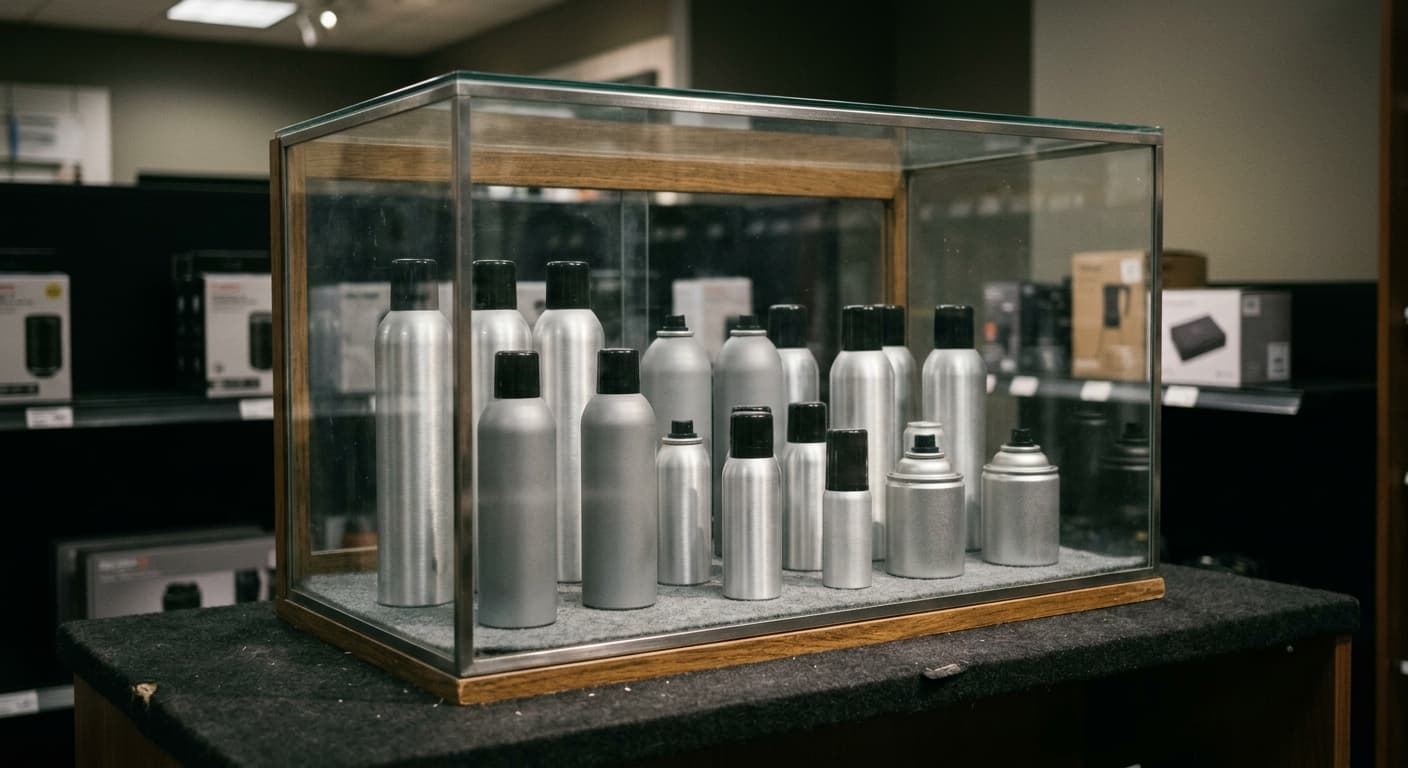
Indiana has no dedicated statute regulating civilian purchase or possession of pepper spray, but it does regulate stun guns directly, and it draws a three-way distinction most other states don't: "stun gun," "electronic stun weapon," and "taser" are three separate defined terms in the same chapter, and they are not all governed by the same rule.
Jurisdiction scope: This page covers Indiana state law only, principally IC 35-47-8, IC 35-47-2, IC 35-31.5-2-86, IC 35-47-11.1, IC 35-47-9, and IC 20-33-8-16. It does not cover Indiana's handgun license-to-carry statute in full detail, or local municipal ordinances.
Is pepper spray legal to carry in Indiana?
Yes, and Indiana has no dedicated statute setting an age minimum, capacity or formula limit, purchase channel, or possession restriction for pepper spray or any other chemical self-defense spray. Indiana's weapons article, IC Title 35, Article 47, contains a chapter specifically for electronic stun weapons, tasers, and stun guns (Chapter 8), but no equivalent chapter for chemical sprays.

That silence has one practical limit worth naming precisely. Indiana's general "deadly weapon" definition, IC 35-31.5-2-86(a)(2), includes "a destructive device, weapon, device, taser..., or electronic stun weapon..., equipment, chemical substance, or other material that in the manner it: (A) is used; (B) could ordinarily be used; or (C) is intended to be used; is readily capable of causing serious bodily injury." Subsection (b) then excludes a chemical "designed to temporarily incapacitate a person," but only "if the device... is used by a law enforcement officer who has been trained in the use of the device and who uses the device in accordance with the law enforcement officer's training and while lawfully engaged in the execution of official duties." That carve-out is written for officers, not for civilians. The practical effect is that owning and carrying pepper spray for self-defense is not itself an offense in Indiana, but using it against another person can still be charged as use of a "deadly weapon," the same category that enhances assault and other offenses, because the exclusion that keeps a chemical spray out of that definition does not extend to an ordinary person's use of it. The same subsection also names a taser and an electronic stun weapon specifically, discussed below; the one device in this three-way scheme it does not separately name is the low-power "stun gun" category defined at IC 35-47-8-2.
A separate, unrelated definitions provision in Indiana's general-definitions article, IC 35-31.5-2-83, defines "dangerous gas" for purposes of the state's "bomb" definition (IC 35-31.5-2-31) to exclude "riot control agents" and "tear gas devices designed to be carried on or about the person that contain not more than one-half (1/2) ounce of the chemical." That exclusion confirms an ordinary self-defense spray was not intended to be swept into Indiana's bomb- or weapon-of-mass-destruction-adjacent provisions; it does not create or imply any separate possession restriction.
Are stun guns legal to carry in Indiana?
Legal, but which rule applies depends on the device. Indiana Code Chapter 35-47-8 defines three distinct terms. An "electronic stun weapon" is "any mechanism that is: (1) designed to emit an electronic, magnetic, or other type of charge that exceeds the equivalency of a five (5) milliamp sixty (60) hertz shock; and (2) used for the purpose of temporarily incapacitating a person" (IC 35-47-8-1). A "stun gun" is the same kind of mechanism, but one that "equals or does not exceed" that five-milliamp threshold (IC 35-47-8-2). A "taser" is "any mechanism that is: (1) designed to emit an electronic, magnetic, or other type of charge or shock through the use of a projectile; and (2) used for the purpose of temporarily incapacitating a person" (IC 35-47-8-3).
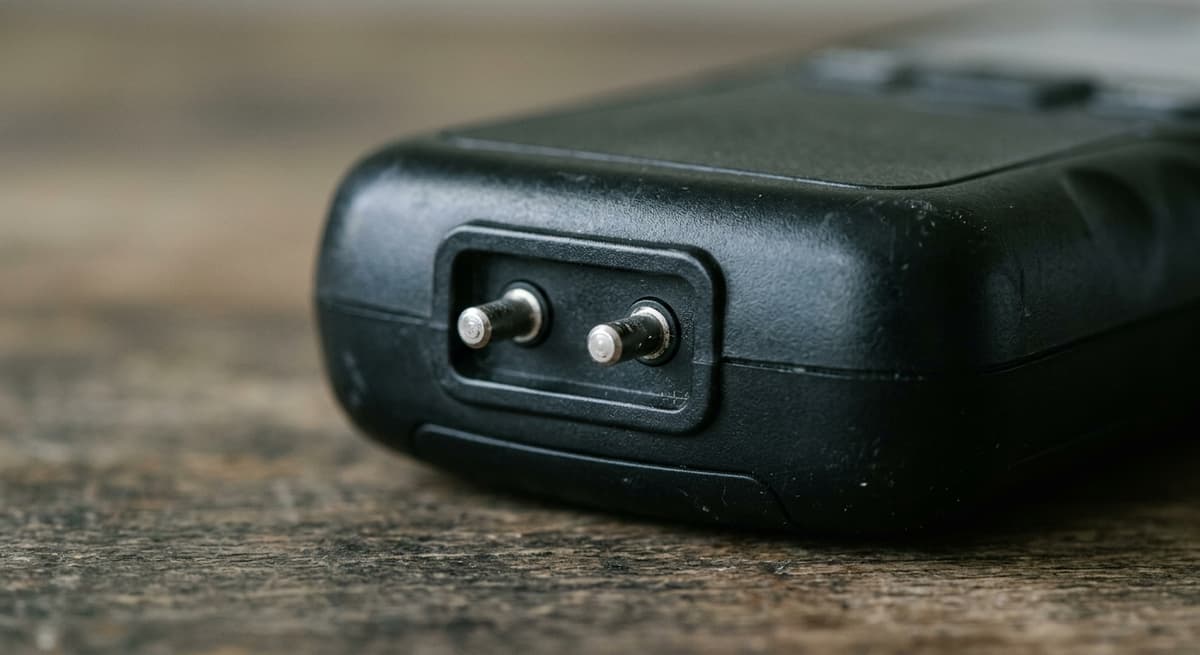
IC 35-47-8-5, the chapter's purchase-and-possession section, addresses only the "stun gun" category by name: "A person eighteen (18) years of age or over may purchase or possess a stun gun." A person who knowingly or intentionally sells or furnishes a stun gun to someone under 18 commits a Class B misdemeanor. A person who knowingly or intentionally uses a stun gun in the commission of a crime commits a Class A misdemeanor. A person who knowingly or intentionally uses a stun gun on a law enforcement officer while the officer is performing official duties commits a Level 6 felony. No permit is required.
The higher-power "electronic stun weapon" and the projectile-firing "taser" are handled differently. IC 35-47-8-4 states, in full: "IC 35-47-2 applies to an electronic stun weapon or taser." IC 35-47-2 is Indiana's handgun-carry chapter. The chapter's general permitless-carry rule is IC 35-47-2-3(a): "A person who is at least eighteen (18) years of age and is not otherwise prohibited from carrying or possessing a handgun under state or federal law is not required to obtain or possess a license or permit from the state to carry a handgun in Indiana." A separate, more restrictive provision, IC 35-47-2-1, applies only to a person who does not meet Section 3's eligibility requirements, and confines that person to specific manners of carry, such as an unloaded handgun that is not readily accessible and is secured in a case inside a vehicle. IC 35-47-2-1.5(b) lists who may not knowingly or intentionally carry: a person convicted of an offense punishable by more than a year in prison, a fugitive from justice, certain immigration-status categories, a person convicted of domestic battery, domestic violence, or criminal stalking, a person subject to a protective order, a person under indictment, a person adjudicated dangerous or a mental defective or committed to a mental institution, a person dishonorably discharged from the military or National Guard, a person who has renounced U.S. citizenship, and anyone under 18, or under 23 with a qualifying juvenile adjudication, unless authorized under IC 35-47-10. Because Section 8-4 pulls this chapter in for an electronic stun weapon or a taser, that same eligibility framework and prohibited-carrier list applies to carrying one of those two device types. Violating IC 35-47-2-1.5 is a Class A misdemeanor, but subsection (e) makes it a Level 5 felony if the offense is committed on or in school property, within five hundred feet of school property, or on a school bus, or if the person has a qualifying prior conviction.
Using either device against another person carries the same enhanced exposure pepper spray does. IC 35-31.5-2-86(a)(2)'s "deadly weapon" definition names a taser and an electronic stun weapon specifically, alongside a chemical substance, and excludes them only when a trained law enforcement officer uses one in the course of official duty. A civilian's offensive use of a taser or an electronic stun weapon can therefore be charged as deadly-weapon use, the same as pepper spray, unlike the low-power "stun gun" category, which IC 35-31.5-2-86(a)(2) does not name.
Where you can't carry either device, and preemption
Indiana's dedicated school-weapons statute, IC 35-47-9, makes it a Level 6 felony to knowingly or intentionally possess a firearm on school property or a school bus, and a Class B misdemeanor to possess an imitation firearm there. Both offenses, and the chapter's exemptions, are written around "firearm" and "imitation firearm" specifically; the chapter does not, by its own terms, name pepper spray, a stun gun, an electronic stun weapon, or a taser. But a separate statute reaches those devices anyway. IC 20-33-8-16(f) provides that a student who is identified as bringing, or found in possession of, a "deadly weapon" on school property "may be expelled for not more than one (1) calendar year." IC 20-33-8-16(b) defines "deadly weapon" by cross-reference to IC 35-31.5-2-86, the same definition discussed above, which names a taser and an electronic stun weapon specifically, though not the low-power "stun gun" category or, by name, pepper spray (which can still qualify under the definition's broader "chemical substance" language). Separately, because IC 35-47-8-4 applies Indiana's handgun-carry chapter to an electronic stun weapon or a taser, a person already barred from carrying under IC 35-47-2-1.5(b) who carries one of those two devices commits a Level 5 felony rather than the base Class A misdemeanor if the offense is committed on or in school property, within five hundred feet of school property, or on a school bus. An adult who is not on Section 1.5(b)'s list commits no offense under that section, on school property or elsewhere, by carrying an electronic stun weapon or taser. Article 47 contains no other place-based restriction naming either device outside these school provisions.

Indiana's firearms preemption statute, IC 35-47-11.1, applies to "a political subdivision" (IC 35-47-11.1-1) and bars a local government from regulating "firearms, ammunition, and firearm accessories," including their ownership, possession, carrying, registration, transfer, storage, and taxation (IC 35-47-11.1-2); a local rule that pertains to those matters is void (IC 35-47-11.1-3). That statute's text is scoped to firearms, ammunition, and firearm accessories; it contains no equivalent provision reaching pepper spray, a stun gun, an electronic stun weapon, or a taser, so it does not, on its own text, bar a city or county from adopting a stricter local ordinance for those devices the way it does for firearms.
Federal law: what it does and does not reach
No federal statute regulates a civilian's purchase or possession of pepper spray or a stun gun. Federal law matters in three places.
Federal buildings. Under 18 U.S.C. § 930(a), whoever knowingly possesses or causes to be present "a firearm or other dangerous weapon in a Federal facility (other than a Federal court facility)" faces a fine, imprisonment of up to 1 year, or both. Subsection (e) sets up to 2 years for a federal court facility, and subsection (b) up to 5 years where the weapon is intended to be used in a crime. Section 930(g)(2) defines the term:
The term "dangerous weapon" means a weapon, device, instrument, material, or substance, animate or inanimate, that is used for, or is readily capable of, causing death or serious bodily injury, except that such term does not include a pocket knife with a blade of less than 2½ inches in length.
The definition names neither device. Whether a particular spray or stun gun is "readily capable of" causing serious bodily injury is a question of fact the statute does not answer. Subsection (d)(3) exempts "the lawful carrying of firearms or other dangerous weapons in a Federal facility incident to hunting or other lawful purposes," and subsection (h) requires notice of the ban to be posted at each public entrance. A "Federal facility" is "a building or part thereof owned or leased by the Federal Government, where Federal employees are regularly present for the purpose of performing their official duties."
Air travel. The Transportation Security Administration's screening rules, which are agency policy rather than statute, bar both devices from carry-on bags. One 4 fl. oz. (118 ml) container of mace or pepper spray is permitted in checked baggage if it has a safety mechanism to prevent accidental discharge, and sprays containing more than 2 percent by mass of tear gas (CS or CN) are prohibited in checked baggage. Tasers, stun guns and other electro-shock weapons may travel in checked baggage only if transported so the device cannot discharge accidentally. Airlines may set stricter rules.
National parks. National Park Service regulations prohibit possessing, carrying or using a "weapon" in a park area except as the regulations provide (36 CFR 2.4(b)(1)). 36 CFR 1.4 defines "weapon" to include an "irritant gas device" and any "weapon the possession of which is prohibited under the laws of the State in which the park area or portion thereof is located."
Disclaimer: This article provides general legal information about Indiana's pepper spray and stun gun laws as of September 2026. It is not legal advice. Consult a lawyer licensed in Indiana for advice about a specific situation.
For a state-by-state comparison, see pepper spray and stun gun laws by state. Indiana's self-defense statutes are covered separately on the Indiana self-defense laws page.
Statutes cited reflect their in-force version as of 2026-09-18. Last updated: 2026-09-18.
Frequently Asked Questions
Do you need a permit to own a stun gun in Indiana?
Not for a device that qualifies as a 'stun gun' under IC 35-47-8-2 (a shock at or below the equivalent of 5 milliamps at 60 hertz): IC 35-47-8-5 only requires being 18 or older. A higher-power 'electronic stun weapon' or a projectile-firing 'taser' is different: IC 35-47-8-4 applies Indiana's handgun-carry chapter to those two categories, which brings in the prohibited-carrier list in IC 35-47-2-1.5(b). An otherwise-eligible adult may still carry one without a license under IC 35-47-2-3(a)'s permitless-carry rule; IC 35-47-2-1 is a separate, more restrictive provision that applies only to someone who does not meet Section 3's eligibility requirements.
Is pepper spray legal to carry in Indiana?
Yes. No Indiana Code chapter specifically regulates civilian purchase or possession of pepper spray, and none sets an age minimum or capacity limit. Using it against another person can still be charged more seriously, because Indiana's general 'deadly weapon' definition (IC 35-31.5-2-86) reaches a chemical substance capable of causing serious bodily injury, and its law-enforcement carve-out does not cover a civilian's use.
What's the difference between a stun gun, an electronic stun weapon, and a taser under Indiana law?
Indiana Code Chapter 35-47-8 defines all three by how they deliver a shock. A 'stun gun' delivers a shock at or below the equivalent of 5 milliamps at 60 hertz; an 'electronic stun weapon' delivers a shock above that threshold; a 'taser' delivers its shock through a fired projectile rather than direct contact. Only the purchase-and-possession rule in IC 35-47-8-5 uses the term 'stun gun' specifically; the other two categories are instead brought under Indiana's handgun-carry chapter by IC 35-47-8-4.
Does Indiana preempt local pepper spray or stun gun ordinances?
Not under its firearms preemption statute. IC 35-47-11.1 bars local regulation of 'firearms, ammunition, and firearm accessories' specifically; its text does not extend to pepper spray or any device in the stun-gun category, so that statute does not bar a local government from regulating those devices the way it bars local firearm regulation.
Can you carry a stun gun on school property in Indiana?
It depends on the device and the consequence. Indiana's dedicated school-weapons statute, IC 35-47-9, is written around 'firearm' and 'imitation firearm' only, so it does not by itself create a school-grounds offense for pepper spray, a stun gun, an electronic stun weapon, or a taser. But IC 20-33-8-16(f) lets a school expel a student for up to one calendar year for bringing or possessing a 'deadly weapon,' a term that names a taser and an electronic stun weapon specifically (IC 35-31.5-2-86). And for a person already barred from carrying under IC 35-47-2-1.5(b) (a felon, a person subject to a protective order, and the chapter's other listed categories), IC 35-47-2-1.5(e) turns that unlawful carrying of an electronic stun weapon or taser into a Level 5 felony if committed on or within 500 feet of school property or on a school bus; an adult who is not on that list commits no offense under Section 1.5 by carrying one at or near a school.
Updates
Independently fact-checked against the cited primary sources
Sources and References
- IC 35-47-8-1, 35-47-8-2, 35-47-8-3 - Definitions of 'electronic stun weapon,' 'stun gun,' and 'taser'(iga.in.gov).gov
- IC 35-47-8-4 - IC 35-47-2 (handgun carry chapter) applies to an electronic stun weapon or taser(iga.in.gov).gov
- IC 35-47-8-5 - Stun guns; purchase, possession, and sale; use in commission of crime; use on law enforcement officer(iga.in.gov).gov
- IC 35-47-2-3 - License requirement; general permitless-carry eligibility rule(iga.in.gov).gov
- IC 35-47-2-1, 35-47-2-1.5 - Carrying a handgun without being licensed (restrictive manner-of-carry provision for a person outside Section 3's eligibility); prohibited persons; unlawful carrying of a handgun(iga.in.gov).gov
- IC 20-33-8-16 - Possession of firearms, deadly weapons, or destructive devices on school property (deadly weapon: expulsion up to one calendar year)(iga.in.gov).gov
- IC 35-31.5-2-86 - 'Deadly weapon' definition (chemical substance and electronic stun weapon/taser scope; law-enforcement training carve-out)(iga.in.gov).gov
- IC 35-31.5-2-83, 35-31.5-2-31 - 'Dangerous gas' and 'bomb' definitions (riot-control-agent and half-ounce tear gas device exclusion)(iga.in.gov).gov
- IC 35-47-11.1 - Regulation of firearms, ammunition, and firearm accessories by political subdivisions (preemption; scope)(iga.in.gov).gov
- IC 35-47-9-1, 35-47-9-2 - Possession of firearms or imitation firearms on school property or a school bus; exemptions(iga.in.gov).gov
- 18 U.S.C. § 930 - Possession of firearms and dangerous weapons in Federal facilities(law.cornell.edu)
- Transportation Security Administration - What Can I Bring? Pepper Spray(tsa.gov).gov
- Transportation Security Administration - What Can I Bring? Stun Guns/Shocking Devices(tsa.gov).gov
- 36 CFR 1.4 - National Park Service definitions (weapon)(ecfr.gov).gov
- 36 CFR 2.4 - Weapons, traps and nets(ecfr.gov).gov