
Texas
Texas Nursing Home Camera Laws: Chapter 242, Subchapter R Electronic Monitoring
Independently fact-checked against primary sources (last audited August 14, 2026). · 3 primary sources cited on this page. How we verify our legal content

Texas gives a nursing home resident, or their guardian or legal representative, the right to install a video or audio monitoring device in the resident's own room. Health and Safety Code Chapter 242, Subchapter R created that right in 2001, the first law of its kind in the country, and Section 247.003(c) extends it to assisted living, though with a narrower enforcement reach.
Information last verified on 2026-08-31. This article has not yet been reviewed by a licensed lawyer.
This article covers Texas's Authorized Electronic Monitoring law for nursing home residents, Health and Safety Code Chapter 242, Subchapter R (Sections 242.841 through 242.852), and its extension to assisted living facilities under Section 247.003(c). It does not cover a family's separate right to record under Texas's general one-party consent law, which is addressed in its own section below.
What the Texas Electronic Monitoring Law Grants
Section 242.841 defines "authorized electronic monitoring" as placing an electronic monitoring device in a resident's room and making recordings with it, after making a request to the institution to allow electronic monitoring. The definition covers both video surveillance cameras installed in the resident's room and audio devices designed to acquire communications or other sounds occurring in the room, and it excludes an interception device specifically used for the nonconsensual interception of wire or electronic communications. That exclusion is a definitional boundary for the Act itself, not a rule about criminal exposure; the liability rules live in Section 242.842, discussed below.
Only the resident may request monitoring if the resident has the capacity to do so, regardless of any power of attorney on file. If a court has declared the resident to lack capacity, only the court-appointed guardian may request it. If the resident lacks capacity but has not been judicially declared incapacitated, only a "legal representative," defined by executive commissioner rule, may make the request under Section 242.845.
Subchapter R also addresses covert monitoring head on rather than leaving it to inference. Section 242.843(a) treats placement and use of a device as covert when it is not open and obvious and neither the institution nor the department has been told about it by the resident, by the person who placed it, or by the person using it. Section 242.843(b) then shields both the department and the institution from civil liability in connection with a covert device. Section 242.844 requires a form completed and signed on admission by or on behalf of every resident, which must state that a person who places a device or discloses a recording may be civilly liable for violating another person's privacy rights, that a person who covertly places a device or acquiesces in a covert placement waives their own privacy rights in what it captures, the resident's right to conduct authorized monitoring, the basic request procedure, and how the chapter affects the duty to report abuse or neglect.
Roommate Consent and Withdrawal
If the resident shares a room, Section 242.846 requires written consent from every other resident in that room, on a department-prescribed form, before a monitoring device may operate. That consent form must also release the institution from privacy-related civil liability. A roommate can condition consent on the camera being pointed away from them, on limiting audio, or on prohibiting audio entirely.
The statute directly addresses what happens when room assignments change:
"If authorized electronic monitoring is being conducted in the room of a resident and another resident is moved into the room who has not yet consented to the electronic monitoring, authorized electronic monitoring must cease until the new resident has consented in accordance with this section."
Monitoring cannot begin at all until every required request and consent form has been completed and returned to the institution.
Notice and Signage Requirements
Under Section 242.847, the resident, guardian, or legal representative who installs a device must post a conspicuous notice at the entrance to the resident's room stating that the room is monitored, and the institution may require that the monitoring be conducted in plain view. Separately, Section 242.850 requires every institution to post its own notice at the facility's entrance, stating that some residents' rooms may be monitored and that the monitoring is not necessarily open and obvious. The executive commissioner prescribes the exact wording and format of that entrance notice by rule.
Who Pays for the Camera
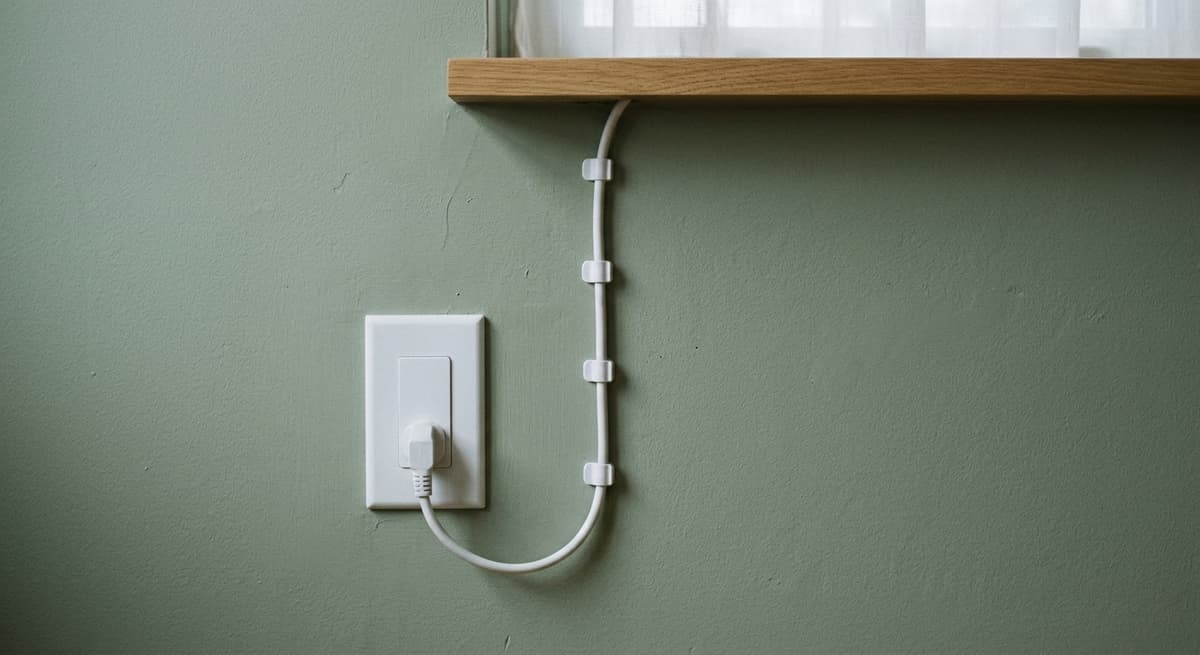
The resident, guardian, or legal representative pays for the device and its installation and maintenance. The institution's obligations are narrower: it must make reasonable physical accommodations, including a secure mounting place and access to power, and it covers the electricity itself. An institution may require that the device be installed safely and that monitoring be conducted in plain view, and it may, but is not required to, move a resident to a different room to make a monitoring request easier to accommodate. Monitoring is always voluntary. An institution cannot compel it, and cannot refuse to admit an individual, or remove a resident, because of a request to monitor or because of covert monitoring conducted by or on behalf of a resident.
Does Texas's Law Cover Assisted Living?
Partly, and the details matter. Chapter 242 generally does not apply to assisted living facilities licensed under Chapter 247. Section 247.003(c) is the specific carve-in: it extends Subchapter R, the electronic monitoring subchapter itself, to assisted living, administered the same way as for a nursing home. But that same subsection then excludes two of Subchapter R's own sections from applying to assisted living: Section 242.851 (administrative enforcement) and Section 242.852 (the criminal tampering offense) do not apply to an assisted living facility.
In practice, that means an assisted living resident in Texas has the same right to request monitoring, the same consent mechanics, and the same notice and cost rules as a nursing home resident, but tampering with that camera is not the Class B misdemeanor described below, and it does not fall under Chapter 242's administrative-sanction path. Assisted living facilities are instead subject to Chapter 247's own separate sanctions regime for other violations.
Tampering Penalties and Enforcement
In a nursing home, Section 242.851 lets the state sanction a facility administrator who knowingly refuses to permit monitoring, refuses admission, or removes a resident over a monitoring request or covert monitoring, and lets the department assess a separate administrative penalty against the institution for the same conduct.
Separately, Section 242.852(a) makes it a criminal offense to interfere with a monitoring device or a recording it made:
"A person who intentionally hampers, obstructs, tampers with, or destroys an electronic monitoring device installed in a resident's room in accordance with this subchapter or a tape or recording made by the device commits an offense. An offense under this section is a Class B misdemeanor."
Under Section 242.852(b), it is a defense to prosecution that the person acted with the effective consent of the resident on whose behalf the device was installed, or that resident's guardian or legal representative. As noted above, neither of these two sections reaches assisted living.
Using Recordings as Evidence of Abuse or Neglect
Texas's monitoring law connects directly to the state's mandatory abuse and neglect reporting duty, and it runs two different clocks. Under Section 242.848(a), a person conducting monitoring on a resident's behalf is deemed to have viewed or listened to a recording on or before the 14th day after the date the recording was made. Section 242.848(b) covers a different situation and starts from a different event: if a resident who has capacity hands a recording to someone and directs that person to review it to determine whether abuse or neglect has occurred, that person is deemed to have viewed it on or before the seventh day after the date the person receives the recording, not after the date it was made. Both deadlines matter because they are tied to the mandatory-reporting requirement in Section 260A.002 and its criminal failure-to-report penalty in Section 260A.012. Once abuse or neglect is reported, the institution can request a copy of the relevant footage at its own expense.

Recordings, whether made covertly or through the authorized process, can also be used more broadly as evidence. Section 242.849(a) provides:
"Subject to applicable rules of evidence and procedure and the requirements of this section, a tape or recording created through the use of covert or authorized electronic monitoring described by this subchapter may be admitted into evidence in a civil or criminal court action or administrative proceeding."
The administrative proceeding branch is the one families use most often, because a Health and Human Services Commission survey or enforcement action is a far more common destination for this footage than a courtroom. Section 242.849(b) then conditions admission on the recording showing the time and date the events occurred if it is video, on the contents not having been edited or artificially enhanced, and, if the contents were transferred to another format, on that transfer having been done by a qualified professional without altering the contents.
If footage from a Texas nursing home or assisted living camera appears to show abuse, neglect, or exploitation, it can support a formal complaint and a civil claim against the facility.
Harmed by a product or exposure? Speak with an attorney about your options
If you or a loved one may have been harmed, you can speak with an attorney about your legal options at no cost. Whether you have a claim depends on the specific facts. This is attorney advertising, not a guarantee that you qualify or of any particular outcome.
Camera vs. Microphone: Texas's Audio Consent Law
The camera itself is a Chapter 242 question. What the camera's microphone picks up is a wiretap-law question, and Subchapter R answers it directly, in a way that surprises most readers. Texas is a one-party consent state for recording generally, meaning at least one party to a conversation has to consent for a recording of it to be lawful; see Texas Recording Laws for that general framework. Inside a resident's room, though, a special rule displaces it.
Section 242.842(a) makes it a defense to prosecution under Section 16.02 of the Penal Code, or any other Texas statute making it an offense to intercept a communication or to disclose or use an intercepted communication, that the communication was intercepted by an electronic monitoring device placed in the room of a resident of an institution. That defense is written to where the device was placed, not to whether the Act's request-and-consent process was followed. A covert camera or microphone in a resident's room is therefore not exposed to the state criminal wiretap penalty the way a covert recording somewhere else would be, and Sections 242.843 and 242.844(2) confirm the point: the statute contemplates covert placement, addresses the civil consequences, and does not criminalize it.
The authorized versus covert distinction still matters, but it is a civil line, not a criminal one. Section 242.842(c) provides that a communication or other sound acquired by an audio device installed under the provisions of this subchapter is not an oral communication as defined by Article 18A.001 of the Code of Criminal Procedure, and not a communication as defined by Section 123.001 of the Civil Practice and Remedies Code. A device installed through the Act is therefore outside both the state wiretap definitions and the civil interception cause of action in Civil Practice and Remedies Code Chapter 123. A covert device gets the criminal defense in Section 242.842(a), but not that civil exclusion, and Section 242.842(b) leaves ordinary civil liability under other law in place except as the subchapter itself, a signed consent or waiver, or the required notice at the room entrance changes it.
None of this reaches federal law. The federal Wiretap Act, 18 U.S.C. § 2511, has its own one-party consent exception and applies on its own terms regardless of a Texas statutory defense, which can matter for a conversation involving people in different states or carried over interstate communications equipment.
Installing a Camera in a Texas Nursing Home or Assisted Living Facility
- Submit a written request. The resident, or the guardian or legal representative if the resident lacks capacity, requests monitoring from the institution on a department-prescribed form.
- Complete the consent forms. Any roommate must sign the department-prescribed consent form, which can include limits on camera direction or audio.
- Wait for every form to be returned. Monitoring cannot legally begin until all required request and consent forms have been completed and returned to the institution.
- Install safely and, if the institution requires it, in plain view. The institution may require safe installation and may require the monitoring be conducted in plain view.
- Post the room-entrance notice. The resident, guardian, or legal representative posts the required conspicuous notice at the entrance to the resident's room.
- Budget for the ongoing cost. Purchase, installation, and maintenance are the resident's or family's expense; only electricity is on the facility.
If You Suspect Abuse or Neglect
Texas's Health and Human Services Commission and the state's Long-Term Care Ombudsman program both accept complaints about a nursing home or assisted living facility, separate from any camera-specific process. The federal Long-Term Care Ombudsman program, created under the Older Americans Act, operates in every state, including Texas, and covers both nursing home and assisted living residents. Its office is required to investigate and help resolve complaints about action or inaction that may adversely affect a resident's health, safety, welfare, or rights.
Related Resources
- Nursing Home Camera Laws by State covers the national picture across all 18 statute states and explains why states like New Jersey and Arizona are not among them.
- Texas Recording Laws covers Texas's general one-party consent rule for audio recording outside this statute.
- Nursing Home Abuse & Neglect covers how an abuse or neglect claim works once camera footage or other evidence is in hand.
Last updated: 2026-08-31.
Frequently Asked Questions
Does Texas law let you put a camera in a nursing home room?
Yes. Health and Safety Code Chapter 242, Subchapter R, Sections 242.841 through 242.852, gives a resident, or their guardian or legal representative, the right to request a video or audio monitoring device for the resident's own room. Texas was the first state to pass a law like this, in 2001.
Does the Texas nursing home camera law cover assisted living facilities?
Partly. Section 247.003(c) extends the monitoring right itself to assisted living, but carves out Section 242.851 (administrative sanctions) and Section 242.852 (the Class B misdemeanor tampering offense). Interfering with a camera in an assisted living facility is not the same crime it is in a nursing home.
Does a roommate have to consent to a camera in a shared Texas nursing home room?
Yes. Section 242.846 requires written consent from every other resident in the room before monitoring can begin, and lets a consenting roommate require the camera point away from them or limit audio. If an unconsenting resident moves into the room, monitoring must stop until they consent in accordance with that section.
Who pays for a nursing home camera in Texas?
The resident, guardian, or legal representative pays for the device, installation, and maintenance under Section 242.847(f). The facility has to provide a reasonably secure place to mount the device and access to power, and covers the electricity, and it cannot refuse admission or remove a resident over a monitoring request.
Is it a crime to tamper with a nursing home camera in Texas?
In a nursing home, yes. Section 242.852(a) makes it a Class B misdemeanor to intentionally hamper, obstruct, tamper with, or destroy a monitoring device installed in a resident's room in accordance with the subchapter, or a recording made by the device. Section 242.852(b) makes the effective consent of the resident, guardian, or legal representative a defense. That offense does not apply to assisted living under Section 247.003(c).
Can nursing home camera footage be used in court in Texas?
Yes. Under Section 242.849(a), a recording made through covert or authorized monitoring may be admitted into evidence in a civil or criminal court action or an administrative proceeding. The administrative track matters in practice, because a state licensing or enforcement proceeding is where this footage most often ends up. Section 242.849(b) requires that video show the time and date, that the contents be unedited and unenhanced, and that any format conversion be done by a qualified professional without altering the contents.
Is audio recording allowed with a Texas nursing home camera?
Yes, subject to any roommate's conditions. Section 242.846(e) lets a consenting roommate limit or prohibit audio specifically, separate from video. On the wiretap side, Section 242.842(a) gives a defense to prosecution under Penal Code Section 16.02 for a communication intercepted by a monitoring device placed in a resident's room, and Section 242.842(c) puts audio from a device installed under the subchapter outside the state's oral-communication definition and outside the civil interception cause of action in Civil Practice and Remedies Code Chapter 123.
Updates
Corrected the scope of Subchapter R to Sections 242.841 through 242.852, rewrote the audio section to follow Section 242.842's actual criminal defense and civil wiretap exclusion, restored the statutory blockquotes to verbatim text including the administrative-proceeding branch of Section 242.849(a), and fixed the seven-day reporting clock under Section 242.848(b) to run from receipt of the recording.
Independently fact-checked against the cited primary sources
The Law Behind This Article
This article rests on the statutory provisions below, held in our own legal record and retrieved from the official source. Tap a section to read the operative text.
Texas Health and Safety Code
§ 242.847AUTHORIZED ELECTRONIC MONITORING: GENERAL PROVISIONSIn force
(a) An institution shall permit a resident or the resident's guardian or legal representative to monitor the room of the resident through the use of electronic monitoring devices. (b) The institution shall require a resident who conducts authorized electronic monitoring or the resident's guardian or legal representative to post and maintain a conspicuous notice at the entrance to the resident's room. The notice must state that the room is being monitored by an electronic monitoring device. (c) Authorized electronic monitoring conducted under this subchapter is not compulsory and may be conducted only at the request of the resident or the resident's guardian or legal representative. (d) An institution may not refuse to admit an individual to residency in the institution and may not remove a resident from the institution because of a request to conduct authorized electronic monitoring. An institution may not remove a resident from the institution because covert electronic monitoring is being conducted by or on behalf of a resident.
Official text (excerpt) · last checked 2026-08-31 · Read the full text in our law library · Verify at statutes.capitol.texas.gov
§ 242.841DEFINITIONSIn force
In this subchapter: (1) "Authorized electronic monitoring" means the placement of an electronic monitoring device in the room of a resident of an institution and making tapes or recordings with the device after making a request to the institution to allow electronic monitoring. (2) "Electronic monitoring device": (A) includes: (i) video surveillance cameras installed in the room of a resident; and (ii) audio devices installed in the room of a resident designed to acquire communications or other sounds occurring in the room; and (B) does not include an interception device that is specifically used for the nonconsensual interception of wire or electronic communications.
Official text (excerpt) · last checked 2026-07-28 · Read the full text in our law library · Verify at statutes.capitol.texas.gov
§ 242.845AUTHORIZED ELECTRONIC MONITORING: WHO MAY REQUESTIn force
(a) If a resident has capacity to request electronic monitoring and has not been judicially declared to lack the required capacity, only the resident may request authorized electronic monitoring under this subchapter, notwithstanding the terms of any durable power of attorney or similar instrument. (b) If a resident has been judicially declared to lack the capacity required for taking an action such as requesting electronic monitoring, only the guardian of the resident may request electronic monitoring under this subchapter. (c) If a resident does not have capacity to request electronic monitoring but has not been judicially declared to lack the required capacity, only the legal representative of the resident may request electronic monitoring under this subchapter.
Official text (excerpt) · last checked 2026-07-28 · Read the full text in our law library · Verify at statutes.capitol.texas.gov
§ 242.846AUTHORIZED ELECTRONIC MONITORING: FORM OF REQUEST; CONSENT OF OTHER RESIDENTS IN ROOMIn force
(a) A resident or the guardian or legal representative of a resident who wishes to conduct authorized electronic monitoring must make the request to the institution on a form prescribed by the department. (b) The form prescribed by the department must require the resident or the resident's guardian or legal representative to: (1) release the institution from any civil liability for a violation of the resident's privacy rights in connection with the use of the electronic monitoring device; (2) choose, when the electronic monitoring device is a video surveillance camera, whether the camera will always be unobstructed or whether the camera should be obstructed in specified circumstances to protect the dignity of the resident; and (3) obtain the consent of other residents in the room, using a form prescribed for this purpose by the department, if the resident resides in a multiperson room.
Official text (excerpt) · last checked 2026-07-28 · Read the full text in our law library · Verify at statutes.capitol.texas.gov
§ 242.848REPORTING ABUSE AND NEGLECTIn force
(a) For purposes of the duty to report abuse or neglect under Section 260A.002 and the criminal penalty for the failure to report abuse or neglect under Section 260A.012, a person who is conducting electronic monitoring on behalf of a resident under this subchapter is considered to have viewed or listened to a tape or recording made by the electronic monitoring device on or before the 14th day after the date the tape or recording is made. (b) If a resident who has capacity to determine that the resident has been abused or neglected and who is conducting electronic monitoring under this subchapter gives a tape or recording made by the electronic monitoring device to a person and directs the person to view or listen to the tape or recording to determine whether abuse or neglect has occurred, the person to whom the resident gives the tape or recording is considered to have viewed or listened to the tape or recording on or before the seventh day after the date the person receives the tape or recording for purposes of the duty to report abuse or neglect under Section 260A.002 and of the criminal penalty for the failure to report abuse or neglect under Section 260A.012.
Official text (excerpt) · last checked 2026-07-28 · Read the full text in our law library · Verify at statutes.capitol.texas.gov
§ 242.849USE OF TAPE OR RECORDING BY AGENCY OR COURTIn force
(a) Subject to applicable rules of evidence and procedure and the requirements of this section, a tape or recording created through the use of covert or authorized electronic monitoring described by this subchapter may be admitted into evidence in a civil or criminal court action or administrative proceeding. (b) A court or administrative agency may not admit into evidence a tape or recording created through the use of covert or authorized electronic monitoring or take or authorize action based on the tape or recording unless: (1) if the tape or recording is a video tape or recording, the tape or recording shows the time and date that the events acquired on the tape or recording occurred; (2) the contents of the tape or recording have not been edited or artificially enhanced; and (3) if the contents of the tape or recording have been transferred from the original format to another technological format, the transfer was done by a qualified professional and the contents of the tape or recording were not altered.
Official text (excerpt) · last checked 2026-07-28 · Read the full text in our law library · Verify at statutes.capitol.texas.gov
§ 242.850NOTICE AT ENTRANCE TO INSTITUTIONIn force
Each institution shall post a notice at the entrance to the institution stating that the rooms of some residents may be being monitored electronically by or on behalf of the residents and that the monitoring is not necessarily open and obvious. The executive commissioner by rule shall prescribe the format and the precise content of the notice.
Official text (excerpt) · last checked 2026-07-28 · Read the full text in our law library · Verify at statutes.capitol.texas.gov
§ 242.851ENFORCEMENTIn force
(a) The department may impose appropriate sanctions under this chapter on an administrator of an institution who knowingly: (1) refuses to permit a resident or the resident's guardian or legal representative to conduct authorized electronic monitoring; (2) refuses to admit an individual to residency or allows the removal of a resident from the institution because of a request to conduct authorized electronic monitoring; (3) allows the removal of a resident from the institution because covert electronic monitoring is being conducted by or on behalf of the resident; or (4) violates another provision of this subchapter.
Official text (excerpt) · last checked 2026-07-28 · Read the full text in our law library · Verify at statutes.capitol.texas.gov
§ 242.852CRIMINAL OFFENSEIn force
(a) A person who intentionally hampers, obstructs, tampers with, or destroys an electronic monitoring device installed in a resident's room in accordance with this subchapter or a tape or recording made by the device commits an offense. An offense under this section is a Class B misdemeanor. (b) It is a defense to prosecution under Subsection (a) that the person took the action with the effective consent of the resident on whose behalf the electronic monitoring device was installed or the resident's guardian or legal representative.
Official text (excerpt) · last checked 2026-07-28 · Read the full text in our law library · Verify at statutes.capitol.texas.gov
§ 247.003APPLICATION OF OTHER LAWIn force
(a) Except as provided by Subsections (b) and (c), Chapter 242 does not apply to an assisted living facility licensed under this chapter. (b) Subchapter D, Chapter 242, applies to an assisted living facility, and the department shall administer and enforce that subchapter for an assisted living facility in the same manner it is administered and enforced for a nursing home. (c) Except as provided by this subsection, Subchapter R, Chapter 242, applies to an assisted living facility, and the department shall administer that subchapter for an assisted living facility in the same manner it is administered and enforced for a nursing home, but shall enforce that subchapter in accordance with the sanctions authorized by this chapter. Sections 242.851 and 242.852 do not apply to an assisted living facility or to conduct within an assisted living facility.
Official text (excerpt) · last checked 2026-07-28 · Read the full text in our law library · Verify at statutes.capitol.texas.gov
United States Code Title 42
§ 3058gState Long-Term Care Ombudsman programIn forcecited in 12 of our articles
In order to be eligible to receive an allotment under section 3058b of this title from funds appropriated under section 3058a of this title and made available to carry out this subpart, a State agency shall, in accordance with this section— establish and operate an Office of the State Long-Term Care Ombudsman; and carry out through the Office a State Long-Term Care Ombudsman program. The Office shall be headed by an individual, to be known as the State Long-Term Care Ombudsman, who shall be selected from among individuals with expertise and experience in the fields of long-term care and advocacy. The Ombudsman shall be responsible for the management, including the fiscal management, of the Office.
Official text (excerpt) · last checked 2026-07-28 · Read the full text in our law library · Verify at uscode.house.gov
Cited in 18 court opinions in our collectionLatest citing opinion in our collection: 2022
In the courts (editorial summary, independently checked):Rackley v. Fairview Care Centers, Inc. (2001) held 42 U.S.C. 3058g(a)(3) and (5) govern the ombudsman office's duties and do not state a public policy clear enough to support a wrongful discharge claim. Northwestern Illinois Area Agency on Aging v. Basta (2022) applied 3058g(f) to uphold a state conflict of interest form.
Opinions citing this section in our collection:
- Puerto Rico Office of the Ombudsman for the Elderly Ex Rel. Leon v. Puerto Rico (District Court, D. Puerto Rico 2009, 665 F. Supp. 2d 74)“…an enforceable right under § 1983). PROOE also cites 42 U.S.C. § 3058g(j), in support of its proposition that…”
- Newman v. Kelly (District Court, District of Columbia 1994, 848 F. Supp. 228)“…uant to the federal Older Americans Act Amendments of 1992, 42 U.S.C. § 3058g, Pub.L. No. 102-375, § 712 , 106 Stat…”
- Northwestern Illinois Area Agency on Aging v. Basta (Appellate Court of Illinois 2022, 468 Ill. Dec. 773)✓An area agency on aging argued a state ombudsman conflict-of-interest form was a rule needing rulemaking. Reading 42 U.S.C. 3058g(f) as putting the duty to identify conflicts on the state agency, the court held the form merely exercised that duty, so no rulemaking was required.
Identified automatically from the court opinions citing this section — not a ranking of which case controls.
Also relied on in: Nursing Home Camera Laws by State, Arkansas Nursing Home Camera Laws: SB616 and What Applies Today, Hawaii Nursing Home Camera Laws: No Statute, Private-Place Risk
United States Code Title 18
§ 2511Interception and disclosure of wire, oral, or electronic communications prohibitedIn forcecited in 441 of our articles
Except as otherwise specifically provided in this chapter any person who— intentionally intercepts, endeavors to intercept, or procures any other person to intercept or endeavor to intercept, any wire, oral, or electronic communication; intentionally uses, endeavors to use, or procures any other person to use or endeavor to use any electronic, mechanical, or other device to intercept any oral communication when— such device is affixed to, or otherwise transmits a signal through, a wire, cable, or other like connection used in wire communication; or such device transmits communications by radio, or interferes with the transmission of such communication; or such person knows, or has reason to know, that such device or any component thereof has been sent through the mail or transported in interstate or foreign commerce; or such use or endeavor to use (A) takes place on the premises of any business or other commercial establishment the operations of which affect interstate or foreign commerce; or (B) obtains or is for the purpose of obtaining information relating to the operations of any business or other commercial establishment the operations of which affect interstate or foreign…
Official text (excerpt) · last checked 2026-09-17 · Read the full text in our law library · Verify at uscode.house.gov
Cited in 2,045 court opinions in our collectionLatest citing opinion in our collection: 2026
In the courts (editorial summary, independently checked):Griggs-Ryan v. Smith (1990) applied the Section 2511(2)(d) prior-consent exception, treating a tenant repeatedly told that all incoming calls were taped as having impliedly consented. United States v. United States District Court (1972) read the then-current Section 2511(3) as conferring no presidential surveillance power.
Opinions citing this section in our collection:
- Mitchell v. Forsyth (Supreme Court of the United States 1985, 472 U.S. 511)✓The Attorney General authorized a warrantless 1970 national security wiretap that caught the plaintiff's calls; the Court held the since-repealed Section 2511(3) disclaimer left the tap lawful under Title III, and that Mitchell had qualified immunity.
- United States v. United States District Court for the Eastern District of Michigan (Supreme Court of the United States 1972, 407 U.S. 297)✓The Attorney General approved warrantless wiretaps on members of a domestic group accused of bombing a CIA office; the Court read Section 2511(3) as a congressional disclaimer conferring no surveillance power, then held the Fourth Amendment required prior judicial approval.
- Forsyth v. Barr (Court of Appeals for the Fifth Circuit 1994, 19 F.3d 1527)✓Dallas police used, in an internal affairs probe of an officer, calls private parties allegedly intercepted illegally; assuming that was unlawful, the Fifth Circuit held Section 2517(1) and (2) allowed the disclosure and use, defeating the Section 2511(1)(c) and (d) claims.
Identified automatically from the court opinions citing this section — not a ranking of which case controls.
Also relied on in: Connecticut Recording Laws (2026): Hybrid Consent Rules Explained, Oregon Recording Laws (2026): Hybrid One-Party and All-Party Rules, US Recording Laws by State (2026): All 50 States Explained
Search our full record of US law — 2.1 million sections, every state + federal →
Sources and References
- Texas Health and Safety Code Chapter 242, Subchapter R, Electronic Monitoring of Resident's Room (§§242.841, 242.845-242.852)(statutes.capitol.texas.gov).gov
- Texas Health and Safety Code Chapter 247, §247.003 (assisted living cross-reference and enforcement carve-out)(statutes.capitol.texas.gov).gov
- 18 U.S.C. § 2511, federal Wiretap Act, one-party consent exception(law.cornell.edu)
- Administration for Community Living, State Long-Term Care Ombudsman Program(acl.gov).gov
- 42 U.S.C. § 3058g, Older Americans Act, State Long-Term Care Ombudsman Program(law.cornell.edu)
- Texas SB 177 (77th Legislature, 2001), enrolled text creating Health and Safety Code Chapter 242, Subchapter R (Sections 242.841-242.852)(capitol.texas.gov)