
New York
New York Noise Laws (2026): Quiet Hours, Car Stereos, Fines
Independently fact-checked against primary sources (last audited October 10, 2026). · 18 primary sources cited on this page. How we verify our legal content
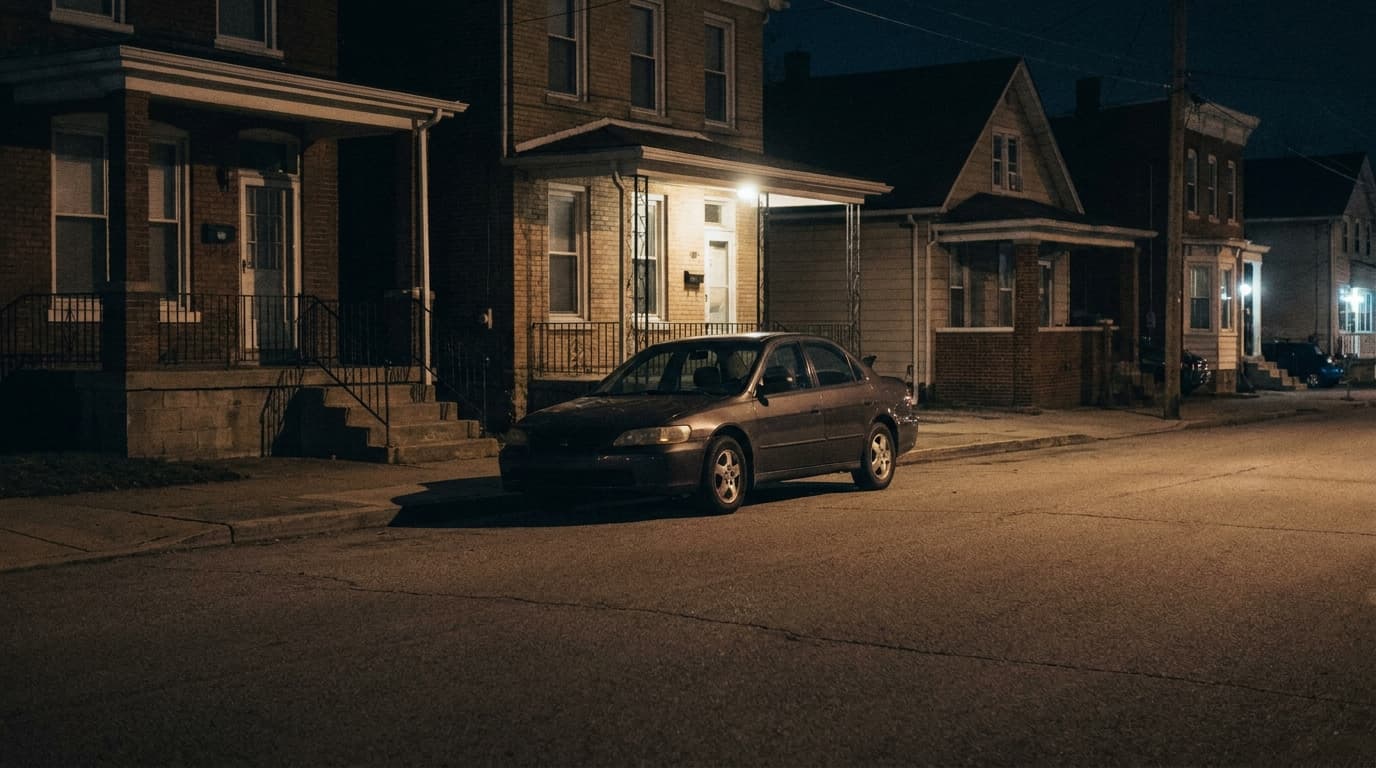
In New York, quiet hours, decibel limits and construction hours for homes are set by your town, village, city or county, and New York City has its own noise code. Statewide, making "unreasonable noise" with intent to cause public inconvenience, annoyance or alarm, or recklessly creating a risk of it, is disorderly conduct, a violation punishable by a fine of up to $250, up to 15 days in jail, or both (N.Y. Penal Law 240.20(2), 70.15(4), 80.05(4)). The Vehicle and Traffic Law adds the rules people most often meet on the road: a muffler requirement, a ban on louder exhaust modifications, and a 70 dB(A) limit at 25 feet for car stereos, with fines that rise for repeat convictions (VTL 375(31), 375(47)). To compare other states, see our guide to noise ordinance laws by state.
Information last verified on 2026-10-10. This article has not been reviewed by a licensed lawyer.
Jurisdiction scope: This article covers New York State law on noise: disorderly conduct, disruption of religious services and funerals, and criminal nuisance (Penal Law 240.20, 240.21, 240.45) and the sentences for violations and misdemeanors (70.15, 80.05); town, village and home rule powers and penalties (Town Law 130, 135; Village Law 20-2006; Municipal Home Rule Law 10); vehicle exhaust, horn and car audio rules (Vehicle and Traffic Law 375); the shooting range noise defense and hours (General Business Law 150); the right-to-farm nuisance shield and the limit on local regulation of farms in agricultural districts (Agriculture and Markets Law 305-a, 308); pleasure vessel noise limits (Navigation Law 44); and the Department of Environmental Conservation's noise authority and policy (Environmental Conservation Law 3-0301; Program Policy DEP-00-1). It does not cover the text of the New York City noise code or any other local law, state park rules, lease terms, aircraft or workplace noise, federal law, or the law of other states.
New York noise laws at a glance
| Rule | Source | How it is classed | Penalty |
|---|---|---|---|
| Making unreasonable noise with intent to cause public inconvenience, annoyance or alarm, or recklessly creating a risk of it | Penal Law 240.20(2) | Violation | Fine up to $250 (80.05(4)); jail up to 15 days (70.15(4)) |
| Making unreasonable noise or disturbance at, or within 300 feet of, a lawfully assembled religious service, funeral, burial or memorial service, with intent to cause annoyance or alarm or recklessly creating a risk of it | Penal Law 240.21 | Class A misdemeanor | Fine up to $1,000 (80.05(1)); jail up to 364 days (70.15(1)) |
| Knowingly or recklessly creating a condition that endangers the safety or health of a considerable number of persons | Penal Law 240.45(1) | Class B misdemeanor | Fine up to $500 (80.05(2)); jail up to 3 months (70.15(2)) |
| Car audio over 70 dB(A) at 25 feet, on or within 100 feet of a public highway | VTL 375(47)(a) | Traffic infraction, not a crime (VTL 155) | Up to $150; then $150 to $300; then $375 to $750 (375(47)(b)) |
| Muffler and exhaust: adequate, no cut-out or bypass, no louder modification | VTL 375(31)(a) | Traffic infraction, not a crime (VTL 155) | Fine up to $150, up to 30 days, or both (375(32)(a)) |
| Horn not used other than as a reasonable warning, not unnecessarily loud or harsh | VTL 375(1)(a) | Traffic infraction, not a crime (VTL 155) | Fine up to $150, up to 30 days, or both (375(32)(a)) |
| Selling or installing a cut-out, bypass or louder exhaust device for any motor vehicle, or motorcycle straight pipes or removable-baffle exhausts | VTL 375(31)(b), (31-a), (31-b) | Traffic infraction, not a crime (VTL 155) | Fine up to $1,000, up to 30 days, or both (375(32)(b)) |
| Town noise ordinance | Town Law 130(11) | Misdemeanor unless otherwise provided by law; civil penalties allowed (135(1)) | Set by the ordinance |
| Village ordinance adopted before September 1, 1974 | Village Law 20-2006(1) | Fine, or a violation under the Penal Law | Fine up to $250 |
Is loud noise against the law in New York?
At the state level, noise is an offense when it meets the disorderly conduct statute. Penal Law 240.20 reads, in the part that covers noise:
"A person is guilty of disorderly conduct when, with intent to cause public inconvenience, annoyance or alarm, or recklessly creating a risk thereof: ... 2. He makes unreasonable noise; ... Disorderly conduct is a violation." (N.Y. Penal Law 240.20)
Two elements work together. The noise must be unreasonable, and the person must act with intent to cause public inconvenience, annoyance or alarm, or recklessly create a risk of it. The intent element is about public inconvenience, annoyance or alarm.
Disorderly conduct is classed as a violation, not a misdemeanor. A fine for a violation is "an amount, fixed by the court, not exceeding two hundred fifty dollars" (80.05(4)). A jail sentence for a violation "shall not exceed fifteen days" (70.15(4)). Both figures are maximums; the court fixes the actual sentence.
Religious services and funerals
Noise near a religious service or funeral is a separate, more serious offense. A person is guilty under Penal Law 240.21 when he or she "makes unreasonable noise or disturbance while at a lawfully assembled religious service, funeral, burial or memorial service, or within three hundred feet thereof, with intent to cause annoyance or alarm or recklessly creating a risk thereof." It is a class A misdemeanor, punishable by a fine of up to $1,000 and a jail term of up to 364 days (80.05(1), 70.15(1)).
Criminal nuisance
Penal Law 240.45 (criminal nuisance in the second degree) is aimed at a different harm. It applies when a person, "by conduct either unlawful in itself or unreasonable under all the circumstances, ... knowingly or recklessly creates or maintains a condition which endangers the safety or health of a considerable number of persons," or knowingly maintains premises where people gather to engage in unlawful conduct. It is a class B misdemeanor, punishable by a fine of up to $500 and a jail term of up to 3 months (80.05(2), 70.15(2)). The statute does not mention noise; its test is danger to the safety or health of a considerable number of people.
Quiet hours: set by your town, village, city or county
None of the statutes on this page sets quiet hours, construction hours or a decibel limit for homes. Those rules come from local law, and they differ from place to place.
Towns
Town Law 130 lists the subjects a town board may regulate by ordinance. Subdivision 11 covers noise:
"Preserving the public peace and good order; ... preventing unreasonably loud or disturbing noises, determined by the board to be of a character, intensity or duration as to be detrimental to the peace, welfare or good order of the people, and preventing all disorderly, noisy, riotous or tumultuous conduct within the town, disturbing the peace and quiet of the town or any meeting or assembly therein" (N.Y. Town Law 130(11))
The town board decides which noises are of a "character, intensity or duration" detrimental to the peace. That is where a town's quiet hours or decibel limits come from.
Cities, villages and counties
The Municipal Home Rule Law gives local governments power to adopt local laws on "the government, protection, order, conduct, safety, health and well-being of persons or property therein" (MHRL 10(1)(ii)(a)(12)). The same paragraph limits where the power reaches: a town's exercise of it "shall relate only to the area thereof outside the village or villages therein," and a county's licensing or regulation of an occupation or business does not reach a city, village or town area that is regulating the same business (10(1)(ii)(a)(12)(a), (b)). If you live in a village, check the village's code as well as the town's.
New York City
New York City has its own noise code. Its quiet hours, decibel limits and complaint procedures are set by the city, not the state, and are not described on this page. Check the city's official website for the current rules and how to report noise.
What a local noise violation can cost
The penalty depends on the type of government and when its law was adopted.
- Towns: "A violation of any ordinance, rule or regulation adopted by the town board pursuant to this chapter is hereby declared to be a misdemeanor except as otherwise provided by law." The town board "is also empowered to provide civil penalties for such violation" (Town Law 135(1)). So a town noise charge may be a misdemeanor, which is a higher class than the state's disorderly conduct violation, or a civil penalty, depending on how the ordinance is written. A town board may instead designate a violation an offense punishable by fine or imprisonment (135(2)), a town may also sue for an injunction (Town Law 135(1)), and a village board may enforce its ordinances adopted before September 1, 1974 by injunction (Village Law 20-2006(1)(c)).
- Villages: for ordinances adopted before September 1, 1974, a village board may prescribe fines for each violation "not to exceed two hundred fifty dollars," or make each violation a violation under the Penal Law, but "in no case shall the fine imposed exceed two hundred fifty dollars" (Village Law 20-2006(1)(a), (b)). Newer village local laws set their own penalties.
- Cities and counties: the local law itself states the penalty. Read the noise section of your city or county code for the amount.
Finding your local rules and whom to call
Search your town, village, city or county code for "noise." Many local codes are posted on the municipality's website. For a party or other noise happening now, the usual contact is the local police or sheriff's non-emergency line. For a recurring problem, such as construction outside allowed hours or a business, the municipality's code enforcement or building department is the usual contact.
If you rent, your lease and New York landlord-tenant law also matter; see our guide to New York landlord-tenant laws. For fireworks, see our guide to New York fireworks laws.
Car stereos: the 70 dB(A) rule and its fines
New York sets a measurable statewide limit for vehicle sound systems. Under VTL 375(47)(a):
"It shall be unlawful for any person to operate or cause to be operated, an audio amplification system which is operated in, installed in or powered by a vehicle which generates an A-weighted sound level in excess of seventy dB (A) measured at, or adjusted to, a distance of twenty-five feet from the vehicle which is driven, standing, or parked on a public highway, or within one hundred feet of a public highway unless that system is being operated to request assistance or warn of a hazardous situation. This section shall not apply to authorized emergency vehicles or vehicles operated by gas, electric, communications or water utilities. This section shall not apply to the sound systems of vehicles used for advertising, or in parades, political or other special events, except that the use of sound systems on those motor vehicles may be prohibited by a local authority by ordinance or local law."
The rule covers a parked car as well as a moving one, and a vehicle within 100 feet of a public highway, not only one on it. The rule does not apply to a system used to request assistance or warn of a hazard, to emergency and utility vehicles, or to sound systems on vehicles used for advertising, parades, political or other special events, although a local government may prohibit those by ordinance or local law.
The fines are graduated under 375(47)(b):
| Conviction | How it is classed | Fine |
|---|---|---|
| First | Traffic infraction (VTL 155) | Up to $150 |
| Second, both violations within 18 months | Traffic infraction | $150 to $300 |
| Third or later, all within 18 months | Traffic infraction | $375 to $750 |
The 18-month window runs across the violations, not the convictions: the statute counts violations "committed within a period of eighteen months."
None of the noise rules in VTL 375 is declared a misdemeanor, so each is a traffic infraction, which "is not a crime" under VTL 155. Under the version of VTL 1809(1) in effect until September 1, 2027, a conviction also carries a mandatory surcharge and crime victim assistance fee in addition to the fine; the version that takes effect that day excludes motor vehicle equipment infractions from the surcharge.
Mufflers, straight pipes and horns
Under VTL 375(31)(a), every motor vehicle on the highways of the state "shall at all times be equipped with an adequate muffler and exhaust system in constant operation and properly maintained to prevent any excessive or unusual noise and no such muffler or exhaust system shall be equipped with a cut-out, bypass, or similar device." The same paragraph adds: "No person shall modify the muffler or exhaust system of a motor vehicle in a manner which will amplify or increase the noise emitted by the motor or exhaust system of such vehicle above that emitted by the muffler or exhaust system originally installed on the vehicle."
Two subdivisions target motorcycle exhausts at the point of sale or installation:
- "No person shall, in the state, sell, offer for sale or install a motorcycle exhaust device without internal baffles, known as "straight pipes"" (375(31-a)).
- No person shall sell, offer for sale or install a motorcycle exhaust device "that is intentionally designed to allow for the internal baffling to be fully or partially removed or interchangeable or that has been modified in a manner that will amplify or increase the noise emitted by the motor of a motorcycle above that emitted by the exhaust system originally installed on such motorcycle" (375(31-b)). That rule does not apply to a motorcycle made before 1979 or one registered as a limited use vehicle or an all terrain vehicle.
- For any motor vehicle, no person may sell, offer for sale or install "a cut-out, bypass, or a similar device which will amplify or increase the noise emitted by the motor or exhaust system" above the original (375(31)(b)).
The horn rule is in 375(1)(a): a vehicle must have a horn that produces "a sound sufficiently loud to serve as a danger warning but shall not be used other than as a reasonable warning nor be unnecessarily loud or harsh."
Penalties. A violation of section 375 not otherwise provided for, which includes the muffler and horn rules, "shall be punishable by a fine not exceeding one hundred fifty dollars or by imprisonment for not exceeding thirty days, or by both" (375(32)(a)). A violation of paragraph (b) of subdivision 31, subdivision 31-a or subdivision 31-b "shall be punishable by a fine not exceeding one thousand dollars or by imprisonment for not exceeding thirty days, or by both" (375(32)(b)).
The official Senate site lists a 2026 revision of section 375; the text quoted here is the version that site shows.
Shooting ranges
General Business Law 150 gives shooting ranges a defense to noise lawsuits and also limits their hours.
The defense, in subdivision 1, applies to a claim "based on noise or noise pollution resulting from the inherent shooting activity on such shooting range." It is an affirmative defense that, when the suit is commenced, the range "is in compliance with any applicable noise control laws or ordinances." If those laws have no legal force against the range, or none applied when the section took effect, the defense turns on a measured standard: the sound level of small arms fire "does not exceed 90 dB(A) for one hour out of a day, or does not exceed 85 dB(A) for eight hours out of a day measured at, or adjusted to, a distance of one hundred feet outside the real property boundary of the shooting range."
The hours limit, in subdivision 3, applies regardless: "no shooting range shall be operated during the period from 10:00 PM until 7:00 AM unless a local law or ordinance specifically authorizes the operation of a shooting range during all or any portion of such time period."
Farms and the right to farm
Under Agriculture and Markets Law 308(3), on land in an agricultural district, or land used in agricultural production under an agricultural assessment, "an agricultural practice shall not constitute a private nuisance, when an action is brought by a person, provided such agricultural practice constitutes a sound agricultural practice pursuant to an opinion issued upon request by the commissioner." The shield depends on that opinion from the Commissioner of Agriculture and Markets. It does not bar recovery of "damages for personal injury or wrongful death." The section does not mention noise by name; it addresses private nuisance claims generally.
Local governments also "shall not unreasonably restrict or regulate farm operations within agricultural districts in contravention of the purposes of this article unless it can be shown that the public health or safety is threatened" (Agriculture and Markets Law 305-a(1)(a)). The Commissioner may give an opinion on whether a local law would do that, and may bring an action to enforce the limit (305-a(1)(b), (c)).
Boats
Navigation Law 44 sets noise limits for pleasure vessels on the waters of the state. No person may operate a pleasure vessel "in such a manner as to exceed a noise level of 90dB(A) when subjected to a stationary sound level test as prescribed by SAE J2005," or operate one "in such a manner as to exceed a noise level of 75dB(A) measured as specified in SAE J1970" (Nav. Law 44(2)(a), (b)).
A pleasure vessel also may not be operated with "an altered muffler or a muffler cutout, bypass" or anything else that reduces a muffler's effectiveness, and no one may modify a muffler so it cannot meet these limits (44(4), (5)). The section does not apply to approved races held between 9:00 AM and sunset, to government vessels on enforcement, rescue, firefighting or research duty, to manufacturer testing, or to pleasure vessels made before 1965 (44(6)).
The state environmental agency's role
The Environmental Conservation Law directs the Department of Environmental Conservation to "provide for prevention and abatement of all water, land and air pollution including, but not limited to, that related to ... noise" (ECL 3-0301(1)(i)). DEC's noise document, Program Policy DEP-00-1, "Assessing and Mitigating Noise Impacts," is staff guidance; it states that "nothing set forth in a Program Policy Memorandum prevents DEC staff from varying from that guidance as specific circumstances may dictate." It is guidance for DEC staff, not a rule that sets quiet hours. For noise from a neighbor or a local business, the town, village, city or county is the place to start.
Related pages
- Noise ordinance laws by state
- New York landlord-tenant laws
- New York fireworks laws
- Connecticut noise ordinance laws
- Massachusetts noise ordinance laws
This article provides general legal information about New York law, not legal advice. For advice about a specific situation, contact a lawyer licensed in New York or your town, village, city or county government.
Last updated: 2026-10-10.
Frequently Asked Questions
What are the noise laws in New York State?
Statewide, making unreasonable noise with intent to cause public inconvenience, annoyance or alarm, or recklessly creating a risk of it, is disorderly conduct (Penal Law 240.20(2)), and the Vehicle and Traffic Law limits car audio, mufflers and horns (VTL 375). Quiet hours and decibel limits for homes come from your town, village, city or county, and New York City has its own noise code.
What are the quiet hours in New York?
Quiet hours are set by local law. None of the state statutes on this page sets quiet hours for homes, so check your town, village, city or county code; New York City has its own noise code.
Is a noise complaint a crime in New York?
Making unreasonable noise with the required intent or recklessness is disorderly conduct, which the Penal Law classes as a violation, not a misdemeanor (Penal Law 240.20). A local noise ordinance can be classed differently; a town ordinance violation is a misdemeanor unless otherwise provided by law (Town Law 135(1)). Unreasonable noise at or within 300 feet of a religious service, funeral, burial or memorial service, with intent to cause annoyance or alarm or recklessly creating a risk of it, is a class A misdemeanor (Penal Law 240.21).
What is the fine for disorderly conduct for noise in New York?
Up to $250, set by the court (Penal Law 80.05(4)), and a jail term of up to 15 days is also possible (70.15(4)).
How loud can car speakers be in New York?
A vehicle audio system may not exceed 70 dB(A) measured at 25 feet when the vehicle is on or within 100 feet of a public highway (VTL 375(47)(a)). Fines run up to $150 for a first conviction, $150 to $300 for a second within 18 months, and $375 to $750 for a third or later (375(47)(b)).
Is a loud exhaust illegal in New York?
A vehicle must have an adequate muffler to prevent excessive or unusual noise, with no cut-out or bypass and no modification making it louder than the original (VTL 375(31)(a)). A violation is punishable by a fine up to $150, up to 30 days, or both (375(32)(a)); selling or installing motorcycle straight pipes carries up to $1,000 (375(31-a), (32)(b)).
Can a shooting range operate at night in New York?
Not from 10:00 PM to 7:00 AM unless a local law or ordinance specifically authorizes it (General Business Law 150(3)).
Updates
Independently fact-checked against the cited primary sources
The Law Behind This Article
This article rests on the statutory provisions below, held in our own legal record and retrieved from the official source. Tap a section to read the operative text.
New York Penal Law
§ 240.20Disorderly conductIn force
Disorderly conduct. A person is guilty of disorderly conduct when, with intent to cause public inconvenience, annoyance or alarm, or recklessly creating a risk thereof: 1. He engages in fighting or in violent, tumultuous or threatening behavior; or 2. He makes unreasonable noise; or 3. In a public place, he uses abusive or obscene language, or makes an obscene gesture; or 4. Without lawful authority, he disturbs any lawful assembly or meeting of persons; or 5. He obstructs vehicular or pedestrian traffic; or 6. He congregates with other persons in a public place and refuses to comply with a lawful order of the police to disperse; or 7. He creates a hazardous or physically offensive condition by any act which serves no legitimate purpose. Disorderly conduct is a violation.
Official text (excerpt) · last checked 2026-07-29 · Read the full text in our law library · Verify at legislation.nysenate.gov
New York Vehicle and Traffic Law
§ 375EquipmentIn forcecited in 6 of our articles
Equipment. 1. (a) Every motor vehicle, operated or driven upon the public highways of the state, shall be provided with adequate brakes and steering mechanism in good working order and sufficient to control such vehicle at all times when the same is in use, and a suitable and adequate horn or other device for signaling, which horn or device shall produce a sound sufficiently loud to serve as a danger warning but shall not be used other than as a reasonable warning nor be unnecessarily loud or harsh. (b) Every such motor vehicle shall be equipped with suitable wipers or other device which shall clear a sufficient area of the windshields to provide reasonable driving vision. (i) The use or placing of posters or stickers on windshields or rear windows of motor vehicles other than those authorized by the commissioner, is hereby prohibited. Notwithstanding any other provision of law, a summons for operating a motor vehicle in violation of this subparagraph shall only be issued when there is reasonable cause to believe that the person operating such motor vehicle has committed a violation of the laws of this state other than a violation of this subparagraph.
Official text (excerpt) · last checked 2026-09-08 · Read the full text in our law library · Verify at legislation.nysenate.gov
Cited in 254 court opinions in our collectionLatest citing opinion in our collection: 2026
In the courts (editorial summary, independently checked):New York courts apply section 375 mainly in suppression rulings. People v. Biggs (2022) applied the tint provision, section 375(12-a)(b), and stated the test is whether the officer reasonably believed the windows were over-tinted; People v. Bookman (2015) found probable cause under section 375(30) for an ornament hung from the mirror.
Opinions citing this section in our collection:
- The People v. Rebecca Guthrie (New York Court of Appeals 2015, 25 N.Y.3d 130)“…ng that its windows were excessively tinted in violation of Vehicle and Traffic Law § 375 (12-a) (b) (4) (People v Estrella,…”
- People v. Pealer (New York Court of Appeals 2013, 20 N.Y.3d 447)✓An officer following a gray Subaru stopped it for an illegal rear window sticker under section 375(1)(b)(i) and arrested the driver for DWI; a footnote rejected the suppression claim, stating that no exception exists for infractions characterized as de minimis.
- People v. Biggs (Appellate Division of the Supreme Court of the State of New York 2022, 175 N.Y.S.3d 117)✓Officers stopped a Nissan at night for dark rear window tint and a marijuana odor; the majority held the officer's testimony that he could not see into the car met the test of a reasonable belief the windows were over-tinted under section 375(12-a)(b).
Identified automatically from the court opinions citing this section — not a ranking of which case controls.
Also relied on in: New York Dashcam Laws: Legality, Mounting Rules, and Evidence Use, Window Tint Laws by State (2026): Legal VLT Limits, New York Window Tint Laws (2026): Legal VLT Limits
New York Town Law
§ 130Town ordinancesIn force
Town ordinances. The town board after a public hearing may enact, amend and repeal ordinances, rules and regulations not inconsistent with law, for the following purposes in addition to such other purposes as may be contemplated by the provisions of this chapter or other laws. In order to accomplish the regulation and control of such purposes, the town board may include in any such ordinance, rule or regulation provision for the issuance and revocation of a permit or permits, for the appointment of any town officers or employees to enforce such ordinance, rule or regulation and/or the terms and conditions of any permit issued thereunder, and for the collection of any reasonable uniform fee in connection therewith. The town clerk shall give notice of such hearing by the publication of a notice in at least one newspaper circulating in the town, specifying the time when and the place where such hearing will be held, and in general terms describing the proposed ordinance. Such notice shall be published once at least ten days prior to the day specified for such hearing.
Official text (excerpt) · last checked 2026-07-29 · Read the full text in our law library · Verify at legislation.nysenate.gov
Search our full record of US law — 2.1 million sections, every state + federal →
Sources and References
- N.Y. Penal Law 240.20, Disorderly conduct(www.nysenate.gov).gov
- N.Y. Penal Law 240.21, Disruption or disturbance of a religious service, funeral, burial or memorial service(www.nysenate.gov).gov
- N.Y. Penal Law 70.15, Sentences of imprisonment for misdemeanors and violation(www.nysenate.gov).gov
- N.Y. Penal Law 80.05, Fines for misdemeanors and violation(www.nysenate.gov).gov
- N.Y. Vehicle and Traffic Law 375, Equipment (mufflers, horns, audio amplification systems)(www.nysenate.gov).gov
- N.Y. Town Law 130, Town ordinances(www.nysenate.gov).gov
- N.Y. Town Law 135, Penalties for violations of town ordinances(www.nysenate.gov).gov
- N.Y. General Business Law 150, Shooting ranges; noise(www.nysenate.gov).gov
- N.Y. Agriculture and Markets Law 308, Right to farm(www.nysenate.gov).gov
- N.Y. Penal Law 240.45, Criminal nuisance in the second degree(www.nysenate.gov).gov
- N.Y. Municipal Home Rule Law 10, Powers of local governments to adopt local laws(www.nysenate.gov).gov
- N.Y. Village Law 20-2006, Enforcement of ordinances(www.nysenate.gov).gov
- N.Y. Navigation Law 44, Noise levels of pleasure vessels(www.nysenate.gov).gov
- N.Y. Environmental Conservation Law 3-0301, General functions of the department(www.nysenate.gov).gov
- NYS DEC Program Policy DEP-00-1, Assessing and Mitigating Noise Impacts(extapps.dec.ny.gov).gov
- N.Y. Vehicle and Traffic Law 155, Traffic infraction(www.nysenate.gov).gov
- N.Y. Vehicle and Traffic Law 1809, Mandatory surcharge and crime victim assistance fee(www.nysenate.gov).gov
- N.Y. Agriculture and Markets Law 305-a, Coordination of local planning with the agricultural districts program(www.nysenate.gov).gov