
Hawaii
Hawaii Noise Laws: Decibel Limits, Quiet Hours and Penalties
Independently fact-checked against primary sources (last audited October 10, 2026). · 21 primary sources cited on this page. How we verify our legal content
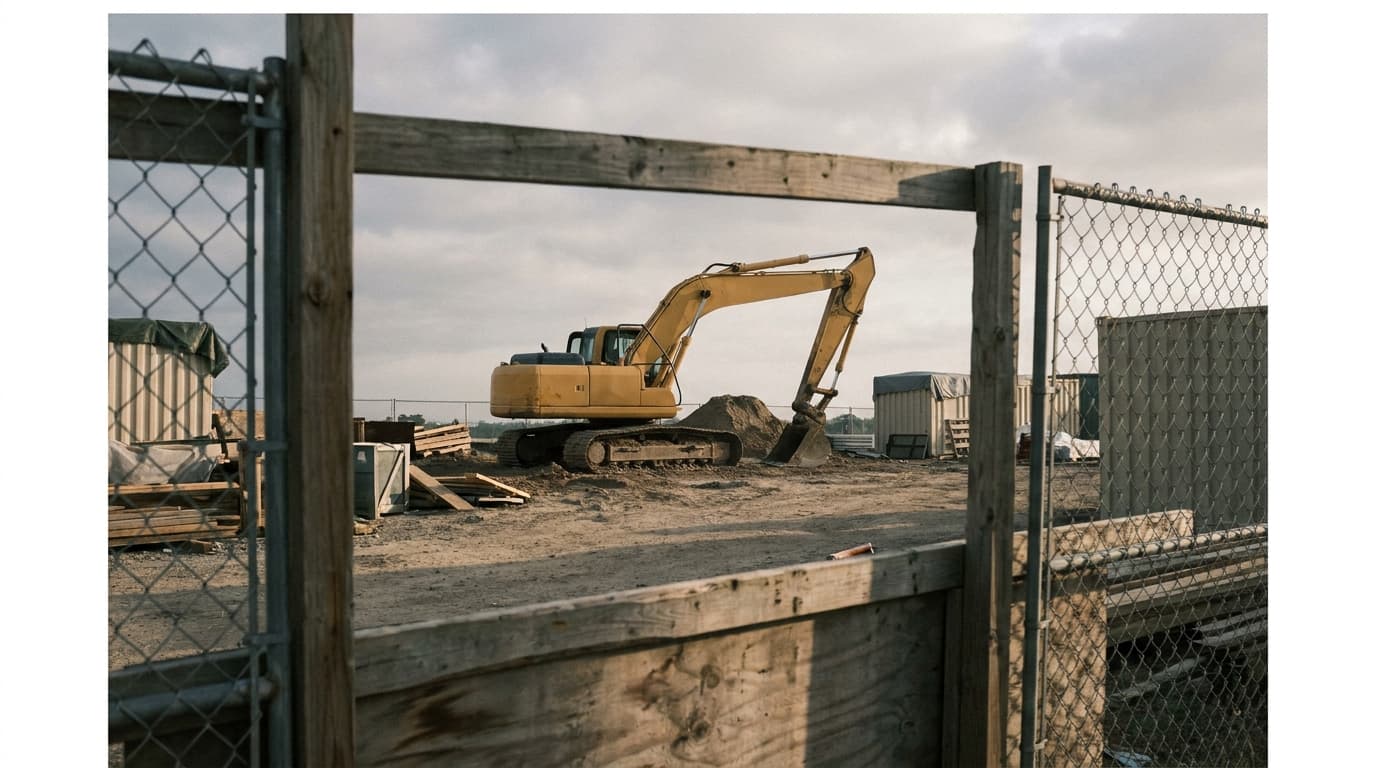
Hawaii sets statewide noise limits. Under the Department of Health's community noise rules (Hawaii Administrative Rules chapter 11-46), adopted under the state noise pollution law (HRS chapter 342F), noise from stationary sources and from construction, agricultural and industrial equipment in Class A (residential) zoning districts may not exceed 55 dBA from 7 a.m. to 10 p.m. or 45 dBA from 10 p.m. to 7 a.m. State law also caps nighttime bass in urban districts (HRS 342F-31.5) and limits leaf blowers and weed whackers near homes to daytime hours (342F-30.8).
The Department of Health does not handle noise from people, animals or most vehicles, such as a loud gathering next door. That noise goes to the police under the disorderly conduct statute, HRS 711-1101, which makes "unreasonable noise" an offense and makes the renter, resident or owner-occupant who knowingly or negligently consents to it guilty of a noise violation, and to county noise ordinances. To compare other states, see our guide to noise ordinance laws by state.
Information last verified on 2026-10-10. This article has not been reviewed by a licensed lawyer.
Jurisdiction scope: This article covers Hawaii state law: the noise pollution chapter (HRS 342F-1, 342F-3, 342F-9, 342F-30, 342F-30.8, 342F-31.5) and the Department of Health's community noise rules (HAR 11-46-3, 11-46-4, 11-46-5, 11-46-7(j), 11-46-17, 11-46-18); disorderly conduct (HRS 711-1101) and the penalties in 701-107, 706-640 and 706-663; county noise ordinance power (46-17); the vehicle noise rules (291-22, 291-23, 291-24, 291-24.4, 291-24.5, 291-24.6) and the inspection requirement in 286-26; the noise rule for state parks (HAR 13-146-12); the right-to-farm statute (165-4); and two noise bills from the 2025 and 2026 sessions. Statute text is from the Hawaii Revised Statutes published by the Legislature on capitol.hawaii.gov, and rule text from the Department of Health's published copy of HAR chapter 11-46. It does not cover the text of any county noise ordinance, aircraft or workplace noise, or the law of other states.
Hawaii's statewide decibel limits
HRS 342F-3(a) directs the Department of Health that "the director shall prevent, control, and abate noise pollution in the State." The chapter defines "excessive noise" as "the presence of sound as measured by standard testing devices as established by the noise rules adopted by the department of a volume or in quantities and for durations which endangers human health, welfare or safety, animal life, or property or which unreasonably interferes with the comfortable enjoyment of life and property in the State or in such areas of the State as are affected thereby" (342F-1).
Under 342F-30, "No person, including any public body, shall engage in activity which produces excessive noise without first securing approval in writing from the director; provided that this section shall not apply to any school activity which is approved by school authorities."
The Department's rules set the levels. Under HAR 11-46-4(a), the maximum permissible sound levels in Table 1 "shall apply to the following excessive noise sources: stationary noise sources; and equipment related to agricultural, construction, and industrial activities."
| Zoning district | Daytime, 7 a.m. to 10 p.m. | Nighttime, 10 p.m. to 7 a.m. |
|---|---|---|
| Class A: residential, conservation, preservation, public space, open space | 55 dBA | 45 dBA |
| Class B: multi-family dwellings, apartment, business, commercial, hotel, resort | 60 dBA | 50 dBA |
| Class C: agriculture, country, industrial | 70 dBA | 70 dBA |
Source: HAR 11-46-3 and 11-46-4, Table 1. The limits apply "at any point at or beyond (past) the property line of the premises" (11-46-4(b)). For impulsive noise such as hammering or pile driving, the limit is ten dBA above the Table 1 level (11-46-4(e)), and in mixed zoning districts the primary land use designation sets the class (11-46-4(d)).
The rules do not apply to emergency vehicles, emergency signaling devices such as sirens and burglar and fire alarms, emergency repairs to highways, parks and utilities, emergency generators, required backup alarms, emergency repair after natural disasters, or school activities approved by school authorities between 7 a.m. and 10 p.m. (11-46-5).
The limits allow for short bursts: "Noise levels shall not exceed the maximum permissible sound levels for more than ten per cent of the time within any twenty minute period, except by permit or variance issued under sections 11-46-7 and 11-46-8" (11-46-4(c)).
Quiet hours in Hawaii: which hours apply
Hawaii's state rules use different hours for different kinds of noise:
| Noise | Hours set by state law | Source |
|---|---|---|
| Stationary sources and construction, agricultural or industrial equipment | Daytime limits 7 a.m. to 10 p.m.; nighttime limits 10 p.m. to 7 a.m. | HAR 11-46-4, Table 1 |
| Bass sound in an urban land use district | Nighttime limit 10 p.m. to 7 a.m. | HRS 342F-31.5 |
| Leaf blowers and weed whackers in or within 100 feet of a residential zone, in an urban district | Allowed 8 a.m. to 7 p.m. Monday to Saturday; 9 a.m. to 7 p.m. Sundays and state or federal holidays | HRS 342F-30.8(a) |
| Construction noise above the maximum levels, under a Department of Health permit | A permit may not allow it before 7 a.m. or after 6 p.m. Monday to Friday, before 9 a.m. or after 6 p.m. Saturday, or at any time on Sundays and holidays | HAR 11-46-7(j) |
In state parks, a Department of Land and Natural Resources rule bars using radios, musical instruments, generators or other motor-driven equipment "in a manner and at times which creates excessive noise or annoyance to park users or others outside the premises" without written permission (HAR 13-146-12(a)); violating the chapter carries "administrative, civil and criminal penalties" (13-146-3).
County ordinances may add their own rules. For noise from a party, a barking dog or a car stereo, the county ordinance and the disorderly conduct statute are the rules to look to, as explained below.
Nighttime bass limit
HRS 342F-31.5(b) sets a separate limit for low-frequency sound:
"In any urban land use district, a sound level of more than sixty decibels for bass sound (using the dBC weighting system), measured at a complainant's site, shall be deemed to exceed the maximum permissible sound at nighttime; provided that, where the complainant's site is within or in close proximity to an area zoned mixed-use or residential, the maximum permissible sound at nighttime shall be fifty decibels dBC."
For this section, "Nighttime" means "the time between the hours of 10:00 p.m. and 7:00 a.m." (342F-31.5(c)). The bass limit is measured at the complainant's site. Under 342F-31.5(a), "The department and the county liquor commissions may enforce nighttime noise levels in any urban land use district measured from over fifty to sixty decibels, measured using the dBC weighting system, in certain areas they deem appropriate and not adversely affecting public health and safety."
Leaf blowers and weed whackers
HRS 342F-30.8(a) provides:
"In any urban land use district, as designated pursuant to section 205-2, it shall be unlawful for any person to operate a leaf blower or weed whacker within a residential zone or within one hundred feet of a residential zone in the State, except between the hours of 8:00 a.m. and 7:00 p.m. on any day except Sunday or a state or federal holiday, and between the hours of 9:00 a.m. and 7:00 p.m. on Sunday or any state or federal holiday; provided that government entities, and agents acting on behalf of government entities, may use weed whackers during the prohibited hours in the case of an emergency as defined in section 127A-2."
Government entities and their agents "shall not be subject to this section as it applies to leaf blowers" (342F-30.8(c)).
Fines. "Violators shall be fined $50 for the first violation, $100 for the second violation, $200 for the third violation, and $500 for each subsequent violation" (342F-30.8(b)). These are set amounts, not maximums.
Stricter county rules. "Any county may adopt a rule or ordinance that places stricter limitations on the use of leaf blowers or weed whackers than are in this section" (342F-30.8(d)).
Construction noise permits
Construction that will exceed the maximum levels needs a Department of Health permit, and HAR 11-46-7(j) limits what a permit may allow:
"(1) No permit shall allow any construction activities which emit noise in excess of the maximum permissible sound levels for the hours before 7:00 a.m. and after 6:00 p.m. of the same day, Monday through Friday; (2) No permit shall allow any construction activities which emit noise in excess of the maximum permissible sound levels for the hours before 9:00 a.m. and after 6:00 p.m. on Saturday; and (3) No permit shall allow any construction activities which emit noise in excess of the maximum permissible sound levels on Sundays and on holidays."
These hours govern construction noise above the Table 1 levels. They are limits on what a permit may allow.
What the Department of Health handles, and what it does not
The Department of Health's Indoor and Radiological Health Branch states the scope of its noise section directly:
"Our section regulates noise resulting from construction, industrial, and agricultural activities and mechanical noise from stationary noise sources (pumps, air conditioners, generators, compressors, ventilation/exhaust systems). Noises resulting directly from people, such as loud gatherings next-door, verbal disputes, nuisance noises from animals, emergency sirens, and noises from vehicles not actively used for construction, industrial, and/or agricultural activities (garbage pick-up) are not within our jurisdiction."
So a neighbor's air conditioner, pump or generator is a Department of Health matter, while a party, an argument or a barking dog goes to the police and the county.
Penalties under the noise chapter. Under HRS 342F-9(b), anyone who violates chapter 342F, a rule adopted under it (other than the vehicular noise rules), or a permit or variance "shall be fined not more than $10,000 for each separate offense. Each day of each violation shall constitute a separate offense." An action in environmental court to impose or collect that penalty is a civil action. A violation of the Department's vehicular noise control rules "shall constitute a violation as defined in section 701-107 and shall be enforceable by police officers," with a fine of "not less than $25 nor more than $2,500 for each separate offense" (342F-9(a)).
Under the Department's rules, a person who violates chapter 11-46 "may be issued a summons or citation for such violation by any person authorized to enforce this chapter," and "Failure to comply with a summons or citation is a misdemeanor" (HAR 11-46-17). The director may also impose the chapter's penalties by order (11-46-18(a)).
Disorderly conduct: unreasonable noise
For noise from people, the state statute is HRS 711-1101. Under subsection (1), a person commits disorderly conduct "if, with intent to cause physical inconvenience or alarm by a member or members of the public, or recklessly creating a risk thereof, the person: ... (b) Makes unreasonable noise." Subsection (2) defines the term:
"(2) Noise is unreasonable, within the meaning of subsection (1)(b), if considering the nature and purpose of the person's conduct and the circumstances known to the person, including the nature of the location and the time of the day or night, the person's conduct involves a gross deviation from the standard of conduct that a law-abiding citizen would follow in the same situation; or the failure to heed the admonition of a police officer that the noise is unreasonable and should be stopped or reduced. The renter, resident, or owner-occupant of the premises who knowingly or negligently consents to unreasonable noise on the premises shall be guilty of a noise violation."
Two features matter for neighbor disputes. Ignoring a police officer's warning that the noise is unreasonable and should be stopped or reduced is itself one way the noise becomes "unreasonable." And the person who lives in or rents the home can be liable for a party's noise if they knowingly or negligently consent to it, even if they are not the one making it.
Grading and penalties. "Disorderly conduct is a petty misdemeanor if it is the defendant's intention to cause substantial harm or serious inconvenience, or if the defendant persists in disorderly conduct after reasonable warning or request to desist. Otherwise disorderly conduct is a violation" (711-1101(3)).
| Grade | When | Maximum penalty |
|---|---|---|
| Petty misdemeanor | Intent to cause substantial harm or serious inconvenience, or persisting after a reasonable warning or request to desist | Up to 30 days in jail (706-663) and a fine of up to $1,000 (706-640(1)(e)) |
| Violation | Other disorderly conduct | Fine of up to $1,000 (706-640(1)(e)); a violation is an offense for which no sentence other than a fine, or a fine and forfeiture or other civil penalty, is authorized (701-107) |
County noise ordinances
Hawaii's counties have express power over noise. HRS 46-17 provides:
"Any provision of law to the contrary notwithstanding, the council of any county may adopt and provide for the enforcement of ordinances regulating or prohibiting noise, smoke, dust, vibration, or odors which constitute a public nuisance. No such ordinance shall be held invalid on the ground that it covers any subject or matter embraced within any statute or rule of the State; provided that in any case of conflict between a statute or rule and an ordinance, the law affording the most protection to the public shall apply, with the exception that: ... (2) An ordinance shall not be effective to the extent that it is inconsistent with any noise rule adopted by the department of health under authority of chapter 342F."
To find your county's rules, look up the county code of ordinances on the county's website or ask the county clerk, and read its noise provisions. The penalty for a county ordinance violation is the one the ordinance sets.
Loud neighbors: your options under Hawaii law
- Party, voices, music or animals: call the police. Disorderly conduct under HRS 711-1101 covers unreasonable noise, and a renter or resident who consents to it is liable for a noise violation. County ordinances also apply.
- Air conditioner, pump, generator, compressor or ventilation system: the Department of Health's noise section regulates mechanical noise from those stationary sources.
- Construction noise: the Department of Health regulates construction noise, including the permit hours above.
- Bass from a bar or club at night: the Department of Health and the county liquor commission may enforce the nighttime bass levels (342F-31.5(a)).
- Leaf blowers or weed whackers outside the allowed hours: HRS 342F-30.8 sets the hours and fines; your county may be stricter.
- The lease: for how Hawaii leases and landlord remedies work, see Hawaii landlord-tenant laws.
Fireworks have their own state and county rules; see Hawaii fireworks laws.
Loud cars and mufflers
HRS 291-24.5(a) provides: "No person shall use on a public highway, sell, offer for sale, alter, or install a muffler, including but not limited to a cut-out, bypass, or similar device, that will noticeably increase the noise emitted by a motor vehicle above that emitted by the vehicle as equipped from the factory."
Fines. Except where 291-24.4 applies, under 291-24.5(b) the fine is not more than $150 for a first violation (or any violation not preceded by another within three years), not more than $350 for a second violation within three years, and not more than $950 for a third or subsequent violation within three years. "Any person who violates the provisions of this section may be issued a summons or citation for the violation." The Legislature amended this section in 2024 and 2025.
A separate section, 291-24.4(a), provides that "No person shall use on a public highway in a high density population area a muffler that noticeably increases the noise emitted by a motor vehicle above that emitted by the vehicle as equipped by the factory." A "high density population area" is defined in 291-24.4(c) by reference to a county with a population of 500,000 or more. A violation of 291-24.4 is a violation, enforceable by law enforcement officers, with fines of not more than $200 for a first violation, $500 for a second violation within five years and $1,500 for a third or subsequent violation within five years (291-24.4(b), added by Act 171 of 2024).
Motorcycles and mopeds. Every motorcycle and moped on a public highway must have a muffler in constant operation "to prevent any excessive or unusual noise," with no cutout, bypass or similar device, and the exhaust may not be modified to be louder than the original muffler (291-24(a)); the fine is not more than $150 (291-24(c)).
Motor scooters. Driving a motor scooter whose exhaust pipe or muffler has been changed from the factory design to make it louder is unlawful (291-22), with fines of not more than $100 for a first violation, $300 for a second within five years and $900 for a third or subsequent violation within five years (291-23).
Safety inspection. Since Act 172 of 2025, a certificate of inspection issues only if the vehicle or moped "is not equipped with a muffler or exhaust system that fails to comply with section 291-24 or 291-24.5, as applicable" (286-26(e)).
Car alarms. If a vehicle alarm sounds "for more than five continuous minutes," the registered owner may be fined not more than $100, rising to $250 for a fourth, $375 for a fifth and $500 for a sixth or later violation within five years (291-24.6(b)).
Farms
Under HRS 165-4, "No court, official, public servant, or public employee shall declare any farming operation a nuisance for any reason if the farming operation has been conducted in a manner consistent with generally accepted agricultural and management practices. There shall be a rebuttable presumption that a farming operation does not constitute a nuisance."
Noise bills that are not law
Two noise bills from the 2025 session are not law. SB 1147, "Relating to Noise Pollution," was carried over to the 2026 Regular Session on December 8, 2025, and its status page shows no later action. HB 470, "Relating to Noise," was recommended for deferral by the House JHA committee on February 25, 2025. Neither changes the rules described on this page.
Related pages
This article provides general legal information about Hawaii law, not legal advice. For advice about a specific situation, contact a lawyer licensed in Hawaii, the Hawaii Department of Health, or your county government.
Last updated: 2026-10-10.
Frequently Asked Questions
What are the quiet hours in Hawaii?
The Department of Health's nighttime noise limits run from 10 p.m. to 7 a.m. (HAR 11-46-4), and so does the urban bass limit (HRS 342F-31.5). Leaf blowers near homes in urban districts are limited to 8 a.m. to 7 p.m., or 9 a.m. to 7 p.m. on Sundays and holidays (342F-30.8).
What is the decibel limit in Hawaii?
In Class A residential districts, 55 dBA from 7 a.m. to 10 p.m. and 45 dBA from 10 p.m. to 7 a.m., at any point at or beyond the property line (HAR 11-46-4). The limits apply to stationary sources and construction, agricultural and industrial equipment.
Who do I call about a loud neighbor in Hawaii?
Call the police for party noise, voices, music or animals: unreasonable noise is disorderly conduct under HRS 711-1101. The Department of Health handles mechanical noise from stationary sources such as air conditioners, pumps and generators.
Can I get in trouble for noise from my party guests in Hawaii?
Yes. Under HRS 711-1101(2), the renter, resident or owner-occupant who knowingly or negligently consents to unreasonable noise on the premises is guilty of a noise violation.
What is the penalty for a noise complaint in Hawaii?
Disorderly conduct is a violation with a fine of up to $1,000, or a petty misdemeanor with up to 30 days in jail and a $1,000 fine if the person persists after a reasonable warning or intends substantial harm (HRS 711-1101(3), 706-640, 706-663).
What hours can you use a leaf blower in Hawaii?
In an urban district, in or within 100 feet of a residential zone, 8 a.m. to 7 p.m. Monday to Saturday and 9 a.m. to 7 p.m. on Sundays and state or federal holidays (HRS 342F-30.8(a)). Fines are $50, $100, $200 and then $500.
Are loud mufflers illegal in Hawaii?
Using, selling, altering or installing a muffler, cut-out or bypass that noticeably increases noise above factory equipment is prohibited (HRS 291-24.5(a)). Fines are up to $150 for a first violation, $350 for a second and $950 for a third within three years. Using such a muffler on a public highway in a county with a population of 500,000 or more falls under HRS 291-24.4, with fines of up to $200, $500 and $1,500 within five years.
What hours can construction be noisy in Hawaii?
A Department of Health permit may not allow construction noise above the maximum levels before 7 a.m. or after 6 p.m. on weekdays, before 9 a.m. or after 6 p.m. on Saturdays, or on Sundays and holidays (HAR 11-46-7(j)).
Updates
Independently fact-checked against the cited primary sources
The Law Behind This Article
This article rests on the statutory provisions below, held in our own legal record and retrieved from the official source. Tap a section to read the operative text.
Hawaii Revised Statutes, Chapter 711: OFFENSES AGAINST PUBLIC ORDER
§ 711-1101Disorderly conductIn force
(1) A person commits the offense of disorderly conduct if, with intent to cause physical inconvenience or alarm by a member or members of the public, or recklessly creating a risk thereof, the person: (a) Engages in fighting or threatening, or in violent or tumultuous behavior; (b) Makes unreasonable noise; (c) Subjects another person to offensively coarse behavior or abusive language which is likely to provoke a violent response; (d) Creates a hazardous or physically offensive condition by any act which is not performed under any authorized license or permit; or (e) Impedes or obstructs, for the purpose of begging or soliciting alms, any person in any public place or in any place open to the public.
Official text (excerpt) · last checked 2026-07-30 · Read the full text in our law library · Verify at capitol.hawaii.gov
Hawaii Revised Statutes, Chapter 342F: NOISE POLLUTION
§ 342F-31.5Noise measurement; rulesIn force
(a) The department shall adopt rules in accordance with chapter 91 that shall use both the dBC and the dBA sound level measurement systems for community noise control. The department and the county liquor commissions may enforce nighttime noise levels in any urban land use district measured from over fifty to sixty decibels, measured using the dBC weighting system, in certain areas they deem appropriate and not adversely affecting public health and safety. (b) In any urban land use district, a sound level of more than sixty decibels for bass sound (using the dBC weighting system), measured at a complainant's site, shall be deemed to exceed the maximum permissible sound at nighttime; provided that, where the complainant's site is within or in close proximity to an area zoned mixed-use or residential, the maximum permissible sound at nighttime shall be fifty decibels dBC. (c) For purposes of this section: "Nighttime" means the time between the hours of 10:00 p.m. and 7:00 a.m.; and "Urban land use district" means property designated as such pursuant to section 205-2. [L Sp 2009, c 25, §3]
Official text (excerpt) · last checked 2026-07-30 · Read the full text in our law library · Verify at capitol.hawaii.gov
§ 342F-30.8Leaf blowers; weed whackers; restrictionsIn force
(a) In any urban land use district, as designated pursuant to section 205-2, it shall be unlawful for any person to operate a leaf blower or weed whacker within a residential zone or within one hundred feet of a residential zone in the State, except between the hours of 8:00 a.m. and 7:00 p.m. on any day except Sunday or a state or federal holiday, and between the hours of 9:00 a.m. and 7:00 p.m. on Sunday or any state or federal holiday; provided that government entities, and agents acting on behalf of government entities, may use weed whackers during the prohibited hours in the case of an emergency as defined in section 127A-2. (b) Violators shall be fined $50 for the first violation, $100 for the second violation, $200 for the third violation, and $500 for each subsequent violation. (c) Government entities, and agents acting on behalf of government entities, shall not be subject to this section as it applies to leaf blowers. (d) Any county may adopt a rule or ordinance that places stricter limitations on the use of leaf blowers or weed whackers than are in this section.
Official text (excerpt) · last checked 2026-07-30 · Read the full text in our law library · Verify at capitol.hawaii.gov
§ 342F-1DefinitionsIn force
As used in this chapter, unless the context otherwise requires: "Complaint" means any written charge filed with or by the department that a person is violating any provision of this chapter or any rule or order adopted pursuant to this chapter. "dBA" means the A-weighted sound level or unit of measurement describing the total sound level of all noises as measured with a sound level meter using the "A" weighting network. "dBC" means the C-weighted sound level or unit of measurement describing the total sound level of all noises as measured with a sound level meter using the "C" weighting network. "Decibel" means the unit for measuring the volume of sound, equal to twenty times the logarithm to the base ten of the ratio of the pressure of the sound measured to the reference pressure, which is twenty micropascals (0.0002 dynes per square centimeter). "Department" means the department of health. "Director" means the director of health.
Official text (excerpt) · last checked 2026-07-30 · Read the full text in our law library · Verify at capitol.hawaii.gov
Search our full record of US law — 2.1 million sections, every state + federal →
Sources and References
- HAR chapter 11-46, Community Noise Control (Hawaii Department of Health)(health.hawaii.gov).gov
- HRS 342F-31.5, Noise measurement; rules(capitol.hawaii.gov).gov
- HRS 342F-30.8, Leaf blowers; weed whackers; restrictions(capitol.hawaii.gov).gov
- HRS 711-1101, Disorderly conduct(capitol.hawaii.gov).gov
- HRS 342F-1, Definitions (noise pollution)(capitol.hawaii.gov).gov
- HRS 342F-30, excessive noise; approval of the director(capitol.hawaii.gov).gov
- Hawaii Department of Health, Indoor and Radiological Health Branch, Noise forms and links(health.hawaii.gov).gov
- HRS 342F-9, noise pollution penalties(capitol.hawaii.gov).gov
- HRS 706-640, fines(capitol.hawaii.gov).gov
- HRS 46-17, county ordinances on noise and other public nuisances(capitol.hawaii.gov).gov
- HRS 291-24.5, muffler noise and fines(capitol.hawaii.gov).gov
- HRS 165-4, farming operations not a nuisance(capitol.hawaii.gov).gov
- Hawaii State Legislature, SB 1147 (2026) measure status(capitol.hawaii.gov).gov
- Session Laws of Hawaii 2024, Act 171 (S.B. 2350), Relating to Noise Pollution(capitol.hawaii.gov).gov
- Session Laws of Hawaii 2025, Act 172, motor vehicle mufflers and inspections(capitol.hawaii.gov).gov
- HRS 291-24, Motorcycles and mopeds, noisy mufflers; penalty(capitol.hawaii.gov).gov
- HRS 291-22, Regulation of exhaust pipe and muffler (motor scooters)(capitol.hawaii.gov).gov
- HRS 291-23, Penalty (motor scooter exhaust)(capitol.hawaii.gov).gov
- HRS 291-24.6, Motor vehicle alarm systems(capitol.hawaii.gov).gov
- HRS 286-26, Certificates of inspection(capitol.hawaii.gov).gov
- Hawaii Administrative Rules chapter 13-146, Hawaii State Park System (Department of Land and Natural Resources, compiled 2020)(dlnr.hawaii.gov).gov