
District of Columbia
Is Lane Splitting Legal in DC? (2026 District Rules)
Independently fact-checked against primary sources (last audited October 10, 2026). · 12 primary sources cited on this page. How we verify our legal content
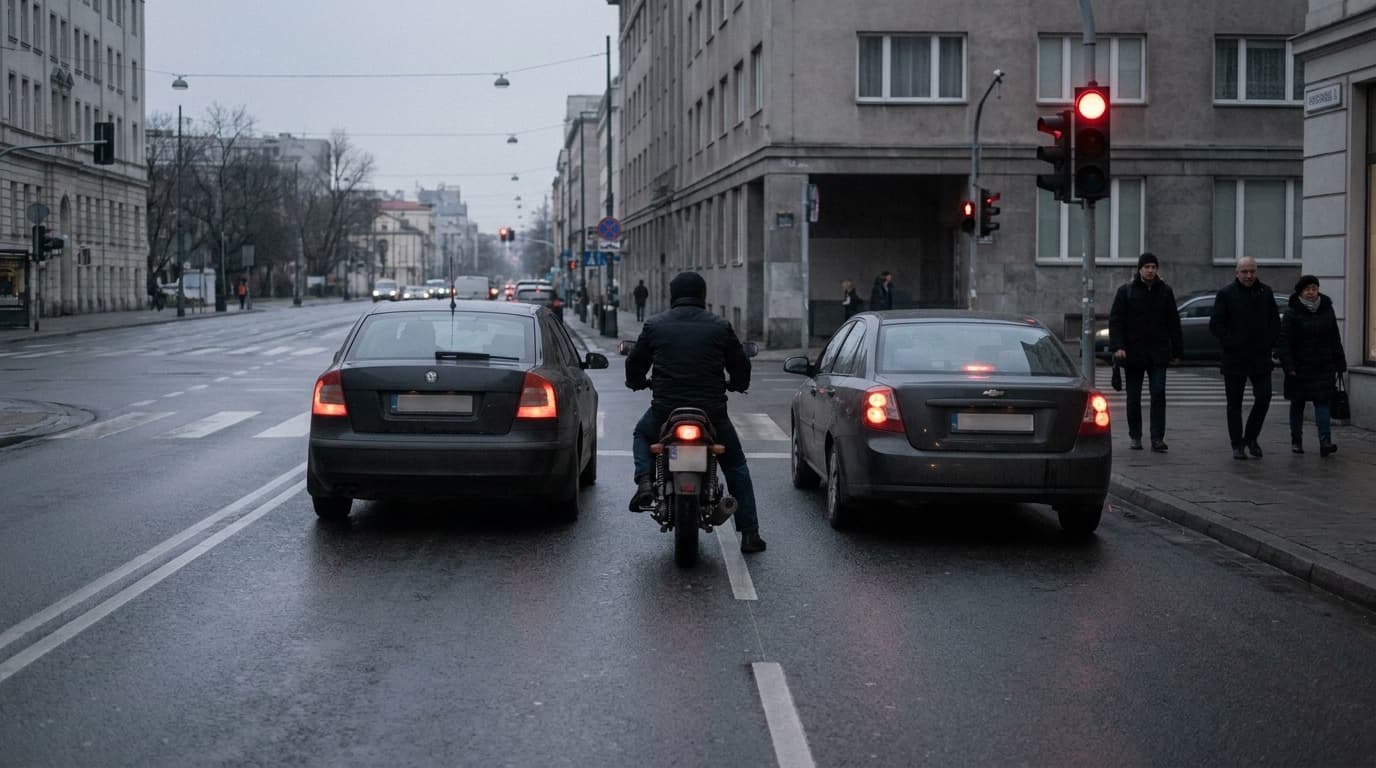
The District of Columbia has no regulation that authorizes lane splitting or lane filtering, and none that bans it by name. The rule that governs instead is 18 DCMR 2201.6(a), which requires every vehicle on a marked multi-lane roadway to be driven "as nearly as practicable entirely within a single lane," and the DC DMV's motorcycle manual tells riders that "Lane sharing is usually prohibited." For how the states handle the same question, see our guide to lane splitting laws by state.
Information last verified on 2026-10-08. This article has not been reviewed by a licensed lawyer.
Jurisdiction scope: This article covers the District of Columbia's traffic regulations in Title 18 of the DC Municipal Regulations (DCMR): the laned-roadway rules in 18 DCMR 2201, the passing rules in 18 DCMR 2202, and the motorcycle section, 18 DCMR 2215. It also describes DC DMV rider guidance, the Metropolitan Police Department's collateral list, the civil fine schedule in 18 DCMR 2600, and the D.C. Code aggressive and reckless driving offenses. It does not cover bus-lane or restricted-lane rules, federal park roads, or the law of Maryland or Virginia.
Where DC's traffic rules live
Most everyday driving rules in the District are regulations, published in Title 18 of the DC Municipal Regulations, rather than sections of the D.C. Code. The rules on moving violations are in chapter 22 of Title 18. That is where any rule on how a motorcycle uses a lane would sit.
The motorcycle section in that chapter, 18 DCMR 2215, deals with matters such as the seat a rider uses, helmets and eye protection. For example, 2215.3 says no person shall operate or ride a motorcycle "unless wearing a protective helmet," and 2215.4 requires goggles or a face shield. Section 2215 contains no rule on lane position, riding between lanes, filtering, or riding two abreast. Sections 2201 through 2203 of the same chapter have no motorcycle-specific lane rule either.
So the District is different from codes that say outright that no person shall operate a motorcycle between lanes of traffic. DC has no such sentence. That does not make splitting lawful; it means the general rules for all vehicles apply.
The single-lane rule that applies to motorcycles
Section 2201.6 sets the rules for any roadway divided into two or more clearly marked lanes. Subsection (a) reads:
"A vehicle shall be driven as nearly as practicable entirely within a single lane and shall not be moved from that lane until the driver has first ascertained that such movement can be made with safety;"
The rule applies to every vehicle and has no motorcycle exception and no exception for stopped or slow traffic. Riding along the line between two lanes, or moving through the gap between rows of cars, sits in tension with a duty to stay "as nearly as practicable entirely within a single lane."
The DC DMV says the same thing in plainer words. Its Motorcycle Operator Manual states: "Cars and motorcycles need a full lane to operate safely. Lane sharing is usually prohibited. Riding between rows of stopped or moving cars in the same lane can leave you vulnerable to the unexpected." The manual is rider guidance and names no regulation, but it shows how the District's licensing agency describes the practice.
Splitting, filtering, shoulders and riding two abreast
| Maneuver | What DC's rules say |
|---|---|
| Lane splitting (riding between lanes of moving traffic) | Not authorized. No regulation names it; the single-lane rule in 18 DCMR 2201.6(a) applies |
| Lane filtering (moving between stopped cars at a light) | Not authorized. 2201.6(a) has no stopped-traffic exception, and passing a vehicle stopped at a crosswalk for a pedestrian is separately barred by 18 DCMR 2221.5 |
| Passing on the right by leaving the pavement | Barred for every vehicle by 18 DCMR 2202.6 |
| Riding two abreast in one lane | 18 DCMR 2215 has no rule on it |
Passing on the right and using the shoulder
Riding past a line of cars on its right is passing on the right, and 18 DCMR 2202.5 limits when a driver may do that:
"The driver of a vehicle may overtake and pass upon the right of another vehicle only under the following conditions: (a) When the vehicle overtaken is making or about to make a left turn; (b) On a street or highway with unobstructed pavement not occupied by parked vehicles and of sufficient width for two (2) or more lines of moving vehicles in each direction; and (c) On a one-way street or upon any roadway upon which traffic is restricted to one direction of movement; where the roadway is free from obstructions and of sufficient width for two (2) or more lines of moving vehicles."
Section 2202.6 adds two limits that matter for riders tempted to use the shoulder or curb edge: a driver may pass on the right "only under conditions permitting such movement in safety," and "In no event shall the passing movement be made by driving off the pavement or main-traveled portion of the roadway."
Penalty for improper lane use in DC
The District's regulations do not create a separate lane-splitting offense, so there is no lane-splitting fine. A ticket tied to lane position would rest on the general lane rules, and other rules can be charged alongside them (see the next section). The Metropolitan Police Department's collateral list, revised in January 2025, includes two entries that cite 18 DCMR 2201.6:

| MPD code | Violation as listed | Collateral |
|---|---|---|
| T058 | Failure to keep in proper [lane], 18 DCMR 2201.6 | $100 |
| T219 | Changing [lanes] without caution, 18 DCMR 2201.6 | $100 |
The collateral list is an MPD schedule, not the regulation itself. The binding amounts are in the District's civil fine schedule, 18 DCMR 2600.1, which lists $100 for failure to stay in the proper lane and $100 for changing lanes without caution. These are civil moving infractions, and under 18 DCMR 2600.2 an infraction in a work zone marked by signs brings an additional fine equal to the original one.
Other charges a rider can face
Aggressive and reckless driving in DC are separate charges with their own elements; whether a particular ride meets them depends on the facts. A stop for lane position can also involve these rules:
| Rule | What it requires | Penalty |
|---|---|---|
| Passing, 18 DCMR 2202.2 | A driver overtaking a vehicle going the same direction must "pass to the left of the vehicle at a safe distance" | $100 civil fine for improper passing (18 DCMR 2600.1) |
| Speed, 18 DCMR 2200.3 | No speed "greater than is reasonable and prudent under the conditions" | $100 civil fine for unreasonable speed (18 DCMR 2600.1) |
| Crosswalk, 18 DCMR 2221.5 | A driver approaching from the rear "shall not overtake and pass" a vehicle stopped at a crosswalk to let a pedestrian cross | $500 civil fine (18 DCMR 2600.1) |
| Aggressive driving, D.C. Code 50-2204.01 | Violating 3 or more listed provisions, including 18 DCMR 2200 and 2201.6, "at the same time or during a single and continuous period of driving within the course of one mile" | $200 fine and 2 points on top of the underlying fines, plus DMV-approved traffic school within 90 days or a license suspension |
| Reckless driving, D.C. Code 50-2201.04(b) | Driving "in any other manner that displays a conscious disregard of the risk of causing property damage or bodily injury to any person" (or 20 mph or more over the limit) | First or second conviction: up to 90 days in jail, a fine of up to $500 (D.C. Code 22-3571.01), or both |
| Aggravated reckless driving, 50-2201.04(c) | Driving with that conscious disregard (or 20 mph or more over the limit) and causing bodily injury to another person, colliding with another motor vehicle, or causing $1,000 or more in property damage | First or second conviction: up to 180 days in jail, a fine of up to $1,000, or both |
If a crash happens
Whether a rider was splitting or filtering can come up after a collision, but it is only one fact in a fault and injury claim. For how fault, insurance and deadlines work in the District, see our guide to District of Columbia motorcycle accident laws. For crashes between other vehicles, see District of Columbia car accident laws.
Related pages
- Lane splitting laws by state
- District of Columbia motorcycle accident laws
- District of Columbia car accident laws
- Maryland lane splitting laws
- Virginia lane splitting laws
This article provides general legal information about District of Columbia law, not legal advice. For advice about a specific situation, contact a lawyer licensed in the District of Columbia or the DC Department of Motor Vehicles.
Last updated: 2026-10-08.
Frequently Asked Questions
Is lane splitting legal in DC?
The District's regulations do not authorize it. No DC traffic regulation names lane splitting, but 18 DCMR 2201.6(a) requires a vehicle on a marked multi-lane roadway to be driven as nearly as practicable entirely within a single lane, and the DC DMV motorcycle manual says lane sharing is usually prohibited.
Is lane filtering legal in Washington, DC?
No DC regulation authorizes filtering between stopped cars. The single-lane rule in 18 DCMR 2201.6(a) has no exception for stopped traffic, and the DC DMV motorcycle manual warns against riding between rows of stopped or moving cars.
What is the fine for lane splitting in DC?
DC has no offense called lane splitting. MPD's collateral list (revised January 2025) lists $100 for failure to keep in proper lane and $100 for changing lanes without caution, both citing 18 DCMR 2201.6, and the civil fine schedule in 18 DCMR 2600.1 sets the same amounts. Heavier charges need more: aggressive driving under D.C. Code 50-2204.01 requires 3 or more listed violations within one mile ($200 and 2 points on top of the other fines), and reckless driving under D.C. Code 50-2201.04 requires driving that displays a conscious disregard of the risk of property damage or bodily injury (up to 90 days, a fine of up to $500, or both, for a first or second conviction).
Can motorcycles ride on the shoulder in DC to pass traffic?
Not to pass on the right. 18 DCMR 2202.6 says that in no event shall a passing movement on the right be made by driving off the pavement or main-traveled portion of the roadway.
Can two motorcycles ride side by side in one lane in DC?
The motorcycle section, 18 DCMR 2215, has no rule on riding two abreast. The general rule in 2201.6(a) speaks of a vehicle being driven within a single lane.
Updates
Independently fact-checked against the cited primary sources
Sources and References
- 18 DCMR 2201 (2201.6, roadways divided into clearly marked lanes)(dcregs.dc.gov).gov
- 18 DCMR chapter 22, Moving Violations (section list)(dcregs.dc.gov).gov
- 18 DCMR 2215 (motorcycles and motor-driven cycles: seat, helmet, eye protection)(dcregs.dc.gov).gov
- DC DMV Motorcycle Operator Manual (2019), Lane Sharing(dmv.dc.gov).gov
- 18 DCMR 2202 (2202.5 and 2202.6, passing on the right)(dcregs.dc.gov).gov
- Metropolitan Police Department Collateral List (revised January 2025)(mpdc.dc.gov).gov
- 18 DCMR 2600, civil fines for motor vehicle moving infractions(dcregs.dc.gov).gov
- 18 DCMR 2200, speed restrictions (2200.3 reasonable and prudent speed)(dcregs.dc.gov).gov
- 18 DCMR 2221 (2221.5, overtaking a vehicle stopped at a crosswalk)(dcregs.dc.gov).gov
- D.C. Code 50-2204.01, aggressive driving(code.dccouncil.gov).gov
- D.C. Code 50-2201.04, reckless and aggravated reckless driving(code.dccouncil.gov).gov
- D.C. Code 22-3571.01, fine amounts by maximum term of imprisonment(code.dccouncil.gov).gov