
Maine
Maine Knife Laws (2026): Concealment, Display, and Exceptions
Independently fact-checked against primary sources (last audited September 18, 2026). · 9 primary sources cited on this page. How we verify our legal content
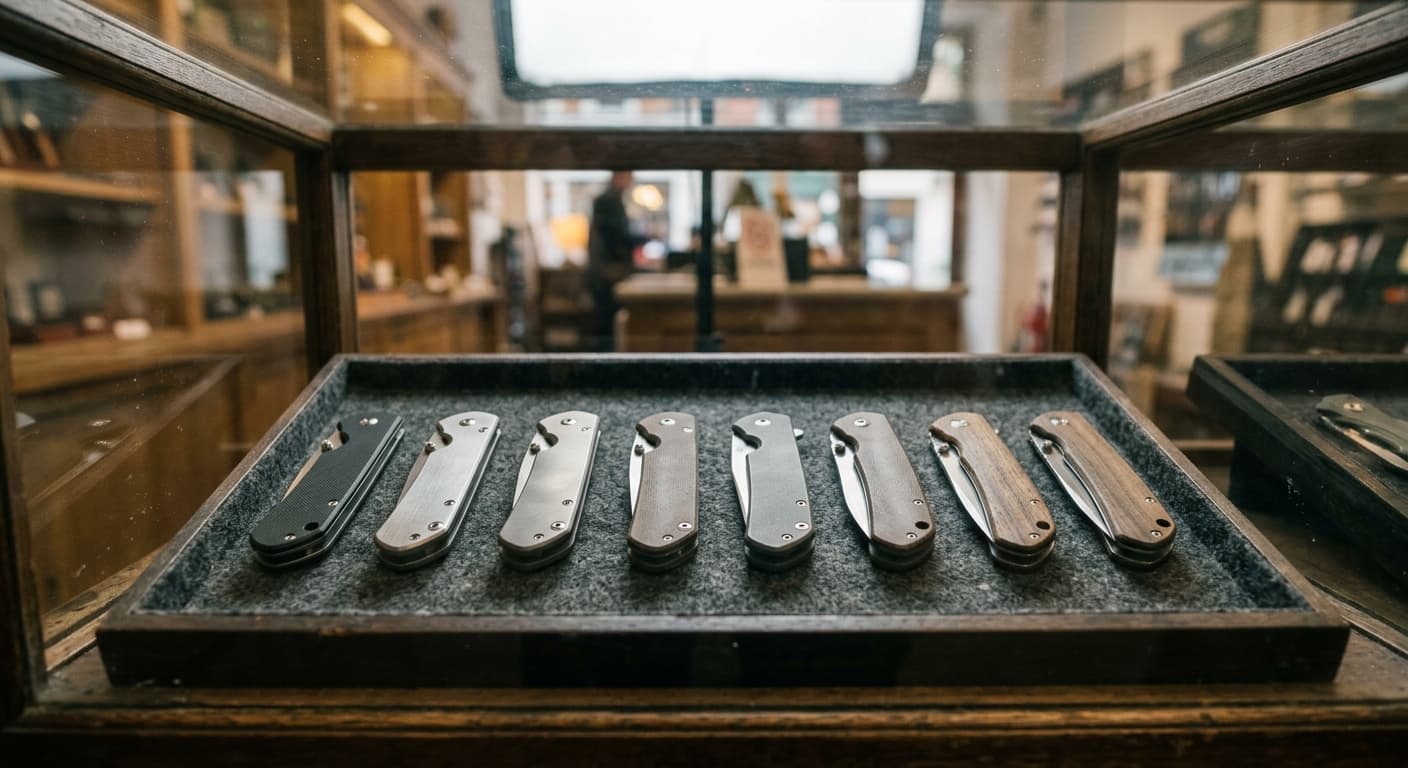
Maine no longer has a standalone dangerous-knives possession statute. A former statute banning possession or distribution of dangerous knives, 17-A M.R.S. § 1055, was repealed in 2015, following an earlier predecessor statute, 17 M.R.S. § 3952, repealed back in 1975. Today, a bowie knife, dirk, or stiletto is regulated in Maine only through the state's general threatening-display-and-concealment statute, which also names other dangerous or deadly weapons.
Jurisdiction scope: This page covers Maine state law only, principally 25 M.R.S. §§ 2001-A, 2004, and 2011. It does not cover Maine's general assault and terrorizing statutes, which can apply to a knife used as a weapon regardless of how it was carried.
Maine's threatening-display and concealment statute
25 M.R.S. § 2001-A(1) provides:
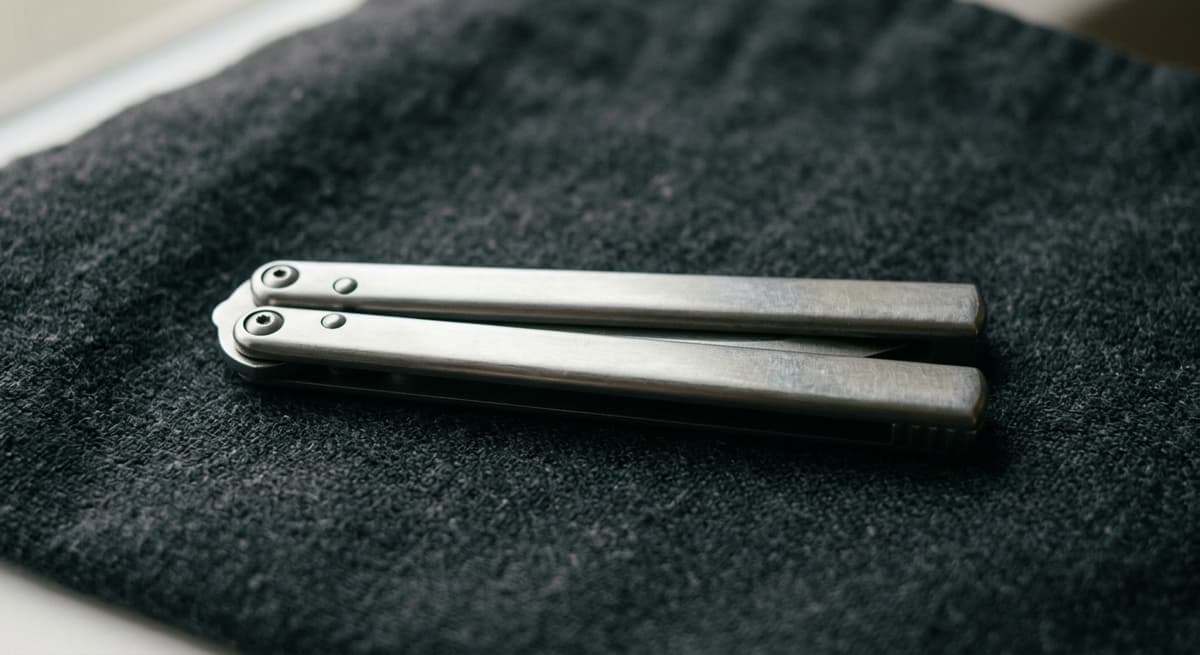
A person may not, unless excepted by a provision of law: A. Display in a threatening manner a firearm, slungshot, knuckles, bowie knife, dirk, stiletto or other dangerous or deadly weapon usually employed in the attack on or defense of a person; or B. Wear under the person's clothes or conceal about the person's person a firearm, slungshot, knuckles, bowie knife, dirk, stiletto or other dangerous or deadly weapon usually employed in the attack on or defense of a person.
This is the operative Maine statute for a bowie knife, dirk, or stiletto. It reaches two distinct kinds of conduct: displaying one of these items in a threatening manner, regardless of whether it is concealed, and separately, wearing or concealing one under clothing, regardless of whether it is displayed threateningly. Openly carrying a listed knife type without a threatening display and without concealment falls outside both clauses. A knife that does not fit the bowie knife, dirk, or stiletto description could still fall under the statute's catch-all for "other dangerous or deadly weapon usually employed in the attack on or defense of a person," a functional description rather than a blade-length threshold.
A violation is a Class D crime under 25 M.R.S. § 2004(2): "A person who violates section 2001-A commits a Class D crime."
The hunting, fishing, and trapping exception
Section 2001-A(2)(C) exempts "Knives used to hunt, fish or trap as defined in Title 12, section 10001" from the concealment ban. This exception is knife-specific, unlike the statute's other listed exceptions, which are framed around firearms: a concealed-handgun permit (paragraph A), an adult 21 or older or a service member 18 to 20 carrying a handgun (paragraph A-1), disabling chemicals (paragraph B), a law enforcement or corrections officer's handgun (paragraph D), a licensed hunter or trapper's firearm (paragraph E), a reciprocal out-of-state handgun permit (paragraph F), and various law enforcement officer exceptions (paragraphs G through I). None of these firearm-focused exceptions separately addresses a bowie knife, dirk, or stiletto beyond the hunting/fishing/trapping knife carve-out in paragraph C.
A repealed history: Maine once had a standalone dangerous-knives statute
Maine's code shows two now-repealed statutes that once regulated knives directly. 17-A M.R.S. § 1055, "Possession or distribution of dangerous knives," was repealed by PL 2015, c. 23, § 1. An earlier predecessor, 17 M.R.S. § 3952, also titled "Dangerous knives," was repealed decades earlier by PL 1975, c. 499, § 24. Neither statute's substantive text remains available in the current code; both are marked repealed with no operative text. Today, Maine's only named-knife-type regulation is the concealment and threatening-display statute discussed above.

A rarely-invoked peace-bond statute
15 M.R.S. § 292, "Persons going armed without reasonable cause," is a still-current statute that lets a court require a person who "goes armed with any dirk, pistol or other offensive and dangerous weapon, without just cause to fear an assault," to post sureties to keep the peace for a term of less than one year, on complaint of a person with cause to fear injury or a breach of the peace. This is a civil peace-bond mechanism, not a criminal offense, and it applies only when the armed person lacks just cause to fear a threat to themselves, their family, or their property.
Where can't you carry a knife in Maine?
Maine has no place-based statute that restricts where an ordinary knife may be carried. Its three place-based weapons statutes, listed below, are each written for a firearm by their own text:

- 20-A M.R.S. § 6552 bans possessing a firearm on public school property or the property of an approved private school, or discharging one within 500 feet of that property, a Class E crime. It reaches only "a firearm"; it does not name a knife.
- 17-A M.R.S. § 1058 makes it a Class D crime to possess "a firearm" in a courthouse, with exceptions for law enforcement and corrections officers, a firearm offered as evidence with prior judicial approval, and courier or security-service employees. It does not name a knife, and holding a concealed-handgun permit is expressly not a defense.
- 17-A M.R.S. § 1059 makes it a Class D crime to possess "a firearm" in a correctional facility or jail, with similar exceptions plus one for a firearm stored out of sight in a locked vehicle on the premises. It does not name a knife.
None of these statutes reaches an ordinary knife. Maine's general threatening-display and concealment statute, 25 M.R.S. § 2001-A, discussed above, still applies at a school, courthouse, or correctional facility the same way it applies anywhere else in the state; these place-based statutes add a separate, firearm-specific offense on top of it, not a knife-specific one.
Does Maine preempt local knife ordinances?
Maine does have a state preemption statute, but it is scoped to firearms, not knives. 25 M.R.S. § 2011, captioned "State preemption," sits in the same Title 25 chapter as § 2001-A above. Subsection 1 provides:
The State intends to occupy and preempt the entire field of legislation concerning the regulation of firearms, components, ammunition and supplies. Except as provided in subsection 3, any existing or future order, ordinance, rule or regulation in this field of any political subdivision of the State is void.
Subsection 2 bars a political subdivision from adopting any rule concerning "the sale, purchase, purchase delay, transfer, ownership, use, possession, bearing, transportation, licensing, permitting, registration, taxation or any other matter pertaining to firearms, components, ammunition or supplies." Subsection 3 preserves a local rule that conforms exactly to state law or regulates firearm discharge, and subsection 5 bars certain emergency-period firearm restrictions. By its own text, section 2011 never uses the word "knife," and its preemption field is firearms, components, ammunition, and supplies. Maine has no knife-specific statewide preemption statute, which means a Maine city or town remains free to regulate knives by local ordinance, unlike the firearms field that section 2011 forecloses to them.
Federal law: what it does and does not reach
Federal law does not ban an individual from owning or carrying a switchblade. The Federal Switchblade Act, 15 U.S.C. §§ 1241 to 1245, instead regulates interstate commerce in switchblade knives, barring their manufacture, sale, transport, or introduction into interstate commerce, and, in 15 U.S.C. § 1245, makes it a federal offense to knowingly possess, manufacture, sell, or import a ballistic knife in or affecting interstate commerce or within federal territorial jurisdiction. 15 U.S.C. § 1244 is captioned "Exceptions" and provides that the chapter "shall not apply to" the knives it lists, exempting them from the Act's prohibitions in 15 U.S.C. §§ 1242-1243 rather than changing the switchblade definition in 15 U.S.C. § 1241(b). Since a 2009 amendment, that exemption in § 1244(5) has covered any knife with a spring, detent, or other closure-bias mechanism that requires hand, wrist, or arm exertion to overcome the bias and assist opening, the carve-out that keeps modern assisted-opening folding knives legal in interstate commerce. A separate exception, § 1244(4), lets a person with only one arm possess and carry a switchblade with a blade three inches or less. None of this changes what Maine allows for ordinary carry; Maine's own concealment and threatening-display statute above governs that question within the state.
Disclaimer: This article provides general legal information about Maine's knife laws as of September 2026. It is not legal advice. Consult a lawyer licensed in Maine for advice about a specific situation. Whether a knife qualifies as a bowie knife, dirk, stiletto, or "other dangerous or deadly weapon usually employed in the attack on or defense of a person" under 25 M.R.S. 2001-A can depend on the specific knife and the circumstances of its display or concealment.
For a state-by-state comparison, see knife laws by state. Maine's self-defense statutes are covered separately on the Maine self-defense laws page.
Statutes cited reflect their in-force version as of 2026-09-18. Last updated: 2026-09-18.
Frequently Asked Questions
Is it legal to carry a knife in Maine?
Openly carrying a knife without a threatening display is not restricted by 25 M.R.S. 2001-A. Concealing a bowie knife, dirk, stiletto, or other dangerous or deadly weapon usually employed in an attack or defense is a Class D crime, unless an exception applies, such as the knife being used for hunting, fishing, or trapping.
Does Maine have a specific law banning dangerous knives?
Not anymore. Maine once had a dedicated dangerous-knives possession and distribution statute, 17-A M.R.S. 1055, repealed in 2015, following an earlier predecessor repealed in 1975. Named knife types are now regulated only through the concealment and threatening-display statute, 25 M.R.S. 2001-A.
Can you carry a hunting knife concealed in Maine?
Yes. 25 M.R.S. 2001-A(2)(C) exempts knives used to hunt, fish, or trap, as defined in 12 M.R.S. 10001, from the concealment ban that otherwise covers a bowie knife, dirk, or stiletto.
Are switchblades illegal in Maine?
Maine's code contains no switchblade-specific statute. A switchblade would be regulated the same way as any other knife under 25 M.R.S. 2001-A, which turns on threatening display or concealment, not on the mechanism by which the blade opens.
Does Maine preempt local knife ordinances?
No. Maine's preemption statute, 25 M.R.S. 2011, declares the State's intent to occupy and preempt the field of firearms, components, ammunition, and supplies regulation, but it never names knives. A Maine city or town remains free to regulate knives by local ordinance.
Where can't you carry a knife in Maine?
Maine has no place-based statute that restricts where an ordinary knife may be carried. Its three place-based weapons statutes, covering school property (20-A M.R.S. 6552), courthouses (17-A M.R.S. 1058), and correctional facilities or jails (17-A M.R.S. 1059), are each written for a firearm by their own text. The general concealment and threatening-display statute, 25 M.R.S. 2001-A, still applies at those locations the same way it applies anywhere else.
Updates
Independently fact-checked against the cited primary sources
Sources and References
- 25 M.R.S. 2001-A - Threatening display of or carrying concealed weapon (bowie knife, dirk, stiletto; hunting/fishing/trapping exception)(legislature.maine.gov).gov
- 25 M.R.S. 2004 - Penalty (Class D crime for violating 2001-A)(legislature.maine.gov).gov
- 17-A M.R.S. 1055 - Possession or distribution of dangerous knives (repealed 2015)(legislature.maine.gov).gov
- 17 M.R.S. 3952 - Dangerous knives (repealed 1975; predecessor statute)(legislature.maine.gov).gov
- 15 M.R.S. 292 - Persons going armed without reasonable cause (peace-bond statute, names dirk)(legislature.maine.gov).gov
- 25 M.R.S. 2011 - State preemption (firearms, components, ammunition, supplies; does not name knives)(legislature.maine.gov).gov
- 20-A M.R.S. 6552 - Firearms on school property (firearm-only, does not name knives)(legislature.maine.gov).gov
- 17-A M.R.S. 1058 - Unauthorized possession of firearm in courthouse (firearm-only)(legislature.maine.gov).gov
- 17-A M.R.S. 1059 - Unauthorized possession of firearm in a correctional facility or jail (firearm-only)(legislature.maine.gov).gov
- 15 U.S.C. 1241-1245 - Federal Switchblade Act, interstate commerce and importation scope(law.cornell.edu)
- 15 U.S.C. 1244 - exceptions, including the 2009 assisted-opening carve-out and the one-arm exception(law.cornell.edu)