
Louisiana
Is Jaywalking Illegal in Louisiana? Crossing Rules and Fines (2026)
Independently fact-checked against primary sources (last audited October 10, 2026). · 16 primary sources cited on this page. How we verify our legal content
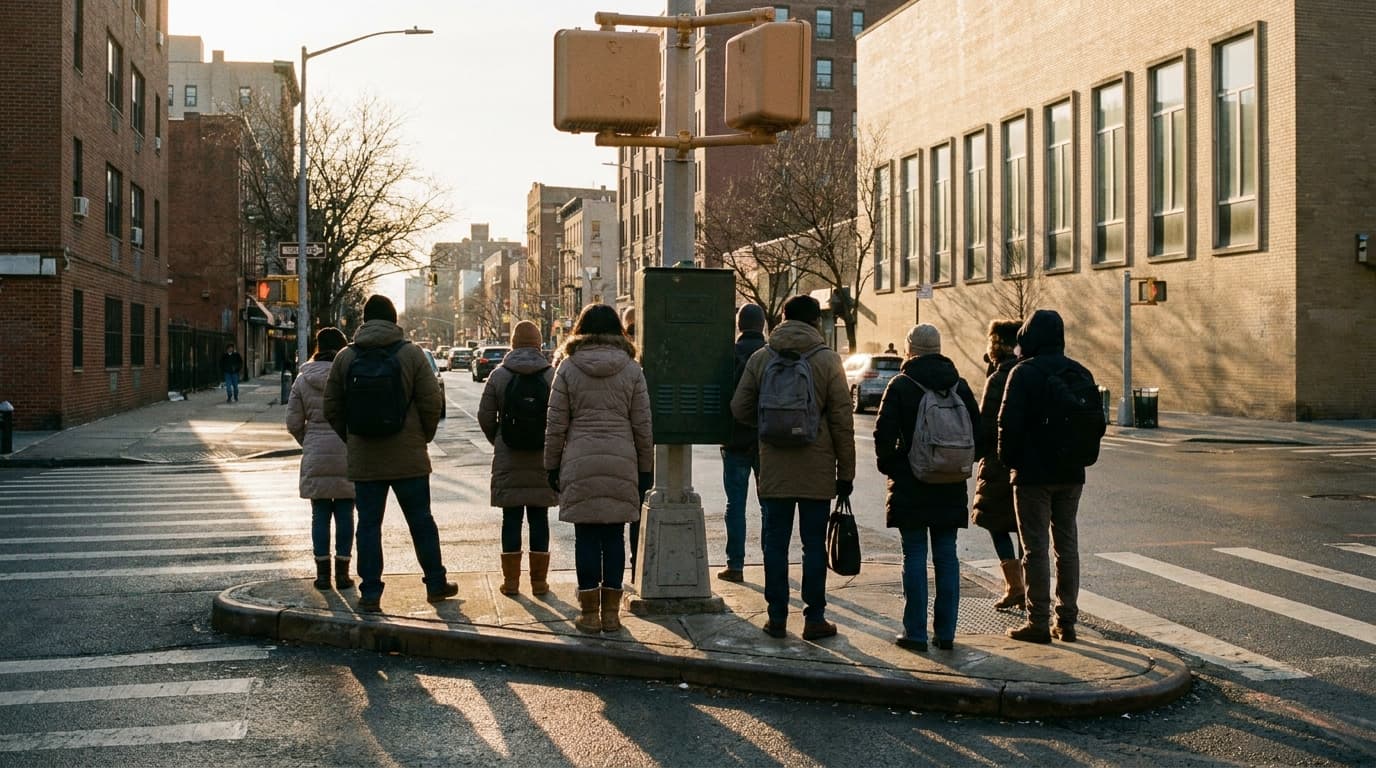
In Louisiana, what most people call jaywalking is governed by La. R.S. 32:213. A pedestrian who crosses anywhere other than a marked crosswalk or an unmarked crosswalk at an intersection must yield the right-of-way to all vehicles, and between two adjacent intersections with working traffic signals a pedestrian may cross only in a marked crosswalk. Louisiana's pedestrian sections (R.S. 32:211 to 32:217) set no fine of their own, so for a citation under state law the general Title 32 penalty in R.S. 32:57 applies: up to $175, up to 30 days in jail, or both for a first violation. A citation under a city ordinance carries the penalty that ordinance sets (R.S. 32:41(C)(1)). To compare other states, see our guide to jaywalking laws by state.
Information last verified on 2026-10-10. This article has not been reviewed by a licensed lawyer.
Jurisdiction scope: This article covers Louisiana state law: the Pedestrians' Rights and Duties part of Title 32 (La. R.S. 32:211 to 32:219), the interstate use restriction in R.S. 32:263(C), the traffic-control signal rules in R.S. 32:232 and 32:233, the crosswalk definition in R.S. 32:1(20), the municipal powers in R.S. 32:41, and the general penalty in R.S. 32:57. It does not cover the text of any parish or city ordinance, local court fine schedules, driver license consequences, injury claims after a crash, or the law of other states.
Is jaywalking illegal in Louisiana?
It depends on where and how you cross. Louisiana's pedestrian rules mix two kinds of rules. One is a duty to yield: crossing outside a crosswalk is allowed, but traffic goes first. The others are flat prohibitions that apply even when the road is empty, such as crossing mid-block between two signalized intersections, walking along a road where a sidewalk exists, or crossing or walking on an interstate.
| Situation | Louisiana rule |
|---|---|
| Crossing outside a marked crosswalk or an unmarked crosswalk at an intersection | Allowed, but the pedestrian must yield the right-of-way to all vehicles (32:213(A)); a municipality may require a crosswalk in a business district or on designated highways it controls (32:41(A)(12)) |
| Crossing between adjacent intersections with traffic-control signals in operation | Only in a marked crosswalk (32:213(B)) |
| Suddenly leaving a curb or other place of safety into the path of a vehicle too close to yield | Barred (32:212(B)) |
| Starting to cross on a flashing or steady DON'T WALK signal | Barred (32:233(2)) |
| Starting to cross on a steady yellow, or entering the roadway on a steady red, with no pedestrian signal directing otherwise | Barred (32:232(2)(b), (3)(d)) |
| Walking along a highway where sidewalks are provided | Unlawful (32:216(A)) |
| Crossing an interstate highway | Unlawful except in an emergency (32:216(C)) |
| Any pedestrian use of an interstate highway, including walking along it | Prohibited (32:263(C)) |
| Standing on a public roadway to solicit a ride, employment, or business from a vehicle occupant | Barred, subject to the exception in subsection B (32:218(A)) |
Crossing outside a crosswalk
The basic rule is R.S. 32:213(A):
"A. Every pedestrian crossing a roadway at any point other than within a marked crosswalk or within an unmarked crosswalk at an intersection shall yield the right-of-way to all vehicles upon the roadway."
This is a duty to yield, not a ban. A pedestrian who crosses mid-block, waits for a gap, and lets vehicles pass first complies with subsection A, subject to the signalized-block rule below and any municipal ordinance. The violation under subsection A is failing to yield.
Subsection A treats an unmarked crosswalk at an intersection the same as a painted one. Louisiana's definition of "crosswalk" in R.S. 32:1(20) covers two things. The first is "That part of a roadway at an intersection included within the connections of the lateral lines of the sidewalks, shoulders, or a combination thereof on opposite sides of the highway measured from the curbs or, in absence of curbs, from the edges of the traversable roadway or if there is neither a sidewalk nor shoulder, a crosswalk is the portion of the roadway at an intersection that would be included within the prolongation of the lateral lines of the sidewalk, shoulder, or both on the opposite side of the street if there were a sidewalk or shoulder." The second is "any portion of a roadway at an intersection or elsewhere distinctly indicated for pedestrian crossing by lines or other markings on the surface." An intersection can therefore have a legal crosswalk with no paint on the road.
Once in a crosswalk, R.S. 32:215 adds a small rule: "Pedestrians shall move, whenever practicable, upon the right half of crosswalks."
Crossing between signalized intersections
Subsection B of 32:213 is the closest Louisiana comes to a flat mid-block ban:
"B. Between adjacent intersections at which traffic-control signals are in operation pedestrians shall not cross at any place except in a marked crosswalk."
It applies only on a stretch of road between two adjacent intersections where traffic-control signals are operating. On that stretch, yielding to traffic is not enough: the crossing must be in a marked crosswalk. On a block without signals at both ends, subsection A's yield rule governs instead.
A separate rule applies everywhere, including in crosswalks. R.S. 32:212(B) provides: "No pedestrian shall suddenly leave a curb or other place of safety and walk or run into the path of a vehicle which is so close that it is impossible for the driver to yield."
City rules and business districts
State law lets municipalities go further on some roads. R.S. 32:41(A) provides that, except as otherwise provided by law, the chapter "shall not be deemed to prevent local municipal authorities, with respect to highways other than state maintained highways within their corporate limits, from adopting ordinances" including:
"(12) Requiring pedestrians to comply strictly with the directions of any official traffic-control signal and prohibiting pedestrians from crossing any roadway within a business district or any designated highways except in a crosswalk;"
The power is limited to highways other than state maintained highways within the municipality's corporate limits. Where a city has adopted such an ordinance, crossing outside a crosswalk there can be cited even if the pedestrian yields. R.S. 32:211 also makes pedestrians subject to signals at intersections "unless otherwise required by local ordinance." Check your city's ordinances and posted signs before crossing mid-block downtown.
Walk signals and traffic lights
R.S. 32:211 ties pedestrians to the signal rules: "Pedestrians shall be subject to traffic-control signals at intersections as provided in R.S. 32:233 unless otherwise required by local ordinance, but at all other places pedestrians shall be accorded the privileges and shall be subject to the restrictions stated in this Part."
Where WALK and DON'T WALK signals are installed, R.S. 32:233 controls:
"(1) Flashing or Steady WALK--A pedestrian facing the signal may proceed across the roadway in the direction of the signal and shall be given the right-of-way by a driver of a vehicle. (2) Flashing or Steady DON'T WALK--No pedestrian shall start to cross the roadway in the direction of the signal, but a pedestrian who has partially completed his crossing on the "Walk" signal shall proceed to a sidewalk or safety island while the "Don't Walk" signal is showing."
The section treats a flashing and a steady DON'T WALK the same way and contains no separate rule for countdown displays.
Where there is no pedestrian signal, the ordinary traffic light governs pedestrians under R.S. 32:232. Unless a pedestrian control signal directs otherwise:
- Facing any green signal, except when the sole green signal is a turn arrow, pedestrians "may proceed across the roadway within any marked or unmarked crosswalk" (32:232(1)(c)).
- Facing a steady yellow, a pedestrian is advised there is insufficient time to cross "and no pedestrian shall then start to cross the roadway" (32:232(2)(b)).
- Facing a steady circular red or red arrow, a pedestrian "shall not enter the roadway" (32:232(3)(d)).
Section 32:232 was last amended by Acts 2024, No. 269, so older summaries of the signal rules may not match the current text. The same section raises the penalty "for red indications or signal infractions" that cause harm: if the violation results in injury to another person, a fine of $200 to $500 and a possible 90-day driver's license suspension, or both; for serious bodily injury, $500 to $1,000, up to six months in jail, or both; and for a death, $1,000 to $5,000, up to one year, or both (32:232(3)(e) to (g)).
Walking along the road and on interstates
R.S. 32:216 covers walking along a road, not just crossing it:
"A. Where sidewalks are provided, it shall be unlawful for any pedestrian to walk along and upon an adjacent highway. B. Where sidewalks are not provided, any pedestrian walking along and upon a highway shall, when practicable, walk only on the left side of the highway or its shoulder, facing traffic which may approach from the opposite direction. C. It shall be unlawful for any pedestrian to cross an interstate highway, except in the case of an emergency."
Subsection C is a flat rule: crossing an interstate on foot is unlawful whether or not traffic is present, with the single exception of an emergency.
A separate section, R.S. 32:263(C), provides: "The use of any Louisiana interstate highway by pedestrians, bicycles, or other non-motorized vehicles is prohibited." The left-side rule in 32:216(B) does not make walking along an interstate lawful.
Standing in the road to flag down drivers is covered separately. R.S. 32:218(A) provides: "Subject to Subsection B of this Section, no person shall stand on a public roadway for the purpose of soliciting a ride, employment, or business from the occupant of any vehicle."
What drivers owe pedestrians
A pedestrian's duty to yield outside a crosswalk sits alongside duties that the same part places on drivers. Where there are no working signals, R.S. 32:212(A) provides:
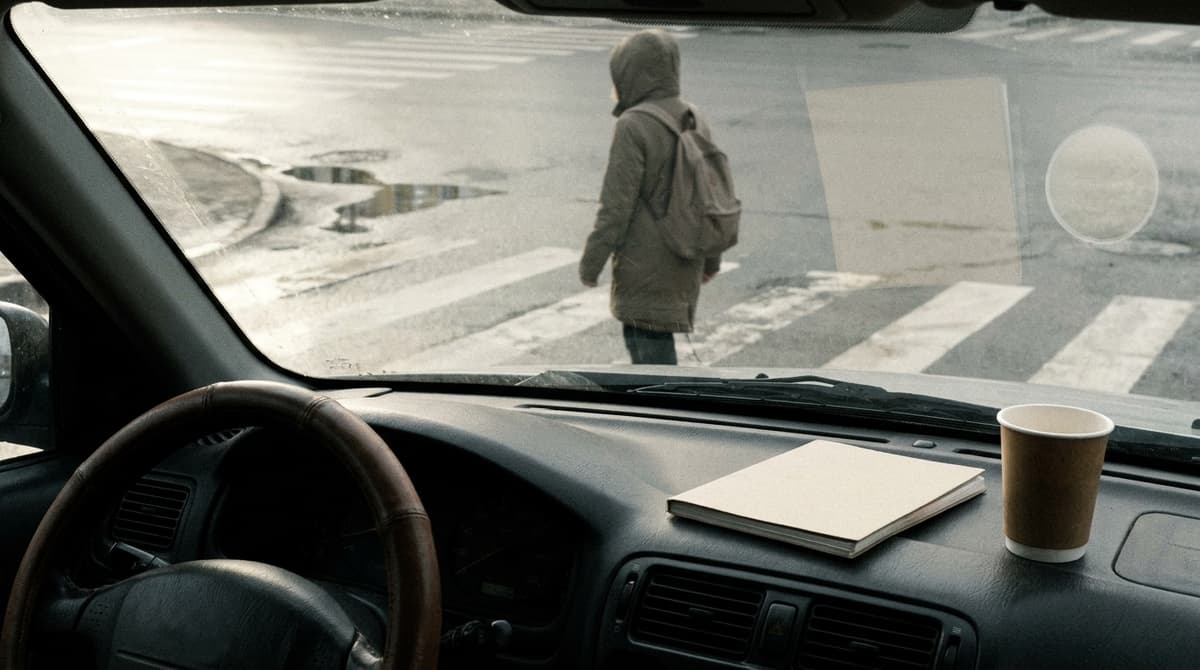
"A. When traffic-control signals are not in place or not in operation, the driver of a vehicle shall stop and yield the right-of-way, to a pedestrian crossing the roadway within a crosswalk when the pedestrian is upon the roadway upon which the vehicle is traveling or the roadway onto which the vehicle is turning."
Subsection A does not apply where the pedestrian is crossing at a point where a pedestrian tunnel or overhead pedestrian crossing has been provided (32:212(D)). The other driver duties:
- When a vehicle is stopped at a marked crosswalk or at an unmarked crosswalk at an intersection to let a pedestrian cross, a driver approaching from the rear "shall not overtake and pass such stopped vehicle" (32:212(C)).
- A pedestrian facing a WALK signal "shall be given the right-of-way by a driver of a vehicle" (32:233(1)).
- On a green signal, vehicles, "including vehicles turning right or left, shall stop and yield the right-of-way to other vehicles and to pedestrians lawfully within the intersection or an adjacent crosswalk" (32:232(1)(a)). Drivers turning on red where permitted, and drivers turning on a flashing yellow arrow, must also yield to pedestrians lawfully within the crosswalk (32:232(3)(c), (4)).
- Every driver "shall exercise due care to avoid colliding with any pedestrian upon any roadway," must sound the horn when necessary, and must exercise proper precaution upon observing any child or any confused or incapacitated person (32:214).
- When a pedestrian guided by a guide dog, carrying a raised or extended white or metallic cane (or white tipped with red), or using a wheelchair is crossing at or near an intersection or crosswalk, the driver must take the precautions needed to avoid injuring or endangering that pedestrian, and must come to a full stop if that is the only way to avoid it (32:217(B)).
- "The driver of a motor vehicle emerging from or entering an alley, private road or driveway, or building shall yield the right-of-way to any pedestrian approaching on any sidewalk extending across such alley, road or driveway, or building entrance" (32:219).
Jaywalking fine and penalty in Louisiana
None of the pedestrian sections, 32:211 through 32:217, states a fine of its own. For a citation under state law, the penalty comes from the general penalty section for Chapter 1 of Title 32, R.S. 32:57(A)(1):
"A.(1) Except as provided in Paragraph (2) of this Subsection and Subsections H and I of this Section, the first violation of the provisions of this Chapter or any regulation of the department, secretary, and commissioner made pursuant thereto shall be punished by a fine of not more than one hundred seventy-five dollars or by imprisonment for not more than thirty days, or both, unless otherwise specifically provided. A subsequent violation shall be punished by a fine of not more than five hundred dollars or by imprisonment for not more than ninety days, or both."
| Violation | Maximum penalty | Source |
|---|---|---|
| First violation | Fine of not more than $175, imprisonment for not more than 30 days, or both | R.S. 32:57(A)(1) |
| Subsequent violation | Fine of not more than $500, imprisonment for not more than 90 days, or both | R.S. 32:57(A)(1) |
| Violation of 32:216 (walking along a highway with sidewalks, crossing an interstate) | Court may order three eight-hour days of community service instead of the 32:57 penalty | R.S. 32:216(D) |
These are statutory ceilings, not a typical ticket amount; the citation or the court handling it shows the amount due. A citation under a city ordinance carries the penalty that ordinance sets. R.S. 32:41(C)(1) provides: "However, the municipal ordinance may provide for such penalties as are consistent with the authority granted by the local municipal charter or state statute under which the municipal government operates and the penalties imposed need not necessarily be consistent with the penalties provided by R.S. 32:57." The higher fines in subsections H and I of 32:57 apply to a person operating a motor vehicle in a work zone or highway safety corridor, not to pedestrians.
For 32:216 violations, subsection D adds an alternative: "Upon conviction of a violation of this Section, a court may order, in lieu of the penalty provisions provided in R.S. 32:57, that the offender perform three eight-hour days of court-approved community service activities, at least half of which shall consist of participation in a litter abatement or collection program."
Paying by mail is a plea. R.S. 32:57(D) requires each governing authority on whose behalf citations are issued under the chapter to "establish a procedure by which alleged offenders may plead guilty or nolo contendere to the alleged offense and pay the fine by mail."
If a pedestrian is hit by a car
Whether a pedestrian was crossing lawfully under 32:213 can come up after a collision, alongside the driver duties in 32:212, 32:214 and 32:232.
Since 2024, R.S. 9:2792.10 bars a pedestrian who is illegally blocking a roadway in violation of 32:216 or another statute from suing a driver for injury or damage, other than from an intentional act, caused when the driver uses force with the vehicle to retreat or escape from the pedestrian and reasonably believes the driver or passengers are in immediate danger of imminent death, serious bodily injury, or serious bodily harm. For how fault and insurance work after a crash, see Louisiana car accident laws. Electric scooter riders follow a separate set of rules, covered in Louisiana e-scooter laws.
Related pages
- Jaywalking laws by state
- Louisiana car accident laws
- Louisiana e-scooter laws
- Texas jaywalking laws
- Mississippi jaywalking laws
This article provides general legal information about Louisiana law, not legal advice. For advice about a specific situation, contact a lawyer licensed in Louisiana.
Last updated: 2026-10-10.
Frequently Asked Questions
Is jaywalking illegal in Louisiana?
Crossing outside a crosswalk is allowed under state law if you yield the right-of-way to all vehicles (La. R.S. 32:213(A)). Between adjacent intersections with traffic-control signals in operation, you may cross only in a marked crosswalk (32:213(B)), and a municipality may require crosswalk use in a business district or on designated highways that are not state maintained (32:41(A)(12)).
What is the fine for jaywalking in Louisiana?
The pedestrian sections of Title 32 (32:211 to 32:217) set no fine of their own, so for a citation under state law the general penalty in La. R.S. 32:57(A)(1) applies: a fine of not more than $175, up to 30 days in jail, or both for a first violation, and not more than $500, up to 90 days, or both for a subsequent violation. These are maximums; the citation or the court handling it shows the amount due. A citation under a city ordinance carries the penalty that ordinance sets, which need not match 32:57 (R.S. 32:41(C)(1)).
Can you go to jail for jaywalking in Louisiana?
The general penalty statute allows it. La. R.S. 32:57(A)(1) authorizes imprisonment for not more than 30 days for a first violation of Chapter 1 of Title 32, and not more than 90 days for a subsequent violation, alone or with a fine, unless otherwise specifically provided. A citation under a city ordinance carries the penalty that ordinance sets (R.S. 32:41(C)(1)).
Can I cross in the middle of the block in Louisiana?
Under state law, yes, if you yield the right-of-way to all vehicles (La. R.S. 32:213(A)), unless the block lies between two adjacent intersections with traffic-control signals in operation; there you may cross only in a marked crosswalk (32:213(B)). A local ordinance may also limit mid-block crossing in a business district on roads the city controls (32:41(A)(12)).
Is it illegal to cross an interstate on foot in Louisiana?
Yes. La. R.S. 32:216(C) makes it unlawful for any pedestrian to cross an interstate highway, except in the case of an emergency. Separately, La. R.S. 32:263(C) prohibits the use of any Louisiana interstate highway by pedestrians, so walking along an interstate is also barred.
Which side of the road should I walk on in Louisiana?
Use the sidewalk where one is provided; walking along an adjacent highway there is unlawful (La. R.S. 32:216(A)). Where there are no sidewalks, walk when practicable only on the left side of the highway or its shoulder, facing oncoming traffic (32:216(B)).
Can I start crossing when the DON'T WALK signal is flashing in Louisiana?
No. Under La. R.S. 32:233(2), no pedestrian shall start to cross on a flashing or steady DON'T WALK signal. A pedestrian who has partly crossed on the Walk signal must proceed to a sidewalk or safety island.
Do drivers have to stop for pedestrians in Louisiana?
Yes, in several situations. Where traffic-control signals are not in place or not operating, a driver must stop and yield to a pedestrian crossing within a crosswalk on the driver's roadway or the one the driver is turning onto (La. R.S. 32:212(A)); a pedestrian on a WALK signal must be given the right-of-way (32:233(1)); turning drivers must yield to pedestrians lawfully in the crosswalk (32:232); and every driver must exercise due care to avoid colliding with any pedestrian (32:214).
Can a Louisiana city have stricter jaywalking rules?
Yes, within limits. La. R.S. 32:41(A)(12) lets municipalities adopt ordinances requiring pedestrians to obey traffic-control signals strictly and barring crossing in a business district or on designated highways except in a crosswalk, but only for highways other than state maintained highways within their corporate limits.
Updates
Independently fact-checked against the cited primary sources
The Law Behind This Article
This article rests on the statutory provisions below, held in our own legal record and retrieved from the official source. Tap a section to read the operative text.
Louisiana Revised Statutes
§ 32:213Crossing at other than crosswalksIn force
A. Every pedestrian crossing a roadway at any point other than within a marked crosswalk or within an unmarked crosswalk at an intersection shall yield the right-of-way to all vehicles upon the roadway. B. Between adjacent intersections at which traffic-control signals are in operation pedestrians shall not cross at any place except in a marked crosswalk.
Official text (excerpt) · last checked 2026-07-29 · Read the full text in our law library · Verify at legis.la.gov
§ 32:212Pedestrians right-of-way in crosswalksIn force
A. When traffic-control signals are not in place or not in operation, the driver of a vehicle shall stop and yield the right-of-way, to a pedestrian crossing the roadway within a crosswalk when the pedestrian is upon the roadway upon which the vehicle is traveling or the roadway onto which the vehicle is turning. B. No pedestrian shall suddenly leave a curb or other place of safety and walk or run into the path of a vehicle which is so close that it is impossible for the driver to yield. C. Whenever any vehicle is stopped at a marked crosswalk or at any unmarked crosswalk at an intersection to permit a pedestrian to cross the roadway, the driver of any other vehicle approaching from the rear shall not overtake and pass such stopped vehicle. D. Subsection A of this Section shall not apply where the pedestrian is crossing a roadway at a point where a pedestrian tunnel or overhead pedestrian crossing has been provided.
Official text (excerpt) · last checked 2026-07-29 · Read the full text in our law library · Verify at legis.la.gov
§ 32:232Traffic-control signalsIn force
Whenever traffic is controlled by traffic-control signals exhibiting different colored lights, or colored lighted arrows, successively one at a time or in combination, only the colors green, red, and yellow shall be used, except for special pedestrian signals carrying a word legend, and said lights shall indicate and apply to drivers of vehicles and pedestrians as follows: (1) GREEN indication: (a) Vehicular traffic facing a circular green signal may proceed straight through or turn right or left unless a sign at such place prohibits either such turn. But vehicular traffic, including vehicles turning right or left, shall stop and yield the right-of-way to other vehicles and to pedestrians lawfully within the intersection or an adjacent crosswalk at the time such signal is exhibited. (b) Vehicular traffic facing a green arrow signal, shown alone or in combination with another indication, may cautiously enter the intersection only to make the movement indicated by such arrow, or such other movement as is permitted by other indications shown at the same time.
Official text (excerpt) · last checked 2026-07-29 · Read the full text in our law library · Verify at legis.la.gov
§ 32:1DefinitionsIn forcecited in 2 of our articles
When used in this Chapter, the following terms have the following meanings unless the context clearly indicates otherwise: (1) "Authorized emergency vehicle" means a vehicle of a fire department, a vehicle of the department's weights and standards police force, a police vehicle, a private vehicle, a privately owned vehicle belonging to members of an organized volunteer fire department or fire district when so designated or authorized by the fire chief of that fire department or fire district, an industrial-owned vehicle assigned to members of a fire department or fire district when so designated or authorized by the fire chief of that fire department or fire district, a vehicle parked or stopped by elevator repair or construction personnel while responding to an elevator emergency, such as ambulances and emergency medical response vehicles certified by the Louisiana Department of Health that are operated by certified ambulance services, vehicles used for coroner investigations as designated by the parish coroner, and emergency vehicles of municipal departments or public service corporations as are designated or authorized by the secretary of the Department of Transportation and…
Official text (excerpt) · last checked 2026-07-29 · Read the full text in our law library · Verify at legis.la.gov
Also relied on in: Is Lane Splitting Legal in Louisiana? (2026 Law and Penalty)
Search our full record of US law — 2.1 million sections, every state + federal →
Sources and References
- La. R.S. 32:213, Crossing at other than crosswalks(legis.la.gov).gov
- La. R.S. 32:57, general penalty for Chapter 1 violations(legis.la.gov).gov
- La. R.S. 32:1, Definitions (crosswalk)(legis.la.gov).gov
- La. R.S. 32:215, Pedestrians to use right half of crosswalks(legis.la.gov).gov
- La. R.S. 32:212, Pedestrians right-of-way in crosswalks(legis.la.gov).gov
- La. R.S. 32:41, Power of local municipal authorities; exception(legis.la.gov).gov
- La. R.S. 32:211, Pedestrians subject to traffic regulations(legis.la.gov).gov
- La. R.S. 32:233, Pedestrian-control signals(legis.la.gov).gov
- La. R.S. 32:232, Traffic-control signals(legis.la.gov).gov
- La. R.S. 32:216, Pedestrians on highways or interstate highways(legis.la.gov).gov
- La. R.S. 32:218, Pedestrians soliciting rides or business(legis.la.gov).gov
- La. R.S. 32:214, Drivers to exercise due care(legis.la.gov).gov
- La. R.S. 32:217, Blind and incapacitated pedestrians; use of canes; persons in wheelchairs; vehicles(legis.la.gov).gov
- La. R.S. 32:263, Special restrictions on use of Louisiana interstate highways(legis.la.gov).gov
- La. R.S. 32:219, Pedestrians right-of-way on sidewalks(legis.la.gov).gov
- La. R.S. 9:2792.10, Limitation of action; pedestrian blocking roadway(legis.la.gov).gov