
Kentucky
Is Jaywalking Illegal in Kentucky? Crossing Rules and Fines (2026)
Independently fact-checked against primary sources (last audited October 10, 2026). · 11 primary sources cited on this page. How we verify our legal content
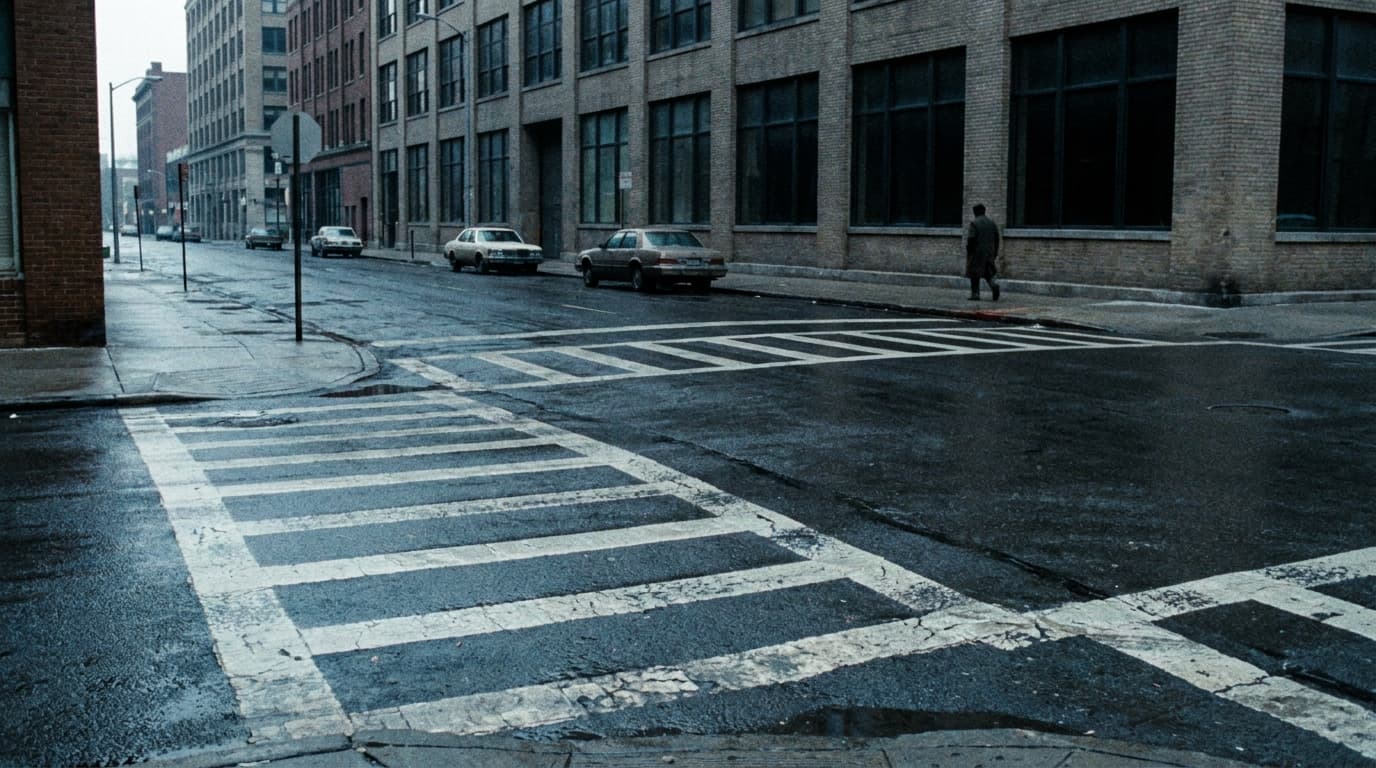
Kentucky lets a pedestrian cross outside a crosswalk only by yielding the right-of-way to all vehicles (KRS 189.570(6)(a)). Inside city limits, crossing between adjacent intersections with working traffic signals is allowed only in a marked crosswalk (189.570(6)(c)), and diagonal crossing of an intersection is barred unless traffic control devices authorize it (189.570(10)). A violation of 189.570 is punished by a fine of $20 to $100 for each offense (KRS 189.990(1)(a)). For how other states handle the same question, see our guide to jaywalking laws by state.
Information last verified on 2026-10-10. This article has not been reviewed by a licensed lawyer.
Jurisdiction scope: This article covers Kentucky state law: the pedestrian section KRS 189.570, the signal rules in KRS 189.338, the stationary-pedestrian section KRS 189.572 created by 2026 Ky. Acts ch. 32 (HB 189), and the fine range in KRS 189.990(1)(a). It also covers court costs in KRS 24A.175. It does not cover city or county ordinances, injury claims after a crash, or the law of other states.
Is jaywalking illegal in Kentucky?
Crossing outside a crosswalk is lawful in Kentucky when the pedestrian yields to traffic. Several rules are flat prohibitions. For crossings, the main two are crossing between adjacent signalized intersections outside a marked crosswalk, which applies within city limits, and crossing an intersection diagonally without authorization from traffic control devices. Entering the roadway against a steady red with no pedestrian signal, and the further rules in the table below, are also outright bans.
| Situation | Kentucky rule | Fine under 189.990(1)(a) |
|---|---|---|
| Crossing outside a marked crosswalk or an unmarked crosswalk at an intersection | Allowed, but the pedestrian must yield to all vehicles (189.570(6)(a)) | $20 to $100 |
| Crossing where a pedestrian tunnel or overhead crossing is provided | Pedestrian must yield to all vehicles (189.570(6)(b)) | $20 to $100 |
| Crossing between adjacent intersections with traffic control signals in operation, within city limits | Only in a marked crosswalk (189.570(6)(c)) | $20 to $100 |
| Crossing an intersection diagonally | Only where official traffic control devices authorize it (189.570(10)) | $20 to $100 |
| Suddenly leaving a curb into the path of a vehicle so close as to be an immediate hazard | Barred (189.570(9)) | $20 to $100 |
| Walking along a roadway next to a usable sidewalk | Unlawful (189.570(12)) | $20 to $100 |
| Entering the roadway facing a steady red signal alone, with no pedestrian signal directing otherwise | Barred (189.338) | $20 to $100 |
| Starting to cross on a steady yellow, with no pedestrian signal directing otherwise | Barred (189.338) | $20 to $100 |
| Walking in a crosswalk | On the right half whenever practicable (189.570(11)) | $20 to $100 |
| Walking or being on a highway while impaired by alcohol or drugs to a degree that makes the pedestrian a hazard | Barred except on a sidewalk (189.570(16)) | $20 to $100 |
| Going past a bridge signal, gate or barrier after a bridge operation signal, or through or around a closed railroad or bridge crossing gate | Barred (189.570(17)-(18)) | $20 to $100 |
| Standing in or on the roadway to solicit a ride, employment or business; on a highway to solicit contributions unless designated by a traffic control device, warning signal, or emergency or public safety vehicle with flashing lights | Barred (189.570(19)-(21)) | $20 to $100 |
| An emergency vehicle approaching with flashing red or blue lights and an audible signal | Pedestrian must yield the right-of-way (189.570(24)) | $20 to $100 |
The fine column applies the range in KRS 189.990(1)(a), which covers violations of "189.300 to 189.360" (the range that includes 189.338) and "189.570 to 189.590."
Crossing outside a crosswalk in Kentucky
KRS 189.570(6) sets the crossing rules:

"(6) (a) Every pedestrian crossing a roadway at a point other than within a marked crosswalk or within an unmarked crosswalk at an intersection shall yield the right-of-way to all vehicles upon the roadway. (b) Any pedestrian crossing a roadway at a point where a pedestrian tunnel or overhead pedestrian crossing has been provided shall yield the right-of-way to all vehicles upon the roadway. (c) Between adjacent intersections within the city limits of every city at which traffic control signals are in operation, pedestrians shall not cross at any place except in a marked crosswalk."
KRS 189.010(2) defines a crosswalk as "That part of a roadway at an intersection within the connections of the lateral lines of the sidewalks on opposite sides of the highway," or any portion of a roadway at an intersection or elsewhere "distinctly indicated for pedestrian crossing by lines or other markings on the surface." An unmarked crosswalk therefore exists at an intersection where sidewalks on opposite sides connect; at an intersection with no sidewalks and no markings, a crossing pedestrian falls under the yield rule in 189.570(6)(a).
Paragraphs (a) and (b) are duties to yield, so a mid-block crossing is lawful where the pedestrian lets traffic pass first. Paragraph (c) is a prohibition, and its words limit it: it applies "within the city limits of every city" between adjacent intersections where signals are operating. Outside city limits, paragraph (c) does not reach the crossing, and the yield rule in (a) governs.
Two more rules in the same section apply to crossings:
"(9) A pedestrian shall not suddenly leave a curb or other place of safety and walk or run into the path of a vehicle which is so close as to constitute an immediate hazard. (10) A pedestrian shall not cross a roadway intersection diagonally unless authorized by official traffic control devices; and, when authorized to cross diagonally, pedestrians shall cross only in accordance with the official traffic control devices pertaining to such crossing movements."
The current text of 189.570 took effect July 15, 2026, after 2026 Ky. Acts ch. 32, sec. 2 amended it. Before that, the section's last amendment was in 1978.
Traffic lights and pedestrian signals in Kentucky
KRS 189.570(1) and (2) bind pedestrians to the devices on the street: "(1) Pedestrians shall obey the instruction of any official traffic control devices specifically applicable to them, unless otherwise directed by a police officer or other officially designated persons. (2) Pedestrians shall be subject to traffic and pedestrian control signals as provided in KRS 189.231 and 189.338."
Where no pedestrian signal directs otherwise, the ordinary traffic light controls under KRS 189.338:
- Steady yellow: pedestrians "are thereby advised that there is insufficient time to cross the roadway before a red indication is shown, and no pedestrian shall then start to cross the roadway."
- Steady red: "Unless otherwise directed by a pedestrian-control signal, pedestrians facing a steady red signal alone shall not enter the roadway."
KRS 189.231, the other section 189.570(2) names, lets the secretary of transportation install traffic control devices and restrict or regulate traffic on state-maintained highways, and requires drivers to obey applicable devices. For a Walk or Don't Walk signal, the pedestrian's duty comes from 189.570: subsection (2) makes pedestrians subject to "traffic and pedestrian control signals," and subsection (1) requires them to obey any official traffic control device "specifically applicable to them." The yellow and red rules above in 189.338 give way where a pedestrian-control signal directs otherwise.
Walking along the road in Kentucky
KRS 189.570 sets where pedestrians walk:
"(12) Where a sidewalk is provided and its use is practicable, it shall be unlawful for any pedestrian to walk along and upon an adjacent roadway. (13) Where a sidewalk is not available, any pedestrian walking along and upon a highway shall walk only on a shoulder, as far as practicable from the edge of the roadway. (14) Where neither a sidewalk nor a shoulder is available, any pedestrian walking on or along a highway shall walk as near as practicable to an outside edge of the roadway, and, if on a two-way roadway shall walk only on the left side of the roadway. (15) Except as otherwise provided in this chapter, any pedestrian upon a roadway shall yield the right-of-way to all vehicles upon the roadway."
Standing in a state highway right-of-way (new in 2026)
A separate rule took effect July 15, 2026. KRS 189.572, created by 2026 Ky. Acts ch. 32 (HB 189), sec. 1, provides:
"(2) Except as provided in subsection (3) or (4) of this section, a person shall not sit, kneel, recline, stand, or remain physically stationary in any portion of a state-maintained right-of-way that is not designated for pedestrian use."
This is not a crossing rule. It reaches people who stop and stay in a part of a state-maintained right-of-way not meant for pedestrians. Subsection (3) lists people it does not apply to, including "Persons located within a pedestrian-designated area such as a sidewalk, marked crosswalk, or transit stop," and subsection (4) lets a local government adopt an ordinance authorizing limited exceptions, granted through a clear process, under objective criteria, limited in duration and scope, with records kept of each authorization.
The same act added KRS 189.570(23): "A person shall not occupy any portion of a state-maintained right-of-way in violation of KRS 189.572." A violation is therefore a violation of 189.570, fined $20 to $100 for each offense under KRS 189.990(1)(a).
What drivers owe pedestrians in Kentucky
A pedestrian's duty to yield outside a crosswalk does not erase the driver's duties. KRS 189.570(4) provides: "When traffic control signals are not in place or in operation the operator of a vehicle shall yield the right-of-way, slowing down or stopping if need be to so yield, to a pedestrian crossing the roadway upon which the vehicle is traveling, or when the pedestrian is approaching so closely from the opposite half of the roadway as to be in danger."
Due care everywhere. Under 189.570(6)(d), "Notwithstanding other provisions of this subsection or the provisions of any local ordinance, every operator of a vehicle shall exercise due care to avoid colliding with any pedestrian and shall give warning by sounding the horn when necessary and shall exercise proper precaution upon observing a child or an obviously confused or incapacitated person upon a roadway."
At signals. Drivers on a circular green or a green arrow, and drivers turning on a steady red, must yield to pedestrians lawfully within the intersection or an adjacent crosswalk, or lawfully proceeding through the intersection (189.338(1)(a)-(b), (3)(a)1-2).
Other duties. A driver may not pass a vehicle stopped at a marked or unmarked crosswalk to let a pedestrian cross (189.570(5)), must yield to any pedestrian on a sidewalk (189.570(8)), and must yield to "any blind pedestrian carrying a clearly visible white cane or accompanied by an assistance dog" (KRS 189.575).
A driver's violation of 189.570 or 189.575 falls under the same fine range in 189.990(1)(a), as does a violation of 189.338.
Jaywalking ticket fine in Kentucky
Kentucky sets a range rather than a fixed amount. KRS 189.990(1)(a) provides that any person who violates the listed provisions, including "189.570 to 189.590, except 189.580(1)(b) or (6)(b)," "shall be fined not less than twenty dollars ($20) nor more than one hundred dollars ($100) for each offense." The same clause covers "189.300 to 189.360," which includes the signal rules in 189.338.

Because the penalty is a fine only, the offense is a violation under KRS 431.060(3): "Offenses punishable by a fine only or by any other penalty not cited herein, whether in combination with a fine or not, are violations."
Court costs are added on conviction. Under KRS 24A.175(1), "Court costs for a criminal case in the District Court shall be one hundred dollars ($100)," and under 24A.175(3) taxing them on conviction is mandatory unless the court finds the defendant is a poor person unable to pay. A $20 minimum fine therefore comes with $100 in court costs.
Where a citation is marked payable, the person may pay the minimum fine plus court costs before trial instead of appearing, and "Prepayment of the fine and costs shown on the citation or accompanying schedule shall be considered as a plea of guilty for all purposes" (KRS 431.452(3)(c)-(d)).
The current version of 189.990 took effect July 15, 2026.
Kentucky's pedestrian sections, KRS 189.570 and 189.572, contain no limit on when police may stop a pedestrian for these violations.
Local jaywalking rules in Kentucky
City and county ordinances are outside the scope of this page; the local code is the place to check the rule on your street. Keep in mind that the state's signalized-block rule in 189.570(6)(c) already applies only within city limits.
If a pedestrian is hit by a car in Kentucky
Whether a pedestrian yielded as 189.570(6)(a) requires can come up after a collision, alongside the driver's duties in 189.570(4) and (6)(d). For how fault, insurance and filing deadlines work in a crash claim, see Kentucky car accident laws. Electric scooter riders follow a different set of rules, covered in Kentucky e-scooter laws.
Related pages
This article provides general legal information about Kentucky law, not legal advice. For advice about a specific situation, contact a lawyer licensed in Kentucky.
Last updated: 2026-10-10.
Frequently Asked Questions
Is jaywalking illegal in Kentucky?
Crossing outside a crosswalk is allowed if you yield the right-of-way to all vehicles (KRS 189.570(6)(a)). Within city limits, you may cross between adjacent signalized intersections only in a marked crosswalk (189.570(6)(c)), and diagonal crossing of an intersection is barred unless traffic control devices authorize it (189.570(10)).
What is the fine for jaywalking in Kentucky?
A violation of KRS 189.570 carries a fine of not less than $20 nor more than $100 for each offense under KRS 189.990(1)(a). District Court costs of $100 are added on conviction (KRS 24A.175), and prepaying a citation marked payable counts as a plea of guilty (KRS 431.452(3)(d)).
Can you cross on a red light as a pedestrian in Kentucky?
Unless a pedestrian-control signal directs otherwise, a pedestrian facing a steady red signal alone shall not enter the roadway, and on a steady yellow no pedestrian shall start to cross (KRS 189.338).
Is it illegal to stand on a highway median or shoulder in Kentucky?
Since July 15, 2026, KRS 189.572(2) bars sitting, kneeling, reclining, standing or remaining physically stationary in any portion of a state-maintained right-of-way not designated for pedestrian use. Exceptions in subsection (3) include people within a sidewalk, marked crosswalk or transit stop.
Which side of the road should you walk on in Kentucky?
Use the sidewalk where one is provided and practicable, otherwise the shoulder. With neither, walk near the outside edge and, on a two-way road, only on the left side (KRS 189.570(12)-(14)).
Do drivers have to yield to pedestrians in Kentucky?
Where traffic control signals are not in place or in operation, a driver must yield the right-of-way to a pedestrian crossing the roadway, slowing down or stopping if needed (KRS 189.570(4)). Every driver must also exercise due care to avoid colliding with any pedestrian, notwithstanding any local ordinance (189.570(6)(d)), and drivers on a green signal must yield to pedestrians lawfully within the intersection or an adjacent crosswalk (KRS 189.338(1)(a)).
Updates
Independently fact-checked against the cited primary sources
The Law Behind This Article
This article rests on the statutory provisions below, held in our own legal record and retrieved from the official source. Tap a section to read the operative text.
Kentucky Revised Statutes, Chapter 189: TRAFFIC REGULATIONS -- VEHICLE EQUIPMENT AND STORAGE
§ 189.570PedestriansIn force
(1) Pedestrians shall obey the instruction of any official traffic control devices specifically applicable to them, unless otherwise directed by a police officer or other officially designated persons. (2) Pedestrians shall be subject to traffic and pedestrian control signals as provided in KRS 189.231 and 189.338. (3) At all other places, pedestrians shall be accorded the privileges and shall be subject to the restrictions stated in this chapter. (4) When traffic control signals are not in place or in operation the operator of a vehicle shall yield the right-of-way, slowing down or stopping if need be to so yield, to a pedestrian crossing the roadway upon which the vehicle is traveling, or when the pedestrian is approaching so closely from the opposite half of the roadway as to be in danger. (5) Whenever any vehicle is stopped at a marked crosswalk or at any unmarked crosswalk at an intersection, to permit a pedestrian to cross the roadway, the operator of any other vehicle approaching from the rear shall not overtake and pass the stopped vehicle.
Official text (excerpt) · last checked 2026-07-29 · Read the full text in our law library · Verify at apps.legislature.ky.gov
§ 189.338Limitation of colored lights used in traffic-control signals -- Rules for vehicular and pedestrian traffic controlled by traffic-control signals -- Affirmative defense for motorcyclistsIn force
Whenever traffic is controlled by traffic-control signals exhibiting different colored lights or colored lighted arrows, successively one at a time or in combination, only the colors green, red, and yellow shall be used, except for special pedestrian signals carrying a word legend or symbolic message, and said lights shall indicate and apply to drivers of vehicles and pedestrians as follows: (1) Green indication. (a) Vehicular traffic facing a circular green signal may proceed straight through or turn right or left unless a sign at such place prohibits either such turn. But vehicular traffic, including vehicles turning right or left, shall yield the right- of-way to other vehicles and to pedestrians lawfully within the intersection or an adjacent crosswalk at the time such signal is exhibited. (b) Vehicular traffic facing a green arrow signal, shown alone or in combination with another indication, may cautiously enter the intersection only to make the movement indicated by such arrow, or such other movement as is permitted by other indications shown at the same time.
Official text (excerpt) · last checked 2026-07-29 · Read the full text in our law library · Verify at apps.legislature.ky.gov
Search our full record of US law — 2.1 million sections, every state + federal →
Sources and References
- KRS 189.570 (pedestrians)(apps.legislature.ky.gov).gov
- KRS 189.990 (penalties)(apps.legislature.ky.gov).gov
- KRS 189.338 (traffic-control signals; rules for vehicular and pedestrian traffic)(apps.legislature.ky.gov).gov
- 2026 Ky. Acts ch. 32 (HB 189)(apps.legislature.ky.gov).gov
- KRS 189.572 (persons stationary in state-maintained right-of-way)(apps.legislature.ky.gov).gov
- KRS 189.231 (state-maintained highways; traffic control devices)(apps.legislature.ky.gov).gov
- KRS 24A.175 (court costs for criminal cases in District Court)(apps.legislature.ky.gov).gov
- KRS 431.452 (prepayment of fines)(apps.legislature.ky.gov).gov
- KRS 431.060 (felonies, misdemeanors and violations defined)(apps.legislature.ky.gov).gov
- KRS 189.575 (yielding right-of-way to blind pedestrian)(apps.legislature.ky.gov).gov
- KRS 189.010 (definitions; crosswalk)(apps.legislature.ky.gov).gov