
Connecticut
Is Jaywalking Illegal in Connecticut? Crossing Rules and Fines (2026)
Independently fact-checked against primary sources (last audited October 10, 2026). · 16 primary sources cited on this page. How we verify our legal content
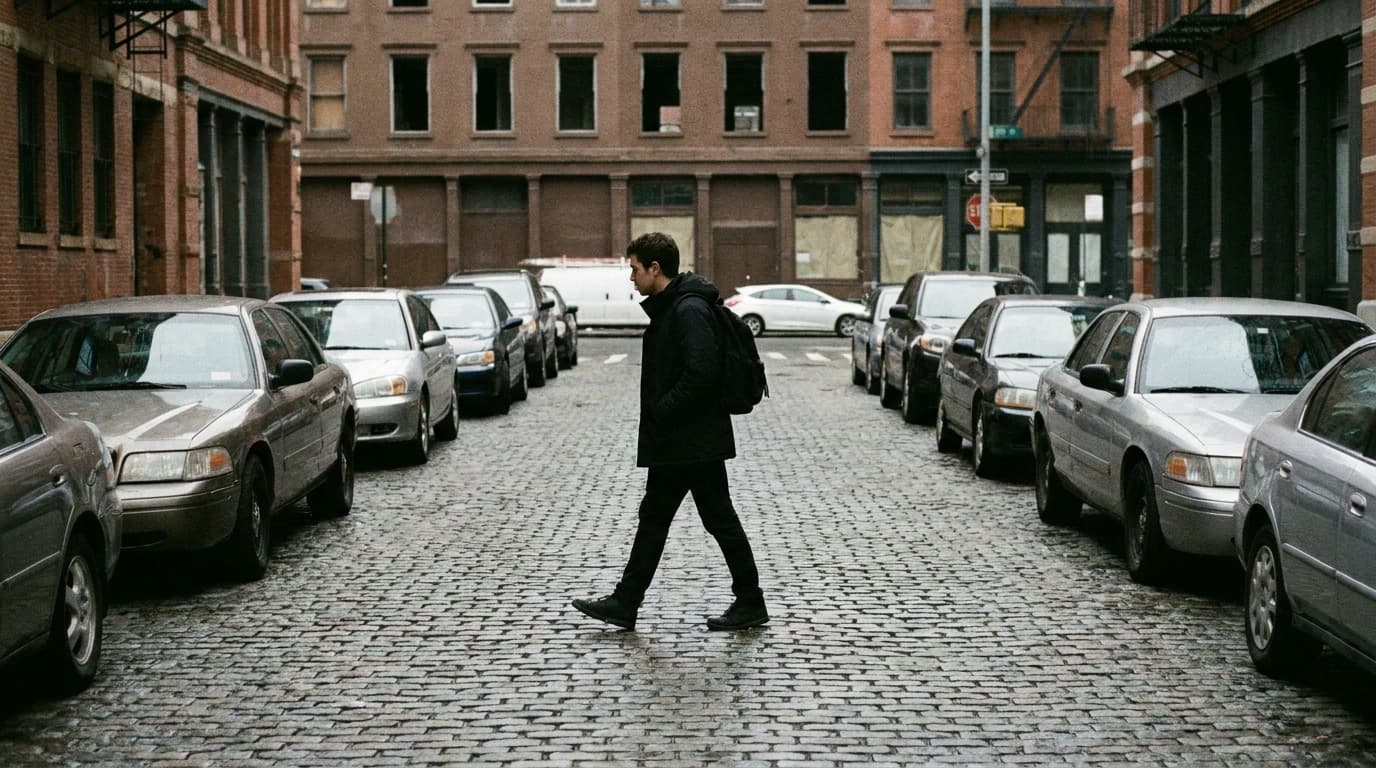
Connecticut does not ban every crossing outside a crosswalk, but it restricts it. Under Conn. Gen. Stat. § 14-300b, a pedestrian crossing anywhere other than a marked or unmarked crosswalk must yield the right of way to each vehicle, and may not cross between adjacent intersections with working signals except within a marked crosswalk. Section 14-300(b) separately bars crossing against a red or Stop signal. A violation of § 14-300b is an infraction, and a second pedestrian statute, § 53-182, carries a fine of $35 to $50 for a pedestrian who uses a street negligently or ignores a signal. For how other states compare, see our guide to jaywalking laws by state.
Information last verified on 2026-10-10. This article has not been reviewed by a licensed lawyer.
Jurisdiction scope: This article covers Connecticut state law: the pedestrian and crosswalk sections of chapter 249 of the General Statutes (§§ 14-297 to 14-300, 14-300b to 14-300e and 14-300i), the pedestrian infractions in §§ 53-181 and 53-182, the Judicial Branch's pedestrian fine amounts, and the infraction fine and payment rules in §§ 51-164m and 51-164n. It does not cover city or town ordinances, the full Judicial Branch fine schedule, injury claims after a crash, or the law of other states.
Is jaywalking illegal in Connecticut?
It depends on where and how you cross. Connecticut's statutes mix a duty to yield with a few flat prohibitions. Crossing mid-block on an ordinary street is allowed if you give way to every vehicle. Crossing mid-block between two signalized intersections, crossing an intersection diagonally without authorization, and crossing against a signal are not allowed.
| Situation | Connecticut rule |
|---|---|
| Crossing outside a marked or unmarked crosswalk | Allowed, but the pedestrian must yield to each vehicle (§ 14-300b(a)) |
| Crossing at a location controlled by police officers | The pedestrian must yield to each vehicle (§ 14-300b(a)) |
| Crossing between adjacent intersections where traffic or pedestrian-control signals are operating | Only within a marked crosswalk (§ 14-300b(b)) |
| Crossing an intersection diagonally | Only if a pedestrian-control signal or police officer authorizes it (§ 14-300b(b)) |
| Intersection with Walk / Don't Walk signals | Cross only as the signal indicates (§ 14-300(b)) |
| Intersection controlled by other traffic signals or by police | Not against a red or Stop signal, and only in a marked or unmarked crosswalk (§ 14-300(b)) |
| Steady yellow light, no pedestrian signal | No pedestrian may start to cross (§ 14-299(b)(2)) |
| Don't Walk signal | Do not start to cross; a pedestrian partly across continues to a sidewalk or safety island (§ 14-299(c)(2)) |
| Crossing where a pedestrian tunnel or overhead crossing is provided | The pedestrian must yield to each vehicle (§ 14-300b(a)) |
| Stepping suddenly off a curb into the path of a close vehicle | Barred (§ 14-300c(b)) |
| Walking on the roadway where a usable adjacent sidewalk is provided | Barred (§ 14-300c(a)) |
| Walking where there is no sidewalk | On the shoulder, as far as practicable from the roadway edge; with no shoulder on a two-way road, only on the left side (§ 14-300c(a)) |
| Walking or standing on a roadway while impaired by alcohol or drugs to a degree that makes the pedestrian a hazard | Barred (§ 14-300c(b)) |
| Walking on a highway where pedestrians are prohibited by statute or regulation | The pedestrian sections give no right to do so (§ 14-300e) |
Crossing outside a crosswalk
Section 14-300b(a) is the yield rule:
"Each pedestrian crossing a roadway at any point other than within a crosswalk marked as provided in subsection (a) of section 14-300 or any unmarked crosswalk or at a location controlled by police officers shall yield the right of way to each vehicle upon such roadway."
The same subsection adds that a pedestrian crossing at a point where a pedestrian tunnel or overhead pedestrian crossing has been provided must yield the right of way to each vehicle. Within a crosswalk, a pedestrian keeps to the right half whenever practicable (§ 14-300b(c)).
That is a duty to give way, not a ban. Two prohibitions follow in § 14-300b(b): "No pedestrian shall cross a roadway intersection diagonally unless authorized by a pedestrian-control signal or police officer," and "No pedestrian shall cross a roadway between adjacent intersections at which traffic or pedestrian-control signals are in operation except within a marked crosswalk."
So on a block with working signals at both ends, the mid-block crossing itself is the violation, whether or not traffic is coming, unless a marked crosswalk is there.
Section 14-300c(d) restates the general rule for pedestrians on the roadway: "Except as provided by sections 14-299, 14-300, and 14-300b to 14-300e, inclusive, each pedestrian upon a roadway shall yield the right-of-way to each vehicle upon such roadway."
What counts as a crosswalk
A crosswalk does not need paint. Section 14-297(2) defines it for the whole chapter:
"'Crosswalk' means that portion of a highway ordinarily included within the prolongation or connection of the lateral lines of sidewalks at intersections, or any portion of a highway distinctly indicated, by lines or other markings on the surface, as a crossing for pedestrians, except such prolonged or connecting lines from an alley across a street;"
The first part of that definition is the unmarked crosswalk: the area where the sidewalk lines would continue across the street at an intersection. The second part covers marked crossings, at an intersection or elsewhere.
Walk signals and red lights
Section 14-300(b) controls pedestrians at signalized intersections:
"At any intersection where special pedestrian-control signals bearing the words Walk or Don't Walk or the image of a walking person symbolizing Walk or an upraised hand symbolizing Don't Walk are placed, pedestrians may cross the highway only as indicated by the signal. At any intersection where traffic is controlled by other traffic control signals or by police officers, pedestrians shall not cross the highway against a red or Stop signal and shall not cross at any place not a marked or unmarked crosswalk."
The second sentence matters where there is no pedestrian signal head. At an intersection run by an ordinary traffic light or an officer, a pedestrian must follow the light and must use a marked or unmarked crosswalk.
Section 14-299, the general signal section, says the lights "shall apply to drivers of vehicles, pedestrians and operators of bicycles, except when such pedestrians are directed by pedestrian-control signals." Where there is no pedestrian signal, a pedestrian facing green may cross within any marked or unmarked crosswalk; on a steady yellow "no pedestrian shall then start to cross the roadway"; and "Pedestrians facing a steady red signal alone, except when directed by separate pedestrian-control signals, shall not enter the roadway" (§ 14-299(b)(1) to (3)). On a Don't Walk signal, no pedestrian may start to cross, and one who has partly crossed on the Walk signal continues to a sidewalk or safety island (§ 14-299(c)(2)).
Section 53-182 adds a separate infraction for a pedestrian who "fails to obey the signal of any traffic officer, pedestrian control, sign, signal, marking or device" (see the fines section below).
Walking along the road
Section 14-300c(a) provides: "No pedestrian shall walk along and upon a roadway where a sidewalk adjacent to such roadway is provided and the use thereof is practicable." Where there is no sidewalk, a pedestrian walking along the roadway must walk only on the shoulder, as far as practicable from the edge of the roadway. Where there is neither a sidewalk nor a shoulder, the pedestrian walks as near as practicable to an outside edge and, on a road carrying traffic in both directions, only on the left side.
Section 14-300c(b) bars darting into traffic: "No pedestrian shall suddenly leave a curb, sidewalk, crosswalk or any other place of safety adjacent to or upon a roadway and walk or run into the path of a vehicle which is so close to such pedestrian as to constitute an immediate hazard to such pedestrian." The same subsection provides: "No pedestrian who is under the influence of alcohol or any drug to a degree which renders himself a hazard shall walk or stand upon any part of a roadway." Pedestrians must also yield the right of way to an authorized emergency vehicle that is giving an audible or visual emergency signal (§ 14-300c(c)). A violation of any provision of § 14-300c is an infraction (§ 14-300c(e)).
Some roads are off limits altogether. Section 14-300e provides that nothing in the pedestrian sections shall be construed "to permit any pedestrian to walk upon or along any highway where pedestrians are prohibited by any provision of the general statutes or any regulations issued thereunder."
Asking for a ride is separate. Under § 53-181, a person who solicits a ride while on the traveled portion of a public highway commits an infraction fined $35, except that a ride may be solicited from the shoulder of any public highway other than a limited access highway.
What drivers owe pedestrians
A pedestrian's duty to yield outside a crosswalk does not remove the driver's duties, which Connecticut sets in the same chapter:
- Crosswalks without signals or police. At a marked or unmarked crosswalk not controlled by police officers or traffic control signals, "each operator of a vehicle shall grant the right-of-way, and slow or stop such vehicle if necessary to so grant the right-of-way, to any pedestrian crossing the roadway within such crosswalk" (§ 14-300(c)). A pedestrian counts as crossing when within any portion of the crosswalk, when stepping to the curb at the entrance and raising a hand and arm toward oncoming traffic, or when moving any part of the body or an extension such as a cane, stroller or leashed dog into the crosswalk at its entrance. A driver approaching from the rear may not pass a vehicle stopped at a crosswalk to let a pedestrian cross. The Judicial Branch schedule effective October 1, 2026 lists a $375 fine, $588 total due, for failing to grant the right of way to a pedestrian within a crosswalk.
- Signals. On a Walk signal, pedestrians "shall be given the right-of-way by the drivers of all vehicles" (§ 14-299(c)(1)). Drivers facing a green light must yield to pedestrians within a crosswalk or the intersection when the signal was exhibited, and a driver turning right on red must first stop and yield to pedestrians within an adjacent crosswalk (§ 14-299(b)(1), (3)).
- Pedestrians already crossing. Under § 14-300(b), "A pedestrian started or starting across the highway or on any such crosswalk shall have the right-of-way over all vehicles, including those making turns, until such pedestrian has reached the opposite curb or safety zone."
- Fine for drivers who violate § 14-300. Under § 14-300(f), as amended by Public Act 25-65 effective October 1, 2025, "The operator of any motor vehicle who violates this section shall be fined not more than seven hundred fifty dollars." The maximum was $500 before that date. This fine applies to motor vehicle operators, not pedestrians.
- Due care everywhere. Section 14-300d requires that "each operator of a vehicle shall exercise due care to avoid colliding with any pedestrian or person propelling a human powered vehicle and shall give a reasonable warning by sounding a horn or other lawful noise emitting device to avoid a collision." A driver who violates § 14-300d "shall be fined not more than five hundred dollars."
- Vulnerable users. Section 14-300i counts a pedestrian as a vulnerable user. A driver who fails to exercise reasonable care and causes substantial bodily harm, serious physical injury or death to a vulnerable user who has shown reasonable care "shall be fined not more than one thousand dollars."
Jaywalking fine and penalty in Connecticut
Connecticut has two pedestrian penalty routes, and they carry different amounts.

Sections 14-300b and 14-300c. Each says that a violation of any of its provisions "shall be an infraction" (§ 14-300b(d), § 14-300c(e)). Neither section states a dollar amount. Infraction fines are set under § 51-164m, which limits the range for Title 14 infractions:
"No fine established in accordance with the provisions of subsection (a) of this section for a violation of any provision of title 14 deemed an infraction may be less than fifty dollars or more than ninety dollars, except that fines established for parking tag violations may be less than fifty dollars."
If no fine has been established for a Title 14 infraction, § 51-164m(e) sets it at $50 "until such time as the Chief Court Administrator may establish a different fine for such infraction." Under the Judicial Branch's Mail-In Violations and Infractions Schedule effective October 1, 2026, each § 14-300b and § 14-300c pedestrian infraction carries a $50 fine and a total amount due of $92, which includes additional amounts set by statute. The schedule is revised each October 1.
Section 53-182. This statute sets its own range:
"Any pedestrian who uses any street or highway negligently or recklessly or fails to obey the signal of any traffic officer, pedestrian control, sign, signal, marking or device or recklessly disregards his own safety or the safety of any person by the manner of his use of any street or highway shall be deemed to have committed an infraction and be fined not less than thirty-five dollars nor more than fifty dollars."
The October 1, 2026 schedule lists a § 53-182 infraction at a $35 fine and a $75 total amount due.
Paying an infraction ticket
Under § 51-164n(c), a person who pays sends payment to the Centralized Infractions Bureau, made payable to the clerk of the Superior Court, and "Such payment shall be considered a plea of nolo contendere and shall be inadmissible in any proceeding, civil or criminal, to establish the conduct of the person." An infraction summons "shall not be deemed to be an arrest," and an infraction is not an offense within the meaning of § 53a-24 (§ 51-164n(e)). In plain terms, paying is a no-contest plea, and the payment cannot be used in a later case to prove what you did.
Pedestrian stops
The pedestrian sections of chapter 249 (§§ 14-297 to 14-300j) and §§ 53-181 and 53-182 contain no provision that limits police stops for pedestrian violations or removes the infraction classification.
Local traffic authorities
Cities, towns and boroughs act through their traffic authorities. A traffic authority may designate crosswalks by traffic control devices, markers or lines on the road (§ 14-300(a)). Under § 14-298, "The traffic authority of any city, town or borough may place and maintain traffic control signals, signs, markings and other safety devices upon the highways under its jurisdiction, and all such signals, devices, signs and markings shall conform to the regulations established by said office in accordance with this chapter." The office is the Office of the State Traffic Administration.
If a pedestrian is hit by a car
Whether a pedestrian was crossing lawfully can come up after a collision, alongside the driver's duties under §§ 14-300 and 14-300d. One rule shapes those cases. Under § 14-300(g), "In any civil action arising under subsection (c) or (d) of this section or sections 14-300b to 14-300d, inclusive, the doctrine of negligence per se shall not apply." For how fault, insurance and filing deadlines work after a crash, see Connecticut car accident laws. Scooter riders follow a different set of rules, covered in Connecticut e-scooter laws.
Related pages
This article provides general legal information about Connecticut law, not legal advice. For advice about a specific situation, contact a lawyer licensed in Connecticut.
Last updated: 2026-10-10.
Frequently Asked Questions
Is jaywalking illegal in Connecticut?
Crossing outside a crosswalk is allowed if you yield the right of way to each vehicle (Conn. Gen. Stat. § 14-300b(a)). Crossing between adjacent signalized intersections outside a marked crosswalk, crossing an intersection diagonally without authorization, and crossing against a red or Stop signal are prohibited (§§ 14-300b(b), 14-300(b)).
What is the fine for jaywalking in Connecticut?
A violation of § 14-300b is an infraction; Title 14 infraction fines must fall between $50 and $90, with $50 applying until the Chief Court Administrator sets a different amount (§ 51-164m). The Judicial Branch schedule effective October 1, 2026 lists each § 14-300b and § 14-300c infraction at a $50 fine and $92 total due. Under § 53-182, a pedestrian who uses a street negligently or fails to obey a signal is fined $35 to $50; the 2026 schedule lists a $35 fine and $75 total due.
Can I cross in the middle of the block in Connecticut?
Yes, if you yield to each vehicle (§ 14-300b(a)), unless the intersections at both ends of the block have operating traffic or pedestrian-control signals. In that case you may cross only within a marked crosswalk (§ 14-300b(b)).
Can I cross against a red light on foot in Connecticut?
No. At an intersection controlled by traffic signals or police officers, pedestrians shall not cross against a red or Stop signal (§ 14-300(b)), and where Walk / Don't Walk signals are placed, pedestrians cross only as the signal indicates.
Does paying a jaywalking ticket in Connecticut admit guilt?
Under § 51-164n(c), paying an infraction is considered a plea of nolo contendere, and the payment is inadmissible in any civil or criminal proceeding to establish the conduct.
Do drivers have to stop for pedestrians in Connecticut?
A pedestrian who has started across has the right of way over all vehicles, including turning vehicles, until reaching the opposite curb or safety zone (§ 14-300(b)). At a marked or unmarked crosswalk not controlled by signals or police, every driver must grant the right of way and slow or stop for a pedestrian crossing within it, including one who steps to the curb and raises a hand and arm toward traffic, and may not pass a vehicle stopped there for a pedestrian (§ 14-300(c)). Every driver must also exercise due care to avoid colliding with any pedestrian (§ 14-300d).
Can I walk in the road in Connecticut?
Not where a sidewalk adjacent to the roadway is provided and its use is practicable (§ 14-300c(a)). Where there is no sidewalk, walk on the shoulder; with neither a sidewalk nor a shoulder on a two-way road, walk only on the left side, as near as practicable to the edge (§ 14-300c(a)). The pedestrian sections also give no right to walk on a highway where pedestrians are prohibited by statute or regulation (§ 14-300e).
Updates
Independently fact-checked against the cited primary sources
The Law Behind This Article
This article rests on the statutory provisions below, held in our own legal record and retrieved from the official source. Tap a section to read the operative text.
Connecticut General Statutes, Title 14 (Motor Vehicles. Use of the Highway By Vehicles. Gasoline), Chapter 249
§ 14-300bPedestrian use of crosswalks and roadways.In force
(a) Each pedestrian crossing a roadway at any point other than within a crosswalk marked as provided in subsection (a) of section 14-300 or any unmarked crosswalk or at a location controlled by police officers shall yield the right of way to each vehicle upon such roadway. Each pedestrian crossing a roadway at a point where a pedestrian tunnel or overhead pedestrian crossing has been provided shall yield the right-of-way to each vehicle upon such roadway. (b) No pedestrian shall cross a roadway intersection diagonally unless authorized by a pedestrian-control signal or police officer. When authorized by a pedestrian-control signal or police officer to cross an intersection diagonally each pedestrian shall cross only in accordance with such signals or as directed by such police officer. No pedestrian shall cross a roadway between adjacent intersections at which traffic or pedestrian-control signals are in operation except within a marked crosswalk. (c) Each pedestrian crossing a roadway within a crosswalk shall travel whenever practicable upon the right half of such crosswalk. (d) A violation of any provision of this section shall be an infraction.
Official text (excerpt) · last checked 2026-07-29 · Read the full text in our law library · Verify at cga.ct.gov
§ 14-300Crosswalks. Pedestrian-control signals. Regulation of pedestrians and motor vehicles at crosswalks. Pedestrians who are blind or have guide dogs.In force
(a) The traffic authority may designate, by appropriate official traffic control devices, as defined in section 14-297, or markers, or by lines upon the surface of the highway, such crosswalks and intersections as, in its opinion, constitute a danger to pedestrians crossing the highway including, but not limited to, specially marked crosswalks in the vicinity of schools, which crosswalks shall have distinctive markings, in accordance with the regulations of the Office of the State Traffic Administration, to denote use of such crosswalks by school children; and may maintain suitable signs located at intervals along highways, particularly where there are no sidewalks, directing pedestrians to walk facing vehicular traffic. (b) At any intersection where special pedestrian-control signals bearing the words “Walk” or “Don't Walk” or the image of a walking person symbolizing “Walk” or an upraised hand symbolizing “Don't Walk” are placed, pedestrians may cross the highway only as indicated by the signal.
Official text (excerpt) · last checked 2026-07-29 · Read the full text in our law library · Verify at cga.ct.gov
§ 14-299Traffic control signals. Right turn on red.In force
(a) For the purpose of standardization and uniformity, no installation of or revision to any traffic control signal light shall be made by any town, city or borough until the same has been approved by the Office of the State Traffic Administration. Such approval shall be based on necessity for, location of and type of such signal light and shall be applied for on a form supplied by the Office of the State Traffic Administration and shall be submitted to said office by the traffic authority having jurisdiction. Approval of any such signal light may be revoked by the Office of the State Traffic Administration at any time if said office deems such revocation to be in the interest of public safety, and thereupon such signal lights shall be removed by the traffic authority having jurisdiction. (b) When traffic at an intersection is alternately directed to proceed and to stop by the use of signals exhibiting colored lights or lighted arrows, successively one at a time or in combination, only the colors green, red and yellow shall be used, except for special pedestrian-control signals carrying word legends or symbols.
Official text (excerpt) · last checked 2026-07-29 · Read the full text in our law library · Verify at cga.ct.gov
Search our full record of US law — 2.1 million sections, every state + federal →
Sources and References
- Conn. Gen. Stat. § 14-300b, Pedestrian use of crosswalks and roadways(www.cga.ct.gov).gov
- Conn. Gen. Stat. § 14-300, Crosswalks and pedestrian-control signals(www.cga.ct.gov).gov
- Conn. Gen. Stat. § 53-182 (pedestrian infraction)(www.cga.ct.gov).gov
- Conn. Gen. Stat. § 14-300c (pedestrians walking along roadways)(www.cga.ct.gov).gov
- Conn. Gen. Stat. § 14-297 (definitions; crosswalk)(www.cga.ct.gov).gov
- Conn. Gen. Stat. § 14-300e (pedestrians on prohibited highways)(www.cga.ct.gov).gov
- Connecticut General Statutes, 2026 Supplement, chapter 249 (§ 14-300(f))(www.cga.ct.gov).gov
- Conn. Gen. Stat. § 14-300d (driver due care toward pedestrians)(www.cga.ct.gov).gov
- Conn. Gen. Stat. § 51-164m (infraction fines)(www.cga.ct.gov).gov
- Conn. Gen. Stat. § 51-164n (payment of infraction fines)(www.cga.ct.gov).gov
- Conn. Gen. Stat. § 14-299 (traffic control signals; pedestrian-control signals)(www.cga.ct.gov).gov
- Conn. Gen. Stat. § 14-298 (Office of the State Traffic Administration; local traffic authorities)(www.cga.ct.gov).gov
- Conn. Gen. Stat. § 14-300i (vulnerable users of a public way)(www.cga.ct.gov).gov
- Conn. Gen. Stat. § 53-181 (soliciting rides)(www.cga.ct.gov).gov
- Public Act 25-65 (Substitute Senate Bill 1377), section 15, amending § 14-300(www.cga.ct.gov).gov
- Connecticut Judicial Branch, Mail-In Violations and Infractions Schedule, effective October 1, 2026(www.jud.ct.gov).gov