
Maryland
Maryland Fireworks Laws (2026): Permit-Only, Age 16
Independently fact-checked against primary sources (last audited September 18, 2026). · 17 primary sources cited on this page. How we verify our legal content
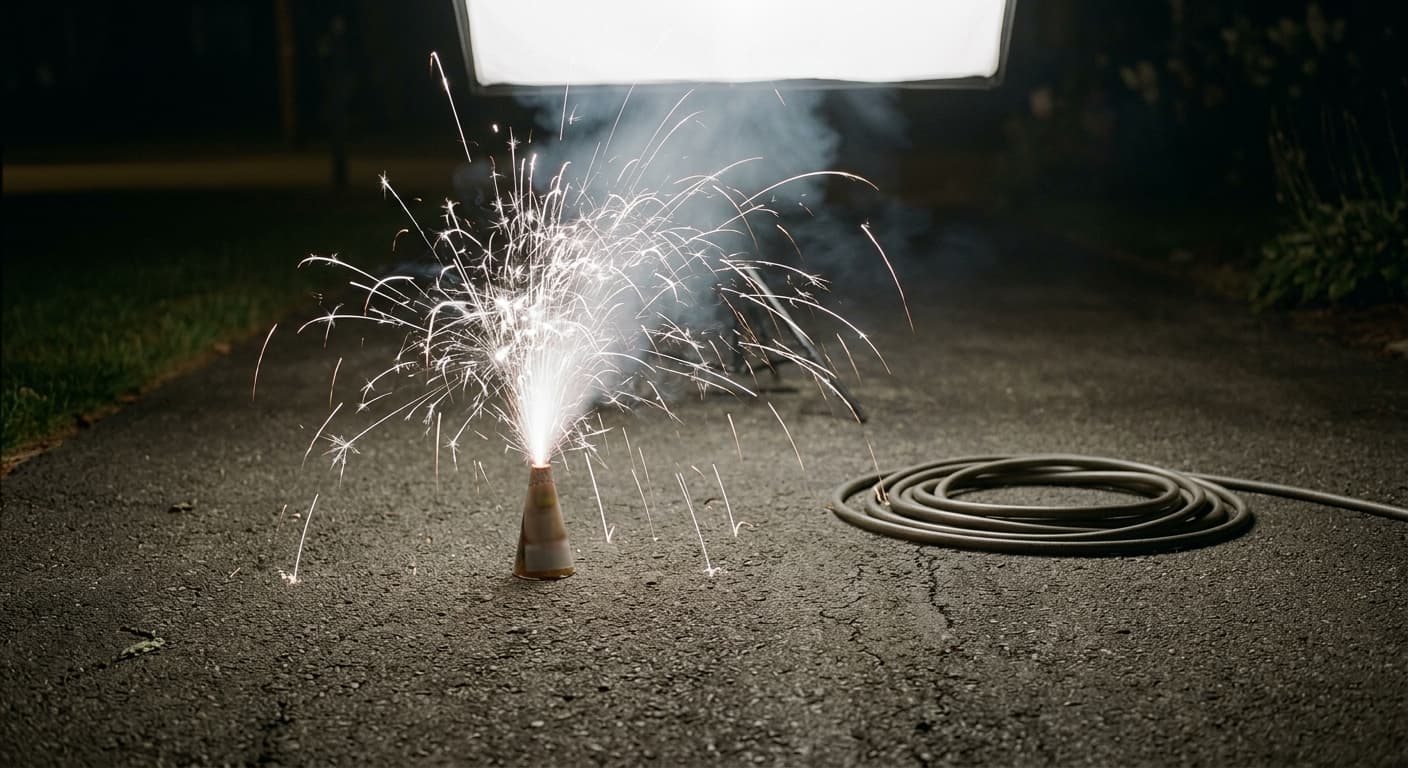
Maryland takes a narrow, exclusion-based approach: only six specific low-risk items, including chlorate- and perchlorate-free sparklers, certain CPSC-labeled ground-based sparkling devices, minimal-composition toy caps and paper snappers, and non-mercury "snakes" ash pellets, fall outside the legal definition of "fireworks" and can be sold and possessed without a permit, under Md. Code, Public Safety § 10-101(f)(3). Sparklers and sparkling devices may only be sold to a buyer 16 or older, and a distributor or wholesaler of them must separately register annually with the State Fire Marshal. Everything else classed as "fireworks" requires a State Fire Marshal discharge permit before it can be possessed with intent to discharge, or discharged, under § 10-104 and § 10-110, subject to a handful of statutory exemptions, and several of Maryland's fireworks offenses carry up to a year in jail, not just a fine.
Jurisdiction scope: This article covers Maryland's state fireworks law under Md. Code, Public Safety Title 10, Subtitle 1 (Fireworks: the § 10-101 definitional exclusions, § 10-102 title-wide exemptions, §§ 10-103-10-105 discharge-permit and local-ordinance provisions, and the §§ 10-110-10-113 sale, age, distributor-registration, and penalty provisions) and Subtitle 2 (Fireworks Plants, §§ 10-201 and 10-210). It does not catalog individual county or municipal ordinances that further restrict discharge; those must be checked with the specific political subdivision.
What's Legal: A Narrow List of Definitional Exclusions
Maryland does not define a broad "consumer fireworks" category the way many states do. Instead, only items that fall outside the statutory definition of "fireworks" entirely are unrestricted for ordinary consumers. Md. Code, Public Safety § 10-101(f)(3) states:
"'Fireworks' does not include: (i) toy pistols, toy canes, toy guns, or other devices that use paper caps that contain 0.25 grains or less of explosive composition if the devices are constructed so that a hand cannot touch the cap when the cap is in place for use; (ii) toy pistol paper caps that contain less than 0.20 grains of explosive composition; (iii) sparklers that do not contain chlorates or perchlorates; (iv) ground-based sparkling devices that are nonaerial and nonexplosive, and are labeled in accordance with the requirements of the U.S. Consumer Product Safety Commission; (v) paper wrapped snappers that contain less than 0.03 grains of explosive composition; or (vi) ash-producing pellets known as 'snakes' that do not contain mercury and are not regulated by the U.S. Department of Transportation."
That six-item list is the entire category of items an ordinary Maryland consumer can buy and possess without a State Fire Marshal permit: capped-composition paper toy caps (in two separate exclusions, with the first requiring a hand-safe construction), chlorate/perchlorate-free sparklers, CPSC-labeled ground-based sparkling devices, low-composition paper snappers, and non-mercury "snakes" ash pellets, which are common July 4th purchases in their own right. Sparklers and sparkling devices within that exclusion are legal to sell, but only to a buyer who is 16 or older, discussed further below.
Maryland sets no consumer-facing gram or tube device caps beyond those definitional thresholds. A separate cap on the maximum amount of explosive or pyrotechnic composition, found in § 10-207, applies to fireworks-plant storage buildings, not to an individual consumer device.
What's Banned: Everything Else Needs a Permit
Any device classed as "fireworks" that does not fall within the narrow exclusions above cannot be possessed with intent to discharge, or discharged, without a State Fire Marshal permit. § 10-110 states:
"Unless the person holds a permit issued under this subtitle, a person may not: (1) discharge fireworks; or (2) possess fireworks: (i) with intent to discharge or allow the discharge of the fireworks in violation of this subtitle..."
That makes Maryland's baseline rule the opposite of a broad-allow state's: fireworks other than the narrow definitional exclusions are unlawful to discharge or possess-with-intent-to-discharge unless the person holds the state permit described below. Manufacturing or processing fireworks may only occur at a State-Fire-Marshal-licensed fireworks plant, under § 10-201; doing so outside a licensed plant is a misdemeanor carrying up to a year in jail, a $1,000 fine, or both, under § 10-210(a).
The whole title, not just the permit requirement, carves out five categories entirely. Md. Code, Public Safety § 10-102(a) exempts: the sale, possession, or use of fireworks to or by the federal government or a state or political subdivision; the sale, possession, or use of a combustible or explosive preparation by an industrial or commercial business as a signal or otherwise in the normal course of business; possession or use of a fusee, railroad torpedo, rocket, Very signal cartridge, or other signal device essential to the safe operation of a motor vehicle, boat, railroad, or aircraft; use of a flare, signal pistol, or similar equipment as a signal in an athletic contest; and, under a separate State Fire Marshal permit, a farmer's use of a slow-fuse explosive device to control destructive animals. None of these five needs the discharge permit described below. Separately, a Subtitle 2 licensee may sell or deliver fireworks to a bona fide out-of-state distributor, jobber, or wholesaler whose principal place of business is in a state where selling or possessing fireworks is allowed, under § 10-110(b)(2).
No Statewide Sale-Date or Use-Date Window
Maryland's fireworks statute sets no calendar date range for either sale or discharge. Sale of the excluded novelty items, such as sparklers, is age-gated at 16, discussed below, but not tied to a calendar window; sale of anything else classed as "fireworks" is a Subtitle 2 licensed-plant or dealer matter, with no discharge-date restriction stated in Subtitle 1. Discharge timing is not set by the state statute at all. § 10-103(c) instead makes legality of discharge dependent on the political subdivision's own ordinance or regulation, discussed next, so any calendar or hours restriction on actually setting off fireworks in Maryland is local, not statewide.
Age
Maryland's one confirmed statewide age rule applies to sparklers and sparkling devices specifically. § 10-112 states:

"A person may not sell sparklers or sparkling devices to a person under the age of 16 years. (b) A person who violates this section is guilty of a misdemeanor and on conviction is subject to a fine not exceeding $1,000."
That age-16 floor is the statute's only stated purchaser age minimum; it applies to the narrow excluded-device category described above, not to a general "fireworks" purchase, since a general purchase by anyone requires the state permit described below regardless of age.
Sparkler and Sparkling-Device Registration
Selling sparklers and sparkling devices at retail in Maryland does not itself require the discharge permit described below, but supplying them wholesale does require its own registration. Md. Code, Public Safety § 10-113 states:
"This section applies to a distributor or wholesaler of sparklers or sparkling devices who: (1) intends to conduct business in the State; or (2) sells, ships, or assigns for sale in the State the products of the distributor or wholesaler. A distributor or wholesaler shall register annually with the State Fire Marshal on forms the State Fire Marshal provides. The annual fee for registration under this section is $750."
Any distributor or wholesaler of sparklers or sparkling devices who does business in Maryland, or who sells, ships, or assigns product for sale here, must register with the State Fire Marshal every year and pay the $750 fee. Failing to register is not merely a paperwork lapse: it is a misdemeanor punishable by up to a year in jail, a $1,000 fine, or both, the same jail exposure as manufacturing fireworks outside a licensed plant.
Local Option
A State Fire Marshal discharge permit is not a statewide green light; it is expressly subordinate to local government. § 10-103(c) states:
"A permit to discharge fireworks: (1) does not authorize the holder of the permit to possess or discharge fireworks in violation of an ordinance or regulation of the political subdivision where the fireworks are to be discharged; and (2) does not relieve an applicant for a permit from any requirement to obtain any additional license or authority from the governing body of the political subdivision..."
In practice, that means holding a state discharge permit is a floor, not a ceiling. A county or municipality can still bar the discharge the permit would otherwise allow, or require its own additional license on top of the state permit, and the permit holder remains bound by whatever local rule applies.
Permits
Discharging fireworks, or possessing them with intent to discharge, requires a State Fire Marshal permit issued under Subtitle 1. § 10-104 states:

"A person must have a permit to discharge fireworks as provided by this subtitle before the person: (1) discharges fireworks; or (2) possesses fireworks with the intent to discharge fireworks or to allow the discharge of fireworks."
The State Fire Marshal may issue a permit only for a place where the discharge of fireworks is already legal, under § 10-103(a); getting one requires a safety showing and a supervising "experienced and qualified person" who holds prior written Fire Marshal authority, under § 10-103(b), plus a surety bond or liability and property insurance, under § 10-105. The mechanics have real deadlines and costs: an applicant must apply to the State Fire Marshal at least 10 days before the date of discharge and pay a $50 permit fee; an application received later than that draws an extra $50 late fee; a volunteer fire department or volunteer ambulance and rescue company is exempt from both fees; and the permit itself cannot be transferred to someone else, under § 10-104(b)-(e). Manufacturing fireworks requires a separate State-Fire-Marshal-licensed fireworks-plant status under § 10-201. Storing or dealing in fireworks requires a dealer license authorizing storage of 1.4G fireworks and 1.3G display fireworks at a Fire-Marshal- or local-authority-approved location, under § 11-108. In Baltimore City specifically, advertising for a fireworks display must disclose the promoter's liability insurance coverage, under § 10-108.
Regulations
Maryland's State Fire Prevention Commission has direct regulatory authority over the fireworks-plant side of this framework. § 10-202 states:
"As necessary or advisable to protect the safety of employees of a fireworks plant and the public and to protect public property, the State Fire Prevention Commission shall: (1) adopt regulations consistent with this subtitle; and (2) enforce the regulations through the office of the State Fire Marshal."
The scope of those regulations can reach a plant's location, construction, arrangement, and operation; its personnel; its public liability and workers'-compensation insurance; and its overall safety. Beyond that adopted-regulation authority, the plant construction, setback, and storage-limit rules in §§ 10-204 through 10-209 carry the force of law directly in the statute itself, rather than through a separately adopted regulation.
Federal Layer
Federal law sets a floor underneath Maryland's rules. Consumer fireworks sold anywhere in the country must meet U.S. Consumer Product Safety Commission construction and labeling standards for DOT Class 1.4G devices (16 CFR Parts 1500.17 and 1507); Maryland's own ground-based sparkling device exclusion cross-references those CPSC labeling requirements directly. Separately, 27 CFR 555.141(a)(7) exempts the importation, distribution, and storage of consumer fireworks, though not their manufacture, from the federal explosives-licensing requirements that otherwise apply. It is a federal crime under 18 U.S.C. § 836 to transport fireworks, other than in the course of continuous interstate transportation through a state, into any state whose law specifically prohibits or regulates the use of fireworks, knowing they will be delivered, possessed, stored, transshipped, distributed, sold, or otherwise dealt with in a manner or for a use prohibited by that state's law; a violation is punishable by a fine or up to one year of imprisonment, or both. The "regulates" half of that phrase is what gives the federal crime any reach into Maryland at all: Maryland does not ban fireworks outright, it regulates them through the permit-and-exclusion system described above, so bringing unpermitted fireworks into Maryland for a use this statute prohibits can trigger § 836 even though Maryland is not a ban state. The statute also exempts common and contract carriers, international or domestic water carriers engaged in interstate commerce, and transportation into a state for federal agencies' own operations. USPS Publication 52 § 341.22 separately classifies all fireworks, including sparklers, as nonmailable explosives.
Penalties
Maryland's fireworks-specific penalties are misdemeanors across the offenses the statute defines, and several of them carry jail exposure, not just a fine. § 10-111 states:
"(a) A person who possesses or discharges fireworks in violation of this subtitle is guilty of a misdemeanor and on conviction is subject to a fine not exceeding $250 for each offense. (b) A person who sells fireworks in violation of this subtitle is guilty of a misdemeanor and on conviction is subject to a fine not exceeding $1,000 for each offense."
Unpermitted possession or discharge of fireworks carries a fine of up to $250 per offense; unpermitted sale carries a fine of up to $1,000 per offense; neither carries jail time under § 10-111 itself. Selling sparklers or sparkling devices to a buyer under 16 carries its own $1,000 maximum fine under § 10-112(b), quoted above, also fine-only. Two other offenses are not fine-only, though. Manufacturing or processing fireworks outside a licensed fireworks plant, under § 10-210(a), and failing to register as a sparkler or sparkling-device distributor or wholesaler, under § 10-113(d), are each a misdemeanor punishable by imprisonment of up to 1 year, a fine of up to $1,000, or both. Operating a fireworks plant after the license has been denied, suspended, or revoked is worse still: up to 2 years imprisonment, a $2,000 fine, or both, under § 10-210(c). All fireworks possessed or sold in violation of the subtitle are seized at the owner's expense and forfeited and destroyed, under § 10-111(c). None of these offenses is tiered by first versus subsequent offense in the sections that define them.
For how Maryland's rule compares with the rest of the country, see fireworks laws by state. Maryland also has its own Maryland open container law covering a different vehicle-related rule.
Disclaimer: This article provides general legal information about fireworks laws in the United States as of September 2026. It is not legal advice. Fireworks statutes, local ordinances, permit requirements, and penalties change frequently and are often further restricted by county or municipal ordinance beyond what state law requires; verify the current rule for your specific county or municipality before buying, selling, or using fireworks, and consult a lawyer licensed in your state for advice about a specific situation.
Statutes cited reflect their in-force version as of 2026-09-17. Last updated: 2026-09-17.
Frequently Asked Questions
Are fireworks legal in Maryland?
Only six specific items, chlorate- and perchlorate-free sparklers, certain CPSC-labeled ground-based sparkling devices, minimal-composition toy caps and paper snappers, and non-mercury "snakes" pellets, are excluded from Maryland's definition of "fireworks" and unrestricted, under Md. Code, Public Safety § 10-101(f)(3). Everything else requires a State Fire Marshal permit before it can be possessed with intent to discharge or discharged, apart from five title-wide exemptions in § 10-102 (government, industrial signal use, vehicle/marine safety devices, athletic flares, and a farmer's permitted animal-control device).
Are sparklers legal in Maryland?
Yes, if they do not contain chlorates or perchlorates, and only to a buyer 16 or older. Selling sparklers to someone younger is a misdemeanor with a fine of up to $1,000, under § 10-112. A distributor or wholesaler of sparklers must separately register annually with the State Fire Marshal for $750, under § 10-113.
Do you need a permit to set off fireworks in Maryland?
Yes, for anything outside the narrow excluded-device list. § 10-104 and § 10-110 require a State Fire Marshal permit before a person may possess fireworks with intent to discharge them, or discharge them, and the Fire Marshal can only issue one for a place where discharge is already legal.
Is there a specific date range when fireworks are legal in Maryland?
No statewide calendar sale-date or discharge-date window exists in Maryland's statute. § 10-103(c) makes legality of discharge dependent on the political subdivision's own ordinance, so timing is set locally, not by a single statewide date range.
Can a county or city in Maryland restrict fireworks beyond state law?
Yes. § 10-103(c) makes clear that a state discharge permit does not authorize discharge in violation of a local ordinance and does not excuse a permit holder from any additional license a local government requires.
What is the penalty for possessing or discharging fireworks without a permit in Maryland?
A misdemeanor punishable by a fine of up to $250 per offense, under § 10-111(a). Unpermitted sale of fireworks carries a separate fine of up to $1,000 per offense under § 10-111(b). Neither carries jail time on its own, unlike manufacturing outside a licensed plant or failing to register as a sparkler distributor, which do.
Can you manufacture fireworks in Maryland, and what happens if you don't have a permit or registration?
Manufacturing is legal only at a State-Fire-Marshal-licensed fireworks plant, under § 10-201. Manufacturing outside a licensed plant, and failing to register as a sparkler or sparkling-device distributor or wholesaler, are each a misdemeanor punishable by up to a year in jail, a $1,000 fine, or both, under § 10-210(a) and § 10-113(d).
Updates
Independently fact-checked against the cited primary sources
Sources and References
- Md. Code, Public Safety § 10-101(f) - Fireworks definition and narrow novelty exclusions (toy caps, chlorate/perchlorate-free sparklers, CPSC-labeled ground devices)(mgaleg.maryland.gov).gov
- Md. Code, Public Safety § 10-102 - Title-wide exemptions: government use, industrial signal use, vehicle/boat/railroad/aircraft safety signal devices, athletic-contest flares, permitted farmer animal-control device(mgaleg.maryland.gov).gov
- Md. Code, Public Safety § 10-103 - Permit limited to places where discharge is already legal; discharge permit subordinate to local ordinance; supervising qualified-person requirement(mgaleg.maryland.gov).gov
- Md. Code, Public Safety § 10-104 - Permit required to discharge or possess with intent to discharge(mgaleg.maryland.gov).gov
- Md. Code, Public Safety § 10-105 - Surety bond or insurance requirement for discharge permit(mgaleg.maryland.gov).gov
- Md. Code, Public Safety § 10-108 - Baltimore City display advertising insurance disclosure(mgaleg.maryland.gov).gov
- Md. Code, Public Safety § 10-110 - Unpermitted discharge or possession with intent to discharge prohibited(mgaleg.maryland.gov).gov
- Md. Code, Public Safety § 10-111 - Penalty for unpermitted possession/discharge and unpermitted sale(mgaleg.maryland.gov).gov
- Md. Code, Public Safety § 10-112 - Sale of sparklers/sparkling devices to a person under 16 prohibited(mgaleg.maryland.gov).gov
- Md. Code, Public Safety § 10-113 - Annual $750 State Fire Marshal registration for sparkler/sparkling-device distributors and wholesalers; up to 1 year jail/$1,000 fine for failing to register(mgaleg.maryland.gov).gov
- Md. Code, Public Safety § 10-201/10-210 - Fireworks plant licensing; unlicensed manufacture/processing (up to 1 yr jail/$1,000 fine) and unlicensed plant operation (up to 2 yrs jail/$2,000 fine) offenses(mgaleg.maryland.gov).gov
- Md. Code, Public Safety § 10-202 - State Fire Prevention Commission regulatory authority(mgaleg.maryland.gov).gov
- Md. Code, Public Safety § 11-108 - Dealer license for storage of 1.4G/1.3G fireworks(mgaleg.maryland.gov).gov
- 16 CFR 1500.17 / 1507 - CPSC consumer fireworks (1.4G) construction and safety standards(ecfr.gov).gov
- 27 CFR 555.141(a)(7) - Federal explosives-licensing exemption for importation, distribution, and storage of consumer fireworks(ecfr.gov).gov
- 18 U.S.C. § 836 - Federal crime to transport fireworks into any state whose law specifically prohibits or regulates fireworks use (reaches a regulate-not-ban state like Maryland); fine or up to one year imprisonment; carrier, water-carrier, federal-agency, and agricultural-use exceptions(uscode.house.gov).gov
- USPS Publication 52 § 341.22 - Fireworks classified as nonmailable explosives(pe.usps.com).gov