
Ohio
Ohio Court Records: How to Search by County, What's Public, and Sealing
Independently fact-checked against primary sources (last audited August 10, 2026). · 2 primary sources cited on this page. How we verify our legal content
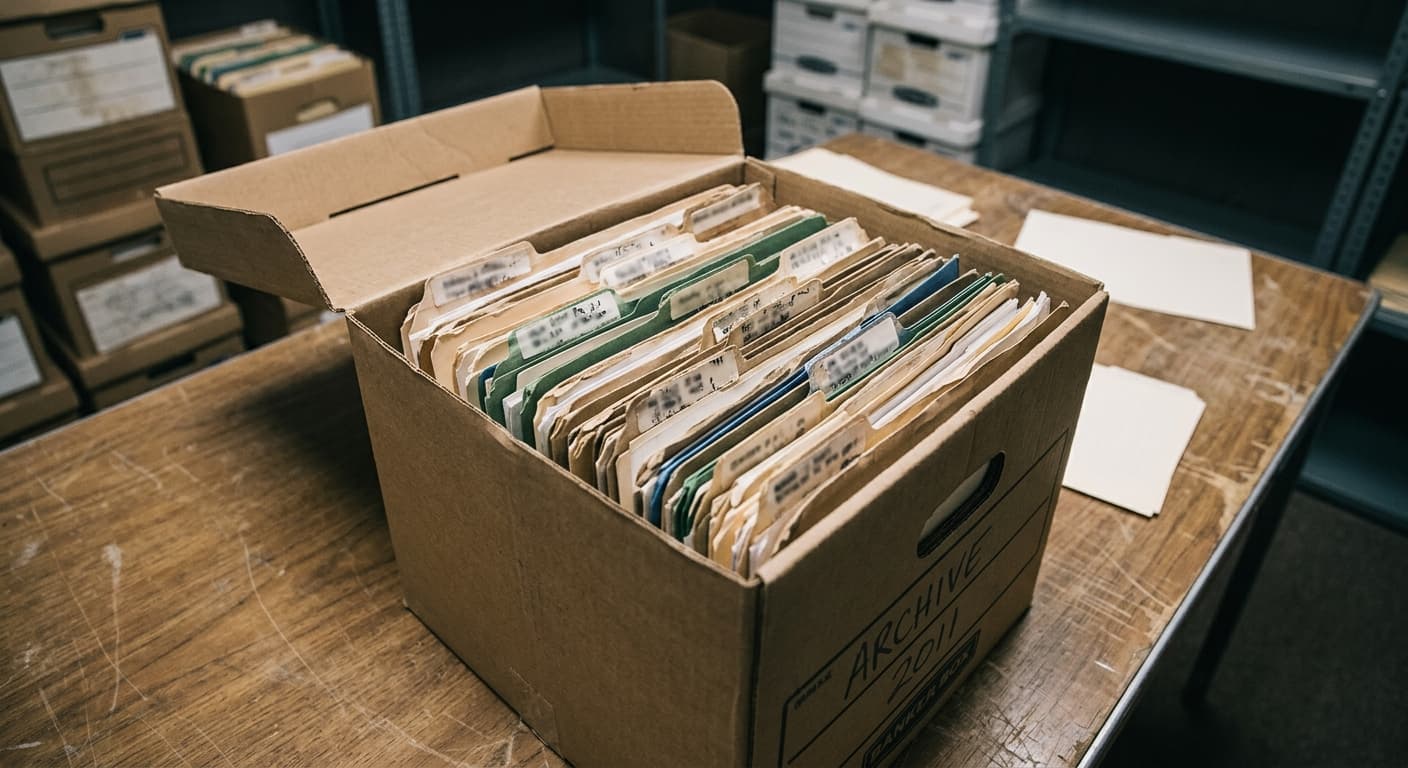
This article covers how to search Ohio court records, which is a county-by-county process rather than a single statewide search, what's public under Ohio's court rules, and how Ohio's sealing and expungement remedies work after a 2023 overhaul. It does not cover other states; for those, see the Court Records by State hub.
Information last verified on 2026-08-10. This article has not yet been reviewed by a licensed lawyer.
How to Search Ohio Court Records
Ohio is a genuinely fragmented state for court-record search. There is no site where you type a name once and see every Ohio case; instead, each of the state's 88 counties runs its own Clerk of Courts system, and interfaces, search fields, and cost vary by county.
Fragmentation is not the whole picture, though. Ohio Revised Code 2303.12 sets a statutory floor beneath the county systems. Division (B) requires the clerk of the court of common pleas to keep the appearance docket, trial docket, journal, execution docket, and the case files themselves. Division (D)(1)(a), added effective April 6, 2023, goes further: within eighteen months of that date, each clerk had to make the court's general docket available online for remote access and printing by the public, including all individual documents in each case file, for civil cases filed on or after April 6, 2023. A later amendment extends the same requirement to criminal cases, on its own eighteen-month clock running from that amendment's effective date.
Two carve-outs matter to a searcher. Division (D)(2) does not require a clerk to post the general docket of a domestic relations division or a juvenile court, or, where a court has no domestic relations division, the general docket in civil domestic relations cases. Division (E) keeps internal judicial work product, meaning notes, emails, drafts, recommendations, advice, and research of judicial officers and court staff, along with anything the court has ordered access-restricted under the Rules of Superintendence, off the online docket. So what varies from county to county is the interface, the fields, and the fees, not whether a recent civil docket has to be online at all.
Two of the state's largest counties illustrate the pattern. Franklin County (Columbus) runs Case Information Online, known as CIO, through the Clerk of Courts. CIO covers criminal and civil cases filed in the General Division of the Court of Common Pleas, Domestic Relations cases filed in the Domestic Relations Division, and appellate cases filed in the 10th District Court of Appeals. The Clerk's own policy states plainly that the information in CIO does not constitute the official record and is only considered a copy, so a discrepancy gets resolved by checking the official court file at the courthouse, not by trusting the online result.
Cuyahoga County (Cleveland) runs its own Case Records Search System through its Clerk of Courts, described on its own site as select public records maintained by the Clerk of Courts, offered as a convenience to the public. As with Franklin County, the Clerk's terms note that documents in the system are not the official public records, and recommend verifying anything important against the office's own records at 1200 Ontario Street in Cleveland.
For any other Ohio county, including Hamilton County (Cincinnati), the starting point is that county's own Clerk of Courts website; search the county name plus "clerk of courts" rather than assuming a single statewide tool exists. Cost, search fields, and how far back records go are set by each county individually, so do not assume one county's rules apply to another.
What's Public and What's Restricted
Ohio's Rules of Superintendence, specifically Sup.R. 45, set the baseline: court records are presumed open to public access, covering both case documents and administrative documents filed in a judicial proceeding. A clerk must acknowledge an access request promptly and respond within a reasonable time.

To restrict access, someone has to file a written motion, and a court can only grant it on clear-and-convincing evidence that the presumption of access is outweighed by a higher interest. Judges weigh factors including whether public policy supports restriction, whether a state, federal, or common-law exemption applies, and whether privacy, safety, or fair-trial concerns justify closure. Ohio's rule also pushes courts toward the least restrictive option before sealing an entire document, such as redacting sensitive lines, limiting remote access while still allowing in-person viewing at the courthouse, or replacing names with initials.
Certain categories sit outside the general presumption of openness by default: personal identifiers like Social Security and bank-account numbers, judicial officers' own notes and drafts, juvenile dependency and abuse records, health-care documents filed in a case, and financial disclosure statements filed in domestic relations matters.
Sealing and Expungement After SB 288
Ohio Senate Bill 288, effective April 4, 2023, is the biggest change to this area of Ohio law in years, and it created a real terminology split that did not exist before. Ohio now recognizes both sealing, where the record is hidden from public view but retained by the court, and expungement, where the record is destroyed, as distinct remedies for adult conviction records under Ohio Revised Code 2953.32.
Before SB 288, a person could only petition to seal a limited number of convictions under a category called "eligible offender," capped by prior-conviction count. SB 288 widened that definition considerably, but it did not take counting out of the analysis. Revised Code 2953.32(A)(1)(h) still bars relief for a third-degree felony if the offender has more than one other conviction of any felony, or, where the person has exactly two third-degree felony convictions, has more convictions in total than those two plus two misdemeanor convictions. Division (A)(3) then supplies the counting rules, treating convictions that arose from the same act, or from the same indictment, plea, or proceeding for related acts committed within a three-month window, as a single conviction.
The permanently excluded categories in Revised Code 2953.32(A)(1) are also broader than most people expect, and several of them catch ordinary cases. The sealing and expungement provisions do not apply to convictions under Revised Code Chapters 4506, 4507, 4510, 4511, or 4549, which sweep in traffic, OVI, and driver-licence offenses, or to substantially similar municipal ordinance violations. They do not apply to felony offenses of violence that are not sexually oriented offenses, to any felony of the first or second degree, to violations of Revised Code 2921.41, or to domestic violence convictions under Revised Code 2919.25 that are misdemeanors of the first or second degree. The sexually-oriented-offense exclusion is narrower than a flat ban: it applies where the offender is subject to the registration requirements of Chapter 2950. A separate exclusion covers offenses where the victim was less than thirteen years of age, except for convictions under Revised Code 2919.21. Where relief is available, the waiting period runs from the offender's final discharge and varies by offense level.
One thing SB 288 did not do is make any of this automatic. Nothing in Revised Code Chapter 2953 seals or expunges an adult conviction record on its own. Revised Code 2953.32(B)(1) provides that an eligible offender may apply to the sentencing court, and the parallel routes work the same way: Revised Code 2953.33, covering records after a not-guilty finding, a dismissal, a no bill, or a pardon, is likewise an application to the court. The closest thing to relief a person does not file themselves is Revised Code 2953.39, under which a prosecutor may move to seal or expunge certain low-level controlled-substance convictions, and that is still a motion somebody files and a judge rules on. The Bureau of Criminal Investigation acts only afterward: it updates or destroys its own copy once it receives notice of the court's order. If you want an Ohio conviction sealed or expunged, someone has to file an application.
This article covers the shape of the law, not your specific eligibility. For current waiting periods and the excluded-offense list as they apply to your situation, see Ohio Expungement Laws.
Certified Copies and Practical Search Tips
Certified copies come from the Clerk of the Court of Common Pleas in the county where the case was filed, which follows the same county-by-county pattern as the search itself. Search fields also vary by county; some support name and case-number search on the same page, others split them. Because there is no single Ohio-wide answer, check the specific county's Clerk of Courts site for its own instructions before assuming a search method that worked in one county will work in another.

Using This Information the Right Way
Ohio's county-by-county structure makes false negatives especially easy: a clean result from one county's clerk system tells you nothing about a case filed in a different county. If you are screening a job applicant or tenant, a single county's online search is not a complete, Fair Credit Reporting Act compliant background check, and a people-search aggregator that claims to search "Ohio" in one query should be treated with real skepticism given how fragmented the underlying data actually is.
Related reading: Court Records by State, How to Look Up Court Records, Are Court Records Public?, Ohio Background Check Laws, Ohio Warrant Search, and Ohio Public Records Laws for records held by executive-branch agencies rather than the courts.
Disclaimer
This article provides general legal information about Ohio court records, not legal advice, and does not create an attorney-client relationship. Portal names, coverage, and fee information reflect their published status as of the verification date above, can vary further by county, and can change without notice. For advice about a specific case, sealing eligibility, or a specific record, consult a lawyer licensed in Ohio.
Last updated: 2026-08-10. Portal facts and fees reflect their published status as of August 2026.
Frequently Asked Questions
Is there one website to search all Ohio court records?
No. Ohio has no unified statewide case-search portal. Each of the state's 88 counties runs its own Clerk of Courts search system with its own coverage and rules. Revised Code 2303.12(D) does require each common pleas clerk to publish the court's general docket online, including the individual documents in each case file, for civil cases filed on or after April 6, 2023, but each county does that on its own site.
How do I search Franklin County or Cuyahoga County court records?
Franklin County uses Case Information Online (CIO) through its Clerk of Courts, covering Common Pleas criminal, civil, and domestic relations cases plus 10th District Court of Appeals cases. Cuyahoga County runs its own Case Records Search System through its own Clerk of Courts.
What is the difference between sealing and expungement in Ohio?
Since Senate Bill 288 took effect April 4, 2023, Ohio treats these as two distinct remedies. Sealing hides a conviction record from public view while the court retains it. Expungement destroys the record. Both have waiting periods and excluded-offense lists set out in Ohio Revised Code 2953.32.
Does Ohio seal or expunge conviction records automatically?
No. Every sealing and expungement route in Revised Code Chapter 2953 begins with an application. Revised Code 2953.32(B)(1) provides that an eligible offender may apply to the sentencing court, and the Bureau of Criminal Investigation updates or destroys its own copy only after it receives notice of the court's order. Nothing is sealed unless someone files.
Can I get an OVI or other traffic conviction sealed in Ohio?
No. Revised Code 2953.32(A)(1)(a) excludes convictions under Revised Code Chapters 4506, 4507, 4510, 4511, and 4549, and substantially similar municipal ordinance violations, from the sealing and expungement provisions. That covers traffic, OVI, and driver-licence offenses.
Where do I get a certified copy of an Ohio court record?
From the Clerk of the Court of Common Pleas in the county where the case was filed. There is no statewide certified-copy office; it follows the same county-by-county structure as the search itself.
Updates
Corrected this page’s description of Ohio sealing and expungement: Ohio has no automatic sealing of adult conviction records, eligibility still turns partly on conviction counts under R.C. 2953.32(A)(1)(h), and the excluded-offense list now includes traffic and OVI offenses, felony offenses of violence, and first- and second-degree felonies; also added the online-docket requirements of R.C. 2303.12.
Independently fact-checked against the cited primary sources
The Law Behind This Article
This article rests on the statutory provisions below, held in our own legal record and retrieved from the official source. Tap a section to read the operative text.
Ohio Revised Code
§ 2953.32Sealing or expungement of record of conviction record or bail forfeiture; exceptionsIn forcecited in 6 of our articles
(A)(1) Sections 2953.32 and 2953.34 of the Revised Code do not apply to any of the following: (a) Convictions under Chapter 4506., 4507., 4510., 4511., or 4549.
Official text (excerpt) · last checked 2026-07-31 · Read the full text in our law library · Verify at codes.ohio.gov
Cited in 607 court opinions in our collectionLatest citing opinion in our collection: 2026
In the courts (editorial summary, independently checked):State v. Hamilton (1996) held that a prosecutor's participation in a sealing hearing is not limited to the issues stated in a written objection under R.C. 2953.32(B), and State v. LaSalle (2002) held that the statutory law in effect when a 2953.32 application is filed controls.
Opinions citing this section in our collection:
- State v. Hamilton (Ohio Supreme Court 1996, 75 Ohio St. 3d 636)✓A man convicted of theft applied to seal the record; the prosecutor filed no written objection but appeared at the hearing and cross-examined him. The court held R.C. 2953.32(B) does not limit a prosecutor's participation to issues raised in a written objection.
- State v. Pariag (Ohio Supreme Court 2013, 137 Ohio St. 3d 81)“…ied definition. Although the word “expungement” was used in R.C. 2953.32, Ohio’s first-time-offender statute, “e…”
- State v. LaSalle (Ohio Supreme Court 2002, 96 Ohio St. 3d 178)✓LaSalle applied to seal a domestic violence conviction; while it was pending, an amendment barred sealing such records and the trial court vacated its sealing order. The court held the statutory law in effect when an R.C. 2953.32 application is filed governs.
Identified automatically from the court opinions citing this section — not a ranking of which case controls.
Also relied on in: Ohio Expungement Laws: Sealing and Expungement Under ORC 2953.32, Ohio Phone Call Recording Laws: Rules, Penalties, and Compliance, Expungement Laws by State: How to Clear Your Record (2026)
Search our full record of US law — 2.1 million sections, every state + federal →
Sources and References
- Franklin County Clerk of Courts, Case Information Online (CIO)(fcdcfcjs.co.franklin.oh.us).gov
- Cuyahoga County Clerk of Courts, Case Records Search System(cpdocket.cp.cuyahogacounty.gov).gov
- Reporters Committee for Freedom of the Press, Open Courts Compendium: Ohio(rcfp.org)
- Ohio Revised Code 2953.32, Sealing or expungement of record of conviction or bail forfeiture; exceptions(codes.ohio.gov)
- Ohio Revised Code 2303.12, Records to be kept by clerk; online access(codes.ohio.gov)
- Ohio Revised Code 2953.39, Low-level controlled substance offense conviction record sealing or expungement, on prosecutor’s motion(codes.ohio.gov)