New Mexico Workplace Recording Laws: Employee and Employer Rights (2026)

New Mexico gives employees broad rights to record in the workplace. The state's wiretapping statute under N.M. Stat. Ann. § 30-12-1 covers only telephone and wire communications, leaving in-person conversations entirely outside its scope. This means face-to-face workplace conversations can be recorded without any consent requirement. For work-related phone calls, one-party consent applies, and the employee who records the call satisfies that requirement by being a participant.
This guide covers the full scope of workplace recording rights and restrictions in New Mexico, including what employees and employers can legally record, how company policies affect recording rights, federal labor protections, and how workplace recordings are used in legal proceedings.
Employee Recording Rights in New Mexico
Recording In-Person Workplace Conversations
New Mexico's wiretapping statute only addresses "telegraph or telephone" communications. In-person conversations are not covered. This gives employees the legal right to record face-to-face interactions at work without telling anyone, including:
- Meetings with supervisors and managers
- Performance reviews and disciplinary meetings
- Conversations with HR representatives
- Discussions with coworkers
- Safety briefings and training sessions
- Verbal instructions and task assignments
No consent from anyone is required for these recordings. You do not need to announce that you are recording or get written permission.
Recording Work-Related Phone Calls
For phone calls made or received at work, New Mexico's one-party consent rule applies. You can record any work-related phone call you participate in, including:
- Calls with clients or customers
- Conference calls with remote colleagues
- Calls with vendors or suppliers
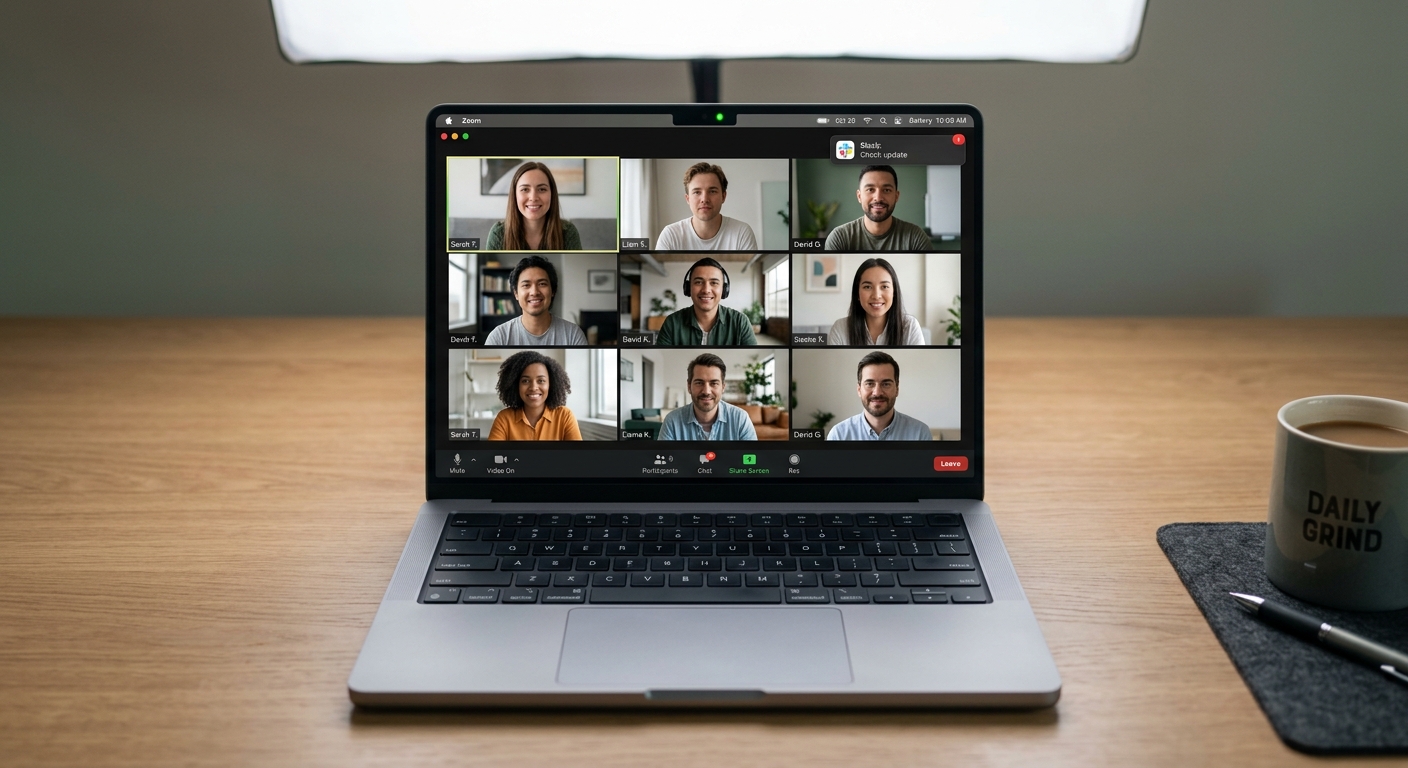
- Virtual meetings on Zoom, Microsoft Teams, or Google Meet
- Calls with government agencies or regulatory bodies
Your participation in the call satisfies the one-party consent requirement. You do not need to inform other participants that you are recording.
Why Employees Record at Work
Common reasons employees choose to record workplace interactions include:
- Documenting harassment or discrimination. Audio recordings provide direct evidence of hostile work environment claims, sexual harassment, or discriminatory statements.
- Preserving verbal agreements. When a manager makes a promise about a raise, promotion, or schedule change, a recording serves as proof.
- Recording performance reviews. Having a record of what was said during evaluations protects against disputes later.
- Documenting safety concerns. Recordings can prove that an employee reported unsafe conditions to management.
- Protecting against retaliation. If you file a complaint, recordings of subsequent interactions can document retaliatory behavior.
Employer Surveillance Rights
Video Surveillance in the Workplace
New Mexico employers can install video surveillance cameras in areas where employees do not have a reasonable expectation of privacy. Permitted locations include:
- Lobbies and reception areas
- Sales floors and retail spaces
- Warehouse and production floors
- Parking lots and exterior areas
- Hallways and common corridors
- Cash register areas and vaults
Prohibited Surveillance Locations
Employers cannot place cameras in areas where employees have a reasonable expectation of privacy:
- Bathrooms and restrooms are always off-limits
- Locker rooms and changing areas where employees change clothes
- Nursing rooms designated for breastfeeding employees
- Medical examination areas in workplace health facilities
Placing cameras in these locations can result in criminal voyeurism charges under N.M. Stat. Ann. § 30-9-20 and civil liability for invasion of privacy.
Audio Surveillance by Employers
Employer audio surveillance follows the same rules as individual recording. Since in-person conversations are not covered by the wiretapping statute, employers can technically record in-person audio in common areas. For telephone monitoring, employers need one-party consent, which can be satisfied by having the employee on the call serve as the consenting party.
However, the National Labor Relations Board (NLRB) has found that pervasive audio surveillance in the workplace can interfere with employees' rights to engage in concerted activity under the National Labor Relations Act. Employers should carefully consider the NLRB's guidance before implementing audio surveillance programs.
Employer Notification Requirements
New Mexico does not have a specific state law requiring employers to notify employees about workplace surveillance. However, best practices include:
- Having a written workplace surveillance policy
- Including surveillance disclosure in the employee handbook
- Posting signs in areas under video surveillance
- Informing new hires about monitoring during onboarding
- Providing notice before implementing new monitoring systems
Company No-Recording Policies
Can Your Employer Ban Recording?
Many New Mexico employers maintain policies that prohibit recording in the workplace. These policies are a matter of employment contract and company rules, not criminal law. Key points:
- A company policy cannot make recording a crime. The legal right to record under New Mexico law exists regardless of company policy.
- Violating a no-recording policy can result in termination. New Mexico is an at-will employment state, meaning employers can generally fire employees for any reason that is not illegal.
- The recording itself remains legal. Even if you are fired for recording, the recording was not a criminal act and can still be used as evidence.
When Company Policies Cannot Override Recording Rights
There are situations where federal law protects your right to record even against a company policy:
- NLRA-protected concerted activity. The National Labor Relations Act protects employees who record workplace conditions as part of collective action to improve working conditions. If you record a safety violation to share with coworkers or a union representative, the NLRA may protect you from retaliation.
- Whistleblower protections. New Mexico's Whistleblower Protection Act (N.M. Stat. Ann. § 10-16C-1 et seq.) protects public employees who report violations of law. Private sector employees may have whistleblower protections under federal statutes like OSHA.
- Equal Employment Opportunity documentation. Employees gathering evidence of discrimination or harassment for an EEOC complaint may have some protection, though courts evaluate this on a case-by-case basis.
Practical Advice for Employees
Before recording at work:
- Review your employee handbook and any recording-related policies.
- Understand that recording may be legal but could still cost you your job if it violates company policy.
- Weigh the importance of what you are recording against the risk of disciplinary action.
- If you are documenting harassment or discrimination, consider whether to record openly or seek other evidence.
- Consult with an employment attorney if you are unsure about your specific situation.
Federal Labor Protections
The National Labor Relations Act
The NLRA protects employees' rights to engage in concerted activities for mutual aid or protection. The NLRB has addressed workplace recording in several decisions:
- Overly broad no-recording policies that would reasonably be interpreted as prohibiting protected concerted activity may violate Section 7 of the NLRA.
- Recording to document safety hazards, wage theft, or unfair labor practices is generally protected activity.
- Recording purely for personal grudges or to harass coworkers is not protected.
OSHA and Workplace Safety Documentation
The Occupational Safety and Health Administration (OSHA) protects employees who report unsafe working conditions. Recordings of safety violations can support OSHA complaints and whistleblower claims. OSHA's anti-retaliation provisions under 29 U.S.C. § 660(c) protect employees who report hazards in good faith.
Using Workplace Recordings in Legal Proceedings
Employment Lawsuits
Workplace recordings made legally in New Mexico are powerful evidence in employment litigation. They can support claims of:
- Wrongful termination
- Sexual harassment or hostile work environment
- Racial or gender discrimination
- Wage theft or unpaid overtime
- Retaliation for protected activity
- Breach of employment contract
Workers' Compensation Claims
Recordings of conversations about workplace injuries, return-to-work discussions, or employer responses to injury reports can support workers' compensation claims. The New Mexico Workers' Compensation Administration adjudicates disputes between injured workers and employers.
Administrative Proceedings
Recordings can be submitted as evidence in proceedings before the New Mexico Human Rights Bureau, the EEOC, OSHA, and the NLRB.
Remote Work and Monitoring
Employer Monitoring of Remote Workers
With the growth of remote work, many employers use software to monitor employee productivity. New Mexico does not have specific legislation governing remote work monitoring. General principles apply:
- Employers should disclose monitoring practices in writing.
- Monitoring should be limited to work activities on company devices.
- Personal devices and personal accounts should not be monitored without consent.
- Keyloggers and screen capture software should be disclosed to employees.
Employee Recording of Remote Meetings
Remote meetings conducted via Zoom, Teams, or other platforms are treated as electronic communications. One-party consent applies, so you can record virtual meetings you participate in without notifying other attendees. Be aware that participants in two-party consent states may have stricter rules.
More New Mexico Recording Laws
Audio Recording | Video Recording | Voyeurism & Hidden Cameras | Workplace Recording | Recording Police | Phone Call Recording | Security Cameras | Recording in Public | Landlord-Tenant | Dashcam Laws | Schools | Medical Recording
Sources and References
- N.M. Stat. Ann. § 30-12-1(nmonesource.com).gov
- NLRA(nlrb.gov).gov
- OSHA Whistleblower(osha.gov).gov
- EEOC(eeoc.gov).gov
- NM Workers Comp(workerscomp.nm.gov).gov