
United Kingdom
Recording Phone Calls in the UK: The Law
Independently fact-checked against primary sources (last audited September 30, 2026). · Law checked current as of September 30, 2026. · 13 primary sources cited on this page. How we verify our legal content
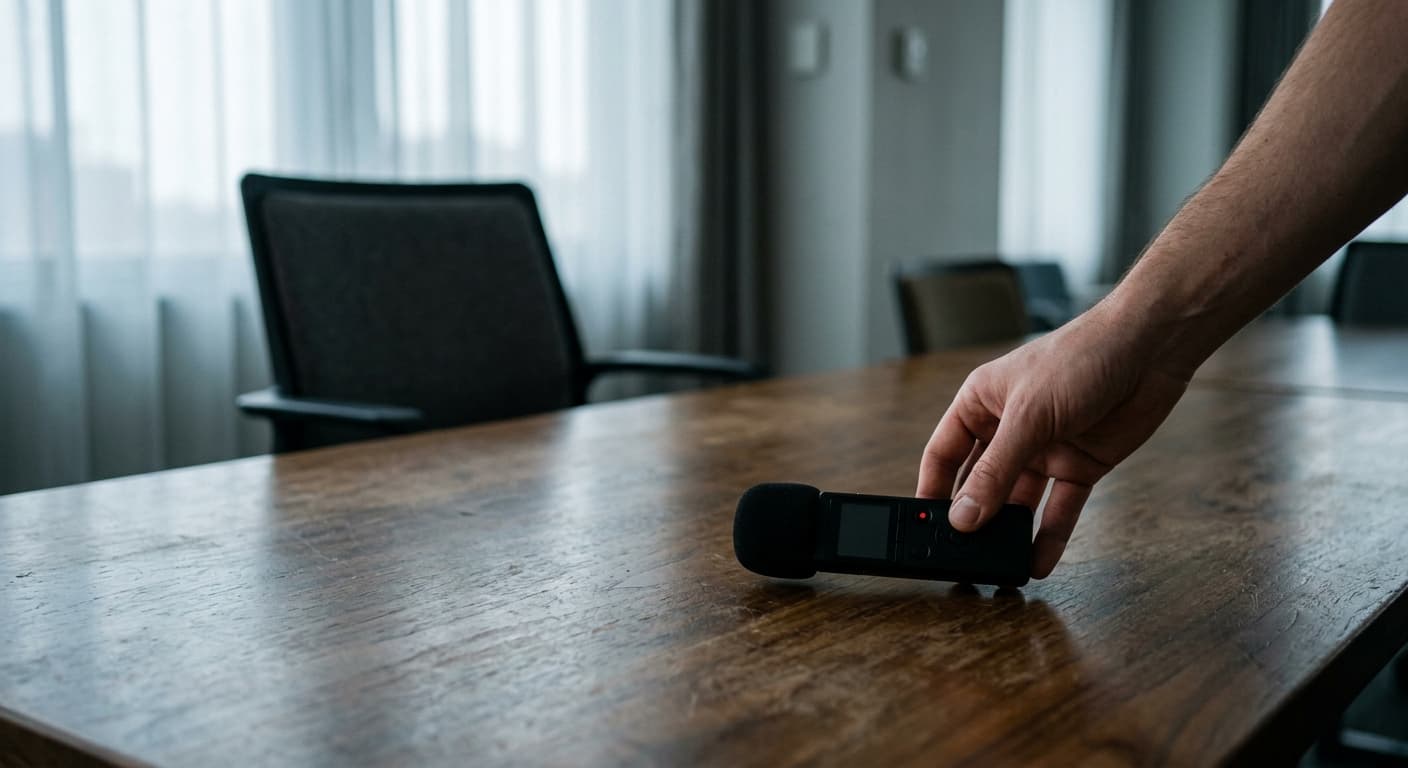
Recording a phone call you take part in is lawful in the UK for your own personal use, and you do not have to tell the other person. The picture changes sharply once a business records callers, once you share the recording, or once you capture a call you are not part of, which is a criminal offence under the Investigatory Powers Act 2016.
For the full UK overview, see UK recording laws.
Recording Your Own Calls: Lawful, No Consent Needed
If you are on the call, you can record it for your own use without telling anyone. The interception offence in section 3 of the Investigatory Powers Act 2016 targets intercepting a communication "in the course of its transmission" without lawful authority. As a participant, you are the sender or the intended recipient of the communication, so recording what is said to you is not the kind of third-party interception the Act criminalises. This follows from section 4, which defines interception as making the content of a communication available to someone who is not the sender or intended recipient. Section 44 is narrower: it authorises interception by a third party only where both the sender and the intended recipient consent, or where one of them consents and the surveillance has also been authorised under Part 2 of the Regulation of Investigatory Powers Act 2000 or its Scottish equivalent.
Watch out: "Personal use" is the boundary, not a loophole. The protection covers keeping the recording for your own notes, your own dispute, or your own potential evidence. It does not stretch to passing the audio to anyone who was not on the call.
Business Call Recording: A Two-Layer Test
Businesses face a far stricter regime than individuals, and recording lawfully means clearing two separate hurdles at the same time.

The first layer is interception law. A company intercepting calls on its own system needs authority. That comes from section 46 of the Investigatory Powers Act 2016 and the Investigatory Powers (Interception by Businesses etc. for Monitoring and Record-keeping Purposes) Regulations 2018 (SI 2018/356), in force since 27 June 2018. They authorise recording by or with the express consent of the system controller for set purposes such as establishing facts, checking compliance with regulatory practices, demonstrating the standards staff achieve, preventing or detecting crime, investigating unauthorised use of the system, and securing its effective operation (reg. 3). Regulation 4(1)(c) requires the system controller to have "made all reasonable efforts to inform every person who may use the telecommunication system" that calls may be intercepted.
The 2018 Regulations replaced the Telecommunications (Lawful Business Practice) (Interception of Communications) Regulations 2000. Those were made under section 4 of the Regulation of Investigatory Powers Act 2000, which was omitted on 27 June 2018, so compliance documents should now cite the 2018 Regulations.
The second layer is data protection. The recording is personal data, so the business needs a lawful basis under Article 6 of the UK GDPR and the Data Protection Act 2018.
Lawful Basis and the ICO
Most businesses rely on legitimate interests (Article 6(1)(f)) for quality and training recording, which the ICO says should be backed by a documented legitimate interests assessment. Legal obligation (Article 6(1)(c)) applies where a regulator mandates recording, for example FCA conduct rules for relevant financial firms. Consent (Article 6(1)(a)) is rarely the right basis because callers cannot freely refuse and still get served. The ICO guidance stresses transparency: callers must be told who is recording, why, and how long the audio is kept, usually through a recorded announcement and a privacy notice.
| Recording scenario | Interception authority | Data protection duty |
|---|---|---|
| Your own call, personal use | Not engaged (you are a party) | Personal/household exemption |
| Business quality or training | IPA business monitoring regs 2018 | UK GDPR lawful basis + notice |
| Marketing or sales call | IPA business monitoring regs 2018 + PECR rules on calls | UK GDPR + transparency |
| Recording a call you are not on | None: generally criminal interception | UK GDPR breach on top |
Watch out: Satisfying the interception rules does not satisfy UK GDPR. A business with a valid recorded-line announcement still breaches data law if it has no lawful basis, ignores retention limits, or cannot answer a subject access request for the audio.
Intercepting a Call You Are Not Part Of
This is the bright line, and crossing it is a crime. Section 3 of the Investigatory Powers Act 2016 makes it an offence to intentionally intercept a communication in transmission, by means of a public or private telecommunication system, without lawful authority. The classic example is listening in on, or recording, a conversation between two other people, or accessing someone else's voicemail. On a private system, the person with the right to control the system (or someone acting with their consent) does not commit this offence (section 3(2)), although they still need lawful authority to avoid civil liability. On conviction on indictment the maximum is two years' imprisonment, a fine, or both. Prosecutions in England and Wales may be brought only by, or with the consent of, the Director of Public Prosecutions.
There is also a civil route. Under section 7, where the Investigatory Powers Commissioner considers a person intercepted a communication on a public system without lawful authority but does not treat it as a section 3 offence, the Commissioner may impose a monetary penalty of up to GBP 50,000. The News of the World voicemail-interception scandal, which led to convictions for intercepting communications, shows how seriously UK courts treat eavesdropping on others' communications.
Sharing or Publishing a Recording
Making a lawful recording is one thing; releasing it is another, and the personal-use protection does not travel with the file. Once you share a recording beyond friends and family or publish it, the ICO treats the activity as no longer purely personal or household, so the UK GDPR applies and you become responsible for that other person's data. Publishing private call audio can also support a civil claim for misuse of private information, the tort English courts have developed under Article 8 of the European Convention on Human Rights, where the person had a reasonable expectation of privacy in the conversation.
Broadcasters face a further, specific rule. The Ofcom Broadcasting Code (section 8, practice 8.12) generally expects a broadcaster recording a call for possible broadcast to identify itself, explain the call's purpose, and say it is being recorded, from the outset, unless not doing so is warranted; if that was not done, consent is normally needed before broadcast.
Watch out: Posting a call recording online to "prove a point" can convert a lawful personal recording into a data-protection breach and expose you to a privacy claim, even though making the recording was fine.
Using a Recording as Evidence
A covert recording of your own call is often useful evidence, but admission is never automatic. In England and Wales, in civil cases the court has a discretion under the Civil Procedure Rules to admit or exclude evidence, weighing relevance, authenticity, and fairness, and may penalise a party in costs for the manner of obtaining it. In criminal cases in England and Wales the court may exclude evidence under section 78 of the Police and Criminal Evidence Act 1984 if admitting it would have an unfair effect on the proceedings. Section 78 does not extend to Scotland or Northern Ireland. Northern Ireland's criminal courts have the equivalent power under Article 76 of the Police and Criminal Evidence (Northern Ireland) Order 1989, and Scotland has its own rules of evidence and court procedure. Courts have generally been willing to consider authentic recordings, but you should keep the original unedited file and be ready to prove how and when it was made.

Frequently Asked Questions
Can I record a phone call in the UK without telling the other person?
Yes, if you are on the call and the recording is for your own personal use. You are a party to the communication, so the interception offence in the Investigatory Powers Act 2016 is not engaged, and there is no legal duty to warn the other person. The protection ends if you share the recording with someone who was not on the call.
Is it illegal to record a call I am not part of?
Yes. Recording or listening in on a communication you are not a party to, without lawful authority, is unlawful interception under section 3 of the Investigatory Powers Act 2016. The maximum penalty on indictment is two years' imprisonment and/or a fine. Where the Investigatory Powers Commissioner does not consider an offence was committed, the Commissioner can instead impose a civil penalty of up to GBP 50,000 under section 7 for interception on a public system.
Do businesses have to tell callers that calls are recorded?
In practice, yes. The Investigatory Powers (Interception by Businesses etc. for Monitoring and Record-keeping Purposes) Regulations 2018 require the system controller to make all reasonable efforts to inform users that communications may be intercepted, and the UK GDPR requires transparency with the people recorded. A recorded announcement plus a privacy notice is the usual way to meet both duties.
What lawful basis do businesses use to record calls under UK GDPR?
Most rely on legitimate interests under Article 6(1)(f) for quality and training, supported by a documented legitimate interests assessment, or on legal obligation under Article 6(1)(c) where a regulator such as the FCA requires recording. Consent is rarely suitable for customer calls because callers cannot freely refuse.
Can I share or post a recording of a call I lawfully made?
Sharing or publishing it can remove the personal-use protection. The ICO treats publication beyond friends and family as no longer purely personal, so the UK GDPR applies, and the other person may bring a claim for misuse of private information if they had a reasonable expectation of privacy in the conversation.
Can a recorded phone call be used as evidence in UK courts?
Often, but not automatically. A covert recording of your own call may be admitted, yet the court keeps a discretion to exclude it. In England and Wales that discretion comes from the Civil Procedure Rules in civil cases and section 78 of the Police and Criminal Evidence Act 1984 in criminal cases. Northern Ireland's criminal courts use Article 76 of the Police and Criminal Evidence (Northern Ireland) Order 1989, and Scotland has its own rules. Keep the original unedited file and be able to show how it was made.
Is accessing someone else's voicemail a crime?
Yes. Intercepting voicemail messages intended for someone else is treated as unlawful interception of communications. Convictions arising from the News of the World voicemail-interception scandal show that UK courts treat eavesdropping on others' communications as serious criminality.
Do the rules differ for in-person recordings versus phone calls?
The interception offence in the Investigatory Powers Act 2016 is built around a telecommunication system, so it focuses on calls and electronic messages rather than face-to-face audio. Recording an in-person conversation you take part in is generally not a criminal offence, though sharing it can still raise data protection and privacy issues.
Updates
We replaced the superseded 2000 business-recording regulations with the current Investigatory Powers business monitoring regulations of 2018, corrected how section 44 of the Investigatory Powers Act 2016 treats consent, clarified that the GBP 50,000 civil penalty is an alternative to prosecution, and limited the evidence rules to England and Wales while naming the Northern Ireland equivalent.
Independently fact-checked against the cited primary sources; governing law re-checked for recent changes
The Law Behind This Article
This article rests on the statutory provisions below, held in our own legal record and retrieved from the official source. Tap a section to read the operative text.
Investigatory Powers Act 2016
s. 3Offence of unlawful interceptionIn forcecited in 4 of our articles
(1) A person commits an offence if— (a) the person intentionally intercepts a communication in the course of its transmission by means of— (i) a public telecommunication system, (ii) a private telecommunication system, or (iii) a public postal service, (b) the interception is carried out in the United Kingdom, and (c) the person does not have lawful authority to carry out the interception. (2) But it is not an offence under subsection (1) for a person to intercept a communication in the course of its transmission by means of a private telecommunication system if the person— (a) is a person with a right to control the operation or use of the system, or (b) has the express or implied consent of such a person to carry out the interception. (3) Sections 4 and 5 contain provision about— (a) the meaning of “interception”, and (b) when interception is to be regarded as carried out in the United Kingdom. (4) Section 6 contains provision about when a person has lawful authority to carry out an interception. (5) For the meaning of the terms used in subsection (1)(a)(i) to (iii), see sections 261 and 262.
Official text (excerpt) · last checked 2026-08-14 · Read the full text in our law library · Verify at legislation.gov.uk
Also relied on in: Recording Conversations at Work UK: Is It Legal?, UK Recording Laws (2026): Calls, In-Person, Workplace and Police, RIPA 2000 Explained: UK Surveillance Powers and Safeguards
s. 44Interception with the consent of the sender or recipientIn forcecited in 2 of our articles
(1) The interception of a communication is authorised by this section if the sender and the intended recipient of the communication have each consented to its interception. (2) The interception of a communication is authorised by this section if— (a) the communication is one sent by, or intended for, a person who has consented to the interception, and (b) surveillance by means of that interception has been authorised under— (i) Part 2 of the Regulation of Investigatory Powers Act 2000, or (ii) the Regulation of Investigatory Powers (Scotland) Act 2000 (2000 asp 11).
Official text (excerpt) · last checked 2026-08-14 · Read the full text in our law library · Verify at legislation.gov.uk
s. 7Monetary penalties for certain unlawful interceptionsIn force
(1) The Investigatory Powers Commissioner may serve a monetary penalty notice on a person if conditions A and B are met. (2) A monetary penalty notice is a notice requiring the person on whom it is served to pay to the Investigatory Powers Commissioner (“ the Commissioner ”) a monetary penalty of an amount determined by the Commissioner and specified in the notice. (3) Condition A is that the Commissioner considers that— (a) the person has intercepted, in the United Kingdom, any communication in the course of its transmission by means of a public telecommunication system, (b) the person did not have lawful authority to carry out the interception, and (c) the person was not, at the time of the interception, making an attempt to act in accordance with an interception warrant which might, in the opinion of the Commissioner, explain the interception. (4) Condition B is that the Commissioner does not consider that the person has committed an offence under section 3(1). (5) The amount of a monetary penalty determined by the Commissioner under this section must not exceed £50,000. (6) Schedule 1 (which makes further provision about monetary penalty notices) has effect.
Official text (excerpt) · last checked 2026-08-14 · Read the full text in our law library · Verify at legislation.gov.uk
The Telecommunications (Lawful Business Practice) (Interception of Communications) Regulations 2000
reg. 3Lawful interception of a communicationIn force
(1) For the purpose of section 1(5)(a) of the Act, conduct is authorised, subject to paragraphs (2) and (3) below, if it consists of interception of a communication, in the course of its transmission by means of a telecommunication system, which is effected by or with the express or implied consent of the system controller for the purpose of— (a) monitoring or keeping a record of communications— (i) in order to— (aa) establish the existence of facts, or (bb) ascertain compliance with regulatory or self-regulatory practices or procedures which are— applicable to the system controller in the carrying on of his business or applicable to another person in the carrying on of his business where that person is supervised by the system controller in respect of those practices or procedures, or (cc) ascertain or demonstrate the standards which are achieved or ought to be achieved by persons using the system in the course of their duties, or (ii) in the interests of national security, or (iii) for the purpose of preventing or detecting crime, or (iv) for the purpose of investigating or detecting the unauthorised use of that or any other telecommunication system, or (v) where that is undertak
Official text (excerpt) · last checked 2026-08-12 · Read the full text in our law library · Verify at legislation.gov.uk
Search our record of UK legislation — retrieved from legislation.gov.uk →
Sources and References
- Investigatory Powers Act 2016, s.3 (offence of unlawful interception; s.3(2) private-system controller exception; up to 2 years on indictment; DPP consent to prosecute)(legislation.gov.uk).gov
- Investigatory Powers Act 2016, s.44 (interception authorised where sender and intended recipient both consent, or one consents and surveillance is authorised under RIPA Part 2 or RIP(S)A)(legislation.gov.uk).gov
- Investigatory Powers Act 2016, s.7 (monetary penalty up to GBP 50,000 for unlawful interception of a public system where no s.3 offence is considered committed)(legislation.gov.uk).gov
- Investigatory Powers (Interception by Businesses etc. for Monitoring and Record-keeping Purposes) Regulations 2018 (SI 2018/356), regs 3 and 4 (authorised purposes; reg 4(1)(c) duty to inform users)(legislation.gov.uk).gov
- ICO guidance: legitimate interests lawful basis under UK GDPR(ico.org.uk).gov
- Ofcom Broadcasting Code, Section 8 (Privacy), practice 8.12 on recording calls for broadcast(ofcom.org.uk).gov
- Investigatory Powers Act 2016, s.4 (definition of interception: content made available to a person who is not the sender or intended recipient)(legislation.gov.uk).gov
- Investigatory Powers Act 2016, s.46 (interception by businesses for monitoring and record-keeping; in force 27 June 2018)(legislation.gov.uk).gov
- Regulation of Investigatory Powers Act 2000, s.4 (power under which the 2000 Lawful Business Practice Regulations were made; omitted 27 June 2018)(legislation.gov.uk).gov
- Civil Procedure Rules, Part 32 (court's power to control evidence; England and Wales)(legislation.gov.uk).gov
- Police and Criminal Evidence Act 1984, s.78 (exclusion of unfair evidence; England and Wales)(legislation.gov.uk).gov
- Police and Criminal Evidence Act 1984, s.120 (extent: England and Wales only)(legislation.gov.uk).gov
- Police and Criminal Evidence (Northern Ireland) Order 1989, Article 76 (exclusion of unfair evidence)(legislation.gov.uk).gov