The Most Expensive Criminal and Civil Fines: Who paid the largest fine
The largest recent criminal and civil fines span industries worldwide. In the United States, Purdue Pharma agreed in 2020 to pay more than $8.3 billion in criminal and civil penalties over its role in the opioid crisis, the largest penalty ever imposed on a pharmaceutical manufacturer, surpassing Pfizer's earlier $2.3 billion settlement. BP has paid more than $65 billion in fines, cleanup costs, and settlements since the 2010 Deepwater Horizon disaster. Volkswagen has paid more than $33 billion worldwide over its diesel emissions scandal, and Facebook (now Meta) paid a $5 billion FTC penalty that remains the largest privacy-related fine ever imposed on a company in the United States.
TEPCO, the Tokyo-based utility that owned the Fukushima Daiichi plant, has paid billions of dollars in compensation to disaster victims since 2011, and that figure continues to rise as claims work through Japanese courts. Separately, four of TEPCO's former executives were ordered in 2022 to personally repay the company roughly $90 billion. A higher court has since thrown out that order, so the case is still not fully resolved.
In July 2022, the Tokyo District Court found four former TEPCO executives responsible for the Fukushima disaster and ordered them to pay 13 trillion yen (about $90 billion USD) in restitution to shareholders.
The Tokyo High Court reversed that ruling in June 2025, finding that the tsunami that triggered the meltdown was not foreseeable. The plaintiffs' lawyer called the decision "fundamentally flawed" and said he intends to appeal further, so the executives' personal liability remains unresolved. Reuters covered the original 2022 order when it was first issued.
Tip: If you have been injured, financially, physically, or in any other way by a corporation, below is how to file a civil or class-action lawsuit against the company.
Quick take: who paid the largest criminal and civil fine in recent history?
- Purdue Pharma, BP, TEPCO, Facebook, and Volkswagen have paid some of the largest criminal and civil fines in recent history.
- Individual claims and lawsuits against several of these companies are still ongoing.
- Facebook's $5 billion FTC penalty remains the largest fine ever imposed on a company in the United States specifically for a privacy violation.
For more on how criminal fines work, see what a criminal fine is and who has paid the largest one in US history.
Who paid the biggest fine in recent history?
According to early BBC estimates, TEPCO's compensation claims from the Fukushima disaster could eventually total more than $134 billion, a figure that rivals even BP's Deepwater Horizon costs.
How much did TEPCO pay in fines and retribution?
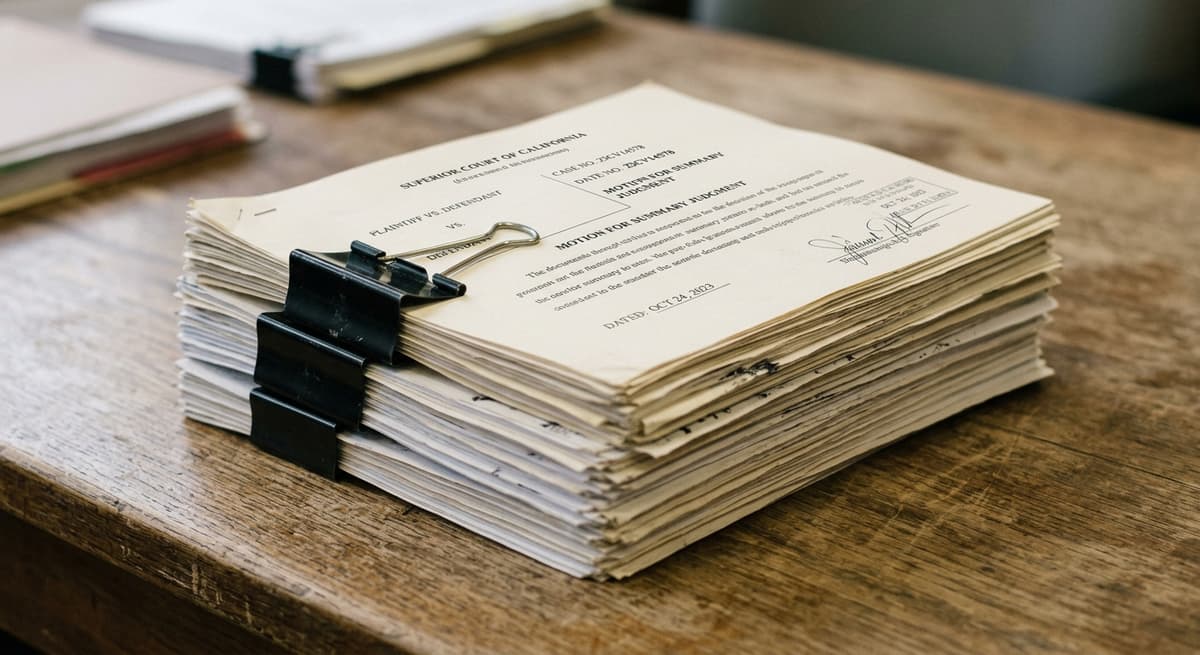
Following the 2011 Fukushima nuclear disaster, TEPCO faced multiple civil lawsuits, including claims from evacuees, businesses, and local governments that together sought roughly 11 trillion yen. The lawsuits argued that the company was ill-prepared for the tsunami. That same year, TEPCO also began paying interim compensation of about 1 million yen to every evacuated household within 30 km of the plant. Add to that ongoing claims from cleanup workers and residents affected by the fallout, including workers whose leukemia and other cancers Japan's health ministry has formally linked to their cleanup work, and TEPCO's compensation bill is one of the largest ever paid by a single company.
Estimates put TEPCO's total compensation costs at more than $134 billion. A separate shareholder lawsuit sought to hold four former TEPCO executives personally liable for the disaster. A Tokyo court ordered them in July 2022 to pay roughly $90 billion (13 trillion yen) to the company, but the Tokyo High Court reversed that order in June 2025, as covered above.
Was TEPCO at fault for Fukushima?
The National Diet of Japan's independent investigation commission concluded that the Fukushima disaster was a "profoundly manmade disaster" caused by regulatory failure and willful negligence, not simply a natural one, because TEPCO and its regulators failed to prepare for a foreseeable tsunami.
Because of that finding, victims of the disaster had grounds to bring civil claims against the company.
Remember that under corporate law, a corporate crime refers to any crime committed by an employee, through the scope of employment, to benefit the business. In TEPCO's case, the underlying failure was not adequately preparing for a known tsunami risk and thereby endangering the public.
Examples of corporate conduct that can lead to civil and criminal fines include:
- Violations of environmental laws
- Breach of contract
- Insider trading
- Bribery
- False claims
- Embezzlement
What was BP's Fine for Deepwater Horizon?
According to the EPA's summary of BP's criminal prosecution, the company pleaded guilty in 2012 to a range of crimes, including:
- Multiple counts of felony manslaughter
- Environmental crimes
- Obstruction of Congress
Two of the highest-ranking BP supervisors on the Deepwater Horizon rig also faced manslaughter and obstruction of Congress charges. As part of the criminal settlement, BP paid $4 billion in fines and penalties, including about $2.4 billion to the National Fish and Wildlife Foundation for natural resource restoration.
Did Deepwater horizon survivors get a settlement?
The Deepwater Horizon disaster caused loss of life, and businesses and livelihoods across the Gulf Coast were affected. The company faced multiple lawsuits as a result. By December 2013, BP had paid at least $13 billion in compensation to victims and businesses, plus separate federal fines.
In 2012, BP agreed to plead guilty to criminal misconduct and pay $4 billion in criminal fines and penalties, the largest criminal resolution in US history at the time.
Once the company pleaded guilty to criminal and negligence charges, it remained exposed to civil lawsuits. BP's own accounting puts its total Deepwater Horizon costs, including cleanup, fines, and settlements, at more than $65 billion.
What we know:
- BP's 2012 criminal plea included $4 billion in fines and penalties.
- In 2016, BP agreed to pay $20.8 billion to resolve federal and state civil claims, which the Department of Justice called the largest settlement with a single entity in its history.
- Additional civil lawsuits related to the spill have continued in US courts since.
How did 'diesel gate' affect VW?
Volkswagen's "dieselgate" emissions scandal has cost the carmaker more than $33 billion worldwide in criminal and civil fines and settlements. Why?
An investigation that began in 2014 and became public in September 2015 found that Volkswagen had intentionally installed defeat devices, software that could sense when a car was undergoing an emissions test and temporarily reduced emissions to pass, in vehicles that emitted far more pollution during normal driving.
Under the Clean Air Act (42 U.S.C. Section 7401 et seq.), it is unlawful to sell vehicles that do not comply with federal emissions standards. The EPA found that Volkswagen sold approximately 590,000 vehicles fitted with defeat devices in the United States, including the Volkswagen Jetta, Passat, Golf, Beetle, and Touareg, along with several Audi diesel models.
In short:
- Volkswagen installed defeat devices to cheat emissions tests.
- The company has paid more than $33 billion worldwide in criminal and civil fines and settlements.
- Volkswagen's buyback and fix program covered hundreds of thousands of affected US vehicles.
- In 2016, Volkswagen agreed to pay $25 million to California's state air board.
- Owners who kept their affected 2.0-liter vehicles were eligible for payments of roughly $5,100 to $10,000 each.
- Volkswagen's related criminal trial in Germany, including former CEO Martin Winterkorn, has continued to work through German courts.
How much has Facebook been sued for?
According to the Federal Trade Commission, Facebook's $5 billion penalty is the largest fine ever imposed on a company in the United States for a privacy violation. For comparison, Equifax agreed to pay up to $700 million over its 2017 data breach, British Airways was ultimately fined about 20 million pounds (roughly $26 million) by UK regulators over its 2018 breach, and Uber paid $148 million to settle claims that it covered up a 2016 data breach.
Why did Facebook overpay?
Some FTC commissioners dissented from the settlement, arguing that Facebook effectively overpaid the fine so the agency would drop its separate investigation into whether founder and CEO Mark Zuckerberg could be held personally liable.
What crime did Facebook commit?
The FTC found that Facebook failed to protect users from Cambridge Analytica, a data harvesting firm that used improperly obtained user data to build voter-targeting profiles during the 2016 US presidential campaign.
In short, the FTC alleged that Facebook:
- Shared user data with third-party applications without adequate consent.
- Repeatedly violated a 2012 FTC privacy order by misrepresenting how much control users had over their data, including by using phone numbers collected for account security to target users with ads.
- Misled users about how the company used facial recognition technology.
How do I file a class-action lawsuit against a company in the US?
The wrongful actions of a company against its customers, workers, or the public can sometimes support a class action lawsuit. Multistate government settlements can be even larger: in 1998, the major US tobacco companies, including Philip Morris and R.J. Reynolds, agreed to pay states more than $206 billion over the settlement's first 25 years as part of the Tobacco Master Settlement Agreement with 46 state attorneys general, plus roughly $1.5 billion to fund a national anti-smoking campaign.
That means that if a company injures your health, business, or you in another way, you may have grounds to take civil action. You also have the option to include others affected by the company's actions in your suit. For example, in Florida, section 768.734, "capacity to sue," states, quote:
"Before issuing a class certification order, the court hearing an action asserting the right to class-action status may expand a class to include any nonresident whose claim is recognized within the claimant's state of residence and is not time-barred, but whose rights cannot be asserted because the claimant's state of residence lacks personal jurisdiction over the defendant or defendants. 2. In addition, the claimant class may include nonresidents if the conduct giving rise to the claim occurred in or emanated from this state."
That raises the question:
What is the capacity to sue?
"Capacity to sue" refers to a person's or entity's legal right to bring a lawsuit, separate from whether they have a valid claim on the merits. In most states, a plaintiff generally needs standing, meaning they must have suffered an actual injury connected to the defendant's conduct, plus the legal capacity to be a party to the case, which can turn on factors like age, competency, or corporate status. Florida's rule, quoted above, addresses a narrower question: whether out-of-state residents can join a Florida class action.
How to file a class-action lawsuit in the US
Suing a corporation or large business entity on your own is time-consuming and expensive. The company likely has multiple lawyers on its side and enough resources to keep the case going for as long as it can. A class-action lawsuit is beneficial because it allows multiple people or groups to come together against a common foe.
If a company participates in unlawful or injurious activities, including employee discrimination, breach of contract, false advertising, or worker endangerment, the individuals affected may come together to share legal costs. Lawyers are also often more willing to work on contingency, meaning you may not have to pay legal fees out of pocket.
Steps: How to file a class action suit
- Evaluate your case and meet a lawyer. A lawyer will help you evaluate the facts and advise if you have a case.
- Find the right jurisdiction.
- Find others. Once you have established that you have the capacity to sue, the next step is to find others affected by the company's actions. It could be former coworkers, neighbors, and so on.
- Get official certification. In the United States, a judge must certify a class action suit. If you do not have valid grounds to sue, the judge will dismiss your claims.
It is worth mentioning that if you have valid grounds for a class action suit, most corporations may choose to settle the issue out of court.
Frequently Asked Questions
Who has paid the largest fine in recent history?
It depends on how you measure it. BP's total Deepwater Horizon liabilities, more than $65 billion, are the largest cost from a single corporate disaster on record. BP's $20.8 billion 2016 civil settlement is the largest settlement the Department of Justice has ever reached with a single company. And Purdue Pharma's $8.3 billion 2020 settlement is the largest penalty ever imposed on a pharmaceutical manufacturer.
Is TEPCO still liable for $90 billion over the Fukushima disaster?
No, not currently. A Tokyo court ordered four former TEPCO executives to personally pay about $90 billion (13 trillion yen) in 2022, but the Tokyo High Court reversed that ruling in June 2025, finding the tsunami was not foreseeable. The plaintiffs have said they intend to appeal further, so the case is not fully resolved.
What is the largest privacy fine in US history?
Facebook's $5 billion FTC penalty from 2019 remains the largest fine ever imposed on a company in the United States specifically for a privacy violation. In 2024, Meta separately agreed to pay Texas $1.4 billion over unauthorized use of biometric data, the largest privacy settlement any single state has obtained, though it is smaller than the FTC's federal fine.
How much has Volkswagen paid over the dieselgate scandal?
Volkswagen has paid more than $33 billion worldwide in criminal fines, civil settlements, and vehicle buybacks since its 2015 emissions-cheating scandal became public, including a $14.7 billion US settlement covering roughly 590,000 vehicles fitted with defeat devices.
Can I join a class action lawsuit against a company?
You generally need standing, meaning you were actually harmed by the company's conduct, and the legal capacity to be a party to the case. A lawyer can evaluate whether your situation qualifies and help you find others affected by the same conduct before a judge certifies the class.
What is the difference between a criminal fine and a civil fine?
A criminal fine is a penalty imposed after a company or individual pleads guilty or is convicted of a crime, while a civil fine or settlement resolves a lawsuit or regulatory claim without a criminal conviction. Many of the largest corporate penalties, including BP's and Purdue Pharma's, combine both criminal fines and separate civil settlements.
Updates
Full accuracy and link audit. Fixed 16 broken markdown links left over from the WordPress migration, removed 4 dead WordPress PDF attachment links, and replaced a dead CNN Money citation and a low-quality tabloid source with authoritative replacements. Corrected the Equifax ($700 million, not $2.785 billion) and British Airways (20 million pounds finalized, not the withdrawn 230 million pound proposal) privacy-fine figures. Added the 2020 Purdue Pharma $8.3 billion settlement, which is now the largest penalty ever imposed on a pharmaceutical manufacturer, surpassing the previously featured Pfizer fine. Updated the TEPCO section to reflect that the Tokyo High Court reversed the 2022 ruling against four former executives in June 2025. Updated BP's total Deepwater Horizon costs to more than $65 billion and corrected the 'largest fine' framing throughout. Removed an irrelevant First Amendment quote from the capacity-to-sue section and replaced it with an accurate explanation. Added an FAQ section and corrected the categories field.
Sources and References
- Tokyo High Court reversed the 13 trillion yen damages order against four former TEPCO executives in June 2025.(jurist.org)
- Reuters coverage of the original July 2022 Tokyo court order for TEPCO executives to pay roughly $95 billion.(reuters.com)
- TEPCO may pay up to $134 billion in compensation claims.(bbc.com)
- A Fukushima cleanup worker's leukemia was confirmed to be linked to radiation exposure during decontamination work.(cbsnews.com)
- Japan's parliamentary investigation found the Fukushima disaster was a profoundly manmade disaster caused by regulatory failure and willful negligence.(nucnet.org)
- EPA summary of BP's 2012 guilty plea to felony manslaughter, environmental crimes, and obstruction of Congress.(cfpub.epa.gov).gov
- BP agreed to plead guilty and pay $4 billion in criminal fines and penalties.(bp.com)
- BP's total Deepwater Horizon costs, including cleanup, fines, and settlements, have topped $65 billion.(maritime-executive.com)
- BP agreed to pay $20.8 billion in civil claims, the largest settlement with a single entity in Department of Justice history.(justice.gov).gov
- EPA summary of the Clean Air Act, which Volkswagen violated by selling vehicles fitted with defeat devices.(epa.gov).gov
- Volkswagen's related criminal trial in Germany over the emissions scandal.(dw.com)
- The FTC imposed a record $5 billion penalty on Facebook for user privacy violations.(ftc.gov).gov
- The FTC found Facebook repeatedly violated its 2012 privacy order.(ftc.gov).gov
- The 1998 Tobacco Master Settlement Agreement required tobacco companies to pay states more than $206 billion over its first 25 years.(naag.org)
- Florida Statute Section 768.734 governs a class's capacity to sue on behalf of nonresidents.(leg.state.fl.us).gov