
Canada
ATIP Request Canada: Fees, Deadlines, and How the Access to Information Act Works
Independently fact-checked against primary sources (last audited September 24, 2026). · 9 primary sources cited on this page. How we verify our legal content
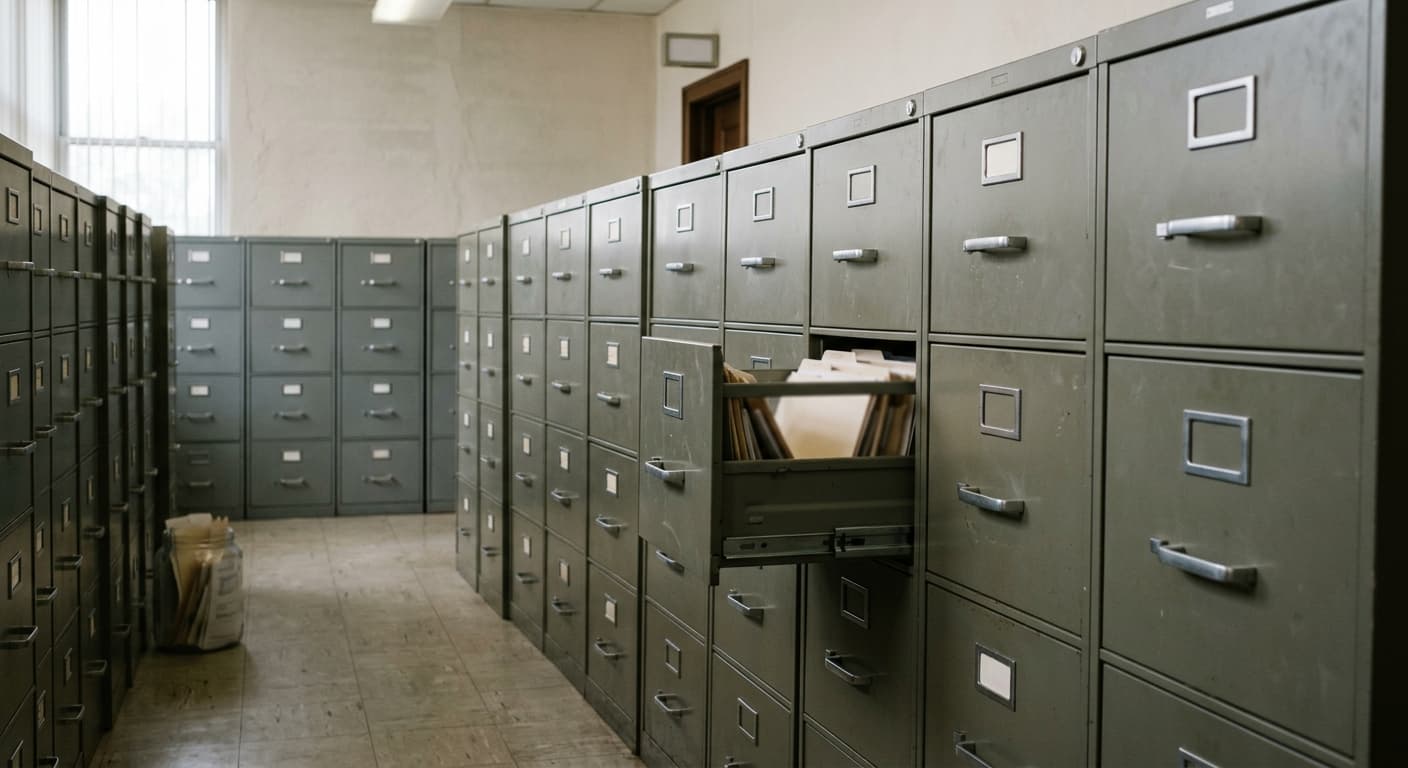
Under the federal Access to Information Act, a requester pays a single $5 application fee for records held by a federal government institution, the institution has 30 days to respond unless it takes a lawful extension, and a refusal can be challenged first with the Information Commissioner and then in Federal Court.
Information last verified on 2026-09-24. This article has not yet been reviewed by a licensed lawyer.
This article addresses requests made under the federal Access to Information Act, RSC 1985, c A-1, and the federal Privacy Act, RSC 1985, c P-21, both of which apply only to federal government institutions across Canada. It does not cover provincial or municipal freedom of information laws; for those, see the access to information hub and the Ontario, British Columbia, Alberta, and Quebec pages linked from it. It also does not cover requests made to a private business for the personal information that business holds about you, which is a separate regime under PIPEDA, not the Access to Information Act. For a fuller look at how the federal Privacy Act itself works, including its scope and oversight, see the Privacy Act in Canada.
Who Can Request Records, and the Bill C-58 Myth
Section 4(1) of the Access to Information Act gives a right of access to "every person who is (a) a Canadian citizen, or (b) a permanent resident within the meaning of subsection 2(1) of the Immigration and Refugee Protection Act." Read alone, that sounds like a citizens-and-residents-only law.
It has not worked that way in practice for decades. Section 4(2) lets the Governor in Council extend the right of access by order to people outside that group, and a longstanding order, the Access to Information Act Extension Order, No. 1 (consolidated as SOR/89-207), does exactly that: it extends the right of access to other individuals and corporations present in Canada. That order was made in 1989 (P.C. 1989-619), about 30 years before Bill C-58.
This matters because Bill C-58, the 2019 amendment that reshaped much of the Act, is often credited with opening ATIA to anyone regardless of citizenship. It did not. C-58's real contributions were narrower and, in practical terms, arguably more significant for someone actually filing a request: it changed the fee structure, gave the Information Commissioner a binding order making power, added mandatory proactive publication duties, and imposed a recurring statutory review of the Act. Each of those is covered below.
Section 4(2.1) adds a duty to assist that is owed regardless of who is asking: the head of a government institution must, without regard to the requester's identity, make every reasonable effort to assist the requester, respond accurately and completely, and, subject to the regulations, provide timely access to the record in the format requested.
The $5 Application Fee
Section 11 of the Act itself only sets a ceiling: a requester "shall pay, at the time the request is made, any application fee of not more than $25, that may be prescribed by regulation." The Access to Information Regulations made under that section set the actual fee at $5.

Since Bill C-58, that $5 fee is the only fee that can be charged for a request under the Act. There is no separate charge for the time a government employee spends searching for records, no preparation fee, and no per page reproduction charge. A request for your own personal information under the Privacy Act carries no application fee at all; the $5 fee applies only to Access to Information Act requests.
The $5 fee can be paid by cheque or money order payable to the Receiver General for Canada, or by credit card through the ATIP Online Request Service described below.
How to File: The ATIP Online Request Service
The federal government directs requesters to the ATIP Online Request Service to submit a request electronically and pay the $5 fee by credit card, rather than mailing a paper form with a cheque. Most federal institutions participate in the online service, though not every institution does; some still require a paper request form specific to that institution. If an institution is not listed as a participant in the online service, its own Access to Information and Privacy page will name the alternative way to submit a request to it.
The 30-Day Deadline and When It Can Be Extended
Section 7 requires the head of the institution to respond within 30 days after the request is received, either by giving access or by giving written notice of a refusal and the reasons for it.
Section 9 allows the institution to extend that deadline where any of three grounds applies:
- The request is for a large number of records, and meeting the original 30-day limit would unreasonably interfere with the institution's operations.
- Consultations are necessary to comply with the request and cannot reasonably be completed within the original 30 days.
- The institution has given a required notice to a third party under section 27(1) about records that may affect that party's interests.
Unlike the Privacy Act's personal-information request rule described near the end of this article, section 9 does not set a fixed numeric cap on how long an extension can run; it allows an extension "for a reasonable period of time, having regard to the circumstances." What section 9 does require is that the institution notify the requester of the extension within the original 30-day period, that the notice state the length of the extension where it rests on the volume or consultation ground, and that the notice tell the requester they have a right to complain to the Information Commissioner about the extension itself. Under section 9(2), an extension of more than 30 days must also be reported to the Information Commissioner.
What Can Be Withheld: Exemptions in Sections 13 Through 24
The Act does not give an institution open-ended discretion to withhold records. It sets specific exemption grounds, and each falls into one of two categories: mandatory, meaning the institution must refuse disclosure of the exempt material, or discretionary, meaning the institution may refuse it, in some cases only where disclosure could reasonably be expected to cause a specified injury.

| Section | Type | What it covers |
|---|---|---|
| s.13 | Mandatory | Information obtained in confidence from another government or international organization |
| s.14 | Discretionary | Federal-provincial affairs, on an injury basis |
| s.15 | Discretionary | International affairs and defence, on an injury basis |
| s.16 | Discretionary | Law enforcement and investigations |
| s.17 | Discretionary | Information that could reasonably be expected to threaten the safety of individuals |
| s.18 / 18.1 | Discretionary | Economic interests of Canada or of certain Crown institutions, such as trade secrets |
| s.19 | Mandatory, with exceptions | Personal information, unless the individual consents, the information is already public, or a Privacy Act disclosure ground applies |
| s.20 | Mandatory, with a public interest override | Trade secrets and confidential commercial, financial, scientific, or technical information of a third party |
| s.21 | Discretionary | Advice, recommendations, and deliberations within government |
| s.22 / 22.1 | Discretionary | Testing procedures and draft internal audit reports |
| s.23 | Discretionary | Solicitor-client privilege, extending to advocates and notaries in Quebec |
| s.24 | Mandatory | Disclosure prohibited by another federal statute listed in the Act's schedule |
Section 25 applies on top of every exemption above: if a record contains both exempt and non-exempt material and the two can reasonably be separated, the institution must still disclose the non-exempt part. An exemption is never a licence to withhold an entire record when only part of it qualifies.
If Your Request Is Refused: Complaints and Federal Court Review
Section 30 requires the Information Commissioner to receive and investigate complaints from a person who has been refused access, charged what they consider an unreasonable fee, given an unreasonable extension, denied a requested format, or otherwise aggrieved about how a request was handled. Section 31 requires a written complaint within 60 days of the refusal notice, or of learning the grounds for the complaint. Investigations are conducted in private under section 35.
Since Bill C-58, the Commissioner's powers go beyond a recommendation. Section 36.1 lets the Commissioner make a binding order that the institution must comply with, unless the institution or an affected third party applies to the Federal Court for review. Section 37 requires the Commissioner to issue a report of findings to the complainant and the institution.
From there, section 41 sets out Federal Court review: a complainant may apply within 30 business days after the institution receives the Commissioner's report, the institution itself may apply within 30 business days to review an order in the report. If neither the complainant nor the institution applies within the period for doing so, a third party that received the report may apply within 10 business days after the complainant's period expires, on the exemptions for third-party commercial information, and the Privacy Commissioner, if it received the report, may apply within the same 10 business days, on matters involving the disclosure of a record that might contain personal information.
Proactive Publication: Records Published Without Being Asked
Part 2 of the Act, sections 71.01 to 91, imposes a separate duty that has nothing to do with filing a request. It requires many federal institutions, ministers' offices, and named bodies such as the Supreme Court Registrar and the Courts Administration Service to publish certain records in electronic form on a routine schedule, without anyone asking for them:
- Travel and hospitality expenses of senior officers and employees, published within 30 days after the end of the month in which the expense was reimbursed (ss.82 to 83).
- Contracts over $10,000, published within 30 days after the quarter in which they were awarded, or 60 days for the fourth quarter (s.86).
- Grants and contributions over $25,000, published within 30 days after the end of the quarter in which the agreement is entered into (s.87).
- Briefing packages prepared for a newly appointed deputy head, published within 120 days of the appointment, along with monthly lists of memoranda titles (s.88).
Requesting Your Own Personal Information: The Privacy Act
The Access to Information Act is not the only federal access statute. The Privacy Act, RSC 1985, c P-21, governs requests by an individual for their own personal information held by a federal institution, and it works on a related but distinct set of rules. Section 14 gives the institution 30 days to respond, the same starting point as the Access to Information Act. Section 15 lets the institution extend that limit, but by contrast with section 9's open-ended standard above, section 15's extension for operational interference is explicitly capped at "a maximum of thirty days." No application fee applies to a Privacy Act request for your own personal information.

This article does not cover the Privacy Act's exemption grounds, its full oversight structure, or how it interacts with federal institutions in depth; see the Privacy Act in Canada for that. And if what you actually want is personal information a private business, rather than a government institution, holds about you, that is a request under PIPEDA, not either of these two Acts; see PIPEDA access requests for that separate process.
Disclaimer: This article provides general information about the federal Access to Information Act, RSC 1985, c A-1, and the federal Privacy Act, RSC 1985, c P-21, current as of September 2026. It is not legal advice. It does not cover provincial or municipal freedom of information laws, PIPEDA requests to private businesses, or the Privacy Act's exemption grounds and oversight structure in depth. Consult the relevant federal institution, the Office of the Information Commissioner of Canada, or a lawyer licensed in your province for advice on your specific situation.
Frequently Asked Questions
Who can file an ATIP request in Canada?
Canadian citizens and permanent residents have a statutory right to request records under section 4(1) of the Access to Information Act. In practice the right reaches further: a longstanding federal order, the Access to Information Act Extension Order, No. 1, extends the right of access to other individuals and corporations present in Canada, and has done so since 1989. This predates, and is separate from, Bill C-58.
How much does an Access to Information Act request cost?
The application fee is $5, set by the Access to Information Regulations under the $25 ceiling in section 11. Since Bill C-58, no other fee, such as a search fee, preparation fee, or per page reproduction charge, can be added on top of it. A Privacy Act request for your own personal information has no fee at all.
How long does a federal institution have to respond?
Section 7 sets a 30 day deadline from the day the request is received. Section 9 lets the institution extend that deadline for a large volume of records, necessary outside consultations, or required third party notice, without a fixed cap on how long the extension can run, provided the requester is notified of the extension within the original 30 days.
Did Bill C-58 open Access to Information Act requests to non-citizens?
No. That capability comes from a federal order in council from the 1980s, the Access to Information Act Extension Order, No. 1 (P.C. 1989-619, SOR/89-207), made in 1989, about 30 years before Bill C-58. C-58, in force since 2019, instead changed the fee structure, gave the Information Commissioner a binding order making power, added mandatory proactive publication duties, and set up a recurring statutory review of the Act.
What can a federal institution refuse to disclose?
Sections 13 through 24 of the Act set out specific exemptions, some mandatory (such as section 13 for information given in confidence by another government, and section 19 for personal information) and some discretionary (such as sections 15, 16, 17, and 21, several of which turn on an injury test). Section 25 still requires disclosure of any part of a record that is not itself exempt and can reasonably be separated from the exempt material.
What can I do if my request is refused or delayed?
Section 31 lets you complain to the Information Commissioner within 60 days of the refusal notice. Since Bill C-58, the Commissioner can issue a binding order under section 36.1. If the matter is not resolved there, section 41 allows an application to the Federal Court for review, generally within 30 business days after the institution receives the Commissioner's report.
Is requesting my own personal information different from a general Access to Information Act request?
Yes. A request for your own personal information from a federal institution goes under the Privacy Act rather than the Access to Information Act. It carries no fee, and its 30 day deadline in section 14 can be extended under section 15 by a maximum of 30 more days for workload or consultations, or for a reasonable period where more time is needed for translation or for converting the information into an alternative format.
Updates
Independently fact-checked against the cited primary sources
Sources and References
- Access to Information Act, RSC 1985, c A-1, s.4 (right of access; extension by order) (Justice Laws Website)(laws-lois.justice.gc.ca).gov
- Access to Information Act Extension Order, No. 1, SOR/89-207, P.C. 1989-619, registered 1989-04-13 (extends right of access to individuals and corporations present in Canada) (Justice Laws Website)(laws-lois.justice.gc.ca).gov
- Access to Information Act, RSC 1985, c A-1, s.11 (application fee, capped at $25 by regulation) (Justice Laws Website)(laws-lois.justice.gc.ca).gov
- Access to Information Act, RSC 1985, c A-1, s.7 (30 day deadline) (Justice Laws Website)(laws-lois.justice.gc.ca).gov
- Access to Information Act, RSC 1985, c A-1, s.9 (extension for a reasonable period of time; notice to the Information Commissioner for extensions over 30 days) (Justice Laws Website)(laws-lois.justice.gc.ca).gov
- Access to Information Act, RSC 1985, c A-1, ss.13 to 25 (exemptions and severability) (Justice Laws Website)(laws-lois.justice.gc.ca).gov
- Access to Information Act, RSC 1985, c A-1, ss.30, 31, 36.1, and 41 (complaints to the Information Commissioner and Federal Court review) (Justice Laws Website)(laws-lois.justice.gc.ca).gov
- Access to Information Act, RSC 1985, c A-1, Part 2, ss.71.01 to 91, including ss.82 to 88 for government institutions (proactive publication duties) (Justice Laws Website)(laws-lois.justice.gc.ca).gov
- Privacy Act, RSC 1985, c P-21, ss.14 and 15 (personal information request deadline; 30 day cap under s.15(a), reasonable period for translation or alternative format under s.15(b)) (Justice Laws Website)(laws-lois.justice.gc.ca).gov