
Australia
Unclaimed Money in Tasmania: How to Search the TAS Register
Independently fact-checked against primary sources (last audited August 18, 2026). · 5 primary sources cited on this page. How we verify our legal content
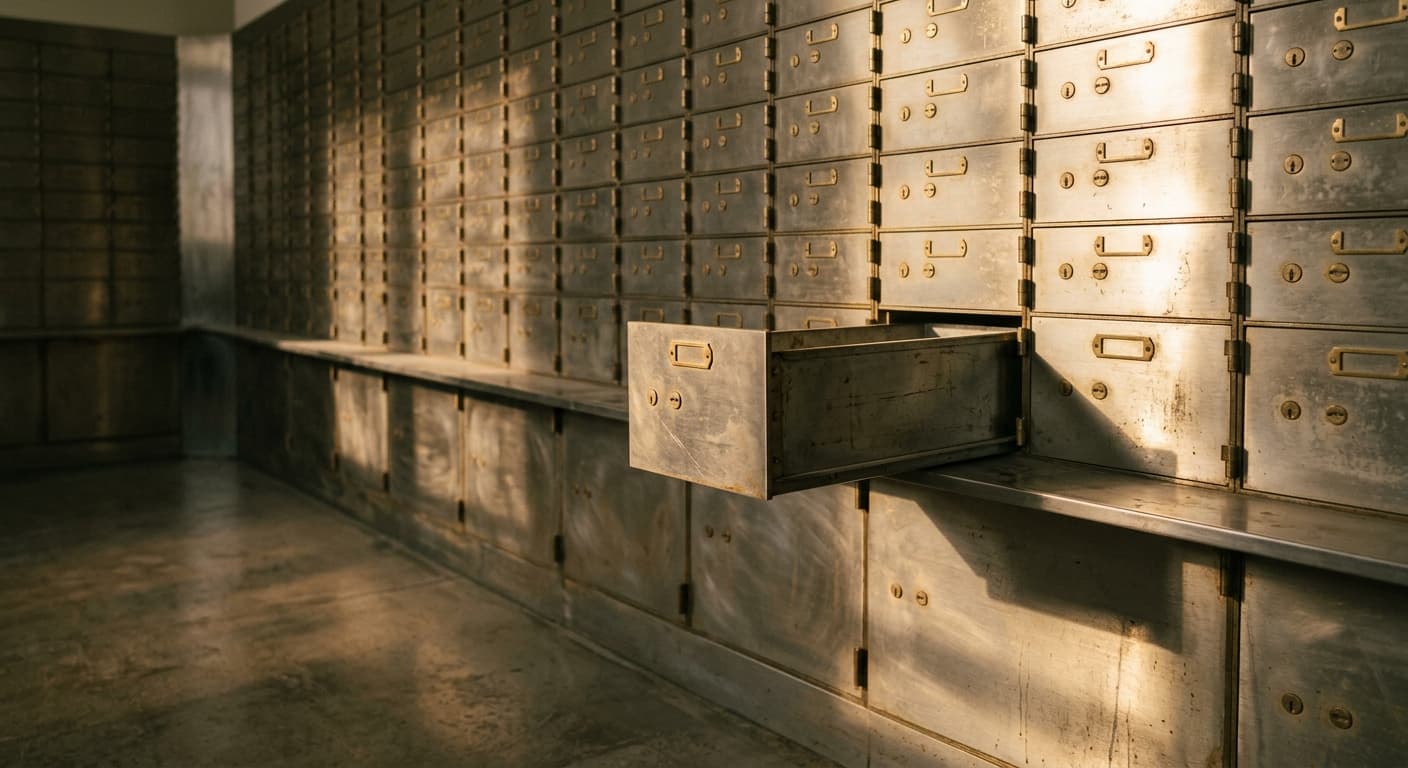
Tasmania's unclaimed money is held by the Treasurer under the Unclaimed Money Act 2015, with the fastest general dormancy trigger among the states covered here, at just 12 months, plus a distinctly detailed set of gaming and wagering listings alongside its general register.
Who Holds Unclaimed Money in Tasmania
Treasury and Finance Tasmania administers the state's unclaimed money, with the Treasurer as the statutory holder under the Unclaimed Money Act 2015. That Act received Royal Assent on 2 November 2015 and replaced the earlier Unclaimed Moneys Act 1918.
A separate agency, Public Trustee Tasmania, handles deceased estate money where a beneficiary cannot be located, and is covered in its own section below.
How Long Before Money Becomes Unclaimed: 12 Months, Then Up to a Further Year to Remit
Section 4(2) of the Act sets a two part general rule. An amount becomes unclaimed money once 12 months have passed since it became payable and no claim has been made by the owner. Section 7(1) then requires a holder to pay that unclaimed money to the Treasurer within a further year after it is entered on the holder's own register, unless it has already been paid to the owner. In practice that means roughly 12 months of dormancy followed by up to another 12 months before the money reaches the Treasurer, rather than a single combined number.
Money paid into a Tasmanian court follows a separate, slower rule. Under section 19(2), court held money becomes unclaimed after 6 years with no disposal order, and must then reach the Treasurer within 12 months of that point under section 20(1).
The Act also has a catch all under Part 5, covering money that other Tasmanian laws, including the Gaming Control Act 1993, the Marine and Safety Authority Act 1997, and the Water Management Act 1999, direct to the Treasurer as unclaimed money. This defaults to the same 12 month remittance window unless another period is set elsewhere.
The Minimum Amount, and What Happens Below It
Section 4(3) of the Act sets the default "relevant minimum amount" at $50, though the Treasurer can vary this by notice for a specific holder or more generally under section 4(4). Treasury's own page confirms it publishes 8 listings of unclaimed money where the amount is $50 or more. Amounts under $50 are not included in those published listings, but Treasury's page states that a claimant who believes Treasury holds a smaller amount can still claim it by following the same identification process.

A separate, more unusual detail in section 5(2) to (3) caps what a holder may charge a member of the public to inspect the holder's own physical unclaimed money register, at $5 by default. This is a fee cap on record keeping, not on a claim itself.
Eight Listings, Including a Notably Detailed Gaming and Wagering Breakdown
Treasury publishes 8 separate searchable listings, each with its own claim form: general unclaimed money, unclaimed superannuation money, expired Federal Rewards Club account funds, unclaimed inactive Betfair accounts, unclaimed Betfair parimutuel ticket funds, unclaimed Sportsbet fixed price tickets, unclaimed inactive TOTE accounts, and unclaimed Tattslotto ticket prize money for tickets purchased in Tasmania. This gaming and wagering detail is more granular than what other states in this cluster publish, reflecting Tasmania's role hosting major wagering operators.
Treasury's own search tips suggest using your browser's find function on the PDF listings, trying common misspellings of a name, and for ticket or membership based funds, searching by the ticket or card number exactly as printed rather than by name.
Tasmania's Superannuation Listing Is Not General Lost Super
It is easy to assume Treasury's "Unclaimed Superannuation money" listing works like a general lost super search. It does not. Part 3 of the Act, sections 8 to 18, defines this listing narrowly as unclaimed benefits from Tasmania's own public sector Retirement Benefits Fund, paid to the Treasurer under the Retirement Benefits Act 1993 and its regulations. This only concerns Tasmanian state public sector superannuation. Anyone with lost or unclaimed super from a private fund, or from work outside the Tasmanian public sector, needs the ATO's system instead, covered below.
How to Claim
Most claims need proof of identification and proof of your relationship to the funds. Ticket based claims for Tattslotto, parimutuel bets, Sportsbet, and Federal Rewards Club funds require the original physical ticket or membership card. Treasury's page states plainly that photocopies will not be accepted for these.

Treasury's main page does not include the kind of explicit "free of charge" statement found on the equivalent pages in several other states. Its framing implies claiming carries no cost, since it describes accepting and paying claims on receipt of proof of entitlement, but a separate Guidelines for Making a Claim document was not reviewed for this page, so do not assume that point is confirmed the same way it is for states that state it outright.
Deceased Estates: Public Trustee Tasmania, Not Treasury
Where a deceased person's beneficiary cannot be located or the next of kin is unclear, that money is handled by Public Trustee Tasmania, not by Treasury's general register. Public Trustee's own page states it is "currently holding funds from various estates where beneficiaries cannot be located," and it publishes a live, named list of specific estate matters with reference numbers and approximate values for people to check their own possible kinship against. Public Trustee's page also links out to ASIC's Moneysmart search.
This is closer to Western Australia's approach of routing deceased estates elsewhere than to states that build deceased estates into their own general claim process. For a Tasmanian estate going through probate more broadly, see the Tasmania probate process, and where there is no will, who inherits under intestacy.
No Deadline Found, and a Discretionary Approach to Interest
Section 25(1) of the Act, covering the Treasurer's power to pay lawful claimants, sets no time bar on a claim. Section 27(2) reinforces this for money that has been further swept into the state's Public Account after 2 years unclaimed with the Treasurer, stating that doing so "does not affect or prejudice the right of the owner" to recover it. No language limiting or extinguishing a claim was found elsewhere in the Act.
Interest works differently here than in some other states. Section 25(2) states that no claimant is to be paid interest, "unless the Treasurer determines otherwise." That is a genuine discretionary power held by the Treasurer, not an automatic entitlement and not a flat refusal either. How often that discretion is actually used was not confirmed for this page.
Paid Finder Services: No Tasmania Specific Warning Found
Neither Treasury's unclaimed money page, Public Trustee's page, nor the Act's own text address third party finder or recovery agents, or any cap on what one could charge. Neither page states a fee for claiming directly either, but as noted above, this page does not confirm claiming through Treasury is free the way several other states' pages state it outright. What can be said is that no source reviewed here describes a paid third party as necessary to search Treasury's listings or lodge a claim.

Superannuation, Bank Accounts and Life Insurance Sit With the Commonwealth
General or private superannuation that is lost or has become unclaimed is searched through the ATO, typically via myGov, not through Treasury's narrow public sector listing. Bank accounts, life insurance and company money that have gone unclaimed, generally after 7 years for bank accounts subject to a $500 minimum, are held by ASIC. A thorough search in Tasmania means checking Treasury's 8 listings, Public Trustee's estate list where relevant, and these separate Commonwealth systems.
Frequently Asked Questions
How quickly does money become unclaimed in Tasmania?
Faster than most other Australian states. Under the Unclaimed Money Act 2015, an amount can become unclaimed after 12 months with no claim from the owner, and the holder generally then has up to a further year to remit it to the Treasurer.
Does Tasmania's Unclaimed Superannuation money listing cover general lost super?
No. It is limited to unclaimed benefits from Tasmania's own public sector Retirement Benefits Fund. General or private lost superannuation is held by the relevant fund or the ATO, not by Treasury.
Is there a deadline to claim unclaimed money in Tasmania?
No deadline was found in the Act's text. Section 27(2) confirms that an owner's right to recover their money survives even after it has been moved into the state's Public Account.
Does Tasmania pay interest on unclaimed money?
Not by default. Section 25(2) of the Act says no interest is payable unless the Treasurer determines otherwise, which is a discretionary power rather than a guaranteed entitlement.
Who handles unclaimed money from a deceased person's estate in Tasmania?
Public Trustee Tasmania, not Treasury. It publishes its own list of deceased estate matters awaiting a provable next of kin claim, separate from Treasury's general unclaimed money listings.
Updates
Independently fact-checked against the cited primary sources
Sources and References
- Treasury and Finance Tasmania, Unclaimed money (guidelines, instructions and legislation)(treasury.tas.gov.au).gov
- Tasmanian Legislation, Unclaimed Money Act 2015, in force text(legislation.tas.gov.au).gov
- Public Trustee Tasmania, Unclaimed monies (deceased estates awaiting a next of kin claim)(publictrustee.tas.gov.au).gov
- Australian Taxation Office, Searching for lost superannuation(ato.gov.au).gov
- ASIC, How authorised deposit taking institutions lodge unclaimed money returns(asic.gov.au).gov