
Australia
Property Records in the ACT: How to Search a Land Title, Fees and Caveats
Independently fact-checked against primary sources (last audited August 19, 2026). · 6 primary sources cited on this page. How we verify our legal content
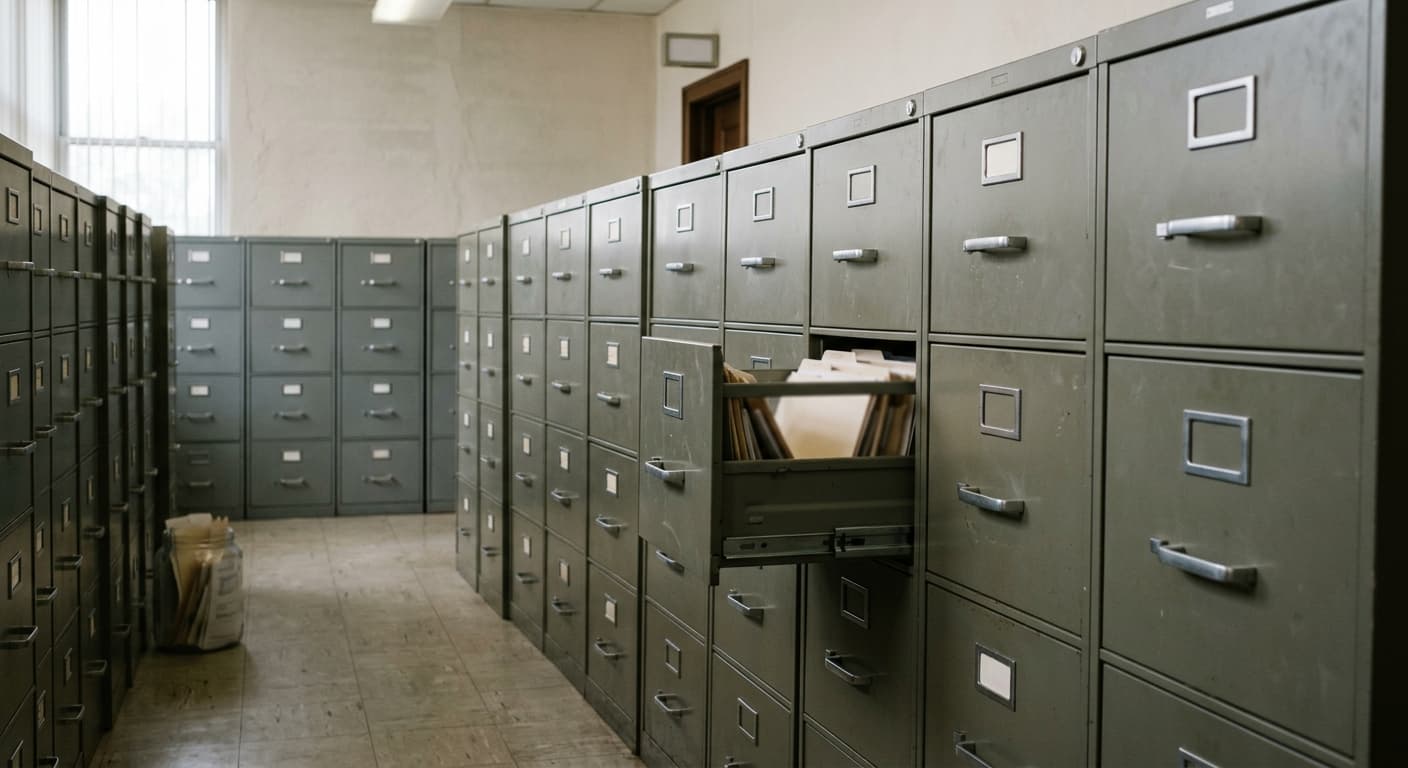
The ACT's Land Titles Act 1925 gives the public access to inspect the land titles register through ACTLIS for a fee, and unlike NSW, the ACT Land Titles Office is a government agency rather than a privatised operator, while certificates of title still exist even though they are no longer required to register a dealing.
This page covers the ACT layer of the property-records picture. For the national context, how the Torrens system works, and how the ACT compares with other states and territories, see the Australia property records hub.
Who Runs the Register and Under Which Act
The ACT's land title register runs under the Land Titles Act 1925 (ACT), administered by the ACT Land Titles Office (LTO), which operates within Access Canberra, a public ACT Government agency. That is a real contrast with NSW, where NSW Land Registry Services is a privatised operator (Australian Registry Investments Pty Ltd, trading under that name) rather than a government office. Section 66 of the Act gives a person access to the register "for the purpose of inspection during office hours," and section 65 entitles an applicant to a certified copy of any part of the register on request. Neither section imposes an identity check or a requirement to state a reason; access is fee-gated under section 139, not eligibility-gated. Indefeasibility runs through section 53, which makes the register "conclusive evidence" of the interests it records and of who holds them.
What a Title Search Shows (and Does Not)
The Act's own search sections establish the mechanism, inspection or a certified copy of "any part of the register," rather than an itemised contents list. Access Canberra's own guidance describes ACTLIS as letting a user purchase a title search, check searches, crown leases, deposited plans, instruments, sublease plans and units plans. A title search would be expected to show the registered proprietor and registered interests such as mortgages and caveats, since caveats are themselves register entries under section 104A. A granular comparison of exactly what a search shows against what it does not, such as whether occupancy or price appears, was not independently confirmed from a dedicated ACT source for this page and is left as an open question rather than assumed.
How to Search: ACTLIS
ACTLIS, the ACT Land Information System, is the official portal. It can be used as a member of the public with no account, or through a subscriber account carrying a running credit balance for repeat use. Access Canberra's own guidance states that ACTLIS lets a user search for and purchase copies of a title search, check searches, crown leases, deposited plans, instruments, sublease plans and units plans.

The search keys named on that guidance are the property's street name, its full address, its volume and folio numbers, or its parcel details. An owner-name search key is not listed. That is a documented restriction, or at least omission, on the public-facing product description; it is not itself a statutory prohibition, since neither section 66 nor section 65 of the Act restricts search keys in the text. The safe framing is that the public ACTLIS search is address, volume/folio, or parcel based, and an owner-name key is not advertised, short of claiming it is barred outright.
A Title Watch subscription service is also available, sending notifications when actions are detected on nominated titles. Plan searches require the plan number, obtainable from a prior title search; crown lease searches require the volume and folio.
Fees
Fees are set under the Land Titles (Fees) Determination 2026 (No 2), made under section 139 of the Act and effective 1 July 2026.
| Item | Fee |
|---|---|
| Application to inspect the register (s66) | $36.00 |
| Plan search, copy of information in the register (s67) | $26.00 |
| All other searches, i.e. standard title search (s67) | $24.00 |
| Certified copy of the register (s65) | $33.00 per page, capped at $110.00 |
| Application to register a caveat (s104A) | $360.00 |
| Application to register a removal of a caveat (s107) | $184.00 |
| Application to hold a duplicate certificate of title, instrument or crown lease (fee item cross-refers to the repealed s164A) | $26.00 |
| Most other dealing registrations (transfers, mortgages, easements, leases) | $184.00 each |
The caveat-lodgement fee is waived to $0.00 where the caveator is Homes for Homes Limited acting under the Social and Affordable Housing Scheme. Requisition fees for lodgement defects run $128.00 for a simple requisition, $256.00 for a complex one, and $487.00 for a units-plan or sublease-plan requisition plus $16.00 per unit over 30, figures also confirmed on Access Canberra's separate "Land title lodgements" page.
Certificates of Title: Not Abolished, But No Longer Required
The Land Titles Act still contains live provisions for certificates of title: section 44 sets out the certificate's form, and section 52 requires the Registrar-General to give the lodging party a certificate of title once an interest is registered. Neither section has been repealed. The current fee determination still prices an application to hold a duplicate certificate of title at $26.00. That fee item cross-refers to section 164A, but section 164A was repealed by the Land Titles (Register) Legislation Amendment Act 2020 (A2020-16, s74) and no longer appears in the current Act, so the determination's own cross-reference is stale; the fee itself is current.
What changed is that a certificate of title is no longer a prerequisite to registering a dealing. The ACT's 2020 reform, the Land Titles (Electronic Conveyancing) Legislation Amendment Act 2020 together with the Electronic Conveyancing National Law (ACT) Act 2020 (both passed 7 May 2020, commenced 1 June 2020), removed the requirement to produce a certificate of title before lodging a document for registration. The correct summary for the ACT is that certificates of title still exist as an available document and remain fee-scheduled, but production of one is no longer required to register a dealing, a materially softer position than NSW's full cancellation of all certificates of title on 11 October 2021.
Caveats
Caveats sit in sections 104 to 108 of the Act. Section 104 lets a caveat be lodged by a trustee-transferor in a bare-trust transfer, by a person claiming an interest in the land or their legal practitioner, or by an authorised agent, and requires the caveat to state the caveator's name and address, describe the interest claimed, and give an ACT address for service. Section 104A requires the Registrar-General to enter a compliant caveat without needing to determine the validity of the caveator's underlying claim, beyond checking it is facially compliant.

A caveat is not automatically time-limited by default. Under section 106, it lapses 14 days after the caveator is given notice that an application has been made to register a document affecting the land, unless a court orders otherwise, with exceptions for caveats lodged by a settlor, by or on behalf of a will or settlement beneficiary, or by the Registrar-General. Under section 107, a registered proprietor can apply to have a caveat removed, and the Registrar-General gives the caveator 14 days' notice before removing it, again unless a court orders otherwise.
Section 108 governs compensation for lodging a caveat without reasonable cause: a person who does so "shall be liable to make to any person who has sustained damage thereby such compensation as is just," recoverable in an action at law. That is structurally the same as NSW's equivalent provision, uncapped and court-assessed rather than a fixed statutory penalty. Lodging a caveat costs $360.00; removing one costs $184.00.
Other Public Property Data
This research did not independently confirm an ACT equivalent of a NSW-style planning certificate or a public sales-price dataset. That gap is worth flagging rather than papering over: the ACT's land system is Crown-leasehold rather than freehold, so concepts like "planning certificate" and public sales data may not map onto it the same way they do in a freehold state. The Land Titles Act cross-references the Community Title Act 2001 and the Unit Titles Act for strata and unit-title schemes; those records are handled separately, see below.
Privacy Limits
Owner-name search: as covered above, the public ACTLIS product page names street, address, volume/folio and parcel as search keys, and does not mention an owner-name key. That is a genuine product-level omission worth noting, short of a confirmed statutory prohibition. Suppression for protected persons: this was not researched for this page and is left as an open question rather than assumed present or absent. Identity verification on lodgement: the Land Titles (Verification of Identity) Rules 2020 and Land Titles (Verification of Authority) Rules 2020 require identity checks on parties lodging a dealing, a fraud-prevention control on who can transact, not a restriction on who can search the register; the two should not be conflated.
What a Property Record Is Not
A land title record is not a strata or unit-title record; those sit under the Community Title Act 2001 and the Unit Titles Act, covered on the Australia strata law hub rather than re-derived here. It is also not a court file: ACT court records, including how to search ACT court proceedings, are covered on the ACT court records page. And a title search answers who currently holds a registered interest in land, not whether someone occupying land without title can eventually claim it, a separate doctrine covered on the adverse possession in Australia page.

Frequently Asked Questions
Can anyone search the ACT land titles register?
Yes. Section 66 of the Land Titles Act 1925 gives a person access to inspect the register during office hours, on payment of a fee set under section 139, with no identity check or stated reason required by the section itself.
How much does an ACT title search cost?
Under the Land Titles (Fees) Determination 2026 (No 2), effective 1 July 2026, a standard title search ("all other searches") costs $24.00 and a plan search costs $26.00.
Are certificates of title abolished in the ACT?
No. The Land Titles Act still provides for issuing and duplicating certificates of title, and the current fee schedule still prices a duplicate certificate at $26.00. What changed with the ACT's 2020 e-conveyancing reforms is that a certificate of title is no longer required to be produced before a dealing can be registered.
Is there a fixed penalty for lodging an improper caveat in the ACT?
No. Section 108 makes a person who lodges a caveat without reasonable cause liable to pay compensation for the loss caused, assessed by a court as "just" compensation. There is no set statutory dollar penalty.
Can I search ACT land titles by owner name?
Not as an advertised search key. The public ACTLIS product page lists street name, full address, volume and folio, or parcel details as the ways to search, and does not mention an owner-name key.
Updates
Independently fact-checked against the cited primary sources
The Law Behind This Article
This article rests on the statutory provisions below, held in our own legal record and retrieved from the official source. Tap a section to read the operative text.
Land Titles Act 1925 (ACT)
s 104Lodging of caveatIn force
(1) A caveat, in relation to land, shall not be entered in the register unless it is lodged by— (a) if the land is to be held by the transferee as trustee—the transferor of the land; or (b) a person claiming an interest in the land or his or her legal practitioner; or (c) where a person claiming an interest in the land so authorises in writing—the agent of that person. (2) Subject to subsections (3) to (5), a caveat may prohibit the registration of any document affecting the land or interest in respect of which it is entered in the register. (3) A caveat may be restricted in operation by stating— (a) that specified types of documents are not prohibited from registration by the caveat; or (b) that 1 or more of the types of documents referred to in subsection (5) are prohibited from registration by the caveat.
Official text (excerpt) · last checked 2026-09-28 · Read the full text in our law library · Verify at legislation.act.gov.au
s 108Compensation for lodging caveat without reasonable causeIn force
Any person lodging any caveat with the registrar-general without reasonable cause shall be liable to make to any person who has sustained damage thereby such compensation as is just, and the compensation shall be recoverable in an action at law by the person who has sustained damage from the person who lodged the caveat. Division 10.5 Determinations under Rates and Land Rent (Relief) Act 1970
Official text (excerpt) · last checked 2026-09-28 · Read the full text in our law library · Verify at legislation.act.gov.au
s 44Form of certificate of titleIn force
(1) Every certificate of title shall set forth the nature of the estate of freehold or leasehold in respect of which it is issued. (2) The registrar-general shall note thereon in such manner as to preserve their priority the particulars of all unsatisfied mortgages or other encumbrances, and of any other interests to which the land is subject, and if the certificate of title be issued to an infant or to a person otherwise under disability he or she shall state the age of the infant or the nature of the disability so far as known to him or her, and shall cause a certificate of title to be delivered to the proprietor entitled to the land described therein.
Official text (excerpt) · last checked 2026-09-28 · Read the full text in our law library · Verify at legislation.act.gov.au
s 53Evidence as to titleIn force
(1) The register is conclusive evidence— (a) as to the interests held in land under the Act; and (b) that the registered proprietor of each such interest is entitled to that interest. (2) A certified copy of a part of the register, furnished under section 65 and signed and sealed by the registrar-general, is conclusive evidence of the matters stated in the certified copy, as at the date on which the certified copy was furnished. (3) A certificate of title signed and sealed by the registrar-general is evidence of the matters stated in the certificate. (4) If the register contains a statement to the effect that the person named therein is entitled to any easement therein specified, the statement shall be conclusive evidence that he or she is so entitled. (5) If the register contains the words ‘Together with a right of carriageway over the road delineated and coloured brown on the said map’ or words to the like effect, those words shall have the same effect as if the words contained in schedule 1 had been in their stead.
Official text (excerpt) · last checked 2026-09-28 · Read the full text in our law library · Verify at legislation.act.gov.au
s 65Certified copies of registerIn force
On application, the registrar-general must give the applicant a certified copy of any part of the register.
Official text (excerpt) · last checked 2026-09-28 · Read the full text in our law library · Verify at legislation.act.gov.au
Search our full record of US law — 2.1 million sections, every state + federal →
Sources and References
- Land Titles Act 1925 (ACT), ss65-66 (search and inspection) and s53 (conclusive evidence)(legislation.act.gov.au).gov
- Land Titles Act 1925 (ACT), ss44, 52 (certificates of title; s164A repealed by A2020-16 s74) and ss104-108 (caveats, s108 compensation)(legislation.act.gov.au).gov
- Land Titles (Fees) Determination 2026 (No 2), Disallowable Instrument DI2026-104 (items 4-7, 28, 30, 48, 50)(legislation.act.gov.au).gov
- Access Canberra, "Search the ACT Land Titles Register" (ACTLIS description and search keys)(accesscanberra.act.gov.au).gov
- Access Canberra, "Land title lodgements" (requisition fees, PEXA/ECNL, VOI/VOA rules)(accesscanberra.act.gov.au).gov
- ACT Government, "Modernising the ACT land titles system" (2020 reform, certificate of title no longer a pre-requisite to dealing)(accesscanberra.act.gov.au).gov