
Australia
Lemon Laws in Australia: Used Car Statutory Warranties by State
Independently fact-checked against primary sources (last audited September 28, 2026). · 20 primary sources cited on this page. How we verify our legal content

Australia has no single "lemon law": a defective car is covered instead by two layers of protection stacked together, the federal Australian Consumer Law's consumer guarantees and a separate state or territory statutory warranty scheme that applies to a used vehicle bought from a licensed dealer.
Information last verified 28 September 2026 against the Australian Consumer Law (Schedule 2 to the Competition and Consumer Act 2010), the ACCC's motor vehicle sales and repairs industry guide, and the used car statutory warranty legislation and government guidance of every Australian state and territory.
This article covers the consumer protections available in Australia to a buyer of a defective or faulty used car: the federal consumer guarantees under the Australian Consumer Law, which apply nationwide to every sale by a business other than at auction, and the separate statutory warranty or dealer guarantee scheme each state and territory runs for a used vehicle bought from a licensed dealer. It does not cover private car sales, new vehicle manufacturer warranties, or vehicle finance and lending disputes. For the consumer guarantees themselves in more depth, see Consumer Guarantees in Australia; for how a statutory guarantee differs from a voluntary warranty, see Warranties vs Guarantees in Australia.
There Is No "Lemon Law" in Australia
"Lemon law" is a US term for statutes that let a buyer force a refund or replacement of a persistently defective new vehicle. Australia has never enacted a single Act by that name, at federal or state level, and there is no Commonwealth or state "Lemon Law" for a reader to look up. What actually protects an Australian buyer of a defective car is two different, and differently scoped, sets of law working together.
The first layer is the Australian Consumer Law, a schedule to the Competition and Consumer Act 2010 (Cth) that applies to every sale of a car by a business, new or used, other than at auction, and carries no age, distance or price cutoff. The second layer is a state or territory statutory warranty, sometimes called a dealer guarantee, that applies only when the car was bought from a licensed motor dealer (in Queensland, also a licensed chattel auctioneer) and comes with its own age, distance or price limits that vary sharply between jurisdictions. A private sale, or a purchase from an unlicensed seller, sits entirely outside the second layer. A one-off private sale also falls outside most of the first: the buyer keeps only the Australian Consumer Law's guarantees of clear title, undisturbed possession and no undisclosed securities, plus any implied terms under state sale of goods law that the contract does not exclude.
Consumer Guarantees for Cars Under the Australian Consumer Law
The Australian Consumer Law's acceptable quality guarantee is the main protection for a defective car, new or used, bought from a business other than at auction. The ACCC's own industry guide, co published with every state and territory consumer affairs regulator, sets out the test: whether a reasonable consumer, fully acquainted with the vehicle's condition including any defects, would find it fit for all the purposes such vehicles are commonly supplied for, acceptable in appearance and finish, free from defects, safe, and durable, assessed against the vehicle's own nature, age and price.
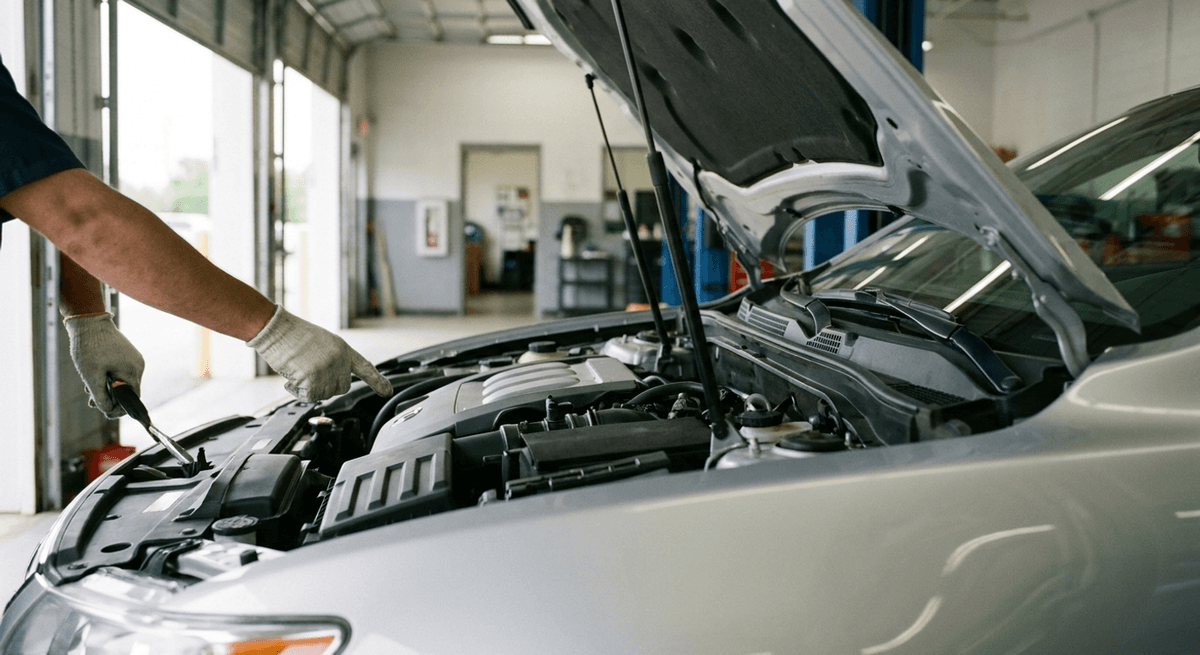
A defect is either a major failure or a minor failure, and the remedy differs sharply between the two.
A major failure includes, among other things, where the vehicle is substantially unfit for its normal purpose, or for a purpose the buyer disclosed to the dealer, and cannot easily be made fit within a reasonable time, or is unsafe. The ACCC guide gives the example of an engine design flaw causing overheating under a normal towing load that cannot easily be fixed. On a major failure, the buyer can choose to reject the vehicle for a refund or an identical or equivalent replacement, or keep it and claim compensation for reasonably foreseeable loss. A buyer cannot reject once the rejection period has passed, if the vehicle was lost, destroyed or disposed of, damaged after delivery, incorporated into other property, or if the buyer caused the problem through abnormal use. The ACCC guide notes that the length of the rejection period is not settled by any significant judicial consideration and is not tied to any warranty period. A latent defect's rejection clock can still be running after a state statutory warranty, discussed below, has already expired.
A minor failure is one that can be fixed within a reasonable time. Here the choice belongs to the dealer or supplier, not the buyer: the dealer chooses repair, refund or replacement while a fix is attempted, and the failure only escalates to a major failure remedy if that reasonable time repair attempt itself fails.
These guarantees apply to a new or a second hand car bought from a licensed dealer other than at auction, not a one-off private sale. A voluntary manufacturer or extended warranty sits on top of, and never replaces, these statutory rights or the state or territory statutory warranty covered below. For what a refund actually involves once a buyer is entitled to one, see Faulty Goods Refunds in Australia.
Used Car Statutory Warranties: All Eight States and Territories
On top of the Australian Consumer Law, every state and territory runs its own statutory warranty, sometimes called a dealer guarantee, for a used car bought from a licensed dealer. Six of the eight schemes cluster around a similar shape, an ordinary used car under ten years old and under 160,000 kilometres (150,000 in Western Australia) carries a three month or 5,000 kilometre warranty, but the details differ enough between jurisdictions that treating them as one uniform rule will mislead a reader in several of the eight. The table states the eligibility thresholds and warranty period for an ordinary passenger vehicle in each jurisdiction; Western Australia's and Queensland's two tier structures are explained further below.
| Jurisdiction | Act | Used Vehicle Eligibility and Thresholds | Warranty Period |
|---|---|---|---|
| New South Wales | Motor Dealers and Repairers Act 2013 (dealer guarantee) | Under 160,000 km and under 10 years old. Used motorcycle: under 30,000 km and under 5 years. Used trailer: under 10 years | 3 months or 5,000 km (motorcycle: 3 months or 3,000 km; trailer: 3 months) |
| Queensland | Motor Dealers and Chattel Auctioneers Act 2014 | Class A: odometer under 160,000 km and built 10 years or less before sale. Class B, from 1 September 2019: odometer 160,000 km or more, or built more than 10 years before sale | Class A: 3 months or 5,000 km. Class B: 1 month or 1,000 km |
| Victoria | Motor Car Traders Act 1986 | Under 10 years old by build plate date and under 160,000 km. Excludes motorcycles, commercial vehicles and auction sales | 3 months or 5,000 km, flat, no lower tier |
| Western Australia | Motor Vehicle Dealers Act 1973 | Covered only if priced $4,000 or more ($3,500 or more for a motorcycle). Tier 1: up to 10 years old and up to 150,000 km (motorcycle: up to 8 years and 80,000 km). Tier 2, cars only: 10 to 12 years old or 150,000 to 180,000 km. Beyond that, no statutory warranty at all | Tier 1: 3 months or 5,000 km. Tier 2: 1 month or 1,500 km. Beyond Tier 2: nil, though the Australian Consumer Law guarantees still apply |
| South Australia | Second-hand Vehicle Dealers Act 1995 | Over $3,000, first registered 15 years or less before the year of sale, and driven 200,000 km or less. Excludes motorcycles. Price bands: $3,001 to $6,000, or over $6,000. Under $3,000, or older or higher-km: no duty to repair beyond a defect, present at possession, that makes the car unroadworthy or unsafe | $3,001 to $6,000: 2 months or 3,000 km. Over $6,000: 3 months or 5,000 km |
| Tasmania | Motor Vehicle Traders Act 2011, ss42 to 46 | Under 120,000 km travelled and compliance plated under 7 years before sale (motorcycle: under 15,000 km and under 3 years). Excludes commercial vehicles and trader to trader sales | 3 months or 3,000 km, ending early if the vehicle is used for racing or rally, as a taxi or hire car, is repossessed, resold, or has its odometer altered |
| Northern Territory | Consumer Affairs and Fair Trading Act 1990, ss168 to 171 | Sold 10 years or less after manufacture (5 years or less for a motorcycle) and driven under 160,000 km (under 30,000 km for a motorcycle) at sale | 3 months or 5,000 km after the purchaser takes possession, whichever comes first |
| Australian Capital Territory | Sale of Motor Vehicles Act 1977, s23 and Schedule 1 | 160,000 km or less and 10 years or less from manufacture | 3 months or 5,000 km, whichever comes first |
Six jurisdictions, New South Wales, Queensland's Class A tier, Victoria, the Northern Territory, the Australian Capital Territory and Western Australia's Tier 1 (which uses 150,000 km), cluster tightly around this under 10 years, under 160,000 km, 3 months or 5,000 km shape. Tasmania is the outlier on the low side, with a shorter 7 year, 120,000 km eligibility window and a shorter 3,000 km distance limit. South Australia is the outlier in kind: its warranty period depends on price band, not age or distance, although a 15 year or 200,000 km cutoff still removes older cars from cover. Western Australia and South Australia both set dollar floors: $4,000 for a car ($3,500 for a motorcycle) in Western Australia, below which there is no statutory warranty, and $3,000 in South Australia, below which the dealer's only duty is to repair a defect, present at possession, that makes the car unroadworthy or unsafe.
Every one of these schemes applies only to a vehicle bought from a licensed motor dealer (in Queensland, also a licensed chattel auctioneer). A private, backyard sale is not covered by any state or territory statutory warranty; a buyer in that position needs to look at misrepresentation or fraud remedies instead, not this scheme.
Two Tier Fallback Warranties in Western Australia and Queensland
Western Australia and Queensland do not simply drop a car from cover once it fails their top eligibility tier. Both run a second, shorter fallback tier instead.
In Queensland, a vehicle too old or too high on the odometer for Class A (over 160,000 km, or built more than 10 years before sale) drops into Class B, which still carries a 1 month or 1,000 km statutory warranty rather than none at all. Buyers can waive Class B cover for a vehicle over 20 years old sold specifically for restoration.
In Western Australia, a car that misses Tier 1 (over 10 years old, or over 150,000 km) but is still within 10 to 12 years old or 150,000 to 180,000 km falls to Tier 2, a 1 month or 1,500 km warranty. Only a car older or higher on the odometer than that, or priced under the $4,000 floor, has no statutory warranty at all, and even then the Australian Consumer Law's consumer guarantees, covered above, still apply regardless of the vehicle's age, distance or the price paid.
Making a Claim and Where Disputes Go
The first step under any of these schemes is to raise the fault with the selling dealer in writing and give the dealer a reasonable opportunity to repair, replace or refund, as the applicable Act requires. If the dealer will not act, the next step is usually the state or territory's fair trading or consumer affairs regulator, which can mediate or investigate a licensed dealer's conduct. If that does not resolve the dispute, most jurisdictions run a low cost tribunal that can hear a motor vehicle claim; for the small claims process generally, see Small Claims Tribunals in Australia.

The tribunals themselves are not interchangeable, and their monetary limits vary in ways that matter for a car dispute specifically.
| Jurisdiction | Tribunal or Court | What Applies |
|---|---|---|
| New South Wales | NCAT, Consumer and Commercial Division | Hears a motor vehicle consumer claim under the Motor Dealers and Repairers Act 2013. A claim must be brought within 3 years of when the problem began, for goods supplied within the last 10 years. Monetary limit $100,000, with no limit for a claim about a new motor vehicle used substantially for private purposes. |
| Queensland | QCAT | General consumer and trader dispute cap of $25,000, but a claim against a licensed dealer for failing to repair a warranted used vehicle under the Motor Dealers and Chattel Auctioneers Act, or for failing to meet a consumer guarantee under the Fair Trading Act 1989, can go up to $100,000. Private sale disputes are excluded entirely. |
| Victoria | VCAT, Civil Claims List | Hears consumer vehicle disputes against a dealer. Confirm the current monetary limit directly with VCAT. |
| Western Australia | Magistrates Court of Western Australia | Hears general consumer and trader claims, including against a vehicle dealer. Confirm the current monetary limit directly with the court. |
| South Australia | Magistrates Court of South Australia (after a CBS conciliation conference) | A purchaser whose dealer refuses to repair a warranted defect applies to the Commissioner for Consumer Affairs for a conference; if that fails, the purchaser may apply to the Magistrates Court for a repair, repair cost or compensation order. |
| Tasmania | Magistrates Court, Civil Division | Tasmania has no consumer tribunal. A minor civil claim up to $15,000 is heard in the Court's minor civil claims stream. |
| Northern Territory | NTCAT | Hears small claims up to $25,000, including a claim that you were sold faulty goods. |
| Australian Capital Territory | ACAT | General civil dispute cap of $25,000. A claimant can proceed above that cap only with the other party's written consent, or abandon the excess amount to stay within it. |
Queensland's motor vehicle carve out is the sharpest example of why this table should not be flattened into a single "goes to the tribunal" line: a $100,000 QCAT claim against a dealer is ten times what the same tribunal allows for an ordinary consumer dispute.
Frequently Asked Questions
Does Australia have a lemon law?
No. Australia has no single Act called a lemon law, at federal or state level. Protection for a defective car instead comes from the Australian Consumer Law's consumer guarantees, which apply nationwide to a car bought from a business other than at auction, with no age or distance cutoff, stacked with a state or territory statutory warranty that applies to a used car bought from a licensed dealer.
What is the difference between the Australian Consumer Law guarantee and a state statutory warranty?
The Australian Consumer Law's consumer guarantees apply to every car sold by a business, new or used, other than at auction, with no age or distance cutoff, and turn on whether the vehicle is of acceptable quality. A state or territory statutory warranty applies to a used car bought from a licensed dealer and comes with its own age, distance or price limits that vary by jurisdiction. The two apply together, not as alternatives.
What if my used car breaks down after the statutory warranty period ends?
The Australian Consumer Law's consumer guarantees do not end when a state statutory warranty period expires. A failure of the acceptable quality guarantee, such as a defect present at the time of sale, can still support a claim against the dealer under the consumer guarantees, though the ACCC's guide notes the exact length of the rejection period is not settled by significant judicial consideration.
Does the statutory warranty apply if I bought the car privately?
No. Every state and territory statutory warranty scheme applies only to a vehicle bought from a licensed motor dealer (in Queensland, also a licensed chattel auctioneer). A private, backyard sale is not covered by any of these schemes. A buyer from a one-off private seller keeps only the Australian Consumer Law's guarantees of clear title, undisturbed possession and no undisclosed securities, plus any implied terms under state sale of goods law that the contract does not exclude, and may need to look at misrepresentation remedies if the seller lied about the car.
What happens if my used car does not qualify for the top tier warranty in Western Australia or Queensland?
It is not left with no cover. Western Australia and Queensland both run a shorter fallback tier for a vehicle that misses the top tier's age or distance cutoff, before the vehicle drops to the Australian Consumer Law's guarantees alone. In Western Australia this fallback tier is 1 month or 1,500 km; in Queensland's Class B, it is 1 month or 1,000 km.
Where do I take a dispute with a car dealer if they will not fix a fault?
Start with the dealer in writing, then the state or territory's fair trading or consumer affairs regulator, then the relevant tribunal or court. Queensland's QCAT can hear a motor vehicle dispute against a licensed dealer up to $100,000, well above its general $25,000 consumer claim cap; New South Wales's NCAT has a $100,000 limit, South Australia sends a dealer warranty dispute to the Magistrates Court after a conciliation conference, and other tribunals' current limits should be confirmed directly with the tribunal.
Updates
Independently fact-checked against the cited primary sources
The Law Behind This Article
This article rests on the statutory provisions below, held in our own legal record and retrieved from the official source. Tap a section to read the operative text.
Competition and Consumer Act 2010
s 260When a failure to comply with a guarantee is a major failureIn force
(1) A failure to comply with a guarantee referred to in section 259(1)(b) that applies to a supply of goods is a major failure if: (a) the goods would not have been acquired by a reasonable consumer fully acquainted with the nature and extent of the failure; or (b) the goods depart in one or more significant respects: (i) if they were supplied by description—from that description; or (ii) if they were supplied by reference to a sample or demonstration model—from that sample or demonstration model; or (c) the goods are substantially unfit for a purpose for which goods of the same kind are commonly supplied and they cannot, easily and within a reasonable time, be remedied to make them fit for such a purpose; or (d) the goods are unfit for a disclosed purpose that was made known to: (i) the supplier of the goods; or (ii) a person by whom any prior negotiations or arrangements in relation to the acquisition of the goods were conducted or made; and they cannot, easily and within a reasonable time, be remedied to make them fit for such a purpose; or (e) the goods are not of acceptable quality because they are unsafe.
Official text (excerpt) · last checked 2026-09-28 · Read the full text in our law library · Verify at legislation.gov.au
Cited in 4 court opinions in our collectionLatest citing opinion in our collection: 2023
Opinions citing this section in our collection:
- Toyota Motor Corporation Australia Limited v Williams (Full Court of the Federal Court of Australia 2023, [2023] FCAFC 50)
- Australian Competition and Consumer Commission v Mazda Australia Pty Limited (Full Court of the Federal Court of Australia 2023, [2023] FCAFC 45)
- Ferraro v DBN Holdings Aust Pty Ltd T/As Sports Auto Group (Federal Court of Australia 2015, [2015] FCA 1127)
Identified automatically from the court opinions citing this section — not a ranking of which case controls.
s 54Guarantee as to acceptable qualityIn force
(1) If: (a) a person supplies, in trade or commerce, goods to a consumer; and (b) the supply does not occur by way of sale by auction; there is a guarantee that the goods are of acceptable quality. (2) Goods are of acceptable quality if they are as: (a) fit for all the purposes for which goods of that kind are commonly supplied; and (b) acceptable in appearance and finish; and (c) free from defects; and (d) safe; and (e) durable; as a reasonable consumer fully acquainted with the state and condition of the goods (including any hidden defects of the goods), would regard as acceptable having regard to the matters in subsection (3). (3) The matters for the purposes of subsection (2) are: (a) the nature of the goods; and (b) the price of the goods (if relevant); and (c) any statements made about the goods on any packaging or label on the goods; and (d) any representation made about the goods by the supplier or manufacturer of the goods; and (e) any other relevant circumstances relating to the supply of the goods.
Official text (excerpt) · last checked 2026-09-28 · Read the full text in our law library · Verify at legislation.gov.au
Cited in 48 court opinions in our collectionLatest citing opinion in our collection: 2024
Opinions citing this section in our collection:
- Williams v Toyota Motor Corporation Australia Limited (High Court of Australia 2024, [2024] HCA 38)
- Capic v Ford Motor Company of Australia Pty Ltd (High Court of Australia 2024, [2024] HCA 39)
- Ford Motor Company of Australia Pty Ltd v Capic (Full Court of the Federal Court of Australia 2023, [2023] FCAFC 179)
Identified automatically from the court opinions citing this section — not a ranking of which case controls.
Search our full record of US law — 2.1 million sections, every state + federal →
Sources and References
- ACCC and state/territory consumer regulators, Motor vehicle sales and repairs: an industry guide to the Australian Consumer Law, acceptable quality test, major and minor failure, remedies (p.14), vehicles bought from private sellers or at auction(accc.gov.au).gov
- Competition and Consumer Act 2010 (Cth) Schedule 2 (Australian Consumer Law) s54(1) acceptable quality guarantee (auction exclusion) and s260 major failure, Compilation No. 167(legislation.gov.au).gov
- ACCC, New and second hand cars, consumer guarantees apply to a vehicle sold by a licensed dealer(accc.gov.au).gov
- NSW Government, Dealer guarantees and warranties, Motor Dealers and Repairers Act 2013 eligibility and warranty periods(nsw.gov.au).gov
- Queensland Government, Warranty for used cars, Class A and Class B statutory warranty under the Motor Dealers and Chattel Auctioneers Act 2014(qld.gov.au).gov
- Consumer Affairs Victoria, Warranties on a used car, Motor Car Traders Act 1986 eligibility and 3 month/5,000 km period(consumer.vic.gov.au).gov
- Consumer Protection WA, Do I have to fix it? A dealer's guide to used car warranty, price floor and tiered age/km tables under the Motor Vehicle Dealers Act 1973(consumerprotection.wa.gov.au).gov
- Consumer and Business Services SA, Buying a used car, price banded statutory warranty under the Second-hand Vehicle Dealers Act 1995(cbs.sa.gov.au).gov
- Second-hand Vehicle Dealers Act 1995 (SA) s23 (duty to repair, $3,000 prescribed amount, 15 year and 200,000 km cutoffs, motorcycle exclusion) and s24 (Commissioner conference, Magistrates Court orders)(legislation.sa.gov.au).gov
- SA Government, Disputes about a second-hand car, warranty eligibility and Magistrates Court step(sa.gov.au).gov
- Motor Vehicle Traders Act 2011 (Tas) ss42 to 46, warrantied vehicle eligibility and warranty period(legislation.tas.gov.au).gov
- Consumer Affairs and Fair Trading Act 1990 (NT) ss168 to 171, statutory warranty for used vehicles(legislation.nt.gov.au).gov
- Sale of Motor Vehicles Act 1977 (ACT) s23 and Schedule 1, statutory warranty periods(legislation.act.gov.au).gov
- Queensland Civil and Administrative Tribunal, Consumer and trader disputes, $25,000 general cap and $100,000 motor vehicle dealer carve out(qcat.qld.gov.au).gov
- NSW Civil and Administrative Tribunal, Motor vehicles case type, 3 year time limit and 10 year supply threshold(ncat.nsw.gov.au).gov
- Fair Trading Act 1987 (NSW) s79S, NCAT monetary limit and new private-use motor vehicle exception(legislation.nsw.gov.au).gov
- Fair Trading Regulation 2019 (NSW) cl 13A, $100,000 prescribed amount(legislation.nsw.gov.au).gov
- Magistrates Court of Tasmania, Minor civil claim ($15,000 or less)(magistratescourt.tas.gov.au).gov
- ACT Civil and Administrative Tribunal, Civil disputes, $25,000 general cap(acat.act.gov.au).gov
- NT Government, Small claims, NTCAT small claims up to $25,000(nt.gov.au).gov