Anonymous Payment Methods: Can you pay someone incognito?
Independently fact-checked against primary sources (last audited August 3, 2026). · 8 primary sources cited on this page. How we verify our legal content

Cash, prepaid gift cards, and anonymous prepaid debit cards are the most private payment options, leaving no digital footprint when purchased with cash. Digital services like PayPal and Cash App require identity verification and a linked bank account, and report qualifying payments to the IRS; privacy-focused cryptocurrencies such as Monero offer partial anonymity but have no legal protections.
To make anonymous payments you must overcome a few initial difficulties. Traditionally, the most significant hurdle has always been the initial addition of funds, this is usually where you have to submit your identity. However, there are a few ways to increase your anonymity online when making purchases, each with differing layers of security. You can combine them together or use them individually as each additional transition can add another layer of protection for the safety of your on-line payments.
If you're trying to protect your data from the average criminal or snoop, then simple data security practices are usually enough; if you want to have absolute security from law enforcement or government agencies, then you will need to take additional steps.
TLDR:
- Cryptocurrency: Contrary to popular belief, some cryptocurrency is actually easier to track than using regular currency or other methods. While some cryptocurrency is built with privacy in mind, the majority of crypto is built with the goal of creating an immutable ledger. This makes it easy to prove ownership, but has the drawback of making transactions public (and very easy to trace). Here is the first Bitcoin wallet address that ever received a transaction; at the time of writing, it has hundreds of pages of transactions that remain publicly traceable.
- Google Wallet: the US version of the standalone Google Pay app stopped working on June 4, 2024 and can no longer send, request, or receive money between people. You may be able to load a cash-purchased prepaid card into Google Wallet for tap-to-pay, if the card's issuer supports it, which hides your card number from the merchant, but that is card privacy rather than anonymity.
- Gift cards and prepaid debit cards are untraceable for making anonymous online payments, if you are able to purchase them without connecting them to your credit card.
- Cash is the best anonymous payment method.
Even though you might think there is protection transacting behind a monitor, every digital transaction can be easily tracked and traced. Identity theft, fraud, and breached databases are common occurrences in the digital age.
But what if there is a way to make or receive money anonymously, without anyone knowing what you are buying or selling?
In the past, underground sites like The Silk Road provided this service (albeit sketchily). But as more people become consciously aware of the importance of online anonymity, mainstream services have emerged that offer anonymous payment methods.
These services allow you to use minimal personal details about yourself to make a purchase or to transfer funds.
When transferring money, your email, home address, credit card number, and name are often at risk. If this information falls into the wrong hands, someone may steal your identity and use it for a fraudulent purpose. The Bureau of Justice Statistics reported that in 2021, about 23.9 million U.S. residents age 16 or older, roughly 9% of that population, had been victims of identity theft in the prior 12 months, with total financial losses of $16.4 billion. Furthermore, large-scale data breaches happen regularly. A scraped dataset covering more than 500 million Facebook accounts, including phone numbers and other personal details, became widely public in 2021 and is catalogued in the Have I Been Pwned breach database.
What payment methods are anonymous? Find out below.
Common Sense Security Practices for Online Transactions
Before we get to the anonymous payment methods, it is vital to discuss how to secure your online identity and device. The thing is, most often, financial fraud happens when someone gains access to your device. For example, if you lose a laptop that has no passwords, the person who finds or steals the device will have easy access to any information on the device.
The Bureau of Justice Statistics' Victims of Identity Theft, 2018 report found that 55% of the victims who resolved financial and credit problems stemming from identity theft did so in one day. If your Social Security card is lost or your Social Security number is stolen, start at the Federal Trade Commission's IdentityTheft.gov, which builds a personalized recovery plan. The Social Security Administration says it does not handle identity theft resolution and directs victims to the FTC, reachable at 1-877-438-4338. SSA's own general line, 1-800-772-1213, is the right number for a replacement card or a question about your earnings record, not for the recovery process itself.
That said, if you regularly transact online and wish to have anonymous payments, you should:
- Use a trusted VPN on public networks: although we discourage making transactions via public networks, some occasions may arise where you have no choice. A VPN is an additional level of protection that will help keep your transaction and any information you share private.
- Use private browsing: private browsing protects your information from anyone who has access to the device, it will not save cookies or any of your activities. But private browsing is not a substitute for a VPN.
- Install an ad blocker: if your computer has malware, malicious ads may pop up. Some may lead you to dummy sites that want to steal your information.
- Activate two-factor authentication on all your accounts, make sure your phone has a screen lock, do not use USB charging stations in public spaces, keep your device updated, and always read app and program permissions while installing.
We have articles on all three: VPNs, private browsing, and secure email accounts. So, if you want to learn more, follow these links.
Anonymous Payment Methods
The best method for anonymous online payments is to use a prepaid debit card or a prepaid gift card. If purchased correctly, these 2 options allow you to make online transactions while leaving no digital footprint. That being said you will still need to purchase them correctly and mask your digital footprints for a completely anonymous payment solution.
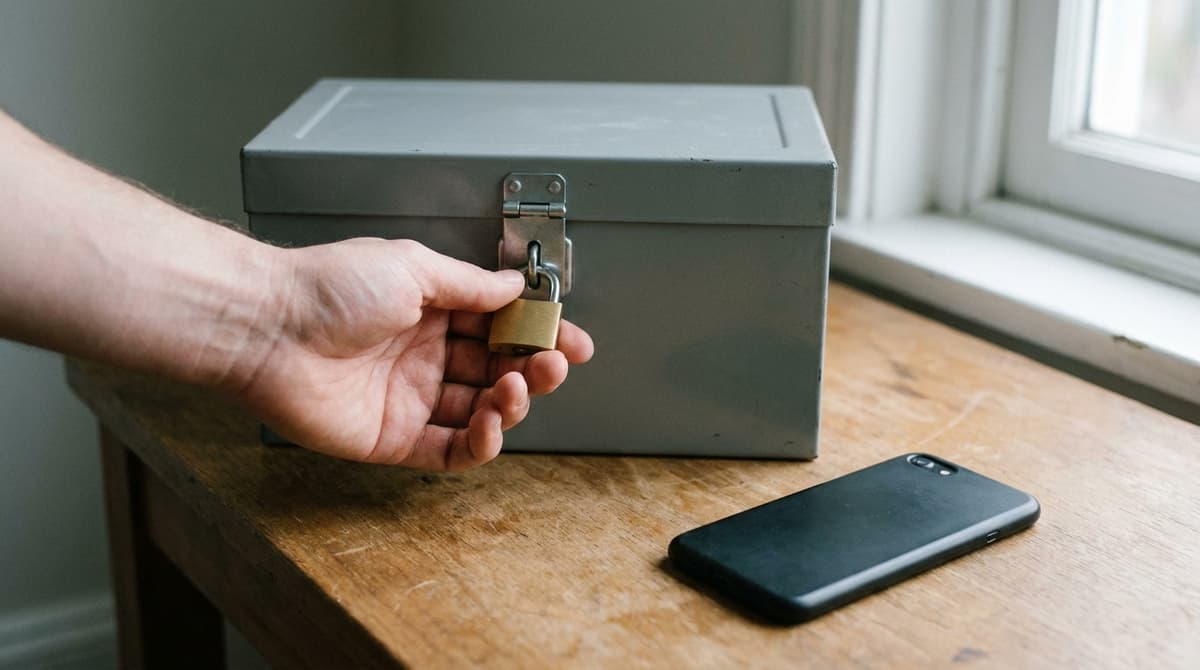
- Purchase the cards with cash and protect your identity when making the cash transaction.
- If an email is required, use a temporary, secure email account.
- Do not connect your bank account to any online services associated with the card, and avoid rechargeable cards for this reason.
1. Prepaid Gift Cards
Prepaid gift cards are a form of payment very popular with scammers for anonymous online payments because they provide unmatched anonymity. You may buy a gift card online, at your local store, Walmart, and many other locations without sharing any information that may lead back to you. Because of that, the money is virtually untraceable.
Furthermore, you do not have to send the gift card to the receiving party. All they need is the number on the card.
Lots of people, especially the elderly, have lost money through gift cards. So, be careful with anyone asking for payment via this method. If you already paid a stranger with a gift card and now suspect a scam, contact the card issuer right away; our guide to getting money back after a scam covers what to tell the issuer and why a refund is not guaranteed. But if you are sure of the transaction and want anonymity, using a gift card is the best option. Additionally, asking for payment in gift cards is rife with fraud because of the anonymous nature and easily available blank cards.
Note: Receiving anonymous payments with prepaid gift cards and converting them to cash will typically have a large fee unless you can find someone who wants your specific gift cards.
2. Anonymous Prepaid Credit Cards
Visa, Mastercard, and American Express offer anonymous credit cards that you may use to purchase services only. What makes these cards anonymous is, you do not have to apply for approval which may require you to share information about yourself. Furthermore, when using anonymous prepaid cards, you do not have to worry about purchase tracking.
How does it work?
Unlike regular credit cards, you must have money to deposit. Once deposited, you cannot reload the card. There are reloadable and virtual anonymous prepaid cards that you may consider.
Anonymous prepaid credit cards are available online, in department stores, or supermarkets.
What to remember:
- Do not use your real name, phone number, or address when purchasing an anonymous prepaid card.
- Small-denomination cards are the ones least likely to trigger a federal identification requirement. Under the Bank Secrecy Act regulations at 31 CFR 1010.100, a closed-loop card providing access to "funds not to exceed $2,000 maximum value that can be associated with a prepaid access device or vehicle on any day" falls outside the definition of a regulated prepaid program, and a retailer is a "seller of prepaid access" if it either sells prepaid access under a prepaid program "that can be used before verification of customer identification," or sells prepaid access "to funds that exceed $10,000 to any person during any one day." Products capped at $1,000 maximum value, with no more than $1,000 loaded, used, or withdrawn on any day, are excluded too, but only if the product also does not permit international transfers, transfers between users of the same prepaid program, or loading from non-depository sources.
- Those are federal thresholds, not a guarantee. Individual retailers, card issuers, and state laws can require identification at far lower amounts, so check the specific product before you assume no ID is needed.
- Your information is only as secure as the place where you purchase the credit card.
- If you're purchasing something online, make sure to obfuscate your browser (as you can be tracked by the cookies presented in your browser) and utilize a VPN to protect your IP address.
We recommend avoiding reloadable anonymous prepaid cards because some vendors may require your bank account when reloading.
Note: The two options listed above are the best anonymous payment methods, as if done correctly they leave no trace. The methods listed below all offer a certain degree of anonymity, but cannot be considered truly anonymous payment methods as there will always be some level of tracking.
3. Google Wallet (formerly Google Pay)
Is Google Pay anonymous? In the United States, the question no longer applies the way it used to. Google shut the US version of the standalone Google Pay app on June 4, 2024. Google's own announcement states that "as of June 4, 2024, you will no longer be able to send, request or receive money from others through the U.S. version of the Google Pay app," and it points US users to Google Wallet, which Google describes as "the primary place for people to securely store payment cards used for tap and pay in stores."
So in the US this is no longer a way to send money to another person at all. What remains is card storage. You may be able to add a prepaid card bought with cash to Google Wallet and tap to pay in a store, if the card's issuer supports it, which keeps your card number away from the cashier and the terminal. That is a meaningful privacy improvement over handing a card across a counter, but it is not anonymity.
- Google Wallet is only as private as the card you load into it and the Google account that holds it.
- Google can still associate that account with your device and IP address.
- Google's announcement addressed the US version specifically, so availability and features differ by country. Check what the app supports where you live rather than assuming this US position applies.
4. Epayservice
Popular in some freelance and gig-economy communities, ePayService, operated by Malta-based MTACC Ltd., offered anonymous international and local payments, virtual and debit cards, and instant electronic payments, with debit-card withdrawal limits advertised up to $15,000 and no loading fees. However, Malta's Financial Services Authority canceled MTACC Ltd.'s financial institution license in February 2025 after finding the company failed to safeguard client funds, and it ordered a court-supervised winding up. Customer reviews on Trustpilot reflect the fallout, with widespread complaints about frozen accounts and delayed withdrawals. Treat ePayService, and any similarly small or unfamiliar e-money provider, with caution: verify a company's current license status with its home regulator before funding an account, since a canceled license can mean your balance is not recoverable.
5. Cash App
Cash App is an app that allows peer-to-peer transfer of funds via mobile. The service is semi-anonymous at best, because using it requires a linked bank account or card and, in practice, a verified identity. Cash App's US terms of service state that "you must be a resident of the United States, at least 18 years and the age of majority in your State of residence," so it is not a route for cross-border anonymous payment.
The receiving figure people quote is a verification threshold rather than a hard ceiling. Cash App's own help documentation on increasing limits describes an unverified account as able to send and receive up to $1,000 within any 30-day period, and says limits rise once you verify your identity using your full name, date of birth, and SSN or ITIN. That is the trade the app is built around: the moment you want to move real money, you hand over the identifying information that ends the anonymity.
Cash App has a lot of similar competitors such as PayPal, Venmo, Zelle, and others. You will run into the same issues in terms of requiring a bank account and identity verification before larger amounts move.
6. Apple Pay
What makes Apple Pay a decent anonymous payment method is that the merchant does not receive your card number, and Apple says it does not keep transaction records in a form that personally identifies you. For payments made in apps or on the web, Apple's Apple Pay security and privacy overview states that Apple retains anonymous transaction information including the approximate purchase amount, app developer and app name, approximate date and time, and whether the transaction completed successfully. This is an improvement over many traditional credit cards, however Apple Pay is still attached directly to your bank account.
Apple Pay transactions are only anonymous from the point of Apple and the retailer. The bank and credit card companies will still know who you are, what you've purchased, and how much it cost.
Additionally, Apple Pay has limitations for online purchases in that many retailers do not support it at this time.
Note: Turning off Location Services stops your device from sending its location to Apple when you pay in a store. Apple's Apple Pay and Privacy disclosure says that "if you have Location Services turned on, the location of your device at the time you use it to make purchases in stores may be sent anonymously to Apple." It does not switch off the anonymous transaction information Apple describes retaining for in-app and web payments.
7. Is it safe to pay with crypto?
Yes, it can be safe to pay for services using cryptocurrency such as Bitcoin if the right precautions are taken. The issue is that your transactions are only as secure as the exchange or place where you buy or sell your cryptocurrency. Bitcoin is built to be an immutable ledger, this means that each transaction is traced digitally online. Although it doesn't have your name, each transaction can easily be traced back to your wallet. Each additional transaction barely provides any security because the money is easily traced, if you would like additional anonymity you can "wash" your bitcoin by sending it to a tumbler that will send your transaction through a series of addresses before returning it to you.
There are some privacy-based cryptocurrencies that you can use that value anonymity. Crypto such as Monero or Zcash have a large use case in the darknet where remaining anonymous is paramount.
The value of Bitcoin and other cryptocurrencies can also change at any moment. However, sending and receiving crypto is possible without the need for traceable information.
To send and receive cryptocurrency as an anonymous payment method, you will need a reliable method to exchange bitcoin for cash.
What to remember:
- Bitcoin and other cryptocurrency transactions are irreversible.
- Cryptocurrency value can change at any moment.
- You need a cryptocurrency wallet to buy, store, sell, or transfer crypto.
- Cryptocurrencies do not have the legal consumer protections that traditional payment methods do.
Watch out: Bitcoin ATMs used to be the easy way to buy small amounts of bitcoin with little or no identification. Do not count on that anymore. Bitcoin Depot, one of the largest US operators, announced on February 24, 2026 a phased rollout of a policy "requiring customers to provide identification for every transaction at its kiosks." States are moving in the same direction: California's Digital Financial Assets Law imposes a $1,000 daily limit per customer at crypto kiosks and required operators to be licensed by the Department of Financial Protection and Innovation from July 1, 2025, and the Superior Court for Los Angeles County upheld that cap as "a reasonable method for limiting fraud."
Note: A locator such as Coin ATM Radar's Bitcoin ATM map still lists operators and their stated identification requirements, which is worth checking before you travel to a machine. Expect identification, or at minimum phone verification, to be required, and expect a daily cap in a growing number of states.
8. Cash Payment
Taking out the middle man is the most secure anonymous payment method. No documents or logs lead back to you, and you do not need your bank account to pay cash. However, this option is limited by geographical location and potentially meeting face to face, meaning it does not always work. If you wish to send or receive cash anonymously you must trust the other person or obscure your identity, and ensure your information is not on any invoice.
An anonymous cash payment is still the best and easiest way to send money anonymously.
9. Masked Credit Card
A masked credit card is interesting in that it provides you fiscal security by creating a unique credit card number with expiration date and security code. What it does not do is protect your information, as the masked number will still be attached to your real credit card, address, and other information. This is a great option if you absolutely need to buy something from a sketchy website, but it does not allow you to make anonymous payments.
The benefits of a masked card are that you can easily enable or disable them on demand. You can use them for a one-time online payment or give the number to a trusted employee to use for a period of time.
10. Paypal
PayPal is not an anonymous payment method, and the reason is identity and tax reporting rather than credit reporting. PayPal's own guidance states that it collects a Taxpayer Identification Number or Social Security number "as required by the IRS and US state revenue authorities", warns that failing to provide one can lead to tax holds and 24% backup withholding, and says it will send the relevant tax form each January per IRS reporting requirements. The IRS describes Form 1099-K as a report of payments received for goods or services "from payment apps or online marketplaces."
There is a workaround on the funding side. PayPal also lets you buy, hold, and spend cryptocurrency directly in your PayPal account, which means you can put value into a PayPal balance with a degree of anonymity. It does not change the exit: you still will not be able to withdraw money to a bank account without submitting your private information.
What to remember:
- PayPal's non-anonymity comes from identity and tax reporting, not from consumer credit reporting. Its own documentation ties the SSN or TIN request to the IRS and state revenue authorities. A PayPal-branded credit card or credit line is a separate product with its own terms.
- PayPal will be able to attach a name to your account when you connect it with a bank, and money leaving PayPal moves through the regulated banking system under that verified name.
- When transacting with cryptocurrencies your security is only as safe as the exchange where you purchased the coins.
Can you use a fake name on PayPal?
You may, but it will cause problems when you want to transfer money. What will happen is PayPal will ask you to verify your PayPal account, if you cannot, the service may freeze the account with your money in it. You may get your money back in six months, or it may remain locked in the account.
How to Secure Online Payments
As mentioned, whenever you make an online transaction, there is a risk of losing or sharing personal information. First, make sure that you are sober or consciously aware of what you are doing. For example, if you are at an ATM, always check what is happening around you. When behind a computer, read before you click.
Expert tips:
- Choose the least-invasive anonymous payment method available, such as a prepaid gift card or an anonymous prepaid credit card; the less information required, the better.
- Use two-factor authentication when using services such as PayPal, Apple Pay, and Google Wallet.
- Use a VPN when transacting on public Wi-Fi.
- Use incognito mode so that your purchase is not stored locally on your device.
- Use Tor or another privacy-focused browser to browse anonymously.
- Protect your password and device.
- Set up a secure, anonymous email account for payment-related sign-ups.
- If you lose your device, log out from that device immediately.
Frequently Asked Questions
What is the most anonymous way to pay someone?
Cash is the most anonymous payment method because it leaves no digital trail and does not require a bank account. When an in-person cash payment is not possible, a prepaid gift card or prepaid debit card purchased with cash is the next-best option, as long as it is not linked to a bank account or your real identity.
Is PayPal anonymous?
No. PayPal collects a Social Security number or Taxpayer Identification Number as required by the IRS and US state revenue authorities, and payments received for goods or services can be reported to the IRS on Form 1099-K. PayPal does let you fund an account using cryptocurrency, which offers a degree of anonymity on the funding side, but you still cannot withdraw money to a bank account without submitting identifying information.
Is Cash App anonymous?
Not fully. Cash App requires a linked bank account or card, and its US terms of service require you to be a resident of the United States. An unverified account can send and receive only up to $1,000 within any 30-day period, and raising that limit requires your full name, date of birth, and SSN or ITIN, which is exactly the information that ends anonymity.
Can you still send money with Google Pay?
Not in the United States. Google shut down the US version of the standalone Google Pay app on June 4, 2024, and states that you can no longer send, request, or receive money from others through it. Google Wallet replaced it for storing payment cards for tap and pay, but it is not a person-to-person transfer service in the US.
Is cryptocurrency an anonymous payment method?
Most cryptocurrency, including Bitcoin, runs on a public ledger, so transactions can be traced to a wallet even though they do not display your name. Privacy-focused coins such as Monero or Zcash offer more anonymity, but no cryptocurrency carries the legal consumer protections that traditional payment methods provide.
Do Bitcoin ATMs require ID?
Increasingly, yes. Bitcoin Depot, one of the largest US operators, began a phased rollout on February 24, 2026 of a policy requiring identification for every transaction at its kiosks. Several states have also imposed daily caps and licensing requirements, including California's $1,000 daily limit per customer under its Digital Financial Assets Law.
Can you use a fake name on PayPal?
You can try, but it will eventually cause problems when you try to transfer money. PayPal will ask you to verify your identity, and if you cannot, the service may freeze your account. You may need to wait up to six months to recover your money, or it may remain locked in the account.
Updates
Independently fact-checked against the cited primary sources
Fact-check and correction pass on the product and compliance claims. Replaced the incorrect statement that PayPal reports to credit bureaus with the actual mechanism PayPal documents, namely the IRS TIN or SSN requirement and Form 1099-K reporting. Rewrote the Google Pay section as Google Wallet: Google closed the US standalone Google Pay app on June 4, 2024 and removed its send, request, and receive money features. Removed the claim that Cash App operates in the UK and replaced it with the US residency requirement in Cash App's own terms of service, and reframed the $1,000 figure as the unverified-account limit rather than a blanket monthly cap. Corrected the Apple Pay location note, which had overstated what turning off Location Services does, and scoped Apple's retained-transaction-data list to the in-app and web payments it describes. Added Bank Secrecy Act citations for the prepaid-card identification thresholds, updated the Bitcoin ATM guidance for the 2025 and 2026 ID and daily-cap rules, and added IdentityTheft.gov as the first step for a stolen Social Security number. Removed the outbound link to ePayService: its operator's Malta license was canceled and the site is still soliciting deposits, so the regulator's notice is now the only link in that section.
Full content audit: repaired 16 markdown links that had degraded to bare, unclickable URLs during the WordPress migration; rewrote the Key Takeaways, which had three items truncated mid-sentence; reformatted several bullet lists that had been flattened into run-on paragraphs; replaced a dead Bitcoin ATM locator link and an outdated Facebook data-leak citation; updated the identity-theft statistic to the Bureau of Justice Statistics' 2021 figures; added a caution notice that ePayService's operator, MTACC Ltd., had its Malta financial institution license canceled in February 2025; removed a dead WordPress-era image path; and added an FAQ section.
The Law Behind This Article
This article rests on the statutory provisions below, held in our own legal record and retrieved from the official source. Tap a section to read the operative text.
Code of Federal Regulations Title 31
§ 1010.100General definitions.In force
When used in this chapter and in forms prescribed under this chapter, where not otherwise distinctly expressed or manifestly incompatible with the intent thereof, terms shall have the meanings ascribed in this subpart. Terms applicable to a particular type of financial institution or specific part or subpart of this chapter are located in that part or subpart. Terms may have different meanings in different parts or subparts. (a) Accept. A receiving financial institution, other than the recipient's financial institution, accepts a transmittal order by executing the transmittal order. A recipient's financial institution accepts a transmittal order by paying the recipient, by notifying the recipient of the receipt of the order or by otherwise becoming obligated to carry out the order. (b) At one time.
Official text (excerpt) · last checked 2026-07-28 · Read the full text in our law library · Verify at ecfr.gov
Cited in 32 court opinions in our collectionLatest citing opinion in our collection: 2026
Opinions citing this section in our collection:
- United States v. Murgio (District Court, S.D. New York 2016, 209 F. Supp. 3d 698)“…when a business qualifies as a “money transmitter.” See 31 C.F.R. § 1010.100 (ff)(5). Under that regulation, an enti…”
- United States v. Faiella (District Court, S.D. New York 2014, 39 F. Supp. 3d 544)“…money transmitting services to others for a profit, see 31 C.F.R. § 1010.100 (ff)(5)(l)(2013) (defining “money trans…”
- United States v. McQueen (Court of Appeals for the Sixth Circuit 2016, 636 F. App'x 652)“…r, for the purpose of evading the reporting requirements.” 31 C.F.R. § 1010.100 (xx); see also Ratzlaf v. United State…”
Identified automatically from the court opinions citing this section — not a ranking of which case controls.
Sources and References
- The first Bitcoin wallet address that ever received a transaction, viewable on Blockchain.com's public explorer(blockchain.com)
- Google, announcement that the US version of the standalone Google Pay app stopped working on June 4, 2024 and that users can no longer send, request, or receive money through it(blog.google)
- Bureau of Justice Statistics, Victims of Identity Theft, 2021(bjs.ojp.gov).gov
- Have I Been Pwned breach database, including the scraped Facebook dataset covering more than 500 million accounts(haveibeenpwned.com)
- Bureau of Justice Statistics, Victims of Identity Theft, 2018(bjs.ojp.gov).gov
- Federal Trade Commission, IdentityTheft.gov reporting and personalized recovery plan(identitytheft.gov).gov
- Social Security Administration, Who can help me if I am a victim of identity theft?(ssa.gov).gov
- Proton Mail, an encrypted email provider(proton.me)
- 31 CFR 1010.100, Bank Secrecy Act general definitions, including the prepaid access, prepaid program, and seller of prepaid access thresholds(ecfr.gov).gov
- Malta Financial Services Authority, regulatory action against MTACC Ltd.(mfsa.mt).gov
- Cash App US Terms of Service, United States residency requirement(cash.app)
- Cash App, Increase Cash App Send Limits, unverified account limits and identity verification requirements(cash.app)
- Apple, Apple Pay security and privacy overview(support.apple.com)
- Apple, Apple Pay and Privacy disclosure, including how Location Services affects what is sent to Apple(apple.com)
- Bitcoin Depot, February 24, 2026 press release announcing ID verification for every kiosk transaction(ir.bitcoindepot.com)
- California Department of Financial Protection and Innovation, court upholds the $1,000 daily transaction limit for crypto kiosks under the Digital Financial Assets Law(dfpi.ca.gov).gov
- Coin ATM Radar, a Bitcoin ATM locator map(coinatmradar.com)
- PayPal, how PayPal uses your TIN or SSN, collected as required by the IRS and US state revenue authorities(paypal.com)
- Internal Revenue Service, Understanding your Form 1099-K(irs.gov).gov
- PayPal's cryptocurrency service page(paypal.com)