
Arkansas
Arkansas Noise Laws: Loud Neighbors, Quiet Hours and Penalties
Independently fact-checked against primary sources (last audited October 10, 2026). · 3 primary sources cited on this page. How we verify our legal content
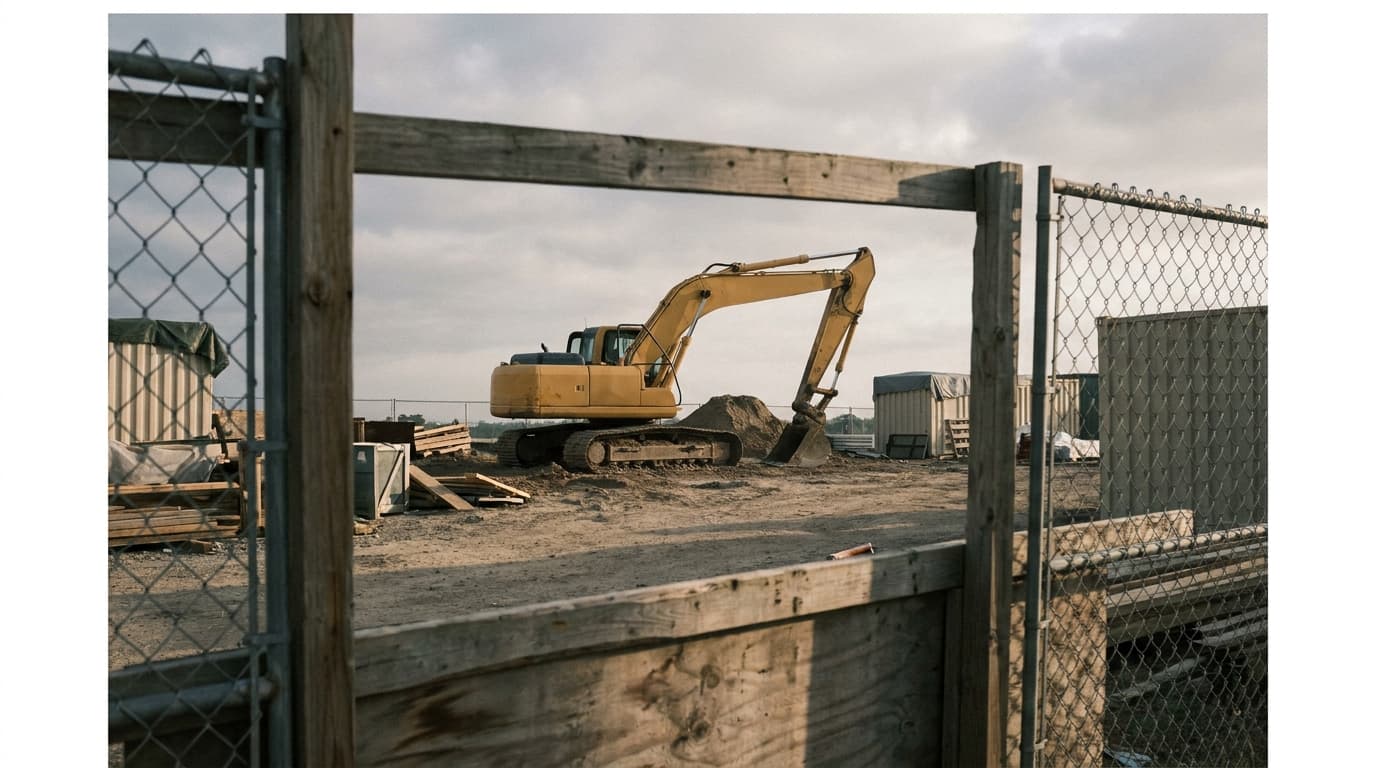
Arkansas's statewide noise offense is disorderly conduct under Ark. Code 5-71-207(a)(2): making "unreasonable or excessive noise" with the purpose to cause public inconvenience, annoyance, or alarm, or recklessly creating a risk of it. It is a Class C misdemeanor, punishable by up to 30 days in jail and a fine of up to $500. The state sections on this page set no quiet hours and no decibel limit for homes; state law gives cities the power to "prevent any riots, noise, disturbance, or disorderly assemblages" (14-54-103(8)), so quiet hours, where they exist, are in your city code. To compare other states, see our guide to noise ordinance laws by state.
Information last verified on 2026-10-10. This article has not been reviewed by a licensed lawyer.
Jurisdiction scope: This article covers Arkansas state statutes: disorderly conduct (Ark. Code 5-71-207) and the Class C misdemeanor limits in 5-4-401 and 5-4-201; the vehicle muffler, cutout, horn and equipment-penalty sections (27-37-601, 27-37-602, 27-37-202, 27-37-101, 27-50-304, 27-50-305); city and county powers over noise, nuisances and ordinance penalties (14-54-103, 14-54-1502, 14-54-1503, 14-55-501, 14-55-502, 14-55-504, 14-20-101); the sport shooting range noise rule (16-105-502); motor vehicle racing facility permits (8-10-302 to 8-10-305); the right-to-farm rule (2-4-107); and the tenant duty in 18-17-601. The statute text quoted here is the Arkansas Code as published in November 2020. The General Assembly's lists of code sections amended in the 2021, 2023 and 2025 regular sessions show no change to the quoted sections except 2-4-107, which gained subsection (e) in 2023 (Act 367), and new section 8-10-305, added in 2021 (Act 520). The current official code is on the Arkansas General Assembly's ArkansasLaw site. This article does not cover the text of any city or county ordinance or the law of other states.
What Arkansas state law says about noise
Arkansas law reaches noise through four routes: the disorderly conduct statute, vehicle equipment rules, city powers to prevent noise and nuisances, and a civil common-nuisance action for conduct inside a city. None of the sections quoted here sets hours of the day or a decibel level for homes or businesses.
| Noise source | State rule | Class or consequence | Source |
|---|---|---|---|
| Unreasonable or excessive noise, with the purpose to cause public inconvenience, annoyance, or alarm, or recklessly creating a risk of it | Disorderly conduct | Class C misdemeanor: up to 30 days in jail, fine up to $500 | 5-71-207(a)(2), (b); 5-4-401(b)(3); 5-4-201(b)(3) |
| Vehicle without a factory-type muffler in constant operation, or with a cutout, bypass or device producing excessive or unusual noise, on public roads | Barred | Misdemeanor: first conviction, fine up to $100 or up to 10 days in jail; higher limits for repeat convictions within a year | 27-37-601(a), (b); 27-37-101; 27-50-304 |
| Sale or use of cutouts on public roads | Barred | Misdemeanor, fine of $10 to $500 | 27-37-602 |
| Horn that emits an unreasonably loud or harsh sound or a whistle | Barred | Misdemeanor: first conviction, fine up to $100 or up to 10 days in jail; higher limits for repeat convictions within a year | 27-37-202(a)(1)(B); 27-50-305 |
| Conduct in a city that disturbs the quiet use and enjoyment of nearby property | Common nuisance | Civil action; any citizen of the city may sue | 14-54-1502; 14-54-1503(b) |
| City noise ordinance (quiet hours, decibel limits, amplified sound) | Set by the city | Penalty set by the ordinance, within state limits (city fines up to $1,000 for a first violation) | 14-54-103(8); 14-55-501; 14-55-502; 14-55-504 |
Disorderly conduct: when noise becomes a crime
Ark. Code 5-71-207 provides, in the parts that concern noise:

"(a) A person commits the offense of disorderly conduct if, with the purpose to cause public inconvenience, annoyance, or alarm or recklessly creating a risk of public inconvenience, annoyance, or alarm, he or she: ... (2) Makes unreasonable or excessive noise; ... (b) Disorderly conduct is a Class C misdemeanor."
Two things must be present. The noise must be "unreasonable or excessive," and the person must act with the purpose to cause public inconvenience, annoyance, or alarm, or recklessly create a risk of it. The statute is framed around public inconvenience, annoyance, or alarm. For a noise dispute between neighbors, a city ordinance and the common-nuisance statute described below are the other routes.
Penalties for a noise disorderly conduct conviction
A Class C misdemeanor carries a jail term that "shall not exceed thirty (30) days" (Ark. Code 5-4-401(b)(3)) and a fine "Not exceeding five hundred dollars ($500)" (5-4-201(b)(3)). Both are maximums set by statute, not fixed amounts; the court sets the sentence within them.
Quiet hours and city noise ordinances
Quiet hours, decibel limits and rules on amplified music in Arkansas come from city codes. Ark. Code 14-54-103 lists among the powers of cities and incorporated towns the power to:
"(1) Prevent injury or annoyance within the limits of the municipal corporation from anything dangerous, offensive, or unhealthy and cause any nuisance to be abated within the jurisdiction given the board of health in § 14-262-102; ... (8) Prevent any riots, noise, disturbance, or disorderly assemblages;"
Cities may also adopt state misdemeanors as local offenses. Under 14-55-501, city and town councils "are authorized and empowered to prohibit and punish any act, matter, or thing which the laws of this state make a misdemeanor."
To find the rule where you live, look up your city or town code (usually on the city's website or available from the city clerk) and read its noise or nuisance chapter. If you live outside city limits, ask your county government which rules apply. A county may punish by ordinance acts that state law makes misdemeanors, with penalties "not greater nor less than the penalties prescribed for similar offenses against the laws of this state" (14-20-101).
The penalty for breaking a city ordinance is set in that ordinance, within state limits. City penalties may not exceed those state law sets for similar offenses (14-55-502), and a city may not impose a fine greater than $1,000 for a first violation, $2,000 for a second, or $4,000 for each later one, or more than $500 a day for a violation that continues over time (14-55-504).
Loud neighbors: your options under Arkansas law
For a neighbor's noise, the routes Arkansas statutes support are:
- A city noise ordinance, enforced by the city.
- Disorderly conduct under 5-71-207(a)(2), where the noise is unreasonable or excessive and made with the purpose to cause public inconvenience, annoyance, or alarm, or recklessly creating a risk of it. Complaints go to local police.
- A common-nuisance action. Under Ark. Code 14-54-1502(a), "Conduct within a municipality that unreasonably interferes with the use and enjoyment of lands of another, including conduct on property which disturbs the peaceful, quiet, and undisturbed use and enjoyment of nearby property, constitutes a common nuisance." Subsection (b) carves out conduct "which is permitted by and in conformance with city ordinances." For these nuisances, 14-54-1503(b) provides that "any citizen of the city may bring the action in his or her own name." The case is heard in circuit court, which may permanently enjoin the person maintaining the nuisance and the owner, lessee, or agent of the property (14-54-1503(a)), and a citizen's complaint "shall be certified" (14-54-1503(c)).
- The lease. Under the Arkansas Residential Landlord-Tenant Act, Ark. Code 18-17-601(7), a tenant must "Conduct himself or herself and require other persons on the premises with the tenant's permission or who are allowed access to the premises by the tenant to conduct themselves in a manner that will not disturb other tenant's peaceful enjoyment of the premises." For how Arkansas leases and landlord remedies work, see Arkansas landlord-tenant laws.
Loud cars, mufflers, cutouts and horns
Ark. Code 27-37-601 sets the muffler rule:
"(a) Every motor vehicle shall, at all times, be equipped with a factory-installed muffler or one duplicating factory specifications, in good working order and in constant operation, to prevent excessive or unusual noise and annoying smoke. (b) No person shall use on a motor vehicle upon the public roads, highways, streets, or alleys of this state, nor shall any person sell for use on a motor vehicle upon the public roads, highways, streets, or alleys of this state, a muffler, other than as defined in subsection (a) of this section, cutout, bypass, similar device, or any type device which produces excessive or unusual noise or smoke."
Section 27-37-601 has no penalty subsection of its own. The equipment chapter's general penalty section, 27-37-101, makes it "a misdemeanor for any person to drive, or for the owner to cause or knowingly permit to be driven or moved, on any highway any vehicle ... which is equipped in any manner in violation of this chapter, or for any person to do any act forbidden or fail to perform any act required under this chapter." The penalty comes from 27-50-304, the penalty section of the 1937 act that enacted the muffler rule: for a misdemeanor "for which another penalty is not provided," a first conviction carries "a fine of not more than one hundred dollars ($100) or ... imprisonment for not more than ten (10) days." A second conviction within one year carries up to $200, up to 20 days, or both, and a third or later conviction within one year after the first carries up to $500, up to six months, or both.
Cutouts have a separate section with its own fine. Under 27-37-602, "The sale or use of cutouts on any motor-driven vehicle while on the public roads, highways, streets, and alleys of Arkansas is prohibited," and a person found guilty "shall be deemed guilty of a misdemeanor and subject to a fine of not less than ten dollars ($10.00) nor more than five hundred dollars ($500)."
Horns are covered by 27-37-202(a)(1)(B): "No horn or other warning device shall emit an unreasonably loud or harsh sound or a whistle." The penalty is set by 27-50-305, which uses the same scale: on a first conviction, a fine of up to $100 or up to 10 days in jail, rising for second and later convictions within a year.
Fireworks noise has its own state and local rules; see Arkansas fireworks laws.
Shooting ranges, farms and racetracks
Sport shooting ranges. Ark. Code 16-105-502(a) provides that a person who operates or uses a sport shooting range "shall not be subject to civil liability or criminal prosecution for noise or noise pollution resulting from the operation or use of the sport shooting range if the sport shooting range is in compliance with noise control ordinances of local units of government that applied to the sport shooting range and its operation at the time the sport shooting range was constructed and began operation." Under subsection (d), state agency rules "for establishing levels of noise allowable in the outdoor atmosphere shall not apply to a sport shooting range exempted from liability under this subchapter." A compliant range also is not subject to a nuisance action, and no court may enjoin it, on the basis of noise (16-105-502(b)). An owner of property near a permanently located range may not bring a nuisance action to stop the range "unless there has been a substantial change in the nature of the use" of the range (16-105-502(c)). The protection is limited to noise: the subchapter does not limit civil liability "except in the limited case of noise pollution" (16-105-502(e)).
Farms. Under Ark. Code 2-4-107(a), "An agricultural operation or its facilities or appurtenances shall not be or become a public or private nuisance as a result of any changed conditions in and about the locality after it has been in operation for a period of one (1) year or more when the agricultural operation or its facilities or appurtenances were not a nuisance at the time the agricultural operation began." A farm that was established before the surrounding nonfarm use and uses methods commonly or reasonably associated with agricultural production is also protected (2-4-107(c)). The court may award expert fees, court costs and attorney's fees to the prevailing party in a suit claiming a farm is a nuisance (2-4-107(d)), and since 2023 "The burden of proof in actions brought under this chapter is on the party who brings an action against an agricultural operation" (2-4-107(e), added by Act 367 of 2023).
Racetracks. Citing "the noise pollution and air pollution from the racing vehicles," Ark. Code 8-10-303 bars building a new motor vehicle racing facility without the consent of at least 75 percent of the property owners and 75 percent of the registered voters within three miles, and without an annual permit from the Division of Environmental Quality. The division holds a public hearing on a new track, at which "Any interested persons may appear and contest" the permit, and grants or renews it only if the track's benefits outweigh its noise, air pollution and traffic impact. Section 8-10-304 sets a separate permit route for tracks in certain counties. Since 2021, a new track built and first permitted after August 31, 2021, in an unincorporated area or town at least one mile from a city of the first or second class (or where that city's mayor gives a written waiver) may instead get an annual permit from the county judge after a public hearing at which interested persons may object; such a track may not be within one mile of another county (8-10-305, added by Act 520 of 2021).
Related pages
- Noise ordinance laws by state
- Arkansas landlord-tenant laws
- Arkansas fireworks laws
- Missouri noise ordinance laws
- Tennessee noise ordinance laws
This article provides general legal information about Arkansas law, not legal advice. For advice about a specific situation, contact a lawyer licensed in Arkansas or your city or county government.
Last updated: 2026-10-10.
Frequently Asked Questions
What are the quiet hours in Arkansas?
The state statutes on this page, including the disorderly conduct statute (Ark. Code 5-71-207), set no hours of the day. Quiet hours come from your city code, adopted under the city power to prevent noise in 14-54-103(8).
Is it illegal to be loud in Arkansas?
Making unreasonable or excessive noise is disorderly conduct when done with the purpose to cause public inconvenience, annoyance, or alarm, or recklessly creating a risk of it (Ark. Code 5-71-207(a)(2)). City ordinances may set further limits.
What is the penalty for disorderly conduct noise in Arkansas?
It is a Class C misdemeanor (Ark. Code 5-71-207(b)), punishable by up to 30 days in jail (5-4-401(b)(3)) and a fine of up to $500 (5-4-201(b)(3)).
What can I do about a loud neighbor in Arkansas?
You can report a city noise ordinance violation to the city, report disorderly conduct to local police, or, inside a city, bring a common-nuisance action for conduct that disturbs the quiet use and enjoyment of nearby property (Ark. Code 14-54-1502, 14-54-1503(b)).
Are loud exhausts illegal in Arkansas?
A motor vehicle must have a factory-installed muffler or one duplicating factory specifications in constant operation, and mufflers, cutouts, bypasses or devices that produce excessive or unusual noise are barred on public roads (Ark. Code 27-37-601). Selling or using cutouts carries a fine of $10 to $500 (27-37-602).
Can a tenant be held to noise rules in Arkansas?
Yes. Ark. Code 18-17-601(7) requires a tenant and the tenant's guests to conduct themselves so as not to disturb other tenants' peaceful enjoyment of the premises.
Updates
Independently fact-checked against the cited primary sources
The Law Behind This Article
This article rests on the statutory provisions below, held in our own legal record and retrieved from the official source. Tap a section to read the operative text.
Arkansas Code of 1987 Annotated
§ 5-71-207Disorderly conduct.In force
(a) A person commits the offense of disorderly conduct if, with the purpose to cause public inconvenience, annoyance, or alarm or recklessly creating a risk of public inconvenience, annoyance, or alarm, he or she: (1) Engages in fighting or in violent, threatening, or tumultuous behavior; (2)…
Official text (excerpt) · last checked 2020-11-06 · Read the full text in our law library
§ 27-37-601Noise or smoke producing devices prohibited.In force
(a) Every motor vehicle shall, at all times, be equipped with a factory-installed muffler or one duplicating factory specifications, in good working order and in constant operation, to prevent excessive or unusual noise and annoying smoke. (b) No person shall use on a motor vehicle upon the public…
Official text (excerpt) · last checked 2020-11-06 · Read the full text in our law library
Search our full record of US law — 2.1 million sections, every state + federal →
Sources and References
- Arkansas Code (official access via the Arkansas General Assembly): Ark. Code 5-71-207, Disorderly conduct; 5-4-401 and 5-4-201, misdemeanor sentences and fines; 27-37-101, 27-37-202, 27-37-601 and 27-37-602, vehicle equipment; 27-50-304 and 27-50-305, penalties; 14-54-103, 14-54-1502, 14-54-1503, 14-55-501, 14-55-502 and 14-55-504, municipal powers, common nuisances and ordinance penalties; 14-20-101, county ordinances; 16-105-502, sport shooting ranges; 8-10-302 to 8-10-304, motor vehicle racing facilities; 2-4-107, agricultural operations; 18-17-601, tenant obligations(arkleg.state.ar.us).gov
- Act 367 of 2023 (HB 1434), adding Ark. Code 2-4-107(e), burden of proof in agricultural nuisance actions(arkleg.state.ar.us).gov
- Act 520 of 2021 (HB 1716), adding Ark. Code 8-10-305, motor vehicle racing facilities in certain rural locations(arkleg.state.ar.us).gov