Name Change After Divorce
Independently fact-checked against primary sources (last audited August 11, 2026). · Law checked current as of August 11, 2026. · 5 primary sources cited on this page. How we verify our legal content

Restoring a former name after a divorce is usually a lighter process than a general name-change petition, and in most states it does not require the full procedure covered in How to Legally Change Your Name: no publication, no fingerprint background check, often no separate filing fee at all, similar in that respect to the marriage-certificate route covered in Name Change After Marriage. But exactly how it works, whether it happens automatically in the decree, through a follow-up motion, or through the standard petition, genuinely varies by state, and getting it wrong means an extra trip to court later.
If you are looking for the agency-by-agency update sequence once your name is restored, see Name Change Checklist, and for what the standard petition costs in states with no dedicated restoration mechanism, see How Much Does It Cost to Change Your Name. For a minor child's surname after a divorce, which is a separate legal matter from a parent's own name restoration, see your state's name change page.
Information last verified on 2026-08-11. This article has not yet been reviewed by a licensed lawyer.
Three Ways States Handle Restoration
A clause in the decree itself. In a number of states the restoration is handled inside the divorce decree rather than through a separate case, though states differ on whether the court must include it or the party has to ask. New York's Domestic Relations Law §240-a requires every divorce or annulment judgment to include a provision that each party may resume a premarriage or other former surname. Montana's statute is phrased as a mandatory right on request: "upon request by a party whose marriage is dissolved or declared invalid, the court shall order the party's maiden or birth name or a former name restored" (§40-4-108(5)). Texas double-codifies the same rule in two places, Family Code §6.706 and §45.105, and its version goes further: the court may not deny the request solely to keep family surnames matching. Iowa's version sits in the same bucket but is permissive rather than mandatory: under Iowa Code §598.37, either party "may request as a part of the decree of dissolution or decree of annulment" a change to either the name on their birth certificate or the name they had immediately prior to the marriage. Only a request for some other name has to go through Iowa's general Chapter 674 petition instead.
A post-decree motion. Colorado treats restoration as a separate, simpler filing after the fact rather than a decree clause. Under §14-10-120.2, a party files an ex parte motion under the original dissolution case number, supported only by a sworn statement that the change is not detrimental to any other person; it skips the fingerprint check, publication, and felony-conviction bar that apply to Colorado's general name-change statute.
No dedicated statute. Some states have no separate name-restoration provision at all, and divorcing spouses use the state's general name-change process instead. Florida's own statute expressly excludes dissolution-related name changes from its general name-change section; in practice, per the Florida Bar and county self-help pages, a spouse requests restoration directly in the dissolution petition or counter-petition and the court includes it in the final judgment, without a distinct numbered statute governing it. Idaho similarly has no codified restoration statute; the practice is either to write it into the decree without a separate law authorizing it, or to file the standard $166 name-change petition after the divorce is final.
Your state's name change page identifies which of these three patterns applies where you live.
If Your Decree Is Silent
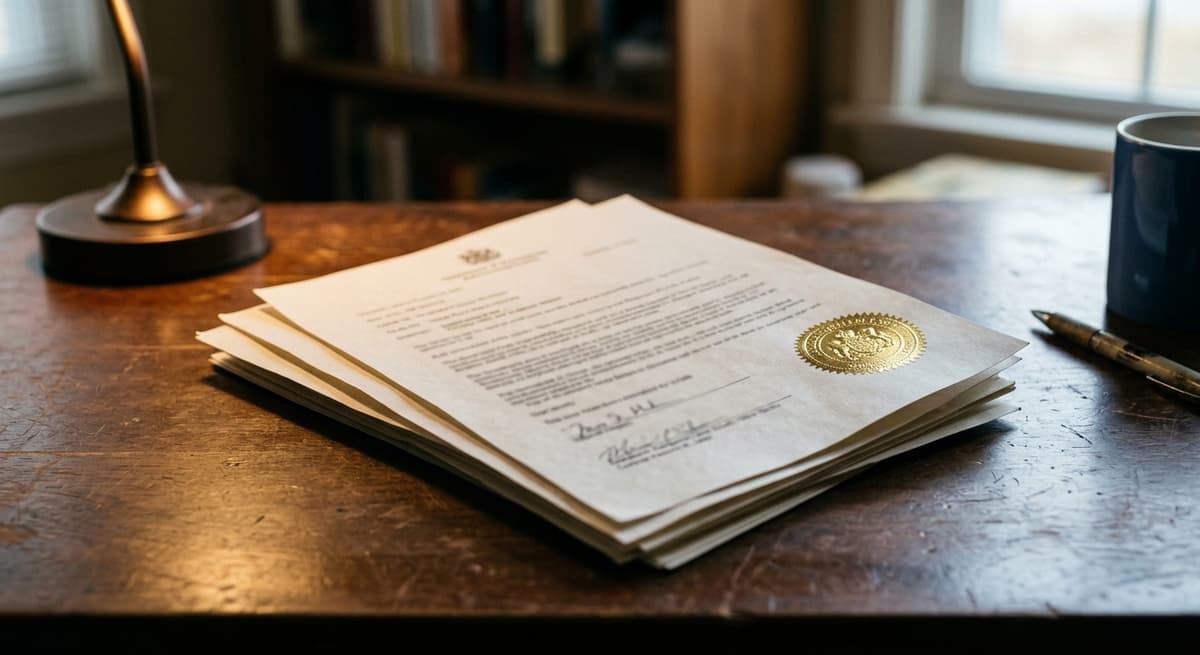
A federal regulation makes this concrete: 22 CFR 51.25(c)(1)(ii) recognizes, for passport purposes, "a divorce decree specifically declaring the return to a former name", meaning a decree that does not include that declaration will not, by itself, satisfy the passport office, even if your state generally allows restoration. If your decree already came and went without addressing your name, you are usually not permanently stuck. Depending on your state, you can typically file a post-decree motion asking the same court to add the restoration, or, in states with no dedicated mechanism, file the ordinary name-change petition. Either way, this is exactly the kind of detail worth raising with your attorney or the court clerk before your decree becomes final, rather than after.

Restoring a Name Years Later
Nothing about a decree being old prevents restoration later, though the process to get there depends on your state. If your decree already restored your name, or specifically declared the restoration, you can generally use that document going forward with no further court involvement, the same way you would use a name-change order. If it did not, and years have passed, the practical path is usually the same as if the decree had been silent from the start: a post-decree motion where your state allows one, or the standard name-change petition where it does not.
Children's Surnames Are a Separate Matter
A parent restoring their own former name after a divorce does not change a child's surname, and changing a minor's name is governed by its own, generally stricter, rules: typically both parents' consent, or a specific statutory exception, and often a best-interest standard a court applies independently. See your state's name change page for the minor-specific procedure where one exists.
Updating Your Documents After Restoration
Once your name is restored, the update sequence is the same one used for any other name change: Social Security first, using your divorce decree as the proof document (SSA's own worked guidance confirms a decree is accepted evidence of the event even where the decree text does not spell out the exact restored name, by cross-referencing your prior record), then your state DMV, then your passport. See Name Change Checklist for the full sequence.
Disclaimer
This article provides general information about restoring a former name after divorce in the United States. It is not legal advice and does not create an attorney-client relationship. Restoration mechanisms vary significantly by state; confirm the current process with your family court or a licensed attorney before relying on this information, particularly if your decree has already been finalized without addressing your name.

Last updated: 2026-08-11. Procedures reflect their published status as of August 2026.
Frequently Asked Questions
Does my name automatically go back to my maiden name after divorce?
No, not automatically in most states. You generally need to request the restoration, either as part of the divorce decree or through a separate filing afterward, depending on your state's mechanism.
What if my divorce decree does not mention restoring my name?
You are usually not stuck. Depending on your state, you can typically file a post-decree motion asking the court to add the restoration, or file the standard name-change petition if your state has no dedicated restoration process.
Can I restore my former name years after my divorce was finalized?
Yes, in general. The path depends on your state: a post-decree motion where one is available, or the standard name-change petition where it is not.
Does restoring my name after divorce change my children's last names?
No. A parent's own name restoration does not affect a child's surname. Changing a minor's name is a separate legal process with its own consent and notice requirements.
What proof do I need to update Social Security after my name is restored?
Your certified divorce decree is generally accepted as proof of the name-change event. For a passport specifically, the decree needs to explicitly declare the return to a former name to satisfy federal regulations.
Updates
Corrected the Iowa entry: Iowa Code 598.37 lets either spouse request restoration of a birth or pre-marriage name directly in the dissolution decree, so Iowa is now listed with the decree-clause states rather than as a state with no dedicated restoration statute.
Independently fact-checked against the cited primary sources; governing law re-checked for recent changes
The Law Behind This Article
This article rests on the statutory provisions below, held in our own legal record and retrieved from the official source. Tap a section to read the operative text.
Texas Family Code
§ 6.706CHANGE OF NAMEIn forcecited in 2 of our articles
(a) In a decree of divorce or annulment, the court shall change the name of a party specifically requesting the change to a name previously used by the party unless the court states in the decree a reason for denying the change of name. (b) The court may not deny a change of name solely to keep the last name of family members the same. (c) A change of name does not release a person from liability incurred by the person under a previous name or defeat a right the person held under a previous name. (d) A person whose name is changed under this section may apply for a change of name certificate from the clerk of the court as provided by Section 45.106.
Official text (excerpt) · last checked 2026-07-28 · Read the full text in our law library · Verify at statutes.capitol.texas.gov
Cited in 3 court opinions in our collectionLatest citing opinion in our collection: 2009
Opinions citing this section in our collection:
- in the Interest of Robert Thomas Barnes A.K.A. Robert Lincoln Jones, Jr. (Texas Court of Appeals, 7th District (Amarillo) 2009)“…name changes authorized on divorce under the Family Code. Tex. Fam. Code Ann. § 6.706 (Vernon 2006); Tex. Fam. Code Ann. § 4…”
- April Lynn Strom v. Carter Robert Strom (Texas Court of Appeals, 12th District (Tyler) 2006)“…Appellant’s name without her request or consent. See Tex. Fam. Code Ann. § 6.706(a) (Vernon 1998). The parties furth…”
- Mary Estelle Williams v. Clifford Loren Williams (Texas Court of Appeals, 2nd District (Fort Worth) 2005)“…failing to change her name to Mary Estelle Lindsey under Texas Family Code section 6.706(a). 21 Mary requested the name chan…”
Identified automatically from the court opinions citing this section — not a ranking of which case controls.
Also relied on in: Texas Name Change Laws: How to Legally Change Your Name
§ 45.105CHANGE OF NAME IN DIVORCE SUITIn forcecited in 2 of our articles
(a) On the final disposition of a suit for divorce, for annulment, or to declare a marriage void, the court shall enter a decree changing the name of a party specially praying for the change to a prior used name unless the court states in the decree a reason for denying the change of name. The court may not deny a change of name solely to keep last names of family members the same. (b) A person whose name is changed under this section may apply for a change of name certificate from the clerk of the court as provided by Section 45.106.
Official text (excerpt) · last checked 2026-07-28 · Read the full text in our law library · Verify at statutes.capitol.texas.gov
Cited in 1 court opinions in our collectionLatest citing opinion in our collection: 2009
Opinions citing this section in our collection:
- in the Interest of Robert Thomas Barnes A.K.A. Robert Lincoln Jones, Jr. (Texas Court of Appeals, 7th District (Amarillo) 2009)“…he Family Code. Tex. Fam. Code Ann. § 6.706 (Vernon 2006); Tex. Fam. Code Ann. § 45.105 (Vernon 2008). But neither are those na…”
Identified automatically from the court opinions citing this section — not a ranking of which case controls.
Colorado Revised Statutes, Title 14: Domestic Matters
§ 14-10-120.2Ex-parte request for restoration of prior name of partyIn forcecited in 2 of our articles
(1) Pursuant to the provisions of this section, at any time after the entry of a decree of dissolution or legal separation, a party to the action may request restoration of a prior full name. (2) The requesting party must file a verified motion and affidavit under the same case number in the district court in which the decree of dissolution or legal separation was entered. The requesting party's motion and affidavit must include: (a) The caption and case number for the action in which the decree of dissolution or legal separation was entered; and (b) The requesting party's sworn statement that the restoration of a prior full name is not detrimental to any person. (3) The court shall enter an order restoring the requesting party's name if the court determines that: (a) The court entered a decree of dissolution or legal separation in an action concerning the requesting party; and (b) The request to restore a prior full name is not detrimental to any person. (4) The order restoring a prior full name of the party does not affect any party's rights or obligations pursuant to the decree of dissolution or legal separation entered in the action.
Official text (excerpt) · last checked 2026-07-29 · Read the full text in our law library · Verify at olls.info
Also relied on in: Colorado Name Change Laws: Fingerprints, Felony Bar, and How to Petition
Montana Code Annotated, Title 40
§ 40-4-108DecreeIn forcecited in 2 of our articles
40-4-108. Decree. (1) A decree of dissolution of marriage or of legal separation is final when entered, subject to the right of appeal. An appeal from the decree of dissolution that does not challenge the finding that the marriage is irretrievably broken does not delay the finality of that provision of the decree that dissolves the marriage beyond the time for appealing from that provision, and either of the parties may remarry pending appeal. (2) No earlier than 6 months after entry of a decree of legal separation, the court on motion of either party shall convert the decree to a decree of dissolution of marriage. (3) The clerk of the court shall give notice of the entry of a decree of dissolution: (a) if the marriage is registered in this state, to the clerk of the district court of the county where the marriage is registered, who shall enter the fact of dissolution in the book in which the marriage license and certificate are recorded; or (b) if the marriage is registered in another jurisdiction, to the appropriate official of that jurisdiction, with the request that the official enter the fact of dissolution in the appropriate record.
Official text (excerpt) · last checked 2026-07-29 · Read the full text in our law library · Verify at mca.legmt.gov
Cited in 4 court opinions in our collectionLatest citing opinion in our collection: 1993
Opinions citing this section in our collection:
- In Re the Marriage of Kraut (Montana Supreme Court 1986, 220 Mont. 267)“…Howeyer, we do not agree. Wife points to the language of § 40-4-108, MCA, and the Commissioner's Comment to this…”
- In Re the Marriage of Griffin (Montana Supreme Court 1993, 260 Mont. 124)“…appeal. Martin correctly points out that pursuant to 5 40-4-108, MCA, a decree of dissolution is "final when…”
- State Ex Rel. Marlenee v. District Court of the Fifteenth Judicial District (Montana Supreme Court 1979, 181 Mont. 59)“…irects our attention to section 48- 328, R.C.M. 1947, now section 40-4-108 MCA, providing that a decree of dissolution…”
Identified automatically from the court opinions citing this section — not a ranking of which case controls.
Also relied on in: Montana Name Change Laws: How to Legally Change Your Name
Code of Federal Regulations Title 22
§ 51.25Name of applicant to be used in passport.In forcecited in 4 of our articles
(a) The passport shall be issued in the full name of the applicant, generally the name recorded in the evidence of nationality and identity. (b) The applicant must explain any material discrepancies between the name on the application and the name recorded in the evidence of nationality and identity. The name provided by the applicant on the application may be used if the applicant submits the documentary evidence prescribed by the Department. (c) A name change will be recognized for purposes of issuing a passport if the name change occurs in one of the following ways. (1) Court order or decree. An applicant whose name has been changed by court order or decree must submit with his or her application a copy of the order or decree. Acceptable types of court orders and decrees include but are not limited to: (i) A name change order; (ii) A divorce decree specifically declaring the return to a former name; (2) Certificate of naturalization issued in a new name. (3) Marriage. An applicant who has adopted a new name following marriage must present a copy of the marriage certificate. (4) Operation of state law.
Official text (excerpt) · last checked 2026-07-28 · Read the full text in our law library · Verify at ecfr.gov
Cited in 1 court opinions in our collectionLatest citing opinion in our collection: 2020
Opinions citing this section in our collection:
- Alzokari v. Pompeo (Court of Appeals for the Second Circuit 2020, 973 F.3d 65)“…ame recorded in the evidence of nationality and identity.” 22 C.F.R. § 51.25(a). Where, as here, the applicant is…”
Identified automatically from the court opinions citing this section — not a ranking of which case controls.
Also relied on in: How to Legally Change Your Name, Name Change After Marriage, Name Change Checklist: Social Security, License, Passport & More
Search our full record of US law — 2.1 million sections, every state + federal →
Sources and References
- Electronic Code of Federal Regulations, 22 CFR 51.25(c)(1)(ii), Name on passport(ecfr.gov).gov
- New York Domestic Relations Law §240-a(nysenate.gov).gov
- Montana Code Annotated §40-4-108, Disposition of property(mca.legmt.gov).gov
- Texas Family Code §6.706, Change of name(statutes.capitol.texas.gov).gov
- Colorado Revised Statutes §14-10-120.2, Restoration of prior name(colorado.public.law)
- Iowa Code Chapter 674, Change of Name(legis.iowa.gov).gov
- Iowa Code §598.37, Name change (Dissolution of Marriage and Domestic Relations)(legis.iowa.gov)