
Australia
Disability Support Pension in Australia: Eligibility, Rates and Appeals
Independently fact-checked against primary sources (last audited August 18, 2026). · 13 primary sources cited on this page. How we verify our legal content
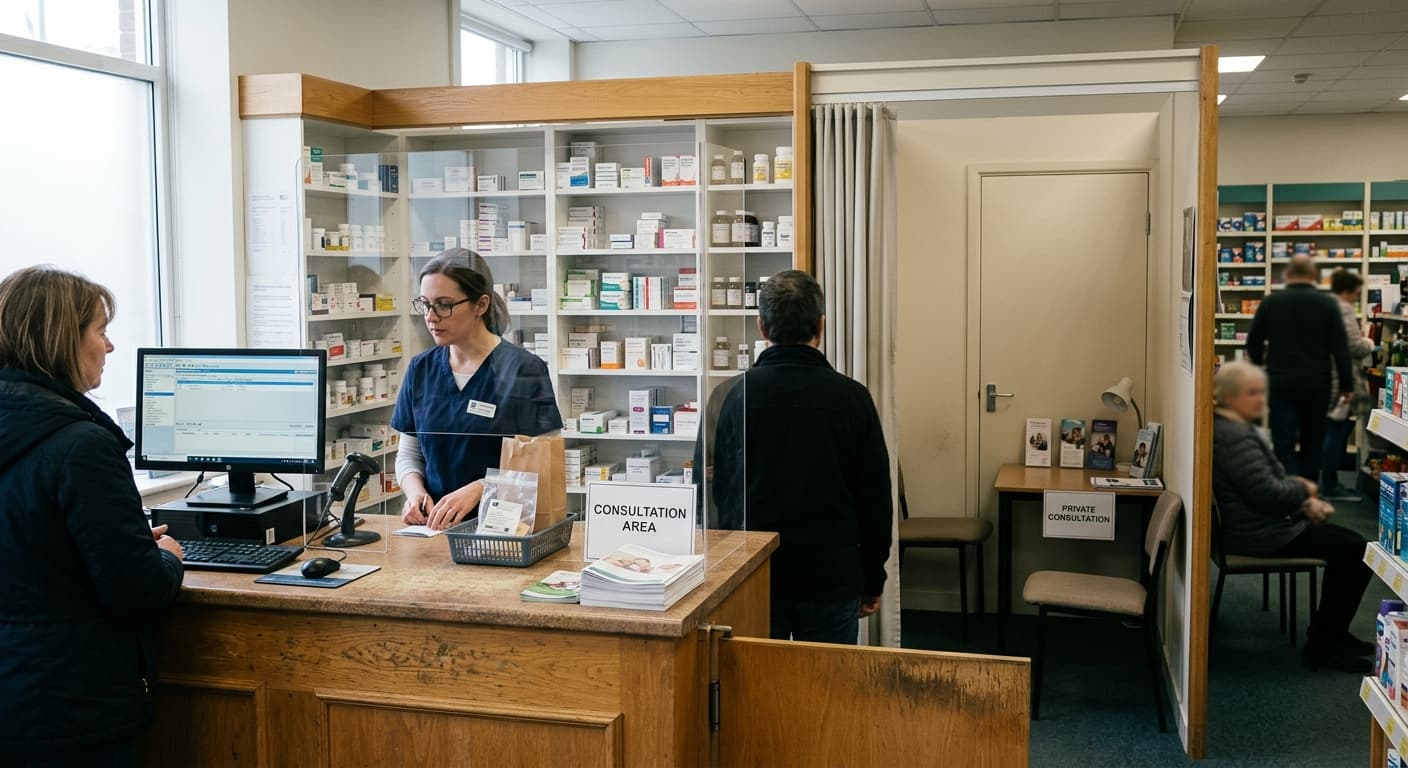
The Disability Support Pension (DSP) is a fortnightly Centrelink payment for people whose physical, intellectual or psychiatric impairment permanently limits their capacity to work, paid under the Social Security Act 1991 and administered by Services Australia.
This hub covers DSP: who qualifies, current rates, how to apply, what happens if a claim is refused, and the rules that apply once a person is on the payment, including working, study and overseas travel. It does not cover the National Disability Insurance Scheme (NDIS) as a claim path in its own right, and it does not cover Carer Payment or Carer Allowance as claims for the carer; those and two smaller related payments are summarised in one section near the bottom of this page, since none of them has enough DSP-specific depth to justify its own guide. DSP is a federal payment and applies nationally; this hub does not cover any state or territory disability support scheme.
What the Disability Support Pension is
DSP is a means-tested pension paid to people with a permanent and significant disability, administered by Services Australia under two federal Acts: the Social Security Act 1991, which sets the qualification test, and the Social Security (Administration) Act 1999, which governs claims, reviews, suspension and cancellation. Most claimants qualify under section 94 of the Social Security Act 1991, which requires an impairment rated 20 points or more on the Impairment Tables together with a continuing inability to work. A smaller group qualifies through the separate, simpler section 95 pathway for permanent blindness, which needs no impairment rating and no work capacity test at all.
Am I eligible for DSP?
Eligibility turns on three main elements: the impairment rating, a continuing inability to work 15 hours a week or more (or, for a severe impairment on a single table, an exemption from first taking part in a program of support), and 10 years of qualifying Australian residence, which is an either/or test rather than two stacked conditions. Six categories, including terminal illness and permanent blindness, can be manifestly granted without a full Job Capacity Assessment. The DSP eligibility guide covers the full section 94 test, the Impairment Tables, the permanent blindness pathway, residence rules and the manifest grant categories in detail.

How much will I get?
The current maximum single rate is $1,200.90 a fortnight, made up of a $1,100.30 basic rate, an $86.50 pension supplement and a $14.10 energy supplement, per the Services Australia rates page last updated 20 March 2026. Couples and people under 21 are paid on different tables, and both an income test and an assets test can reduce the rate below the maximum. Services Australia indexes most of these figures on 20 March and 20 September each year, so a September 2026 update is expected soon after this page was written; always confirm the current figure on the Services Australia site before relying on it. DSP is tax-free for recipients under Age Pension age, and recipients automatically receive a Pensioner Concession Card. The DSP payment rates guide sets out the full rate tables, the income and assets tests, and the indexation cadence.
How do I apply?
A DSP claim can be lodged online through a Centrelink account linked to myGov, or by form for people who cannot claim online. The main claim form is SA466, alongside separate consent and medical-evidence forms rather than a single generic medical report. Services Australia assesses most claims through a Job Capacity Assessment, and, where needed, a further Disability Medical Assessment. Two different clocks apply and should not be confused: Services Australia states a claimant can expect to hear from them within 21 days of submitting a claim, while the first DSP payment typically arrives around 2 weeks after the claim is approved. A claimant may also be able to get JobSeeker Payment or Youth Allowance while their DSP claim is assessed. The how to apply for DSP guide covers the claim channels, the forms, the medical evidence that carries weight, and income support while a claim is pending. Medical evidence gathering also touches medical records access more generally.
What if my claim is refused?
A refused or reduced DSP decision must first go through internal review by an Authorised Review Officer before an external appeal is available. Applying for that internal review within 13 weeks of the decision notice preserves back pay to the original decision date; applying later does not. From there, a claimant can seek a merits review by the Administrative Review Tribunal (ART), and then a further ART second review under Part 5A of the Administrative Review Tribunal Act 2024, which replaced the former Administrative Appeals Tribunal on 14 October 2024. Beyond the ART, an appeal to the Federal Court is limited to a question of law, not a re-examination of the medical evidence, and the Commonwealth Ombudsman can look into maladministration in how a claim was handled, though it does not review the merits of a decision. The DSP reviews and appeals guide covers the full ladder and the evidence points that matter at each stage.
Working, studying and travelling while on DSP
A DSP recipient can generally work up to 29 hours a week without it affecting qualification, subject to the income test that applies to every dollar of income regardless of hours worked. Sustained work of 30 hours a week or more, on an ongoing basis, can suspend rather than cancel DSP for up to 2 years under the Social Security (Administration) Act 1999, provided Services Australia is notified within 14 days of the work starting; studying 30 or more hours a week in mainstream, unmodified study is generally treated the same way as work for this purpose. The working while on DSP guide covers the hours rule, the income test, study, reporting obligations and the invitation-based move to Age Pension at Age Pension age.
Separately, a DSP recipient can generally spend up to 28 days overseas in a rolling 12-month period without it affecting the payment, with narrow unlimited-portability exceptions for severe impairment with no future work capacity and for terminal illness. Mobility Allowance is a related but separate payment for transport costs that a person cannot receive while they have funded NDIS supports, even though NDIS funding otherwise has no effect on DSP itself. The DSP overseas travel, NDIS and Mobility Allowance guide covers portability, the unlimited-portability categories, Mobility Allowance and how DSP and the NDIS relate to each other.
A disability that arises from a workplace injury sometimes also involves a workers compensation claim, which can trigger a separate waiting period on DSP; see workers compensation in Australia for that side of the picture, and unfair dismissal in Australia if reduced hours or a disability lead to a dispute with an employer.
Related payments
A few other Centrelink payments sit close to DSP without being DSP itself. None of them has enough DSP-specific depth to justify its own guide, so they are summarised here rather than as separate pages.

JobSeeker Payment with a partial capacity to work is the payment most likely to fit someone who does not qualify for DSP but still cannot sustain full-time work. Where DSP's own work capacity test is pegged to 15 hours a week, JobSeeker's partial capacity to work test under section 16B of the Social Security Act 1991 is pegged to a higher, 30-hour benchmark, so a person capable of working somewhere between 15 and 29 hours a week may fail DSP on capacity but qualify for JobSeeker instead, generally with reduced mutual obligation requirements. Services Australia's published rate for a single JobSeeker recipient assessed with a partial capacity to work of under 15 hours a week is $866.00 a fortnight, higher than the standard single JobSeeker rate, from 20 March 2026.
Carer Payment and Carer Allowance are paid to the person providing care, not to the person with disability. Carer Payment is an income-support pension for someone providing constant care, paid at the same rate structure as DSP, up to $1,200.90 a fortnight for a single carer; Carer Allowance is a smaller, flat supplementary payment of $162.60 a fortnight for a lower intensity of ongoing care, and can be paid on top of another income support payment. Both the carer and the person cared for must separately meet eligibility rules, and the two payments can be claimed together on a combined form.
Youth Disability Supplement is an automatic top-up, not a separate claim, for DSP recipients under 21 without dependent children, and also reaches some younger Youth Allowance and ABSTUDY recipients with an assessed partial capacity to work. It is currently $162.60 a fortnight and is already included in the DSP youth rate tables.
Rent Assistance is likewise automatic once a DSP recipient tells Services Australia their rent details, rather than a separate claim. For a single DSP recipient with no dependent children, the current maximum is $219.40 a fortnight, calculated as 75 cents for every dollar of fortnightly rent above a threshold, up to that cap; special rules apply to DSP recipients aged 20 or younger.
Frequently Asked Questions
What is the Disability Support Pension?
The Disability Support Pension (DSP) is a fortnightly Centrelink payment for people whose physical, intellectual or psychiatric impairment permanently and significantly limits their capacity to work, paid under the Social Security Act 1991 and administered by Services Australia.
How many points do I need on the Impairment Tables to qualify for DSP?
Generally 20 points or more under the current Impairment Tables Determination, together with a continuing inability to work 15 hours a week or more. A person who is permanently blind qualifies through a separate pathway and does not need an impairment rating at all. See the eligibility guide for the full test.
How much is the Disability Support Pension per fortnight?
The current maximum single rate is $1,200.90 a fortnight, made up of a $1,100.30 basic rate plus the pension supplement and energy supplement, as published on the Services Australia rates page last updated 20 March 2026. Rates differ for couples and for people under 21, and are reduced by the income and assets tests. See the payment rates guide for the full tables.
Can I work while getting DSP?
Yes, up to 29 hours a week without it affecting DSP qualification, subject to the income test. Sustained work of 30 hours a week or more can suspend, rather than cancel outright, the payment for up to 2 years if the recipient notifies Services Australia within 14 days of starting that work. See the working while on DSP guide for the full rules.
What happens if Services Australia refuses my DSP claim?
A refused claim first goes to internal review by an Authorised Review Officer, then can be taken to the Administrative Review Tribunal (ART) for a merits review, and then to a second ART review under Part 5A of the ART Act 2024. Applying for internal review within 13 weeks of the decision preserves back pay to the original decision date. See the reviews and appeals guide for the full ladder.
Does NDIS funding affect my Disability Support Pension?
No. The National Disability Insurance Agency states that NDIS funding does not impact any income support payment, including DSP, and that receiving DSP does not make a person automatically eligible for the NDIS. The two programs run on separate eligibility tests. See the overseas travel, NDIS and Mobility Allowance guide for the one exception, which involves Mobility Allowance rather than DSP itself.
Does Carer Payment or Carer Allowance go to me or to my carer?
Both go to the carer, not to the person with disability. They sit alongside DSP rather than replacing it, and a DSP recipient's carer may separately qualify for one or both depending on the level of care they provide. See the related payments section below for a brief comparison.
Updates
Independently fact-checked against the cited primary sources
The Law Behind This Article
This article rests on the statutory provisions below, held in our own legal record and retrieved from the official source. Tap a section to read the operative text.
Administrative Review Tribunal Act 2024
s 131CMeaning of eligible social services decisionIn forcecited in 2 of our articles
Each of the following is an eligible social services decision: (a) a reviewable decision made under the A New Tax System (Family Assistance) Act 1999; (b) a reviewable decision made under the A New Tax System (Family Assistance) (Administration) Act 1999, other than a child care provider decision (within the meaning of that Act); (c) a decision under section 92 of the Child Support (Registration and Collection) Act 1988 to refuse an extension application; (d) a reviewable decision made under the Child Support (Registration and Collection) Act 1988 that is a care percentage decision (within the meaning of that Act); (e) a decision under subsection 95N(2) of the Child Support (Registration and Collection) Act 1988 to make, or not to make, a determination; (f) a reviewable decision made under the Paid Parental Leave Act 2010 that is a claimant decision (within the meaning of that Act); (g) a reviewable decision made under the Social Security Act 1991; (h) a reviewable decision made under the Social Security (Administration) Act 1999; (i) a reviewable decision made under the Student Assistance Act 1973.
Official text (excerpt) · last checked 2026-09-28 · Read the full text in our law library · Verify at legislation.gov.au
Also relied on in: DSP Reviews and Appeals: Challenging a Disability Support Pension Decision
Social Security Act 1991
Search our full record of US law — 2.1 million sections, every state + federal →
Sources and References
- Social Security Act 1991 (Cth) s94, the core Disability Support Pension qualification test(web.archive.org)
- Social Security Act 1991 (Cth) s95, the permanent blindness qualification pathway(web.archive.org)
- Services Australia, Payment rates for Disability Support Pension - the current fortnightly rate table, page last updated 20 March 2026(servicesaustralia.gov.au).gov
- Services Australia, How to claim Disability Support Pension(servicesaustralia.gov.au).gov
- Administrative Review Tribunal, Centrelink - applying for a review of a Centrelink decision, including DSP(art.gov.au).gov
- Administrative Review Tribunal Act 2024 (Cth) Part 5A s131C, the second review pathway for social services decisions including DSP(legislation.gov.au).gov
- National Disability Insurance Agency, Applying for the NDIS (Booklet 1 of 3) - confirming DSP and NDIS funding do not affect each other(ndis.gov.au).gov
- Services Australia, Who can get Mobility Allowance - the NDIS funded support exclusion(servicesaustralia.gov.au).gov
- Services Australia, Who can get Rent Assistance - Disability Support Pension listed as an eligible payment(servicesaustralia.gov.au).gov
- DSS Guide to Social Security Law 1.1.P.65, Partial capacity to work (JSP, YA (job seeker), PP and SpB) - the 30-hour threshold that distinguishes JobSeeker's partial-capacity test from DSP's own 15-hour test(guides.dss.gov.au).gov
- Services Australia, Carer Payment - rate and eligibility overview(servicesaustralia.gov.au).gov
- Services Australia, Carer Allowance - flat fortnightly rate(servicesaustralia.gov.au).gov
- Services Australia, SA466 - the primary Claim for Disability Support Pension form(servicesaustralia.gov.au).gov
- Services Australia, When you will get your first Disability Support Pension payment - the two distinct 21-day and 2-week timeframes(servicesaustralia.gov.au).gov
- DSS Guide to Social Security Law 3.6.1.100, Continuation, variation or termination of DSP - the 30-hour work suspension mechanism under the Social Security (Administration) Act 1999(guides.dss.gov.au).gov