Nevada Audio Recording Laws: Split Consent Rules and Penalties (2026)

Nevada audio recording law operates under a split consent framework that treats in-person conversations and telephone communications differently. If you record a face-to-face conversation you participate in, you are protected by one-party consent under NRS 200.650. If you record a phone call without every participant's permission, you have committed a felony under NRS 200.620.
This distinction catches many people off guard. This guide breaks down exactly when audio recording is legal in Nevada, what the penalties are for violations, and how to stay compliant whether you are recording in person or over the phone.
Nevada's Split Consent System Explained
In-Person Audio: One-Party Consent (NRS 200.650)
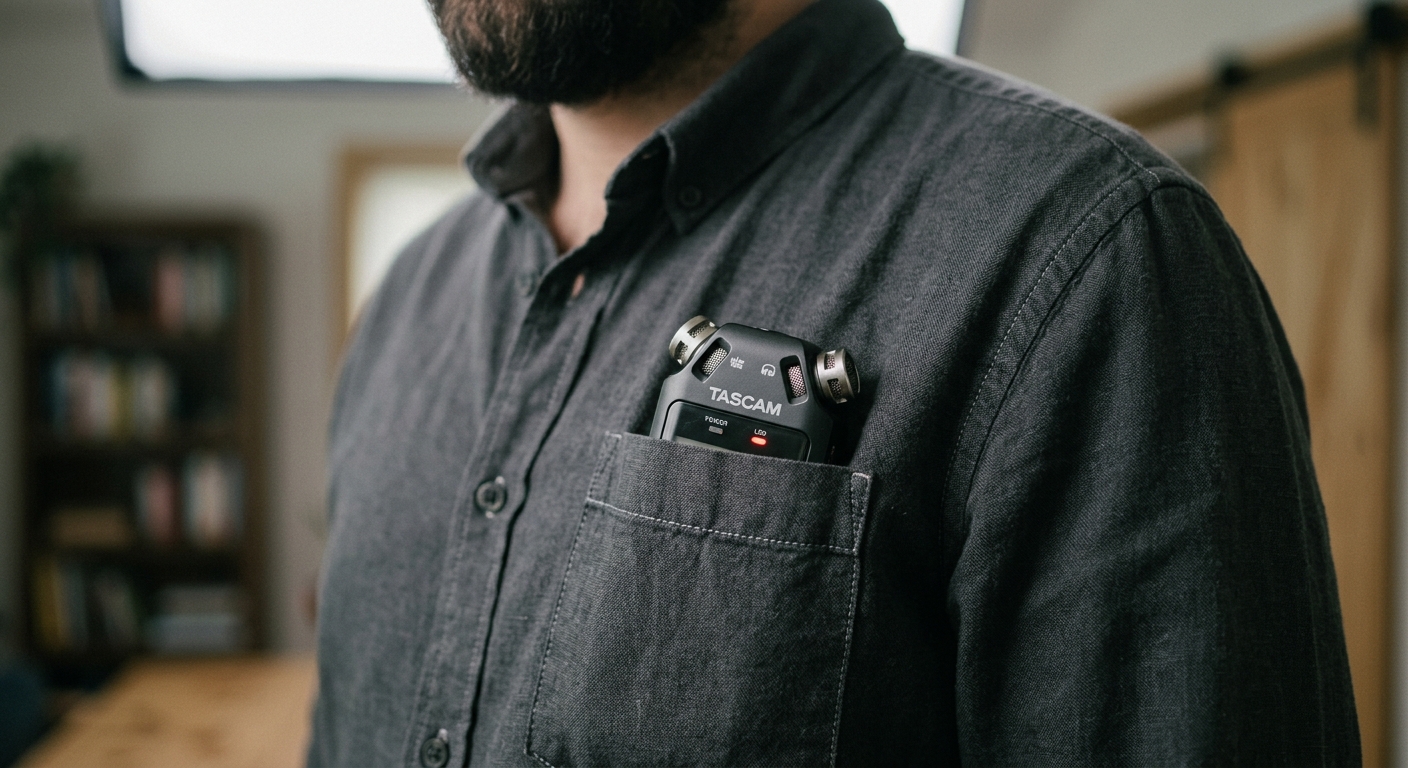
NRS 200.650 prohibits surreptitiously listening to, monitoring, or recording any private conversation "unless authorized to do so by one of the persons engaging in the conversation." This is a clear one-party consent standard.
If you are a participant in a face-to-face discussion, your own consent satisfies the law. You can press record on your phone, wear a voice recorder, or use any other device to capture the conversation without telling anyone else. The key requirement is that you must be an active participant in the discussion, not just a bystander in the same room.
Phone and Wire Audio: All-Party Consent (NRS 200.620)
NRS 200.620 governs the interception of wire communications. Despite statutory language that references consent of "one of the parties," the Nevada Supreme Court interpreted this provision to require consent from every party to the communication.
This all-party requirement applies to:
- Landline telephone calls
- Cell phone and mobile calls
- VOIP calls (Zoom, Microsoft Teams, Google Meet, Skype)
- Video calls with audio (FaceTime, WhatsApp video)
- Text messages (as confirmed in Sharpe v. State, 2015)
Recording any of these without universal consent is a Category D felony.
Why the Rules Are Different
The split exists because Nevada's legislature wrote two separate statutes with different language. NRS 200.650, covering in-person conversations, explicitly permits recording when "authorized to do so by one of the persons." NRS 200.620, covering wire communications, uses different phrasing that the Nevada Supreme Court interpreted as requiring all-party consent.
The 1998 Nevada Supreme Court decision in Lane v. Allstate Ins. Co., 969 P.2d 938 cemented this interpretation. Randy Lane, a former Allstate employee, recorded over 700 telephone conversations with coworkers. The court held in a 3-2 decision that recording phone calls requires everyone's consent, reasoning that the legislature intentionally used different consent language for in-person and wire communications.
Quick Reference: When Can I Audio Record in Nevada?
| Situation | Legal? | Consent Standard | Statute |
|---|---|---|---|
| In-person conversation you participate in | Yes | One-party | NRS 200.650 |
| Phone call with everyone's consent | Yes | All-party | NRS 200.620 |
| Phone call without everyone's consent | No (felony) | All-party | NRS 200.620 |
| Recording others' private conversation you are not part of | No (felony) | N/A | NRS 200.650 |
| Conversation in a public place with no privacy expectation | Yes | None required | No specific statute |
| VOIP or video call | Only with all-party consent | All-party | NRS 200.620 |
What Makes a Conversation "Private"?
Both NRS 200.620 and NRS 200.650 protect communications where the parties have a reasonable expectation of privacy. A conversation is generally not private when it occurs:
- In a public place where others can easily overhear
- At events open to the general public
- In settings where the speaker knows others are listening
- At a volume that makes it clear the speaker does not expect privacy
Courts analyze the totality of the circumstances. They look at the location, the volume of speech, whether doors were closed, whether the speakers took steps to keep the conversation private, and whether they knew or should have known that others could hear them.
A conversation in a crowded casino lobby has less privacy protection than one in a closed hotel suite. A discussion at a public city council meeting carries no privacy expectation at all.
Audio Recording and the Sharpe v. State Decision (2015)
In Sharpe v. State, 350 P.3d 388 (Nev. 2015), the Nevada Supreme Court extended the all-party consent requirement under NRS 200.620 to modern communications technology. Despite the statute's 1973 origins, the court held that the law's language is broad enough to encompass cellular telephone calls and text messages.
The court relied on the definition of "wire communication" under NRS 179.455, which includes communications transmitted "in whole or in part by the aid of wire, cable or other like connection." Because cell signals travel through wired infrastructure at some point, they qualify as wire communications subject to all-party consent.
This means any audio communication that passes through electronic infrastructure, whether cell towers, internet cables, or satellite connections, falls under the all-party consent requirement of NRS 200.620.
Penalties for Illegal Audio Recording
Criminal Penalties
Under NRS 200.690, willful and knowing violations of Nevada's recording statutes constitute a Category D felony:
| Penalty | Details |
|---|---|
| Prison | 1 to 4 years in Nevada state prison |
| Fine | Up to $5,000 |
| Classification | Category D felony |
| Probation | Available at court discretion for first offenses |
The prosecution must prove that the defendant acted both willfully and knowingly. An accidental recording or one made under a genuine good-faith belief that consent was given may not meet this standard, although such a defense is fact-specific.
Civil Liability
Victims of illegal audio recording can pursue civil damages under NRS 200.690:
| Damage Type | Amount |
|---|---|
| Actual damages | Whatever losses the victim can prove |
| Liquidated damages | $100 per day of violation, minimum $1,000 |
| Punitive damages | At court discretion |
| Attorney fees | Reasonable fees and court costs |
The victim receives whichever is greater: actual damages or the liquidated damages amount. The minimum $1,000 floor means even a single illegal recording exposes the violator to significant liability.
The federal Wiretap Act (18 U.S.C. Section 2520) provides an additional civil remedy with statutory damages of $10,000 per violation, actual damages, punitive damages, and attorney fees.
Exceptions to Nevada Audio Recording Laws
Law Enforcement with Court Order
Law enforcement officers may intercept audio communications with a court-ordered wiretap under NRS 179.410 through 179.515. The application must demonstrate probable cause and follow strict procedural requirements.
Emergency Exception
NRS 200.620(1)(b) permits wire communication interception without a court order when an emergency exists and obtaining an order is impractical. The interceptor must seek written ratification from a judge within 72 hours. If ratification is denied, the interceptor must notify both parties and the disclosure becomes unlawful.
Emergency Call Facilities
Law enforcement and fire-fighting agencies may record calls to emergency lines (911), provided they inform the caller that the conversation is being recorded (NRS 200.620(4)).
Collection Agency Calls
Under NRS 649.331, debtors may audio record telephone calls from collection agencies. The debtor must notify the collection agent and state at the beginning of the recording that the call is being recorded.
Service Providers
Persons providing wire communication services may intercept communications for construction, maintenance, or operational purposes under NRS 200.620(2).
Using Audio Recordings as Evidence in Nevada
Admissibility
Audio recordings made lawfully under Nevada's consent laws are generally admissible as evidence in both criminal and civil courts. Nevada follows the Nevada Rules of Evidence, which require:
- Authentication: The proponent must show the recording is genuine and unaltered
- Relevance: The recording must relate to an issue in the case
- Best evidence rule: The original recording is preferred over transcripts
- Prejudice analysis: The court weighs probative value against unfair prejudice
Illegally Obtained Recordings
Recordings obtained in violation of NRS 200.620 or NRS 200.650 are generally inadmissible in Nevada courts. Under NRS 200.680, no person may use or disclose information obtained through illegal interception. Using such a recording could expose you to criminal prosecution regardless of what the recording reveals.
Preservation Best Practices
To maximize the evidentiary value of lawful audio recordings:
- Use a reliable recording device or smartphone app
- Do not edit, trim, or alter the original file
- Back up the recording immediately to cloud storage and a separate device
- Document the date, time, location, and participants as soon as possible
- Store the recording securely to prevent tampering claims
Interstate Calls Involving Nevada
Because Nevada requires all-party consent for phone calls, any call between Nevada and another state should follow the all-party standard. Even if you are calling from a one-party consent state, the person in Nevada has a legal right not to be recorded without their knowledge.
States that border Nevada and their consent requirements:
| State | Consent Standard |
|---|---|
| California | All-party consent |
| Oregon | One-party consent |
| Idaho | One-party consent |
| Utah | One-party consent |
| Arizona | One-party consent |
For calls between Nevada and California, both states require all-party consent, so the rule is clear: everyone on the call must agree. For calls between Nevada and one-party consent states like Oregon or Arizona, Nevada's stricter all-party requirement still applies.
The safest approach is to announce that the call is being recorded and proceed only if all parties remain on the line. If someone objects, you must stop recording immediately.
AI Voice Recorders and Wearable Devices
Wearable audio recording devices like the Plaud NotePin, AI voice recorders, and smartwatches follow the same split consent rules as any other recording device in Nevada.
For in-person conversations you participate in, wearable audio recorders are legal under NRS 200.650. You can wear a Plaud device, use your Apple Watch, or carry any voice recorder during face-to-face discussions without notifying other parties.
For phone calls, wearable devices that record calls must comply with NRS 200.620's all-party consent requirement. If your AI voice recorder captures a phone conversation without every participant's consent, you have committed a Category D felony regardless of the device used.
The AI transcription and summarization features that many of these devices offer do not change the underlying consent requirements. The legality depends on the original recording, not what you do with the data afterward.
2025 Legislative Updates
Nevada's 83rd Legislature (2025 session) passed several laws affecting audio and digital recordings:
- SB 263 expanded criminal penalties for creating or distributing synthetic audio or media depicting minors in explicit situations, effective January 1, 2026
- SB 213 created civil liability for distributing synthetic intimate audio or imagery of adults without consent, effective January 1, 2026
- AB 73 established disclosure requirements for political campaign materials using synthetic media or AI-generated audio content
These laws do not change the core consent requirements under NRS 200.620 and NRS 200.650, but they add penalties for AI-generated or manipulated audio recordings that depict real people without consent.
More Nevada Recording Laws
Audio Recording | Video Recording | Voyeurism & Hidden Cameras | Workplace Recording | Recording Police | Phone Call Recording | Security Cameras | Recording in Public | Landlord-Tenant | Dashcam Laws | Schools | Medical Recording
Sources and References
- NRS 200.620 - Interception of Wire Communications(leg.state.nv.us).gov
- NRS 200.650 - Surreptitious Intrusion of Privacy(leg.state.nv.us).gov
- NRS 200.690 - Penalties for Recording Violations(leg.state.nv.us).gov
- NRS 179.455 - Definition of Wire Communication(leg.state.nv.us).gov
- NRS 200.680 - Prohibition on Use of Illegally Intercepted Communications(leg.state.nv.us).gov
- NRS 649.331 - Collection Agency Recording Exception(leg.state.nv.us).gov
- Lane v. Allstate Ins. Co., 969 P.2d 938 (Nev. 1998)(law.justia.com)
- FCC Guide on Recording Telephone Conversations(fcc.gov).gov