
Kansas
Kansas Ring Doorbell Laws: What You Need to Know in 2026
Independently fact-checked against primary sources (last audited August 17, 2026). · Reviewed by the RecordingLaw editorial team. · Law checked current as of August 17, 2026. · 6 primary sources cited on this page. How we verify our legal content
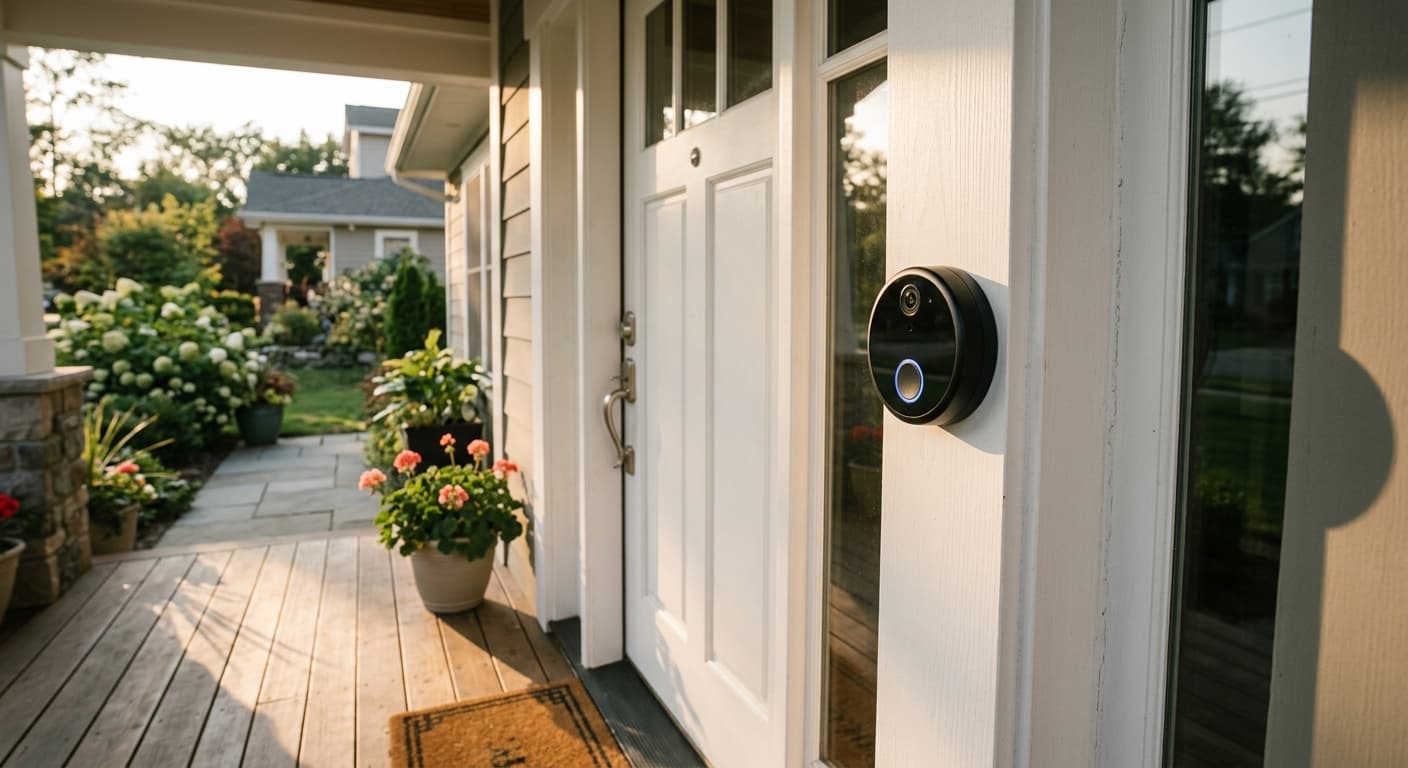
Ring doorbells are legal in Kansas. State law permits video recording of your own property, and K.S.A. 21-6101 makes Kansas a one-party consent state, so your Ring doorbell can record audio of any front-door conversation you participate in without notifying the other person.
Ring doorbell cameras raise specific legal questions in Kansas because they record both video and audio. Kansas law treats these two types of recording differently, and understanding the distinction matters for anyone who owns or plans to install a Ring device. This guide breaks down the relevant Kansas statutes, consent requirements, HOA rules, landlord-tenant considerations, and penalties that apply to Ring doorbell use across the state.
Kansas Audio Recording Laws and Ring Doorbells
Kansas is a one-party consent state for audio recording. Under K.S.A. 21-6101, a person can lawfully record a conversation as long as at least one party to that conversation consents to the recording. If you are the person having a conversation at your front door and your Ring doorbell is recording, your participation satisfies the consent requirement.
The statute specifically prohibits intercepting telephone, telegraph, or wireless communications without consent. It also bars anyone from entering a private place with the intent to secretly listen to private conversations or from installing devices to record sounds originating in a private place without permission from the people being recorded.

What One-Party Consent Means for Your Ring Doorbell
Because Kansas follows one-party consent, your Ring doorbell can record audio of any conversation you are part of at your front door. The key legal distinction is participation. If you are present and speaking with a visitor, delivery driver, or anyone else, the recording is lawful under K.S.A. 21-6101.
However, if your Ring doorbell records conversations between two other people on your porch when you are not present or participating, the legal analysis becomes less clear. No Kansas court has directly ruled on whether a homeowner's passive doorbell recording of third-party conversations satisfies one-party consent. The safer interpretation is that recordings of conversations you are not a party to could raise legal concerns, particularly if they occur in a setting where the speakers might reasonably expect privacy.
Audio Recording in Public Spaces vs. Private Property
Kansas law draws a line between public spaces and private places. Conversations occurring in public areas where no reasonable expectation of privacy exists can generally be recorded without anyone's consent. Your front porch and the area visible from your doorway are typically considered semi-public spaces, especially when visitors voluntarily approach your door.
Private places receive stronger protection under the statute. K.S.A. 21-6101(a)(4) makes it unlawful to install or use any device for hearing, recording, amplifying, or broadcasting sounds originating in a private place without the consent of the person or persons entitled to privacy there. A Ring doorbell aimed at your own front entrance does not typically raise this issue, but positioning a device to capture conversations inside a neighbor's home or in enclosed private areas could violate the law.
Video Recording Laws and Ring Doorbells in Kansas
Kansas does not have a standalone statute that broadly regulates residential video surveillance. Instead, video recording falls under the broader breach of privacy provisions in K.S.A. 21-6101. The statute prohibits using a camera of any type to photograph or record someone who is nude or in a state of undress, for the purpose of viewing that person's body or undergarments, without that person's consent or knowledge and with the intent to invade their privacy, in circumstances where the person has a reasonable expectation of privacy.
For Ring doorbell cameras, this means outdoor video recording of your property, walkways, driveway, and front porch is generally lawful. These are areas where visitors do not have a reasonable expectation of privacy. The legal risk increases if a camera is positioned to capture the interior of a neighbor's home, a bathroom window, or any other area where privacy is reasonably expected.

Voyeurism Protections Under K.S.A. 21-6101
Kansas has strong protections against voyeurism under K.S.A. 21-6101(a)(6). The law makes it a severity level 8 person felony to install or use a camcorder, motion picture camera, or photographic camera of any type to record someone who is nude or in a state of undress, for the purpose of viewing that person's body or undergarments, without that person's consent or knowledge and with the intent to invade their privacy. It applies when the recording occurs in circumstances where the person has a reasonable expectation of privacy.
The subsection no longer contains a concealment element. The 2024 amendment struck the word "concealed" from this provision, so a camera that is plainly visible, including a doorbell camera mounted in the open, is not exempt merely because it is not hidden. What limits the offense is the combination of the other elements: the subject must be nude or in a state of undress, the recording must be made for the purpose of viewing the body or undergarments, it must be without consent or knowledge, it must be made with intent to invade privacy, and the person must have a reasonable expectation of privacy in the circumstances.
A Ring doorbell mounted at a standard height on your front door and aimed at your entryway would not typically implicate these provisions. The concern arises only when cameras are positioned to capture people in states of undress through windows, in bathrooms, or in other private areas. A second voyeurism conviction within five years escalates the charge to a severity level 5 person felony under Kansas sentencing guidelines.
HOA Rules and Ring Doorbells in Kansas
Kansas does not have a state law that specifically addresses HOA authority over doorbell cameras. However, HOAs in Kansas operate under their own covenants, conditions, and restrictions (CC&Rs), which often include architectural guidelines that can affect Ring doorbell installation.
Many Kansas HOAs require homeowners to submit an architectural review request before installing any exterior device, including a doorbell camera. Common restrictions include rules about device color, size, placement height, and whether the camera can be visible from the street or common areas.
What Kansas HOAs Can and Cannot Do
HOAs in Kansas generally have the authority to regulate the appearance and placement of exterior devices on homes within their communities. If the CC&Rs include provisions about exterior modifications, a Ring doorbell installation could require prior approval. Failure to obtain approval may result in fines or a requirement to remove the device.
However, HOAs cannot enact rules that directly conflict with Kansas state law. Since Kansas law permits homeowners to use security devices on their own property, an HOA likely cannot impose a blanket ban on all doorbell cameras. The more common approach is regulation of placement, appearance, and angle to balance security needs with community aesthetics and neighbor privacy.
Homeowners in Kansas HOA communities should review their CC&Rs and architectural guidelines before installing a Ring doorbell. Requesting approval in advance can prevent disputes and potential fines down the road.

Landlord and Tenant Rights for Ring Doorbells in Kansas
Kansas landlord-tenant law under K.S.A. Chapter 58, Article 25 (the Residential Landlord and Tenant Act) does not specifically address doorbell camera installation. However, several general principles apply.
Tenant Installation Rights
Tenants in Kansas typically need landlord permission before installing a Ring doorbell on rental property. Installing a doorbell camera usually requires drilling holes or modifying the exterior of the property, which most lease agreements classify as an alteration requiring landlord approval. Some landlords may allow battery-operated Ring doorbells that do not require permanent modifications.
Tenants can generally install security cameras inside their own rental unit without landlord permission, as long as the cameras only record within the tenant's private living space. Placing cameras in common areas or exterior spaces of the building typically requires approval from the property owner or management company.
Landlord Surveillance Restrictions
Kansas landlords can install security cameras in common areas such as building entrances, hallways, parking lots, and laundry rooms. These are not considered private spaces, so recording in these areas does not violate K.S.A. 21-6101.
Landlords cannot install cameras inside a tenant's living space without the tenant's explicit consent. Recording inside bedrooms, bathrooms, or any area where a tenant has a reasonable expectation of complete privacy violates Kansas breach of privacy law. If a landlord installs a Ring doorbell on a rental property that captures the interior of a tenant's unit, this could raise serious legal concerns.
Law Enforcement Access to Ring Doorbell Footage in Kansas
Kansas law enforcement can access Ring doorbell footage through several legal channels. The primary method is a search warrant issued by a Kansas court based on probable cause. Under the Fourth Amendment to the U.S. Constitution and Section 15 of the Kansas Bill of Rights, law enforcement generally needs a warrant to compel production of private recordings.
Voluntary Sharing vs. Legal Compulsion
Ring doorbell owners in Kansas can voluntarily share footage with law enforcement at any time. If police officers knock on your door and ask to see footage related to an investigation, you have the right to say yes or no. Voluntary sharing does not require a warrant.
If you decline to share footage, law enforcement can pursue a subpoena or search warrant through the courts. They can also submit a legal request directly to Amazon (Ring's parent company) under Ring's law enforcement guidelines.
Ring's Evolving Law Enforcement Policies
Ring's policies on law enforcement access have changed multiple times. In early 2024, Ring discontinued its "Request for Assistance" feature that allowed police to ask Ring users for footage through the Neighbors app. Ring stated that law enforcement would need to obtain a warrant to access individual users' footage.
In April 2025, Ring announced a partnership with Axon, and by late 2025 police agencies could once again ask Ring users for footage through voluntary Community Requests submitted via Axon Evidence and posted to the Neighbors feed. Sharing is entirely optional: users decide whether to share, declining is anonymous to the agency, and police still need a warrant, subpoena, or court order to compel footage. A separate partnership with Flock Safety, announced in October 2025, drew immediate criticism from privacy advocates, and on February 12, 2026, Ring withdrew from it, stating it had "never officially been implemented." Ring retains the ability to disclose video without user consent in situations where the company believes someone faces "danger of death or serious physical injury."
The FTC's 2023 settlement with Ring required the company to implement stronger privacy and security measures, including restrictions on employee access to customer videos and mandatory multi-factor authentication. The FTC found that Ring had allowed employees and contractors to view thousands of customer videos without proper safeguards.

Penalties for Illegal Recording in Kansas
Kansas imposes different penalties depending on the type of illegal recording under K.S.A. 21-6101.
Audio Recording Violations
Illegal interception, recording, or disclosure of private audio communications is a class A misdemeanor. Penalties include up to 12 months in county jail and a fine of up to $2,500. This applies to situations such as recording private conversations without the consent of any party involved.
Video Voyeurism Violations
Recording someone who is nude or in a state of undress, without that person's consent or knowledge and with the intent to invade their privacy, is a severity level 8 person felony under K.S.A. 21-6101(b)(2)(A). The privacy statute itself sets no prison term. Whether a conviction carries prison or probation, and for how long, is determined by the nondrug sentencing guidelines grid in K.S.A. 21-6804, where the sentence depends on the offender's criminal history category and the grid's dispositional line decides between presumptive imprisonment and presumptive nonimprisonment. A felony ranked at severity levels 6 through 10 of the nondrug grid also carries a fine of up to $100,000 under K.S.A. 21-6611(a)(3).
A second or subsequent conviction within the previous five years becomes a severity level 5 person felony, which sits higher on the grid and carries longer presumptive terms. The July 1, 2024 amendment to K.S.A. 21-6101 struck the word "concealed" from the voyeurism subsection. It did not create mandatory minimum sentences and it did not restrict plea agreements; no such language appears anywhere in the statute.
Dissemination of Illegally Recorded Material
Distributing images or recordings obtained through illegal voyeurism is a separate felony offense under K.S.A. 21-6101(a)(7). This includes sharing Ring doorbell footage that was obtained in violation of the law, such as footage that captures someone in a private area without their consent.
Civil Liability
Beyond criminal penalties, a person whose privacy has been violated through illegal recording in Kansas may pursue civil remedies. Kansas recognizes the tort of invasion of privacy, which can result in monetary damages for the victim. A neighbor who believes your Ring doorbell is unlawfully recording their private activities could potentially file a civil lawsuit seeking damages and injunctive relief.
How to Use a Ring Doorbell Legally in Kansas
Following these guidelines can help Ring doorbell owners in Kansas stay within the law:
Position your camera appropriately. Aim your Ring doorbell at your own property, including your front door, porch, walkway, and driveway. Avoid angling the camera to capture the interior of neighboring homes, fenced backyards, or bathroom windows. The fact that your camera is out in the open is not a defense under the voyeurism subsection, which no longer requires a concealed device.
Understand audio recording limits. Your Ring doorbell can record audio of conversations you participate in at your front door. Consider using the privacy settings in the Ring app to disable audio recording if you want to avoid potential issues with recording conversations between third parties.
Check your HOA rules. If you live in an HOA community, review the CC&Rs and architectural guidelines before installation. Submit any required approval requests to avoid fines or removal orders.
Get landlord permission if renting. Tenants should obtain written permission from their landlord before installing a Ring doorbell, especially if installation requires drilling or other modifications to the property.
Manage Ring's privacy settings. Use Ring's motion zones to limit the area your camera monitors. Adjust sensitivity settings to reduce recordings triggered by activity on neighboring properties. Enable end-to-end encryption for stored footage.
Respond appropriately to law enforcement requests. You can voluntarily share footage with police, but you are not legally required to do so without a warrant. If you receive a formal legal request, consult an attorney before responding.
Keep your Ring software updated. Regular updates include security patches that protect your footage from unauthorized access. Following the FTC's 2023 enforcement action, Ring implemented stronger security measures including multi-factor authentication.
More Kansas Laws
Understanding Ring doorbell laws is just one part of knowing your rights in Kansas. These related guides cover other important Kansas legal topics:
- Kansas Recording Laws cover the full scope of one-party consent rules for phone calls, in-person conversations, and workplace recording.
- Kansas Hit and Run Laws explain what to do if you are involved in a traffic accident and the penalties for leaving the scene.
- Kansas Lemon Law outlines protections for buyers who purchase defective vehicles in the state.
This article provides general legal information about Ring doorbell camera laws in Kansas. Laws can change, and their application depends on specific circumstances. Consult an attorney licensed in Kansas for advice specific to your situation. Information is current as of April 2026.
Frequently Asked Questions
Is it legal to have a Ring doorbell in Kansas?
Yes, Ring doorbells are legal in Kansas. The state follows one-party consent for audio recording under K.S.A. 21-6101, and video recording of your own property is generally permitted. The camera should be positioned to capture your own entryway and property rather than areas where neighbors have a reasonable expectation of privacy.
Can my neighbor record me with a Ring doorbell in Kansas?
A neighbor can legally record video of areas visible from their front door, which may include portions of your property such as a shared sidewalk or street. However, if the camera is deliberately aimed to record private areas of your home or captures audio of your private conversations without your consent, it could violate K.S.A. 21-6101.
Does Kansas voyeurism law only apply to hidden cameras?
No. K.S.A. 21-6101(a)(6) once required a concealed camera, but the 2024 amendment struck that word from the statute. The current offense covers a camcorder, motion picture camera, or photographic camera of any type, so a plainly visible camera such as a doorbell unit can still violate the law if the other elements are met: the subject is nude or in a state of undress, the recording is made for the purpose of viewing their body or undergarments without their consent or knowledge, it is made with intent to invade their privacy, and they had a reasonable expectation of privacy.
Do I need to tell visitors my Ring doorbell is recording in Kansas?
Kansas one-party consent law does not require you to notify visitors that audio is being recorded as long as you are a participant in the conversation. For video, no notification is legally required for recording in areas without a reasonable expectation of privacy. Some homeowners choose to post a small sign as a courtesy and deterrent.
Can police in Kansas access my Ring doorbell footage without my permission?
Law enforcement generally needs a warrant or court order to compel access to your Ring footage. You can voluntarily share footage with police if you choose. Ring can also disclose footage without your consent in emergency situations where the company believes someone faces imminent danger of death or serious physical injury.
Can my Kansas HOA force me to remove my Ring doorbell?
A Kansas HOA can require removal if the installation violates the community's CC&Rs or architectural guidelines. HOAs typically regulate placement, appearance, and camera angle rather than imposing outright bans. Reviewing your HOA's rules and obtaining approval before installation is the best way to avoid disputes.
Updates
Corrected the Kansas voyeurism section: the 2024 amendment to K.S.A. 21-6101(a)(6) removed the hidden-camera requirement, so a visible doorbell camera is not exempt; fixed a misnumbered subsection cite and removed unsupported sentencing figures and a mischaracterized 2024 amendment.
Corrected a claim that Ring partnered with Axon in 2025 to let police request footage and live-stream access; the actual 2025 partner was Flock Safety, and Ring publicly withdrew from that partnership in February 2026 before it was implemented.
Independently fact-checked against the cited primary sources; governing law re-checked for recent changes
Governing law re-checked for recent changes
Reviewed and approved by an editor
The Law Behind This Article
This article rests on the statutory provisions below, held in our own legal record and retrieved from the official source. Tap a section to read the operative text.
Kansas Statutes Annotated, Chapter 21: CRIMES AND PUNISHMENTS
§ 21-6101Breach of privacy.In forcecited in 27 of our articles
(a) Breach of privacy is knowingly and without lawful authority: (1) Intercepting, without the consent of the sender or receiver, a message by telephone, telegraph, letter or other means of private communication; (2) divulging, without the consent of the sender or receiver, the existence or contents of such message if such person knows that the message was illegally intercepted, or if such person illegally learned of the message in the course of employment with an agency in transmitting such message; (3) entering with intent to listen surreptitiously to private conversations in a private place or to observe the personal conduct of any other person or persons entitled to privacy therein; (4) installing or using outside or inside a private place any device for hearing, recording, amplifying or broadcasting sounds originating in such place, which sounds would not ordinarily be audible or comprehensible without the use of such device, without the consent of the person or persons entitled to privacy therein; (5) installing or using any device or equipment for the interception of any telephone, telegraph or other wire or wireless communication without the consent of the person in…
Official text (excerpt) · last checked 2026-09-23 · Read the full text in our law library · Verify at ksrevisor.gov
Cited in 8 court opinions in our collectionLatest citing opinion in our collection: 2026
In the courts (editorial summary, independently checked):Recent Kansas decisions construe the image-dissemination subsection, K.S.A. 21-6101(a)(8), not the interception subsections. State v. Ivy (2025) held a reasonable expectation of privacy under that subsection has a subjective and an objective component. State v. Jamil (2026), unpublished, found disseminating needs no jury definition.
Opinions citing this section in our collection:
- State v. Ivy (Court of Appeals of Kansas 2025)✓Ivy posted on Snapchat a sexual video his ex-girlfriend had recorded and texted him during their relationship; the court applied a subjective and objective two-part test and held a jury could find she kept a reasonable expectation of privacy, affirming the conviction.
- In re Belcher (Supreme Court of Kansas 2024, 552 P.3d 1213)“…deotape, photograph, film or image obtained in violation of K.S.A. 21-6101(a)(6) or (a)(8), and amendments…”
- State v. Jamil (Court of Appeals of Kansas 2026)✓Jamil secretly filmed a woman undressed and unconscious at his home, then sent the videos to her boyfriend; the court held that sharing with a single recipient can be disseminating under K.S.A. 21-6101(a)(8) and that intent to harass could be inferred from his conduct.
Identified automatically from the court opinions citing this section — not a ranking of which case controls.
Also relied on in: Kansas Audio Recording Laws, Kansas Dashcam Laws: Mounting Rules, Audio Recording, and Evidence (2026), Kansas Phone Call Recording Laws
§ 21-6611Fines; crimes committed on or after July 1, 1993.In forcecited in 5 of our articles
(a) A person who has been convicted of a felony may, in addition to the sentence authorized by law, be ordered to pay a fine which shall be fixed by the court as follows: (1) For any off-grid felony crime, or any felony ranked in severity level 1 of the drug grid committed prior to July 1, 2012, or in severity levels 1 or 2 of the drug grid committed on or after July 1, 2012, as provided in K.S.A. 21-6805, and amendments thereto, a sum not exceeding $500,000; (2) for any felony ranked in severity levels 1 through 5 of the nondrug grid as provided in K.S.A. 21-6804, and amendments thereto, or in severity levels 2 or 3 of the drug grid committed prior to July 1, 2012, or in severity levels 3 or 4 of the drug grid committed on or after July 1, 2012, as provided in K.S.A. 21-6805, and amendments thereto, a sum not exceeding $300,000; and (3) for any felony ranked in severity levels 6 through 10 of the nondrug grid as provided in K.S.A. 21-6804, and amendments thereto, or in severity level 4 of the drug grid committed prior to July 1, 2012, or in severity level 5 of the drug grid committed on or after July 1, 2012, as provided in K.S.A.
Official text (excerpt) · last checked 2026-07-29 · Read the full text in our law library · Verify at ksrevisor.gov
Cited in 6 court opinions in our collectionLatest citing opinion in our collection: 2026
Opinions citing this section in our collection:
- Heinzman v. State (Court of Appeals of Kansas 2026)“…olation when, in fact, the maximum amount was $300,000. See K.S.A. 21-6611(a)(2). She also…”
- State v. Abell (Court of Appeals of Kansas 2026)“…hose two cases for the appropriate fines in compliance with K.S.A. 21-6611(a)(3), and for the district court to de…”
- State v. Washington (Court of Appeals of Kansas 2025)“…nclude fines, in addition to or instead of jail time, under K.S.A. 21-6611. Washington's argument misappl…”
Identified automatically from the court opinions citing this section — not a ranking of which case controls.
Also relied on in: Kansas Smart Glasses Recording Laws (K.S.A. 21-6101), Kansas Recording Laws (2026): One-Party Consent Rules, Kansas Surveillance Camera Laws (2026 Guide)
§ 21-6804Sentencing grid for nondrug crimes; authority and responsibility of sentencing court; presumptive disposition.In forcecited in 7 of our articles
(a) The provisions of this section shall be applicable to the sentencing guidelines grid for nondrug crimes. The following sentencing guidelines grid shall be applicable to nondrug felony crimes: (b) Sentences expressed in the sentencing guidelines grid for nondrug crimes represent months of imprisonment. (c) The sentencing guidelines grid is a two-dimensional crime severity and criminal history classification tool. The grid's vertical axis is the crime severity scale which classifies current crimes of conviction. The grid's horizontal axis is the criminal history scale which classifies criminal histories. (d) The sentencing guidelines grid for nondrug crimes as provided in this section defines presumptive punishments for felony convictions, subject to the sentencing court's discretion to enter a departure sentence. The appropriate punishment for a felony conviction should depend on the severity of the crime of conviction when compared to all other crimes and the offender's criminal history. (e) (1) The sentencing court has discretion to sentence at any place within the sentencing range.
Official text (excerpt) · last checked 2026-07-29 · Read the full text in our law library · Verify at ksrevisor.gov
Cited in 70 court opinions in our collectionLatest citing opinion in our collection: 2026
Opinions citing this section in our collection:
- State v. Lamia-Beck (Supreme Court of Kansas 2024, 549 P.3d 1103)“…grid block for an offender classified in that grid block;" K.S.A. 21-6804(a), which holds Lamia-Beck's grid block…”
- State v. Smith (Court of Appeals of Kansas 2024)“…ts to the components of a "complete sentence" identified in K.S.A. 21-6804(e)(2): "the complete sentence . . . sha…”
- State v. Fleming (Supreme Court of Kansas 2018, 423 P.3d 506)“…rity level 3 person felony, in violation of K.S.A. 21-5420, K.S.A. 21-6804 and K.S.A. 21-6807 (aggravated r…”
Identified automatically from the court opinions citing this section — not a ranking of which case controls.
Also relied on in: Kansas Security Camera Laws, Kansas Voyeurism Laws, Kansas Workplace Recording Laws
Search our full record of US law — 2.1 million sections, every state + federal →
Sources and References
- K.S.A. 21-6101 - Breach of Privacy(ksrevisor.gov).gov
- Kansas Legislature - K.S.A. 21-6101(kslegislature.gov).gov
- K.S.A. Chapter 58, Article 25 - Residential Landlord and Tenant Act(ksrevisor.gov).gov
- FTC Settlement with Ring over Privacy Violations(ftc.gov).gov
- FTC Consumer Alert - Ring Privacy Failures(consumer.ftc.gov).gov
- FTC Ring Customer Refunds(ftc.gov).gov
- Ring Law Enforcement Information Requests(ring.com)
- Ring Law Enforcement Guidelines(ring.com)
- Kansas Reporters Recording Guide - RCFP(rcfp.org)
- 2024 Kansas Session Laws, Ch. 96 (SB 414) - amendment striking the concealment element from K.S.A. 21-6101(a)(6)(sos.ks.gov)
- K.S.A. 21-6804 - Sentencing guidelines grid for nondrug crimes(ksrevisor.gov)
- K.S.A. 21-6611 - Fines for felony and misdemeanor convictions(ksrevisor.gov)