
Cameroon
Cameroon Recording Laws: All-Party Consent Rules and Penalties (2026)
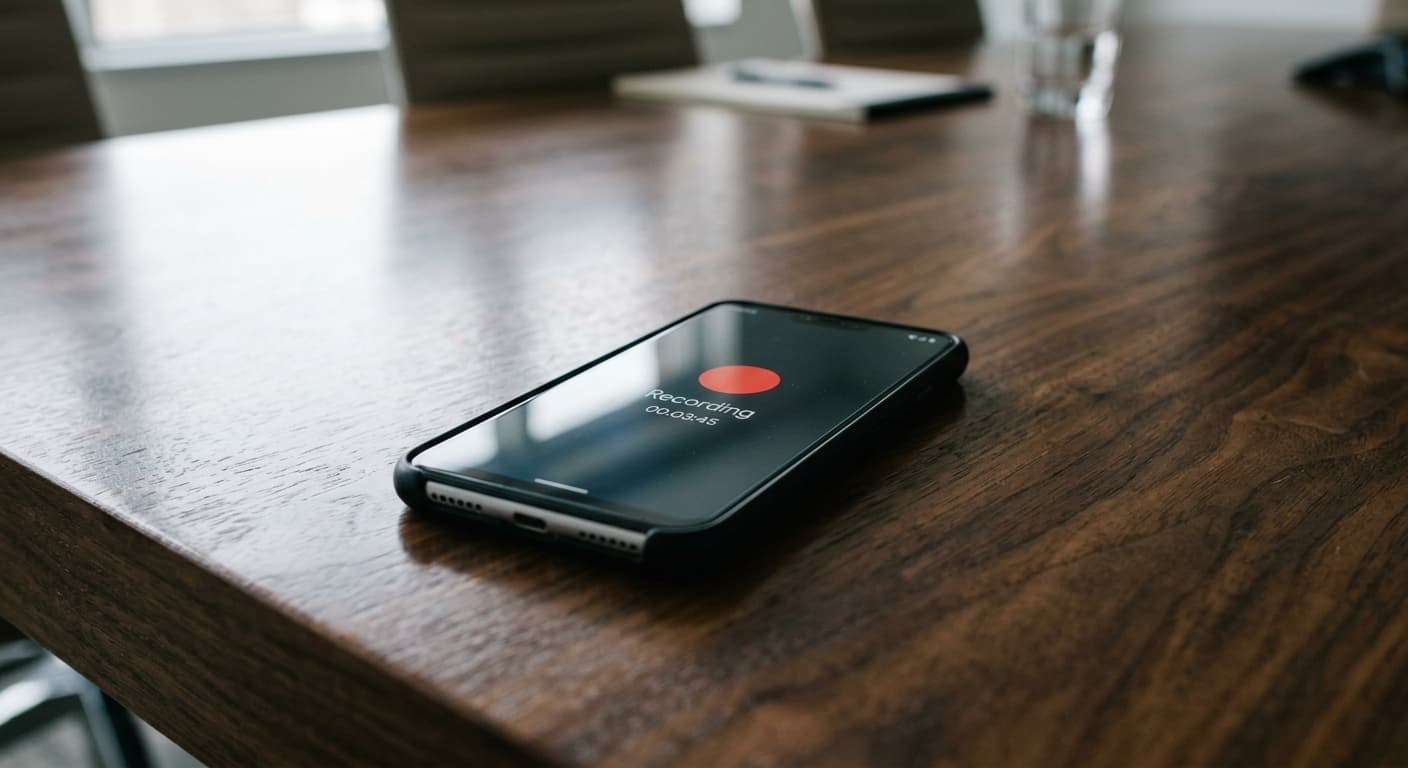
Cameroon's Recording Laws: A Country Where Consent Is Not Optional
Cameroon treats the act of recording a private conversation without consent as a criminal offense. The country's legal framework does not leave room for one-party consent, silent recording, or implied permission. If you record someone without their knowledge, you face prison time and substantial fines.
The primary statute governing this area is Law No. 2010/012 of 21 December 2010 on Cybersecurity and Cybercriminality in Cameroon. Article 74 of that law targets anyone who interferes with the privacy of others by fixing, recording, or transmitting electronic data of a private or confidential nature without the consent of the author. A separate provision, Section 65, imposes even heavier penalties on anyone who intercepts communications during transmission without authorization. The law does not distinguish between phone calls, video recordings, or digital messages. If the data is private and the author did not consent, the act is illegal.
This places Cameroon squarely in the all-party consent category, alongside countries like Germany, Switzerland, and Austria. For anyone living in, traveling through, or conducting business in Cameroon, understanding these rules is not just advisable. It is a legal necessity.
The Bijural System: Two Legal Traditions, One Recording Standard
How Cameroon's Dual Legal System Works

Cameroon inherited two distinct legal systems from its colonial history. After Germany lost control of the territory following World War I, Britain administered the western regions (now the North West and South West) under English common law. France governed the eastern regions under the French civil law tradition. When the country reunified in 1961, both systems remained in place.
Today, Cameroon operates as a bijural state. English common law, with its emphasis on judicial precedent and adversarial proceedings, governs the two Anglophone regions. French civil law, built on codified statutes and inquisitorial procedures, governs the eight Francophone regions: Adamaoua, Centre, East, Far North, Littoral, North, West, and South.
What This Means for Recording Laws
The distinction matters less than you might expect when it comes to recording. Criminal law in Cameroon has been unified through national legislation that applies across all ten regions. The Cybersecurity Law (Law No. 2010/012), the Penal Code (Law No. 2016/007), and the Criminal Procedure Code (Law No. 2005/007) apply nationwide regardless of whether a case is heard in a common law or civil law court.
Where the bijural system creates practical differences is in procedural matters and how cases move through the courts. In Anglophone regions, proceedings follow common law conventions with greater reliance on oral arguments and cross-examination. In Francophone regions, the examining magistrate plays a more active role in directing investigations. But the substantive law on recording consent is the same in Douala as it is in Bamenda.
The Cybersecurity Law: Cameroon's Primary Recording Statute
Article 74: Recording and Transmitting Private Data
Article 74 of Law No. 2010/012 is the provision that directly criminalizes unauthorized recording. It states that anyone who interferes with the privacy of others by fixing, recording, or transmitting, without the consent of the author, electronic data of a private or confidential nature faces criminal penalties.
The language is broad. "Fixing" covers saving or storing a communication. "Recording" covers audio and video capture. "Transmitting" covers forwarding, sharing, or distributing private content. The article does not require the person recording to have malicious intent. The act itself, performed without consent, triggers liability.
Penalties under Article 74:
- Imprisonment of one to two years
- A fine of XAF 1,000,000 to XAF 5,000,000 (approximately USD $1,600 to $8,000)
- Or both
These are not theoretical penalties. Cameroon's judicial system actively prosecutes privacy violations, and the fines represent significant sums in a country where the average annual income falls well below XAF 1,000,000.
Section 65: Illegal Interception During Transmission
Section 65(1) of the same law addresses the more serious offense of intercepting communications in real time. It provides that whoever, without any right or authorization, proceeds by electronic means to intercept communications during transmission intended for an information system shall face significantly heavier consequences than those imposed under Article 74.
Penalties under Section 65:
- Imprisonment of five to ten years
- A fine of XAF 5,000,000 to XAF 10,000,000 (approximately USD $8,000 to $16,000)
- Or both
The practical difference between Article 74 and Section 65 turns on timing. Article 74 covers recording, saving, or transmitting content that is already in existence or at rest. Section 65 covers active interception during the moment of transmission, such as wiretapping a live phone call or intercepting data packets in transit. Both provisions apply to private, unauthorized conduct. Both require consent. Section 65 simply reflects the greater intrusiveness of real-time surveillance by imposing penalties three to five times heavier than those under Article 74.
Articles 41 to 48: The Privacy Framework
Article 74 and Section 65 do not stand alone. They sit within a broader privacy framework established in the same law.
Article 41 declares that every individual has the right to the protection of their privacy. This is the foundational statement that supports all recording-related provisions.
Article 42 requires operators of electronic communication networks and information systems to ensure the confidentiality of information channeled through their systems, including traffic data.
Article 44(1) states that it is forbidden for any natural person or corporate body to listen to, intercept, or store communications and the traffic data related thereto, or to subject them to any other means of interception or monitoring, without the consent of the users concerned. The only exception is where such interception is legally authorized.
Article 47 adds that using electronic communication networks to store information or access information stored on someone's terminal equipment requires their prior consent.
Taken together, these articles create a layered defense of communications privacy. You cannot record, intercept, store, or access private communications without explicit consent from the people involved.
Constitutional Protections: The Foundation
The constitutional basis for Cameroon's recording laws sits in the Preamble to the Constitution (Law No. 96/6 of 18 January 1996, as amended). The Preamble declares that "the privacy of all correspondence is inviolable" and that "no interference may be allowed except by virtue of decisions emanating from the Judicial power."

Under Article 65 of the Constitution, the Preamble is an integral part of the Constitution and carries full legal force. This means the privacy of correspondence is not just a guiding principle. It is a constitutionally guaranteed right.
Cameroon's Constitution also affirms the country's commitment to the Universal Declaration of Human Rights (Article 12, protecting against arbitrary interference with privacy) and the African Charter on Human and Peoples' Rights. These international instruments reinforce the domestic prohibition on unauthorized recording.
The Penal Code: Additional Criminal Protections
Section 300: Tampering with Correspondence
Beyond the Cybersecurity Law, the Cameroon Penal Code (Law No. 2016/007 of 12 July 2016) provides separate criminal penalties for privacy violations.
Section 300 addresses tampering with correspondence. This provision criminalizes the unauthorized opening, suppression, or diversion of another person's correspondence. While it was originally drafted with physical mail in mind, Cameroonian legal scholars and courts have interpreted "correspondence" broadly to encompass electronic communications.
Section 310: Professional Secrecy
Section 310 of the Penal Code governs breaches of professional secrecy. Any person who, by reason of their profession or position, holds confidential information and discloses it faces imprisonment of three months to three years and fines of XAF 20,000 to XAF 200,000.
This provision is relevant to recording in professional settings. A doctor, lawyer, banker, or government official who records a confidential interaction and shares it without authorization faces liability under both Section 310 and the Cybersecurity Law.
Section 132: Doubled Penalties for Public Servants
Section 132(2) of the Penal Code provides that penalties for privacy-related offenses, including those under Sections 299, 300, and 310, are doubled when the offender is a public servant. A government employee who secretly records a colleague's phone call or tampers with official correspondence faces twice the standard prison term and fine.
Phone Call Recording
Personal Calls
Recording a personal phone call in Cameroon without the consent of all parties violates Article 74 of the Cybersecurity Law and Article 44 of the same statute. There is no exception for recording your own calls. The law requires the consent of "the author" of the communication, meaning the person whose words are being captured.
This applies to traditional landline calls, mobile phone calls, and internet-based voice communications. Whether you use MTN Cameroon, Orange Cameroon, or a VoIP service like WhatsApp or Zoom, the consent requirement is the same.
If you tap a live call rather than simply recording it after the fact, Section 65 applies instead of, or in addition to, Article 74. That means exposure to a sentence of five to ten years rather than one to two years.
Business Calls
Businesses that record phone calls for quality assurance, training, or compliance purposes must obtain explicit consent from all parties before the recording begins. Automated consent prompts at the start of a call can satisfy this requirement, but the consent mechanism must be clear and give callers the option to decline.
Call centers, customer service departments, and financial institutions operating in Cameroon should treat consent collection as a mandatory step, not a formality.
In-Person Conversations
The Cybersecurity Law's reference to "electronic data" might suggest it applies only to digital communications. In practice, Cameroon's courts interpret the law more broadly. Recording an in-person conversation with a smartphone, a digital voice recorder, or any electronic device falls within the scope of Article 74 because the captured content becomes electronic data the moment it is recorded.
The Constitutional protection of correspondence privacy and the Penal Code's provisions on tampering with correspondence further reinforce that secret recording of face-to-face conversations is prohibited.
Hiding a phone in your pocket to record a business meeting, using a smartwatch to capture audio during a negotiation, or placing a recording device in a private room are all acts that expose you to criminal prosecution.
Public Spaces
Cameroon does not have a comprehensive CCTV or public surveillance statute comparable to what exists in Europe or parts of Asia. However, the general privacy framework still applies.
Recording conversations in public spaces without the participants' consent violates the Cybersecurity Law when the communication is private in nature. Two people having a quiet conversation at a cafe in Yaounde enjoy the same legal protection as two people speaking on the phone. The setting does not eliminate the expectation of privacy in the content of their exchange.
Video recording in public is less clearly regulated. Cameroon has not adopted specific legislation governing photography or filming in public places. However, if a video captures private conversations or is used in a way that violates someone's dignity or privacy, the general provisions of the Cybersecurity Law and the Penal Code provide a basis for prosecution.
Government buildings, military installations, and certain strategic sites are subject to additional restrictions. Recording at or near these locations without authorization can trigger national security provisions.
Recording Police and Public Officials
The Legal Baseline
Cameroon law does not contain an explicit statutory right to film police or government officials in the exercise of their duties. The general privacy framework cuts in both directions. Conversations in public spaces enjoy reduced privacy expectations, but filming in ways that capture private exchanges or that authorities characterize as interference with operations creates exposure.
In practice, recording police in Cameroon carries risks that go well beyond a standard unauthorized-recording prosecution under Article 74.
The Anti-Terrorism Law and Its Application to Journalists
Law No. 2014/028 of December 2014 on the Suppression of Acts of Terrorism grants broad authority to security forces. The law contains broadly worded offenses, including "non-denunciation of terrorism" and "laundering of the proceeds of terrorist acts." Maximum penalties include the death sentence. The law permits prosecution before military courts, a mechanism that international human rights bodies have criticized as inconsistent with fair-trial standards.
The government has applied the anti-terrorism law against journalists who recorded or reported on security operations. Ahmed Abba, a Radio France Internationale correspondent, was arrested in 2015 while reporting on conflict areas and sentenced to ten years in prison under the terrorism statute. In 2017, documentary filmmaker Achomba Hans Achomba was charged under the same law after filming anti-government protests in the South West region.
These prosecutions demonstrate that recording activity near security operations, whether of police conduct, protests, or conflict, can result in charges far more serious than a standard cybersecurity violation.
The Anglophone Crisis and Phone Seizures
The conflict in the North West and South West regions has produced a specific risk for anyone in those areas who carries recording equipment. According to the Committee to Protect Journalists, security forces operating in the Anglophone regions have stopped individuals, demanded their mobile phones, and used content found on those devices to support terrorism charges. The practice is not limited to journalists.
In February 2026, Cameroonian judicial police detained three journalists working for the Associated Press, including reporter Nalova Akua, photographer Angel Ngwe, and videographer Arnold Ndal, for five hours in Yaounde. Police seized their equipment while they were reporting on deportation flights. The journalists were released without charge, but the incident reflects an operating environment in which recording activity by journalists and members of the public alike can result in detention and equipment confiscation.
RSF Press Freedom Context
Reporters Without Borders ranked Cameroon 133rd out of 180 countries in the 2026 World Press Freedom Index, down from 131st in 2025. The country scores 40.88 points. RSF cites surveillance of journalists, internet shutdowns during the Anglophone crisis, and use of anti-terror laws against reporters as structural threats to press freedom.
This context matters for recording law analysis. The formal legal prohibitions in the Cybersecurity Law apply to everyone equally. But the rule-of-law environment in which those laws are enforced is uneven. In conflict-affected areas, practical risks to individuals who record exceed what the statute text alone might suggest.
Practical guidance: Anyone intending to record police operations, protests, or official conduct in Cameroon should seek legal advice from a Cameroonian advocate before doing so, particularly in the North West and South West regions. The anti-terrorism framework can transform a recording question into a much more serious legal exposure.
Voyeurism and Non-Consensual Intimate Imaging
Cameroon's Penal Code (Law No. 2016/007) does not contain a dedicated voyeurism statute comparable to those found in common-law jurisdictions that have specifically criminalized upskirt photography, hidden cameras in private spaces, or the non-consensual recording of intimate acts.
That gap does not mean such conduct is unpunishable. Non-consensual recording of intimate images can be prosecuted under several existing provisions.
Article 74 of the Cybersecurity Law applies when an intimate image is captured, stored, or transmitted without the subject's consent. The recording itself, the act of saving it to a device, and any act of sharing it each independently trigger liability.
The PDPL 2024 classifies information relating to sex life and biometric data as sensitive personal data. Processing such data without explicit, specific consent is a violation of Law No. 2024/017, carrying administrative fines up to XAF 100,000,000 (via the ANPDP) and criminal court penalties up to XAF 1,000,000,000 (1 billion CFA) and 10 years imprisonment. This provision is relevant to anyone who records, stores, or distributes intimate material involving another person.
General Penal Code provisions on indecency and violation of dignity also provide a prosecutorial basis, though without the specificity of a dedicated voyeurism statute.
The practical result is that voyeuristic recording is illegal in Cameroon through a combination of overlapping provisions, even without a single statute that names the offense. The absence of a dedicated law may affect how prosecutors frame charges rather than whether prosecution is possible.
Deepfake and AI-Generated Content
As of May 2026, Cameroon has no law specifically addressing deepfakes, AI-generated synthetic media, or the non-consensual manipulation of a person's digital likeness. The legislature has not amended the Cybersecurity Law or the Penal Code to address these technologies, and the PDPL 2024 does not use the terms "deepfake" or "synthetic media."
Several existing provisions, however, apply to AI-generated content that uses a person's image, voice, or biometric data without consent.
PDPL 2024, sensitive data provisions: The law defines biometric data as a category of sensitive personal data requiring heightened consent. An AI system that generates a synthetic image or voice clone using a real person's biometric data without consent processes sensitive personal data in violation of Law No. 2024/017. Administrative penalties reach XAF 100,000,000; criminal court penalties can reach XAF 1,000,000,000 (1 billion CFA) and 10 years imprisonment.
Article 74 of the Cybersecurity Law: Transmitting electronic data of a private or confidential nature without consent is an offense under Article 74. Distributing an AI-generated video that incorporates someone's likeness in a private or intimate context, without that person's consent, falls within this provision.
Penal Code defamation provisions: If an AI-generated image is false and damages the subject's reputation, defamation provisions in the Penal Code provide an additional basis for prosecution.
The enforcement reality is that deepfake prosecutions in Cameroon are not yet documented. But the legal framework that would support such prosecutions is already in place through the combination of the PDPL and the Cybersecurity Law. As the ANPDP becomes operational, enforcement against AI-enabled privacy violations is likely to grow.
Workplace Recording and Employee Monitoring
Employer Obligations
Cameroon's Labour Code (Law No. 92/007 of 14 August 1992) does not contain specific provisions on workplace surveillance or audio recording. However, the Cybersecurity Law applies to employers just as it applies to individuals.
An employer who records employee phone calls, installs hidden microphones in offices, or monitors electronic communications without the employees' knowledge and consent violates Article 44 of the Cybersecurity Law. The fact that the recording occurs on company premises does not create an automatic right to monitor.
CCTV in the Workplace
Security cameras in Cameroonian workplaces exist in a regulatory gray area. There is no specific CCTV statute, but the general privacy principles apply. Employers should, at minimum:
- Inform employees that video surveillance is in use
- Limit cameras to common areas and exclude restrooms, changing rooms, and private offices
- Avoid recording audio alongside video unless all-party consent has been obtained
- Post visible notices indicating that surveillance is in operation
The 2024 Data Protection Act and Workplace Monitoring
Law No. 2024/017, Cameroon's first comprehensive data protection statute, adds new requirements for employers processing employee data. Once enforcement begins on June 23, 2026, businesses that collect, store, or process employee personal data through monitoring systems must obtain explicit consent and register with the Personal Data Protection Authority.
The law defines "processing" broadly to include collection, recording, organization, storage, adaptation, retrieval, consultation, dissemination, transmission, alignment, blocking, erasure, and transfer of personal data. Any workplace monitoring system that captures employee data falls within this definition.
Employers running large-scale processing operations must appoint a Data Protection Officer certified by an approved certification body. The DPO must have specialist knowledge of applicable technology law and operate with independence from line management.
Law Enforcement and Judicial Interception
When Interception Is Legal
The Criminal Procedure Code (Law No. 2005/007) provides the only legal pathway for recording or intercepting communications without the parties' consent. Under Section 245(4), an Examining Magistrate or State Counsel may order the interception, recording, and transcription of telecommunications when the following conditions are met:
- The investigation involves a crime punishable by at least two years of imprisonment
- The interception is authorized in writing by the Examining Magistrate
- The operation is conducted under the control of the State Counsel
- The order identifies the specific communication means, the offense under investigation, and the duration
Duration and Limits
An interception order may last up to four months and can be renewed for additional four-month periods. There is no statutory cap on the number of renewals, meaning an interception can continue as long as the Examining Magistrate determines it remains necessary.
Judicial police officers carry out the actual interception, and qualified agents from telecommunications operators install the necessary equipment. The intercepting officer must transcribe relevant correspondence and produce a report of each operation.
Protections for Attorneys
Barristers' phone lines and the communications of individuals protected by parliamentary or diplomatic immunity are exempt from interception. This protection reflects the recognized need for attorney-client privilege within Cameroon's legal system.
Data Retention by Service Providers
Article 25 of the Cybersecurity Law requires service providers to retain traffic and connection data for 10 years and make it accessible during investigations. This is one of the longest mandatory retention periods in Africa and gives authorities a substantial window to request historical communications data.
The 2024 Personal Data Protection Act
A New Layer of Protection
On December 23, 2024, Cameroon enacted Law No. 2024/017 relating to personal data protection. This law is the country's first comprehensive data protection statute and introduces requirements that directly affect anyone who records, stores, or processes personal information.
The law requires explicit, informed consent before personal data is processed. Consent must be freely given, specific, and unambiguous. Pre-ticked boxes, opt-out mechanisms, and bundled consent arrangements do not meet the legal standard.
The ANPDP: Supervisory Authority
Law No. 2024/017 establishes the Autorite de Protection des Donnees a Caractere Personnel (ANPDP), the body responsible for regulating data protection, issuing guidance, handling complaints, and authorizing cross-border data transfers.
As of May 2026, the ANPDP has not yet been constituted. The government missed its January 2025 deadline to establish the authority, and presidential decrees setting out its composition and structure have not been issued. This means that, while the law's consent and penalty provisions are in force, the administrative enforcement infrastructure is not yet operational.
Organizations preparing for the June 23, 2026 compliance deadline should treat the authority's absence as temporary rather than as relief from compliance obligations. Once the ANPDP is constituted, it will have retroactive visibility into whether entities brought their practices into compliance on time.
Data Subject Rights
Law No. 2024/017 enumerates eight rights for individuals whose data is processed:
- The right to be informed before data is collected
- The right of access to personal data held about them
- The right to object to processing
- The right to rectification or deletion of inaccurate data
- The right to erasure
- The right to restriction of processing
- The right to data portability
- The right against automated decision-making
The law also extends these rights posthumously: heirs may request updates to or deletion of a deceased person's data, at the expense of the data controller.
Sensitive Data and Recording
The PDPL 2024 defines a category of sensitive personal data that receives heightened protection. This category includes information relating to religious, philosophical, political or trade union opinions, banking transactions, racial or ethnic origin, sex life, genetics, biometrics, health, legal proceedings, and criminal sanctions.
Because voice recordings and video footage of identifiable individuals constitute personal data, and because biometric data and information about a person's private life are classified as sensitive, any recording activity that captures such content is subject to both the consent requirements of the Cybersecurity Law and the heightened-consent regime of the PDPL.
Penalties Under the 2024 Act
Non-compliance with Law No. 2024/017 carries:
- Administrative fines of up to XAF 100,000,000 (approximately USD $174,000) imposed by the ANPDP
- Criminal court penalties of up to XAF 1,000,000,000 (1 billion CFA, approximately USD $1,740,000) and up to 10 years imprisonment
The two tiers are distinct. The ANPDP imposes administrative fines up to XAF 100M. Criminal courts can impose the higher XAF 1bn fine in the most serious cases. Both tiers apply to violations of consent requirements, unauthorized data processing, and failure to comply with orders from the ANPDP once it is operational.
Compliance Deadline
Organizations have until June 23, 2026 to bring their data processing protocols into compliance with the new law. That deadline is less than six weeks away as of the date this article was reviewed. After that date, the ANPDP will be empowered to begin enforcing sanctions.
Businesses operating in Cameroon should treat compliance as urgent rather than aspirational.
Cross-Border Recording and Data Transfers
Recording Across Borders
Cameroon's Cybersecurity Law and PDPL apply to processing that occurs within Cameroon. If a recording is made in Cameroon and then sent to a recipient outside the country, both the recording itself and the transmission may implicate Cameroonian law.
Whether Cameroon law reaches purely extraterritorial recording (where neither the recorder nor the subject is in Cameroon) is less settled. As a practical matter, anyone physically in Cameroon who records a conversation with someone outside the country should treat the recording as subject to Cameroonian consent rules.
Cross-Border Data Transfer Rules Under the PDPL
Law No. 2024/017 establishes a tiered regime for international transfers of personal data. Under this regime:
- Transfers to countries that provide an "adequate level" of protection are permitted without additional authorization
- Transfers to countries without adequate protection require prior authorization from the ANPDP and the implementation of appropriate safeguards, such as contractual clauses
- The law creates specific provisions for transfers within the CEMAC and ECCAS regional blocs
- Both the sender and the recipient of an unauthorized cross-border transfer face joint liability
In practical terms, any organization that makes recordings in Cameroon and then stores them on servers outside the country, or shares them with international affiliates, must obtain ANPDP authorization before doing so. That authorization process will not be available until the ANPDP is constituted.
CEMAC Regional Framework
Cameroon is a member of the Central African Economic and Monetary Community (CEMAC), which has issued directives relevant to electronic communications privacy.
CEMAC Directive No. 07/08-UEAC-133-CM-18 requires member states to protect the privacy of users by ensuring the confidentiality of their electronic communications. This regional directive reinforces Cameroon's domestic prohibition on unauthorized interception and recording.
The 2019 CEMAC Directive 02/19-UEAC-639-CM-18 on consumer protection within the economic community adds further requirements for safeguarding consumer data in electronic transactions.
These directives do not create directly enforceable rights in Cameroonian courts, but they inform the interpretation of domestic law and signal the direction of regional legal development.
Penalties Summary
| Offense | Law | Imprisonment | Fine |
|---|---|---|---|
| Recording/fixing/transmitting private data without consent | Cybersecurity Law Art. 74 | 1-2 years | XAF 1M-5M (~$1,600-$8,000) |
| Real-time interception of communications without authorization | Cybersecurity Law Sec. 65 | 5-10 years | XAF 5M-10M (~$8,000-$16,000) |
| Interception or monitoring without consent | Cybersecurity Law Art. 44 | Up to 2 years | Up to XAF 5M |
| Tampering with correspondence | Penal Code Sec. 300 | Up to 1 year | Fine as prescribed |
| Breach of professional secrecy | Penal Code Sec. 310 | 3 months-3 years | XAF 20,000-200,000 |
| Banking secrecy violation | Banking Secrecy Law Art. 26 | 3 months-3 years | XAF 1M-10M |
| Data protection violations (administrative) | Law No. 2024/017 | N/A | Up to XAF 100M (~$174,000) |
| Data protection violations (criminal court) | Law No. 2024/017 | Up to 10 years | Up to XAF 1bn (~$1,740,000) |
| Public servant committing above offenses | Penal Code Sec. 132(2) | Doubled | Doubled |
Business Compliance Checklist
Organizations operating in Cameroon should take the following steps to comply with the country's recording and data protection laws:
- Audit all recording systems. Identify every system that captures audio, video, or electronic data, including phone systems, CCTV, video conferencing platforms, and customer service tools.
- Obtain explicit consent. Before recording any call, meeting, or interaction, secure clear consent from all parties. Verbal acknowledgment or a written agreement both satisfy the requirement.
- Implement consent mechanisms for call recording. Automated prompts at the beginning of recorded calls must clearly inform all parties and allow them to decline.
- Register with the Data Protection Authority. Once the ANPDP becomes operational under Law No. 2024/017, organizations that process personal data must register before processing begins.
- Appoint a Data Protection Officer. Large-scale data processing operations require a certified DPO under the 2024 Act.
- Restrict workplace surveillance. Limit cameras to common areas. Never record audio in the workplace without explicit employee consent. Post visible notices about surveillance.
- Establish data retention policies. Align retention schedules with both the 10-year requirement under the Cybersecurity Law (for service providers) and the data minimization principles of the 2024 Act.
- Train employees. Staff who handle recording equipment, call center operations, or surveillance systems must understand the consent requirements and penalties for non-compliance.
- Review cross-border data transfers. The 2024 Act restricts international transfers of personal data. Organizations sending recordings or personal data outside Cameroon must demonstrate adequate safeguards and await ANPDP authorization once the authority is constituted.
- Act before June 23, 2026. The compliance deadline for Law No. 2024/017 is now imminent. Organizations that have not begun their compliance assessment should treat this as urgent.
This article presents general legal information about recording laws in Cameroon as of May 2026. It is not legal advice. The laws discussed here may change, and their application depends on specific facts and circumstances. Persons seeking guidance on their specific situation should consult a lawyer licensed to practice in Cameroon. Recordinglaw.com is not a law firm and does not provide legal advice.
Frequently Asked Questions
Can I record my own phone calls in Cameroon?
No. Cameroon requires all-party consent for recording. Article 74 of the Cybersecurity Law (Law No. 2010/012) criminalizes fixing, recording, or transmitting private electronic data without the consent of the author. Even if you are a participant in the conversation, recording it without the other person's knowledge and permission carries penalties of one to two years in prison and fines of XAF 1,000,000 to XAF 5,000,000. If you intercept the call in real time without authorization, Section 65 imposes much heavier penalties of five to ten years.
Does Cameroon's bijural system mean recording laws differ between Anglophone and Francophone regions?
No. While Cameroon's two Anglophone regions follow English common law procedures and the eight Francophone regions follow French civil law procedures, criminal statutes like the Cybersecurity Law and the Penal Code apply uniformly across the entire country. The substantive rules on recording consent are identical in both legal systems. The differences only affect procedural matters such as how cases are investigated and tried.
What happens if I secretly record a workplace conversation in Cameroon?
Secretly recording a workplace conversation violates Article 74 of the Cybersecurity Law and may also trigger liability under Section 310 of the Penal Code if the content involves professional confidences. Penalties include one to two years in prison and fines of XAF 1,000,000 to XAF 5,000,000 under the Cybersecurity Law, plus three months to three years and additional fines under the Penal Code for breach of professional secrecy. If the recorder is a public servant, all penalties are doubled under Section 132(2).
Can Cameroonian law enforcement record my calls without my knowledge?
Only under strict judicial oversight. Section 245(4) of the Criminal Procedure Code allows an Examining Magistrate to authorize the interception of telecommunications for investigations involving crimes punishable by at least two years of imprisonment. The authorization must be in writing, specify the communication means and offense, and last no longer than four months per period. Barristers' communications and those of immunity-protected individuals are exempt from interception.
How does Cameroon's 2024 data protection law affect recording practices?
Law No. 2024/017, enacted December 23, 2024, requires explicit and informed consent before any personal data is processed. Since voice recordings and video footage of identifiable individuals constitute personal data, any recording activity now falls under both the Cybersecurity Law and the new data protection statute. Administrative fines reach XAF 100,000,000 (approximately USD $174,000); criminal court penalties can reach XAF 1,000,000,000 (1 billion CFA, approximately USD $1,740,000) and 10 years imprisonment. Organizations must bring their practices into compliance by June 23, 2026.
Can I film police officers in Cameroon?
There is no explicit statutory right to film police in Cameroon. The legal risks are substantial. The Anti-Terrorism Law (Law No. 2014/028) contains broadly worded offenses that authorities have applied against journalists who recorded security operations near conflict zones. In the Anglophone regions, security forces have seized mobile phones and used their contents to support terrorism charges. The risk of prosecution under the Cybersecurity Law, the anti-terrorism statute, or both is real. Anyone intending to document police conduct should seek advice from a Cameroonian advocate before doing so.
Are deepfakes illegal in Cameroon?
Cameroon has no law specifically targeting deepfakes as of May 2026. However, generating or distributing AI-synthesized content that incorporates a real person's biometric data, likeness, or voice without consent violates the PDPL 2024 sensitive data provisions and Article 74 of the Cybersecurity Law. Penalties under the PDPL reach 10 years imprisonment and XAF 100,000,000 in fines. The absence of a dedicated deepfake statute does not create a legal safe harbor.
Can I send recordings from Cameroon to another country?
Sending recordings outside Cameroon that contain personal data requires compliance with the cross-border transfer provisions of Law No. 2024/017. Transfers to countries without adequate data protection require prior ANPDP authorization. Since the ANPDP has not yet been constituted as of May 2026, that authorization process is not available. Organizations should document their transfer safeguards now and prepare to apply for authorization once the authority is operational.
Updates
May 2026 refresh: Added Section 65 illegal interception 5-10 years, Recording Police H2 with Anti-Terrorism Law 2014 and Anglophone crisis context, RSF 133/180 2026, AP journalist detention Feb 2026, Voyeurism H2, Deepfake/AI H2, Cross-Border Recording H2. Expanded PDPL 2024 section with ANPDP operational status, data subject rights, sensitive data categories. Updated penalties table. Fixed broken internal link. Word count expanded from 2,850 to 6,270 words.
May 2026 refresh: Added Section 65 (illegal interception, 5-10 years), Recording Police and Public Officials H2 (Anti-Terrorism Law 2014, Anglophone crisis, RSF 133/180 2026, AP journalist detention Feb 2026), Voyeurism H2, Deepfake/AI H2, Cross-Border Recording H2. Expanded PDPL 2024 section with ANPDP operational status (not yet constituted), data subject rights, sensitive data categories, and urgency of June 23 deadline. Updated penalties table to include Section 65 row. Fixed broken internal link in compliance checklist. Word count expanded from 2,850 to approximately 6,200 words.
Sources and References
- Law No. 2010/012 of 21 December 2010 on Cybersecurity and Cybercrime in Cameroon(minpostel.gov.cm).gov
- Constitution of the Republic of Cameroon (Law No. 96/6 of 18 January 1996)(prc.cm).gov
- Criminal Procedure Code (Law No. 2005/007 of 27 July 2005)(unodc.org)
- Penal Code of Cameroon (Law No. 2016/007 of 12 July 2016)(wipo.int)
- Law No. 2024/017 of 23 December 2024 Relating to Personal Data Protection in Cameroon(prc.cm).gov
- Privacy Protection in Electronic Communications Under Cameroon Law(hallelaw.com)
- Data Protection Overview in Cameroon(lexafrica.com)
- Cameroon Country Profile - Council of Europe Octopus Cybercrime Community(coe.int)
- Cameroon Legal System Overview(hg.org)
- Cameroon Data Protection Law: Key Compliance Rules(lexafrica.com)
- Cameroon Digital Rights and Freedom Report(clfr.globalnetworkinitiative.org)
- Key Features of Cameroon New Data Protection Law - African Law and Business(africanlawbusiness.com)
- Cameroon Police Probe Journalists Investigating US Migrant Deportations - CPJ February 2026(cpj.org)
- Cameroon: Journalists Not Terrorists - CPJ Report on Anti-Terror Law(cpj.org)
- Cameroon Press Freedom Index 2026 - Reporters Without Borders(rsf.org)