Pennsylvania Ring Doorbell Laws: What You Need to Know in 2026
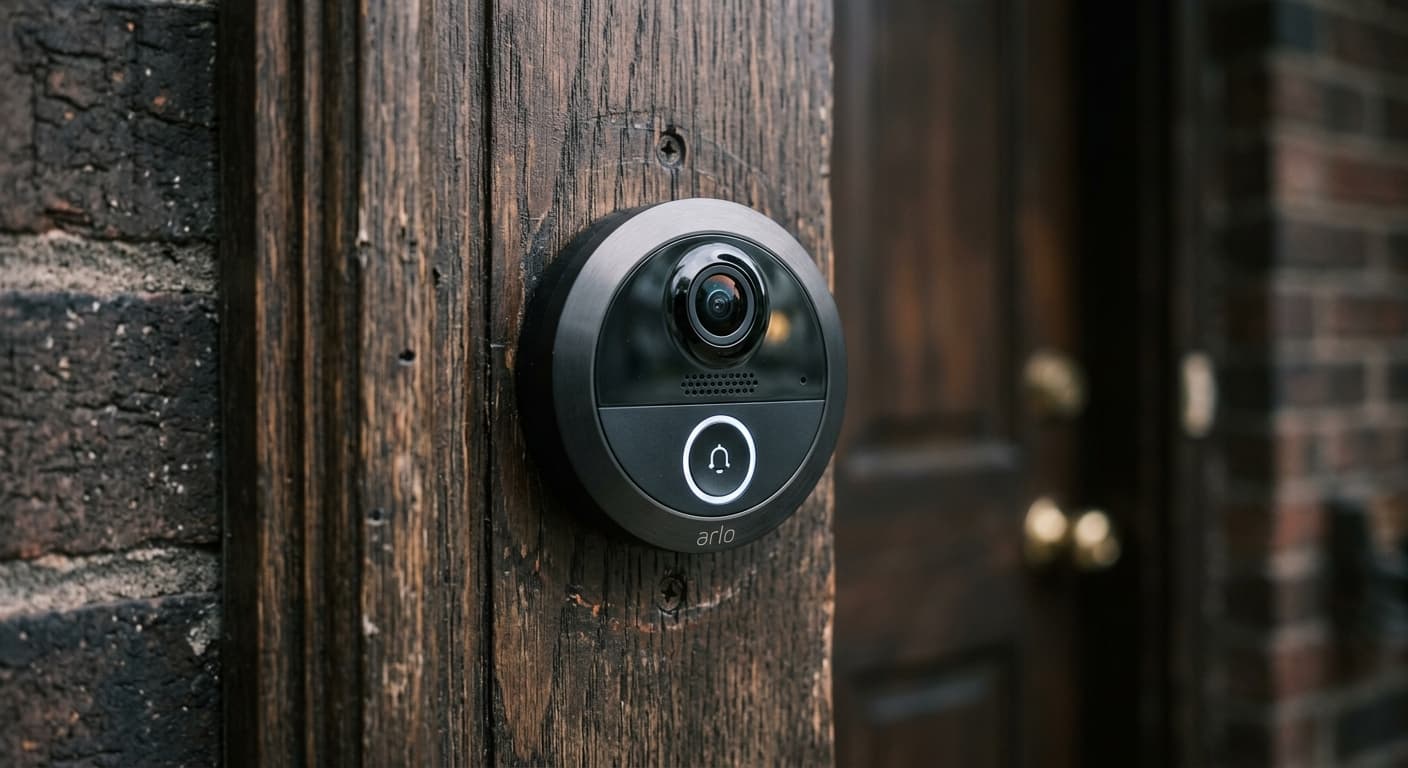
Pennsylvania is one of the highest-risk states in the country for Ring doorbell owners. The commonwealth's Wiretapping and Electronic Surveillance Control Act (18 Pa.C.S. Chapter 57) requires the consent of every party to a conversation before any audio recording is legal. Violating this law is not a misdemeanor or a civil infraction. It is a felony of the third degree, punishable by up to 7 years in prison and fines up to $15,000.
Every Ring doorbell sold today records audio by default. In a state where recording a single conversation without all-party consent can result in felony charges, Pennsylvania Ring doorbell owners face legal exposure that does not exist in most other states. This guide explains the specific statutes, penalties, court interpretations, and practical steps needed to use a Ring doorbell within the boundaries of Pennsylvania law.
Audio Recording Laws and Ring Doorbells in Pennsylvania
Pennsylvania's all-party consent requirement is the central legal issue for Ring doorbell owners. Understanding the statute, its exceptions, and how courts have interpreted it is essential for anyone operating a Ring doorbell in the commonwealth.
The All-Party Consent Rule: 18 Pa.C.S. 5703
18 Pa.C.S. 5703 makes it a criminal offense to intentionally intercept, endeavor to intercept, or procure any other person to intercept or endeavor to intercept any wire, electronic, or oral communication. The only way to legally record a conversation in Pennsylvania is through one of the specific exceptions listed in 18 Pa.C.S. 5704, the most relevant being Section 5704(4): a recording is lawful when "all parties to the communication have given prior consent to such interception."
This is not a one-party consent framework. Your own consent as the Ring doorbell owner is not enough. Every person whose voice is captured by the Ring doorbell's microphone needs to have given prior consent for the recording to be legal.
How This Applies to Ring Doorbells
Ring doorbells record audio continuously when motion is detected or when the doorbell is pressed. In Pennsylvania, this creates legal risk in several common scenarios:
- Delivery drivers, postal workers, or visitors approach your door and speak. Your Ring doorbell captures their voice. They have not consented to the recording.
- Neighbors or passersby have a conversation near your front door. The Ring microphone picks up their words. Neither party has consented.
- Two-way conversation through the Ring app: When you answer the doorbell and speak with a visitor, you have consented. But the visitor has not given prior consent unless they were informed before the conversation began.
Each of these scenarios could potentially constitute a violation of 18 Pa.C.S. 5703.

The "Expectation of Privacy" Question
Pennsylvania's wiretap statute defines "oral communication" as any oral communication uttered by a person possessing an expectation that such communication is not subject to interception under circumstances justifying such expectation. This definition creates an important legal question for Ring doorbell recordings.
A person standing on a public sidewalk having a loud conversation may not have a reasonable expectation of privacy. But a person speaking quietly on your front porch, believing the conversation is private, likely does. Pennsylvania courts have not established a bright-line rule for when doorstep conversations carry a reasonable expectation of privacy, which means Ring doorbell owners operate in a gray area with felony-level consequences.
The Philadelphia DA's Position
The Philadelphia District Attorney's office has taken the position that audio recordings from Ring and other outdoor home surveillance devices may be admissible as evidence in criminal cases. This creates a paradox: the same recording that could serve as evidence might also constitute an independent felony if it was obtained without all-party consent.
Criminal defense and civil liberties experts have noted that the question of third-party audio recordings of unwitting private individuals captured by doorbell cameras remains largely untested in Pennsylvania appellate courts as of April 2026.
Video Recording Laws in Pennsylvania
Pennsylvania's approach to video surveillance is far more permissive than its audio recording rules. The commonwealth does not have a general statute prohibiting video recording from your own property when the camera captures publicly visible areas.
No Expectation of Privacy in Public View
Video recording of areas visible to the public, including sidewalks, streets, driveways, and front porches, is legal in Pennsylvania. The key principle is that people do not have a reasonable expectation of privacy in spaces that are open to public observation.
A Ring doorbell pointed at your front door, walkway, and the public sidewalk beyond is recording areas where visitors have limited privacy expectations for video purposes. This is the primary reason many legal experts recommend disabling Ring's audio feature in Pennsylvania while leaving video recording active.
18 Pa.C.S. 7507.1: Invasion of Privacy
Pennsylvania's video-specific restriction comes from 18 Pa.C.S. 7507.1, which prohibits knowingly viewing, photographing, videotaping, or recording another person without consent while that person is in a state of full or partial nudity in a place where they have a reasonable expectation of privacy. The statute also covers recording "intimate parts" of another person without consent.
For Ring doorbell owners, 18 Pa.C.S. 7507.1 means the camera cannot be positioned to record into bathrooms, bedrooms, or other private spaces where people may be undressed. A standard Ring doorbell installation aimed at the front entrance does not typically trigger this statute.
Violation of 18 Pa.C.S. 7507.1 is a misdemeanor of the third degree for a first offense and a misdemeanor of the second degree for subsequent violations.

Neighbor Disputes and Camera Angles
Pointing a Ring doorbell or supplemental camera directly at a neighbor's windows, patio, or fenced backyard can support a civil claim for invasion of privacy under Pennsylvania common law. The tort of intrusion upon seclusion applies when someone intentionally intrudes on another's private affairs in a manner that would be highly offensive to a reasonable person. Pennsylvania courts have recognized this tort, and a deliberate camera aimed at a neighbor's private spaces could satisfy the elements of such a claim.
HOA Rules and Ring Doorbells in Pennsylvania
Pennsylvania homeowners associations operate under the Uniform Planned Community Act (68 Pa.C.S. Chapter 51) and the Uniform Condominium Act (68 Pa.C.S. Chapter 33). These statutes give HOAs broad authority to regulate exterior modifications through declarations, bylaws, and rules.
What HOAs Can Regulate
HOAs in Pennsylvania communities can adopt rules affecting Ring doorbell installation:
- Architectural review requirements: Many CC&Rs require written approval from an architectural committee before any exterior modification, including mounting a doorbell camera.
- Placement and appearance standards: HOAs may dictate where Ring doorbells can be installed, what colors are acceptable, and whether visible wiring is permitted.
- Audio recording prohibitions: Given Pennsylvania's all-party consent law, some HOAs have adopted rules requiring residents to disable audio recording on all exterior cameras.
- Common area restrictions: Condominium associations can prohibit individual unit owners from installing cameras that record shared hallways, lobbies, or parking areas.
Legal Conflicts Between HOA Rules and State Law
An HOA cannot authorize a Ring doorbell owner to violate 18 Pa.C.S. 5703. Even if the HOA expressly permits Ring doorbells with audio enabled, the owner remains individually liable for any wiretapping violation. HOA approval does not override state criminal law.
Conversely, an HOA may prohibit Ring doorbells entirely or impose conditions beyond what state law requires. Pennsylvania courts have generally upheld reasonable HOA restrictions on exterior modifications when those restrictions are properly adopted and consistently enforced.
Landlord and Tenant Rights
Pennsylvania's Landlord and Tenant Act governs the rights and responsibilities of landlords and tenants regarding property modifications like Ring doorbell installation.
Tenant Installation Rights
Tenants in Pennsylvania generally need written landlord permission before making exterior modifications to rental property. A Ring doorbell installation involves attaching a device to the door frame or exterior wall, which constitutes an alteration to the property. Most Pennsylvania leases include provisions requiring landlord consent for exterior changes.
Some landlords have adopted specific policies about Ring doorbells and other smart security devices. Lease provisions that prohibit Ring doorbells or surveillance cameras are generally enforceable in Pennsylvania. Tenants should review their lease carefully before purchasing or installing a Ring doorbell.
Landlord Camera Restrictions
Landlords in Pennsylvania can install security cameras in common areas of multi-unit properties with proper notice to tenants. Cameras cannot be placed inside individual rental units without tenant consent. A landlord-installed Ring doorbell that records a specific tenant's entrance should be disclosed in the lease or through written notice.
The all-party consent rule under 18 Pa.C.S. 5703 applies to landlords just as it does to homeowners. A landlord who installs Ring doorbells with audio enabled on a multi-unit property and records tenant conversations without consent faces the same felony liability as any other person who violates the wiretap statute.
Shared Area Recordings
Tenants who install Ring doorbells on their apartment doors in Pennsylvania face a unique challenge. The camera and microphone may capture activity in a shared hallway. While video recording of common areas is generally permissible due to reduced privacy expectations in shared spaces, audio recording of conversations in those spaces triggers the all-party consent requirement. The safest approach for apartment tenants in Pennsylvania is to disable the Ring doorbell's audio feature.
Law Enforcement Access to Ring Footage in Pennsylvania
Pennsylvania law enforcement can access Ring doorbell footage through several legal mechanisms, each governed by the wiretap statute and constitutional protections.
Search Warrants
A search warrant issued by a Pennsylvania court is the standard mechanism for compelling disclosure of Ring footage. Under Article I, Section 8 of the Pennsylvania Constitution and the Fourth Amendment to the U.S. Constitution, law enforcement needs probable cause and judicial authorization to access private recordings.
Subpoenas and Court Orders
Grand jury subpoenas and court orders can also compel Ring footage disclosure. The wiretap statute includes specific provisions governing how intercepted communications can be used in legal proceedings.

Amazon's Policies
Amazon's Ring changed its law enforcement access policies in January 2024, ending the Request for Assistance tool that allowed police to directly request footage from Ring users through the Neighbors app. Law enforcement now needs a valid legal process (warrant, subpoena, or court order) to obtain footage through Ring.
Amazon retains the right to disclose footage without user consent in emergency situations involving imminent danger of death or serious physical injury. The FTC's 2023 settlement with Ring for $5.8 million highlighted concerns about Amazon's data handling practices and employee access to customer recordings.
Voluntary Cooperation
Ring doorbell owners in Pennsylvania can voluntarily share footage with law enforcement at any time without a warrant. Voluntary disclosure does not violate the wiretap statute when the owner of the recording consents to sharing it.
The Exception for Crime Suspicion
Pennsylvania's wiretap statute includes an exception under 18 Pa.C.S. 5704(17) that allows warrantless interception of communications "if that person is under a reasonable suspicion that the intercepted party is committing, is about to commit, or has committed a crime of violence and there is reason to believe that evidence of the crime of violence may be obtained from the interception." This provision could potentially apply to Ring doorbell recordings that capture evidence of crimes in progress, though its application to passive doorbell camera recordings has not been fully tested in Pennsylvania courts.
Penalties for Illegal Recording in Pennsylvania
Pennsylvania imposes some of the harshest penalties in the country for illegal recording. The severity reflects the legislature's strong commitment to protecting conversational privacy.
Criminal Penalties
| Violation | Classification | Maximum Prison | Maximum Fine |
|---|---|---|---|
| 18 Pa.C.S. 5703 (Wiretapping) | Felony, Third Degree | 7 years | $15,000 |
| 18 Pa.C.S. 7507.1 (Invasion of Privacy, 1st offense) | Misdemeanor, Third Degree | 1 year | $2,500 |
| 18 Pa.C.S. 7507.1 (Invasion of Privacy, repeat) | Misdemeanor, Second Degree | 2 years | $5,000 |
Civil Damages Under 18 Pa.C.S. 5725
Victims of illegal recording in Pennsylvania have a statutory right to sue under 18 Pa.C.S. 5725. The civil remedies include:
- Actual damages sustained as a result of the violation
- Liquidated damages of $100 per day of violation or $1,000, whichever is greater
- Punitive damages at the court's discretion
- Litigation costs and reasonable attorney fees
These civil remedies are available in addition to any criminal penalties. A Ring doorbell owner who records a neighbor's conversations without consent could face both a felony prosecution and a civil lawsuit.
How to Use a Ring Doorbell Legally in Pennsylvania
Given the severity of Pennsylvania's wiretap penalties, Ring doorbell owners in the commonwealth should take specific precautions:
-
Disable audio recording immediately. The Ring app allows you to turn off the microphone on all Ring doorbell models. In Pennsylvania, this is the single most important step for legal compliance. Video-only recording eliminates wiretap liability.
-
If you keep audio enabled, obtain documented consent. Post a clearly visible sign stating "AUDIO AND VIDEO RECORDING IN PROGRESS" near the Ring doorbell. While signage alone may not constitute "prior consent" under the strict reading of 18 Pa.C.S. 5703, it reduces the argument that recorded parties had a reasonable expectation of privacy.
-
Aim your camera at public-facing areas. Point the Ring doorbell toward your entrance, walkway, and public sidewalk. Avoid angles that capture neighbors' windows, private patios, or enclosed areas.
-
Check your HOA rules. Review CC&Rs for exterior modification requirements and camera-specific policies before installing a Ring doorbell.
-
Get written landlord approval if renting. Do not install a Ring doorbell on rental property without documented permission from your landlord.
-
Understand the felony risk. Pennsylvania is not a state where wiretapping violations result in a slap on the wrist. A third-degree felony conviction carries up to 7 years in prison. Treat audio recording compliance seriously.
-
Secure your Ring account. Enable two-factor authentication, use a strong password, and review Ring's privacy settings regularly. The FTC's 2023 enforcement action against Ring underscored the risks of poor account security.
-
Know the crime exception. Under 18 Pa.C.S. 5704(17), recordings may be lawful when there is reasonable suspicion that the recorded party is committing a crime of violence. This exception does not authorize routine audio recording but may provide a defense if your Ring doorbell captures evidence of a violent crime.
More Pennsylvania Laws
Pennsylvania has specific laws across many legal areas that affect residents and visitors. Explore these related guides:
- Pennsylvania Recording Laws cover the full scope of the commonwealth's all-party consent wiretap framework.
- Pennsylvania Hit and Run Laws explain what to do after a hit and run accident in the commonwealth.
- Pennsylvania Lemon Law covers your rights when purchasing a defective vehicle.
Frequently Asked Questions
This article provides general legal information about Pennsylvania Ring doorbell laws as of April 2026. Laws and their interpretations can change. Consult an attorney for advice specific to your situation.
Sources and References
- 18 Pa.C.S. 5703 - Interception, disclosure or use of wire, electronic or oral communications(legis.state.pa.us).gov
- 18 Pa.C.S. Chapter 57 - Wiretapping and Electronic Surveillance(legis.state.pa.us).gov
- 18 Pa.C.S. 5704 - Exceptions to prohibition of interception and disclosure(legis.state.pa.us).gov
- 18 Pa.C.S. 5725 - Civil action for unlawful interception(legis.state.pa.us).gov
- 18 Pa.C.S. 7507.1 - Invasion of privacy(legis.state.pa.us).gov
- 68 Pa.C.S. Chapter 51 - Uniform Planned Community Act(legis.state.pa.us).gov
- Pennsylvania Constitution - Article I, Section 8(legis.state.pa.us).gov
- Pennsylvania Attorney General - Uniform Planned Community Act(attorneygeneral.gov).gov
- FTC - Ring employees illegally surveilled customers, failed to stop hackers (May 2023)(ftc.gov).gov
- FTC Sends Refunds to Ring Customers (April 2024)(ftc.gov).gov