Louisiana Ring Doorbell Laws: What You Need to Know in 2026
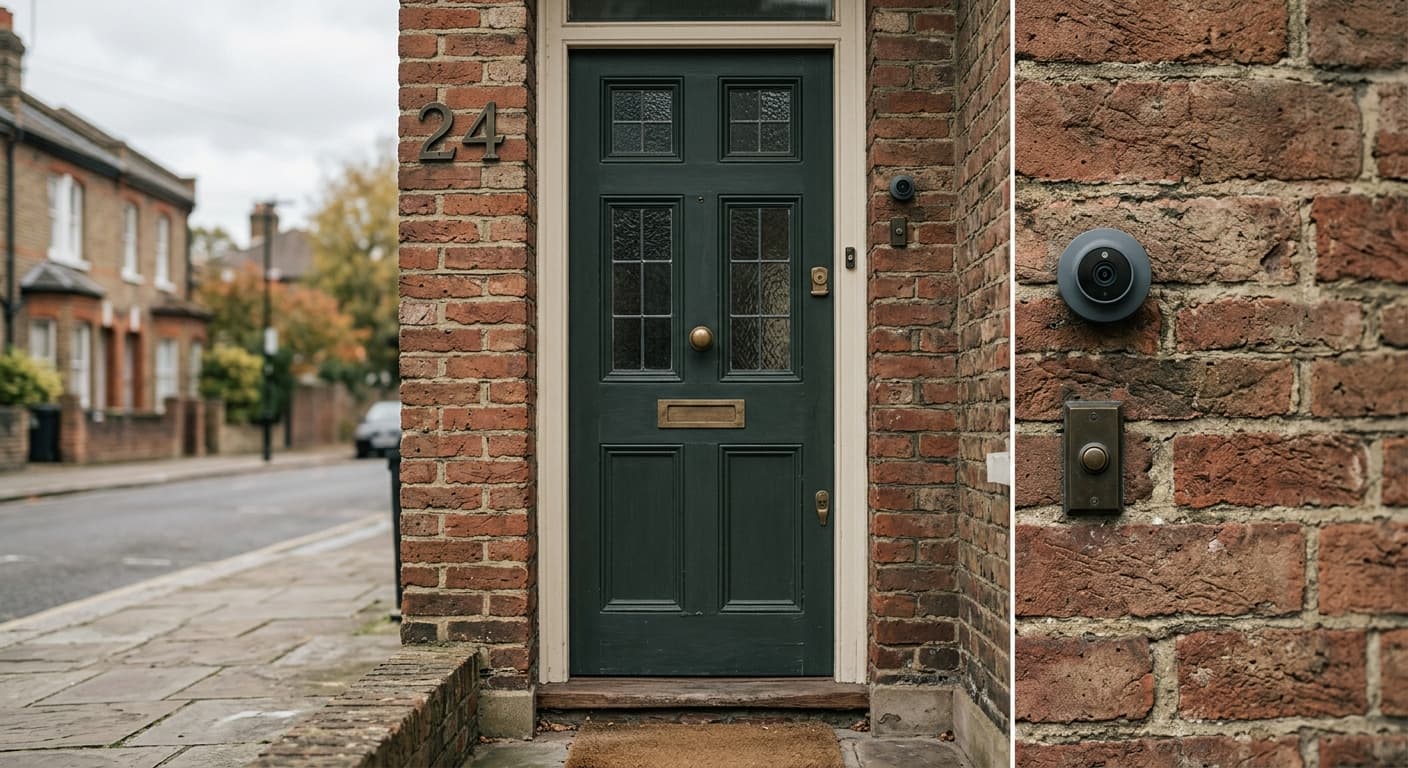
Louisiana's recording laws carry some of the steepest penalties in the nation, making it important for Ring doorbell owners to understand exactly where the legal lines fall. The state's Electronic Surveillance Act governs audio recording, while separate voyeurism statutes address video. This guide covers how these laws apply to Ring doorbells, along with HOA restrictions, landlord-tenant rights, law enforcement access rules, and the specific penalties for violations.
Louisiana Audio Recording Laws and Ring Doorbells
Louisiana is a one-party consent state for audio recording. Under the Electronic Surveillance Act, La. R.S. 15:1303, it is unlawful to intentionally intercept any wire, electronic, or oral communication. However, the statute includes a critical exception: it is not unlawful for a person to intercept a communication where that person is a party to the communication, or where one of the parties has given prior consent to the interception.
This means your Ring doorbell can legally record the audio of any conversation you are part of at your front door. Your participation provides the required one-party consent.

One-Party Consent and Ring Doorbell Audio
When you speak with someone at your door through the Ring app or in person, the recording is lawful because you are a party to the conversation. This applies whether the visitor is a neighbor, a delivery driver, a solicitor, or anyone else.
The legal question becomes more nuanced when your Ring doorbell captures conversations between third parties on your porch while you are not present. Under a strict reading of La. R.S. 15:1303, recording a conversation without the consent of at least one party to that conversation could constitute illegal interception. No Louisiana appellate court has issued a ruling specifically addressing passive doorbell recordings of third-party conversations, so the legal risk remains uncertain.
Given Louisiana's severe penalties for wiretapping violations (discussed below), homeowners who want to minimize legal exposure may consider disabling audio recording in the Ring app when they are not actively monitoring their doorbell.
Reasonable Expectation of Privacy
Louisiana's Electronic Surveillance Act protects "oral communications," which the statute defines as communications uttered by a person exhibiting an expectation that the communication is not subject to interception, under circumstances justifying that expectation. Conversations in public spaces, where speakers have no reasonable expectation of privacy, fall outside the statute's protection.
A front porch is generally considered a semi-public area. Visitors who approach your door enter a space that is open and visible from the street. Courts in other jurisdictions have found that conversations on open front porches carry a diminished expectation of privacy. While Louisiana courts have not addressed this specific scenario in the Ring doorbell context, the semi-public nature of a front porch may reduce the legal risk associated with incidental audio capture.
Video Recording Laws and Ring Doorbells in Louisiana
Louisiana does not have a general residential video surveillance statute. Video recording with a Ring doorbell is governed by the state's video voyeurism law, La. R.S. 14:283, and general privacy principles.
Recording video of your own property, including your front door, porch, walkway, driveway, and the street in front of your home, is lawful. These are areas where people do not have a reasonable expectation of privacy. A Ring doorbell aimed at your entryway operates well within legal boundaries for video surveillance.
Video Voyeurism Under La. R.S. 14:283
Louisiana's video voyeurism statute prohibits using any camera, videotape, or image recording device to observe, view, photograph, film, or videotape a person where that person has not consented, if the recording is for a lewd or lascivious purpose, or if the person is in a location where they have a reasonable expectation of privacy.
The statute also covers the use of unmanned aircraft systems (drones) equipped with cameras. A Ring doorbell mounted in a standard position on your front door would not implicate this law. The concern arises when cameras are positioned to capture people through windows, in bathrooms, or in other areas where privacy is reasonably expected.
Convicted video voyeurs in Louisiana face mandatory sex offender registration under La. R.S. 15:541, regardless of whether the offense is a first conviction. This registration requirement makes Louisiana's video voyeurism penalties particularly consequential.
Neighbor Privacy and Camera Placement
Pointing a security camera at a neighbor's house is not inherently illegal in Louisiana when the camera serves a legitimate home security purpose. The front of a neighbor's property visible from the street or from your own property does not carry a reasonable expectation of privacy.
However, deliberately aiming a Ring camera or associated outdoor camera at a neighbor's windows, enclosed patio, fenced backyard, or other private spaces could give rise to a civil invasion of privacy claim. Louisiana Civil Code Article 667 addresses the obligations of property owners to avoid causing unreasonable interference with neighboring properties, and courts could apply these principles to intrusive surveillance.
Short-Term Rental Camera Restrictions
Louisiana has a specific statute addressing cameras in short-term rental properties. La. R.S. 21:61 prohibits the owner or landlord of a short-term rental structure from installing or using a camera on the premises. This law directly affects Ring doorbell use in properties listed on Airbnb, Vrbo, and similar platforms.
If you operate a short-term rental in Louisiana, installing a Ring doorbell on the property may violate this statute. The law does not distinguish between indoor and outdoor cameras, though its application to exterior doorbell cameras positioned at the entrance has not been tested in court as of April 2026. Short-term rental operators should consult with a Louisiana attorney to understand how this statute applies to their specific situation.
HOA Rules and Ring Doorbells in Louisiana
Louisiana does not have a state law specifically addressing HOA authority over doorbell cameras. HOAs in Louisiana govern through their declarations of covenants, conditions, and restrictions (CC&Rs), bylaws, and architectural guidelines, which derive their authority from the Louisiana Condominium Act and the state's property law framework.
Architectural Review and Approval
Many Louisiana HOAs require homeowners to submit an architectural modification request before installing exterior devices like Ring doorbells. The architectural review committee (ARC) may impose requirements regarding device color, size, placement, and visibility from common areas or the street.
Some communities have adopted specific security camera policies that address doorbell cameras. These policies may permit video recording while restricting audio capture, require cameras to point only toward the homeowner's property, or specify approved device models that match the community's aesthetic standards.
HOA Authority and Limitations
Louisiana HOAs have broad authority to regulate exterior modifications within their communities. If the CC&Rs include provisions about exterior alterations, a Ring doorbell installation could require prior approval. Homeowners who install without approval risk fines, mandatory removal, or legal action from the HOA.
At the same time, an HOA likely cannot impose a total ban on security devices. Louisiana law recognizes homeowners' legitimate interest in protecting their property, and a court might view a blanket prohibition on all doorbell cameras as unreasonable. The more defensible approach for HOAs is to regulate placement and appearance rather than prohibit security devices entirely.
Homeowners in Louisiana HOA communities should review their community's governing documents and submit any required requests before installing a Ring doorbell.
Landlord and Tenant Rights for Ring Doorbells in Louisiana
Louisiana's landlord-tenant law, primarily governed by the Louisiana Civil Code (Articles 2668 through 2729), does not specifically address doorbell camera installation. General principles of lease law and property modification apply.
Tenant Installation Rights
Tenants in Louisiana typically need landlord permission before installing a Ring doorbell. Under Louisiana Civil Code Article 2692, a tenant is bound to use the property as a "good administrator" and cannot make modifications that go beyond ordinary use without the landlord's consent. Mounting a doorbell camera on the exterior of a building, even a battery-operated model, constitutes an alteration that most landlords would require approval for.
Tenants can generally install cameras inside their own rental unit without landlord permission, provided the cameras record only within the tenant's private living space. Cameras pointed at common areas, neighboring units, or the exterior of the building require landlord approval.
Landlord Surveillance Restrictions
Louisiana landlords can install security cameras in common areas of multi-unit properties, such as building entrances, hallways, parking areas, and shared amenities. These areas lack a reasonable expectation of privacy.
Landlords cannot install cameras inside a tenant's individual unit without explicit consent. Doing so could violate the Electronic Surveillance Act (for audio recording) and constitute an invasion of privacy. A landlord who installs a Ring doorbell that captures audio or video inside a tenant's home without consent faces both criminal and civil liability.
Short-Term Rental Landlords
As noted above, La. R.S. 21:61 prohibits short-term rental owners from installing or using cameras on the premises. Landlords who rent properties through platforms like Airbnb should be aware that this restriction may apply to Ring doorbells installed on or near the rental property.
Law Enforcement Access to Ring Doorbell Footage in Louisiana
Louisiana law enforcement can access Ring doorbell footage through established legal procedures. The Fourth Amendment and Article I, Section 5 of the Louisiana Constitution protect residents from unreasonable searches and seizures, including searches of digital recordings.
Warrant and Subpoena Requirements
Police in Louisiana generally need a search warrant based on probable cause to compel a homeowner to turn over Ring footage. The warrant must specify the recordings sought and the relevant time period. Law enforcement can also use a grand jury subpoena or court order to obtain footage.
Louisiana courts have recognized that individuals have a reasonable expectation of privacy in their home security recordings, even when those recordings capture activity in semi-public areas like a front porch.
Voluntary Cooperation
Ring owners in Louisiana can voluntarily share footage with police at any time. Officers investigating a crime in your neighborhood may knock on your door and ask to review your Ring footage. You have the right to agree or decline. Voluntary sharing does not require a warrant or any legal process.
Ring's Law Enforcement Policies
Ring responds to legally valid government demands, including search warrants, subpoenas, and court orders. In early 2024, Ring ended its "Request for Assistance" feature that allowed police to request footage directly from users through the Neighbors app.
As of 2025, Ring has partnered with Axon to reintroduce features enabling police to request footage from Ring users and to request live-stream access to home security devices. Ring also retains the authority to share footage without user consent in situations involving "danger of death or serious physical injury," with Amazon making that determination internally.
The FTC's 2023 enforcement action against Ring resulted in a $5.8 million settlement and required Ring to implement stronger privacy protections, including restrictions on employee access to customer videos and mandatory multi-factor authentication.
Penalties for Illegal Recording in Louisiana
Louisiana imposes some of the most severe penalties in the country for illegal recording.
Electronic Surveillance Act Violations (La. R.S. 15:1303)
Violating Louisiana's Electronic Surveillance Act by illegally intercepting, recording, or disclosing wire, electronic, or oral communications carries a prison sentence of 2 to 10 years at hard labor and a fine of up to $10,000. This applies to audio recording violations, such as using a Ring doorbell to intentionally record private conversations without the consent of any party.
Civil Damages for Wiretapping
Beyond criminal penalties, victims of illegal interception can pursue civil remedies under La. R.S. 15:1312. The statute allows recovery of actual damages, $100 per day of violation or $1,000 (whichever is greater), punitive damages, and reasonable attorney's fees and litigation costs. This civil remedy provides a significant financial incentive for victims to pursue claims.
Video Voyeurism Penalties (La. R.S. 14:283)
A first conviction for video voyeurism carries a fine of up to $2,000 and imprisonment of up to 2 years, with or without hard labor. A second or subsequent conviction increases the penalty to a fine of up to $2,000 and imprisonment at hard labor for 6 months to 3 years, without benefit of parole, probation, or suspension of sentence.
Video voyeurism involving a child under 17 carries a fine of up to $10,000 and imprisonment at hard labor for 2 to 10 years. All video voyeurism convictions require mandatory sex offender registration.

Invasion of Privacy Civil Claims
Louisiana recognizes civil causes of action for invasion of privacy under its general tort law. A neighbor or visitor who believes a Ring doorbell violates their privacy could pursue a civil lawsuit seeking compensatory damages, punitive damages, and injunctive relief requiring the camera to be repositioned or removed.
How to Use a Ring Doorbell Legally in Louisiana
Given Louisiana's steep penalties for recording violations, following these guidelines is particularly important:
Position your camera at your own entryway. Aim your Ring doorbell at your front door, porch, and walkway. Avoid directing the camera toward a neighbor's windows, enclosed patios, or fenced private areas. The camera may incidentally capture portions of a neighbor's visible property without creating legal issues.
Consider the audio recording risks. Louisiana's 2-to-10-year felony penalty for illegal interception makes audio recording a serious concern. If you are worried about capturing third-party conversations when you are not present, disable audio recording through the Ring app's privacy settings.
Know the short-term rental rules. If you operate a short-term rental in Louisiana, La. R.S. 21:61 may restrict your ability to install or use a Ring doorbell on the property. Consult an attorney before installing a camera on a rental property listed on platforms like Airbnb.
Check your HOA guidelines. Review the CC&Rs and architectural review requirements in your community before installing a Ring doorbell. Submit a formal request if required, and keep a copy of any written approval.
Get landlord permission if renting. Tenants should obtain written landlord approval before mounting a Ring doorbell on the exterior of a rental property. Discuss removal obligations and any damage repair expectations before installation.
Use Ring's privacy features. Configure motion zones to limit detection to your property. Enable end-to-end encryption for stored footage. Keep your Ring software and firmware updated to protect against security vulnerabilities.
Understand law enforcement access. You can share footage voluntarily, but police generally need a warrant to compel production. If you receive a formal legal request for footage, consulting an attorney before responding is a prudent step.
More Louisiana Laws
Ring doorbell regulations are one piece of Louisiana's legal landscape. These related guides cover other important topics:
- Louisiana Recording Laws explain the full scope of one-party consent rules for phone calls, in-person conversations, and workplace recording across the state.
- Louisiana Hit and Run Laws detail what drivers are required to do after an accident and the penalties for leaving the scene.
- Louisiana Lemon Law covers protections for buyers who purchase defective new or used vehicles.
This article provides general legal information about Ring doorbell camera laws in Louisiana. Laws can change, and their application depends on specific circumstances. Consult an attorney licensed in Louisiana for advice specific to your situation. Information is current as of April 2026.
Sources and References
- La. R.S. 15:1303 - Electronic Surveillance Act(legis.la.gov).gov
- La. R.S. 14:283 - Video Voyeurism; Penalties(legis.la.gov).gov
- La. R.S. 15:1312 - Civil Remedies for Illegal Interception(legis.la.gov).gov
- La. R.S. 21:61 - Short-Term Rental Camera Restrictions(legis.la.gov).gov
- La. R.S. 15:541 - Sex Offender Registration(legis.la.gov).gov
- FTC Settlement with Ring - Privacy Violations(ftc.gov).gov
- FTC Blog - Ring Privacy Failures(ftc.gov).gov
- Ring Law Enforcement Information Requests(ring.com)
- Louisiana Reporters Recording Guide - RCFP(rcfp.org)