Delaware AI Meeting Recording Laws (2026)

Delaware presents one of the most confusing recording law landscapes in the country. Two separate criminal statutes set contradictory consent standards, and no Delaware appellate court has definitively resolved the conflict. The wiretapping statute permits recording with one party's consent. The privacy statute demands consent from all parties. For anyone deploying AI meeting recorders like Otter.ai or Fireflies.ai, this ambiguity creates real legal exposure, and the only safe path is to treat Delaware as an all-party consent state.
The stakes are not trivial. Depending on which statute a prosecutor or plaintiff invokes, penalties range from a misdemeanor with up to one year in jail to a felony carrying five years of imprisonment and $10,000 in fines.
Delaware's Conflicting Consent Statutes
Delaware's recording laws are governed by two statutes that do not agree with each other.
The Wiretapping Statute: One-Party Consent (11 Del. C. § 2402)
Delaware Code Title 11, § 2402 prohibits the intentional interception of any wire, oral, or electronic communication. However, the statute carves out a critical exception: interception is lawful when "a person is a party to the communication or where one of the parties to the communication has given prior consent to the interception," provided the interception is not carried out for criminal or tortious purposes.
Under this statute alone, a person who records their own conversation (or has one participant's agreement) is acting lawfully. This is the standard one-party consent framework found in most states.
The Privacy Statute: All-Party Consent (11 Del. C. § 1335)
Delaware Code Title 11, § 1335 takes a different approach. This statute makes it a crime to intercept "without the consent of all parties thereto, a message by telephone, telegraph, letter or other means of communicating privately." The statute also prohibits installing any device in a private place for the purpose of overhearing or recording conversations without consent.
Under § 1335, recording a private conversation requires every participant's agreement. There is no one-party exception.
The Unresolved Conflict
No Delaware state appellate court has issued a definitive ruling on which statute controls when the two conflict. In United States v. Vespe (389 F. Supp. 1359, D. Del. 1975), a federal district court interpreted § 1335 as consistent with the federal one-party consent standard, reasoning that Delaware's drafters intended to emulate federal wiretapping law. However, federal district court opinions are not binding on Delaware state courts, and the plain text of § 1335 clearly requires all-party consent.
Legal practitioners and compliance officers overwhelmingly recommend treating Delaware as an all-party consent jurisdiction. The risk of relying on a non-binding federal interpretation when the state statute's plain language says otherwise is significant.
How Delaware Law Applies to AI Meeting Recorders
The statutory conflict directly affects how AI meeting recording tools operate when Delaware participants are involved.
Virtual Meetings and the Privacy Statute
AI meeting recorders capture audio from virtual meetings conducted over internet-based platforms. These communications fall within the scope of both Delaware statutes. Under § 1335, intercepting a private message "by telephone... or other means of communicating privately" without all-party consent is prohibited. Video conferencing tools transmit audio through electronic means, making them subject to § 1335's all-party consent requirement.
The Account Holder Is Not "All Parties"
When a user enables an AI notetaker like Otter.ai on a Zoom call, the account holder has consented to the recording. Under § 2402's one-party framework, that might be sufficient. Under § 1335's all-party framework, every other participant must also consent. Since the legal landscape is unresolved, failing to obtain universal consent risks a § 1335 prosecution or civil claim.
Automated Recording Creates Higher Risk
AI tools that join meetings automatically based on calendar integration pose additional concerns. The Otter.ai class action (Brewer v. Otter.ai, Inc., N.D. Cal., No. 5:25-cv-06911) alleges the tool records conversations without meaningful consent from non-subscriber participants. In Delaware, where even the scope of required consent is disputed, automated recording without affirmative authorization from each participant amplifies the legal risk.
Data Transmission and AI Training
Several AI recording tools transmit meeting audio to external servers for transcription and, in some cases, use that data to train machine learning models. Under Delaware law, the interception occurs when the audio is captured, but the subsequent transmission and use of that data raises additional privacy concerns under the Delaware Personal Data Privacy Act.
Popular AI Meeting Tools and Delaware Compliance
Each major AI meeting recorder handles consent differently, and none provides a perfect solution for Delaware's ambiguous legal environment.
Otter.ai / OtterPilot
Otter's AI assistant can auto-join meetings and begin recording without per-meeting authorization from participants. Under Delaware's all-party consent reading, this practice likely violates § 1335. Users in Delaware should disable automatic joining and obtain explicit consent from every participant before activating Otter.
Zoom Native Recording
Zoom displays a notification that "this meeting is being recorded" and requires participants to acknowledge it before joining. This notification provides stronger consent documentation than tools that record silently, but whether a click-through acknowledgment constitutes "consent" under Delaware law remains untested.
Microsoft Teams / Copilot
Teams displays a recording indicator and announces when AI features like Copilot are active. These notifications offer transparency, but Delaware's privacy statute may require affirmative consent rather than passive awareness.
Fireflies.ai
Fireflies joins as a visible meeting participant but does not independently obtain consent from each attendee. Delaware users should supplement Fireflies' built-in notifications with their own verbal or written consent process.
Compliance Recommendations
For any AI meeting tool used with Delaware participants:
- Announce recording verbally at the start of each meeting and ask for explicit agreement from every participant
- Send a pre-meeting notice via email or calendar invitation stating the meeting will be recorded by an AI tool
- Document all consent through written records, verbal acknowledgments captured in the recording, or consent forms
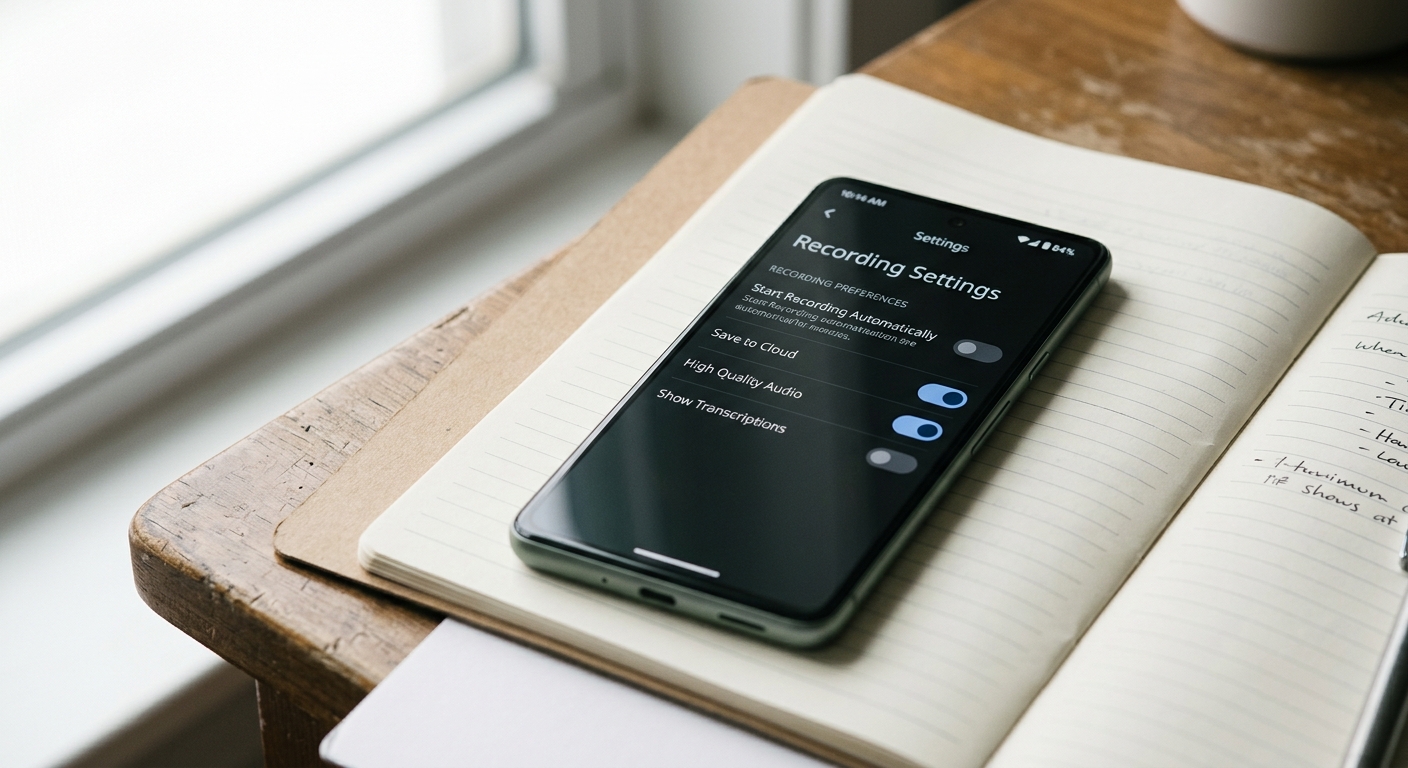
- Disable auto-recording features to ensure consent is obtained before each individual meeting
- Provide a genuine opt-out so participants who object can attend without being recorded
Penalties for Violating Delaware Recording Laws
Delaware imposes a range of criminal and civil penalties depending on which statute is violated.
Criminal Penalties
| Statute | Classification | Imprisonment | Fine |
|---|---|---|---|
| § 1335 (Privacy) | Class A Misdemeanor | Up to 1 year | Up to $2,300 |
| § 1335(a)(6) (Hidden imaging) | Class G Felony | Up to 2 years | Up to $2,300 |
| § 2402 (Wiretapping) | Class E Felony | Up to 5 years | Up to $10,000 |
The classification depends on which statute applies. A recording that violates the all-party consent requirement of § 1335 but complies with the one-party consent provision of § 2402 would face the misdemeanor penalty. A recording that violates both statutes (recording without any party's consent) faces the felony penalty.
Civil Penalties (§ 2409)
Delaware Code Title 11, § 2409 provides a private right of action for anyone whose communications are intercepted in violation of the wiretapping chapter. Victims may recover:
- Actual damages suffered from the unauthorized interception
- Punitive damages of not less than $1,000
- Attorney's fees and litigation costs
- Equitable relief including injunctions
The $1,000 statutory minimum for punitive damages means even cases with minimal actual harm carry meaningful financial exposure. In a meeting with multiple unconsenting participants, each could bring a separate claim.
Evidence Suppression
Communications obtained in violation of Delaware's wiretapping laws are subject to suppression in legal proceedings. Under 11 Del. C. § 2407, any aggrieved person may move to suppress the contents of intercepted communications and evidence derived from them.
Employer and Workplace Considerations
Delaware employers face layered compliance requirements when deploying AI meeting recorders.
Employee Monitoring Notice (19 Del. C. § 705)
Delaware Code Title 19, § 705 requires employers to provide notice before monitoring employee telephone transmissions, electronic mail, or internet usage. Employers must either give written or electronic notice acknowledged by the employee, or provide an electronic notice at least once each day the employee accesses employer-provided email or internet services.
Violations carry a civil penalty of $100 per occurrence. This statute applies in addition to the recording consent requirements, meaning employers must provide monitoring notice and obtain recording consent as separate compliance steps.
Remote Workers
Delaware's recording laws apply based on where the participants are located. An employer headquartered outside Delaware cannot bypass these requirements when recording a meeting that includes Delaware-based employees. The all-party consent standard (under the safer § 1335 interpretation) applies to any recording involving a Delaware participant.

Delaware Personal Data Privacy Act (DPDPA)
The Delaware Personal Data Privacy Act, effective January 1, 2025, adds data privacy requirements for businesses that process the personal data of Delaware consumers. Key provisions affecting AI meeting recorders include:
- Opt-out right for profiling: Consumers can opt out of AI profiling and automated decision-making that produces legal or similarly significant effects
- Data protection assessments: Controllers processing data of 100,000 or more consumers must conduct regular data protection assessments for high-risk activities, including AI profiling
- Universal opt-out mechanisms: As of January 1, 2026, businesses must honor Global Privacy Control (GPC) signals as valid opt-out requests
- Full enforcement discretion: The mandatory 60-day cure period expired December 31, 2025; the Attorney General now has full enforcement discretion
AI meeting recording tools that collect, transcribe, and potentially use Delaware residents' voice data for model training must comply with these provisions. The right to opt out of profiling is particularly relevant for tools that analyze meeting participants' speech patterns or generate behavioral insights.
Federal Law Intersection
Federal One-Party Consent Standard
18 U.S.C. § 2511 establishes the federal baseline of one-party consent. Delaware's wiretapping statute (§ 2402) mirrors this standard. The privacy statute (§ 1335) exceeds it. When state law provides greater protection than federal law, the state standard applies. Because § 1335's all-party requirement is the safer interpretation, federal one-party consent does not shield AI meeting tool users from potential Delaware state liability.
Interstate Recordings
Multi-state meetings require compliance with the most restrictive jurisdiction involved. If one participant is in Delaware and another is in a one-party consent state, the all-party consent standard from § 1335 applies to protect the Delaware participant. AI meeting tools recording across state lines should default to all-party consent whenever a Delaware participant is present.
Evolving AI Case Law
The Otter.ai class action and the Ambriz v. Google "capability test" case represent the leading edge of applying traditional wiretapping laws to AI recording technology. While neither case arose in Delaware, their outcomes will likely influence how Delaware courts interpret §§ 1335 and 2402 in the AI context. The core question these cases address, whether AI tools that continuously listen to communications constitute "interception" under wiretapping statutes, has direct relevance to Delaware's conflicting statutory framework.
Frequently Asked Questions
More Delaware Laws
- Delaware Recording Laws
- Delaware Recording Laws
- Delaware Recording Laws
- Delaware Data Privacy Laws
- Delaware Data Privacy Laws
- Delaware Recording Laws
- Delaware Recording Laws
- Delaware Recording Laws
This article provides general legal information about Delaware recording laws as they apply to AI meeting tools. Delaware's recording statutes contain unresolved conflicts, and their application to AI technology is untested in state courts. Consult a Delaware-licensed attorney for advice specific to your situation.
Sources and References
- 11 Del. C. § 2402 - Interception of communications generally(delcode.delaware.gov).gov
- 11 Del. C. § 1335 - Violation of privacy; class A misdemeanor; class G felony(delcode.delaware.gov).gov
- 11 Del. C. § 2409 - Civil liability for interception violations(delcode.delaware.gov).gov
- 19 Del. C. § 705 - Notice of monitoring of telephone transmissions(delcode.delaware.gov).gov
- Delaware Personal Data Privacy Act (Title 6, Chapter 12D)(delcode.delaware.gov).gov
- Delaware Attorney General - Personal Data Privacy Portal FAQ(attorneygeneral.delaware.gov).gov
- 18 U.S.C. § 2511 - Federal Wiretap Act(uscode.house.gov).gov
- Reporters Committee - Delaware Recording Guide(rcfp.org)
- Brewer v. Otter.ai - Class Action Complaint (N.D. Cal., No. 5:25-cv-06911)(npr.org)