Washington Ring Doorbell Laws: What You Need to Know in 2026
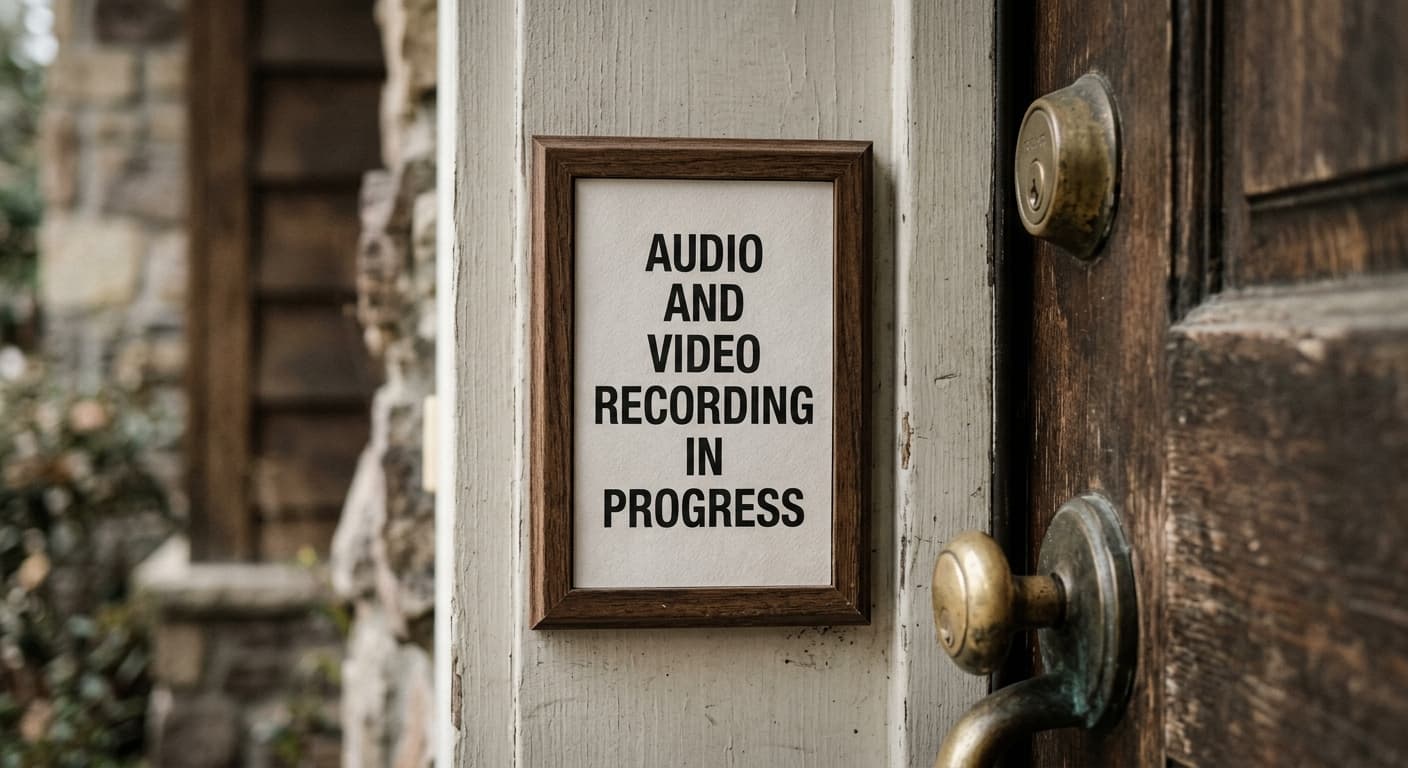
Washington has one of the strictest recording consent laws in the country. Under RCW 9.73.030, recording a private conversation requires the consent of every person involved. This all-party consent requirement creates significant legal risk for Ring doorbell owners, because these devices record audio by default. A Ring doorbell capturing a conversation on your front porch without everyone's consent could expose you to criminal charges.
This is not a theoretical concern. Washington courts take recording violations seriously, and the penalties include both criminal prosecution and civil lawsuits. This guide provides a detailed analysis of how Washington's privacy laws apply to Ring doorbells, with specific attention to the audio recording risks that make Washington a high-risk state for doorbell camera owners.
Audio Recording Laws and Ring Doorbells
Washington's all-party consent law is the central legal issue for Ring doorbell owners. The distinction between legal and illegal recording in Washington often comes down to a single factor: audio.
Washington's All-Party Consent Rule (RCW 9.73.030)
RCW 9.73.030 makes it unlawful to intercept, record, or divulge any private communication or private conversation without first obtaining the consent of all participants. Unlike one-party consent states where only one person in a conversation needs to agree, Washington requires everyone to consent before any recording begins.
For Ring doorbell owners, this means the device's default audio recording feature is a legal liability. If a delivery driver has a phone conversation on your porch, if two neighbors chat near your front door, or if a visitor speaks to a companion while approaching your home, your Ring doorbell may be recording a private conversation without anyone's consent.
The statute specifically covers communications intercepted by "any device electronic or otherwise designed to record or transmit such conversation." A Ring doorbell with audio enabled fits squarely within this definition.
What Counts as a "Private Conversation"
The critical question for Ring doorbell owners is whether conversations captured near a front door qualify as "private" under RCW 9.73.030. Washington courts have interpreted "private conversation" to mean a conversation that the parties reasonably expect to be free from recording or interception.
Conversations on a public sidewalk where participants are speaking loudly enough for passersby to hear may not qualify as private. But a hushed conversation between two people standing on your porch, or a phone call made while waiting at your door, likely carries a reasonable expectation of privacy.
No Washington court has established a bright-line rule for Ring doorbells specifically. The safest legal position treats any conversation captured by your device as potentially private and takes steps to ensure consent.
How to Establish Consent in Washington
RCW 9.73.030 specifies that consent is obtained when one party "has announced to all other parties engaged in the communication or conversation, in any reasonably effective manner, that such communication or conversation is about to be recorded or transmitted."
For Ring doorbell owners, this means posting visible signage is the most practical path to compliance. A sign stating "Audio and Video Recording in Progress" near your Ring doorbell provides notice to visitors. While no Washington court has definitively ruled that signage alone constitutes consent under RCW 9.73.030, it establishes that visitors were informed and chose to continue the conversation within range of the recording device.
Ring's own two-way talk feature can also help establish consent. When you answer a Ring notification and speak to a visitor, your verbal announcement that the conversation is being recorded satisfies the statute's notice requirement.
Exceptions to the All-Party Consent Rule
RCW 9.73.030 includes limited exceptions where one-party consent is sufficient:
- Communications of an emergency nature, such as reporting a fire, medical emergency, crime, or disaster
- Communications that convey threats of extortion, blackmail, bodily harm, or other unlawful requests
- Communications that occur anonymously or repeatedly or at an extremely inconvenient hour
- Communications by a hostage holder or barricaded person
These exceptions are narrow. A package thief caught on your Ring doorbell would not automatically trigger the emergency exception unless the theft was being reported to police in real time.
The Building Owner Exception (RCW 9.73.110)
RCW 9.73.110 provides an important exception for property owners. It is not unlawful for the owner of a building (or their agent) to intercept, record, or disclose communications that occur within the building if the persons being recorded are committing a criminal act through unlawful entry or remaining unlawfully.
This exception could apply to Ring doorbell recordings of trespassers or burglars. If someone breaks into your home and your Ring doorbell records their conversation, the building owner exception may protect you from liability. The exception is limited to situations where the recorded persons are actively engaged in criminal conduct on your property.
Video Recording Laws and Ring Doorbells
Washington treats video recording differently from audio recording, and Ring doorbell owners benefit from this distinction.
Legal Video Surveillance
Washington has no statute broadly prohibiting video-only surveillance of public areas from private property. Recording video of your porch, driveway, walkway, and the public street is legal. Ring doorbells with audio disabled function as standard video surveillance cameras and face minimal legal restrictions when pointed at areas without a reasonable expectation of privacy.
Voyeurism Statute (RCW 9A.44.115)
RCW 9A.44.115 criminalizes recording or filming a person in a place where they have a reasonable expectation of privacy, or recording intimate areas of a person without consent. Voyeurism in the first degree is a Class C felony.
For Ring doorbell owners, this statute reinforces the importance of camera positioning. A doorbell camera angled to look through a neighbor's window, into a bathroom, or into any area where someone would reasonably expect privacy could trigger voyeurism charges. Keep your Ring doorbell pointed at your own property and public areas.
Recording Restrictions on Private Areas
Even though outdoor video surveillance is broadly legal, Washington law draws a firm line at private spaces. Recording into a neighbor's home through windows, recording fenced backyard areas that are not visible from public spaces, or recording areas where people undress crosses from legal surveillance into criminal conduct.
HOA Rules and Ring Doorbells
Washington homeowners associations can add another layer of regulation to Ring doorbell use.
HOA Authority Under Washington Law
Washington HOAs operate under the Homeowners' Associations Act (RCW 64.38) or the Washington Uniform Common Interest Ownership Act (RCW 64.90) depending on when the community was established. Both statutes grant associations the power to adopt rules governing the use and appearance of properties within the community.
HOA restrictions on Ring doorbells may include requiring approval from an architectural review committee, specifying acceptable colors or mounting locations, limiting camera angles that record common areas, and requiring signage to notify residents and guests of recording.
Compliance with State Recording Laws
HOA rules cannot authorize recordings that violate RCW 9.73.030. Even if your HOA permits Ring doorbells, the all-party consent requirement for audio recording still applies. Similarly, an HOA cannot prohibit a homeowner from complying with state law by posting required recording notices.
Some Washington HOAs have adopted specific policies addressing doorbell cameras, including requirements for audio to be disabled and signage to be posted. Review your community's CC&Rs and any supplemental rules before installation.
Landlord and Tenant Rights
Washington renters face unique challenges with Ring doorbell installation due to the intersection of landlord-tenant law and recording consent requirements.
Tenant Installation Rights
The Washington Residential Landlord-Tenant Act (RCW 59.18) governs the landlord-tenant relationship. Tenants have the right to peaceful enjoyment of their rental property, which includes reasonable security measures.
Non-invasive Ring doorbell models (battery-powered, adhesive mount) that do not damage the property typically do not require landlord approval. These devices can be removed without leaving marks or holes, making them suitable for rental properties.
Hardwired Ring installations or those requiring drilling into door frames constitute alterations to the property. Tenants should obtain written landlord consent before making physical modifications. Washington landlords can require tenants to restore the property to its original condition upon move-out, and unauthorized modifications could result in deductions from the security deposit.
Landlord Surveillance Restrictions
Washington landlords who install Ring doorbells on their own rental properties face strict limits. Under RCW 59.18.150, landlords must provide at least two days' notice before entering a rental unit (except in emergencies). A Ring doorbell that continuously records tenants' comings and goings could raise privacy concerns, particularly regarding audio recording under RCW 9.73.030.
Landlords who use Ring doorbells to monitor tenant activity without consent risk both criminal liability under the privacy statute and potential claims of harassment or interference with quiet enjoyment.
Common Area Recordings
Tenants in apartment buildings cannot install Ring doorbells in common areas (hallways, lobbies, building entrances) without property management approval. These areas are controlled by the landlord or property management company.
Law Enforcement Access to Ring Footage
Washington has specific protections governing law enforcement access to private recordings.
Voluntary Sharing
Ring doorbell owners can voluntarily share footage with Washington law enforcement. Police frequently request Ring footage during investigations, particularly for property crimes, package theft, and neighborhood safety incidents. You have no obligation to share footage in response to a voluntary request.
Legal Process Requirements
If you decline a voluntary request, Washington law enforcement can obtain Ring footage through a search warrant based on probable cause, a court order, or a subpoena. Amazon Ring requires valid legal process before disclosing customer footage to law enforcement, per their published information request guidelines as of 2026.
Admissibility Concerns
RCW 9.73.050 provides that any information obtained in violation of RCW 9.73.030 is inadmissible in any civil or criminal case in all courts. This means Ring doorbell audio recorded without all-party consent cannot be used as evidence in Washington courts, even if it captures criminal activity. Video-only footage recorded in public areas remains admissible.
This admissibility rule creates a paradox for Ring doorbell owners in Washington. Even if your Ring doorbell captures audio of a crime in progress, that audio may be excluded from court proceedings if consent was not obtained. Video footage from the same recording, however, can still be used.
Facial Recognition Restrictions
Washington has enacted restrictions on facial recognition technology under RCW 43.386.080. Law enforcement cannot use facial recognition results as the sole basis for establishing probable cause. This is relevant because Ring has faced scrutiny over its facial recognition capabilities and data sharing with law enforcement.
Penalties for Illegal Recording in Washington
Washington imposes both criminal and civil penalties for recording violations, making it one of the most consequential states for Ring doorbell non-compliance.
| Violation | Statute | Classification | Potential Penalty |
|---|---|---|---|
| Recording private conversation without all-party consent | RCW 9.73.030 | Gross Misdemeanor | Up to 364 days jail and $5,000 fine |
| Voyeurism in the first degree | RCW 9A.44.115 | Class C Felony | Up to 5 years prison and $10,000 fine |
| Voyeurism in the second degree | RCW 9A.44.115 | Gross Misdemeanor | Up to 364 days jail and $5,000 fine |
Civil Liability
Beyond criminal penalties, RCW 9.73.060 allows anyone whose privacy has been violated to sue for damages. The statute provides for liquidated damages of $100 per day for each day of violation (up to $1,000), plus actual damages and reasonable attorney fees. For a Ring doorbell that has been recording audio without consent for months, these daily penalties can accumulate.
Evidence Exclusion
Under RCW 9.73.050, recordings obtained in violation of the privacy statute are inadmissible in court. This applies to both criminal and civil proceedings, meaning illegally recorded Ring doorbell audio cannot be used as evidence regardless of what it captures.
How to Use a Ring Doorbell Legally in Washington
Washington's all-party consent requirement demands more careful setup than most states. Following these steps reduces legal risk.
Disable audio recording. The single most effective step for Washington Ring doorbell owners is turning off audio recording in the Ring app settings. This eliminates the primary legal risk under RCW 9.73.030 while preserving full video functionality.
Post visible signage if you keep audio enabled. If you choose to keep audio recording active, post clear signs at all entry points stating "Audio and Video Surveillance in Use" or similar language. Position signs where visitors will see them before reaching the doorbell's recording range. While not a guaranteed defense, signage provides evidence that visitors were notified.
Use the two-way talk feature to announce recording. When you answer a Ring notification and speak to a visitor, state that the conversation is being recorded. Under RCW 9.73.030, announcing the recording in "any reasonably effective manner" satisfies the consent requirement.
Position the camera to face your property and public areas. Point your Ring doorbell toward your porch, walkway, driveway, and the street. Avoid angles that capture the interior of neighboring homes or private outdoor spaces (fenced yards, patios).
Check your HOA rules before installation. Review your CC&Rs and any supplemental rules about exterior devices, cameras, and recording. Some Washington HOAs have adopted specific doorbell camera policies.
Get landlord approval for hardwired installations. Battery-powered Ring models typically do not require permission. Any installation requiring drilling or wiring modifications needs written landlord consent.
Understand the evidence limitations. Audio recorded without all-party consent is inadmissible in Washington courts. If your primary goal is capturing evidence for law enforcement, video-only recording provides admissible evidence without the consent complications.
Know the building owner exception. Under RCW 9.73.110, recordings of people who have unlawfully entered your property may be protected. This exception does not cover lawful visitors.

More Washington Laws
Washington has specific laws covering many areas beyond doorbell cameras. These related guides provide additional detail:
- Washington Recording Laws cover the full scope of Washington's all-party consent framework and privacy statutes.
- Washington Hit and Run Laws explain reporting requirements and penalties for leaving the scene of an accident.
- Washington Lemon Law covers your rights when purchasing a defective vehicle.
This article provides general legal information about Washington Ring doorbell laws and is not legal advice. Laws change, and their application depends on specific circumstances. Consult an attorney for advice specific to your situation. Information is current as of April 2026.
Sources and References
- RCW 9.73.030 - Intercepting, recording, or divulging private communication; consent required(app.leg.wa.gov).gov
- RCW 9.73.050 - Admissibility of recordings in court(app.leg.wa.gov).gov
- RCW 9.73.060 - Civil action for damages from privacy violations(app.leg.wa.gov).gov
- RCW 9.73.080 - Penalties for privacy violations(app.leg.wa.gov).gov
- RCW 9.73.110 - Building owner exception for recording during criminal acts(app.leg.wa.gov).gov
- RCW 9A.44.115 - Voyeurism statute(app.leg.wa.gov).gov
- RCW 9A.20.021 - Maximum sentences for gross misdemeanors(app.leg.wa.gov).gov
- RCW 64.38 - Washington Homeowners Associations Act(app.leg.wa.gov).gov
- RCW 59.18 - Washington Residential Landlord-Tenant Act(app.leg.wa.gov).gov
- RCW 43.386.080 - Facial recognition restrictions for law enforcement(app.leg.wa.gov).gov
- Chapter 9.73 RCW - Privacy, Violating Right Of (full chapter)(app.leg.wa.gov).gov
- FTC Settlement with Ring LLC - Privacy and security violations(ftc.gov).gov
- Ring Law Enforcement Information Request Guidelines(ring.com)